


Bohemian Living Room Design: How to Create a Boho Interior in 2026
Bohemian interior design — commonly known as boho — is one of the most expressive and personalised styles in contemporary interiors. Unlike more structured aesthetics such as Scandi minimalism or industrial design, bohemian style actively celebrates eclecticism, layering, warmth, and the accumulation of meaningful objects from diverse cultural influences. Done well, a boho living room feels like a journey — warm, layered, full of life, and entirely unique to its occupant. This guide covers the principles behind creating a genuinely successful bohemian living room in 2026.
The Boho Colour Palette
Bohemian interiors use warm, saturated earth tones as their foundation: terracotta, rust, deep ochre, burnt amber, and warm cream. Into this earthy base, boho style introduces rich jewel tones — deep teal, burgundy, forest green, dusty rose — often in textiles and soft furnishings rather than on walls. The palette is never cool or minimal: boho embraces warmth, depth, and visual richness. Pattern plays a central role — mix ethnic prints, geometric weaves, organic botanical motifs, and ikat or kilim patterns. The key is variety within a warm, earthy tonal framework.
The Boho Sofa: Foundation of the Room
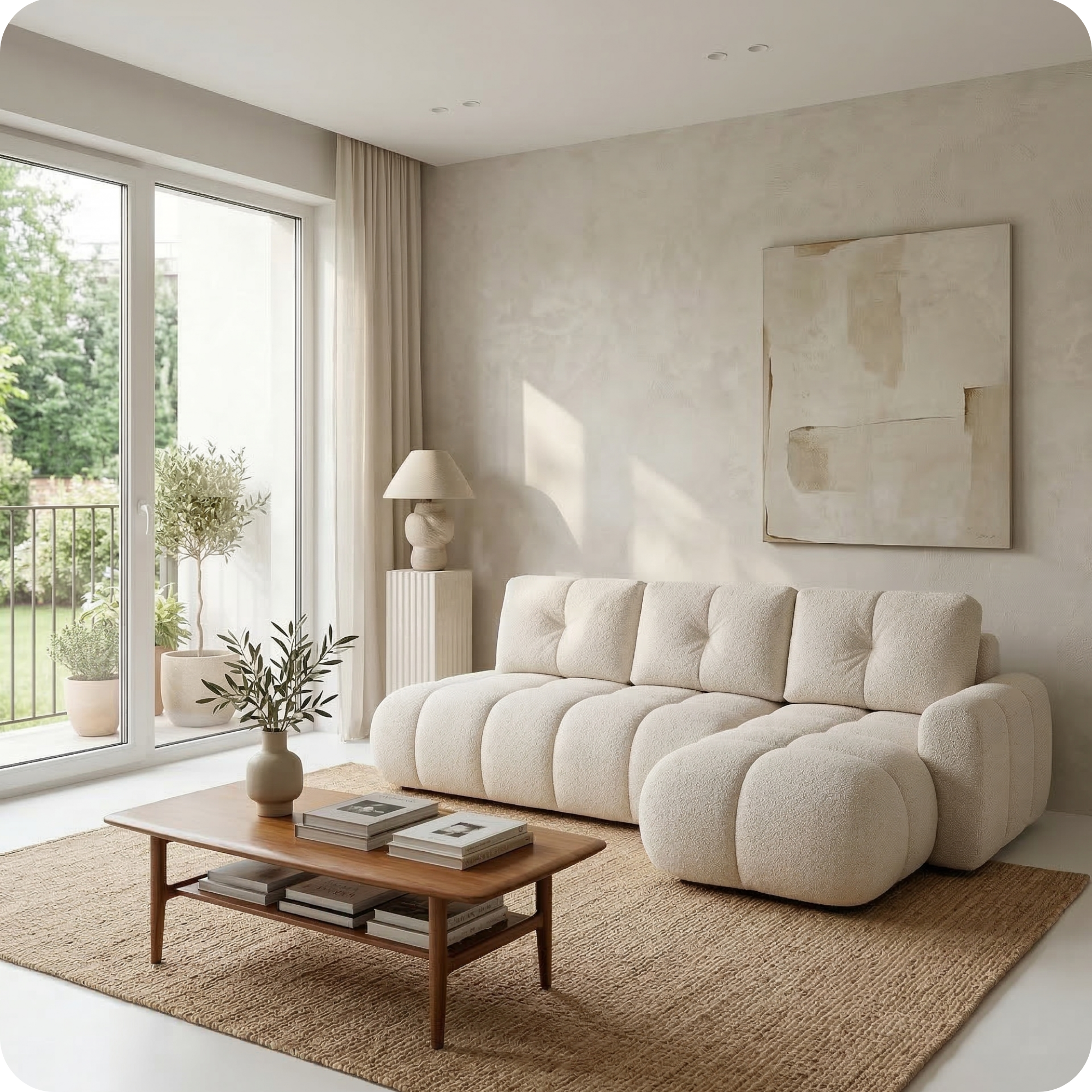
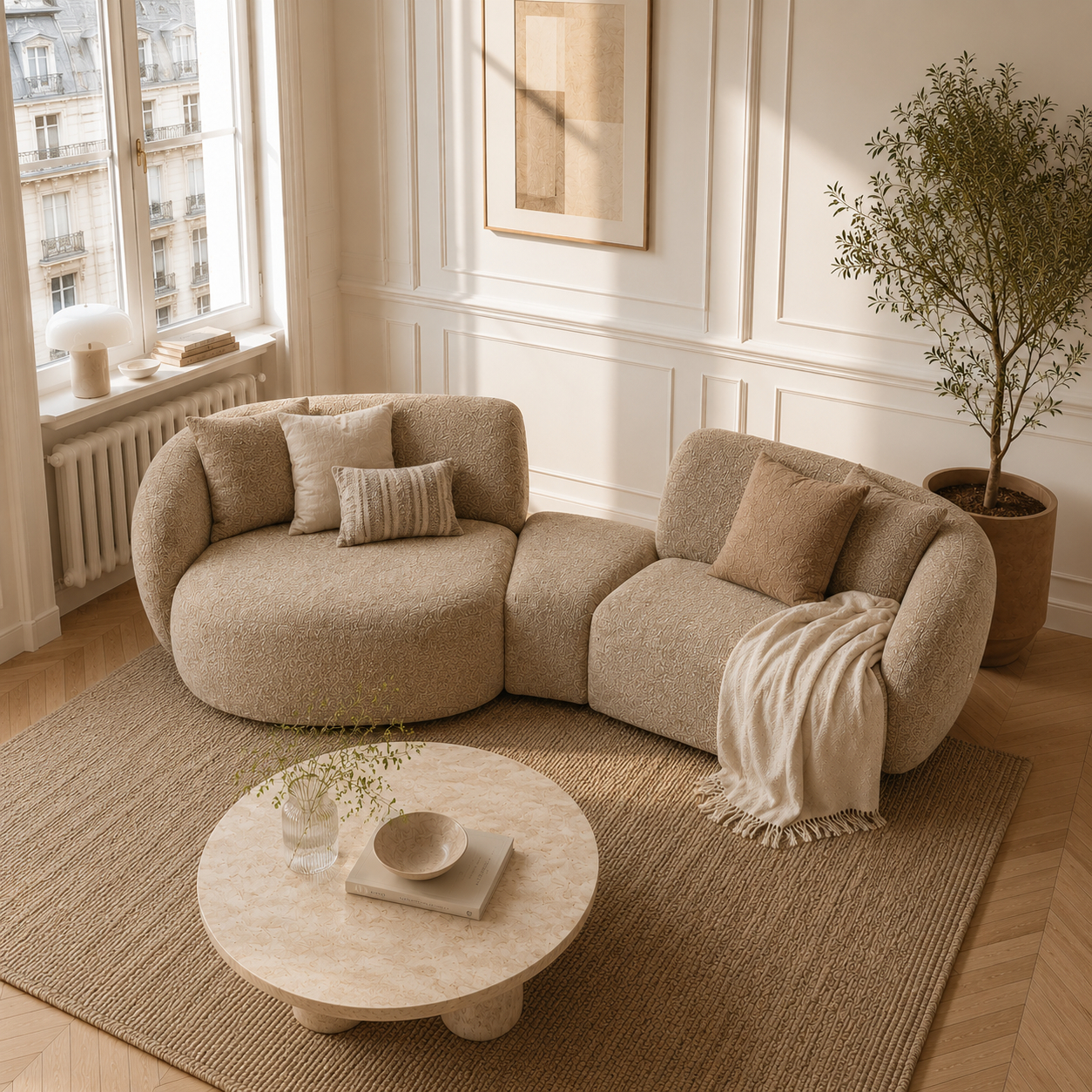
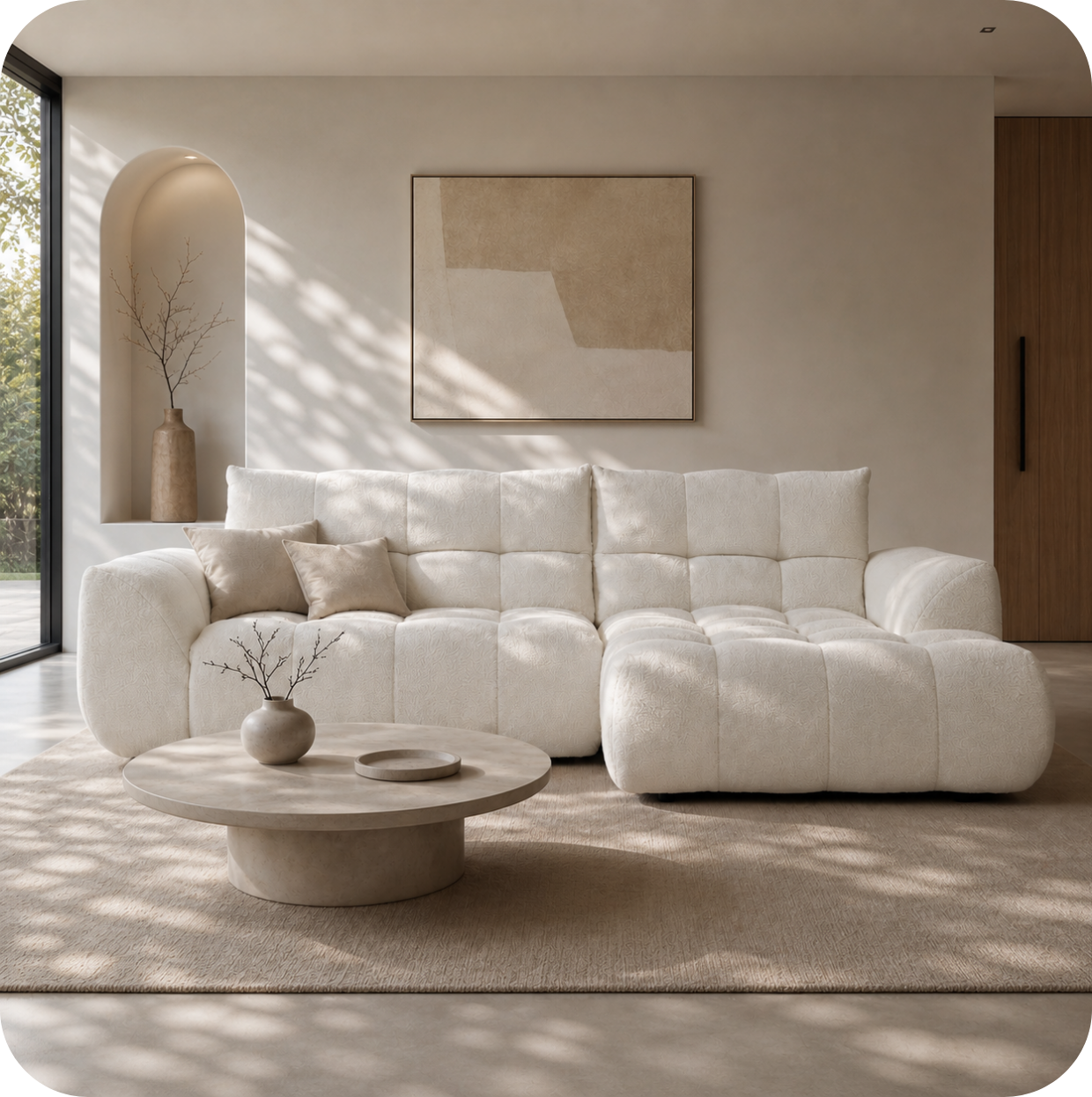
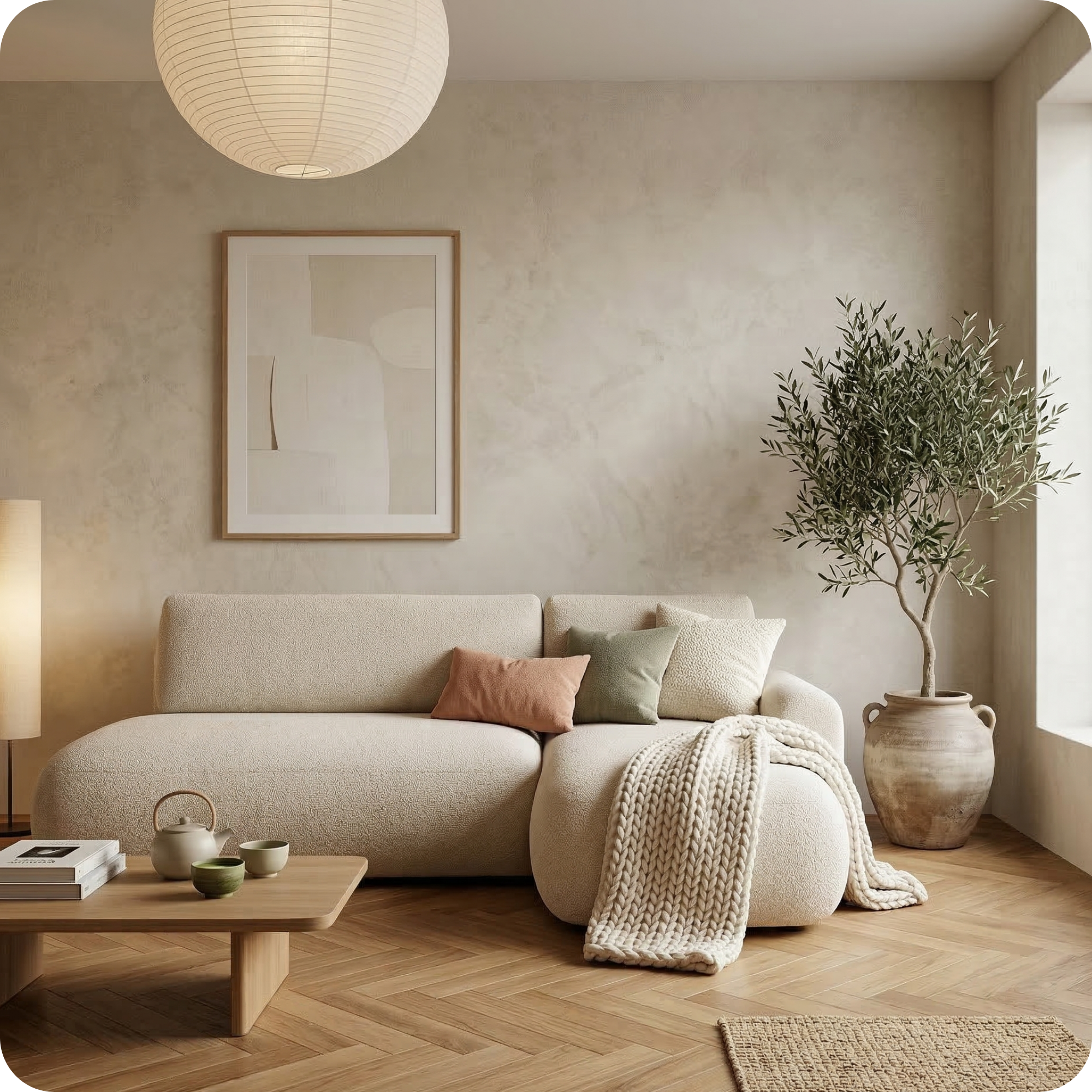
The sofa is the anchor of any bohemian living room and should be chosen as a base over which layers of cushions, throws, and textiles can be built. The most effective boho sofas are either a deep, low-profile sofa in a neutral tone (cream, warm white, camel) that acts as a blank canvas for expressive cushion arrangements — or a sofa in a rich jewel tone (deep teal, forest green, burgundy) that becomes itself a statement piece around which the rest of the room is built.

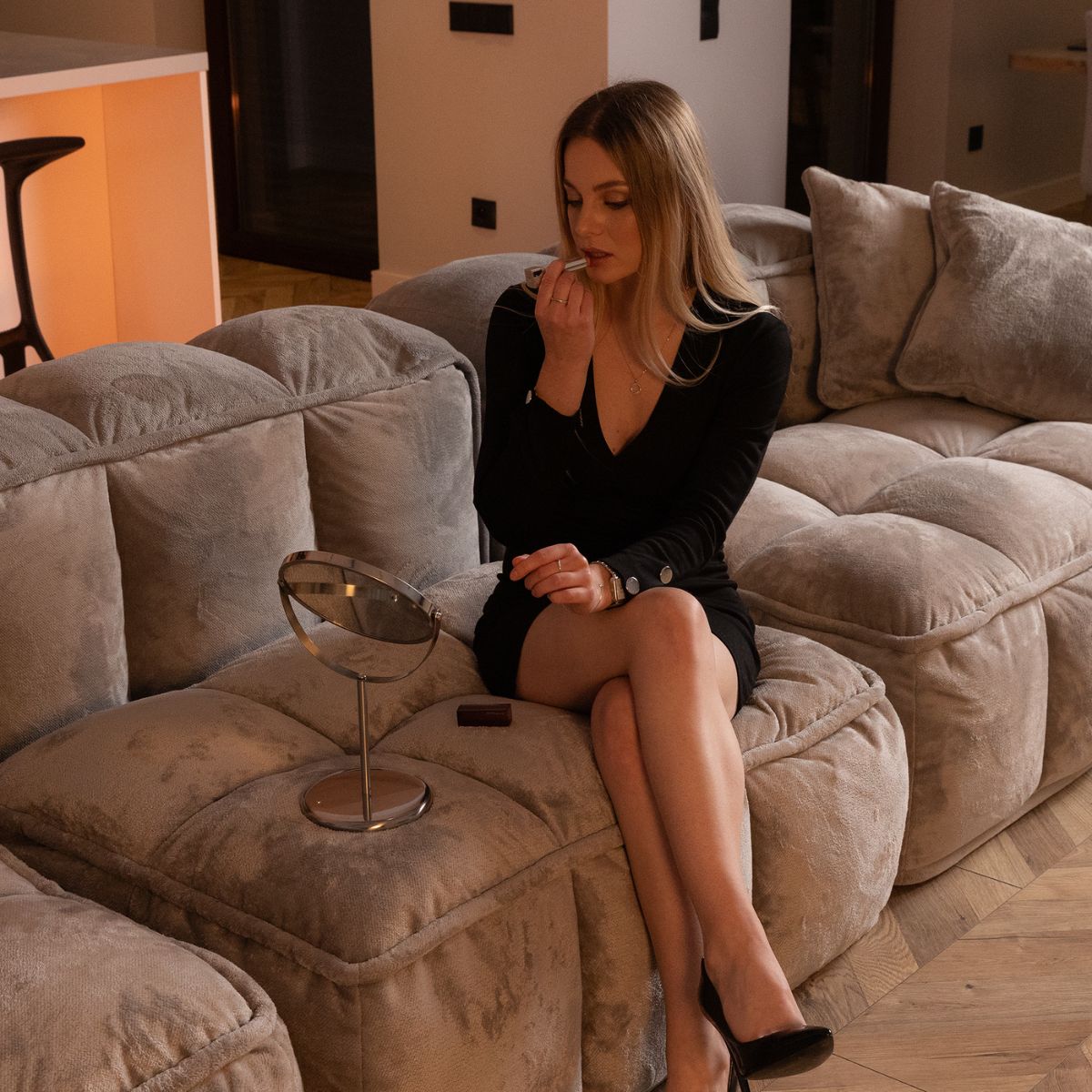
Merlot Modular Sofa — Leaf Green — from EUR 990
The deep leaf green of the Merlot is one of the most naturally boho sofa colours available. It resonates with the botanical, earthy character of bohemian design. Layer with terracotta, rust, and warm amber cushions in a mix of velvet, linen, and woven fabrics — add a large kilim rug and trailing plants to complete the boho atmosphere.

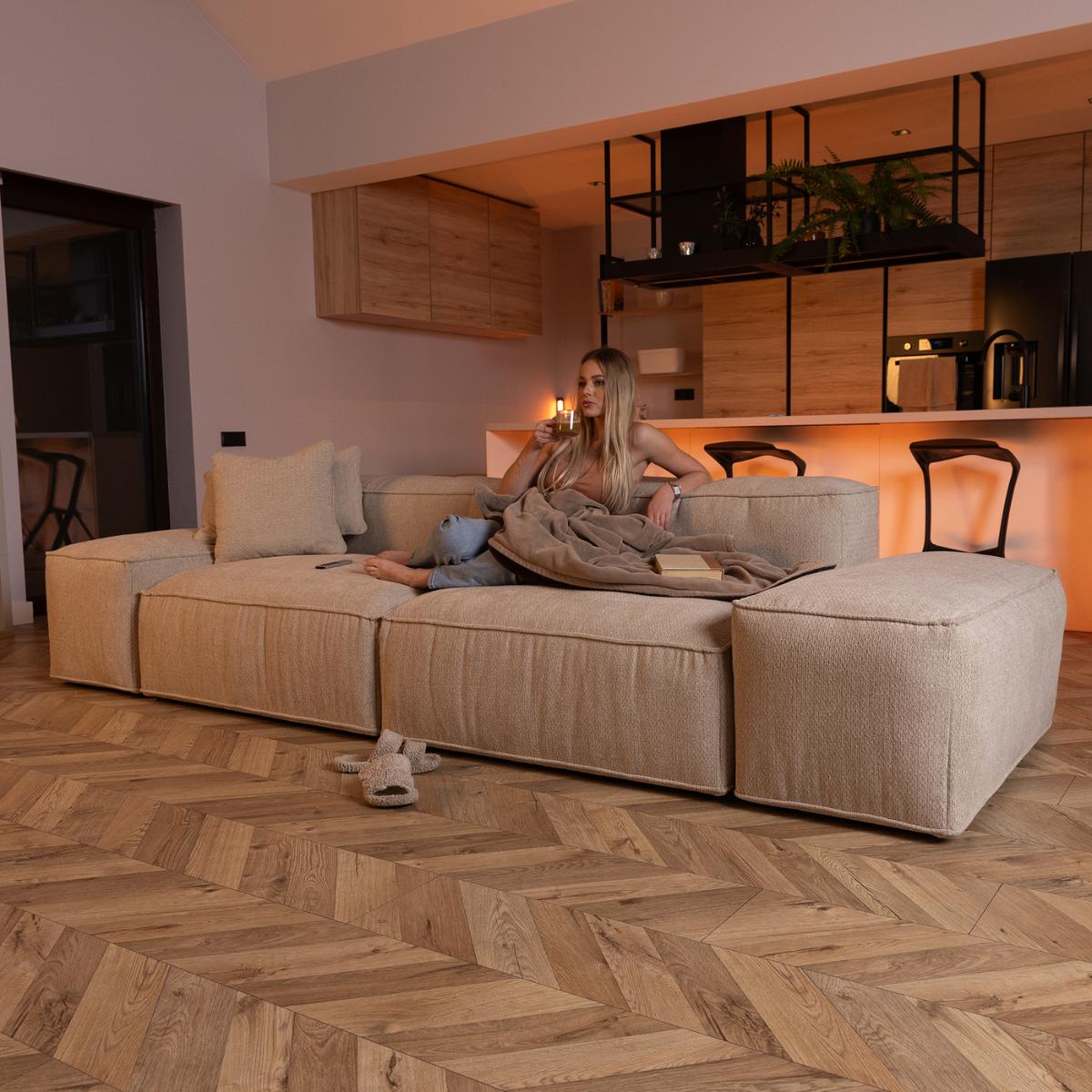
Lugano Sofa — Toffee — from EUR 890
The Lugano in toffee is a warm, deeply earthy tone that sits naturally within the bohemian palette. Build around this base with patterned cushions, woven throws, rattan side tables, and a large patterned rug in warm ochre and rust tones for a fully realised boho living room.
Key Boho Furniture Pieces
Low furniture: boho rooms tend toward lower-slung furniture — floor cushions, low coffee tables, and sofas that invite lounging. Rattan and cane: wicker, rattan, and cane furniture and accessories are quintessentially boho — natural, textured, and warm. Macrame and woven wall hangings: handmade textiles on walls add the artisanal, crafted quality that is central to the boho aesthetic. Ethnic and vintage pieces: a Moroccan pouf, an Indian block-print throw, a vintage rug — objects with cultural heritage and travel associations reinforce the bohemian spirit. Plants: large, abundant, varied — trailing plants, succulents, fiddle-leaf figs, and hanging planters all contribute to the lush, alive quality of a great boho room.
Layering: The Central Technique of Boho Design
More than any other interior style, bohemian design is about layering — building up visual richness through accumulated objects, textiles, and surfaces. A successful boho room never looks finished: it always looks like it has evolved organically. Layer rugs over rugs (a large natural jute rug under a smaller patterned kilim). Layer cushions in 3–4 sizes and 3–4 patterns. Layer plants at different heights. Layer candles, books, ceramics, and personal objects on every surface. The layering creates the sense of abundance and warmth that defines the boho aesthetic.

Hinterlasse einen Kommentar
Diese Website ist durch hCaptcha geschützt und es gelten die allgemeinen Geschäftsbedingungen und Datenschutzbestimmungen von hCaptcha.