


How to Choose the Right Sofa Colour: A Complete Decision Guide
Choosing a sofa colour is one of the most consequential decorating decisions you'll make -- a sofa is a large, expensive, long-lived piece of furniture that becomes the visual anchor of your living room for years. Getting the colour right has an outsized impact on how the entire room looks and feels. Getting it wrong is expensive to fix. This guide gives you the framework you need to make the right decision.
Step 1: Assess What You Already Have
Before thinking about what sofa colour you want, take stock of what's already in the room. Flooring: Your floor colour is fixed and sets the warm or cool temperature of the room. Light oak floors read warm; grey concrete reads cool. Your sofa colour should either complement or intentionally contrast with the floor. Wall colour: White walls give maximum flexibility. Coloured walls constrain your options -- a terracotta wall rules out most warm tones on the sofa (too much colour) but would work beautifully with a cream or sage sofa. Existing furniture: If you're keeping other furniture pieces, their colour and material matters. Dark wood furniture reads warm and pairs better with warm sofa tones. Fixed architectural elements: Dark beams, coloured tile floors, or brick fireplaces all influence the room's colour temperature.
Step 2: Decide Between Neutral and Statement
This is often the most important decision and one that many buyers skip. The neutral approach: A neutral sofa (grey, beige, cream, sand) is safe, versatile, and easy to redecorate around. You can change cushions, throws, rugs, and artwork without buying a new sofa. The downside is neutrals can feel safe to the point of blandness. The statement approach: A coloured sofa (forest green, navy, terracotta, mustard) makes the room feel designed and intentional. It takes a commitment but the results are often more satisfying. Coloured sofas are still versatile -- you just plan your palette around them rather than around neutrals.
Step 3: Consider Your Room's Light Conditions
Light fundamentally changes how colours look. North-facing rooms: Get cool, indirect light all day. Avoid cool colours -- grey, blue, white -- which will look very cold. Choose warm tones: cream, sand, camel, warm terracotta, or a warm olive. South-facing rooms: Get warm direct light. Can handle almost any colour. Cool tones like grey, sage, and even pale blue look beautiful in south-facing rooms. East-facing rooms: Warm morning light, cool afternoon. Balanced rooms that work with most palettes. West-facing rooms: Cool mornings, warm golden evening light. Good for most colours but particularly beautiful with warm tones that glow in evening light.
Step 4: Think About Your Lifestyle
Children and pets: Lighter, pale-toned sofas show every mark. Dark colours are more forgiving with everyday use. Patterned fabrics hide marks between cleaning better than plains. Everyday entertaining: If the sofa sees heavy use and regular gatherings, a practical mid-tone (medium grey, camel, medium olive) in a durable fabric is your friend. Formal spaces: A rarely-used formal sitting room can take a more daring sofa colour -- the low risk of staining means you can choose the colour purely on aesthetics.

Lugano Sand — from EUR 999
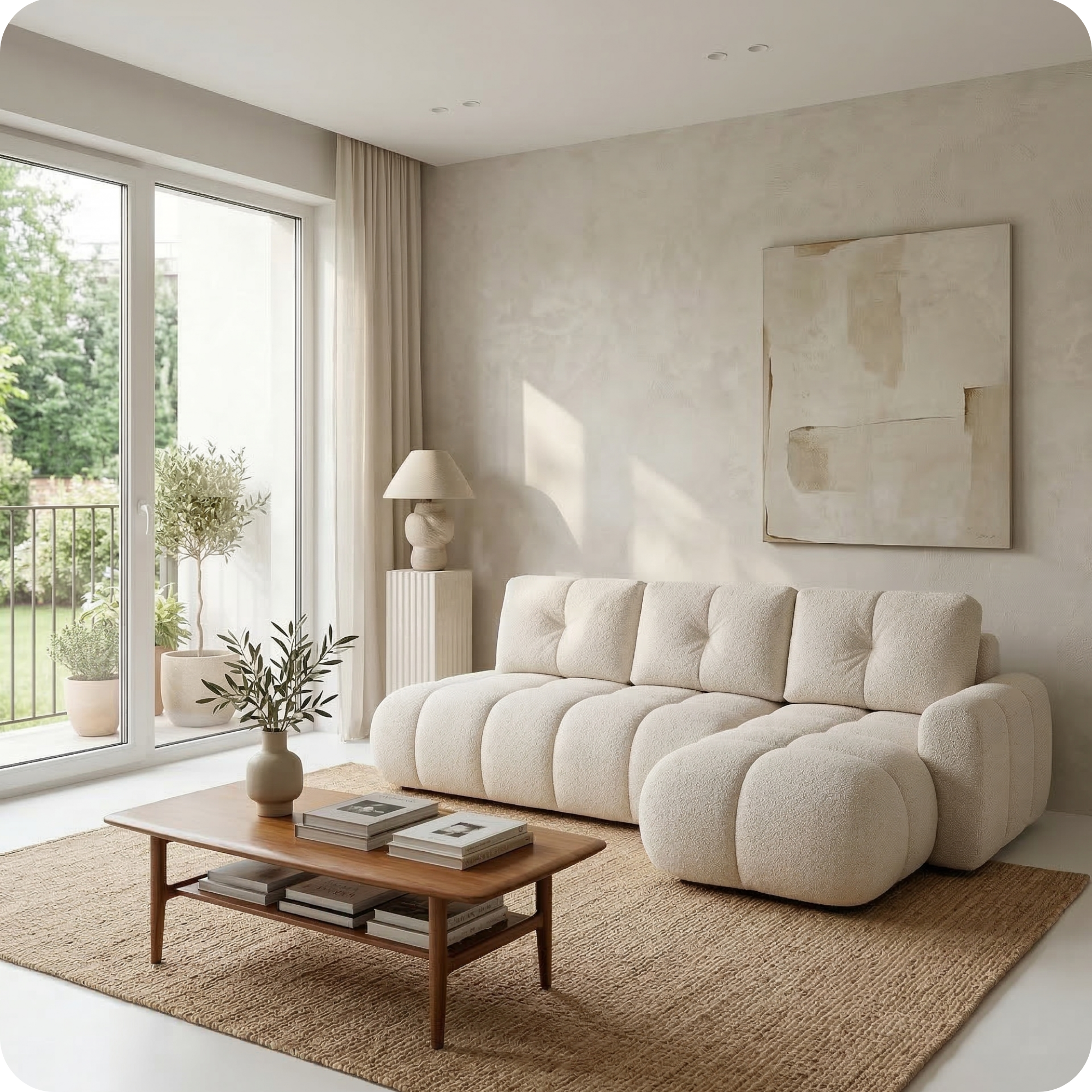
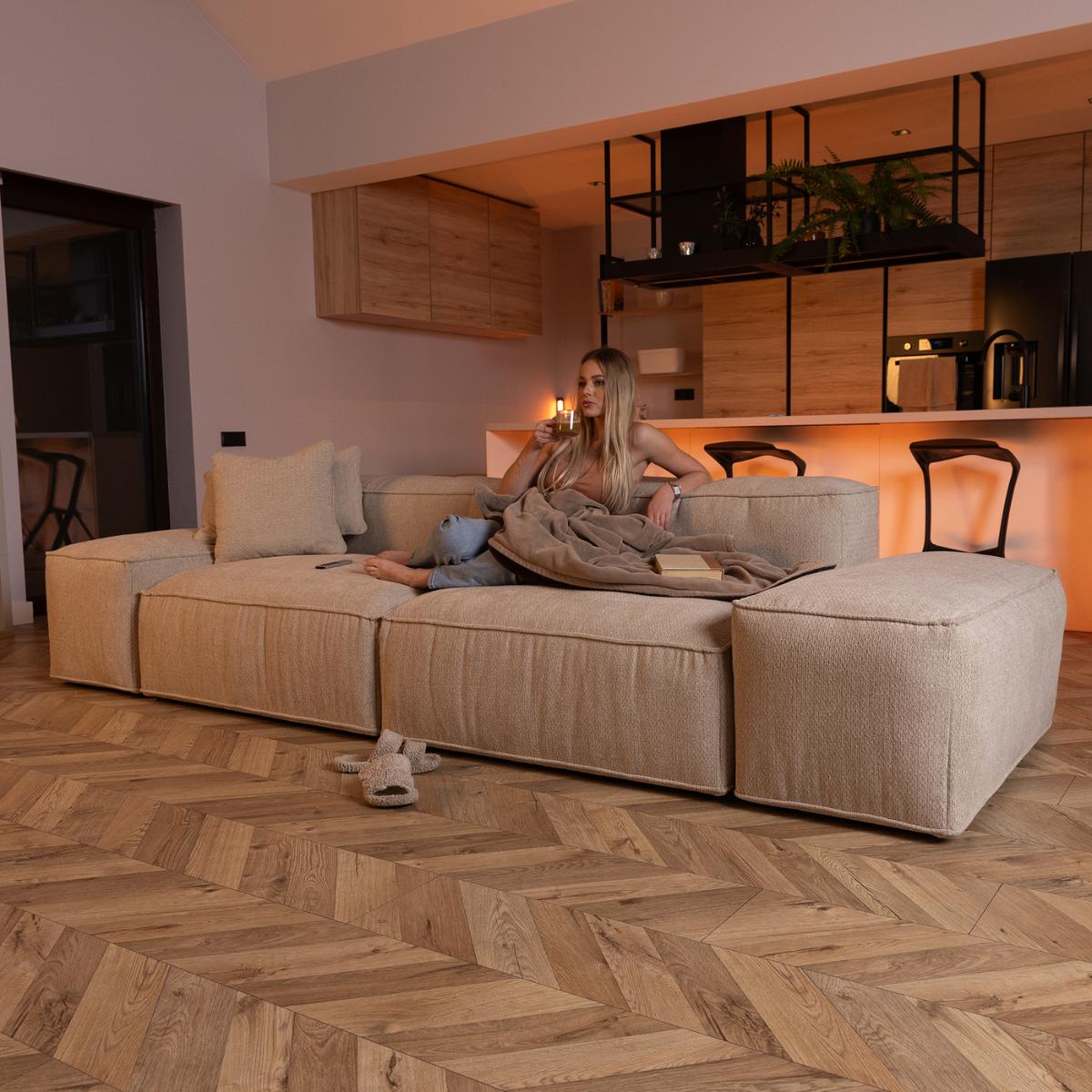
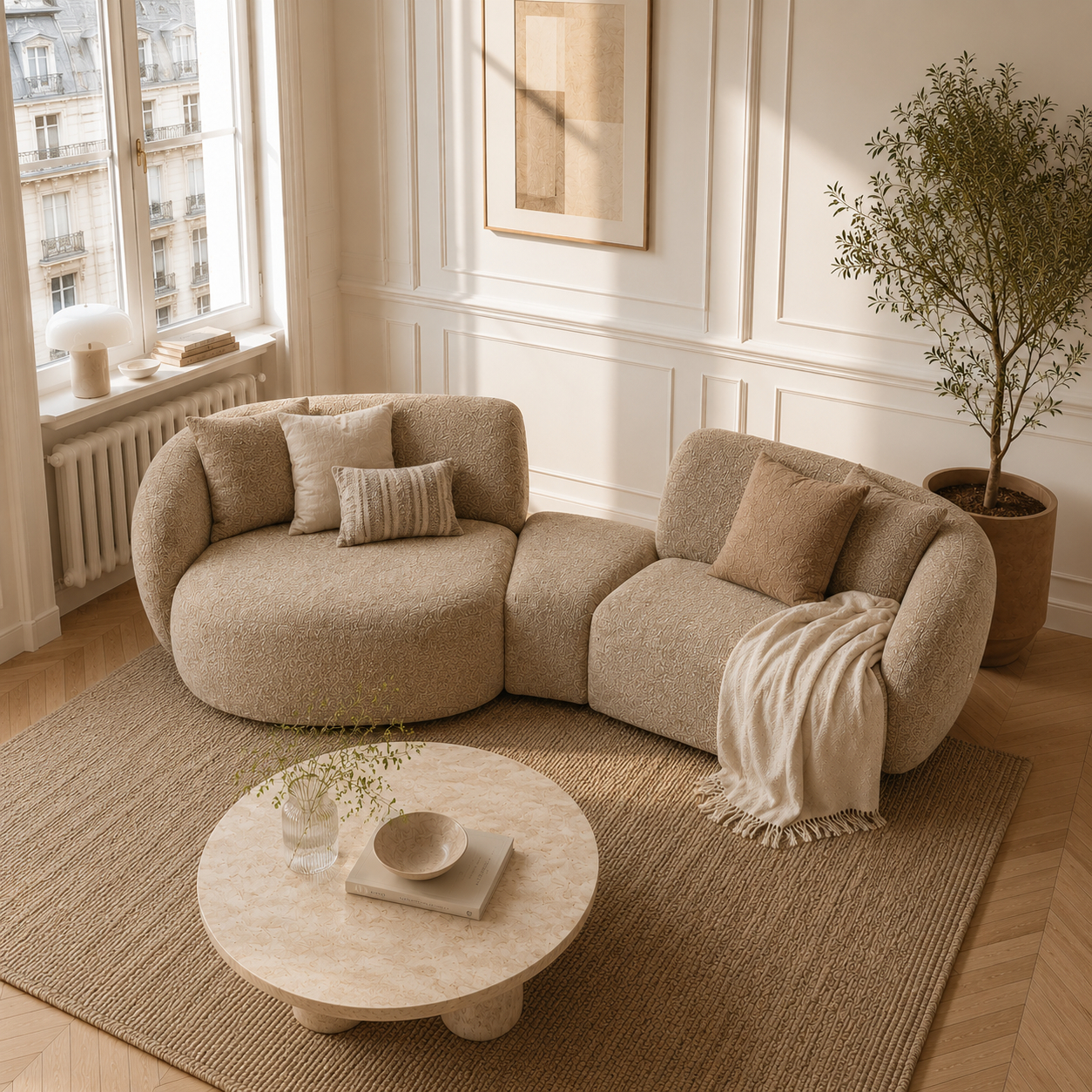
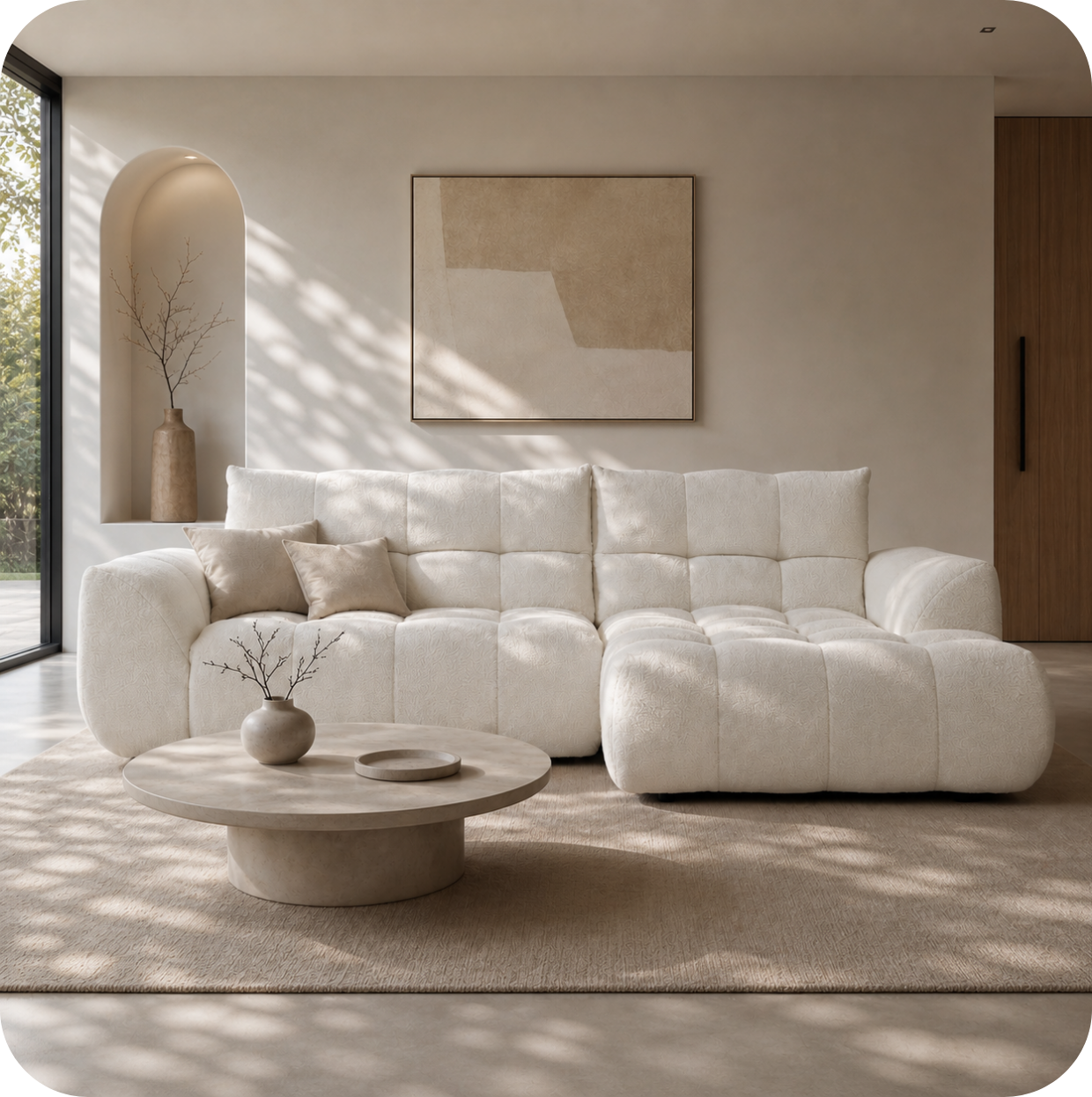
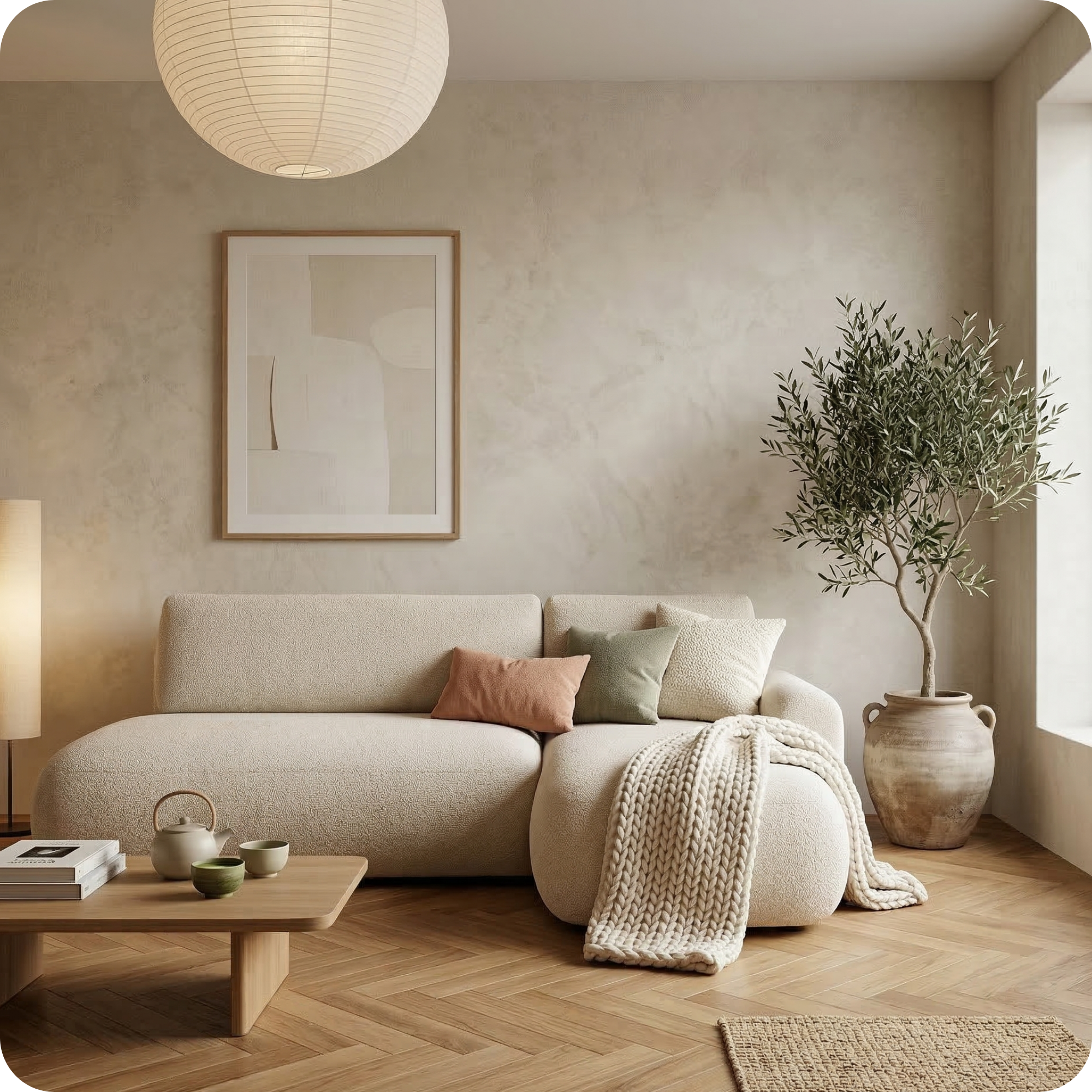
Sand is the perfect neutral for those who want warmth without commitment to a colour. It works in virtually every room, with every floor, and with any cushion palette.

Merlot in Leaf Green — from EUR 1,290
For buyers ready to commit to a statement sofa, leaf green is a brilliant choice -- botanical, rich, and deeply connected to the natural world that is at the heart of contemporary interior design.
The Most Versatile Sofa Colours and Who They're For
Warm grey: The most versatile overall. Works in any direction room. Goes with warm and cool accents. Sand or camel: Best for warm-direction rooms and buyers who love natural materials. Forest green: Best for buyers who want a statement that still works with any number of accent palettes. Navy: Best for buyers who love the classic, tailored look. Needs warm accents (brass, terracotta) to prevent coldness. Cream or ivory: Best for formal spaces or rooms with excellent natural light and low traffic. Charcoal: Best for practical households -- hides everything and anchors any room strongly.

Hinterlasse einen Kommentar
Diese Website ist durch hCaptcha geschützt und es gelten die allgemeinen Geschäftsbedingungen und Datenschutzbestimmungen von hCaptcha.