



How to Choose the Right Sofa Colour for Your Living Room
The sofa is the most dominant piece of furniture in most living rooms — and its colour is the most visible element in the entire scheme. Get the colour right and it ties the room together, makes the space feel considered and complete. Get it wrong and no amount of good accessories will fix the disconnect. Yet choosing a sofa colour is also one of the decisions that most people find most difficult — partly because of the cost and commitment involved, and partly because the sheer range of options can be paralysing. This guide cuts through the complexity.
The Case for Neutral Sofa Colours
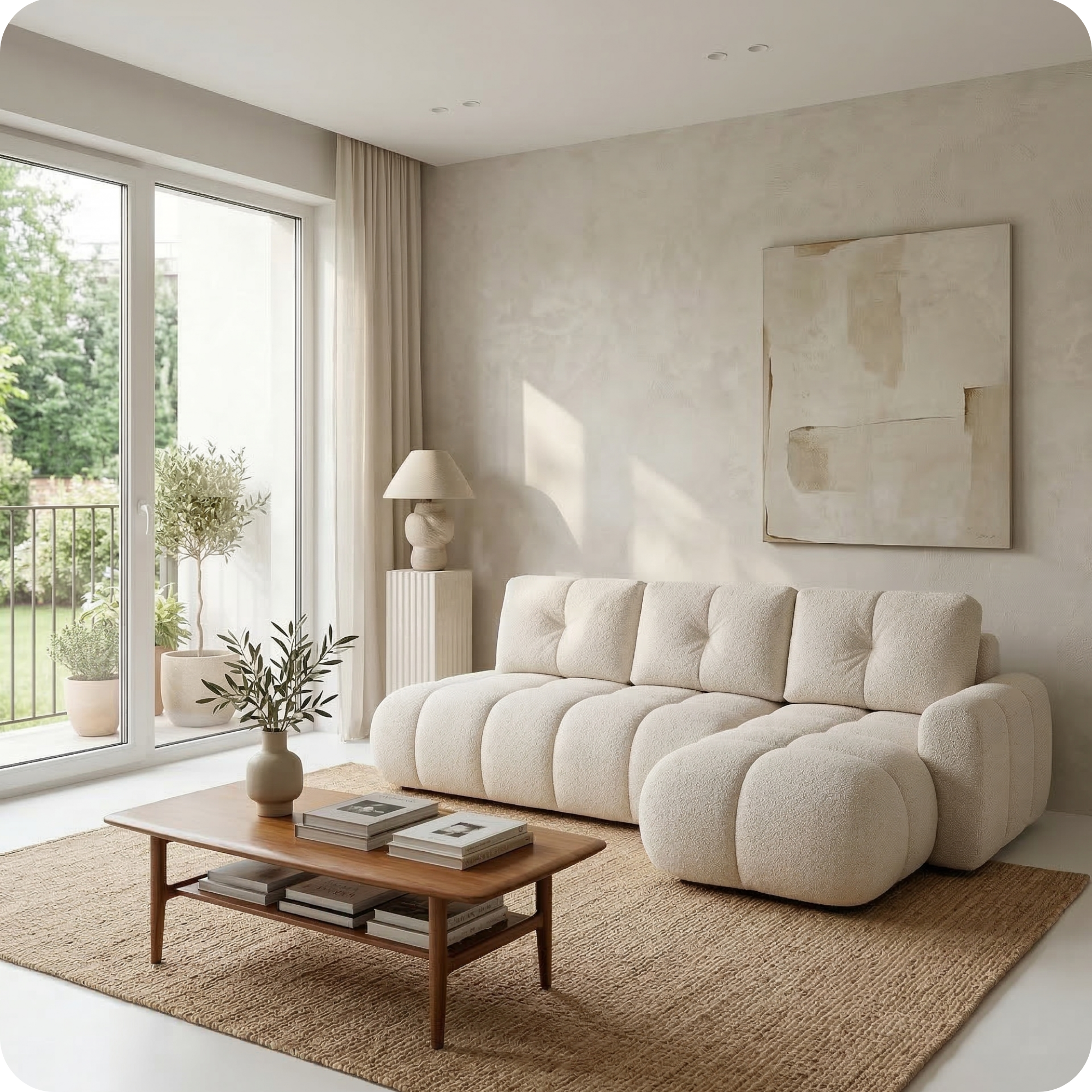
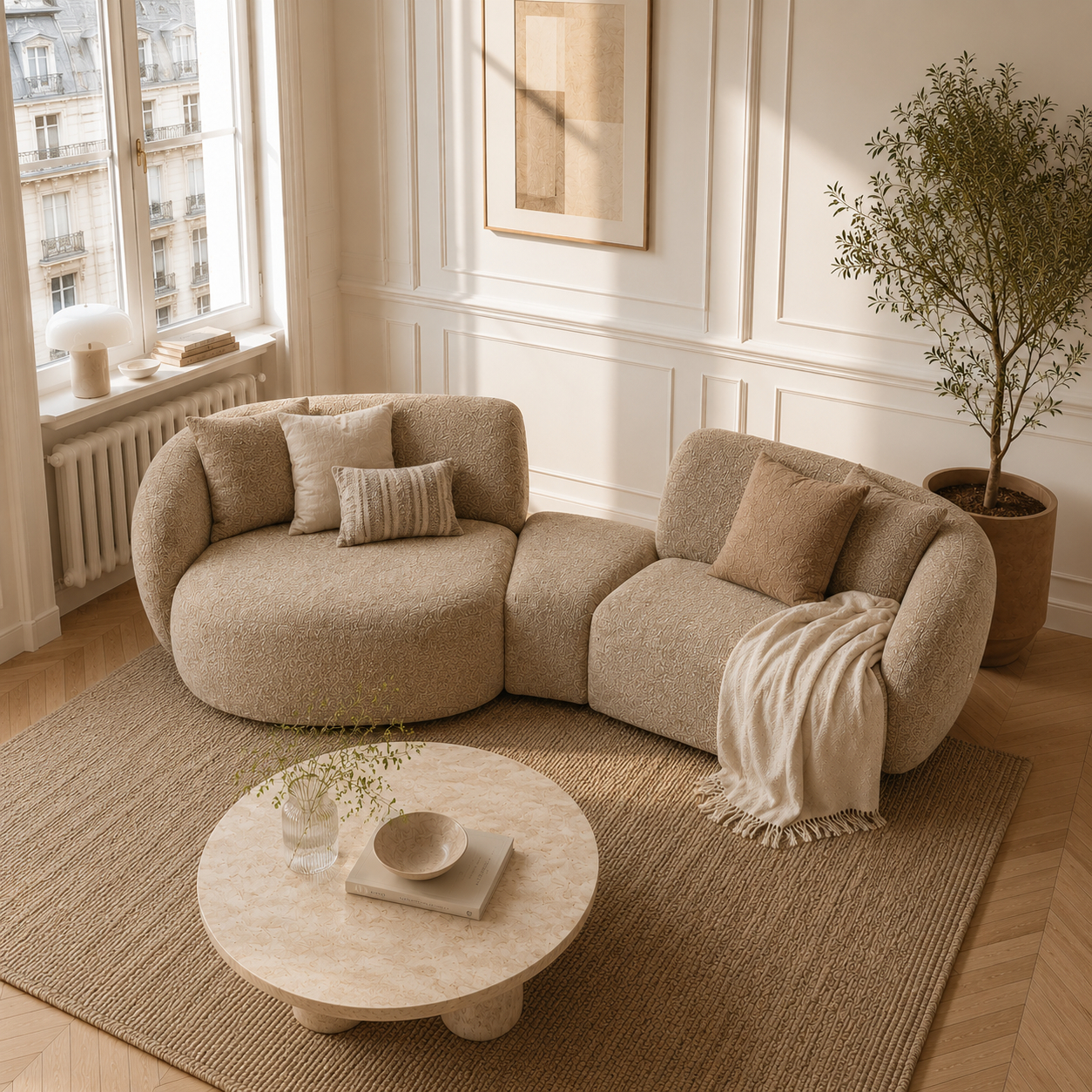
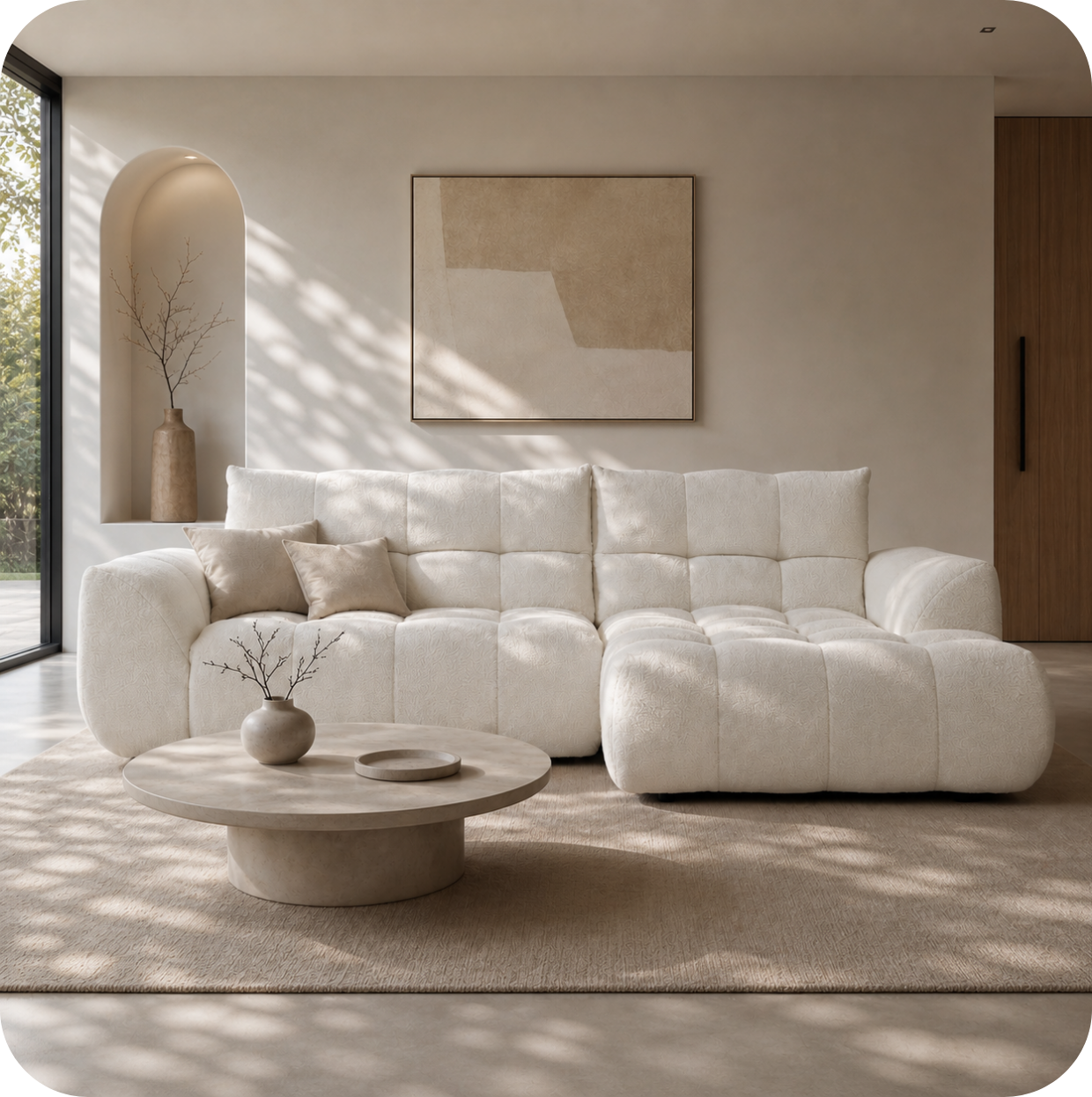
Neutral sofa colours — grey, sand, cream, beige, oatmeal, and warm white — are the most popular choices, and with good reason. They are the most versatile: a neutral sofa works with almost any wall colour, any rug, and any accessory palette. They give you maximum flexibility to change the rest of the room over time without replacing the sofa. They photograph well and look consistently appealing. And in a room where the sofa is the dominant element, a neutral colour allows other elements — lighting, artwork, textiles — to contribute more equally to the overall scheme. The risk with neutrals is blandness: a grey sofa in a grey room with grey accessories is simply dull. The solution is contrast through texture and layering rather than through colour.
When to Choose a Bold Sofa Colour
A bold sofa colour — deep green, forest blue, rich burgundy, mustard yellow, terracotta, or deep charcoal — is a genuine commitment, but one that pays back in atmosphere and personality that neutrals simply cannot match. The key considerations: a bold sofa works best in a room with relatively neutral walls, so the sofa becomes the focal point rather than competing with a busy background. The bolder the sofa colour, the simpler the rest of the room needs to be. A deep green velvet sofa needs clean, pale walls, a simple rug, and restrained accessories — the sofa does all the work.

Lugano Sofa in Sand — from EUR 790
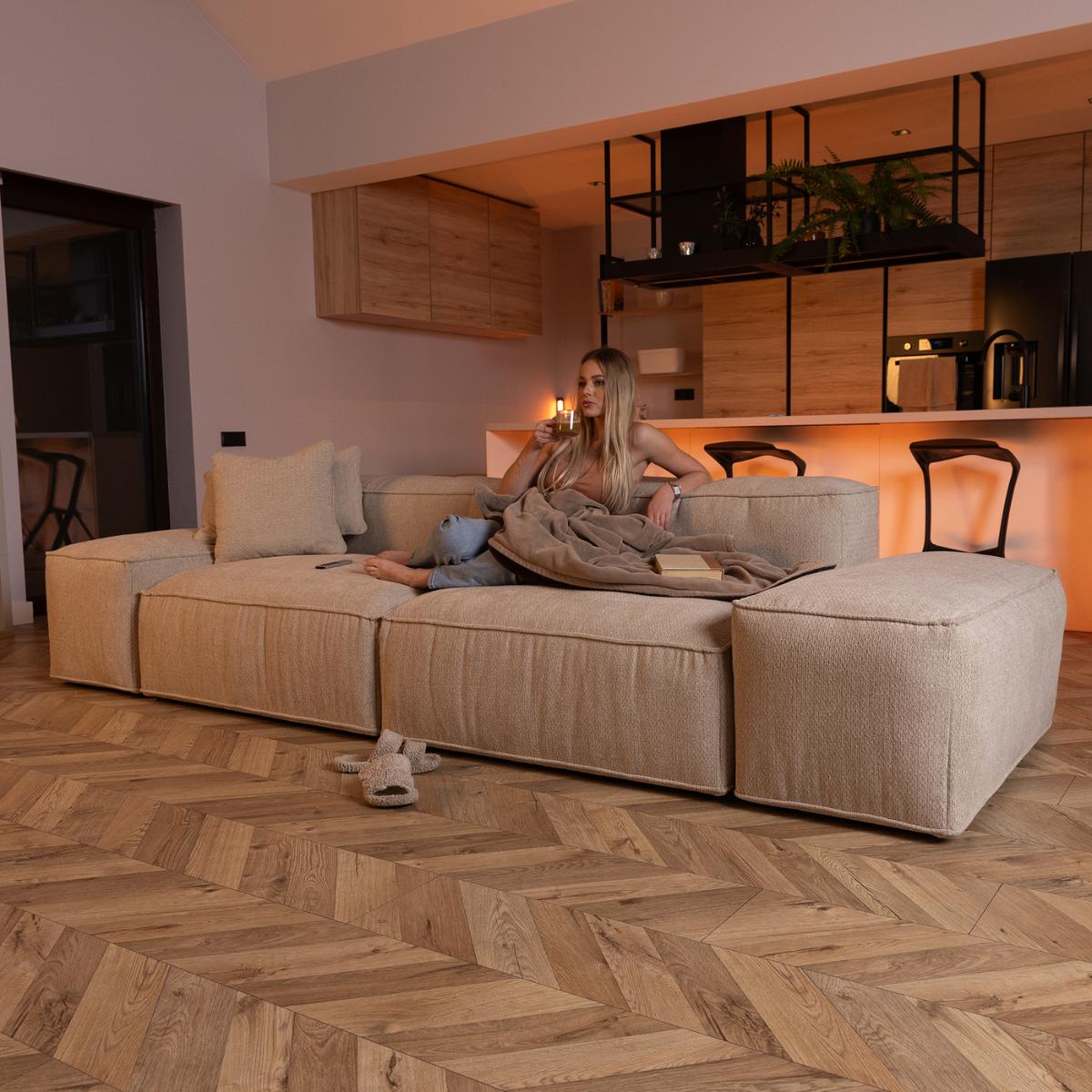
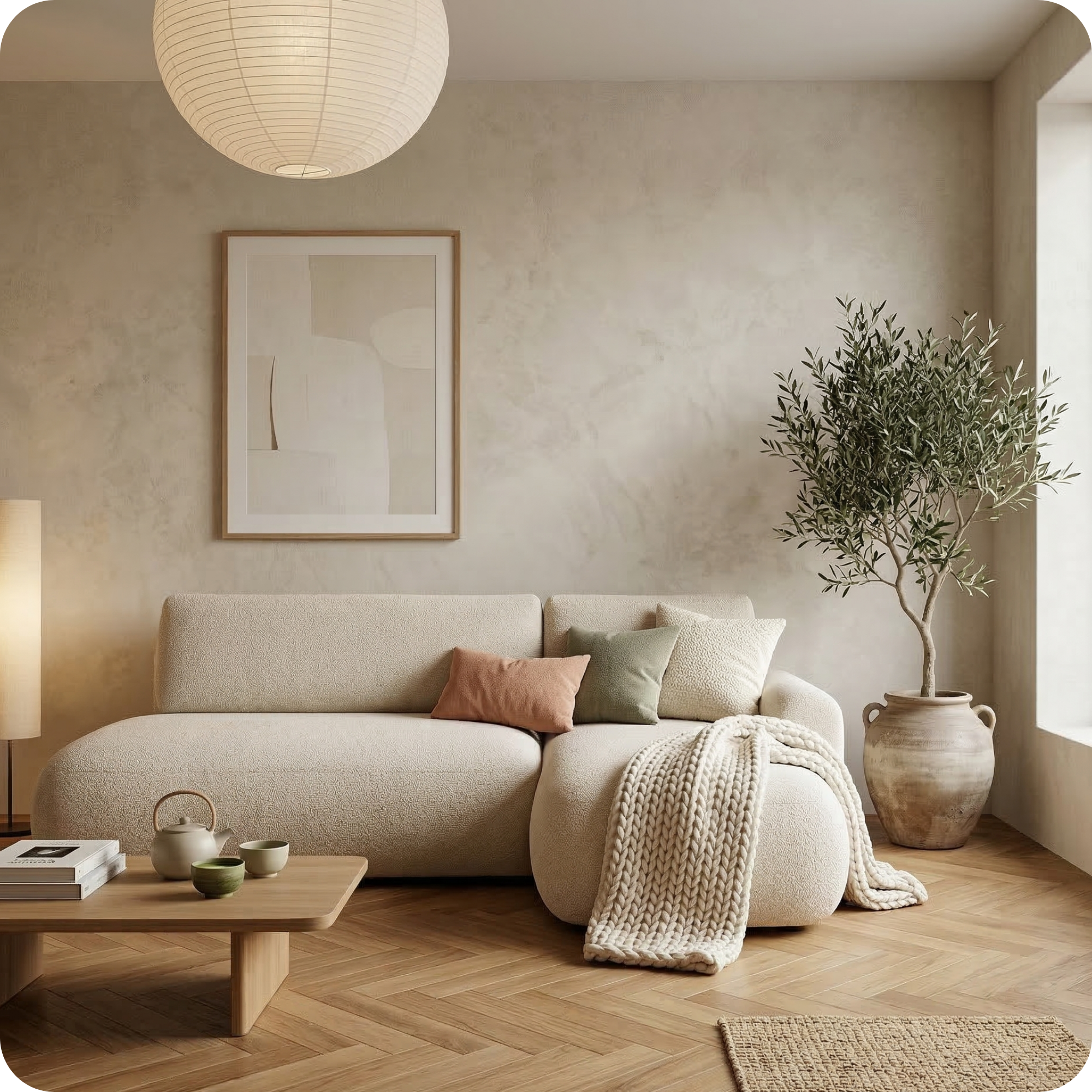
Sand is one of the finest neutral sofa colours — warm enough to avoid sterility, light enough to maximise versatility. The Lugano in sand works beautifully with warm wall tones, cool whites, and everything in between.

Merlot Sofa in Leaf Green — from EUR 990
Leaf green is one of the most successful bold sofa colours — it is distinctive enough to make a genuine statement, but earthy and organic enough to feel natural and liveable rather than garish. Against pale walls it reads as rich and sophisticated.
Grey: The Most Popular Sofa Colour
Grey remains the single most popular sofa colour — for good reasons, but also with important caveats. Light grey is arguably the most flexible neutral of all: it reads as cool, contemporary, and effortless. Dark charcoal adds drama and makes a stronger statement. The caveat: grey can tip a room into coldness if not balanced with sufficient warm tones elsewhere — warm wood, amber lighting, warm-toned textiles. A cool grey sofa in a room with cold white walls and cool lighting is the recipe for a room that looks good in photographs but feels uncomfortable to inhabit.
Dark Sofas: Practical and Dramatic
Very dark sofa colours — charcoal, chocolate brown, deep navy, near-black — have significant practical advantages: they hide marks, pet hair, and general wear far better than light colours. They also create an immediate sense of depth and drama in a room. The risk is weight — in a small or poorly lit room, a very dark sofa can make the space feel heavy and oppressive. The solution is to ensure the room has generous natural light and warm artificial lighting, and to balance the dark sofa with lighter walls, a light rug, and pale accessories.
How Your Wall Colour Affects the Decision
The wall colour is the most important contextual factor in choosing a sofa colour. White and very light walls give maximum flexibility — virtually any sofa colour works against a white wall. Medium-toned walls in warm neutrals work best with sofas in tonal variations of the same warm family, or with a contrasting colour in the same warmth level. Strongly coloured walls — deep green, navy, terracotta — typically work best with a neutral sofa that doesn't compete for dominance.

Hinterlasse einen Kommentar
Diese Website ist durch hCaptcha geschützt und es gelten die allgemeinen Geschäftsbedingungen und Datenschutzbestimmungen von hCaptcha.