



How to Choose Sofa Cushions: Size, Fill, Cover and Arrangement
Cushions are the quickest, cheapest, and most flexible way to transform the look and feel of a sofa. They can add colour, texture, pattern, and comfort — and they are easy to change seasonally or whenever you want a fresh look. The challenge is that cushion selection seems deceptively simple but is actually governed by a set of principles around size, fill, cover material, and arrangement that, when understood and applied, produce results that feel considered and complete rather than random and busy.
Getting the Size Right
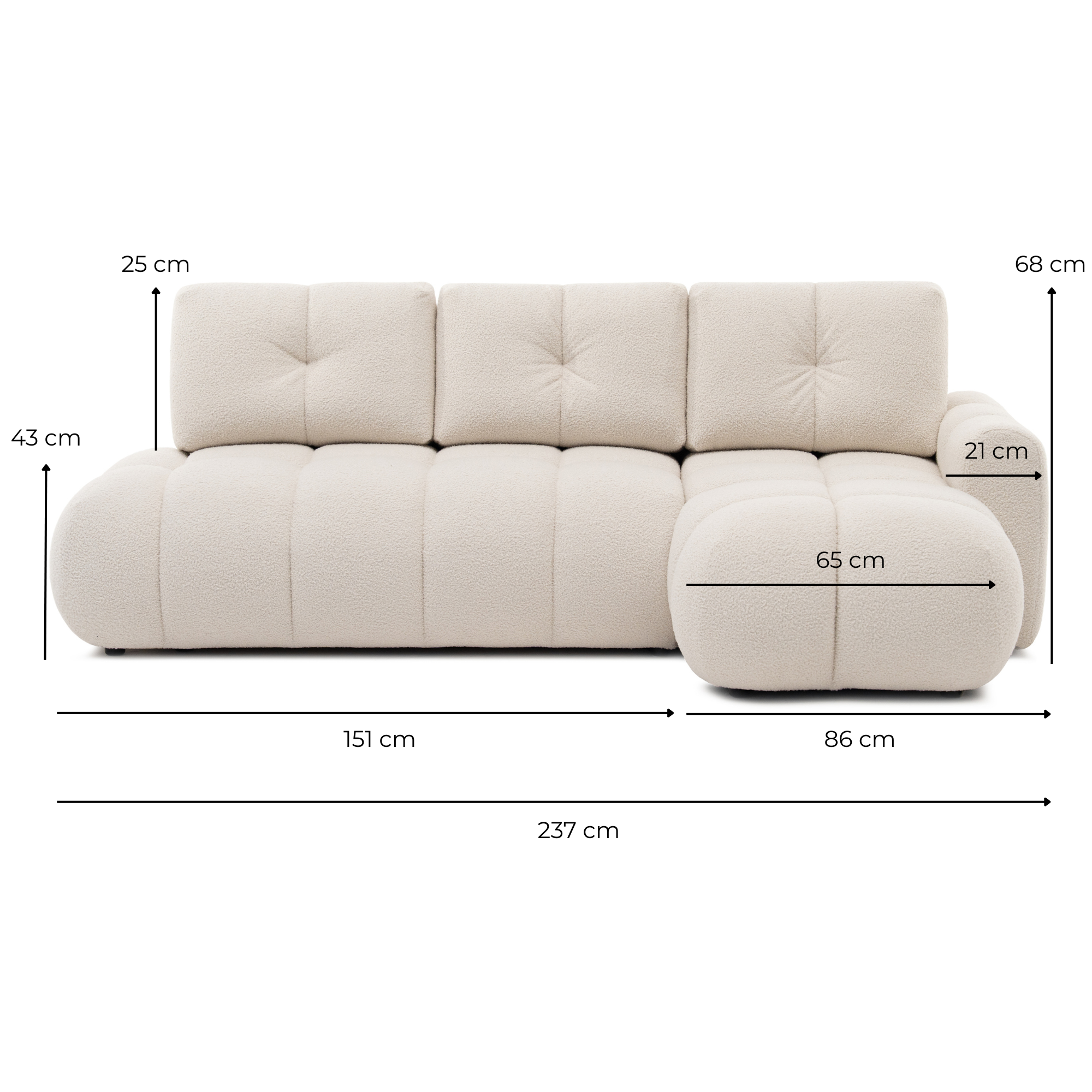
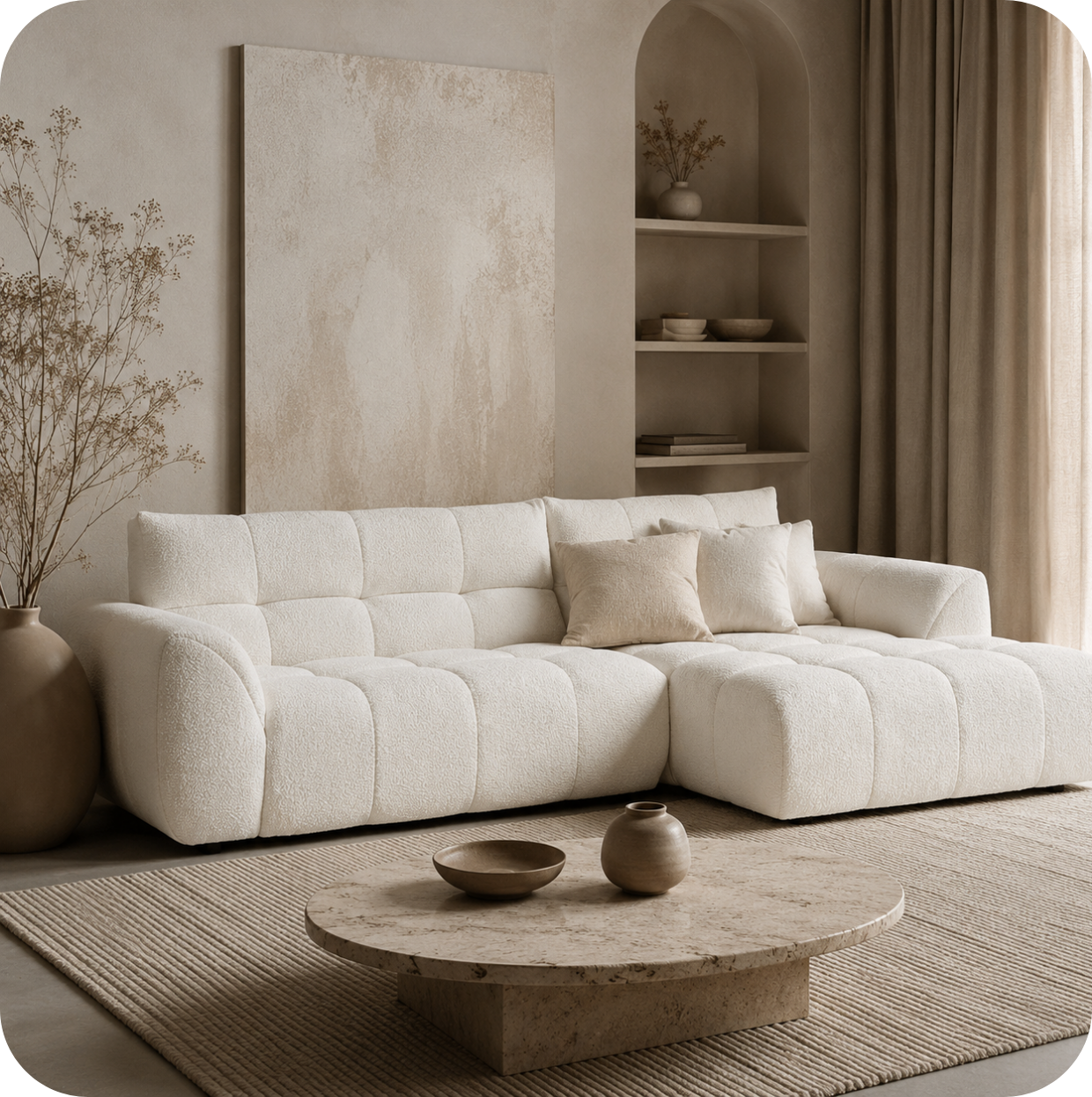
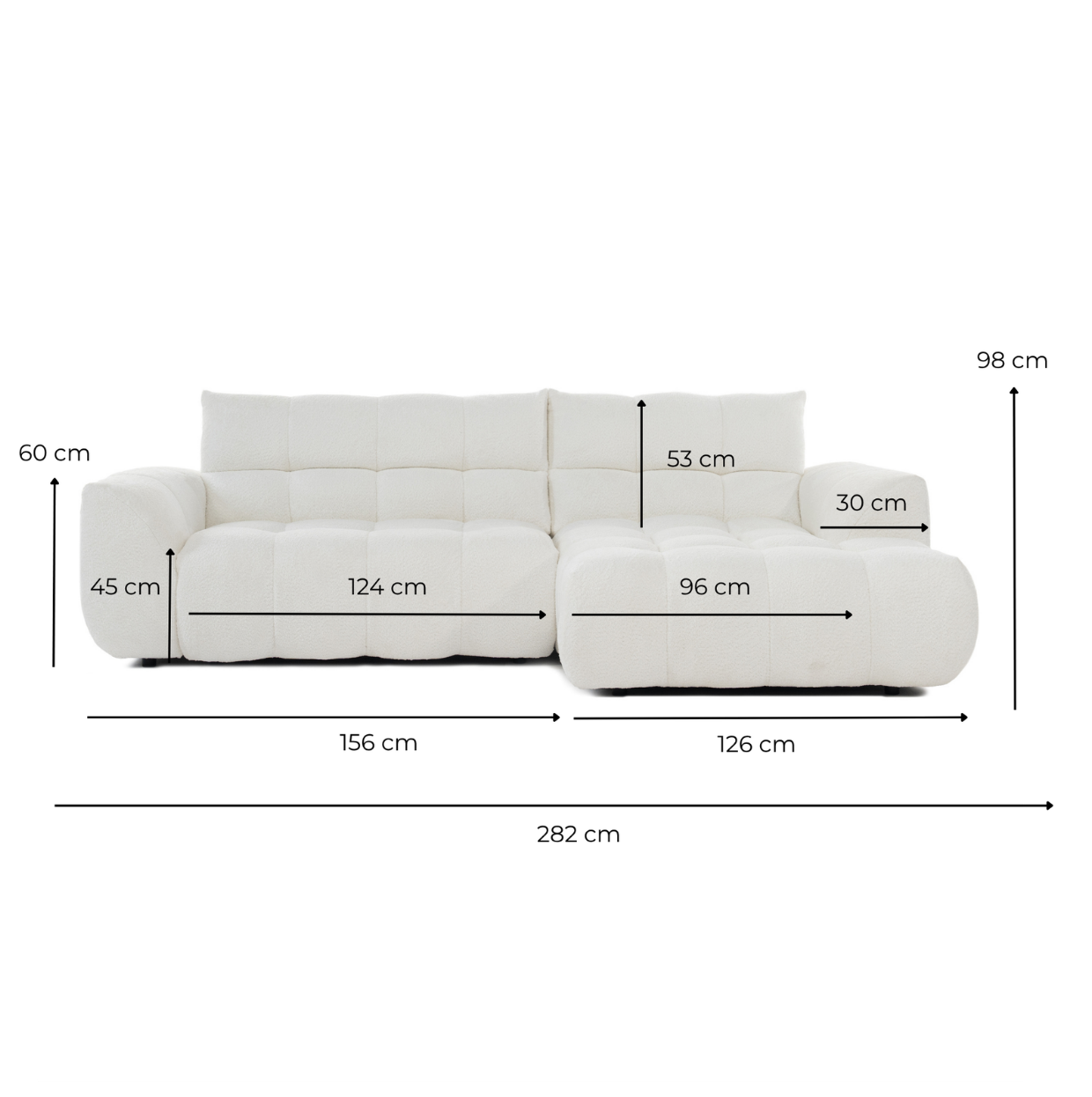
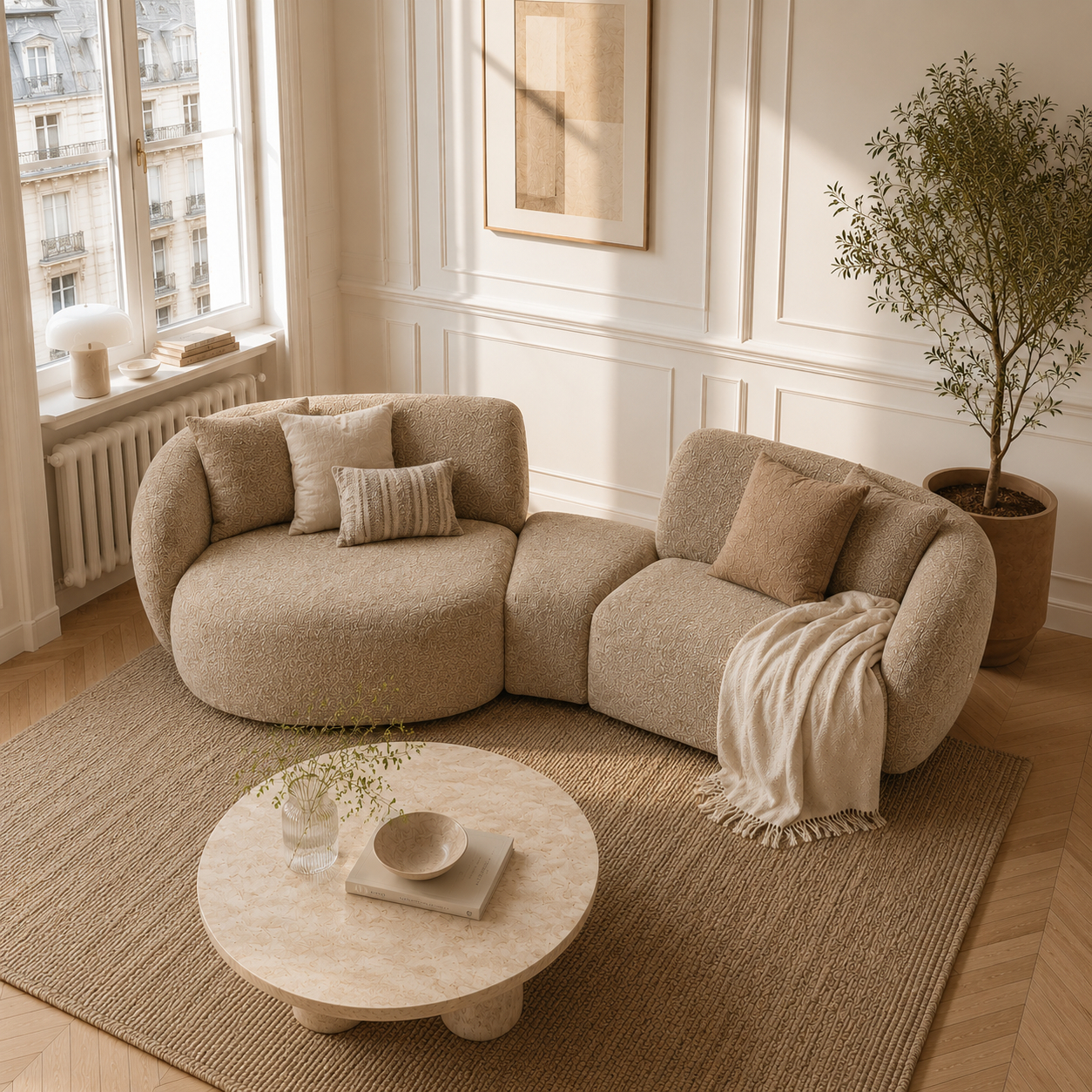
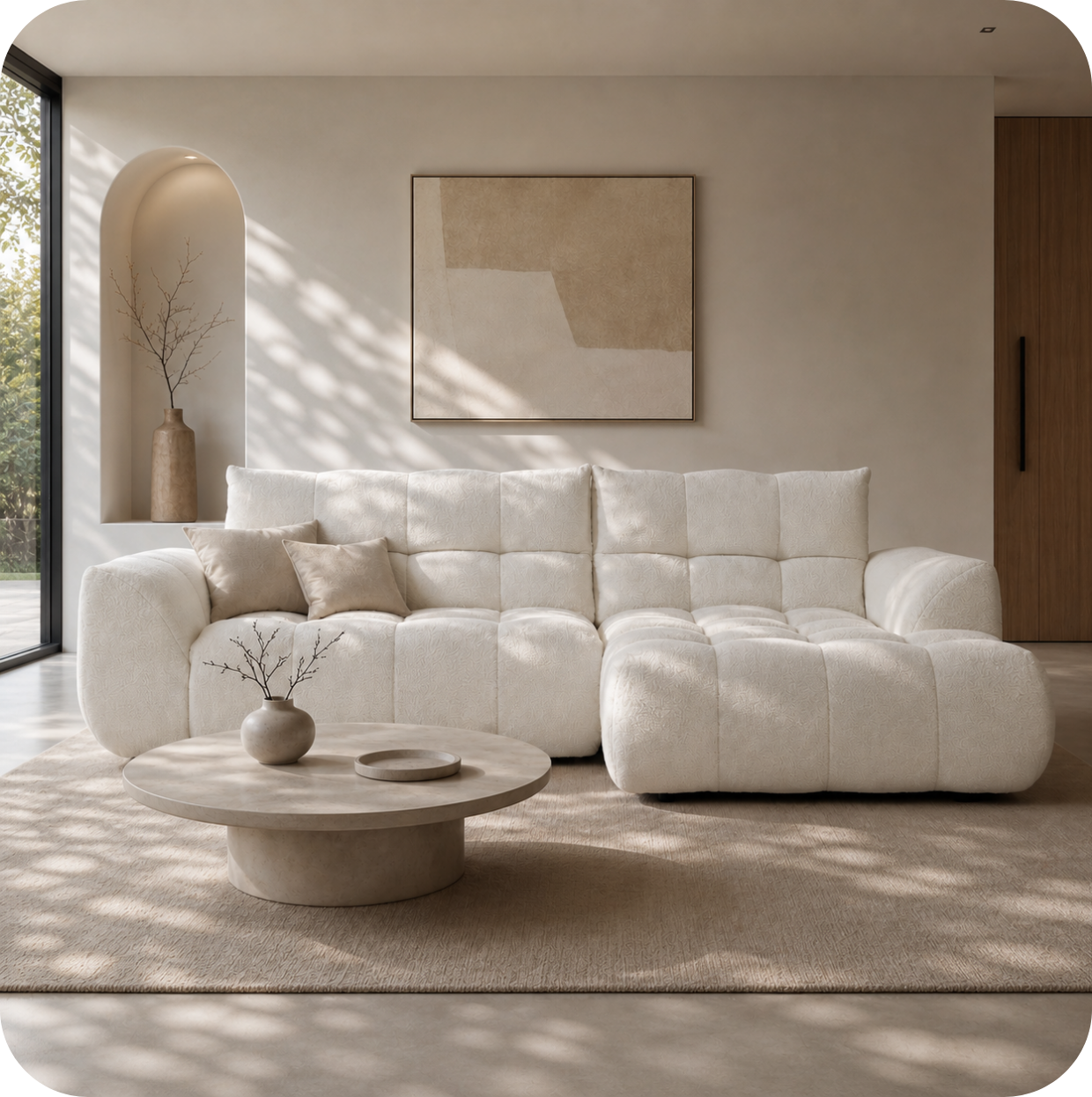
Cushion size is the most overlooked dimension of sofa styling. Many people buy cushions that are too small for their sofa, which makes both the sofa and the cushions look underwhelming. As a general rule, cushions should feel generous relative to the sofa. For a standard 3-seater sofa, 50x50cm cushions are the minimum — 60x60cm cushions are often better, particularly for deep-seated sofas. Rectangular cushions (50x30cm or 65x45cm) work well as second-row or bolster cushions. Oversized square cushions (70x70cm or even 80x80cm) can look spectacular on a large corner sofa, giving it a generous, hotel-like quality. Mixing sizes adds dynamism: a common approach is two large squares at each end, two medium squares in the middle, and one or two rectangular cushions as the front layer.

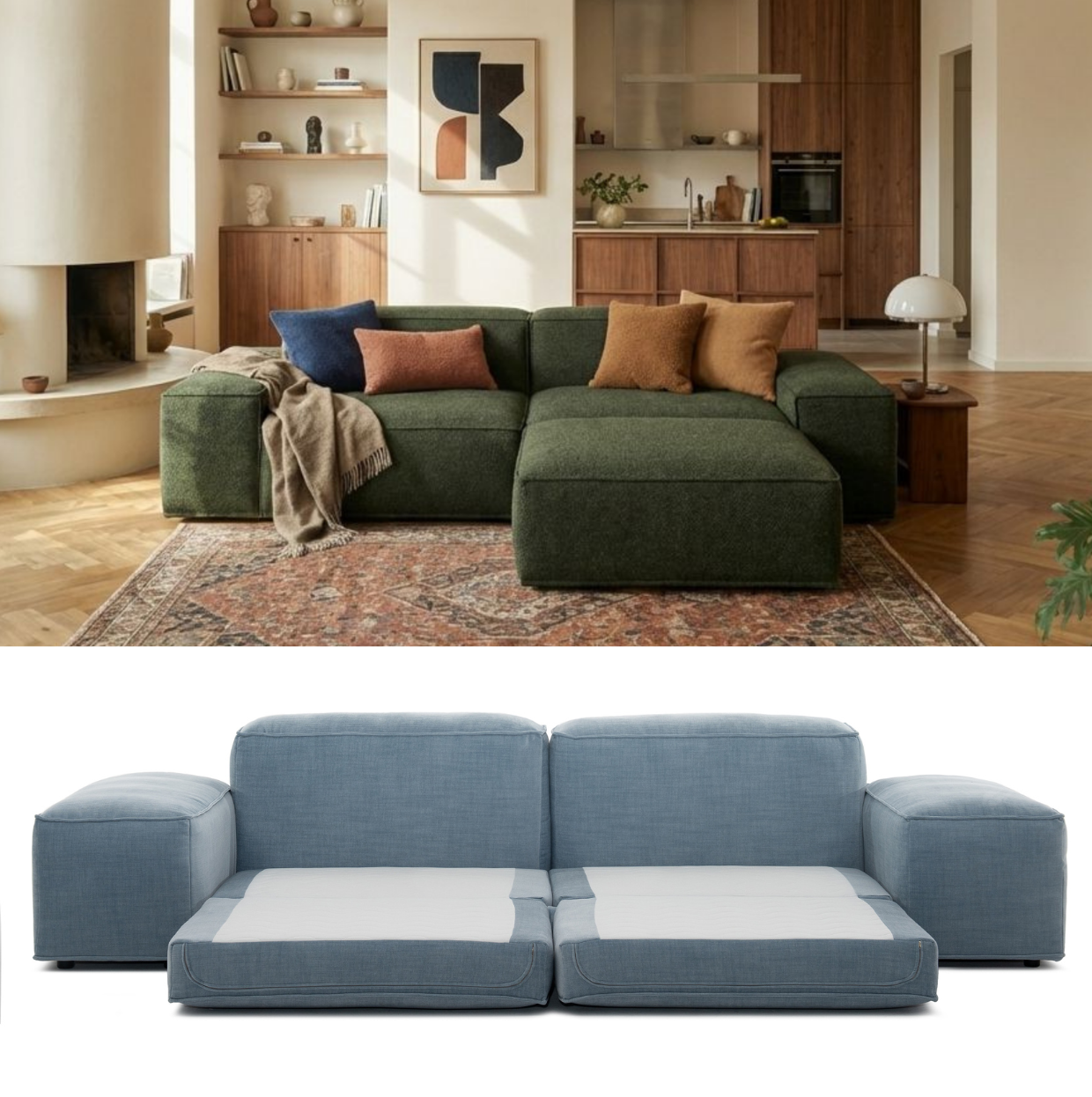
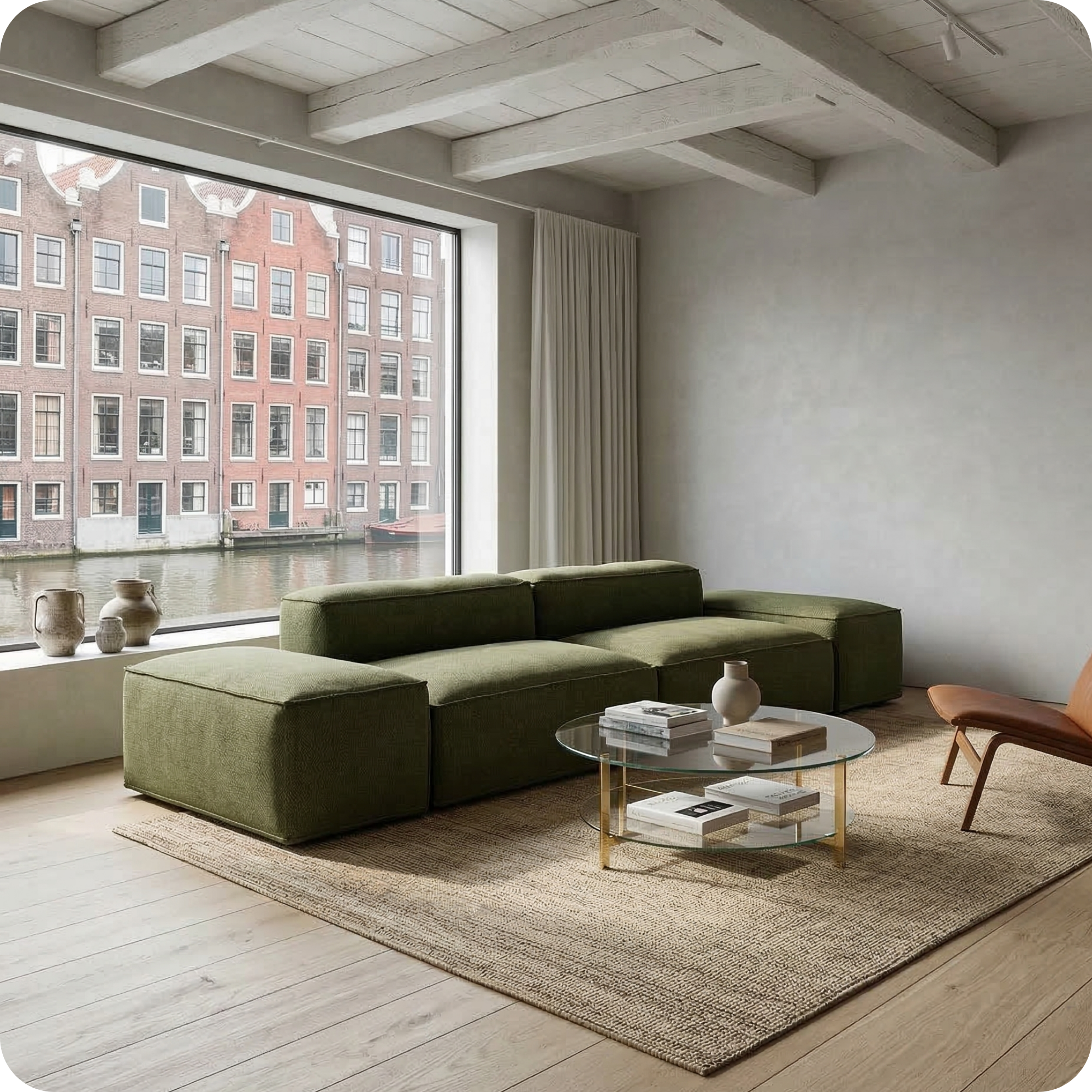
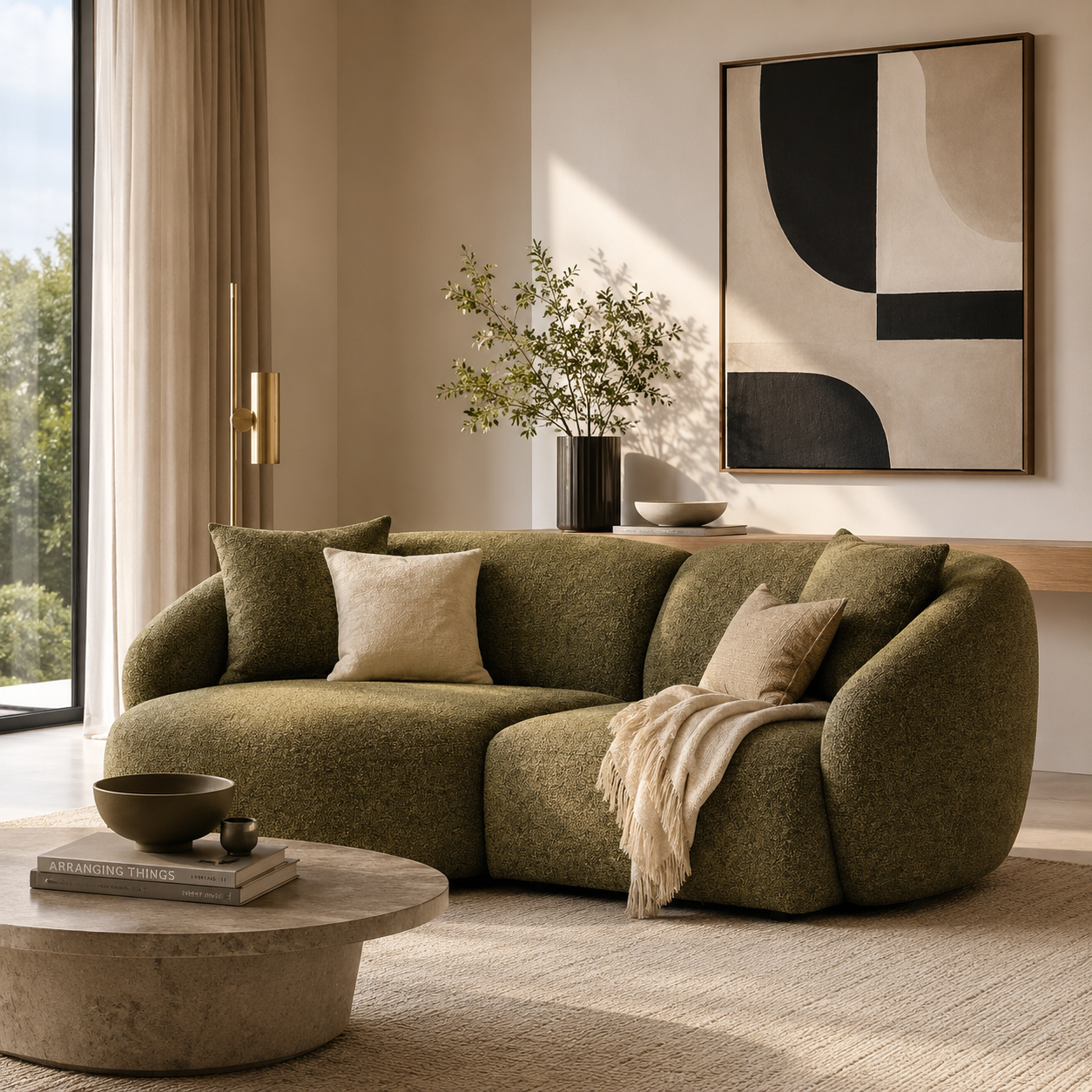
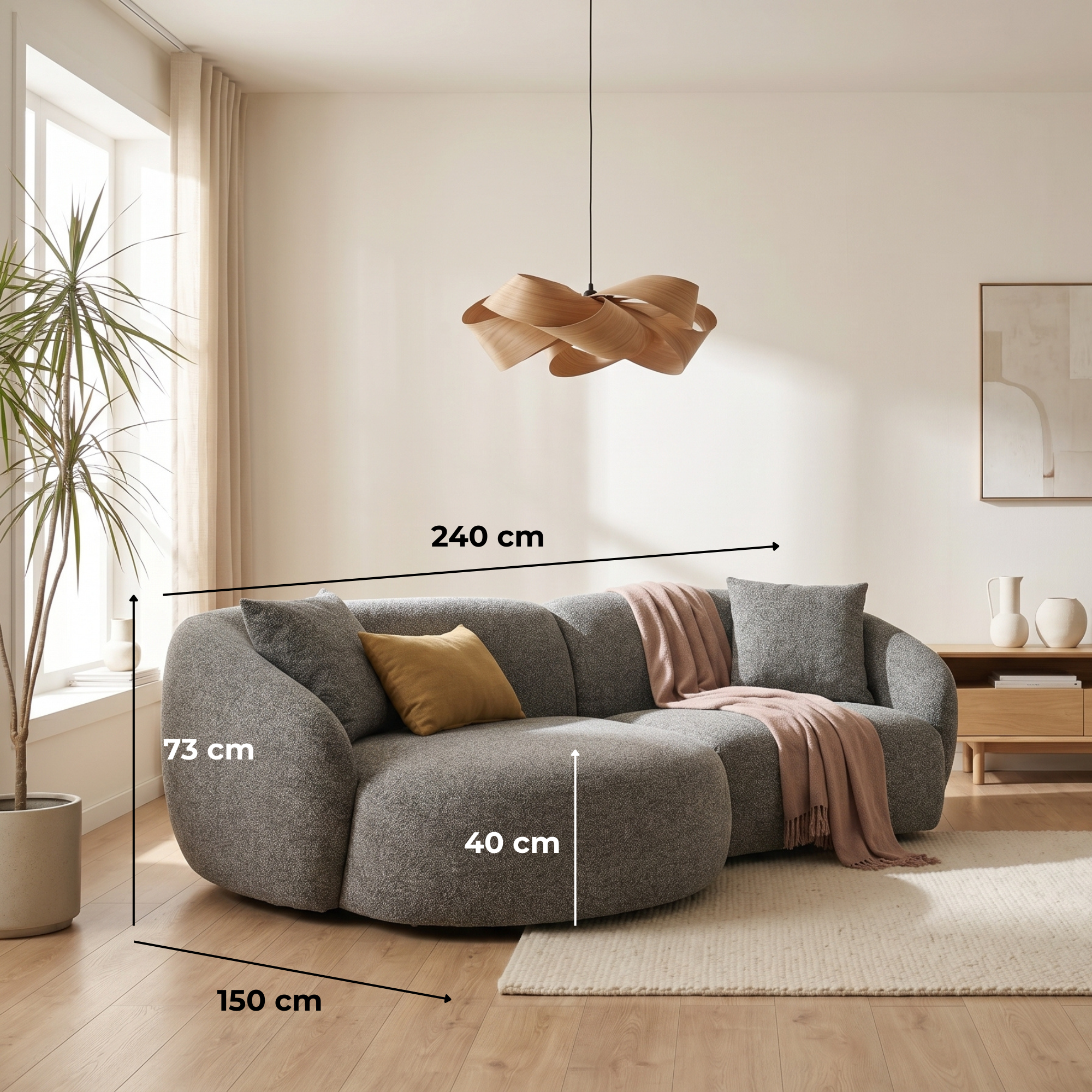
Merlot Corner Sofa — from €1,913
A corner sofa like the Merlot has a generous surface area that calls for a considered cushion arrangement: we suggest 60x60cm cushions in a warm cream and terracotta colour palette as the base layer, with 50x30cm rectangular cushions in a contrasting texture (bouclé or velvet) as accent pieces. The leaf green fabric of the Merlot pairs brilliantly with terracotta, rust, and warm caramel tones — colours found abundantly in the current homeware market.

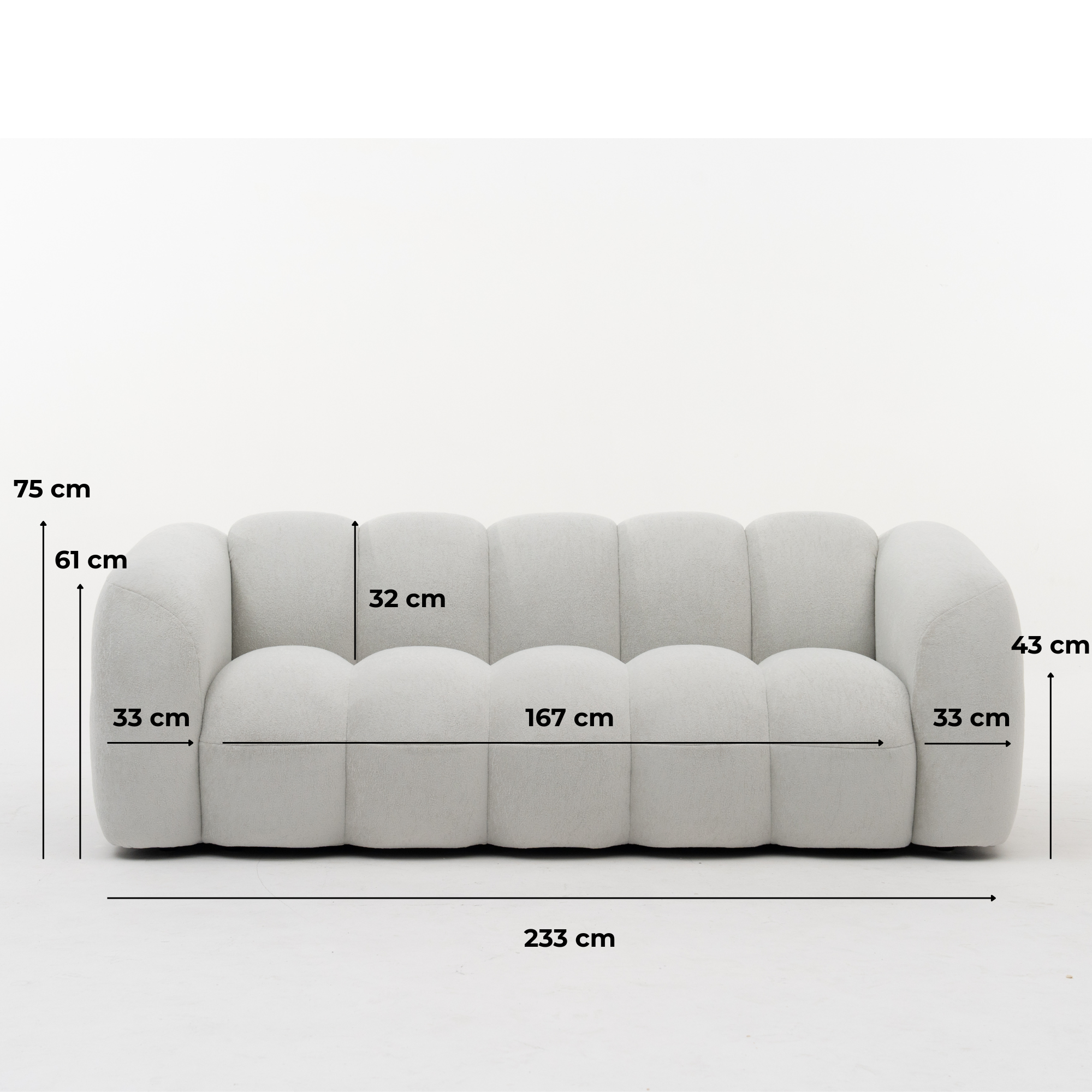
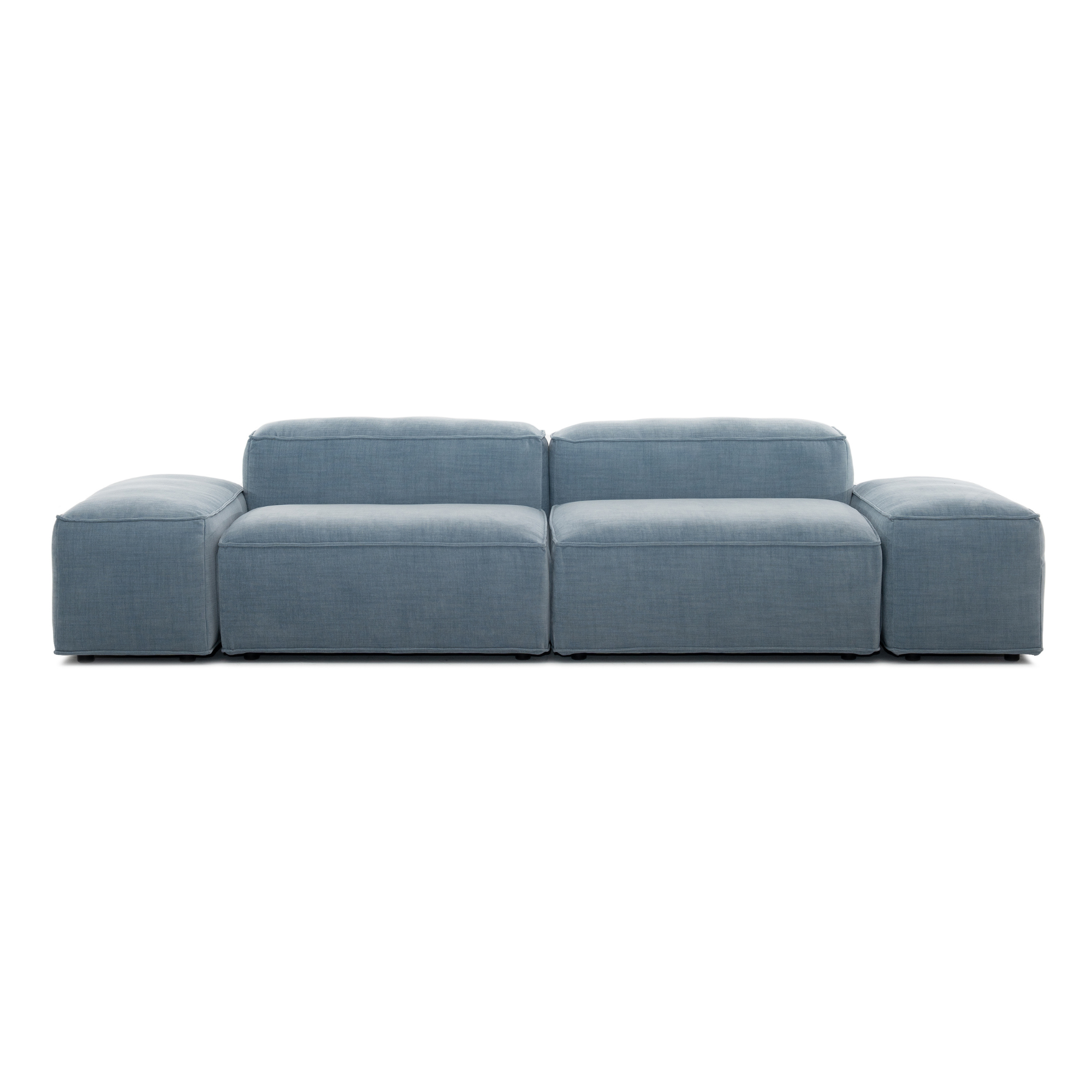
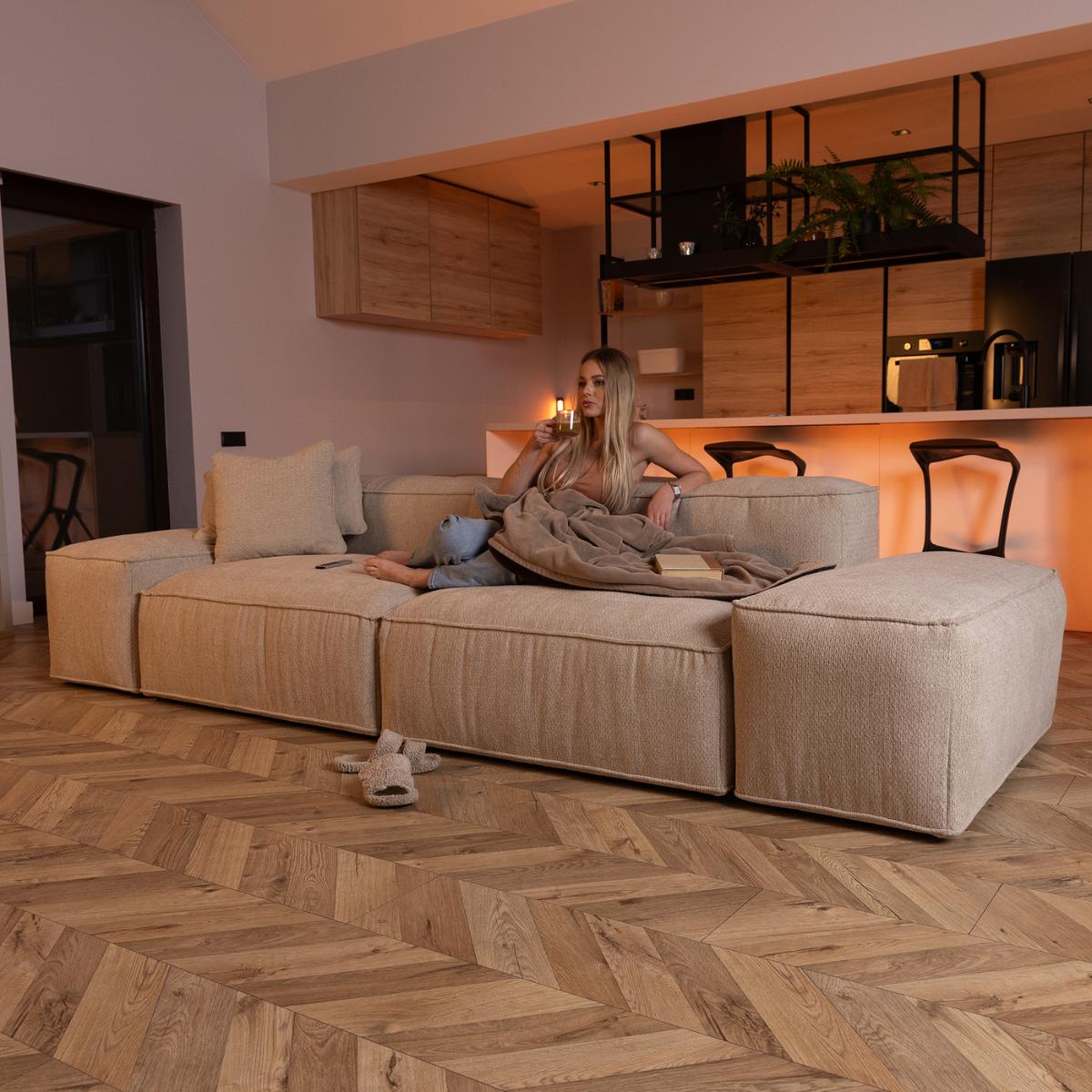
Lugano Sofa in Khaki — from €1,299
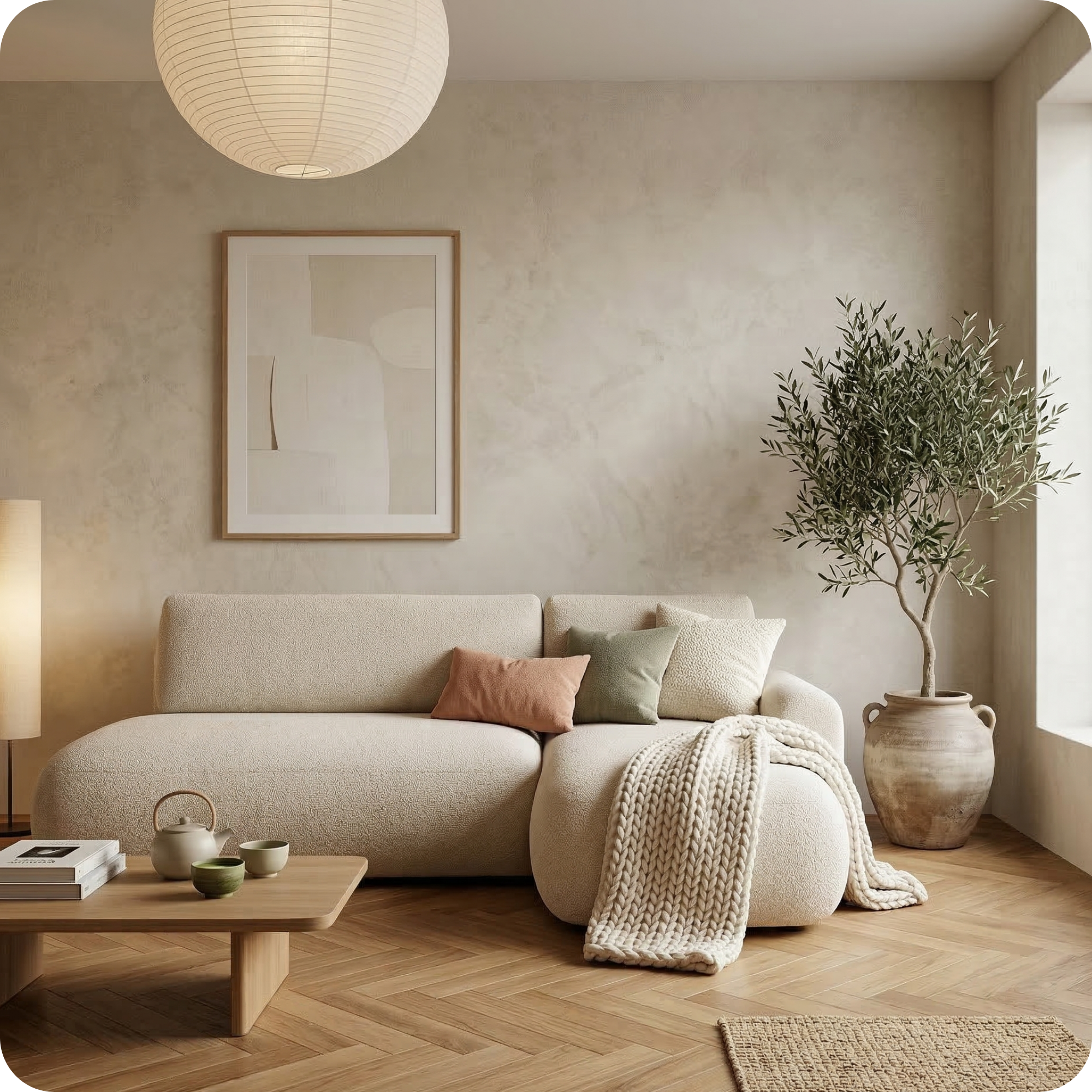
A neutral khaki sofa like the Lugano is the ideal canvas for experimenting with cushion colour. Because the sofa itself is neutral, you can be bolder with cushion choices without the risk of colour clash. Deep terracotta, forest green, mustard yellow, and warm navy all work beautifully as accent colours against khaki. Try a combination of one bold colour and one pattern cushion alongside your neutral base cushions for a complete and confident look.
Fill: What Makes a Cushion Feel Expensive
The fill is what separates a cushion that looks and feels luxurious from one that looks flat and cheap. The best cushion fills are feather and down (or a feather/down blend) — they have a soft, slouchy quality that looks generous and inviting, and they spring back when plumped. Feather cushions need to be plumped and karate-chopped regularly to maintain their shape, but this is a feature rather than a bug: the slight informality of a settled feather cushion is part of what makes a sofa look lived-in and comfortable rather than staged. High-quality hollow fibre is a good vegan alternative — look for fills with a high gram weight (500g+) for adequate loft. Avoid cheap polyester ball-fibre fills, which go flat and lumpy quickly.
Cover Materials and Their Qualities
Cushion cover material affects both look and feel. Linen and linen-blend covers have a natural, casual quality that works particularly well with Scandinavian and relaxed contemporary interiors. Velvet covers add richness, depth, and a luxurious tactile quality — they compress to show light-catching pile and look particularly good in jewel tones (deep green, teal, midnight blue, burgundy) and warm earth tones. Cotton canvas covers are durable and wash well, making them practical for family homes. Bouclé covers — the looped, textured weave that has become synonymous with contemporary interior design — add organic texture and warmth. Mixing cover materials within a cushion arrangement adds the tactile dimension that makes a sofa feel genuinely considered.
Colour and Pattern: The Rules of Cushion Arrangement
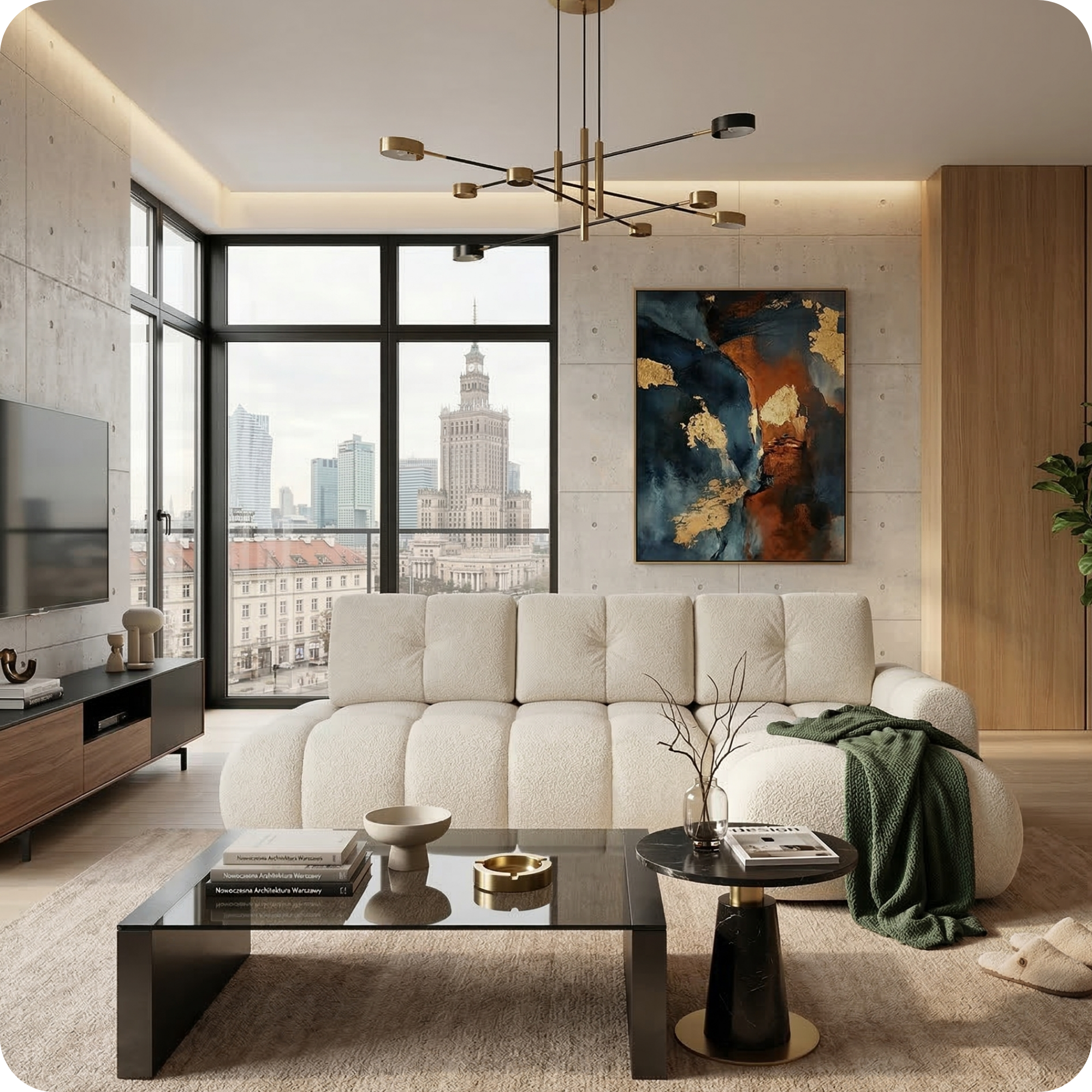
The easiest approach to cushion colour is to start with your sofa colour and identify its natural complements. For neutral sofas (grey, beige, cream, white), almost any colour works — the risk is not the individual colour but the combination. A reliable system is to choose one dominant neutral (matching or tonal with the sofa), one accent colour, and one pattern that contains both. For coloured sofas, the safest cushion approach is to use lighter and darker tones of the same colour family alongside warm neutrals — this creates a cohesive, intentional palette. Odd numbers of cushions typically look better than even numbers: three, five, or seven cushions on a three-seater feels more natural and less formal than four or six.