

How to Choose Sofa Fabric: A Complete Guide to Every Upholstery Option
Sofa fabric is one of the most important decisions in the buying process, yet it often receives less attention than colour or size. The wrong fabric choice means daily frustration: a beautiful sofa that is impossible to keep clean, a practical one that feels uncomfortable, or a fashionable one that pills and wears within two years. The right fabric means a sofa that looks great, feels good, and is easy to live with for a decade or more. This guide covers every major upholstery option and who each suits best.
Performance Polyester / Microfibre
This is the most practical category of sofa fabric and the most popular choice for families, pet owners, and anyone who values easy maintenance over premium feel. Tightly woven performance polyester resists staining, cleans with a damp cloth, does not pill, and holds its colour well over time. Microfibre is a sub-category with an extremely fine weave that creates a soft, suede-like surface that is both comfortable and durable. Both are available across the full range of colours and are significantly less expensive than natural fabrics of equivalent durability. The downside: performance polyester does not have the warmth or character of natural fibres, and it can generate static in dry conditions.
Linen
Linen is a natural fibre with a distinctive texture and a casual, organic appearance that suits contemporary and coastal interior styles particularly well. It is breathable (important in warm climates or warm rooms), has a natural warmth to the touch, and ages beautifully -- linen softer with use rather than deteriorating. The downsides are significant for family homes: linen wrinkles and creases easily, shows oils from skin contact, can water-stain if not cleaned immediately, and is not pet-friendly. Pure linen sofas are best suited for homes without young children or pets, where aesthetics are the priority.
Cotton
Cotton upholstery is softer than linen and more colourfast. It is a natural fibre that breathes well and feels comfortable, particularly in warmer months. Cotton tends to wear faster than performance fabrics and is susceptible to pilling in high-wear areas (seat cushions, armrests) over time. Cotton-polyester blends solve many of cotton's durability issues while retaining its natural feel -- blends of 60-70% cotton / 30-40% polyester represent a good balance of comfort and practicality.

Lugano Collection — from €1,299
The Lugano range is available in a carefully curated selection of performance fabrics across multiple colourways. The fabric is a high-resilience woven polyester that offers the warmth and visual appeal of a natural fibre with the practicality of a performance one.

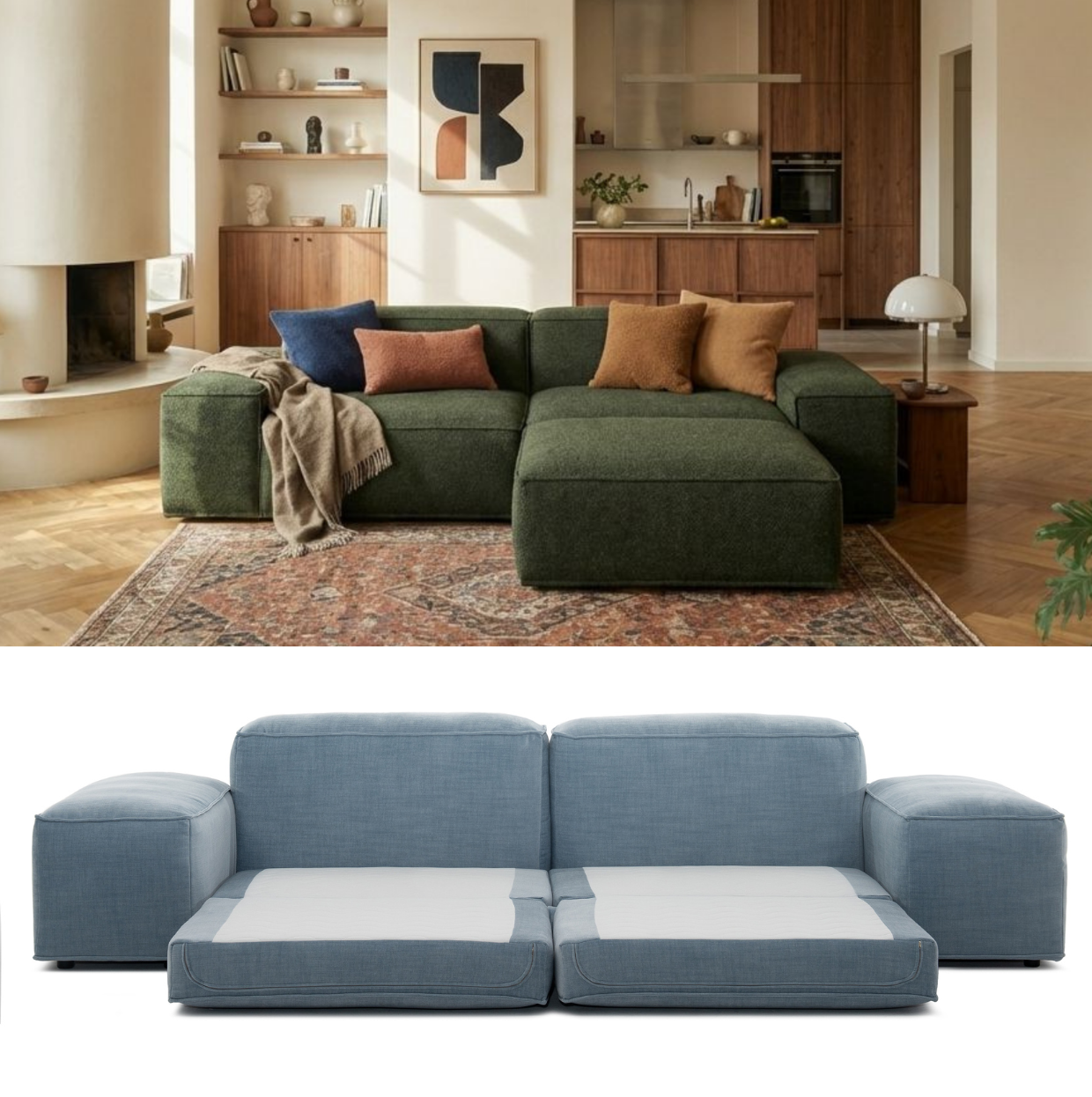
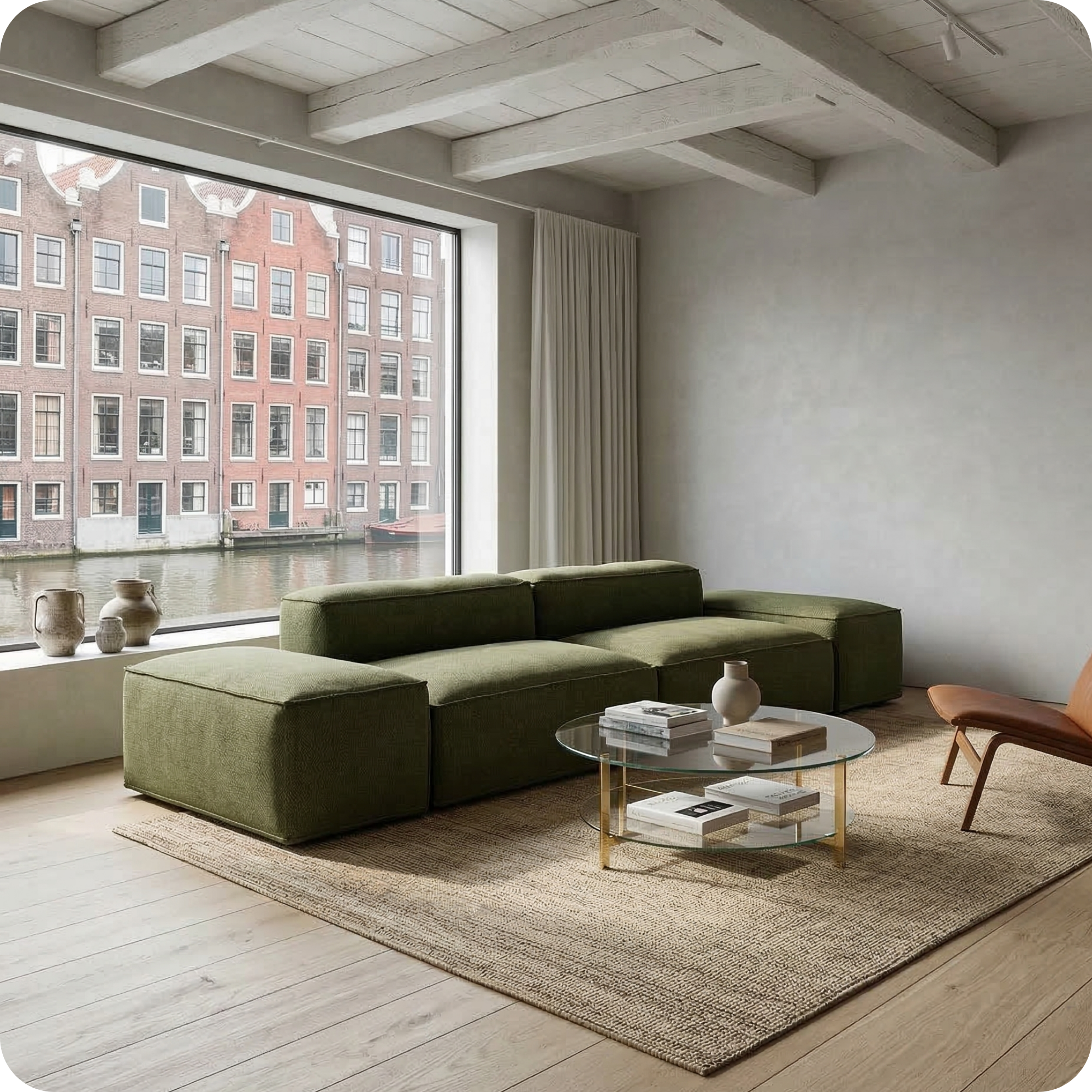
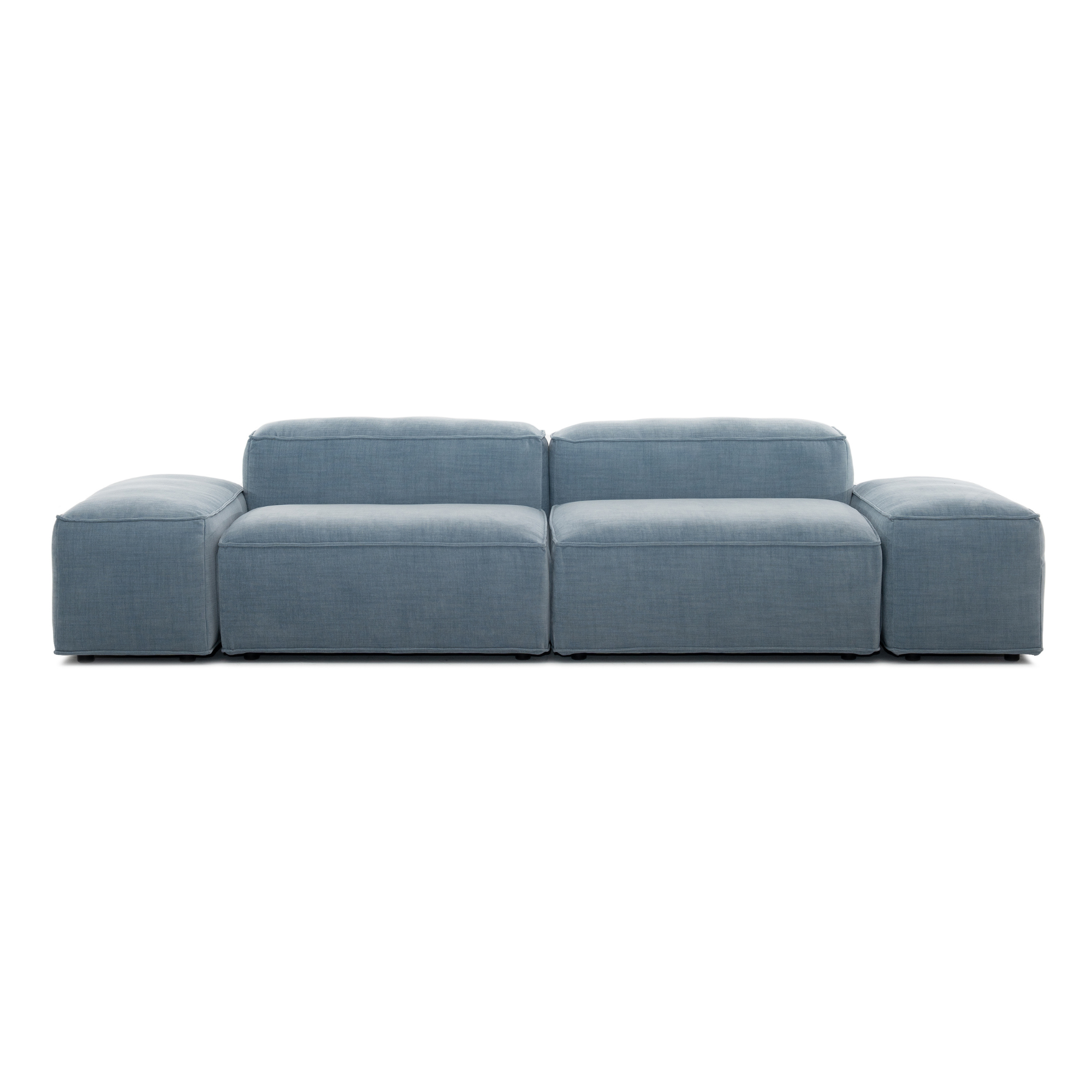
Merlot Modular Sofa — from €1,532
The Merlot uses a high-quality upholstery fabric that is soft to the touch, resistant to everyday wear, and available in a range of colours from classic neutrals to richer tones. The fabric responds well to standard stain treatment methods.
Velvet
Velvet has been one of the most popular upholstery choices for several years and shows no sign of retreating. It is available in cotton velvet (softer and more natural-feeling but less durable) and synthetic velvet or velour (harder-wearing, usually more stain-resistant, and easier to clean). The pile of velvet catches light beautifully and creates a deep, luxurious surface. The downsides: velvet shows contact marks and directional changes in the pile (where someone has sat or touched it); it attracts and retains pet hair more than smooth fabrics; and it requires more careful maintenance. Best for rooms where the sofa is used for sitting (not lying), where the aesthetic is the priority, and where there are no cats with intact claws.
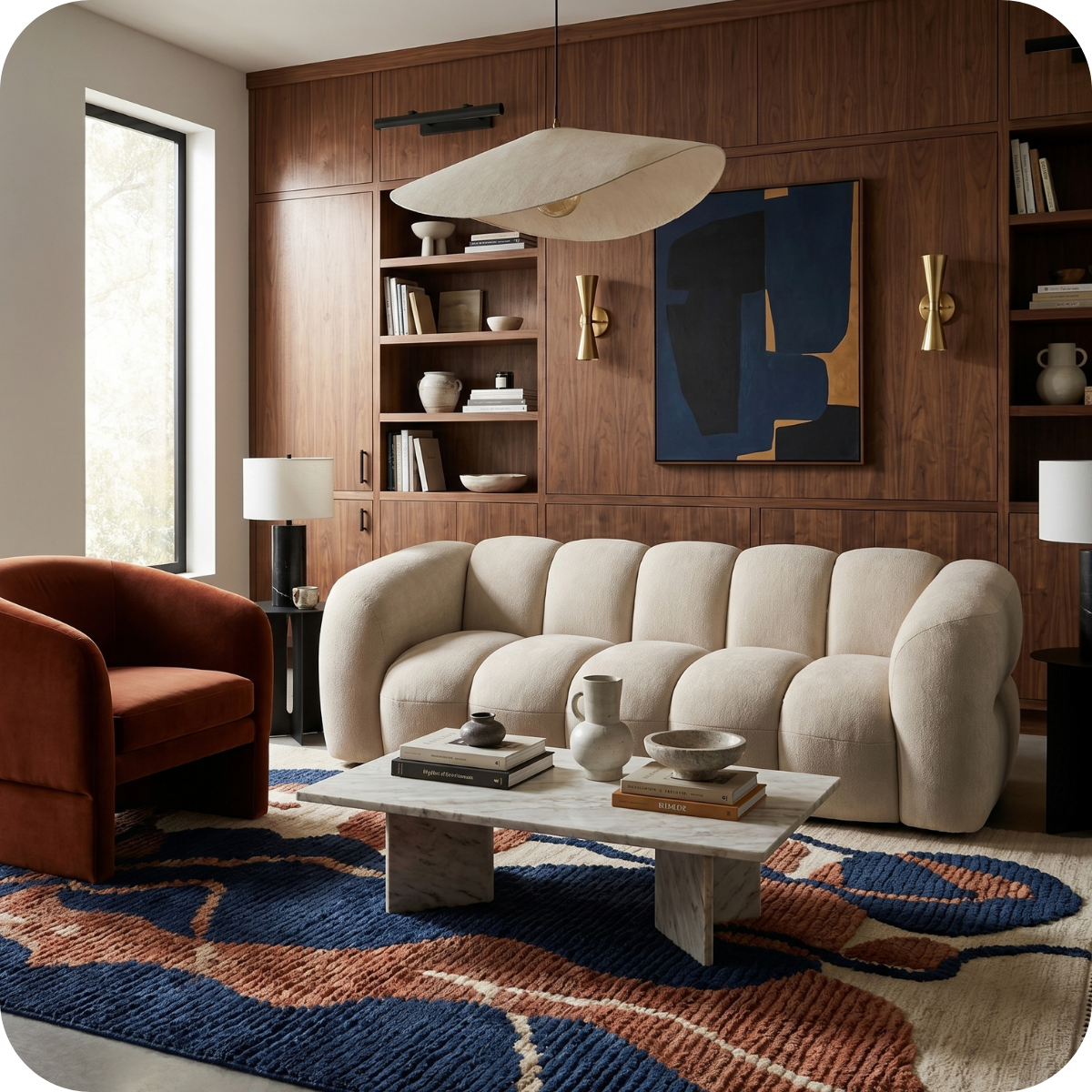
Bouclé
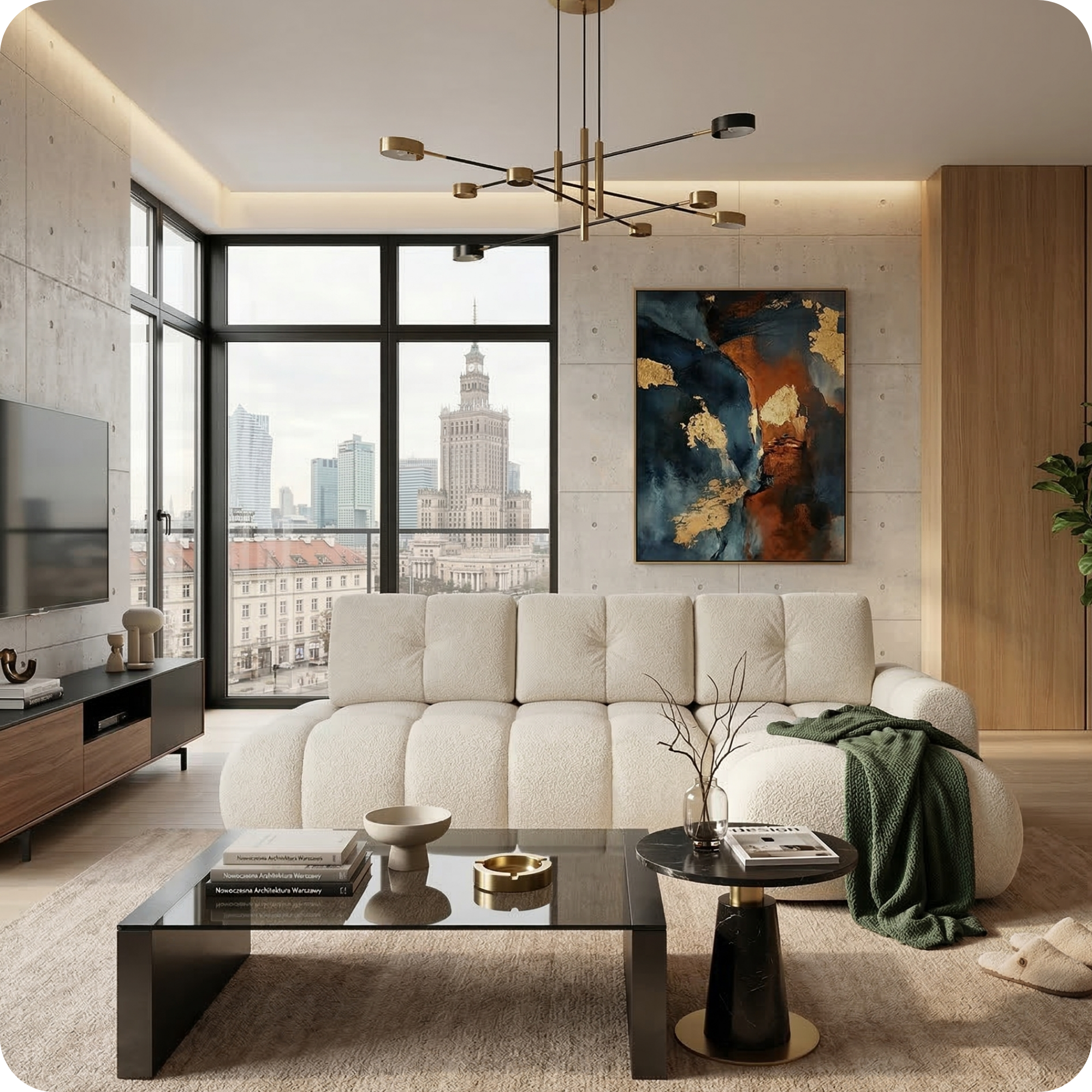
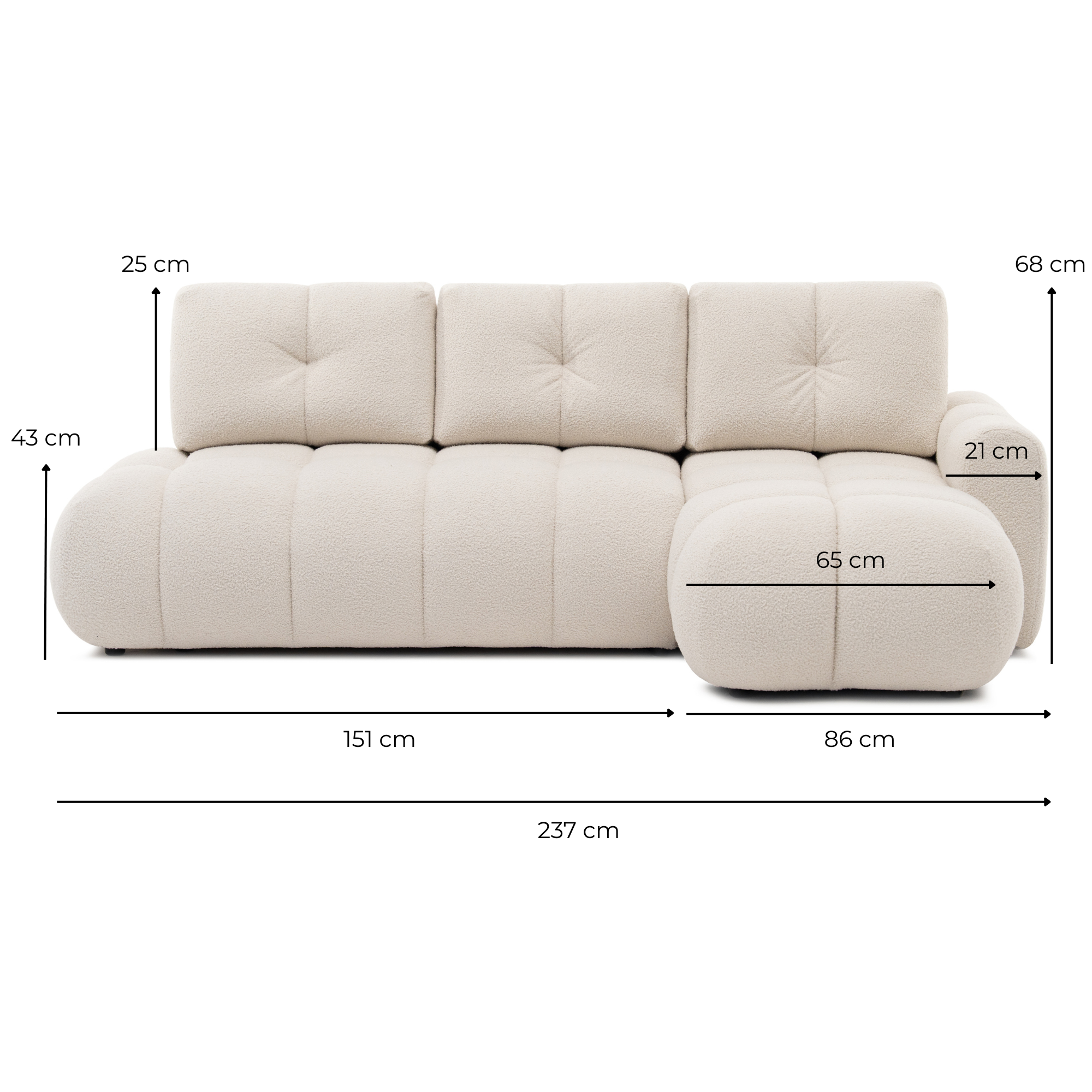
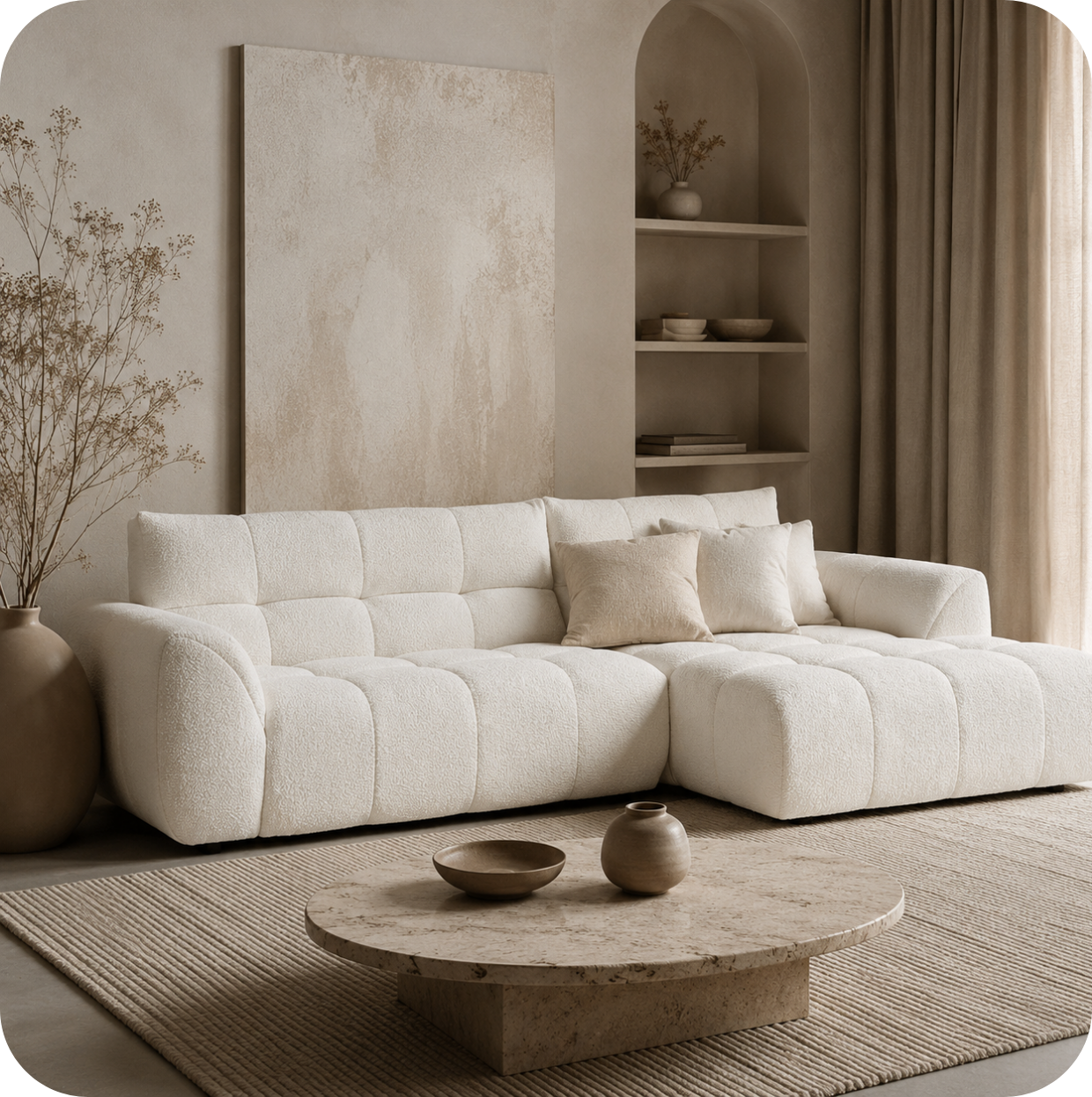
Bouclé -- the distinctive looped, textured weave -- has been the defining upholstery trend of the early 2020s and remains very popular in 2026. It creates an organic, tactile surface that reads as warm and interesting regardless of colour. The loops can catch on jewellery, Velcro, and (most critically) cat claws, which can pull the loops and permanently damage the fabric. Not recommended for homes with cats. Also requires careful vacuuming with a brush attachment rather than a standard nozzle to avoid matting the pile. Best suited for decorative-use sofas in adult households.
Leather
Leather is the most durable sofa material and, in quality form, ages the most beautifully -- developing a patina that improves with time. Full-grain leather is the highest quality (the natural surface of the hide is preserved) and the most expensive. Top-grain leather is slightly corrected and more consistent in appearance. Bonded leather uses leather scraps compressed with polyurethane and is significantly less durable -- avoid it. Leather is excellent for pet owners (cat scratches aside), is easy to wipe clean, and is hypoallergenic. It is cold in winter and can feel hot in summer. Premium leather sofas have a multi-decade lifespan that justified their higher upfront cost.
The Rub Count Measure of Durability
The Martindale rub test measures fabric durability by counting how many rubs a fabric withstands before showing wear. For a sofa in a typical home: 15,000-25,000 rubs is adequate for light use. 25,000-50,000 rubs is suitable for average family use. 50,000+ rubs is heavy-duty and suitable for high-traffic homes and commercial settings. When comparing fabrics, ask for the Martindale rating -- it is the most reliable single measure of how the fabric will hold up over years of daily use.