



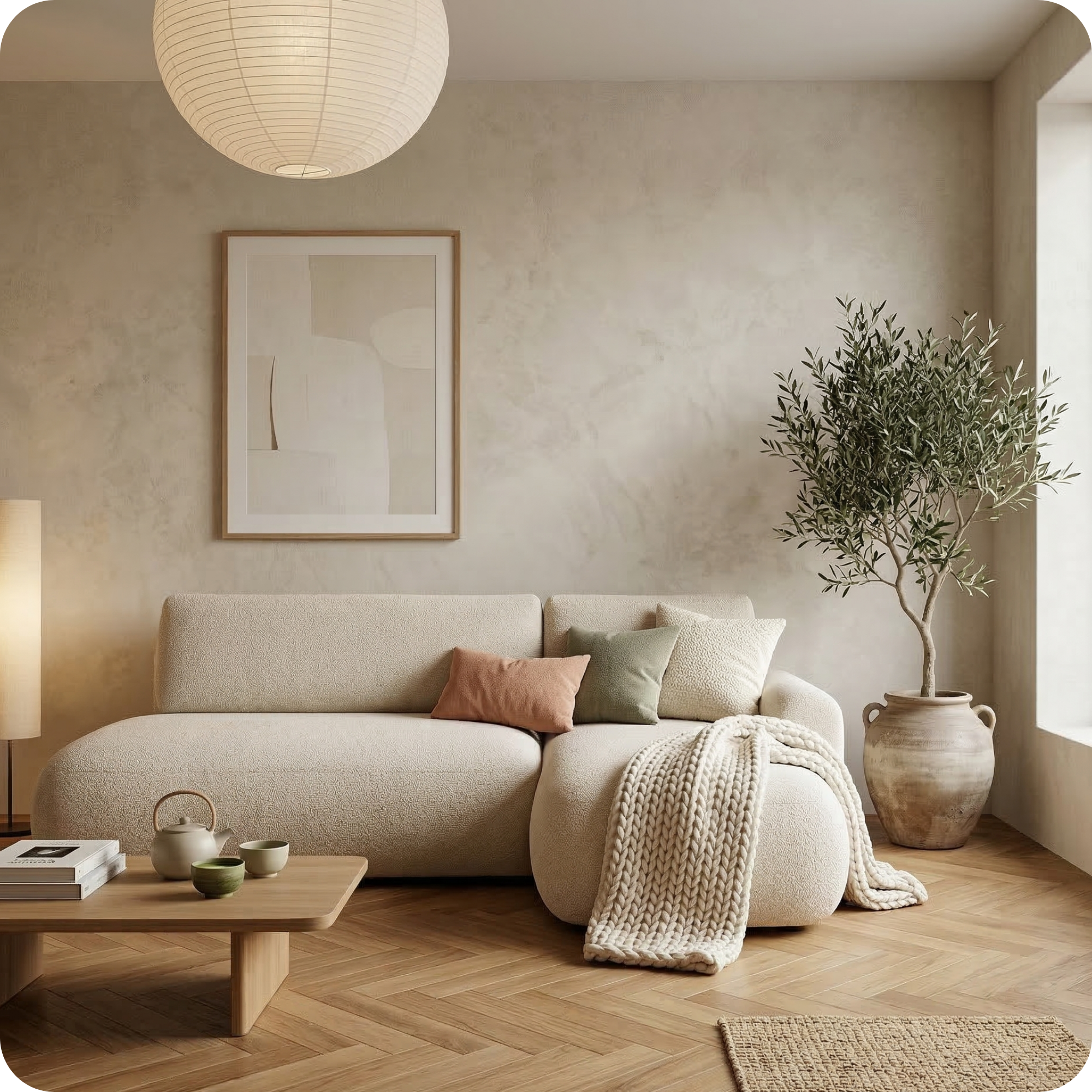
How to Clean a Sofa: The Complete Guide to Sofa Care and Maintenance
A sofa is one of the most significant purchases in any home, and with proper care, a high-quality sofa should last 10-15 years or more. The key to maintaining a sofa's appearance and longevity is regular, gentle maintenance combined with prompt attention to spills and stains. Understanding what your sofa's upholstery is made from — and what cleaning methods are appropriate for that material — is the essential first step. Never use the same cleaning method on all fabrics; what works for cotton may damage velvet or linen.
Understanding Your Upholstery: Fabric Codes and Care Labels
Most upholstered furniture has a care label attached to the frame (usually under the cushions or on the back of the sofa) with a cleaning code. The key codes are: W — water-based cleaning products only; S — solvent-based (dry cleaning) only; WS or SW — either water or solvent-based; and X — vacuum only, no liquid cleaners. Always check the care label before applying any cleaning product. In the absence of a label, test any product on a hidden area first and allow to dry completely before proceeding.

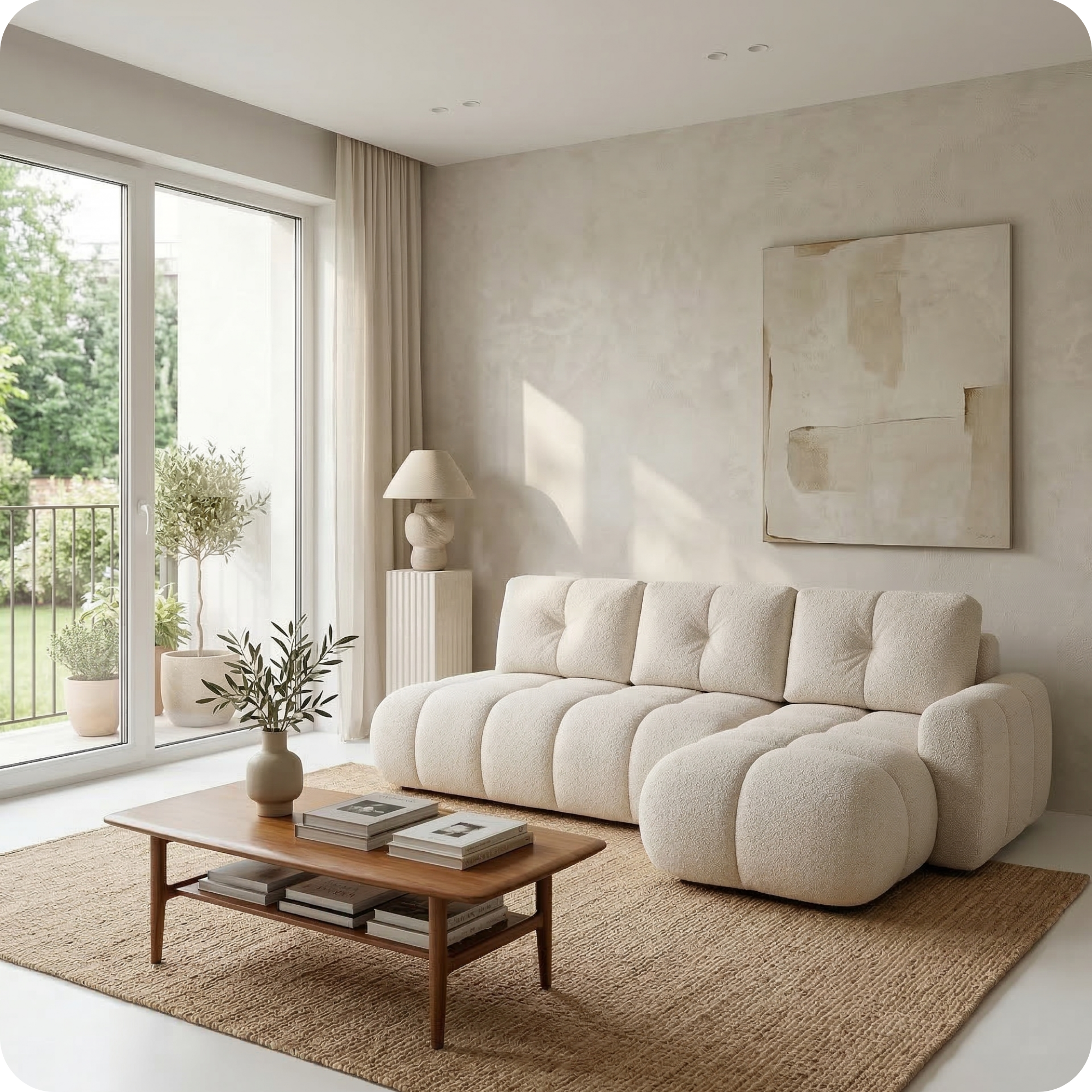
Lugano Sofa in Light Grey — from EUR 790
The Lugano sofa features high-quality upholstery fabric that responds well to regular maintenance. Brush off dry debris with a soft brush, vacuum with the upholstery attachment regularly, and address spills immediately by blotting (never rubbing) to prevent permanent staining.

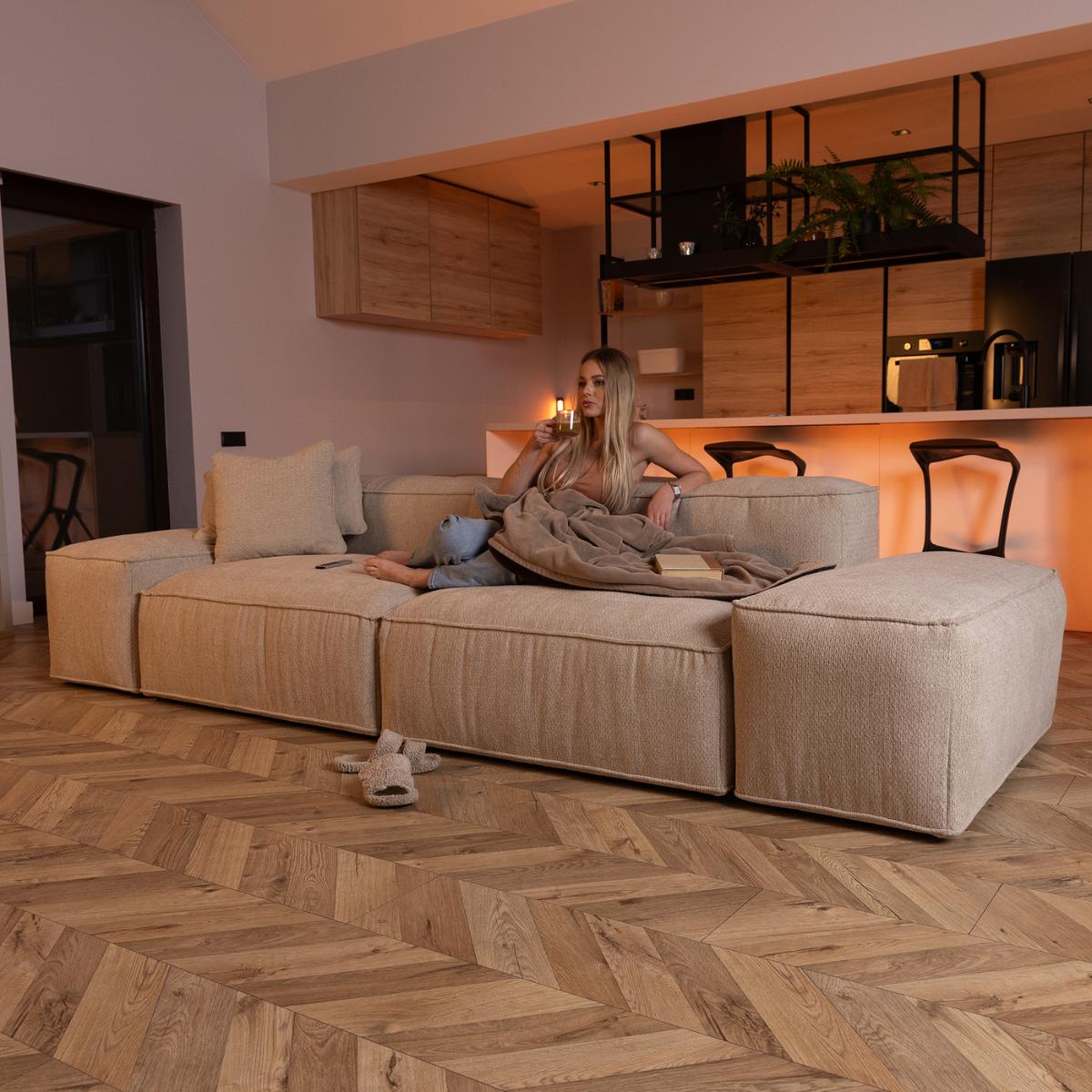
Merlot Modular Sofa — from EUR 1,090
The Merlot's modular construction makes cleaning easier — individual sections can be separated to access hard-to-reach areas, and removable cushion covers (where fitted) can be laundered separately according to their care instructions.
Regular Maintenance: Vacuuming and Brushing
The most effective sofa maintenance is regular, light cleaning that prevents dirt and dust from working into the fabric fibres. Vacuum your sofa once a week using the upholstery attachment — work in the direction of the fabric weave and pay particular attention to crevices between cushions and along the edges. For fabric sofas, a soft-bristled brush used before vacuuming will loosen embedded dust and pet hair. Rotate and flip cushions regularly — this distributes wear evenly and prevents one side from becoming more worn, faded, or misshapen than the other. For velvet upholstery, always brush in one direction to maintain the nap.
Dealing with Spills and Stains
The golden rule with spills is to act immediately and to blot — never rub. Rubbing spreads the spill and pushes it deeper into the fibres; blotting with a clean, dry white cloth lifts the liquid out. Work from the outside of the stain inward to prevent spreading. For water-soluble stains (coffee, tea, juice, food), a solution of one teaspoon of washing-up liquid in one cup of cold water, applied sparingly and blotted repeatedly, is effective on most fabric sofas. For oil-based stains (butter, oil, grease), sprinkle with bicarbonate of soda, leave for 15-20 minutes to absorb the oil, then vacuum off before treating with a mild detergent solution. For stubborn or set stains, or for specialist fabrics like velvet or silk, always consult a professional upholstery cleaner rather than risk permanent damage.

Hinterlasse einen Kommentar
Diese Website ist durch hCaptcha geschützt und es gelten die allgemeinen Geschäftsbedingungen und Datenschutzbestimmungen von hCaptcha.