




How to Clean and Maintain a Sofa: Chenille, Velvet and Fabric Care Guide 2026
A sofa is the most-used piece of furniture in the home, and the one most people feel least confident maintaining. Most sofa fabrics are far more durable than their owners give them credit for — the issue is usually using the wrong cleaning method rather than the fabric itself being fragile. This guide covers the correct care approach for the most common premium sofa fabrics: chenille, velvet, and performance weaves.
Weekly maintenance: the habits that matter most
The single most effective thing you can do to extend a sofa's life is weekly vacuuming. Use the upholstery attachment (the wide flat brush) at low suction — high suction can damage pile fabrics. Vacuum every cushion surface, the crevices between cushions, and the back and sides of the sofa. This removes the fine dust and debris that accumulates in fabric fibres and causes premature wear if allowed to build up over time. Rotate and flip seat cushions monthly if they are reversible — uneven wear distribution is one of the most common causes of sofas looking old before their time. Plumping fibre-filled cushions daily maintains their shape; foam cushions benefit from occasional standing upright to allow air circulation and recovery.
Chenille fabric care (Lugano collection)

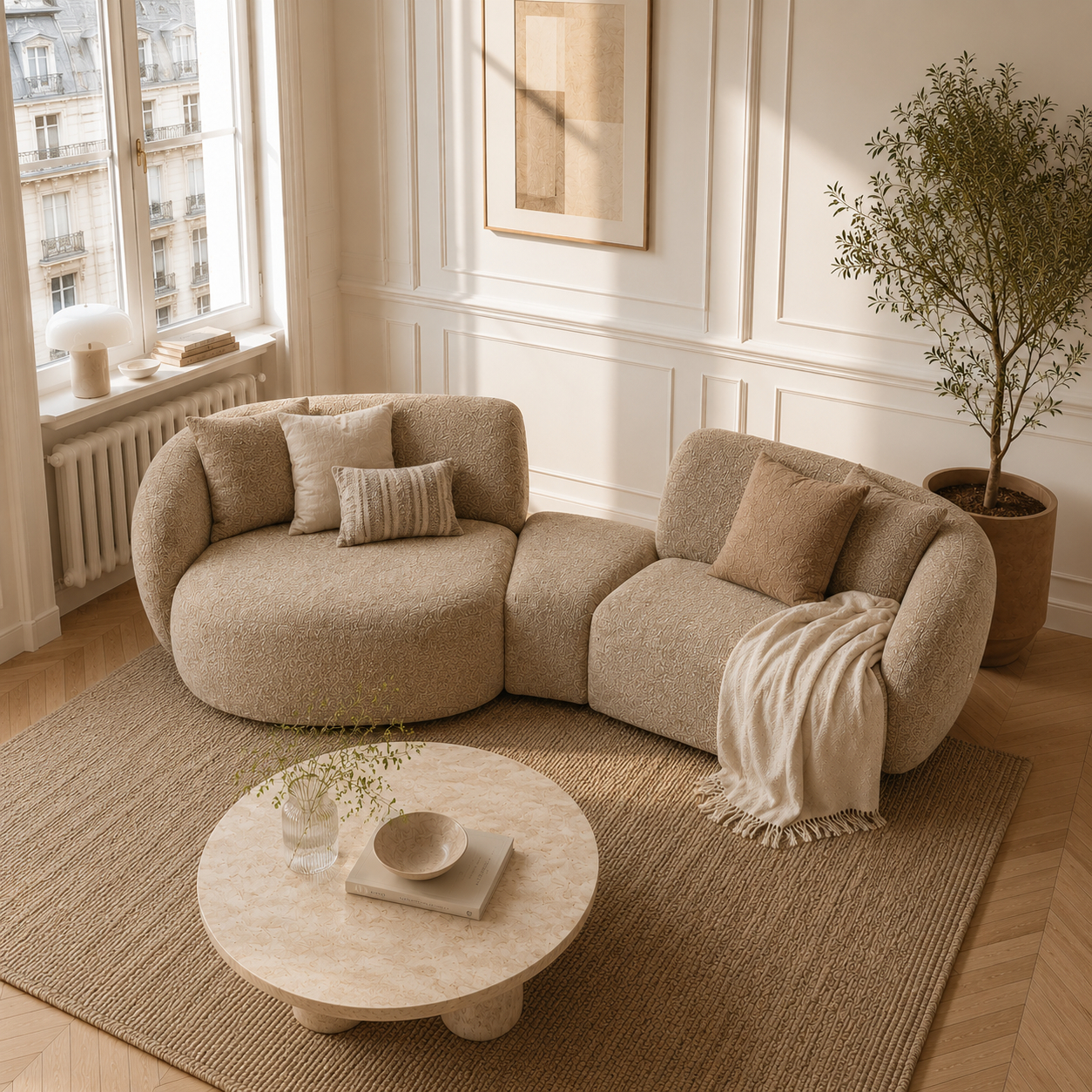
Lugano — Wolf-weave Chenille — the Lugano collection uses a wolf-weave chenille that is designed for durability and easy cleaning. The tight weave resists pilling and staining better than standard chenille.
Chenille is a pile fabric — the fibres are twisted and looped to create texture. The key principle for chenille care: always work with the pile direction, never against it. For spills, blot immediately with a clean white cloth. Never rub — rubbing spreads the stain and can permanently flatten the pile. For deeper cleaning, use a mild upholstery shampoo or a solution of warm water and a small amount of washing-up liquid. Apply with a soft damp cloth, work gently in the pile direction, and follow immediately with a clean damp cloth to remove any soap residue. Allow to dry naturally in a ventilated room — never use a hair dryer directly on chenille as the heat can damage the fibres and set stains. Chenille should not be steam cleaned regularly as this can distort the pile, though occasional professional steam cleaning every 1-2 years is generally acceptable.
Velvet fabric care
Velvet is arguably the most demanding sofa fabric to maintain correctly — but with the right technique it is entirely manageable. The critical concept with velvet: pile direction determines how light reflects off the fabric. When the pile is crushed or matted in different directions, the sofa looks worn and patchy. The goal of all velvet care is to restore and maintain uniform pile direction. For daily maintenance, a velvet brush (a soft-bristle clothes brush or dedicated velvet brush) used in consistent strokes in one direction will keep the pile even and prevent matting. For spills, blot immediately — never rub. Use cold water for most spills; avoid warm or hot water as it can distort velvet pile. For stubborn marks on velvet, hold the fabric taut and use a slightly damp (not wet) white cloth to dab gently, then brush the pile back to alignment while still slightly damp.
Performance weave and microfibre care (Merlot, Asti, Riva)

Riva 3-seater with Pull-out Bed — performance weave fabric with good stain resistance, particularly suitable for high-use sofas and households with children or pets.
Performance weave fabrics are designed with durability and cleanability as priorities. They typically have a tighter weave than natural fabrics and often include synthetic fibres that add moisture and stain resistance. For everyday cleaning, a damp cloth with warm water is sufficient for most marks. For deeper stains, a diluted upholstery cleaner or a small amount of mild detergent in warm water works well — apply with a soft cloth and blot clean. Performance weaves are generally more tolerant of moisture than velvet or chenille, making them the most practical choice for family use. They can typically withstand regular damp cleaning and are less likely to watermark.
What to avoid on all fabric sofas
Never use bleach, solvents, or harsh chemical cleaners — these strip dyes and damage fibres permanently. Avoid excessive moisture — oversaturating any upholstery fabric causes deep-set stains, watermarks, and can damage internal foam or fibre. Keep sofas out of direct prolonged sunlight — UV exposure fades fabric colour over time, particularly on south-facing rooms. Use fabric protector spray (a clean-fabric Scotchgard or equivalent) on a new sofa before first use and reapply every 12-18 months — this creates a microscopic barrier that makes stain removal significantly easier.

Hinterlasse einen Kommentar
Diese Website ist durch hCaptcha geschützt und es gelten die allgemeinen Geschäftsbedingungen und Datenschutzbestimmungen von hCaptcha.