


How to Layer Lighting in a Living Room: A Complete Guide
Lighting is the single element most capable of transforming a living room — yet it is consistently the most neglected aspect of interior design. A room with beautiful furniture, a well-chosen sofa, and a carefully selected colour scheme will still feel flat and institutional under harsh single-source lighting. Layered lighting — the practice of combining multiple light sources at different heights and intensities — is what turns a room from a functional space into an atmosphere. This guide explains how to layer lighting effectively in a living room in 2026.
The Three Layers of Light
Every well-lit living room has three layers of light working together. Ambient (or general) lighting provides the overall baseline illumination of the room — typically a ceiling pendant, recessed downlights, or a semi-flush fixture. Task lighting provides focused light for specific activities — reading lamps, desk lamps, and floor lamps positioned next to seating areas. Accent lighting highlights specific elements of the room — a picture light over artwork, a shelf light to illuminate books or objects, or a small table lamp that creates a warm focal point. The principle of layering is to use all three simultaneously at different intensities, rather than relying on a single overhead source at full brightness.
Ambient Lighting: The Foundation
The ambient layer should be dimmable — this is non-negotiable for a well-designed living room. A single bright overhead light at full power is the enemy of atmosphere: it casts harsh shadows, flattens surfaces, and makes people look unflattering. Recessed downlights on dimmer switches, or a pendant fitting with a warm-toned bulb at low wattage, provide much more comfortable ambient illumination. In the absence of a dimmer, use a lower-wattage bulb or choose a pendant with a diffuser that softens and spreads the light.
Task Lighting: Function and Atmosphere Combined
Floor lamps positioned beside sofas and armchairs are the most versatile task lighting option — they provide reading light and also serve as beautiful room accessories in their own right. An arc floor lamp that curves over the sofa provides overhead illumination without requiring ceiling fixtures. Table lamps on side tables beside the sofa are both functional and atmospheric — they add warmth and create intimate pools of light that define seating areas within the room. When placing task lighting, aim to have at least one lamp at eye level when seated — this is the most flattering and comfortable height for ambient atmosphere.

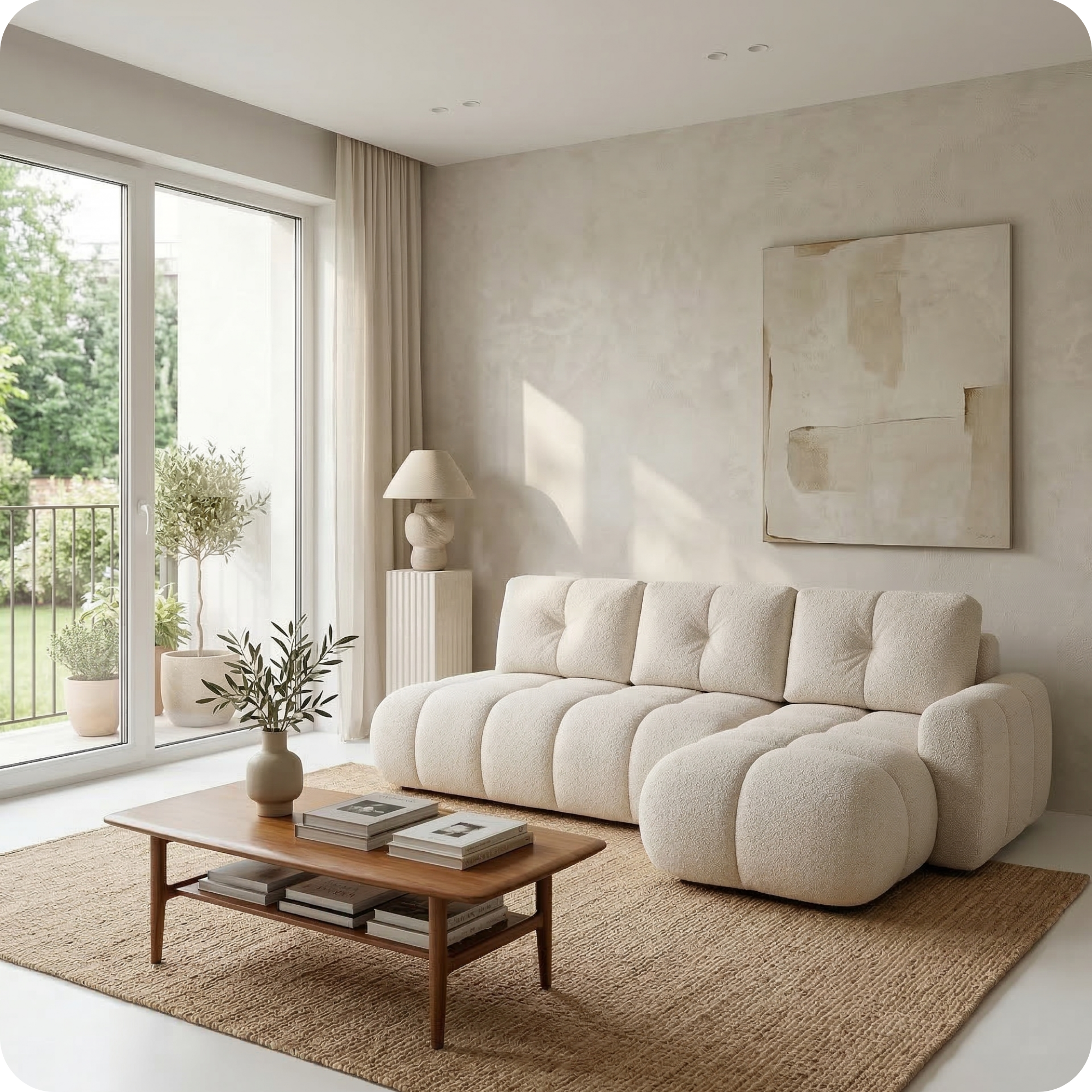
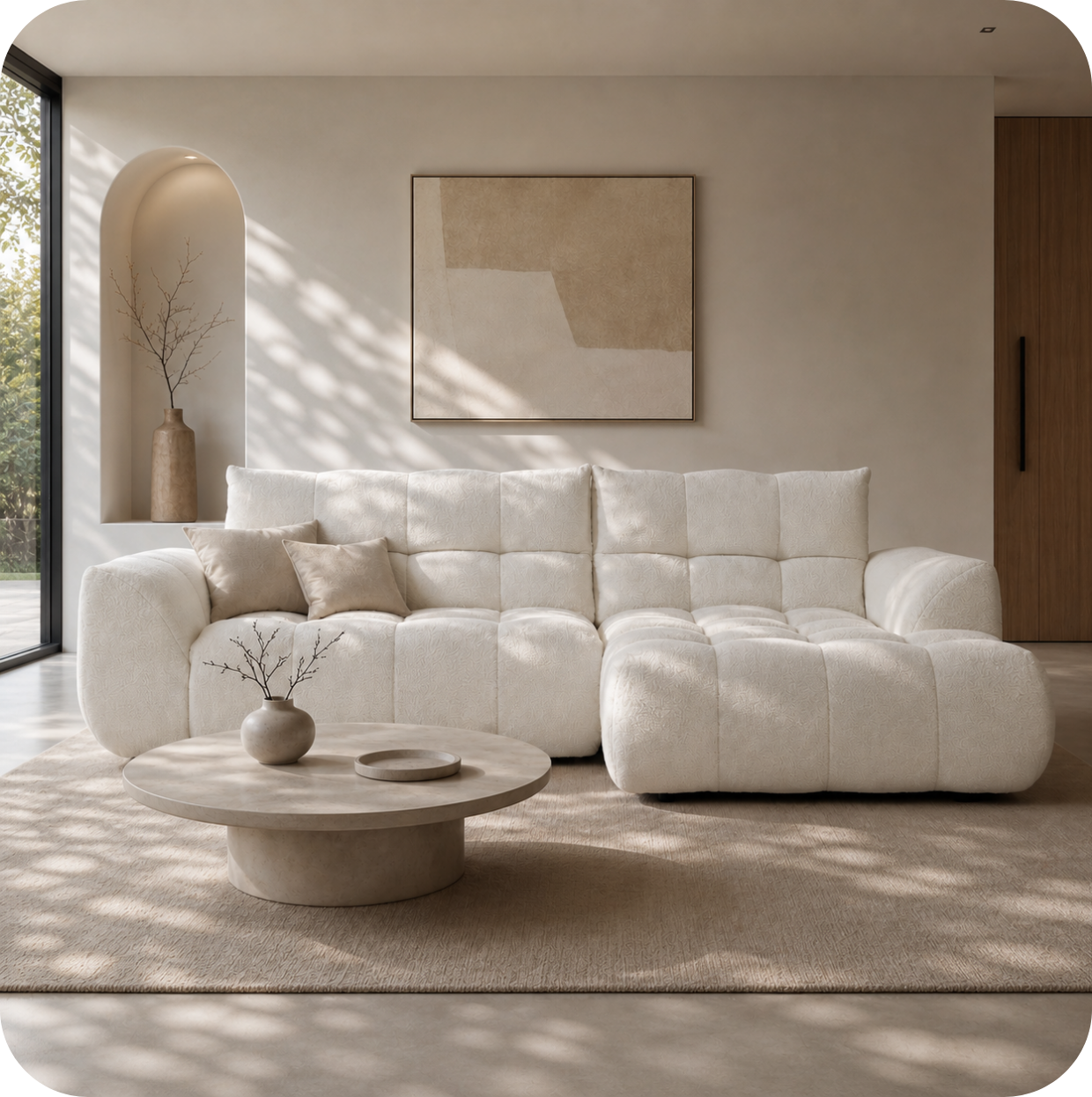
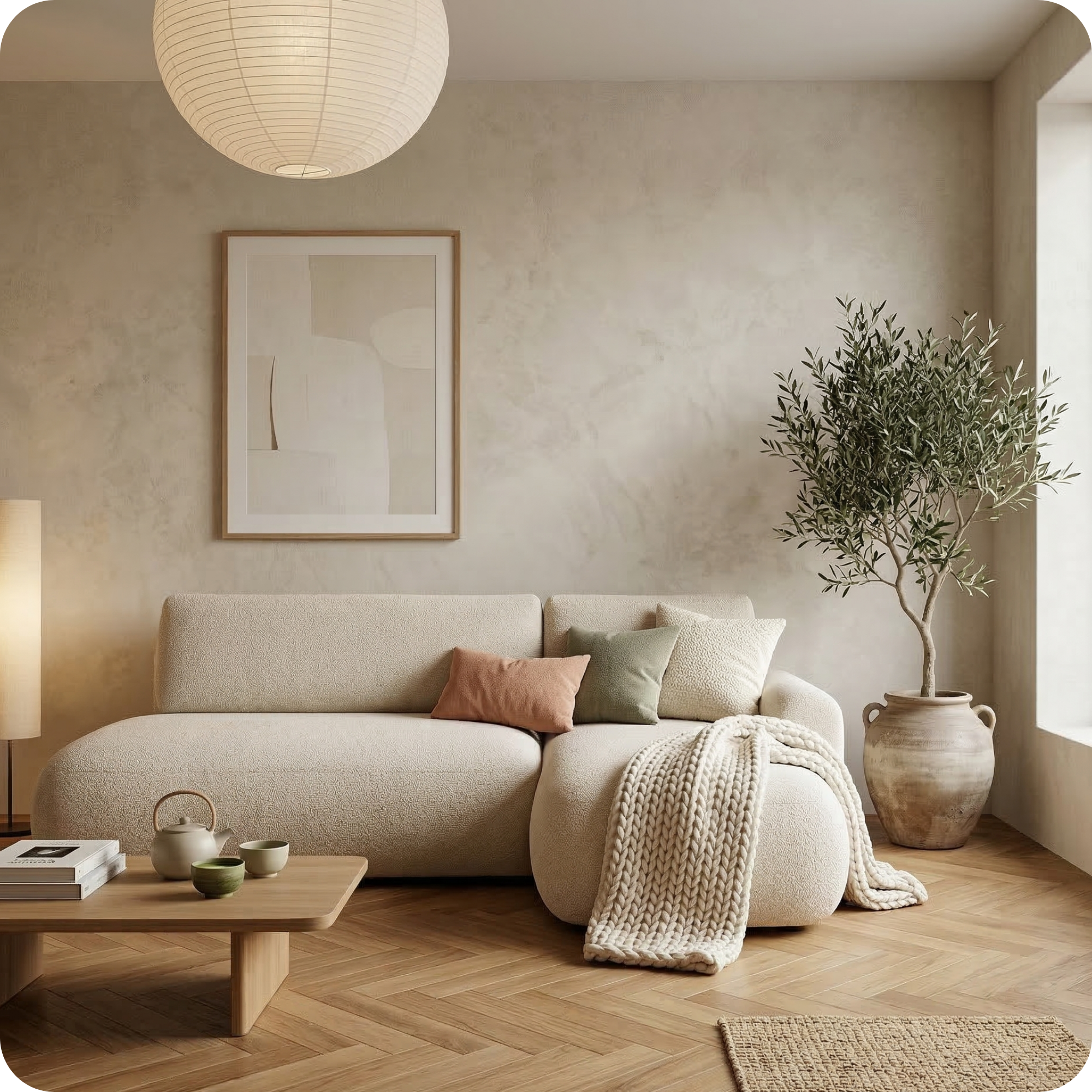
Torino Corner Sofa — from EUR 1.090
A corner sofa arrangement like the Torino benefits from layered lighting that defines the entire seating area. Place a floor lamp at one end, a table lamp on the side table at the other end, and ensure the overhead light is on a dimmer to adjust the room's overall brightness to the time of day and mood.

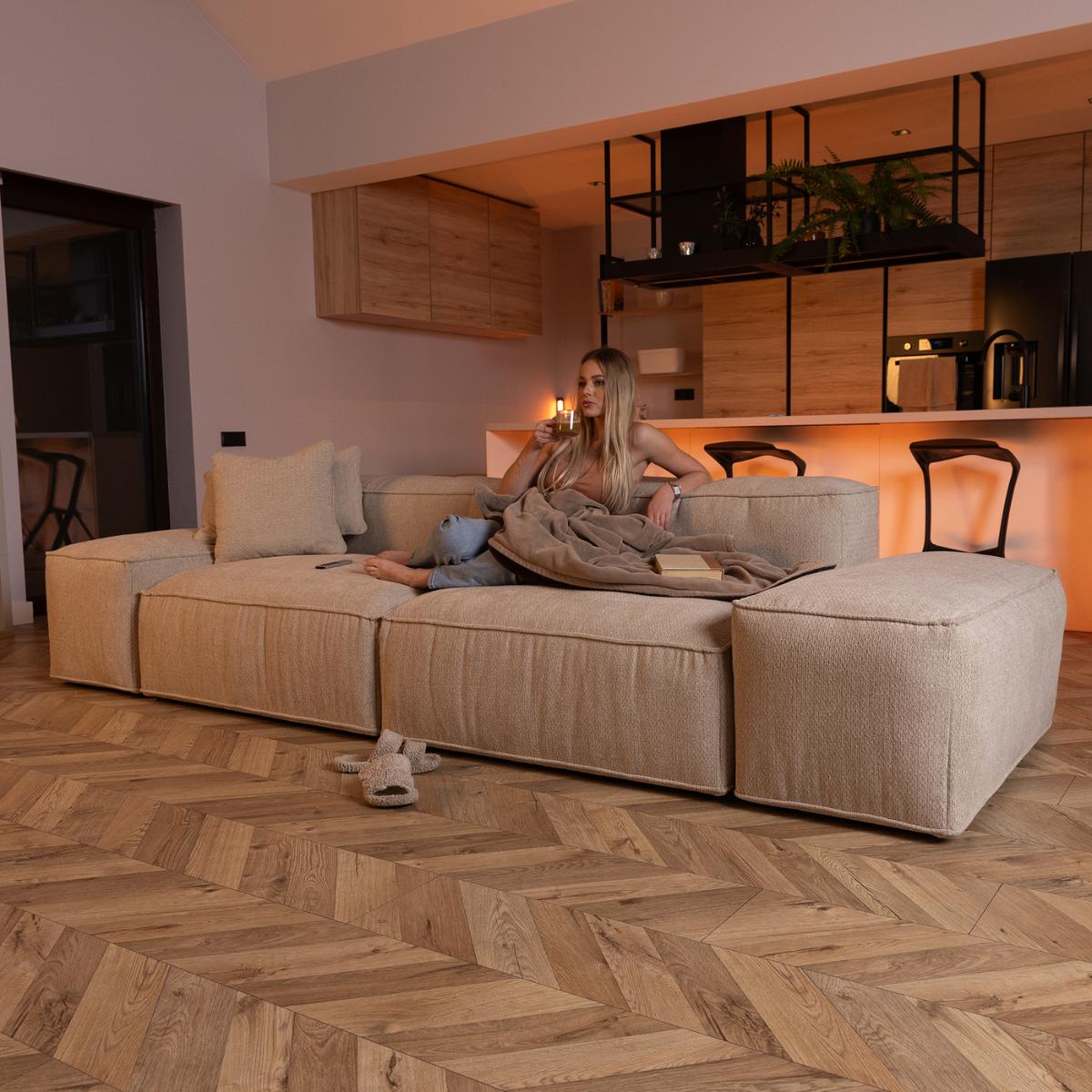
Malbec Modular Sofa — from EUR 1.390
Against a modular sofa like the Malbec, layered lighting creates an evening atmosphere that transforms the room: dimmed ceiling lights, a warm table lamp at one end, and a floor lamp positioned near the chaise longue create distinct zones of light and shadow that make the room feel sophisticated and inviting.
Accent Lighting: The Detail Layer
Accent lighting does the detailed work of highlighting the room's most interesting features. Picture lights or directional spotlights draw attention to artwork. Shelf lighting illuminates books, plants, and objects on shelving. LED strip lighting under floating shelves or behind a media unit creates a warm glow that adds depth. Small battery-powered candle lights or lanterns on coffee tables and mantelpieces add intimate warmth at the lowest level in the room.
Colour Temperature: Choosing the Right Warmth
Colour temperature is measured in Kelvin. For living rooms, always choose warm white (2700K–3000K) bulbs rather than cool white (4000K+) or daylight (5000K+). Warm white mimics the quality of natural evening light and candlelight — it is inherently more relaxing and flattering. Cool or daylight bulbs are appropriate for kitchens, bathrooms, and work spaces, but they should be avoided in living rooms where warmth and relaxation are the goal.
Smart Lighting and Dimmers
Installing dimmer switches on all living room circuits is one of the highest-return interior improvements you can make. Smart lighting systems (such as Philips Hue or similar) allow you to program preset scenes — bright and cool for daytime, warm and dim for evenings, extra warm for film watching — and control all lights simultaneously. Even without smart systems, a simple dimmer on the overhead light and individual switches for floor and table lamps provides enough control to create dramatically different atmospheres from the same room throughout the day.

Hinterlasse einen Kommentar
Diese Website ist durch hCaptcha geschützt und es gelten die allgemeinen Geschäftsbedingungen und Datenschutzbestimmungen von hCaptcha.