

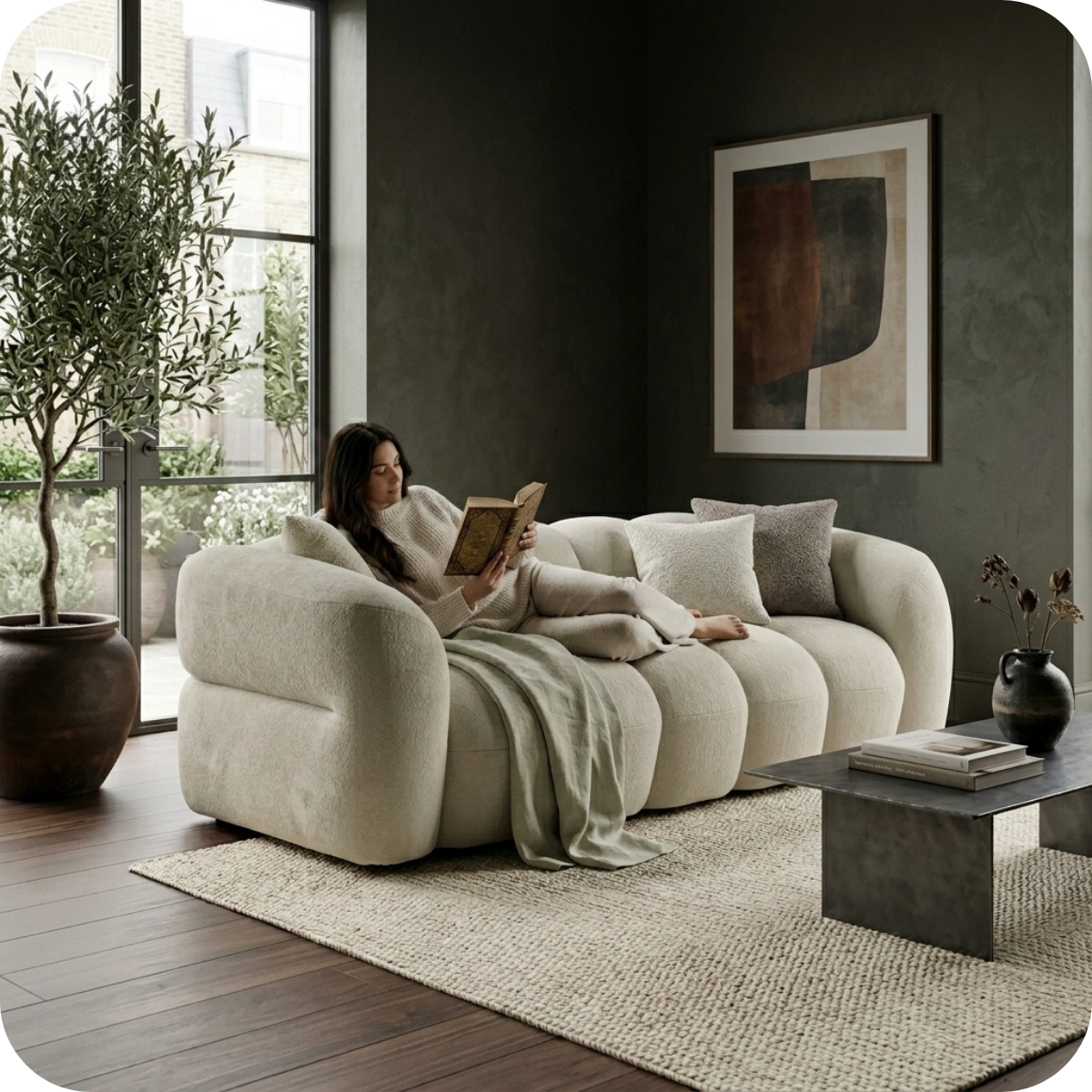
How to Layer Textiles in a Living Room: Cushions, Throws and Rugs
Textile layering is the most accessible form of interior decoration — and the most transformative. The difference between a living room that feels considered and warm and one that feels bare and impersonal is almost entirely a matter of textiles. Cushions, throws, and rugs add colour, softness, and the visual texture that makes a space feel inhabited. Learning to layer them well is one of the most valuable skills in home decoration, and the principles are simpler than they might appear.
The Foundation: Start With the Rug
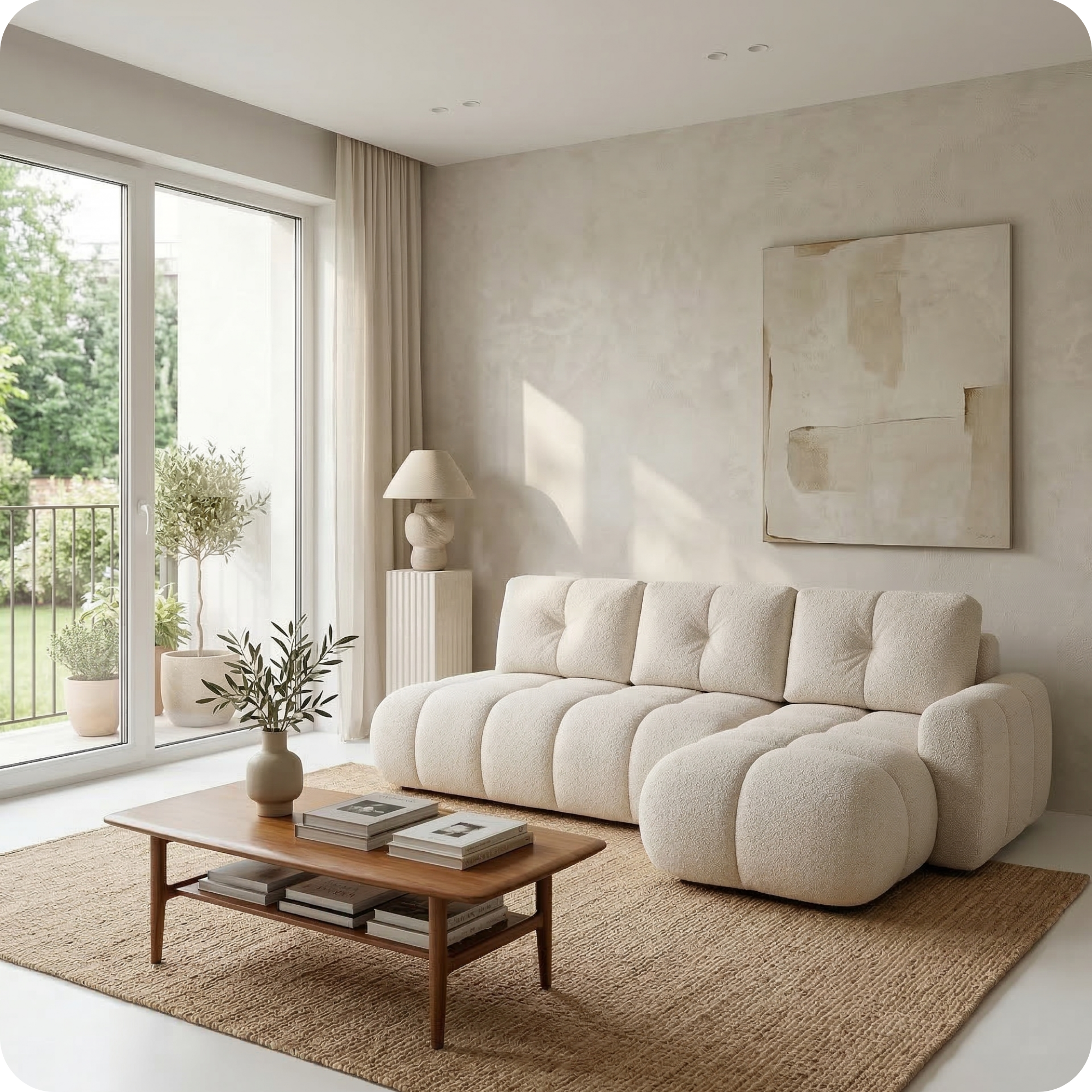
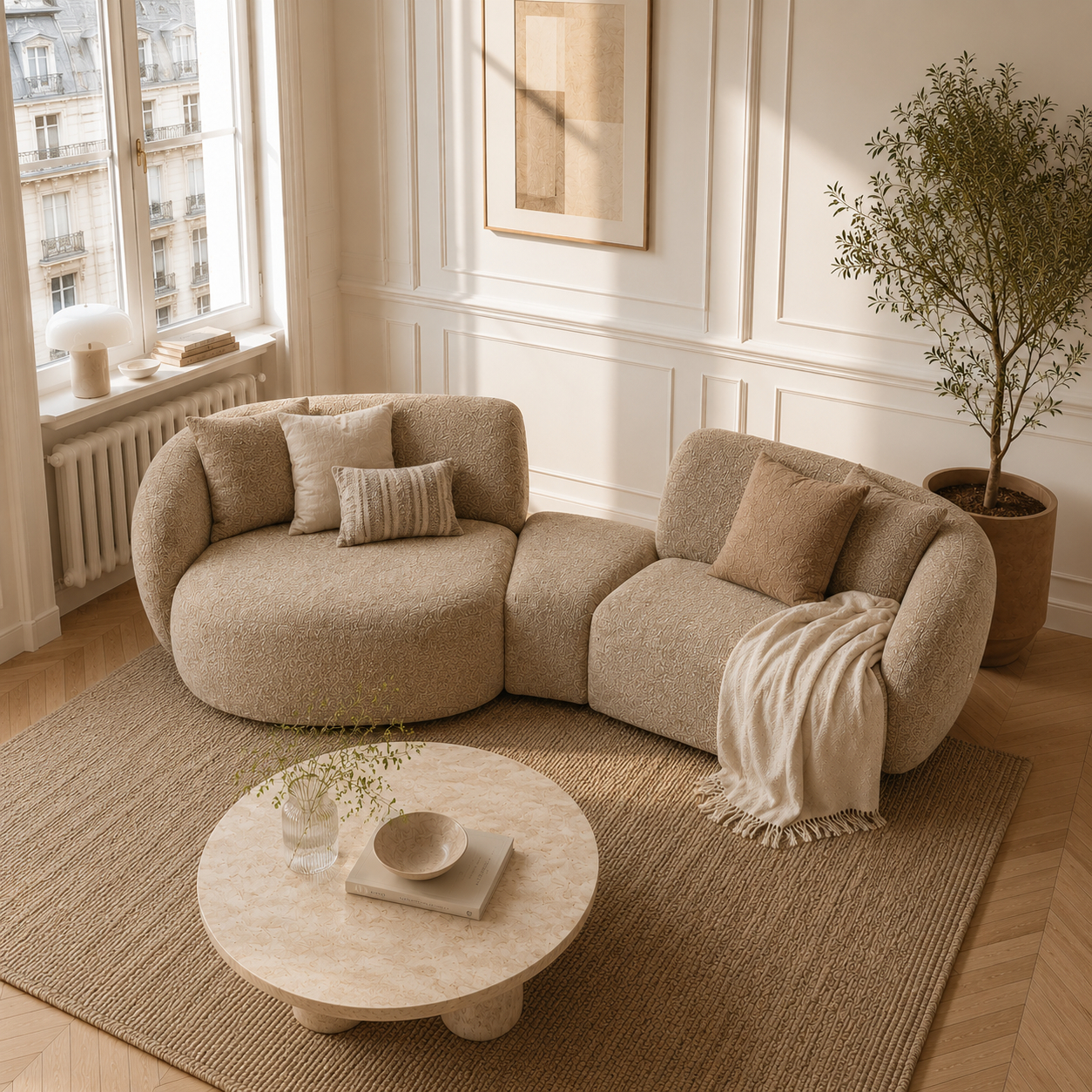
The rug is the largest textile in the room and the foundation of all other layering. Size it correctly first: the rug should be large enough that at least the front legs of all sofa and seating pieces sit on it. The most common mistake is choosing a rug too small, which creates a floating, disconnected effect — the rug ends up looking like a decorative mat rather than a zone anchor. In a typical living room seating arrangement, a rug of 200x300cm is the minimum that creates a properly grounded effect; 240x340cm is more generous and more effective.
Rug texture is as important as rug colour and pattern. A flatweave kilim rug pairs well with a sofa in a smooth fabric — the contrast between flat pattern and smooth surface creates visual interest. A high-pile shaggy rug complements a boucle or textured sofa fabric in a different way — two highly textured surfaces create richness rather than contrast. Jute and sisal rugs with natural textures bring an organic quality to otherwise polished interiors.
Cushion Layering: The Formula
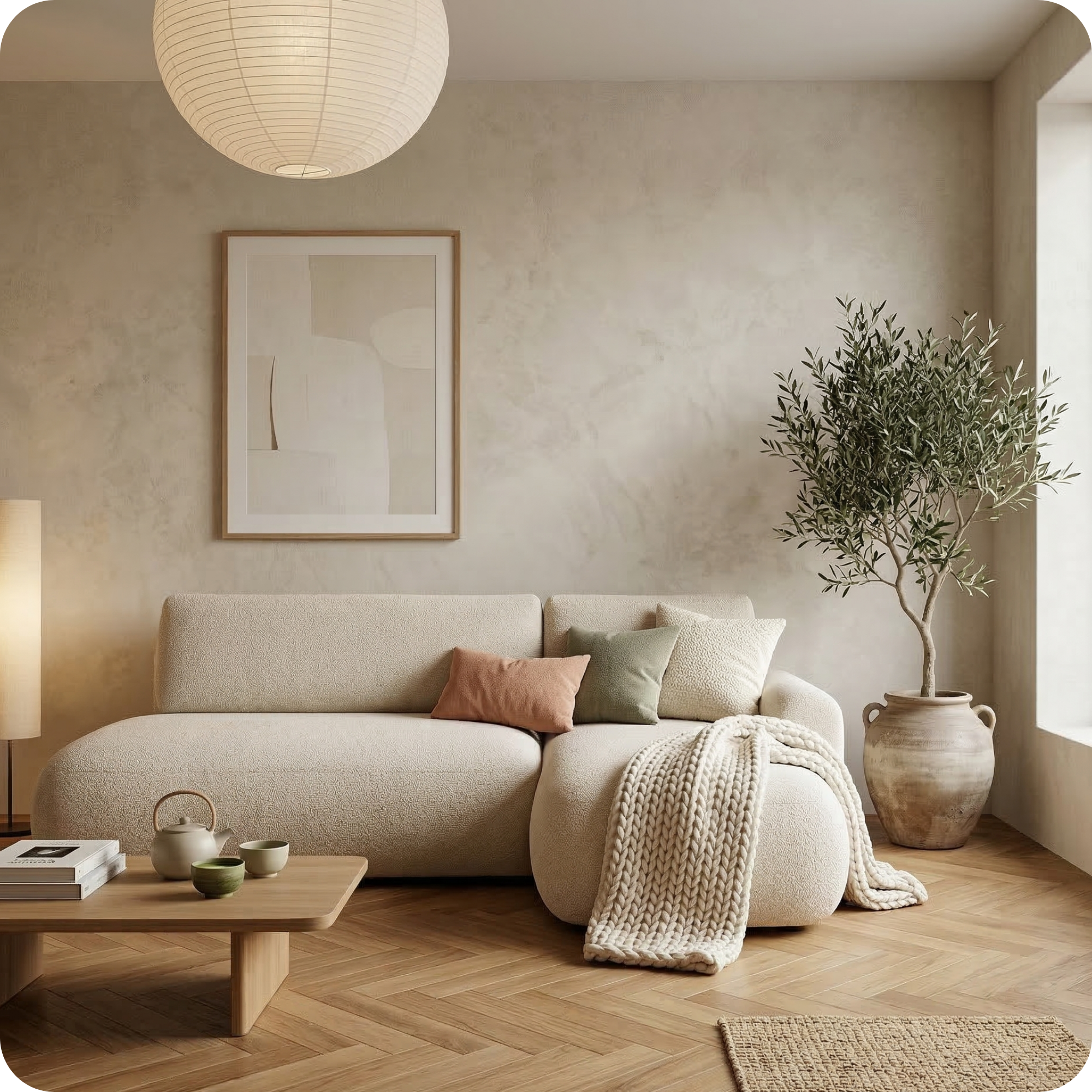
The most reliable cushion formula for a 3-seater sofa is a group of 5-6 cushions in 3 different sizes. Start with two large 60x60cm cushions at each end of the sofa — these provide structural support and define the sofa's endpoints. Add two medium 50x50cm cushions in a different pattern or texture — these create the visual interest. Finish with one or two smaller 40x40cm or rectangular cushions toward the centre — these add variety and a sense of abundance without overcrowding. Never use all the same size cushion — it creates a flat, uniform effect with none of the visual richness that makes cushion layering so effective.

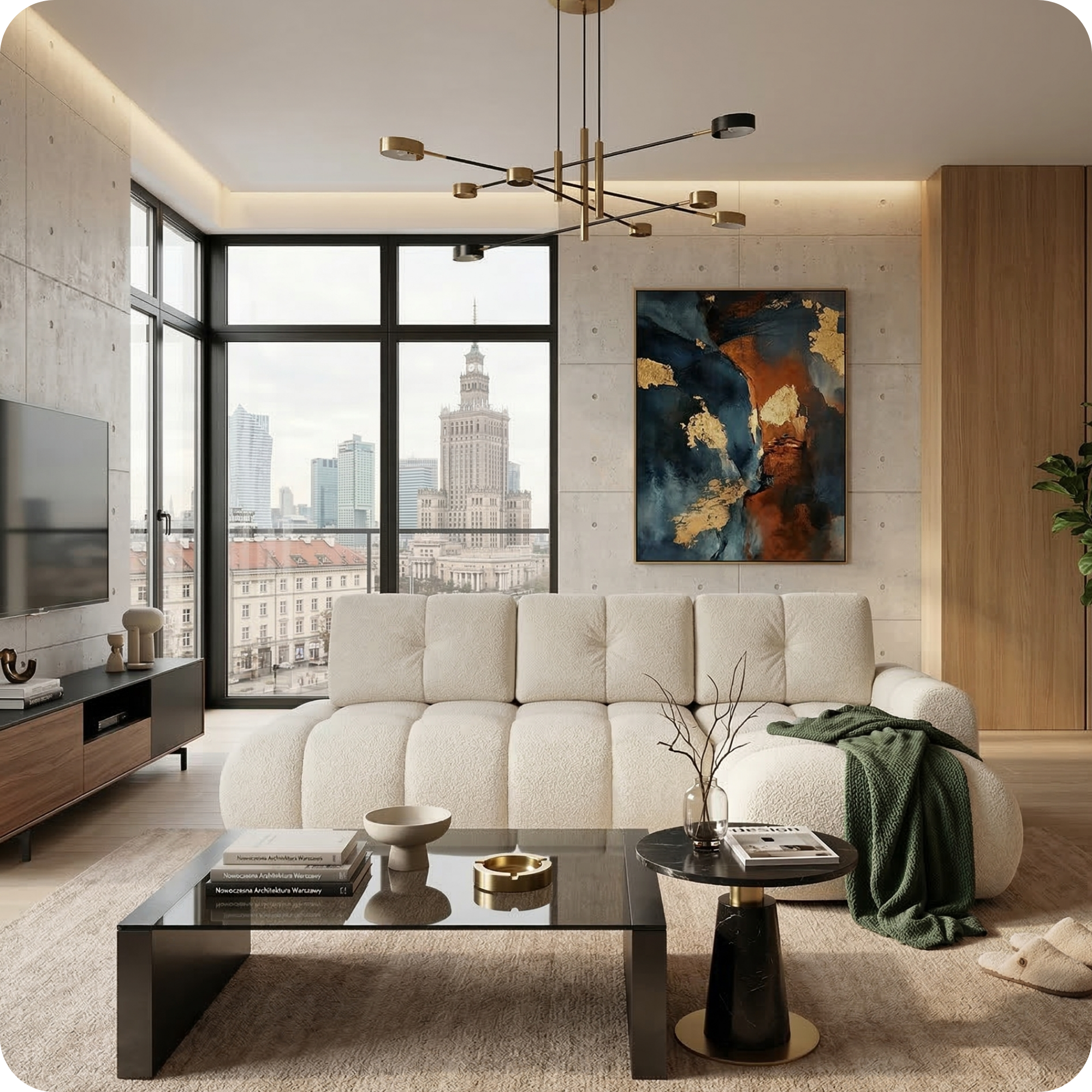
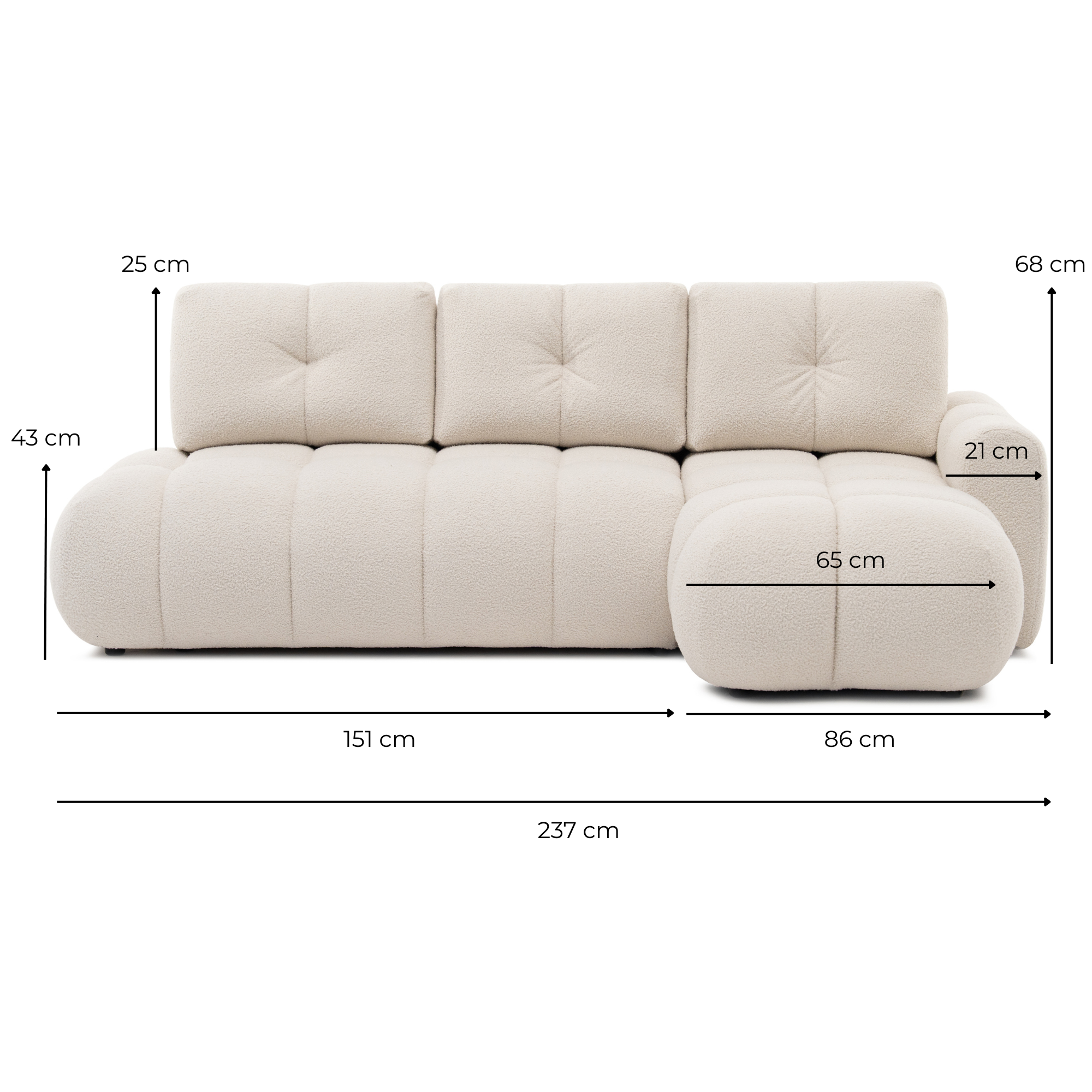
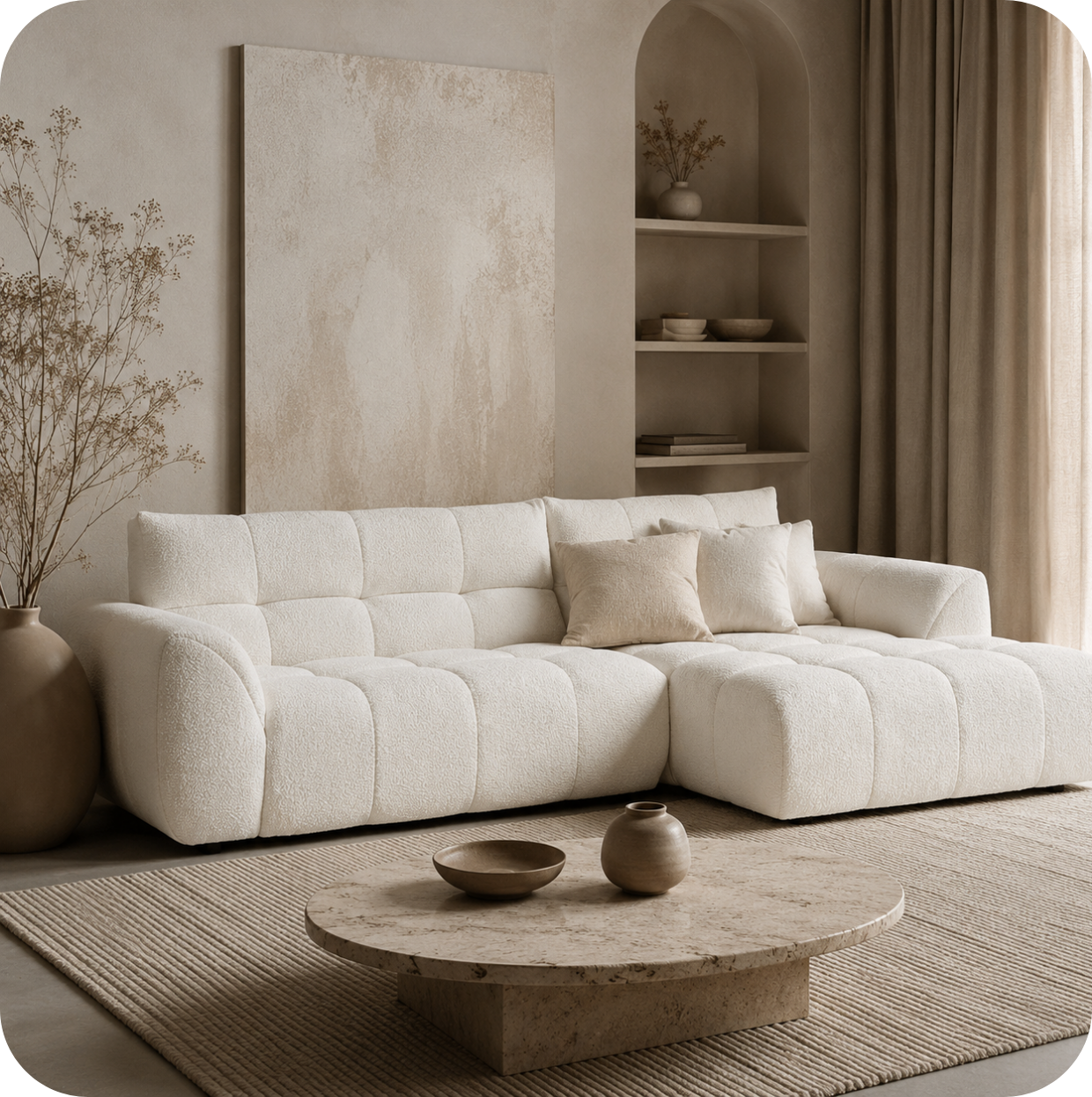
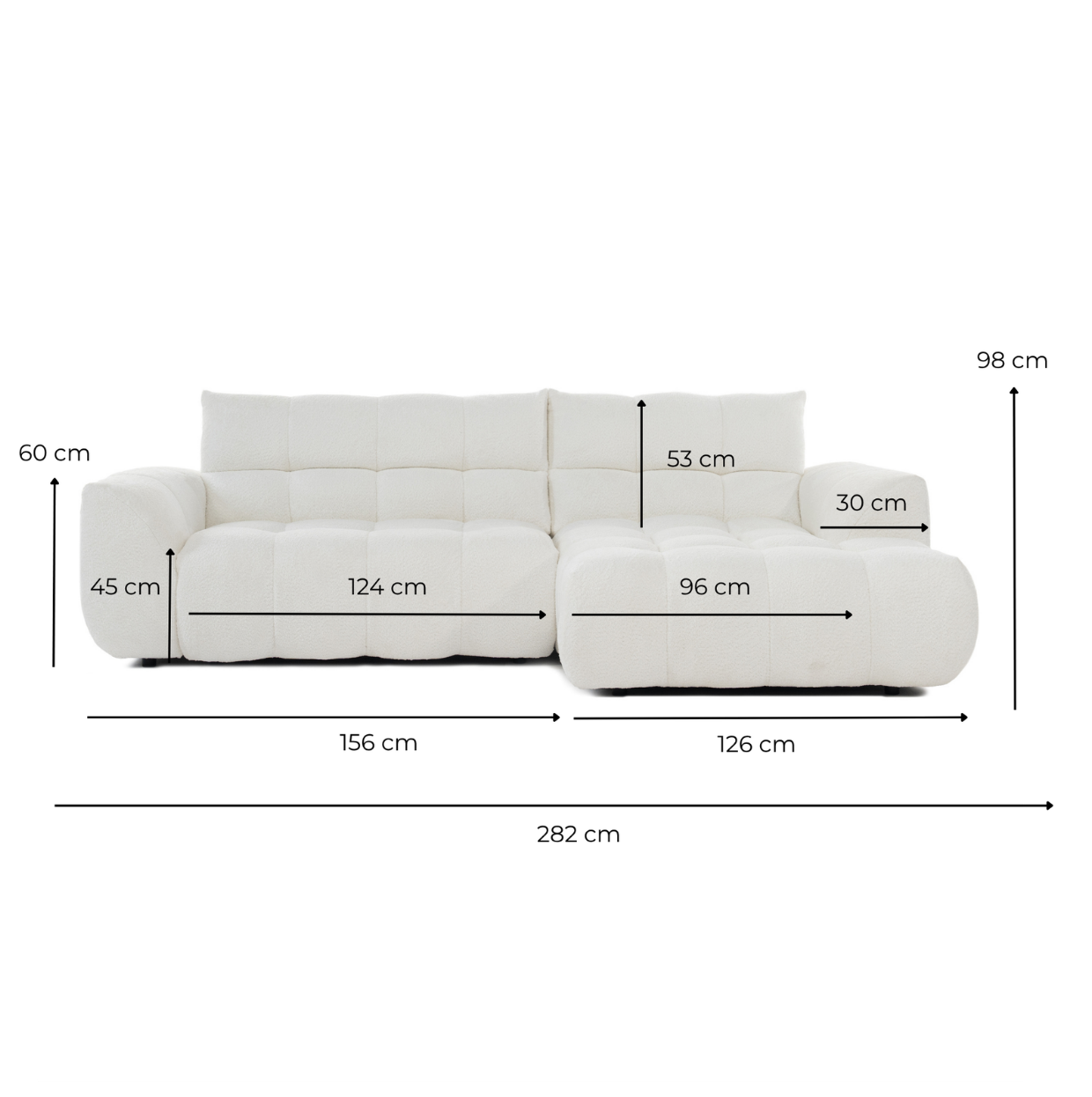
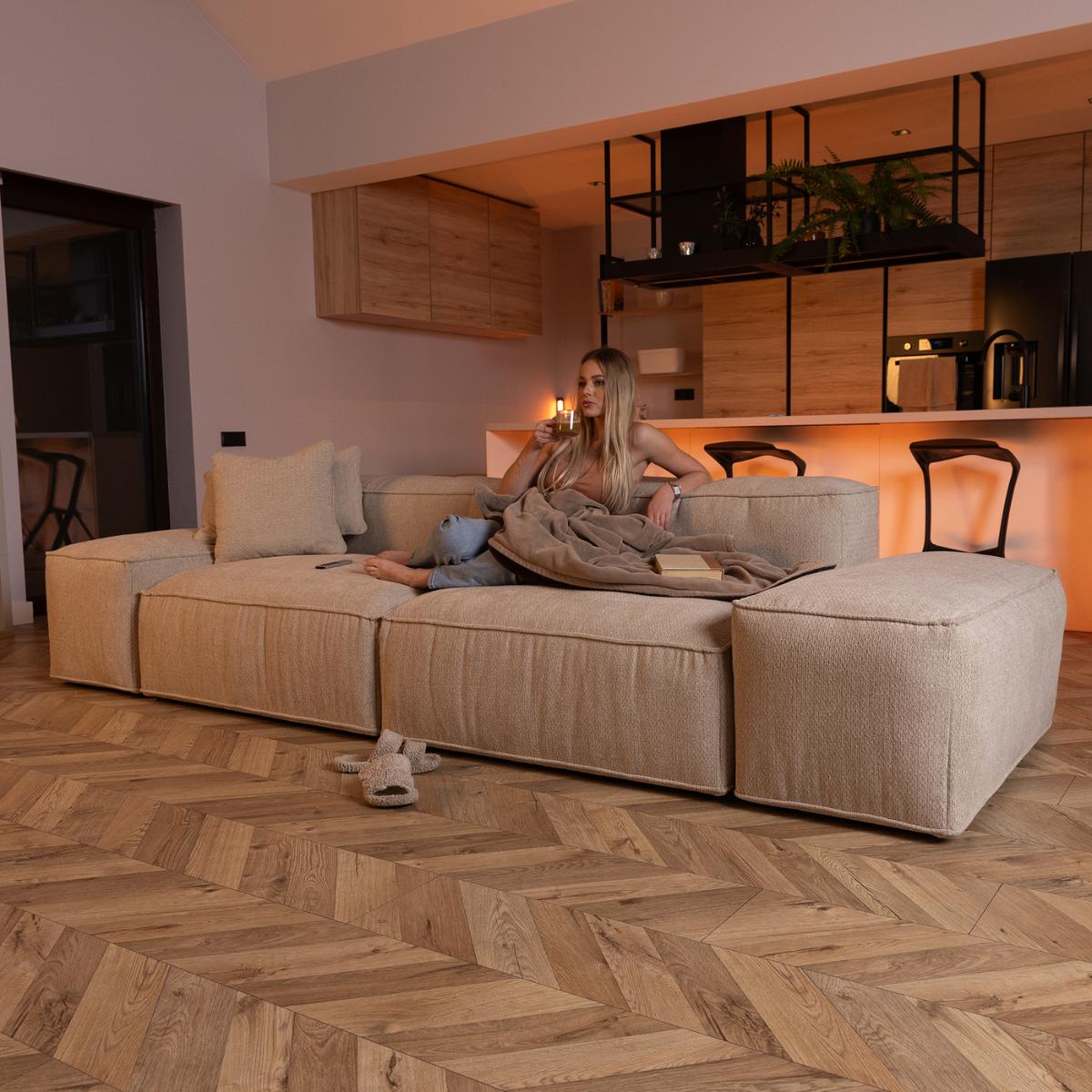
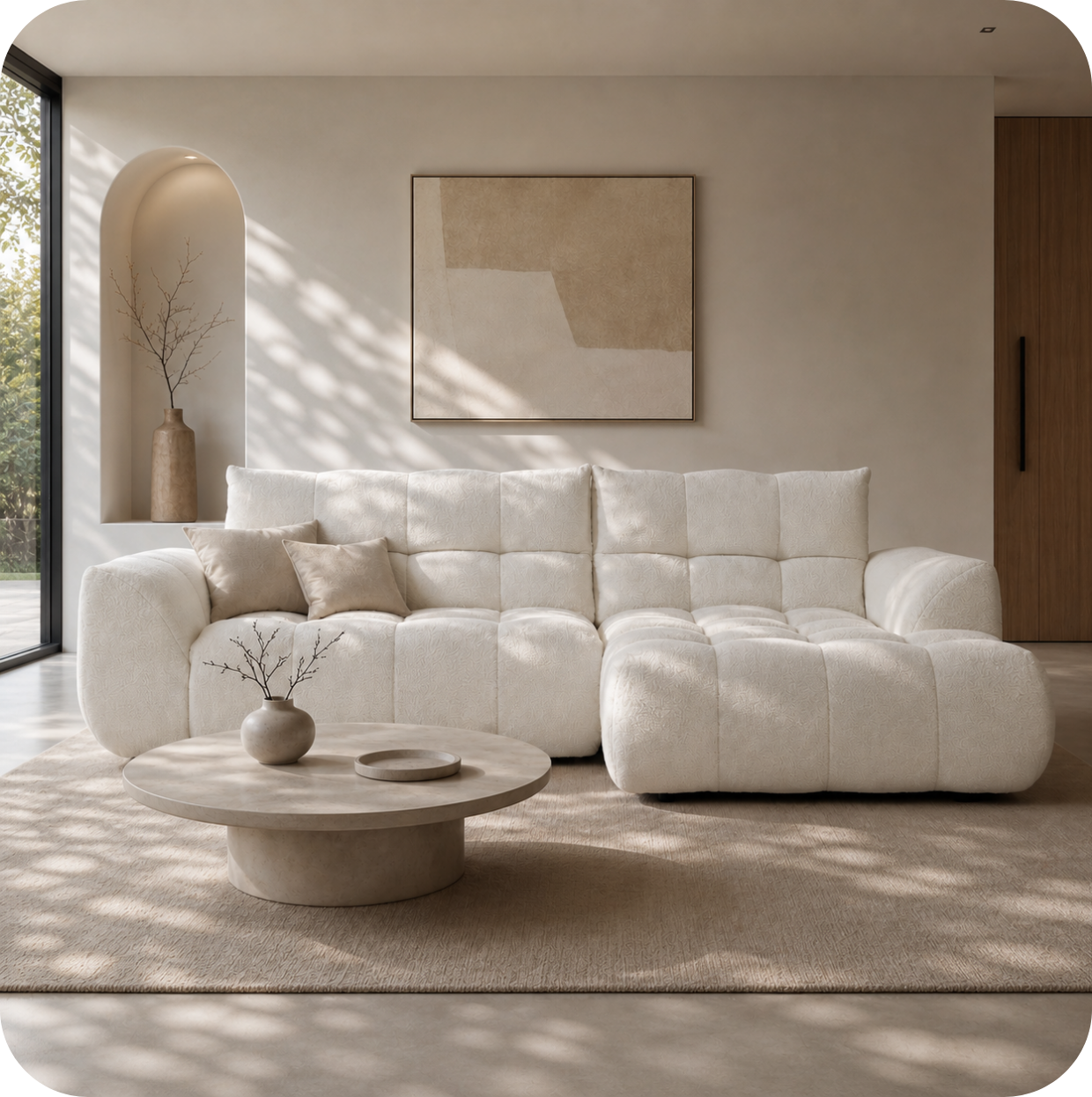
Lugano in Sand — from €1,299
A warm, neutral sand sofa is one of the best foundations for textile layering — its neutral tone allows you to bring in multiple cushion colours and patterns without the sofa dominating the composition. The Lugano's generous seat depth also means cushions have enough room to be arranged expressively without falling off — the depth provides the backstop that makes cushion layering look natural rather than precarious.

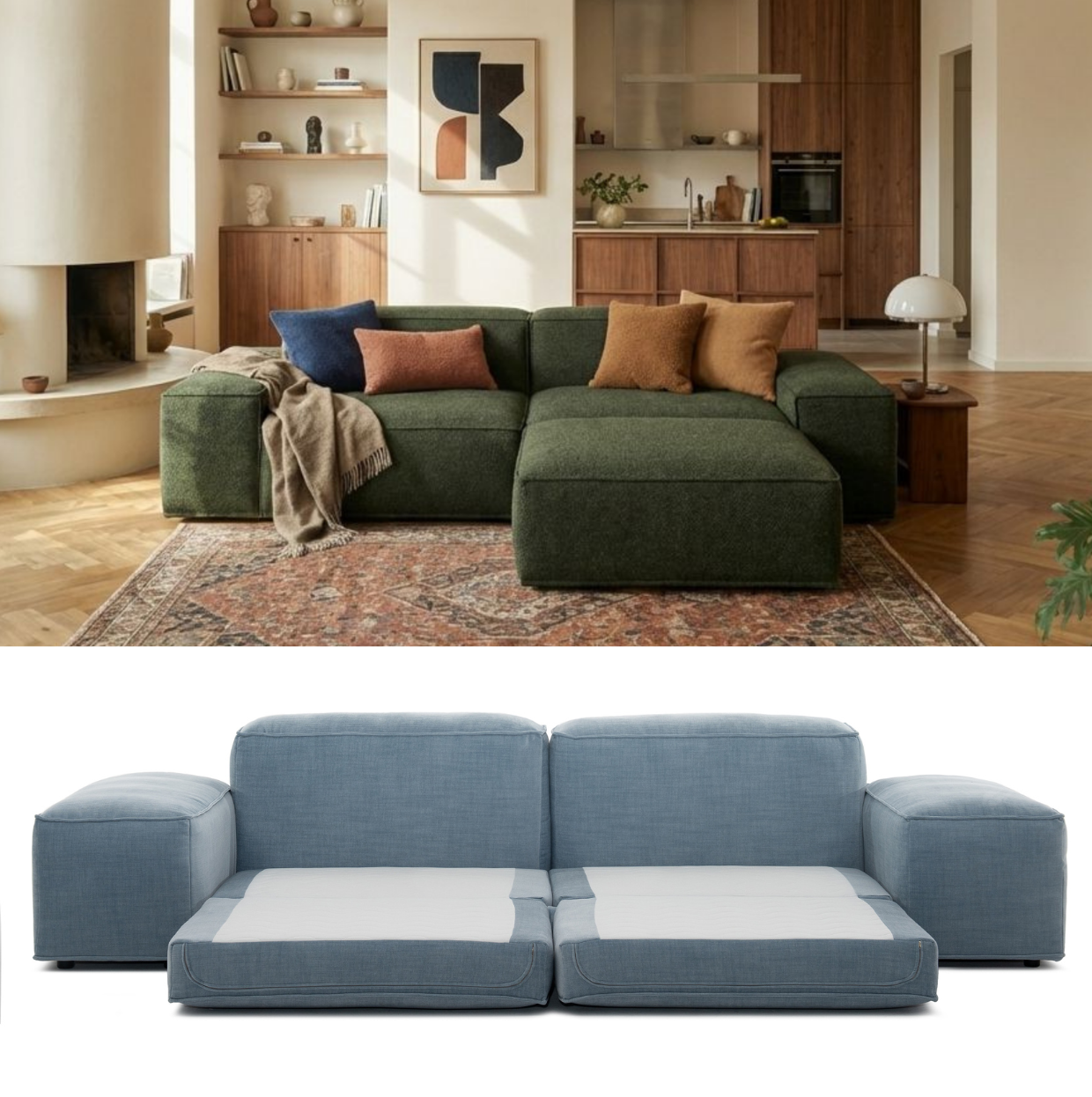
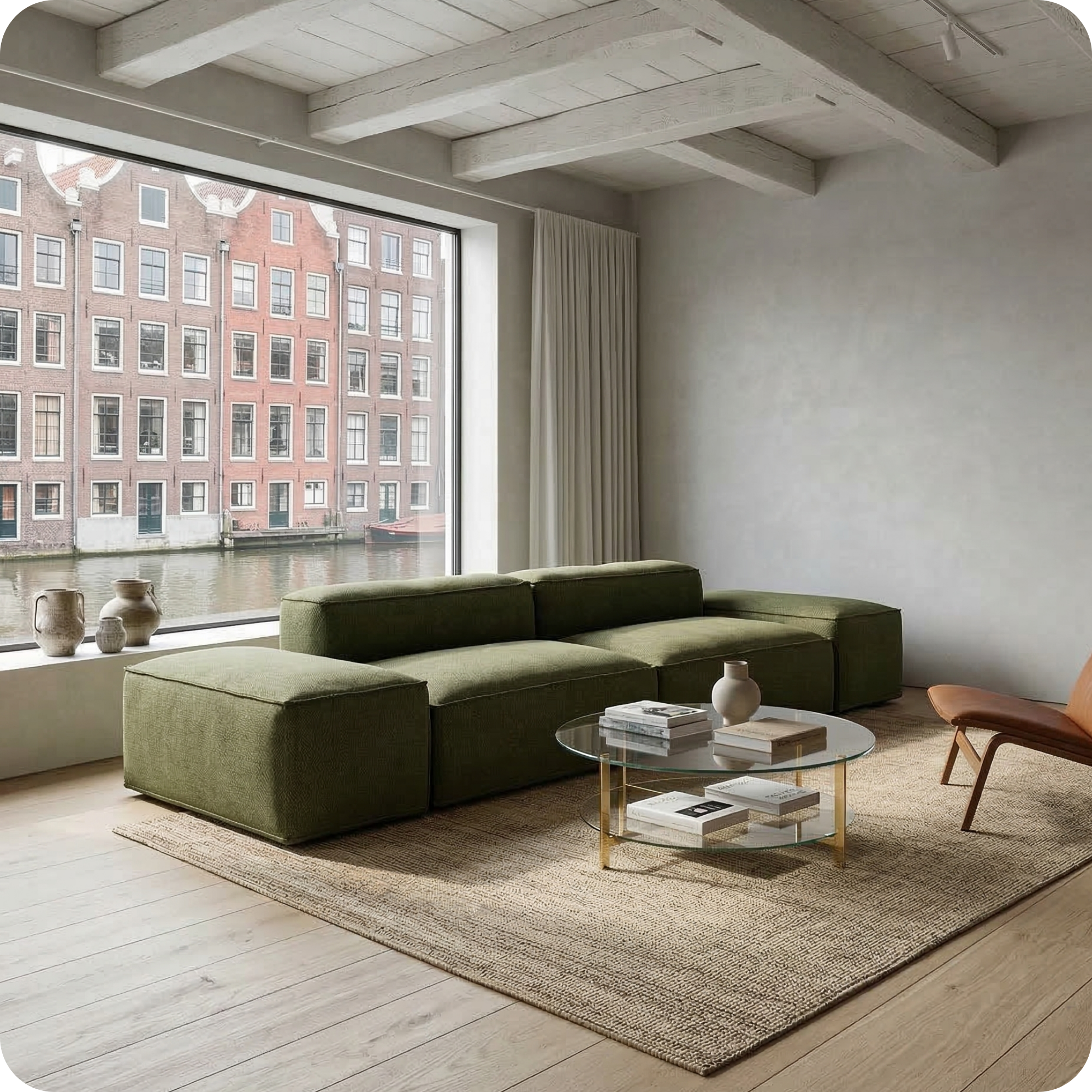
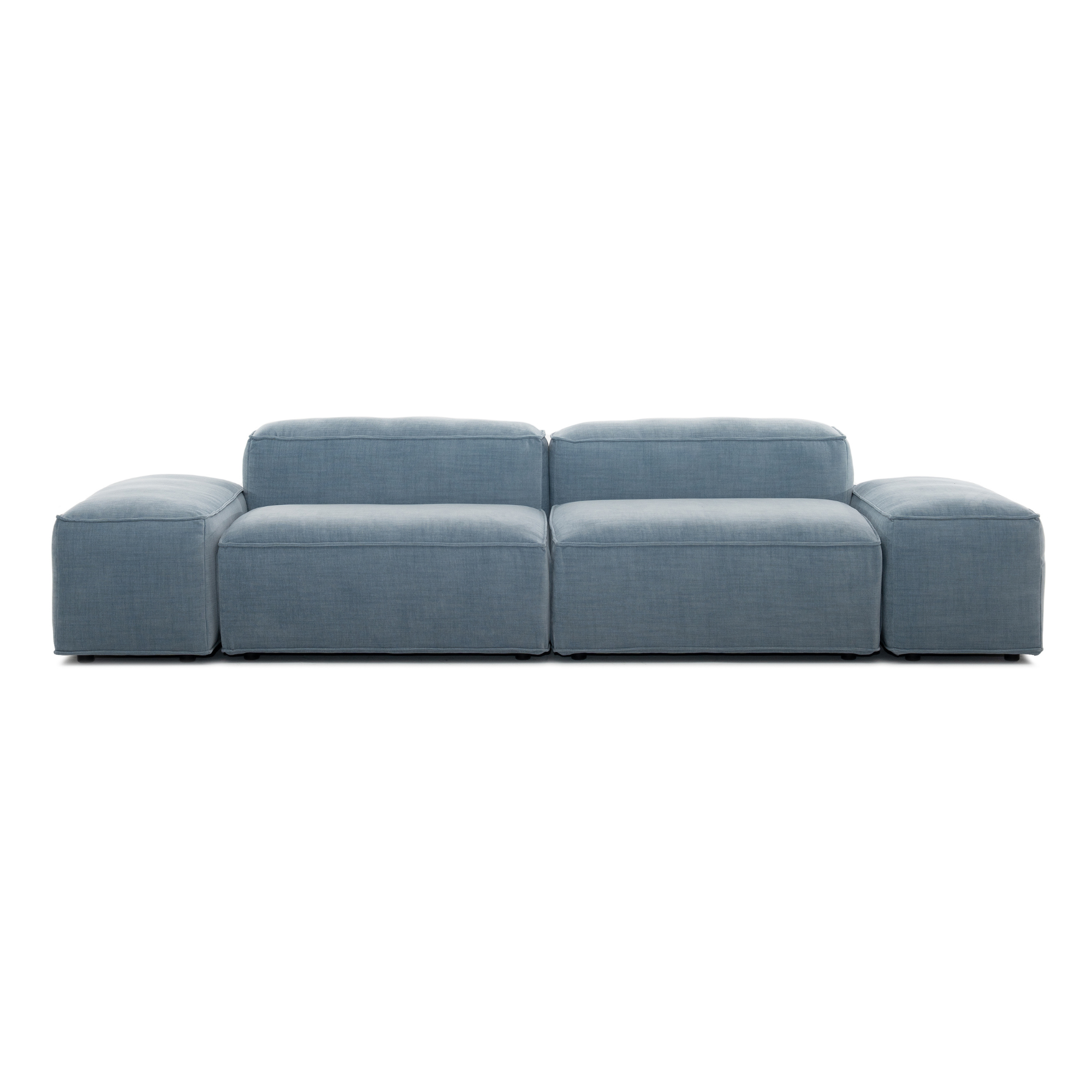
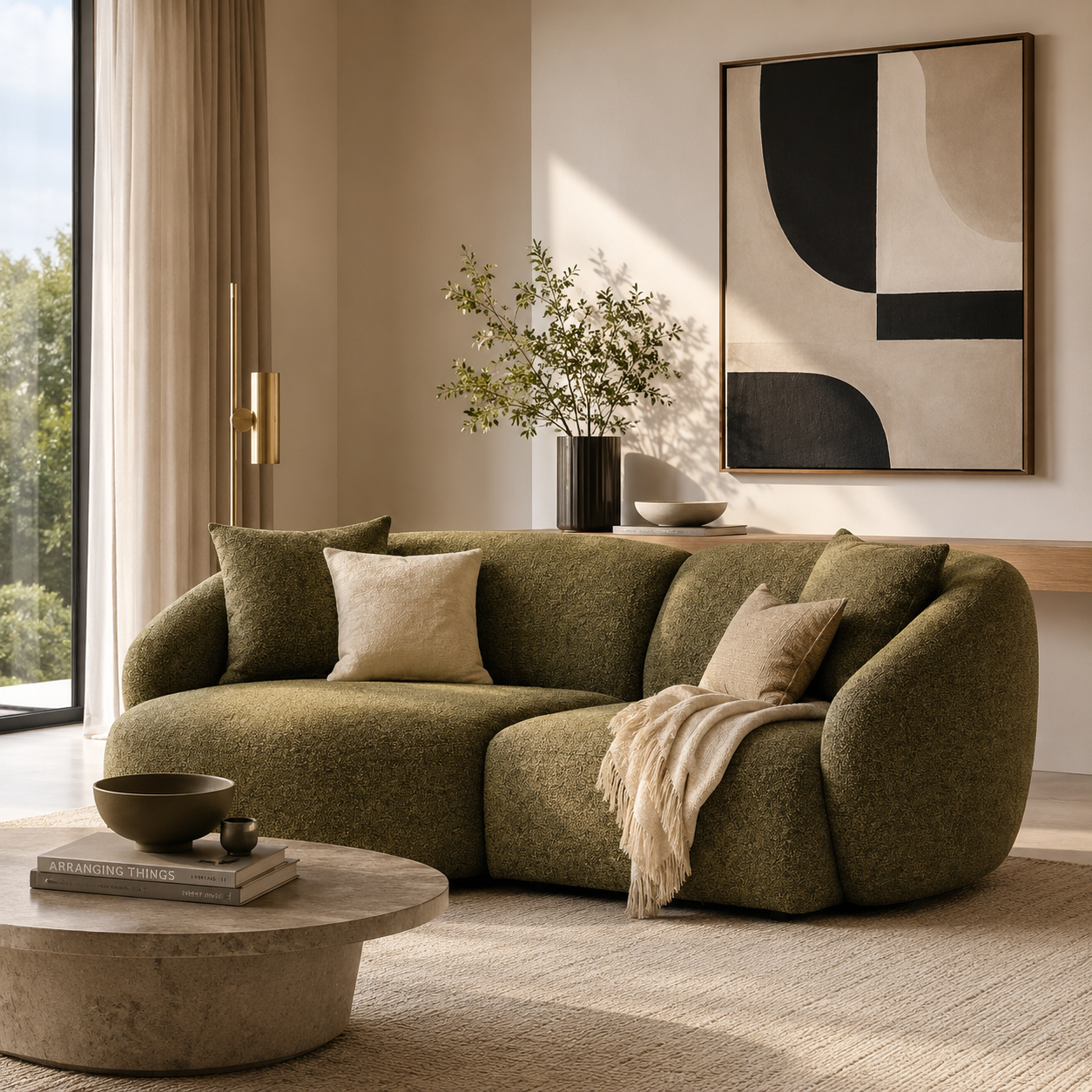
Merlot Modular Sofa — from €1,532
A statement sofa in a strong colour — like the Merlot's leaf green — calls for cushions that either complement (warm autumn tones: rust, mustard, ochre) or contrast boldly (warm cream, ivory, or soft white). The Merlot's clean, architectural lines provide a stable visual platform for cushion arrangements: the sofa's clarity of form means the cushion arrangement reads clearly rather than competing with a busy silhouette.
The Throw: Casual Luxury
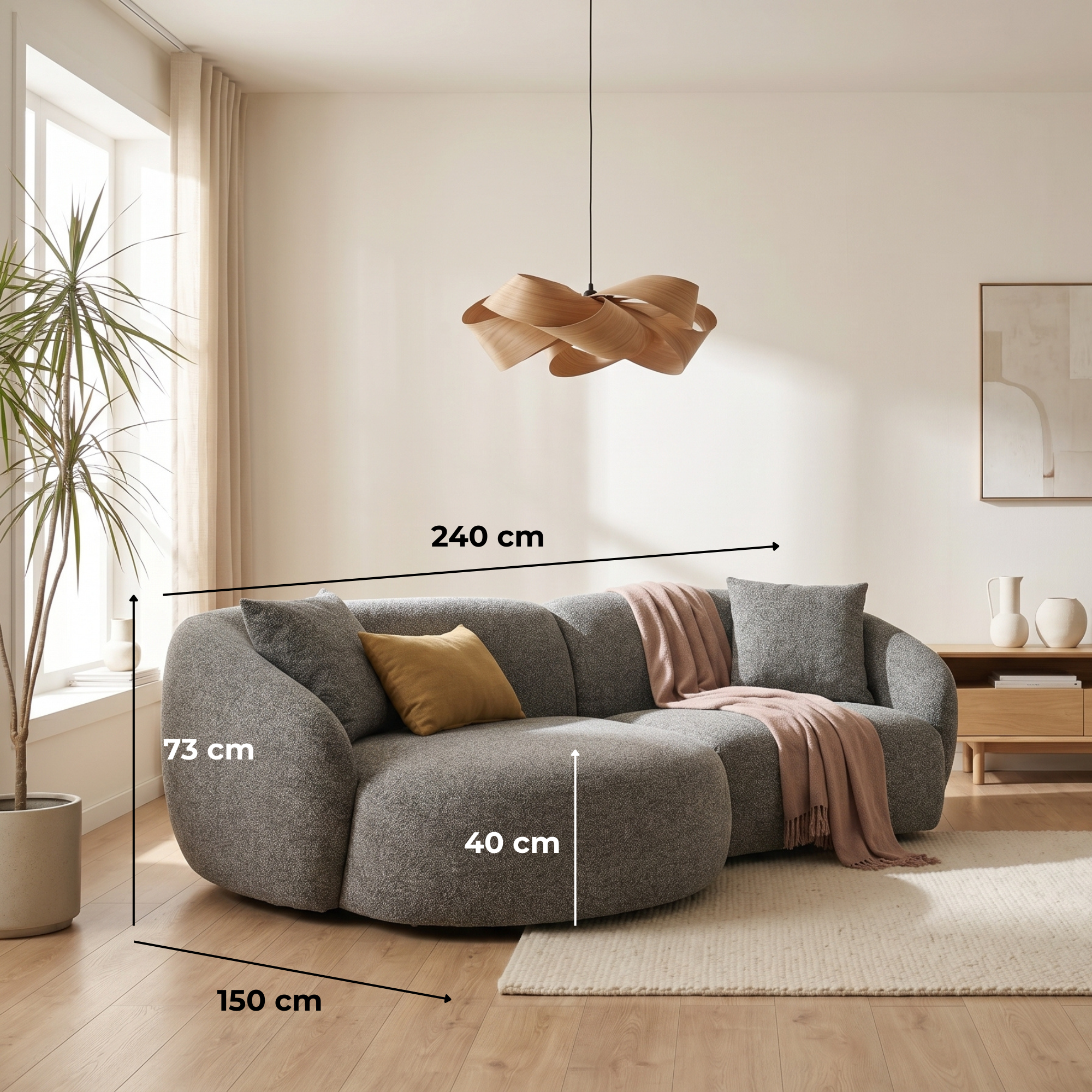
A throw adds the final layer of textile richness and also signals something important: that this room is used, that people actually sit on this sofa, and that the room is genuinely lived in rather than staged for a photograph. Place the throw in three ways: folded neatly over one arm of the sofa (the tidiest look, suitable for more formal living rooms); draped casually over the back corner of the sofa (more relaxed, suits contemporary and Scandi-influenced rooms); or bunched loosely in one corner of the sofa as if just pushed aside (the most casual, works in bohemian or eclectic rooms). The throw material matters: a chunky knit throw adds a different quality than a lightweight linen throw or a mohair throw. In winter, lean toward chunky knit or fleece for warmth and texture. In summer, a lightweight cotton or linen throw provides the visual softness without excessive weight.
Mixing Patterns Without Conflict
The biggest fear with textile layering is pattern clash — that the different cushion and throw patterns will fight each other visually. The rule that prevents this is the scale variation rule: never mix two patterns of the same scale. Large geometric with small floral works. Large botanical with a fine-line geometric works. Two competing medium-scale florals do not work. Keep a consistent colour story running through all the textiles — even if the patterns vary significantly, shared colours create cohesion. A warm terracotta thread through a floral cushion, a geometric rug, and an ochre throw creates unity even though all three patterns are completely different.
Seasonal Rotation
One of the greatest practical advantages of textile layering is how cheaply and easily it can be changed seasonally. A warm-weather palette of cool linen, cotton whites, and muted sage and soft blue cushions can be exchanged in autumn for rich terracotta, warm brown, deep rust, and chunky knit — completely transforming the room's character without changing any furniture. This is interior decoration at its most accessible: high impact, low cost, and entirely reversible.