


How to Style a Modular Sofa: Configuration and Decor Ideas
Modular sofas are among the most versatile pieces of furniture available — they can be configured into dozens of different arrangements, expanded as your household grows, and restyled as your taste evolves. But that very versatility can make them feel overwhelming. Where do you start? How do you choose the right configuration? And once you have it, how do you style it to look genuinely pulled together? This guide answers all of those questions.
Choosing the Right Configuration
The first decision is shape. The most common modular configurations are the L-shape (a corner sofa), the U-shape (for large rooms), the straight sofa (for narrow rooms or open-plan spaces), and the sofa with chaise longue (a partial L-shape). The L-shape is the most universally useful — it fits into corners efficiently, seats four to five people comfortably, and creates a natural conversation area. For rooms under 25 square metres, a straight modular sofa or a compact corner is usually the best fit; for rooms over 35 square metres, a large corner or U-shape can anchor the space properly.

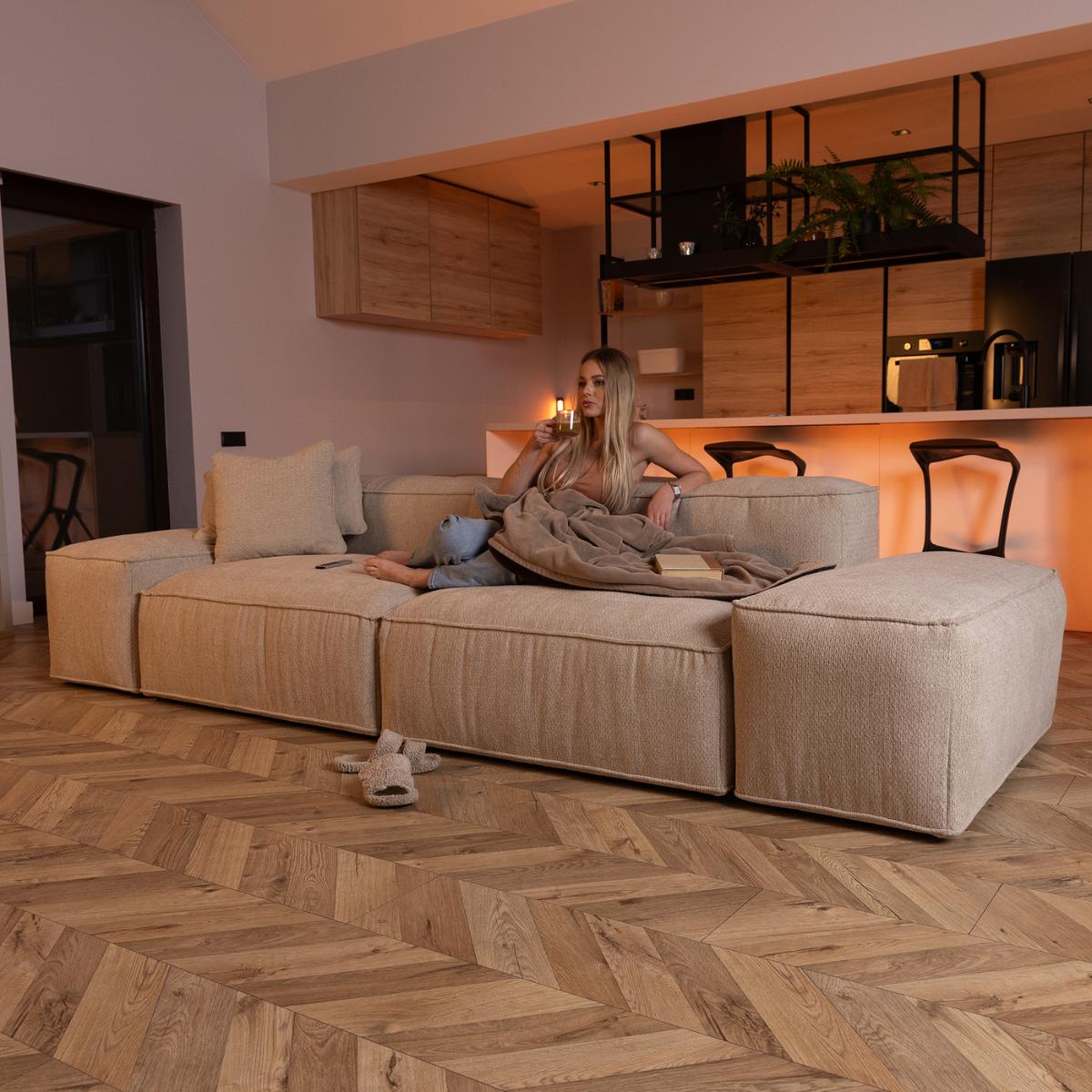
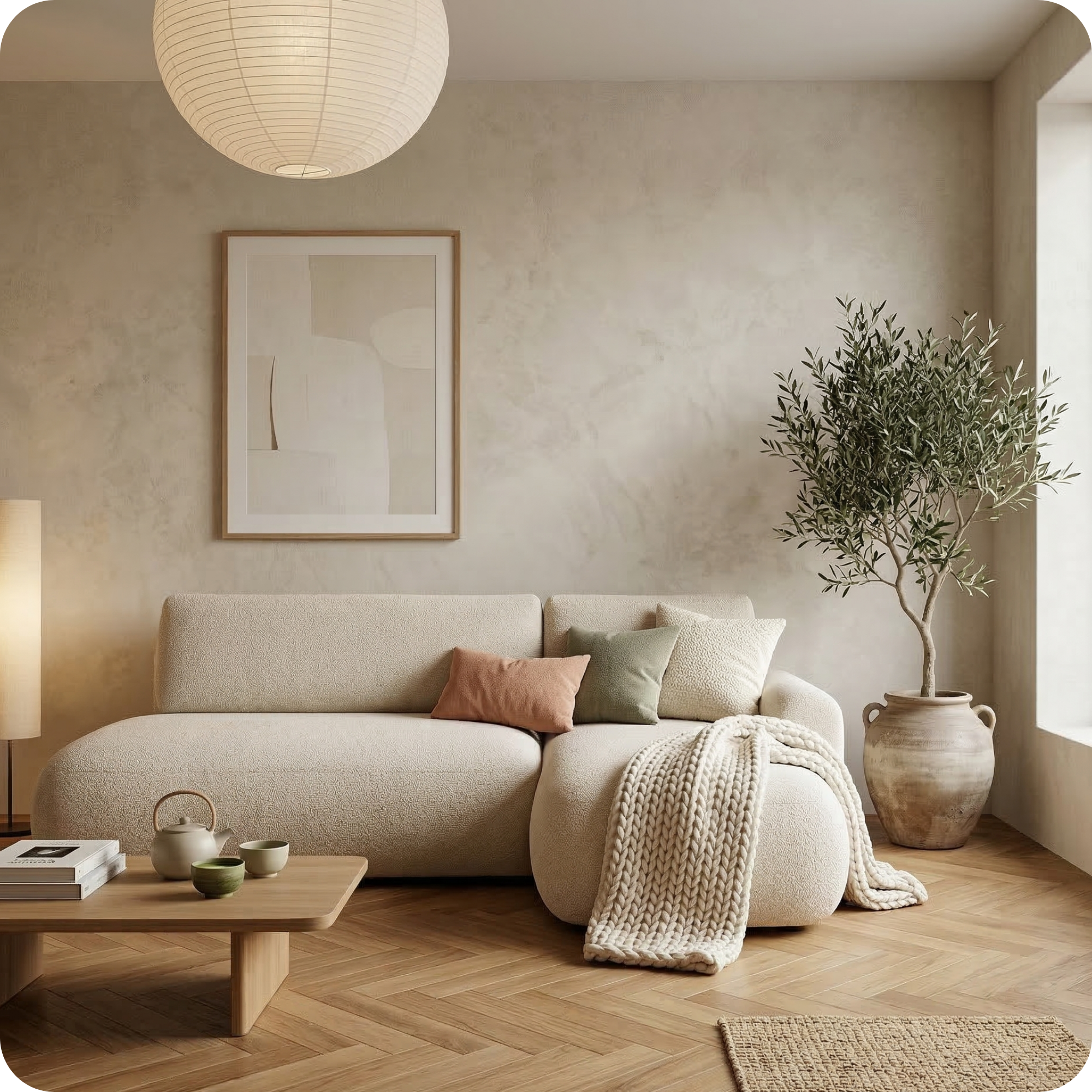
Merlot Modular Sofa — from EUR 1.290
The Merlot's clean, geometric lines make it ideal for styling — the low armrests and structured silhouette work with both minimalist and layered decor approaches. In leaf green, it becomes the room's focal point; in a neutral, it recedes gracefully and lets the surrounding decor carry the visual weight.

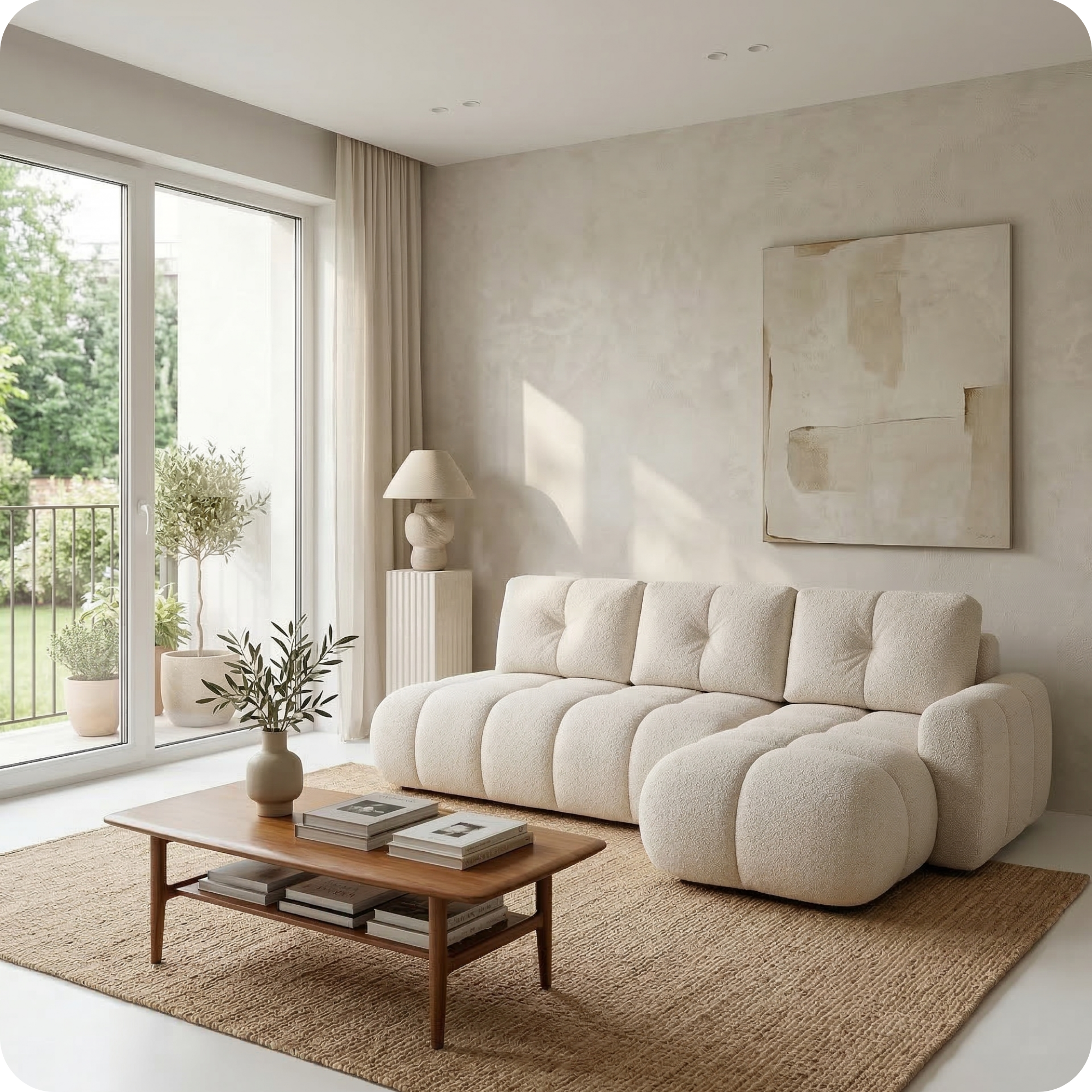
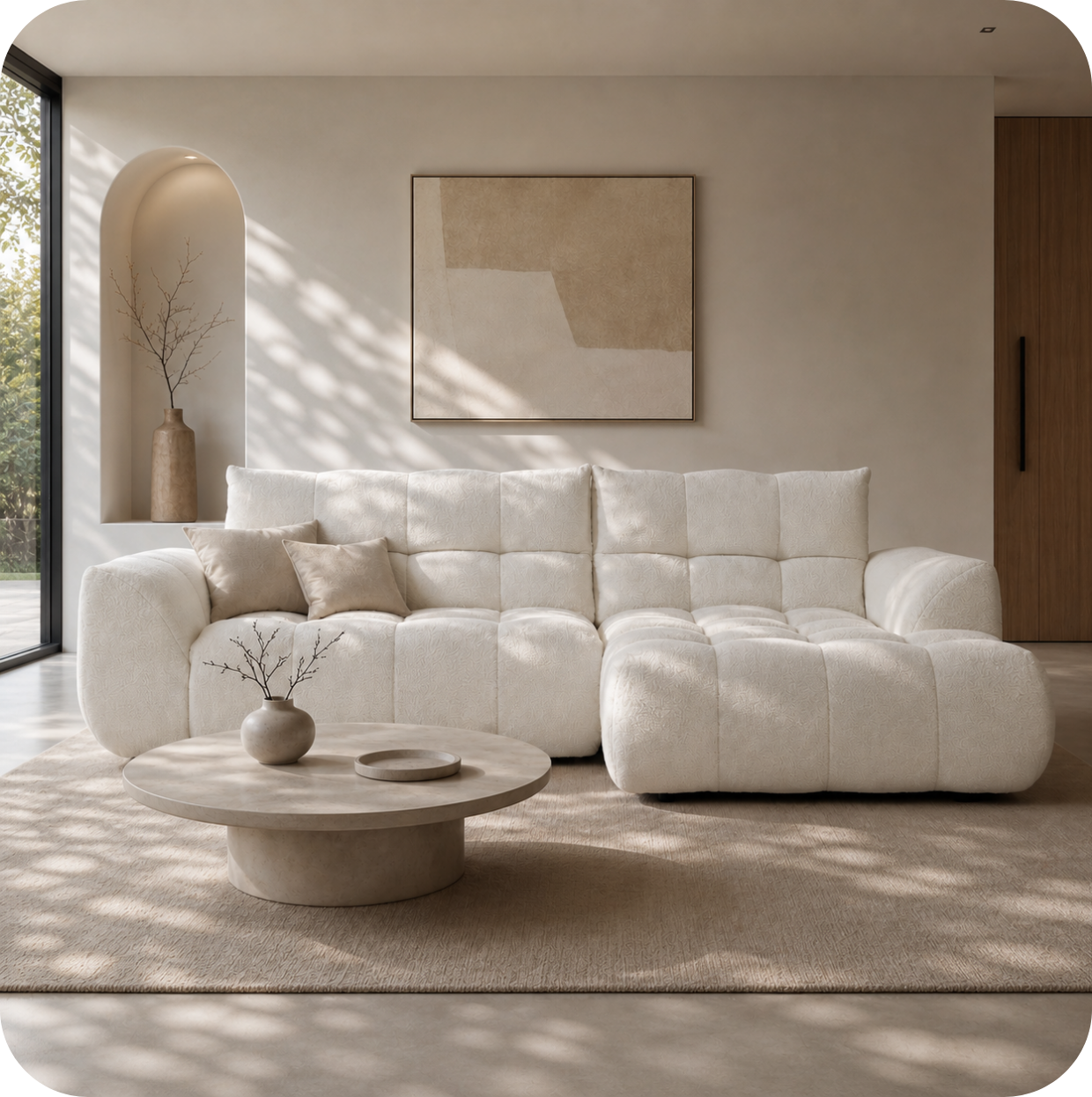
Merlot Modular Corner — from EUR 1.490
The corner configuration of the Merlot demonstrates how a modular sofa fills a room with purpose — the L-shape defines the seating zone cleanly, and the generous chaise longue on one side creates a natural lounging position that is both functional and visually dynamic.
Cushion Arrangement and Layering
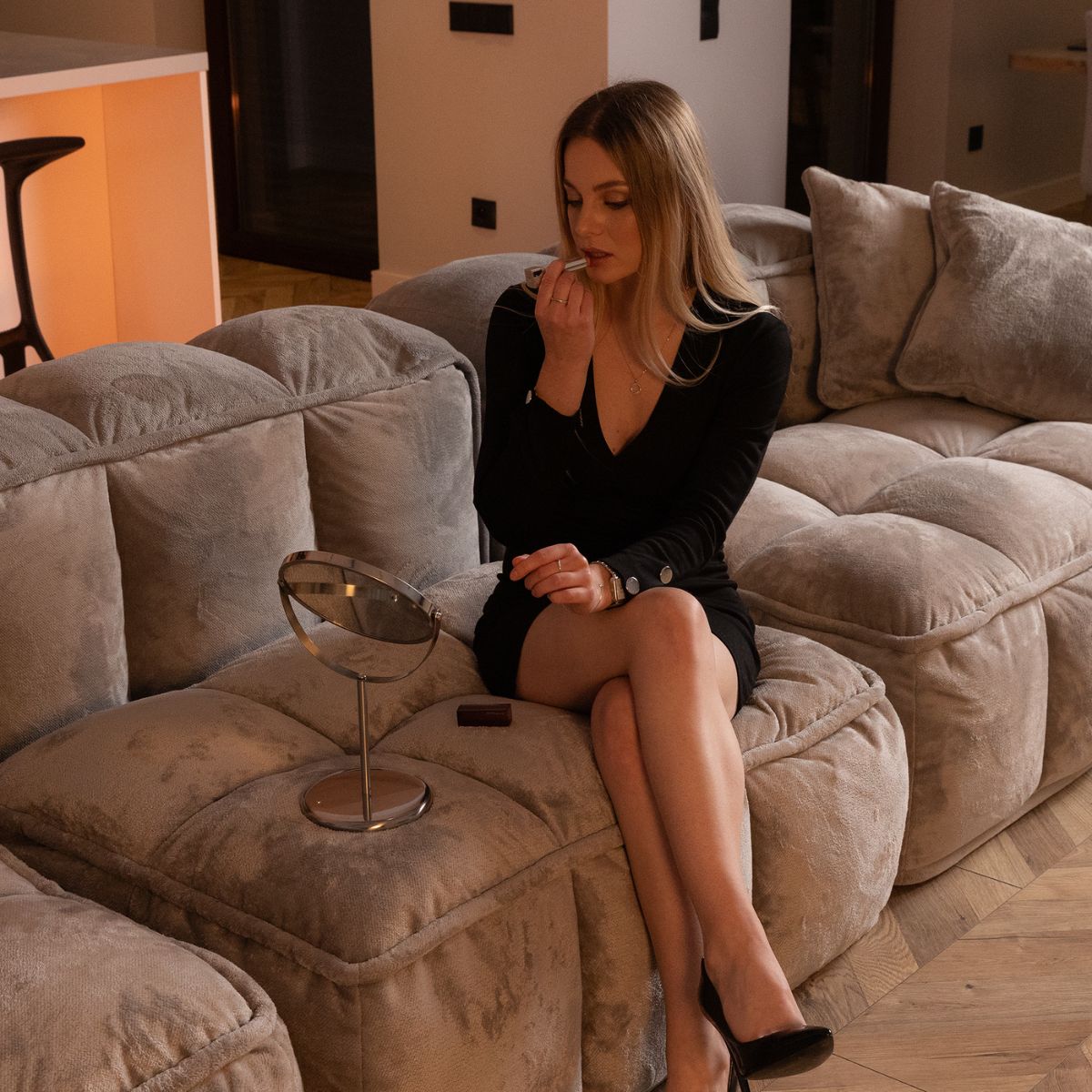
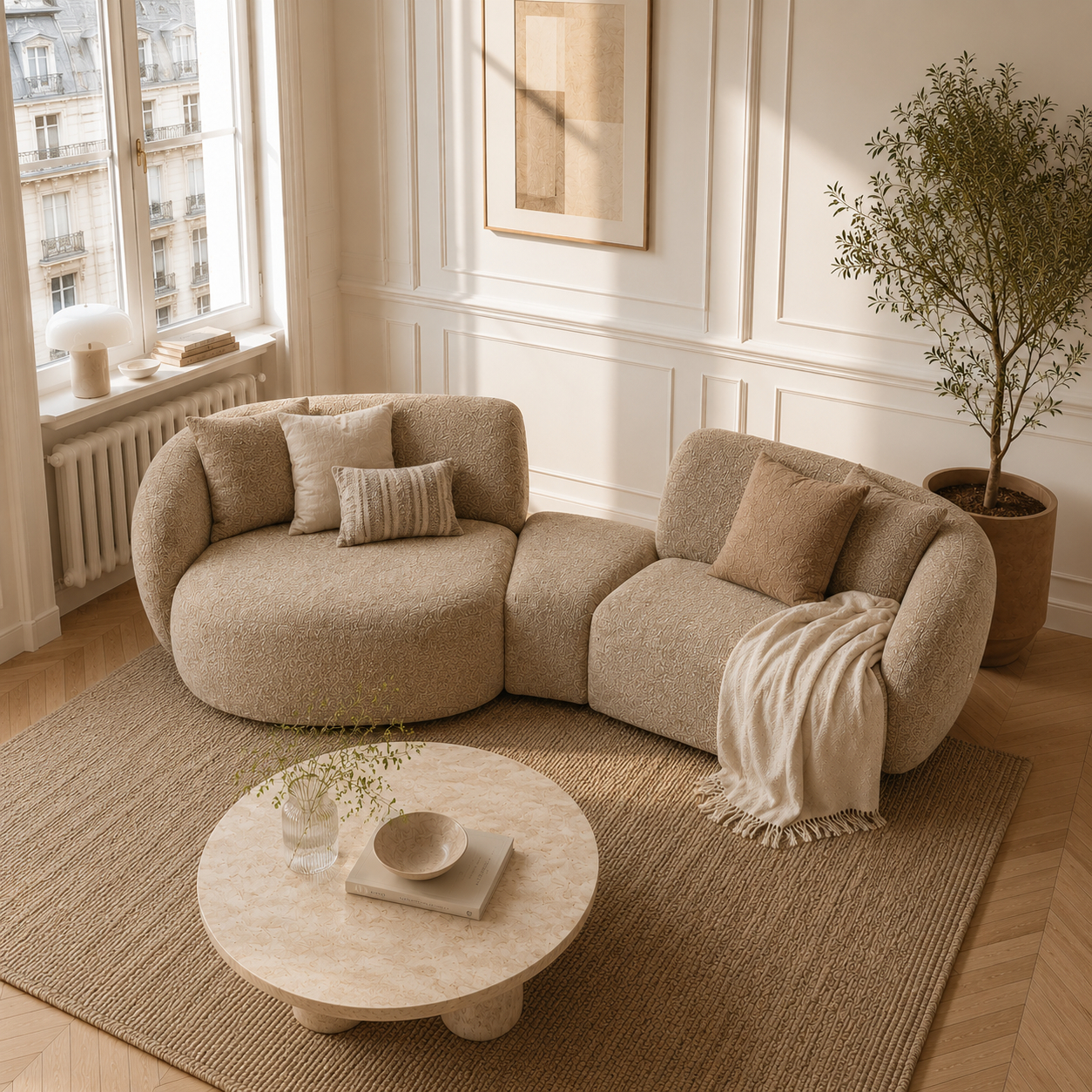
The cushion arrangement is one of the easiest ways to elevate a modular sofa from functional to genuinely styled. The most common approach is to mix cushion sizes: use the sofa's standard back cushions as the base layer, then add two or three accent cushions in front in varying sizes. A typical combination might be one large 60x60cm cushion, two medium 50x50cm cushions, and one long lumbar cushion across the end. Varying textures — a velvet cushion alongside a woven linen one alongside a plain cotton — creates depth without visual chaos.
Throw Blankets and Draping
A throw blanket draped casually over one end of a modular sofa does a lot of decorative work. It adds texture and colour while implying that someone lives there and uses the space. The most natural placement is draped over one armrest and falling onto the seat, or folded loosely over the back of one corner section. Choose a throw in a complementary texture — chunky knit, waffle cotton, or a soft wool blend — rather than matching the exact sofa fabric. Contrast is what makes the throw visible and purposeful.
Coffee Table Placement
The coffee table placement for an L-shaped modular sofa requires more thought than for a straight sofa. The most common approach is a rectangular table positioned in front of the longer section, aligned with approximately the middle of that section's length. A round coffee table placed in the corner of the L can also work well and feels more relaxed. The gap between the sofa and coffee table should be 35-45cm — enough to walk past easily but not so much that the table feels disconnected from the sofa.
Anchoring with a Rug
A rug under a modular sofa is the single most effective way to make the seating arrangement feel intentional. The rug should be large enough that at least the front legs of all sofa sections sit on it. For an L-shaped sofa, this typically means a rug of at least 200x300cm. The rug defines the seating zone and visually anchors the sofa to the floor, preventing the furniture from appearing to float in the middle of the room.
Wall Art and Backdrop Styling
The wall behind a modular sofa is valuable real estate. A gallery wall of framed prints, a single large statement artwork, or a large mirror all work well. The arrangement should sit so that the visual centre of the wall art aligns with the visual centre of the sofa — typically around eye height when standing. For a corner sofa, treating the wall behind the longer section as the primary canvas and the shorter section's wall as secondary usually gives the most balanced result.

Hinterlasse einen Kommentar
Diese Website ist durch hCaptcha geschützt und es gelten die allgemeinen Geschäftsbedingungen und Datenschutzbestimmungen von hCaptcha.