


How to Style a White Living Room Without It Looking Sterile
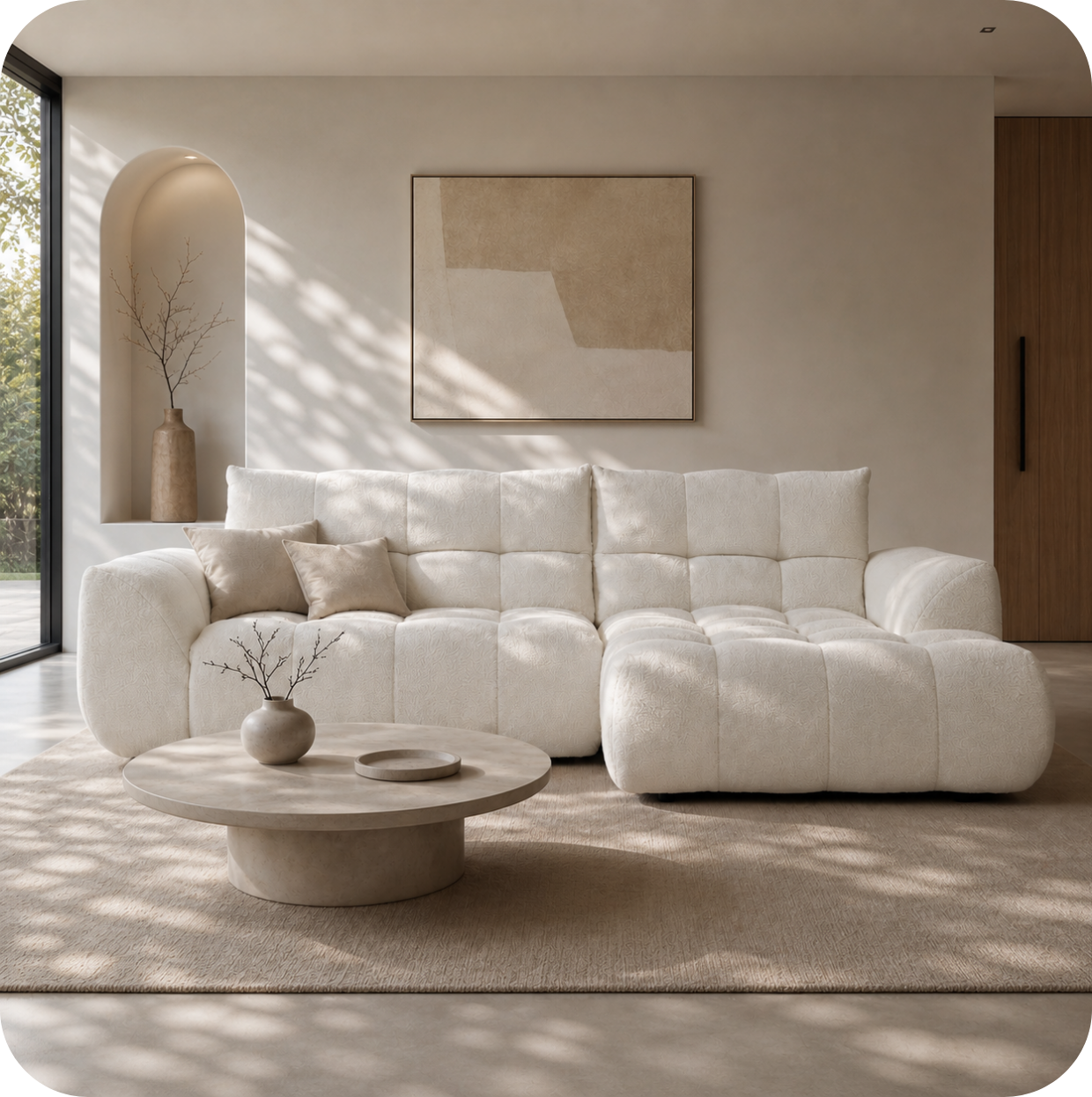
A white living room is one of the most desirable interiors in contemporary design — bright, calm, timeless, and endlessly adaptable. It is also one of the most commonly executed badly, producing spaces that feel clinical, cold, or simply unfinished. The difference between a white room that feels luxuriously airy and one that feels like a hospital waiting room lies almost entirely in texture, material variety, and the strategic use of warmth. Here is how to style a white living room that feels genuinely inviting.
The First Principle: White Is Never Just White
The most important realisation when working with white is that white exists on a spectrum from cool, blue-based whites to warm, cream-based whites, and mixing the two within the same room creates dissonance. Before choosing walls, trim, furniture, or cushions, decide whether you are working with a warm white palette or a cool white palette. Warm whites — those with yellow, pink, or red undertones — feel more intimate and inviting, work particularly well with natural materials, and are generally more forgiving in smaller rooms. Cool whites — those with blue or green undertones — feel more contemporary and architectural, work well in rooms with strong natural light, and suit a more minimal aesthetic.

Lugano Sofa in Sand — from EUR 1.290
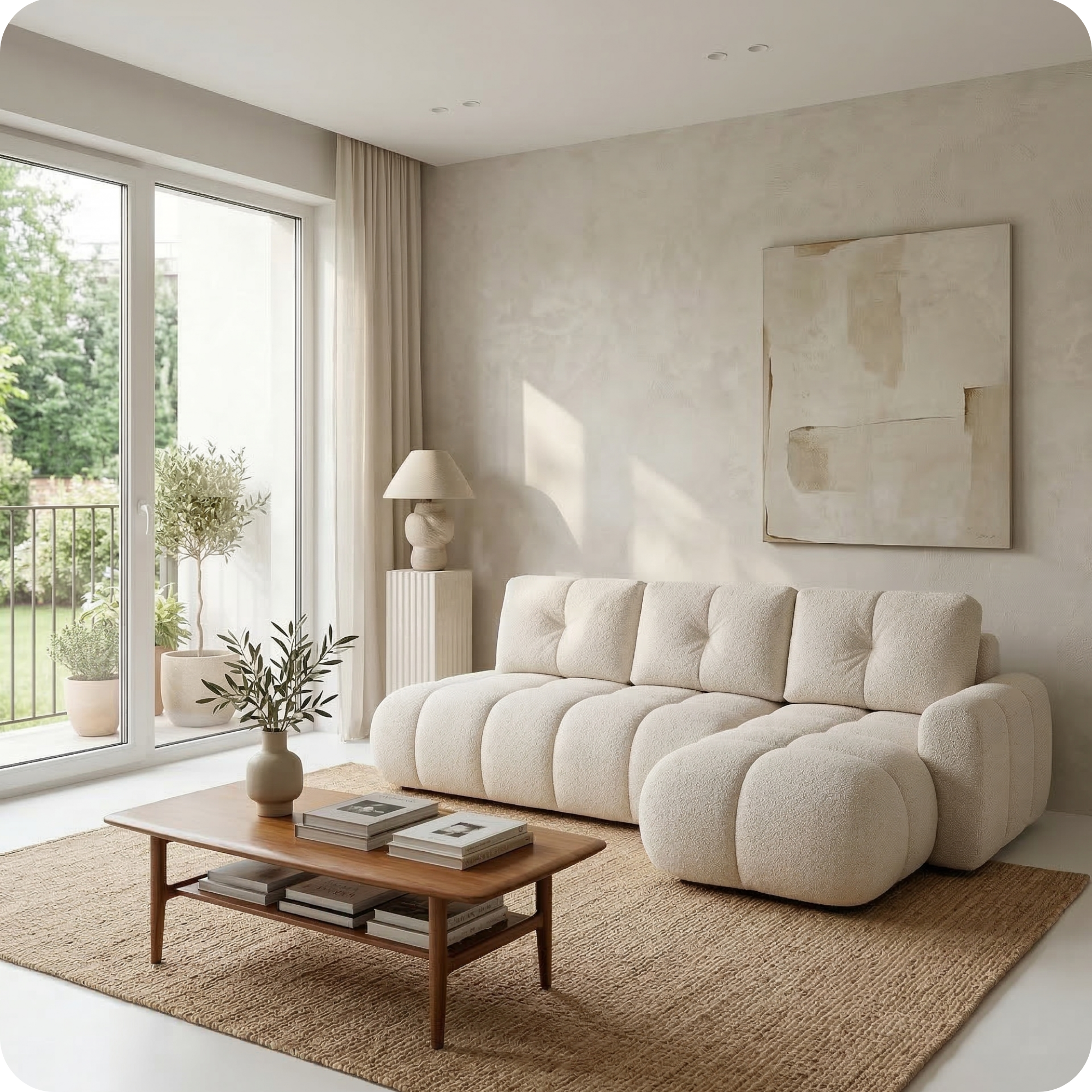
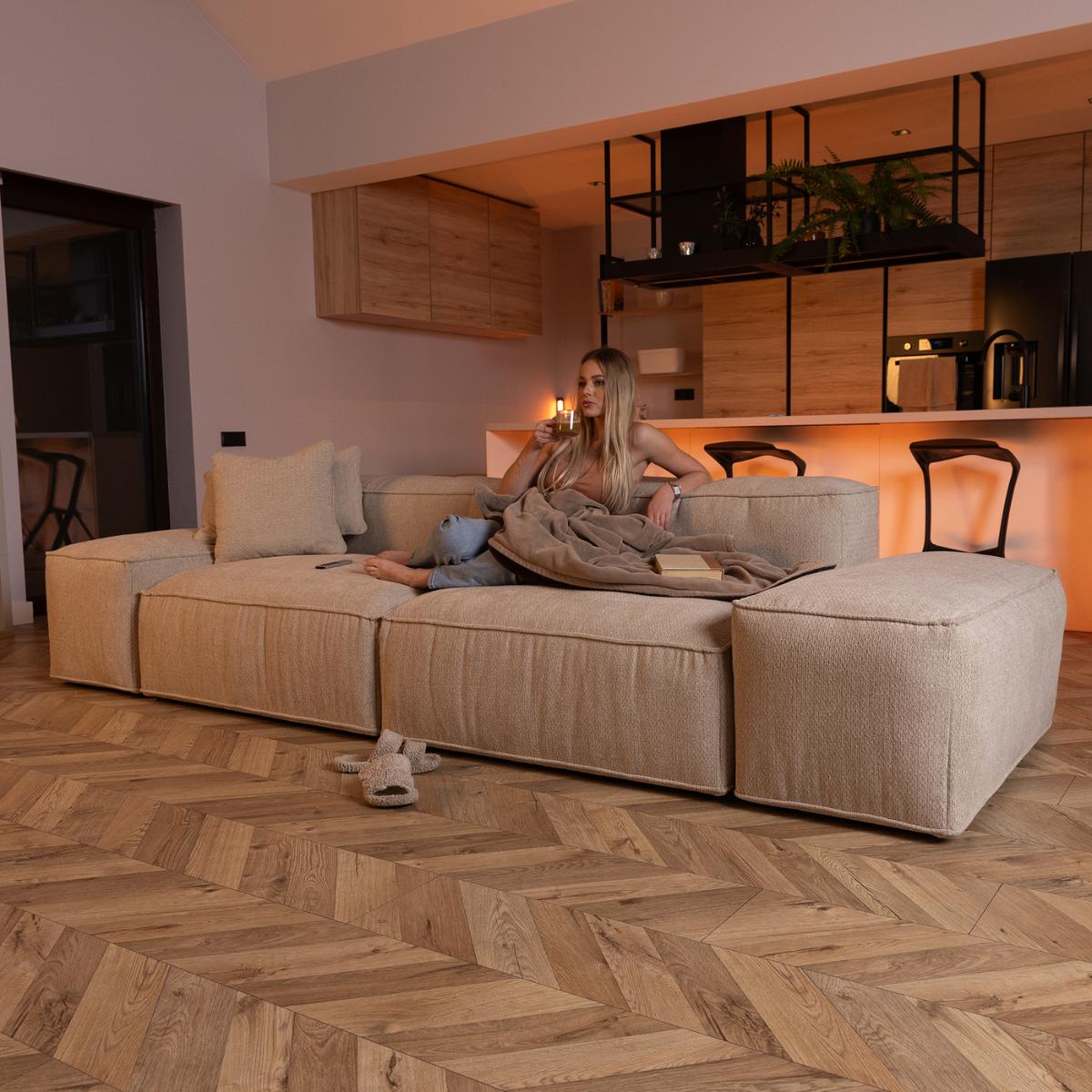
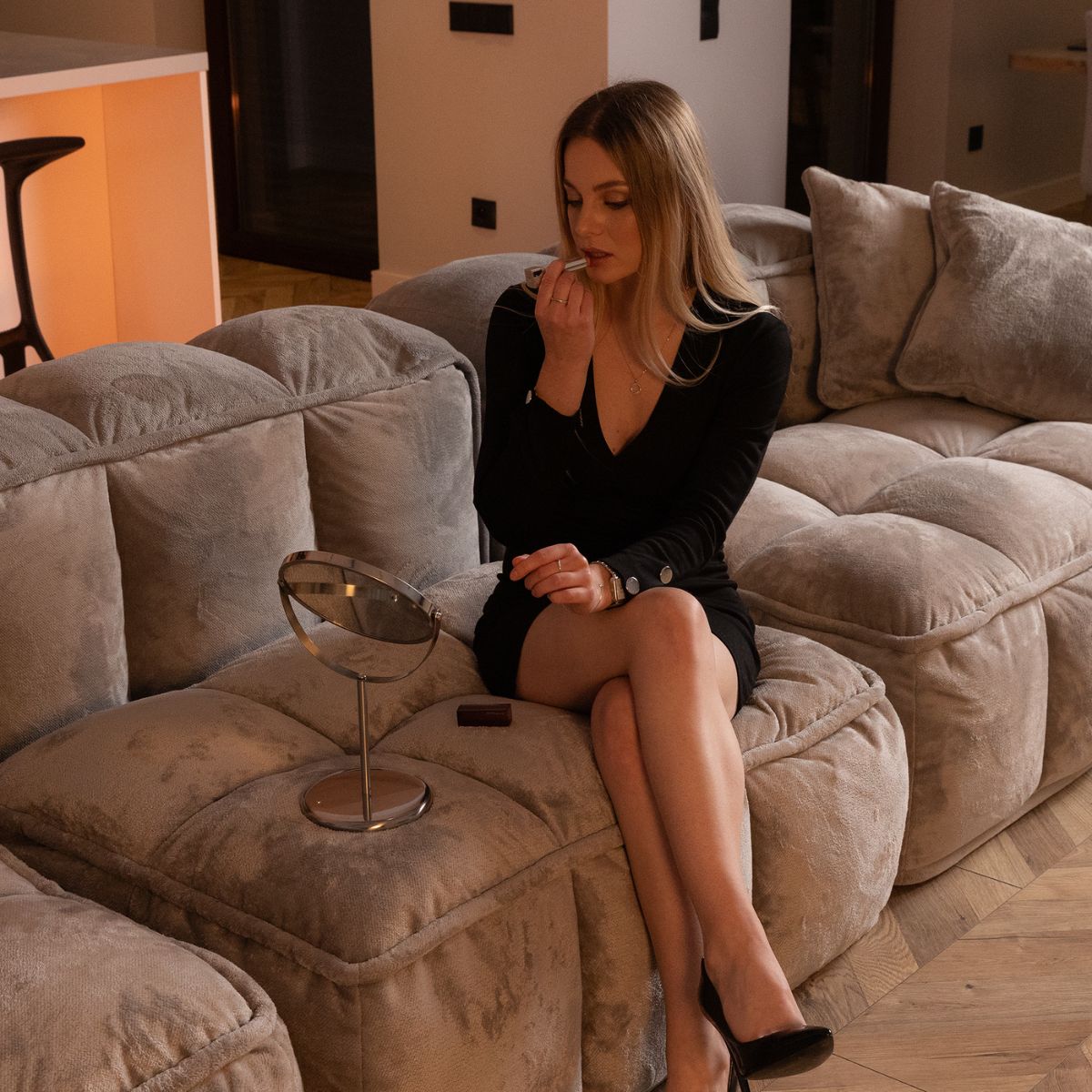
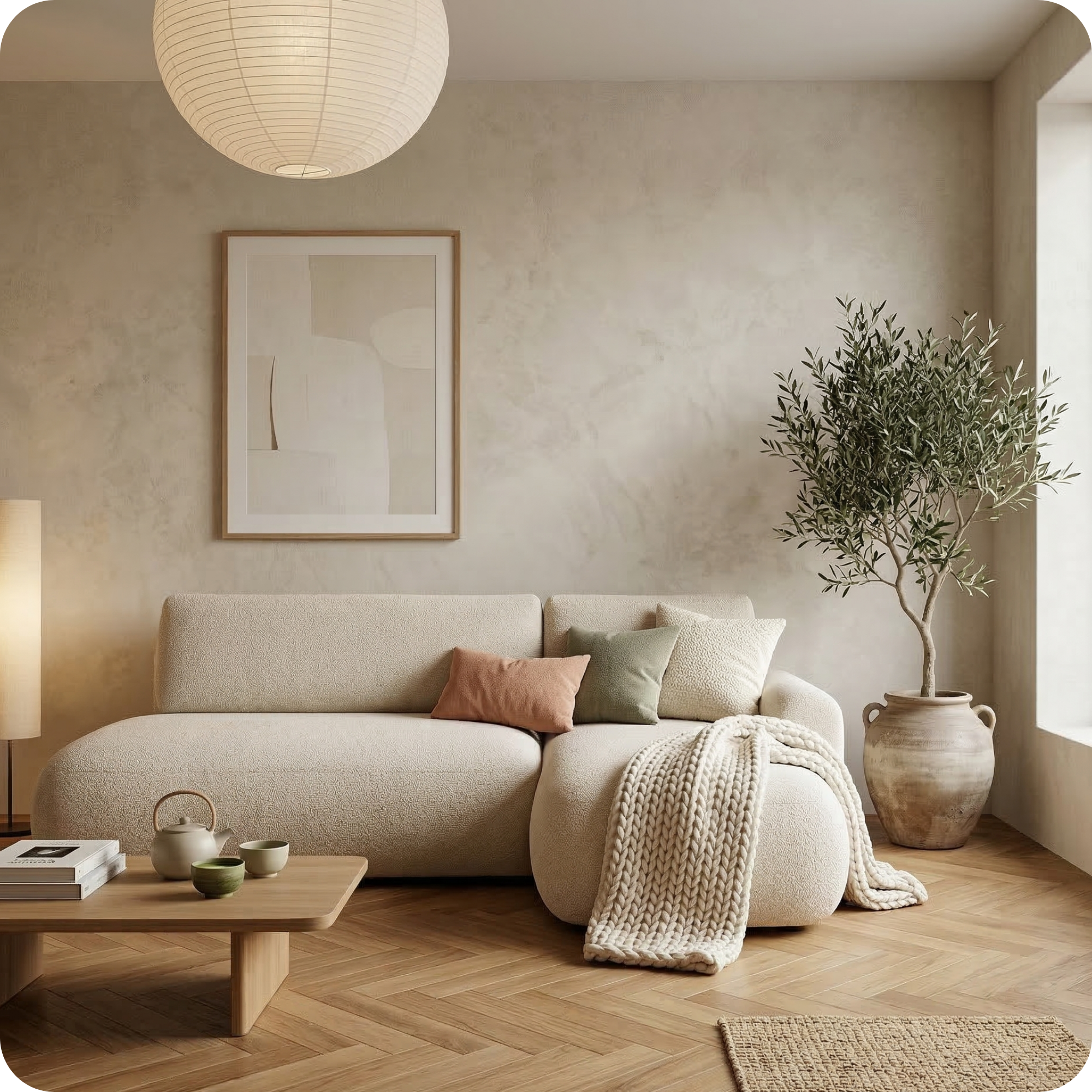
In a white living room, a sand-coloured sofa like the Lugano adds the warmth that prevents the space from feeling cold or clinical. The sand tone sits harmoniously with warm white walls — close enough not to create jarring contrast, but distinctly enough to ground the room and give the eye somewhere to rest. It also provides a natural base for adding deeper accent tones through cushions: terracotta, warm rust, forest green, or deep indigo all read beautifully against sand in a white-walled room.

Riva 3-Seater Sofa — from EUR 1.090
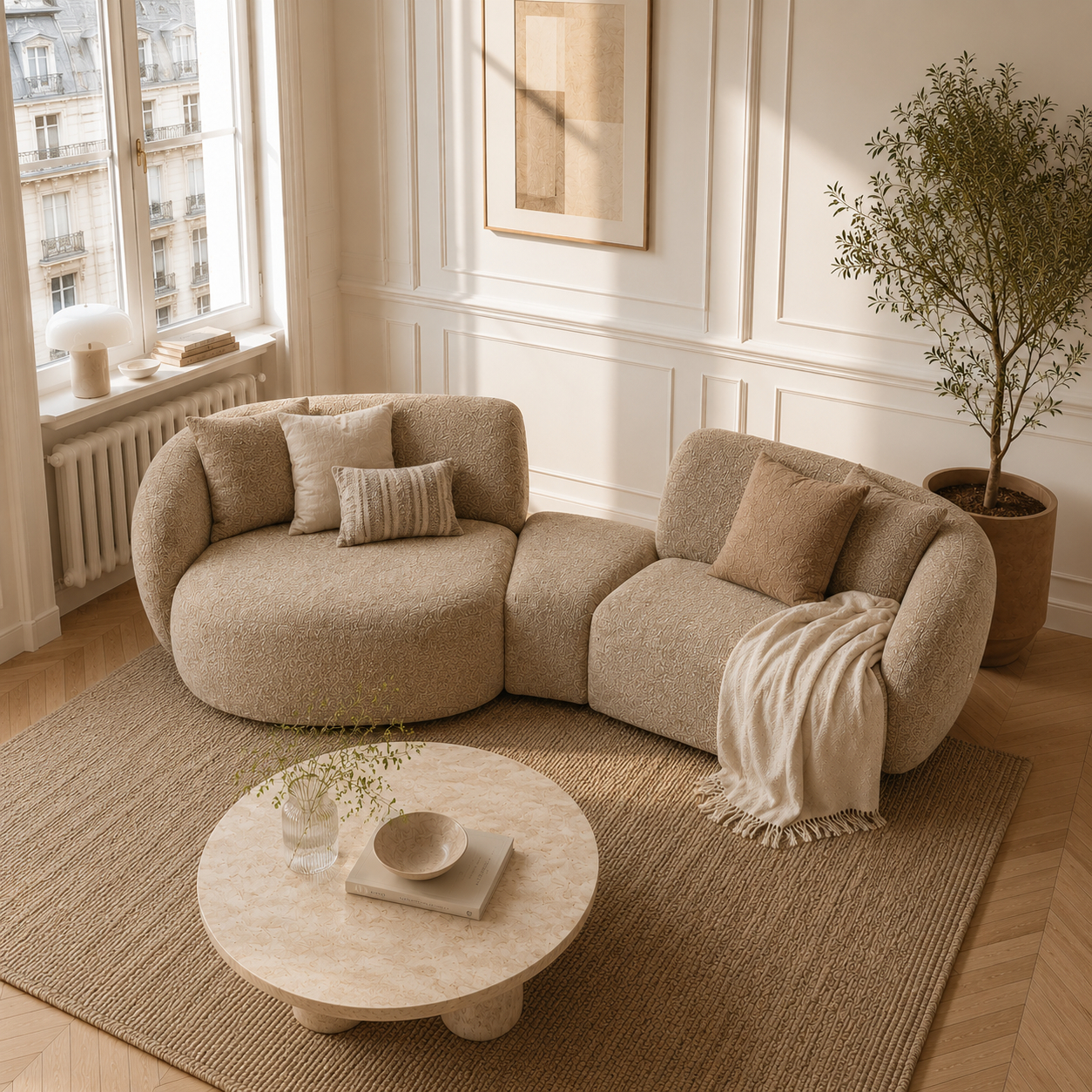
For those who want a lighter, more monochromatic white living room, a sofa in a light tone — cream, pale grey, or soft oatmeal — keeps the palette cohesive while still providing visual separation from white walls. The key to making this work is adding texture: a chunky knit throw, a bouclé cushion, a jute rug, wooden accessories. In an all-pale room, texture is what creates visual interest and prevents the space from feeling flat.
Texture Is Everything in a White Room
In a colourful room, colour creates visual interest and depth. In a white room, texture takes on that role entirely. The most successful white living rooms layer multiple textures in the same tonal palette: rough linen cushions against a smooth sofa fabric; a nubbly jute or sisal rug under a smooth coffee table; raw wood or woven rattan accessories alongside polished ceramic or glass. The interplay of matte and shiny surfaces — a matte plaster wall alongside a gloss ceramic vase, a rough wood shelf against smooth white-painted brick — creates the visual richness that makes a white room feel alive rather than empty.
The Power of Natural Materials
Natural materials are the most reliable allies in a white room: they bring warmth, texture, and organic life that prevents the space from feeling synthetic. Wood is the most versatile — from pale ash and light oak to darker walnut and teak, all wood tones warm a white room. A wooden coffee table, floating shelves, picture frames, or sideboard introduces warmth without colour. Plants are one of the most powerful interventions in a white room: the irregular, living green of a large leaf plant against a white wall is difficult to replicate with any other material. Woven materials — jute, rattan, seagrass — add texture and earthiness that pure white rooms especially benefit from.
Strategic Warmth: Where to Introduce It
Even if your goal is a predominantly white room, strategic introductions of warmth prevent the clinical feeling. A warm-toned area rug (ivory, oatmeal, jute) grounds the room and adds comfort. Warm-white bulbs rather than daylight bulbs in all light fittings — table lamps, floor lamps, and any directional lighting — transform the evening character of the space from cold to inviting. Candles, both scented and unscented, add golden warmth. A curated arrangement of warm-toned objects — terracotta pottery, brass or gold hardware, warm wood accessories — used sparingly in clusters creates anchors of warmth against the white backdrop without compromising the clean, airy quality of the overall palette.

Hinterlasse einen Kommentar
Diese Website ist durch hCaptcha geschützt und es gelten die allgemeinen Geschäftsbedingungen und Datenschutzbestimmungen von hCaptcha.