



Industrial Living Room Ideas: How to Achieve the Urban Loft Look
Industrial interior design takes its visual language from converted factories, warehouses, and urban loft spaces. It celebrates the honest, unfinished qualities of materials — raw concrete, exposed brick, bare steel, aged wood — and creates an aesthetic that is simultaneously rough and refined, masculine and sophisticated. Industrial design is not simply about leaving things unfinished; at its best, it is about a very specific sensibility: appreciating the beauty of functional materials, honest construction, and the patina of age and use. The result is a living room that feels urban, confident, and completely original.
The Industrial Palette: Dark, Raw, and Textural
The industrial colour palette is dark, monochromatic, and textural. Black, charcoal, raw steel grey, concrete grey, and deep brown are the dominant tones. These are warmed with the natural tones of aged wood and leather, and occasionally punctuated with a single accent colour — a deep emerald, a burnt orange, or a muted mustard — that adds a moment of warmth without softening the overall edge of the space. Exposed brick walls in their natural terracotta or grey tones are the ideal industrial wall treatment; where brick is not available, a concrete effect paint or dark grey limewash is a convincing alternative.

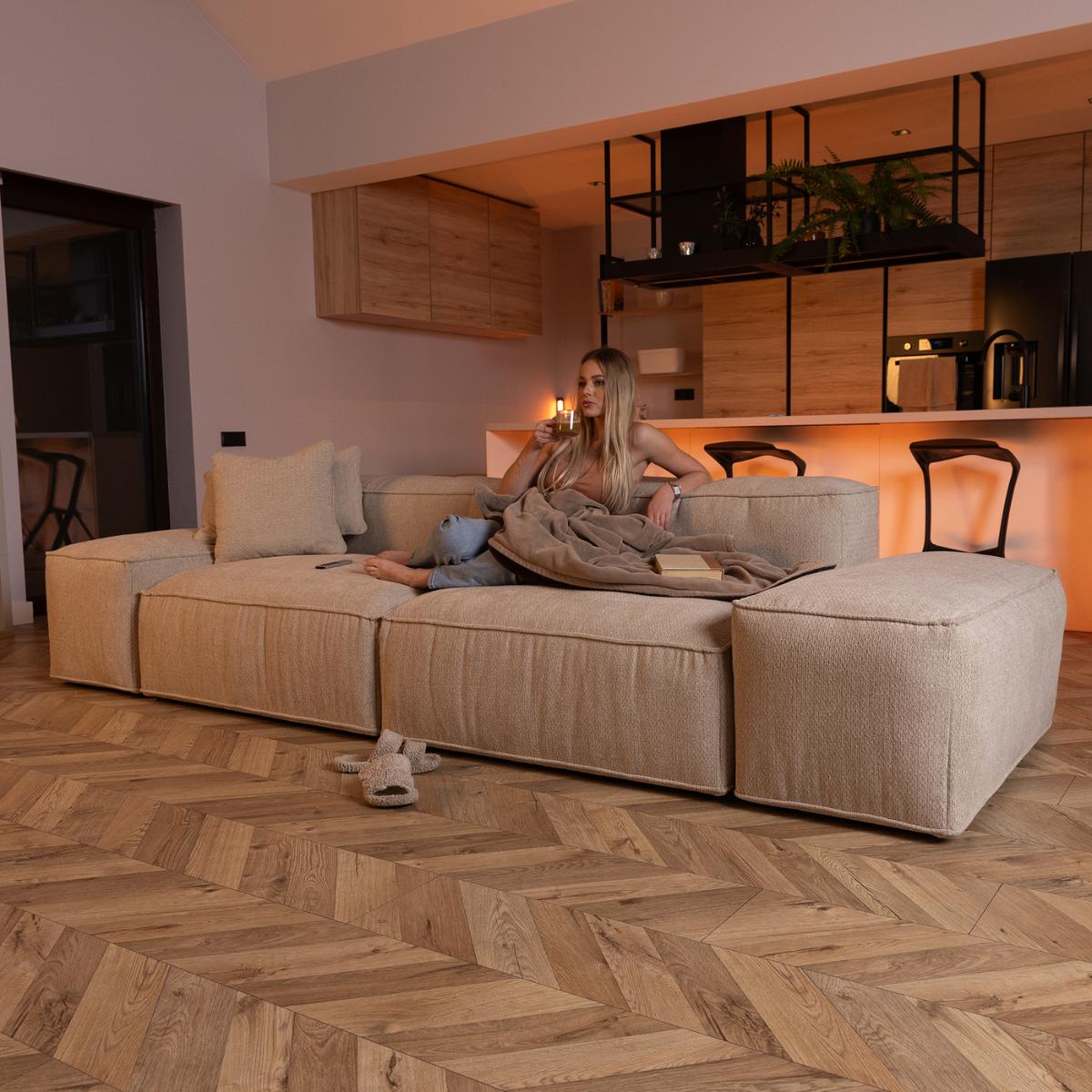
Malbec Modular Sofa — from EUR 1,190
The Malbec's deep, textured upholstery works perfectly in an industrial living room. Its strong, architectural silhouette and warm-dark tone create the ideal anchor for a raw, loft-inspired space — pair with steel shelving, exposed concrete, and black metal pendant lighting.

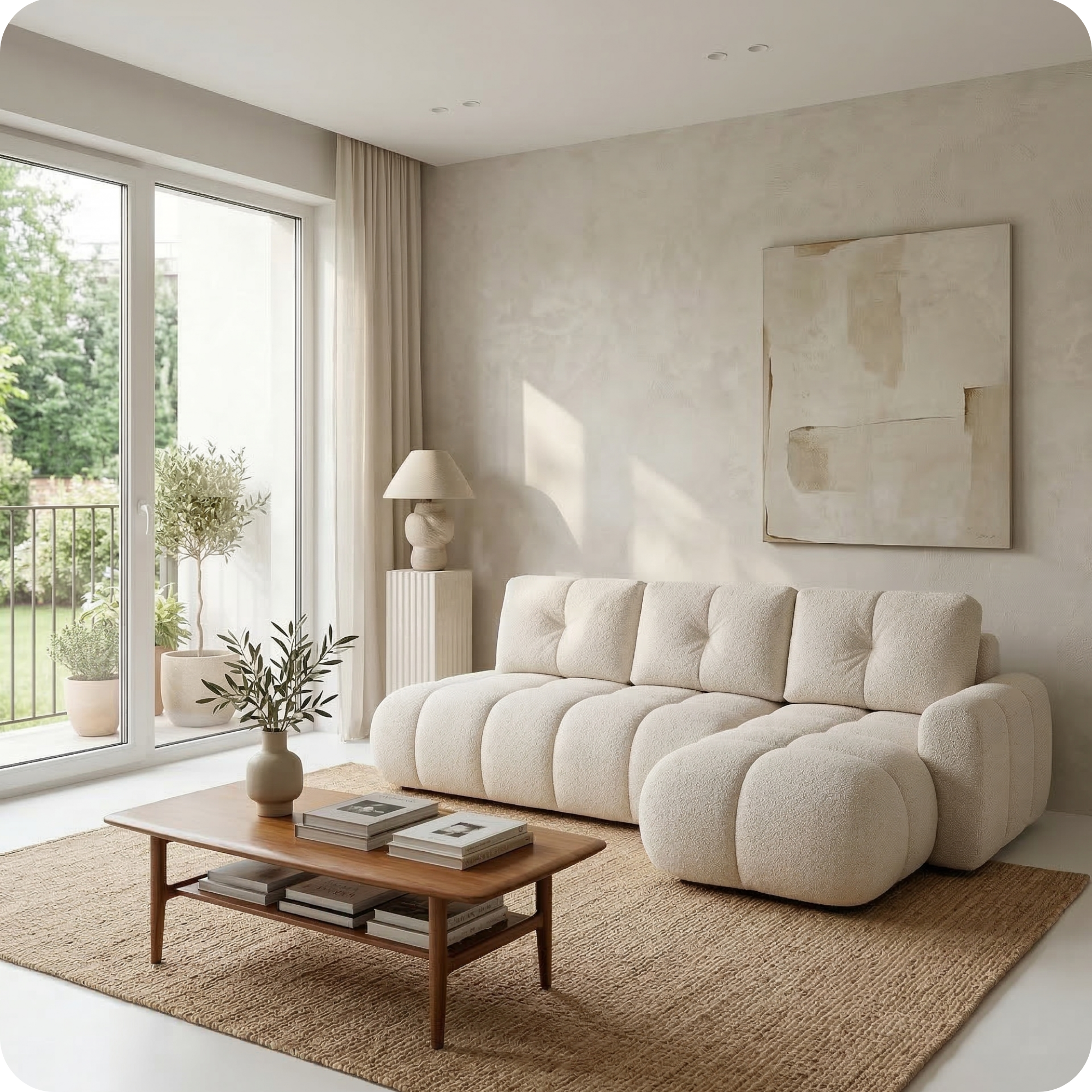
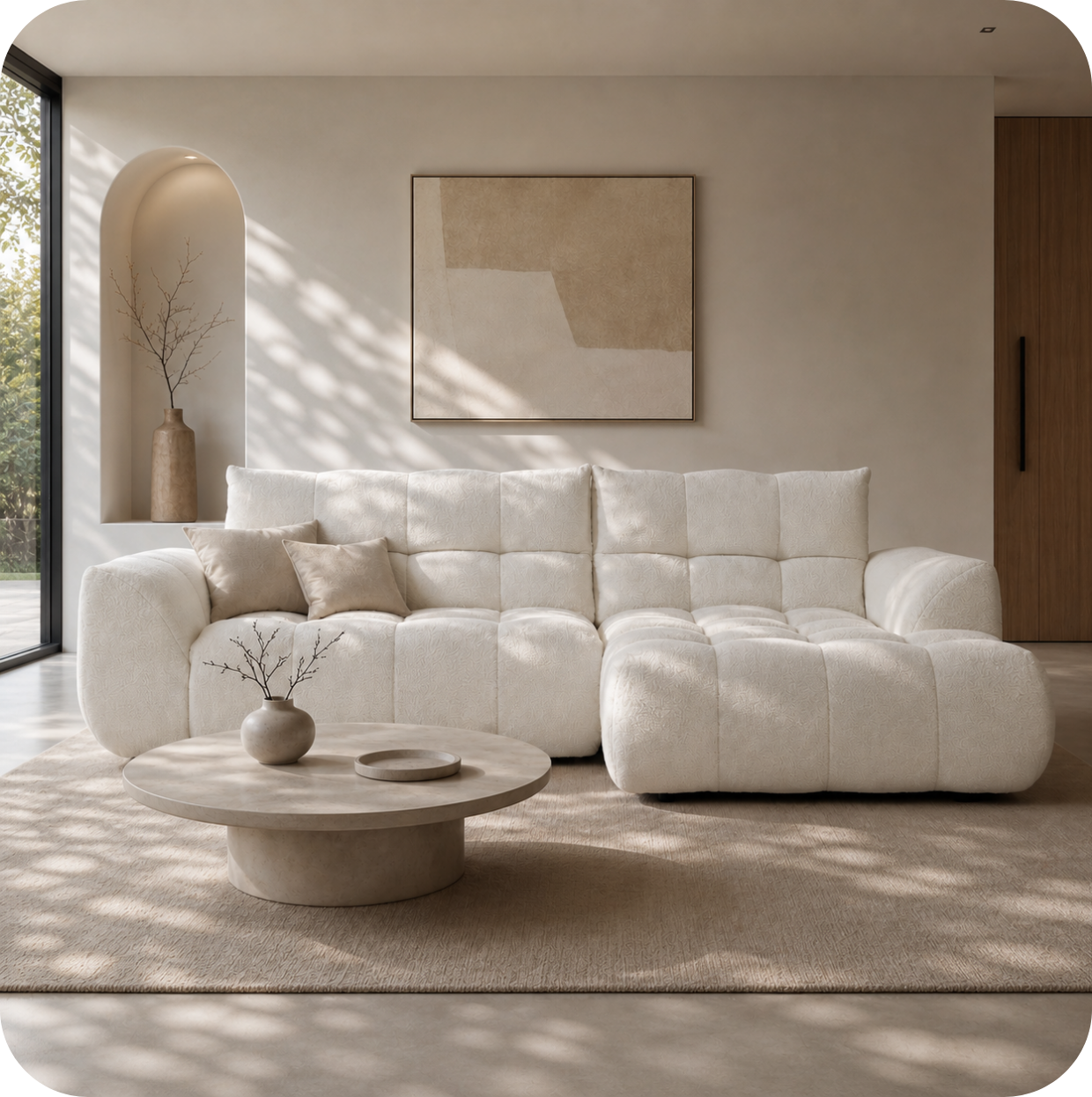
Asti Corner Sofa — from EUR 1,190
The Asti's bold, contemporary silhouette translates beautifully into an industrial setting. Its generous scale and clean angles work with the raw, structural character of industrial interiors — grounding the space and providing a comfortable counterpoint to the hard surfaces and raw materials.
Key Industrial Design Elements
Certain elements are essential to the industrial aesthetic. Exposed structural elements — steel beams, metal pipes, brick walls, concrete ceilings — are celebrated rather than concealed. Metal is used extensively: steel shelving units, iron-framed windows, black metal light fittings, and furniture with welded or riveted metal legs all contribute to the industrial character. Lighting is particularly important: vintage-style Edison bulb pendants, wire cage lights, and large industrial-style floor lamps in black or gunmetal create the characteristic amber glow of the industrial interior. Aged, reclaimed wood — in flooring, furniture, shelving — provides warmth and contrast against the harder metal and concrete surfaces.
Softening the Industrial Look
A purely industrial interior can feel cold and uncomfortable. The key is softening the rawness with carefully chosen elements that add warmth and comfort without compromising the overall aesthetic. A large, warm-toned area rug — Persian, kilim, or a simple textured wool rug in grey or rust — introduces softness and warmth underfoot. Leather furniture adds tactile luxury. Books, art, and plants introduce life. The goal is to balance the hard, raw, structural elements with enough warmth and softness to make the space feel comfortable and inhabitable — an urban living space, not a building site.

Hinterlasse einen Kommentar
Diese Website ist durch hCaptcha geschützt und es gelten die allgemeinen Geschäftsbedingungen und Datenschutzbestimmungen von hCaptcha.