

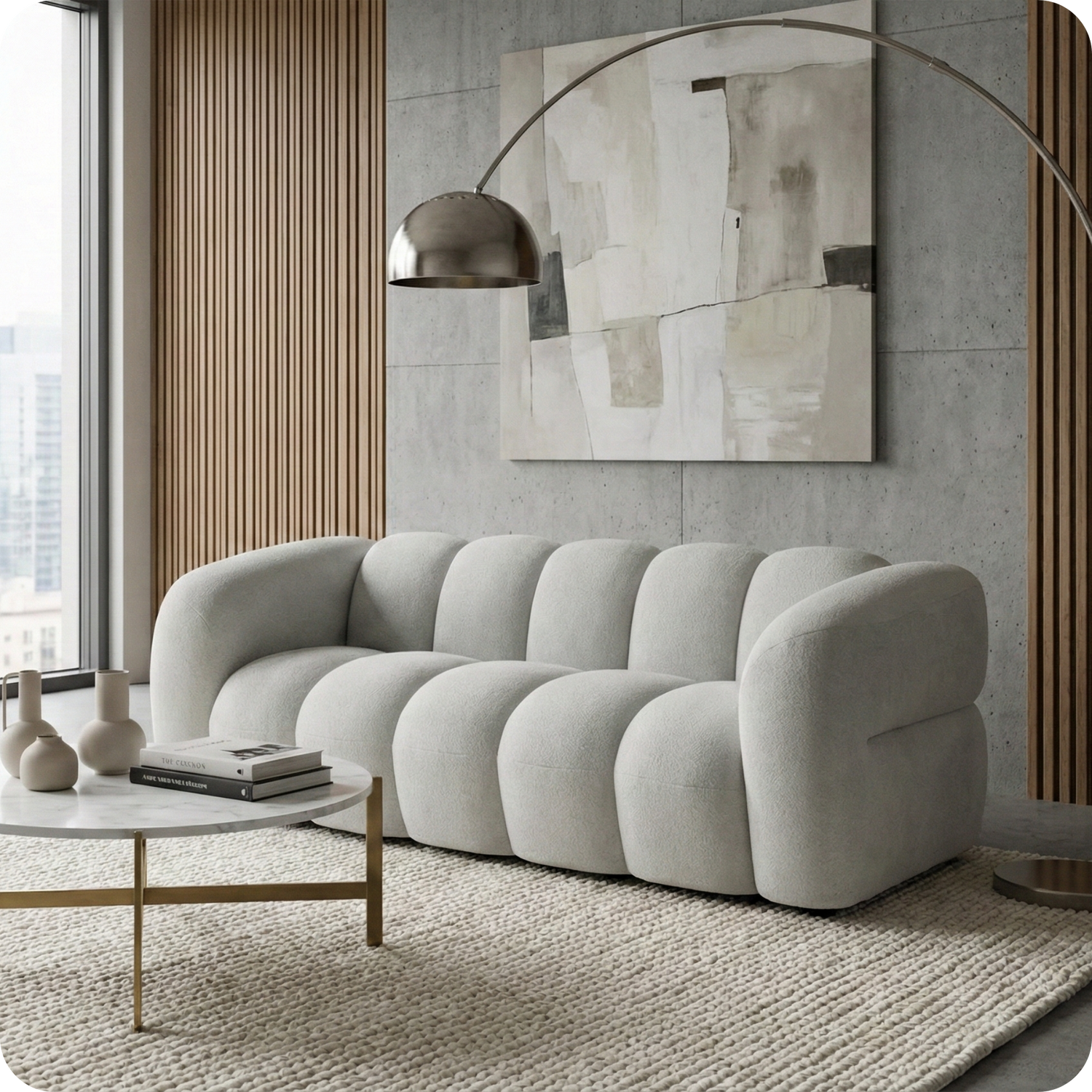
Living Room Accent Wall Ideas: 10 Ways to Transform a Single Wall
An accent wall — a single wall treated differently from the rest of the room — is one of the most impactful and cost-effective ways to transform a living room. Done well, it creates a focal point that anchors the space and pulls the whole room together. Done poorly, it can feel arbitrary and disconnected. The key is intentionality: the accent wall should feel like it was designed for the room, not added as an afterthought. Here are ten of the best approaches.
1. Deep Colour — The Classic Accent Wall
Painting a single wall in a bold, deep colour while leaving the remaining walls neutral is the original accent wall technique — and it endures because it works. The ideal accent wall colour is two to three shades deeper or more saturated than the room's base colour. A room with warm greige walls benefits from a wall in deep rust or forest green. A neutral white room comes alive with a wall in slate blue or charcoal. The wall behind the sofa is typically the best candidate — it frames the main seating area and creates a sense of backdrop.
2. Wallpaper — Pattern, Depth, and Character
A single wallpapered wall can introduce pattern, texture, and character to a living room in a way that paint simply cannot. Botanical prints, geometric patterns, large-scale abstract designs, and textured grasscloth wallpapers are all popular accent wall choices. The scale of the pattern matters enormously: in a small room, a large-scale print can overwhelm; in a large room, a small repeat can disappear. Apply wallpaper only to the wall that is most visible on entry — this creates the strongest impact.
3. Exposed Brick — Industrial Warmth
Exposed brick — whether genuine structural brick or a high-quality brick slip tile — brings warmth, texture, and an organic quality to a living room that feels both grounded and characterful. Natural brick works best in warm-toned rooms; painted white or grey brick can work in cooler, more Scandinavian-influenced schemes. A brick accent wall behind a fireplace or stove is a particularly successful combination.

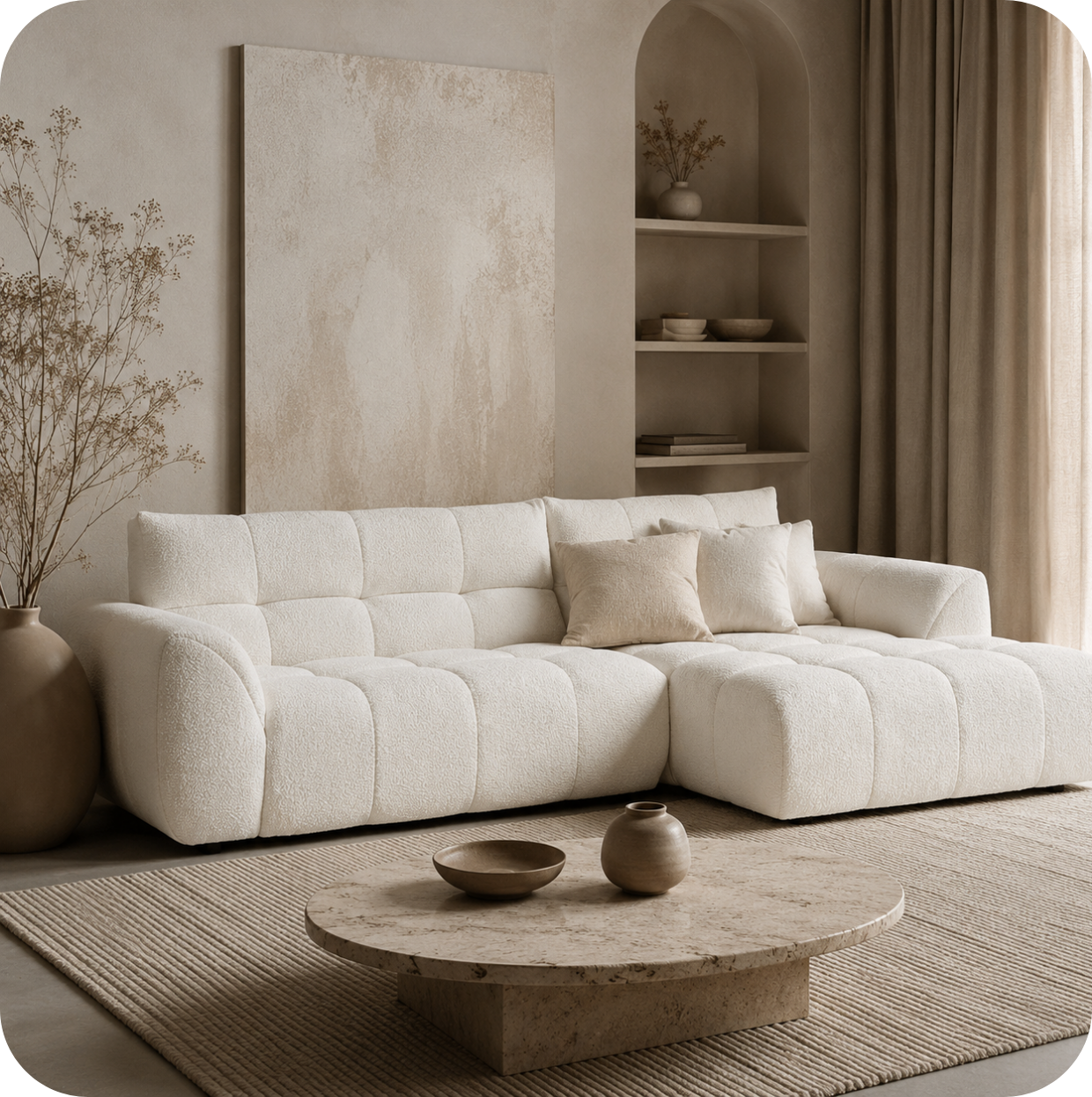
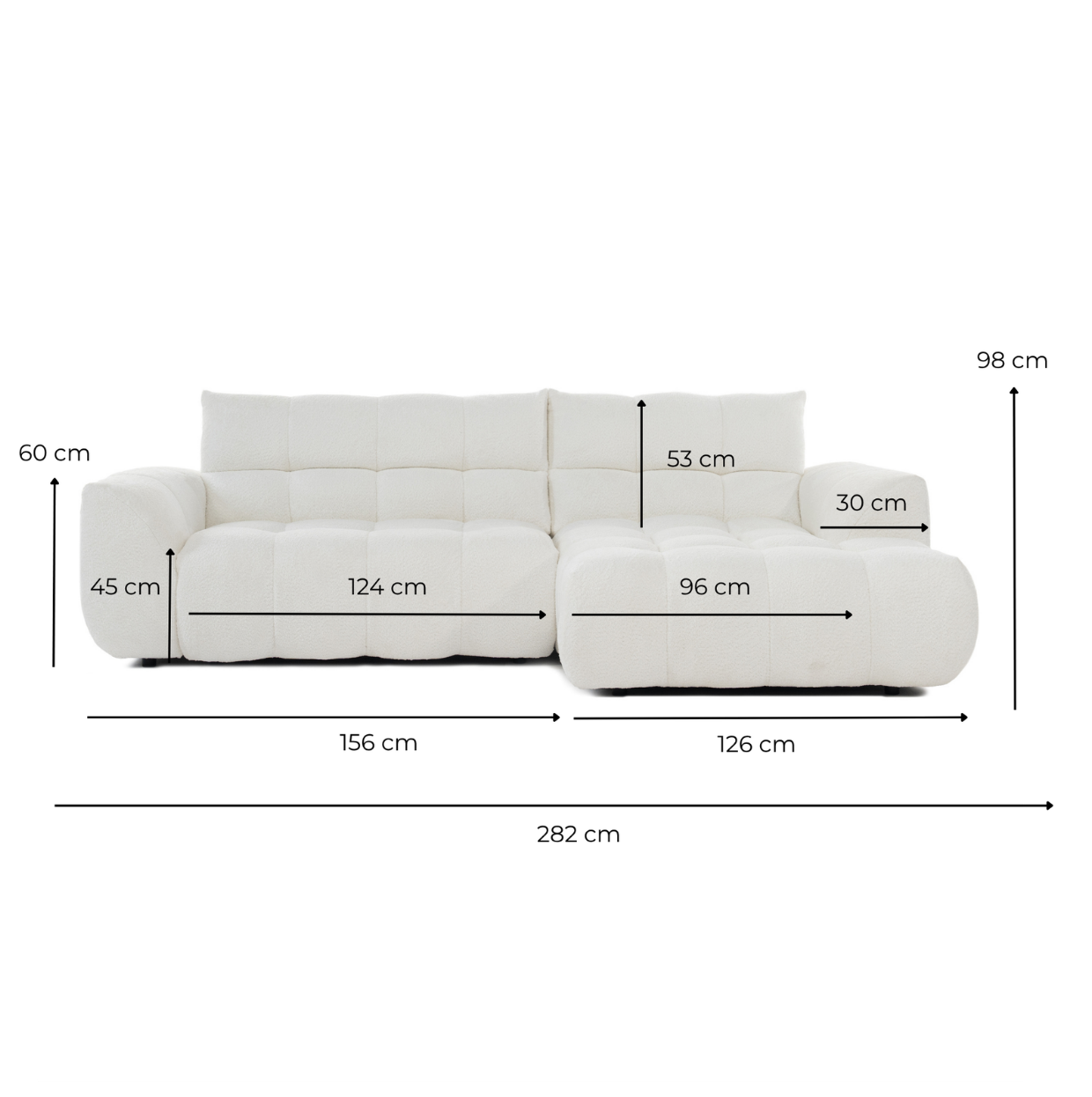
Lugano Sofa in Light Grey — from €1,299
A light grey sofa positioned against an accent wall — whether deep colour, textured wallpaper, or exposed brick — is one of the most successful combinations in contemporary interior design. The neutrality of the sofa allows the wall to be the star.

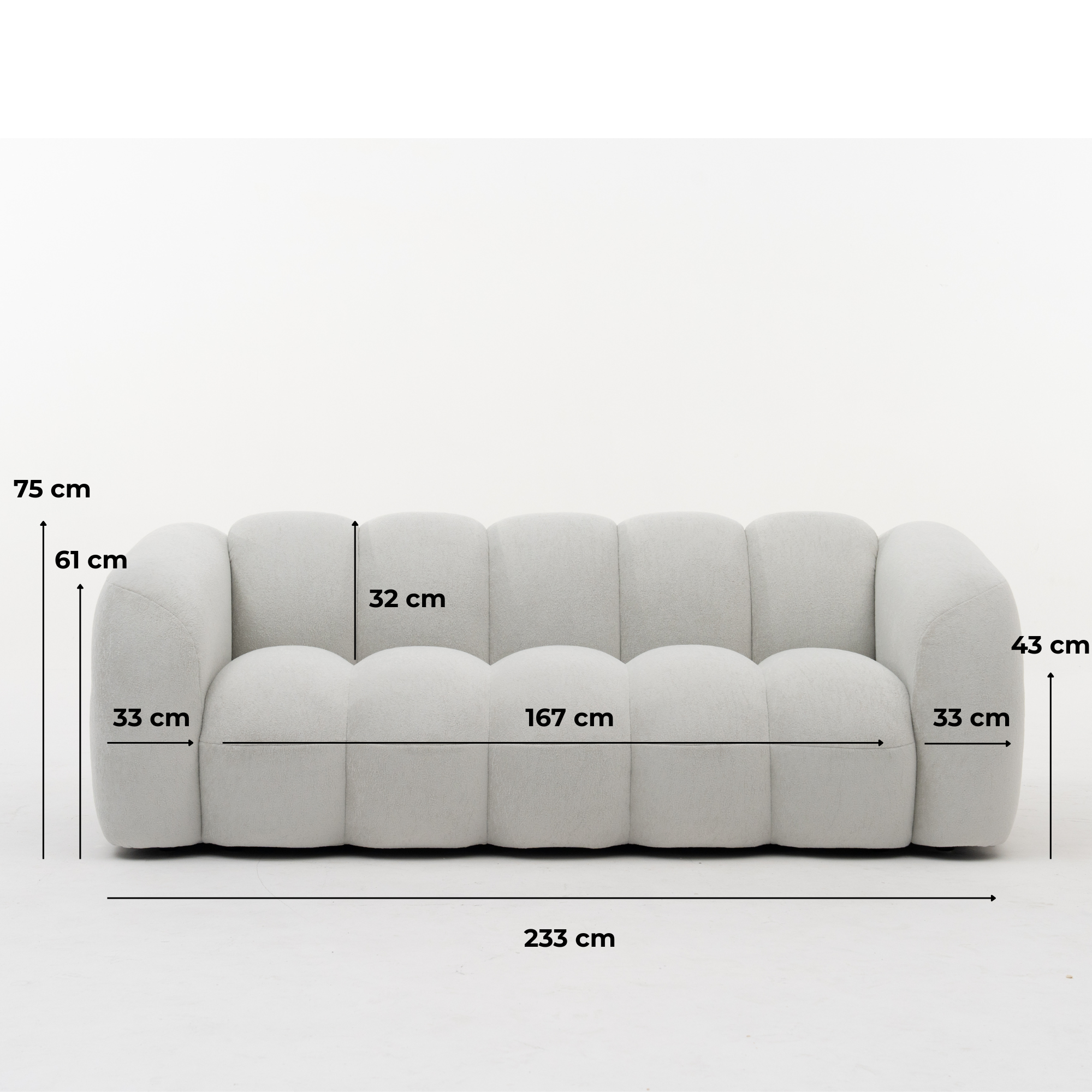
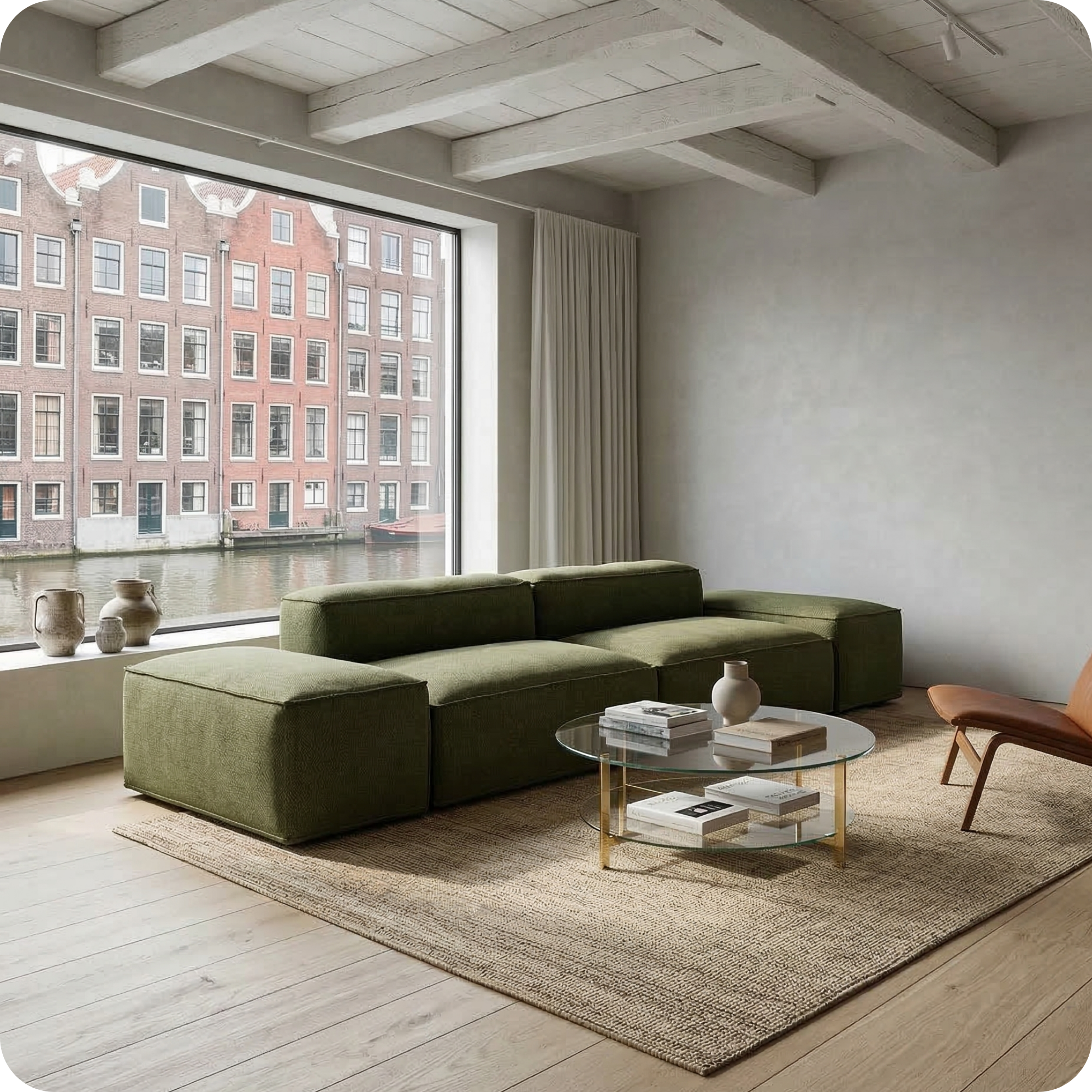
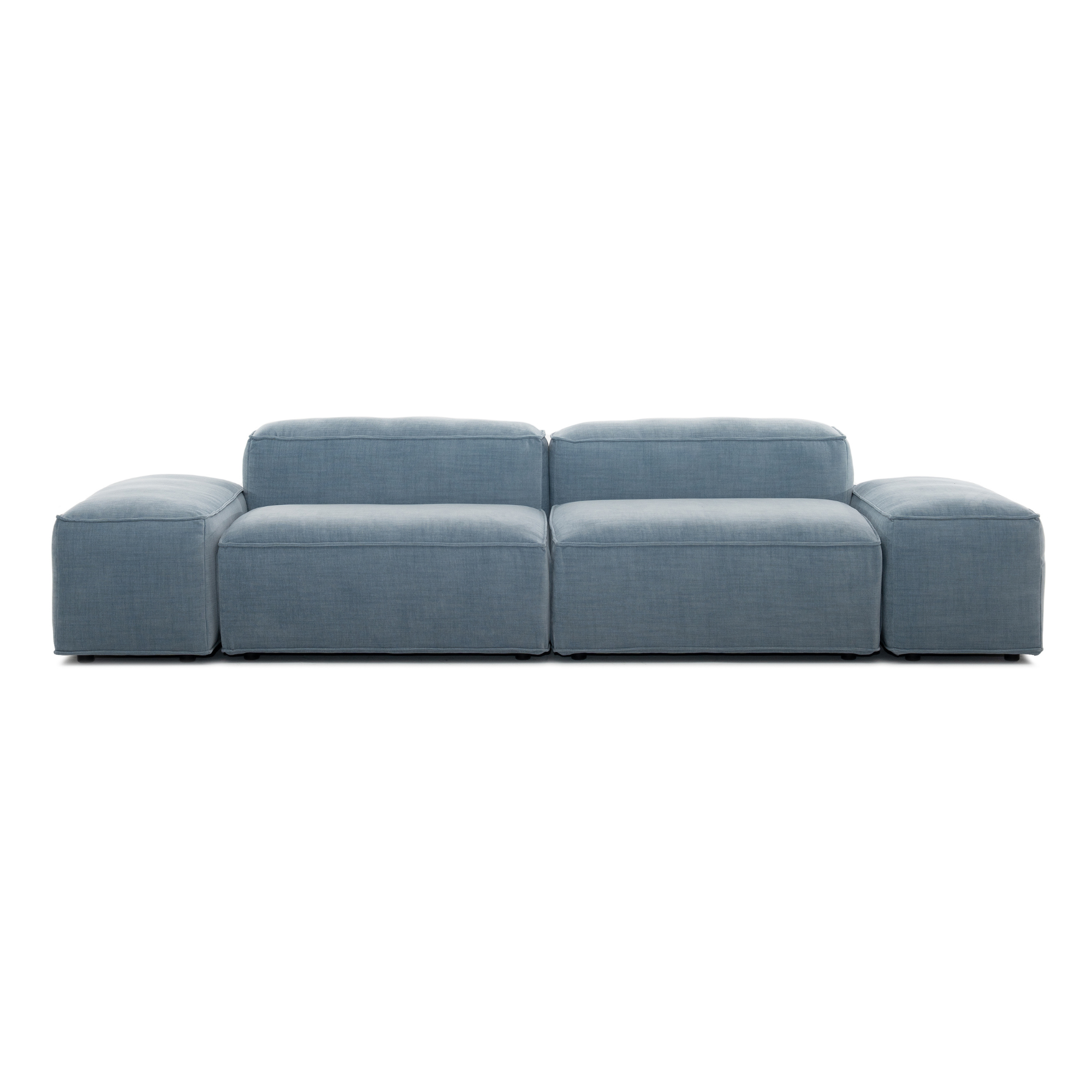
Riva 3-Seater Sofa — from €999
The Riva's clean, architectural lines complement a bold accent wall beautifully — its simple form doesn't compete with the wall's visual interest, but grounds the space and completes the composition.
4. Timber Cladding and Wood Panelling
Timber cladding, shiplap, and wood panelling have become enormously popular accent wall treatments — and for good reason. They add depth, warmth, and texture to a room in a way that feels both natural and refined. Painted panelling in deep colours — navy, forest green, dark charcoal — is a particularly strong look for a living room. Natural wood cladding works best in Japandi, Scandinavian, and organic modern schemes.
5. Gallery Wall — Art as Architecture
A carefully curated gallery wall — multiple artworks arranged together on a single wall — can function as an accent wall in its own right. The key is curation and consistency: frames in a single metal finish, a consistent mat width, or a coherent colour palette across artworks. The wall behind the sofa is the classic gallery wall position.
6. Stone and Tile
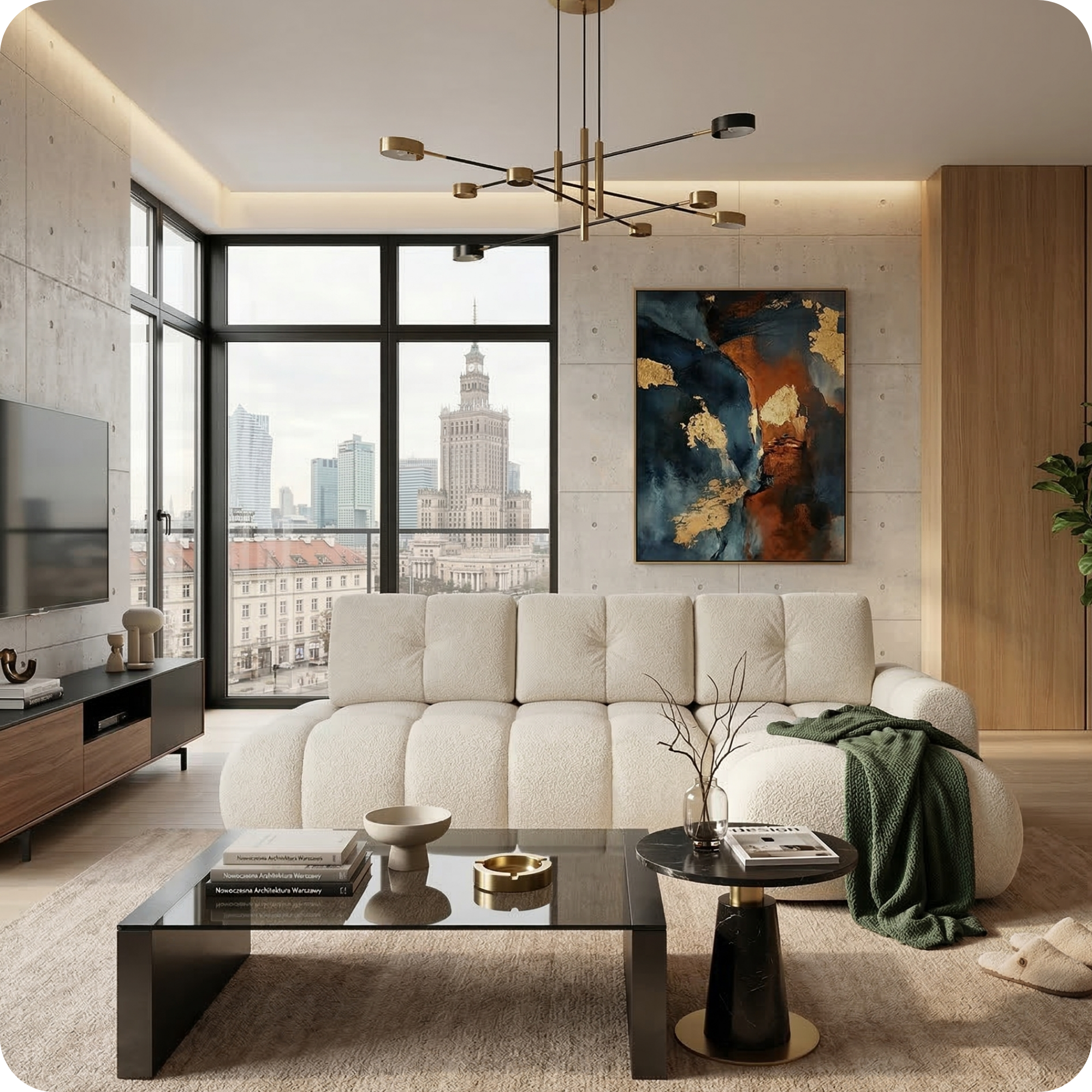
Large-format stone-effect tiles, travertine, marble, or slate applied to a single living room wall create a dramatically impactful accent feature. This approach works particularly well around fireplaces, on chimney breasts, or on the media wall behind a television. The tactile quality and natural variation of stone is impossible to replicate with paint or wallpaper.
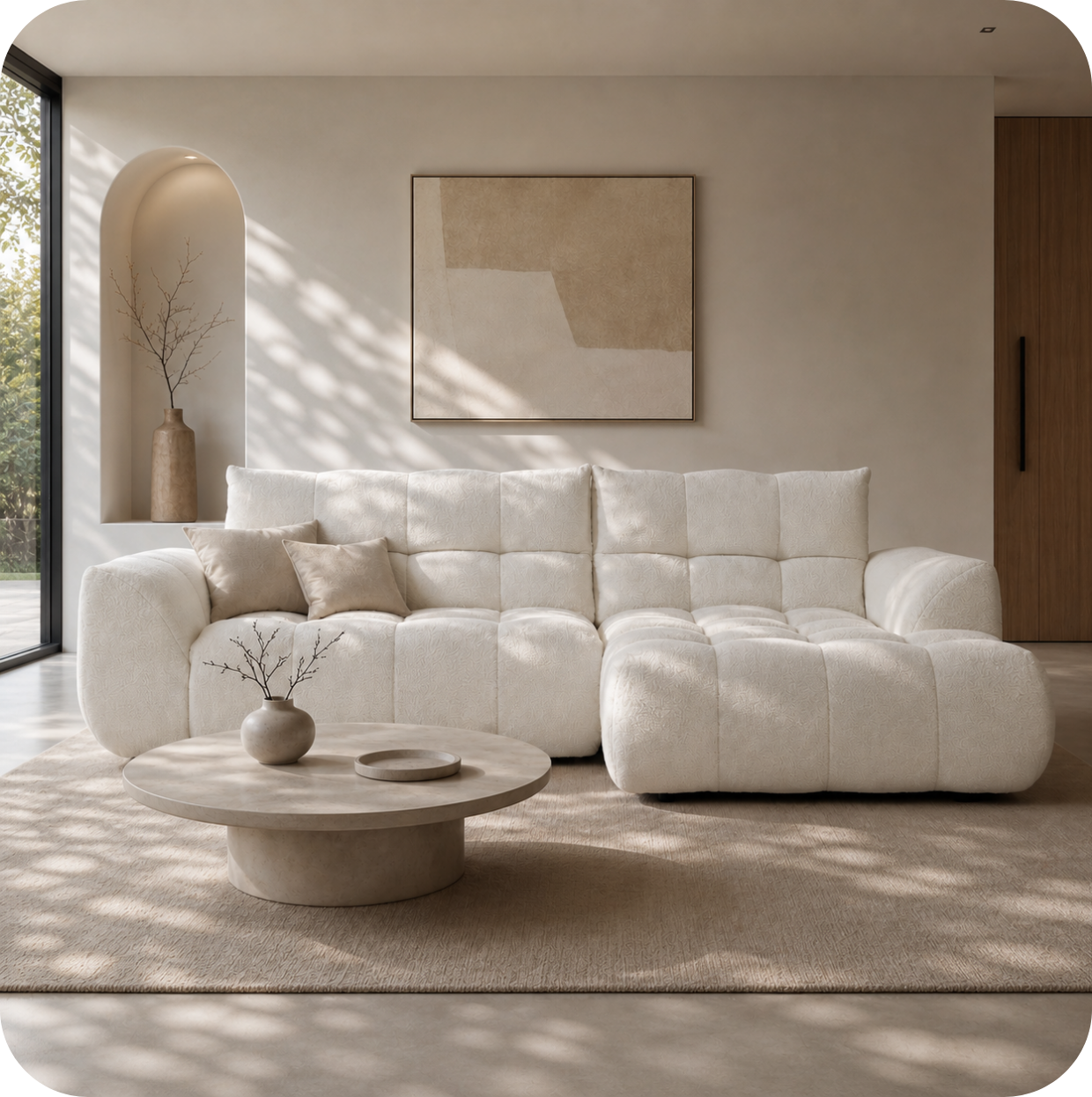
7. Arched and Geometric Painted Details
Rather than painting a full wall, consider using paint to create architectural details: a large arch shape, vertical stripes, a geometric blocked colour pattern, or a painted panel effect using painter's tape. These techniques add visual interest and a bespoke quality without the commitment of full wallpaper or dark colour across an entire wall.