

Living Room Lighting Ideas: How to Layer Light for a Beautiful Interior
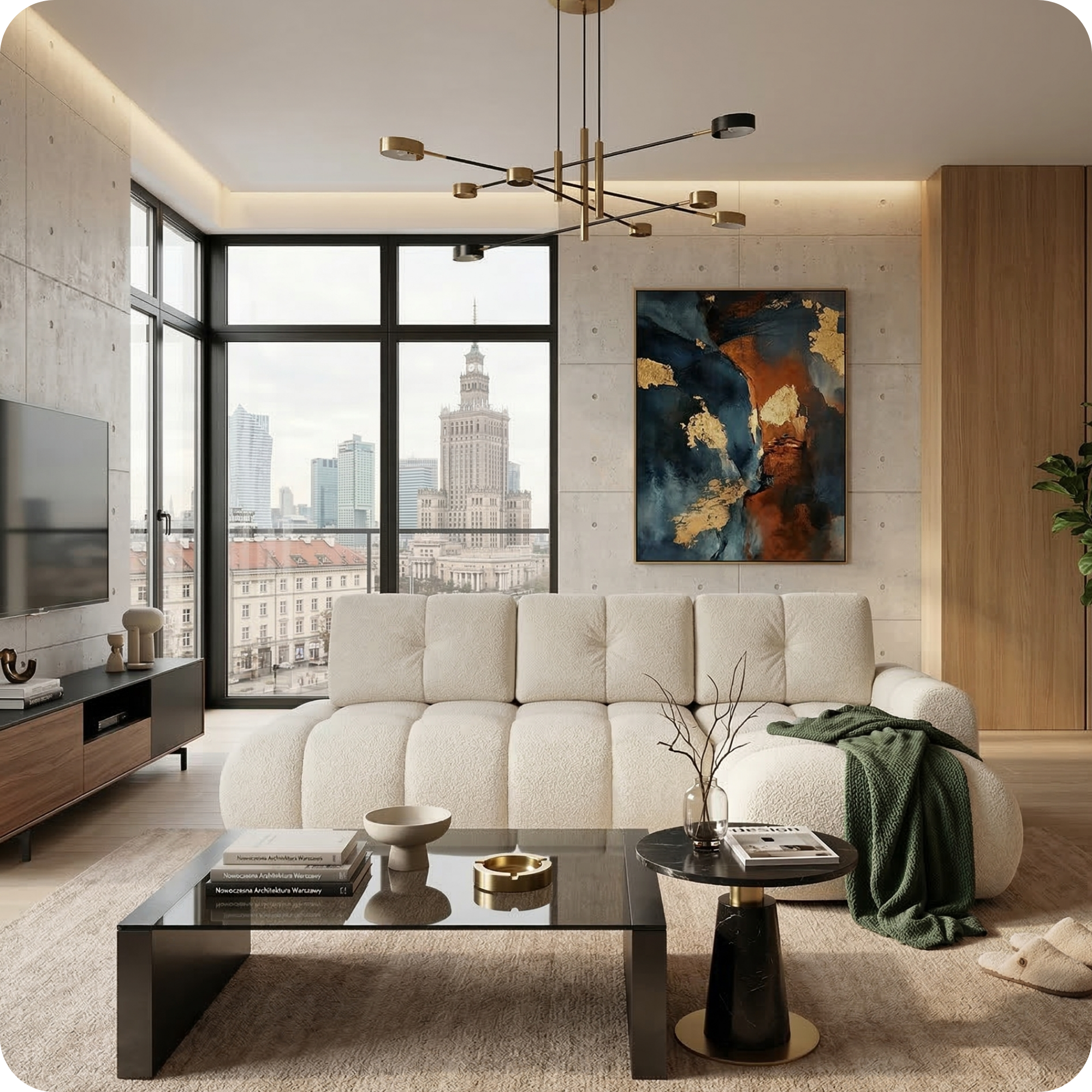
Lighting is the single most powerful tool in interior design — more powerful than colour, more transformative than furniture. A room with beautiful furniture but poor lighting will always feel flat and uninviting, while a room with modest furniture but well-designed lighting can feel warm, sophisticated, and magical. The key principle to understand is layered lighting: creating a room that has multiple, independently controllable light sources at different heights and for different purposes, rather than relying on a single overhead ceiling light to do everything. This guide explains how to plan and execute layered lighting in a living room.
The Three Layers of Living Room Lighting
The concept of layered lighting is built around three distinct types: ambient (general background light), task (focused functional light), and accent (decorative or highlight light). Ambient lighting provides the overall illumination of the room — it is the background layer that makes the space usable but shouldn't be overly bright. In a living room, ambient lighting typically comes from ceiling fixtures (pendants, recessed downlights, or flush mount) and sometimes from wall lights. Task lighting serves a specific functional purpose — reading lights beside a sofa, table lamps next to a chair, or under-shelf lighting for a home office corner. Accent lighting is the decorative layer — uplights illuminating a plant, picture lights over artwork, strip lights inside shelving units, or candles — that adds visual interest and atmosphere.

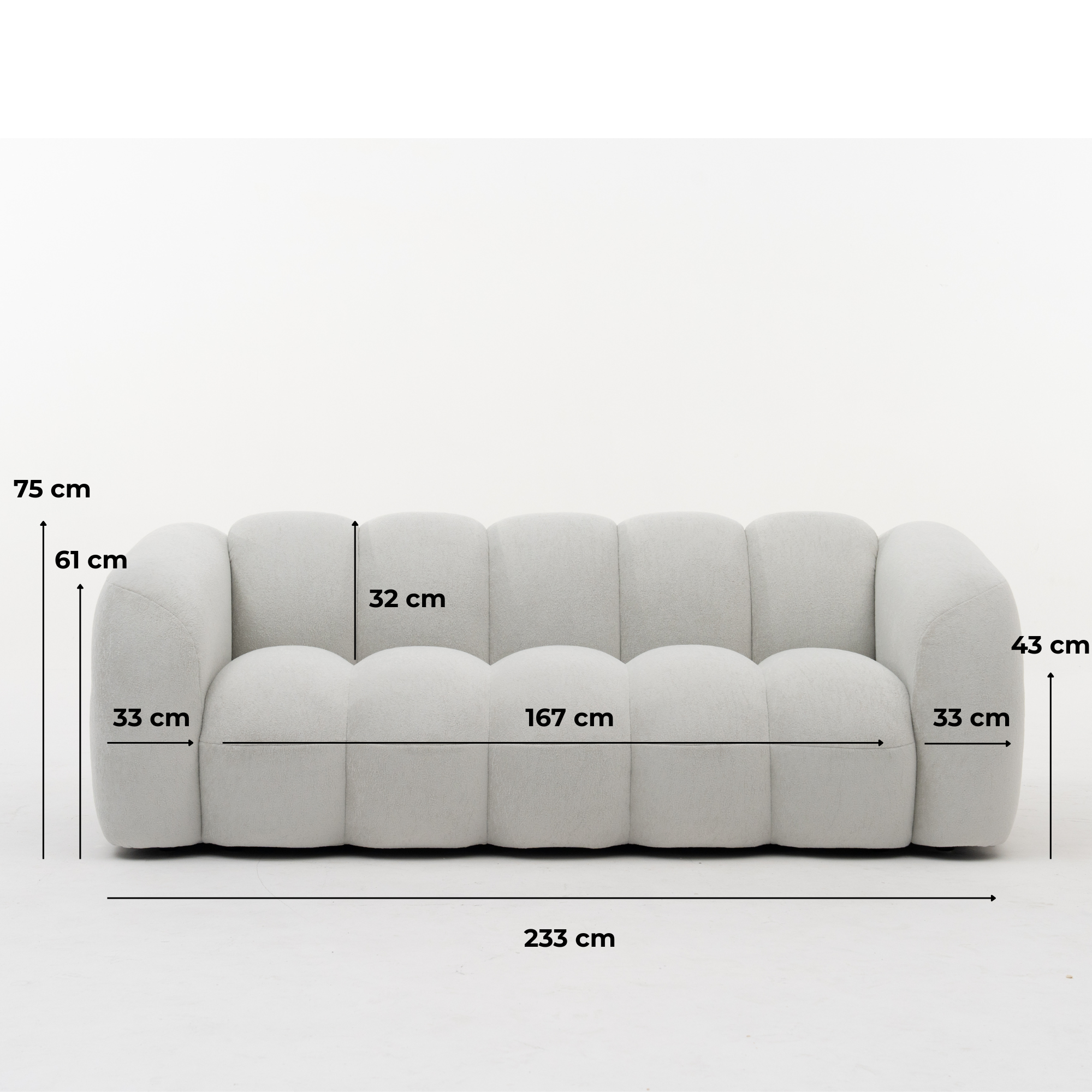
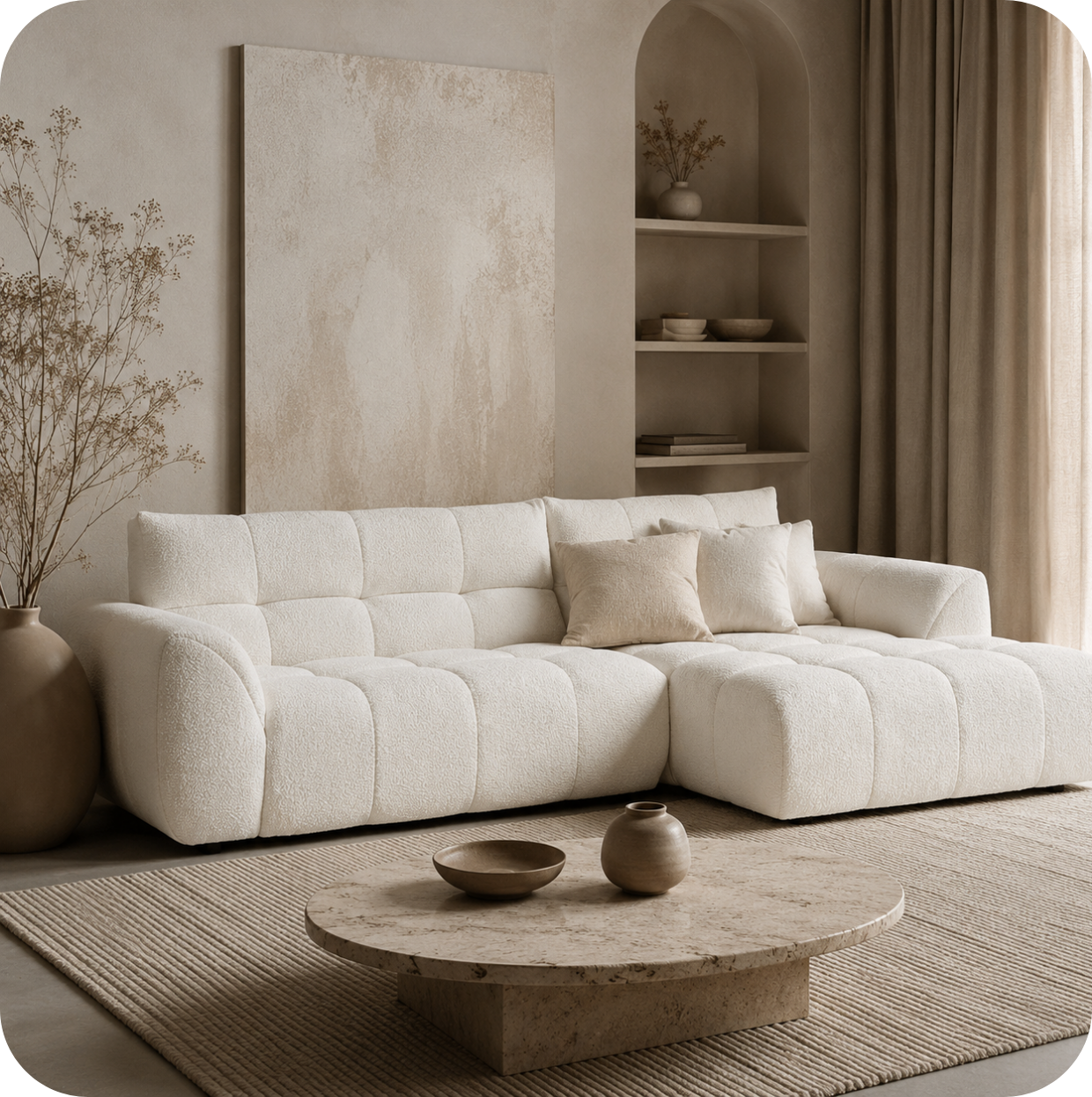
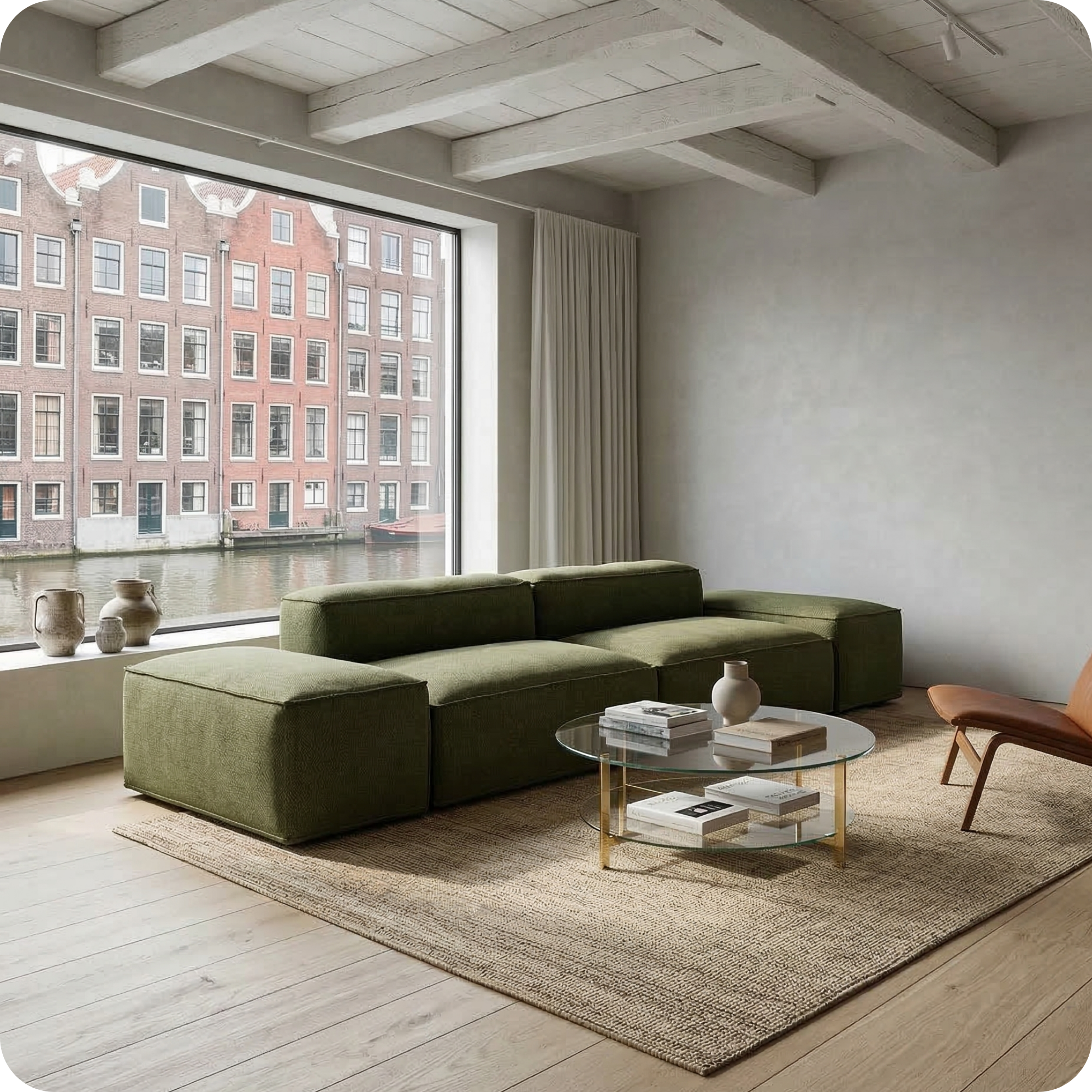
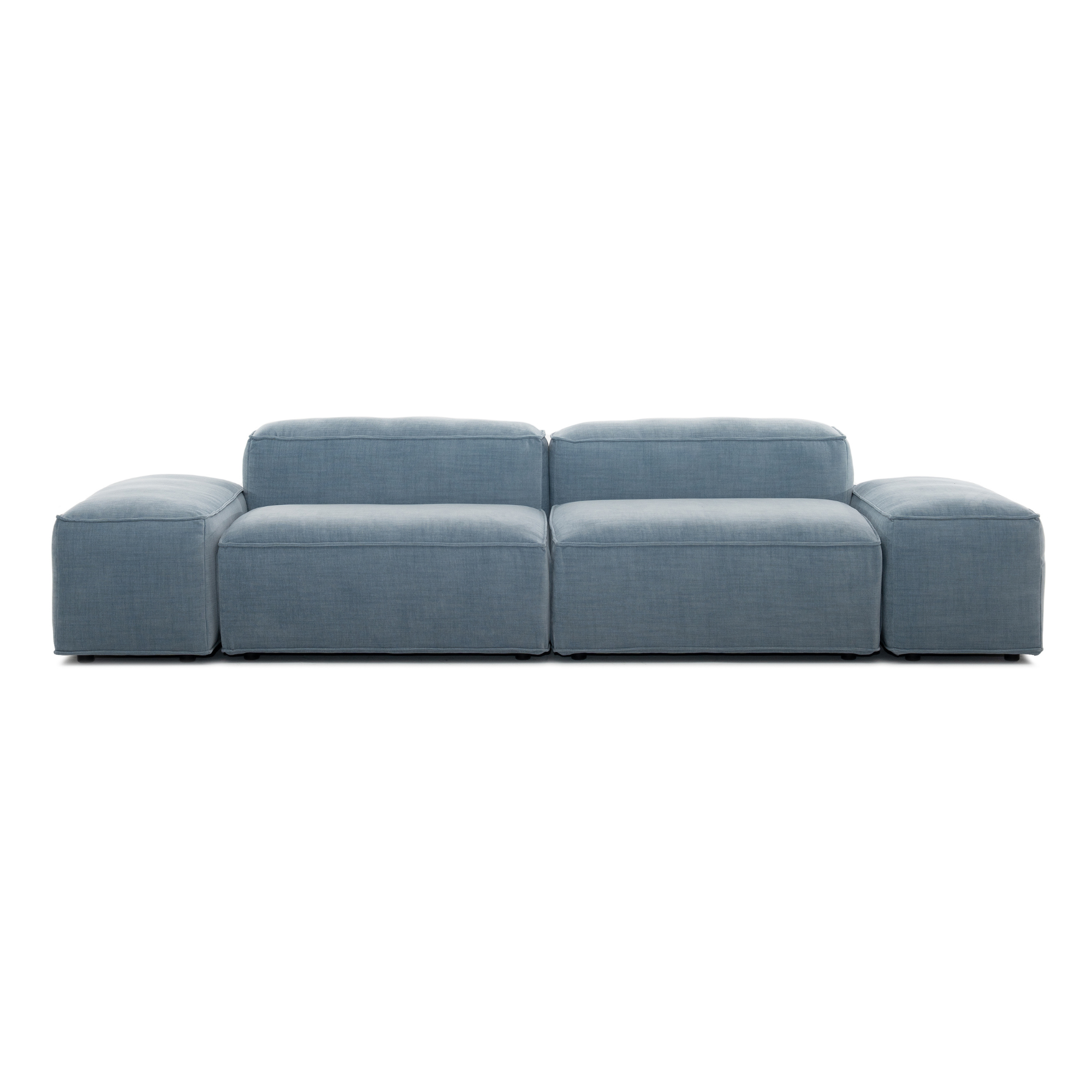
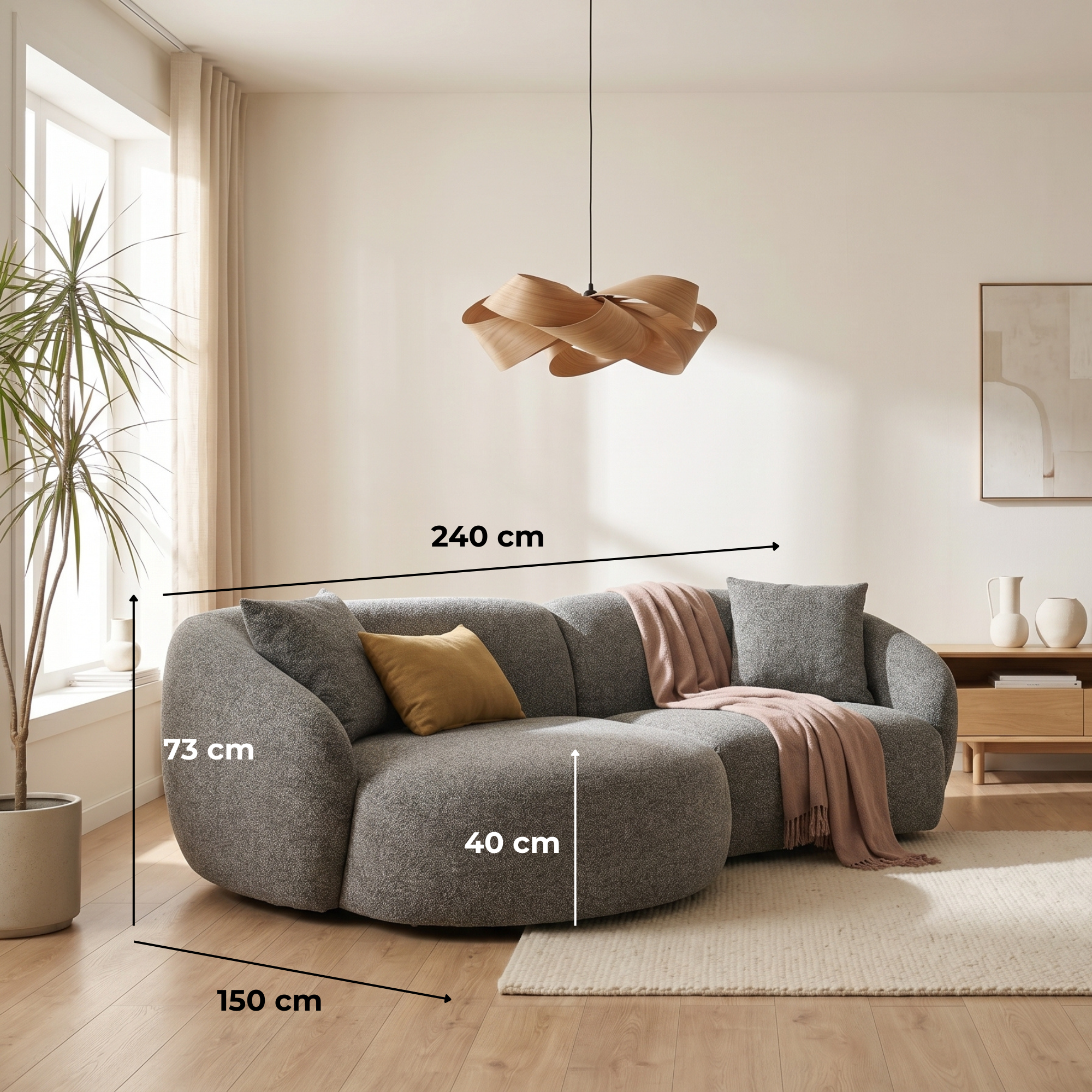
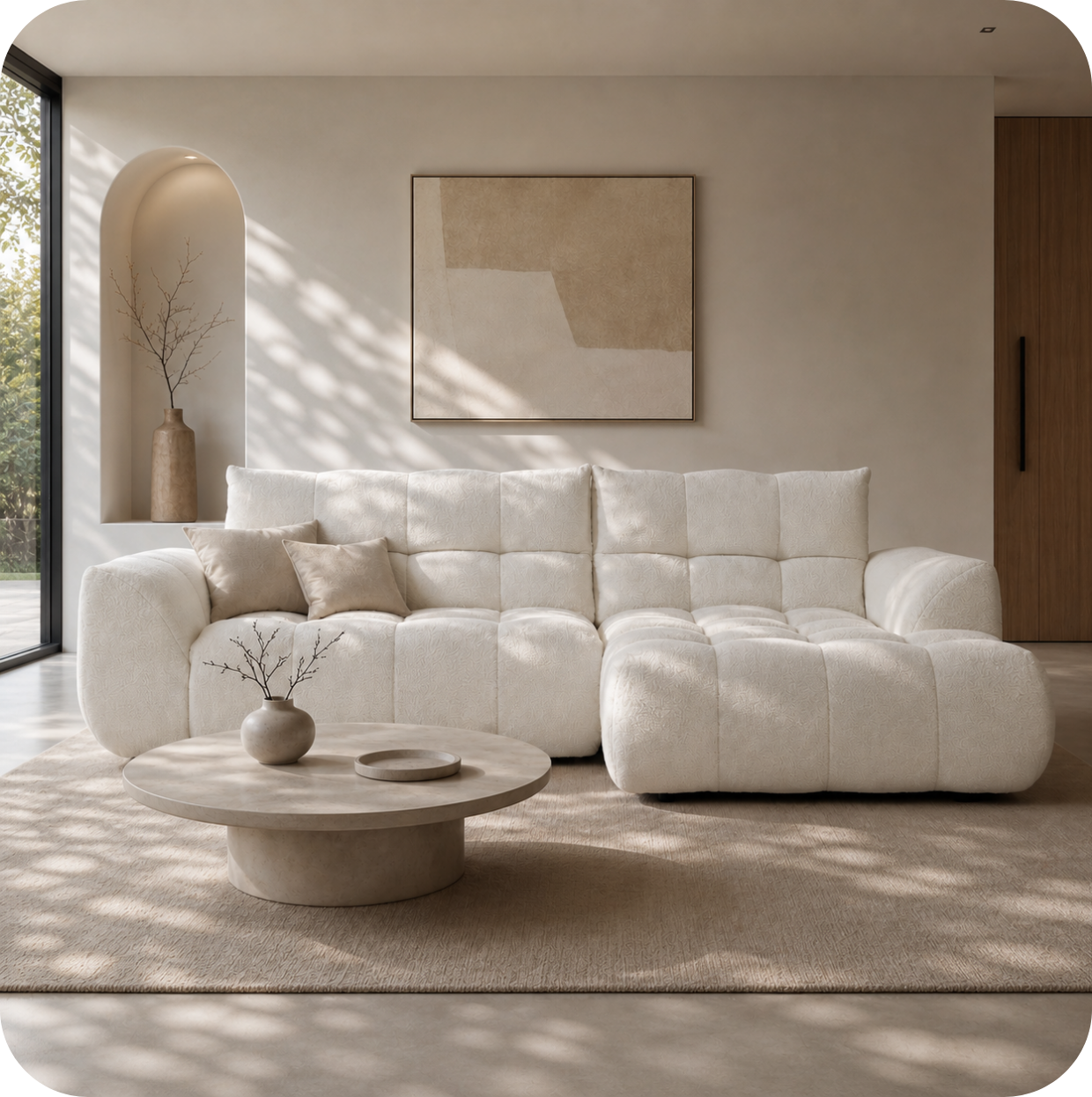
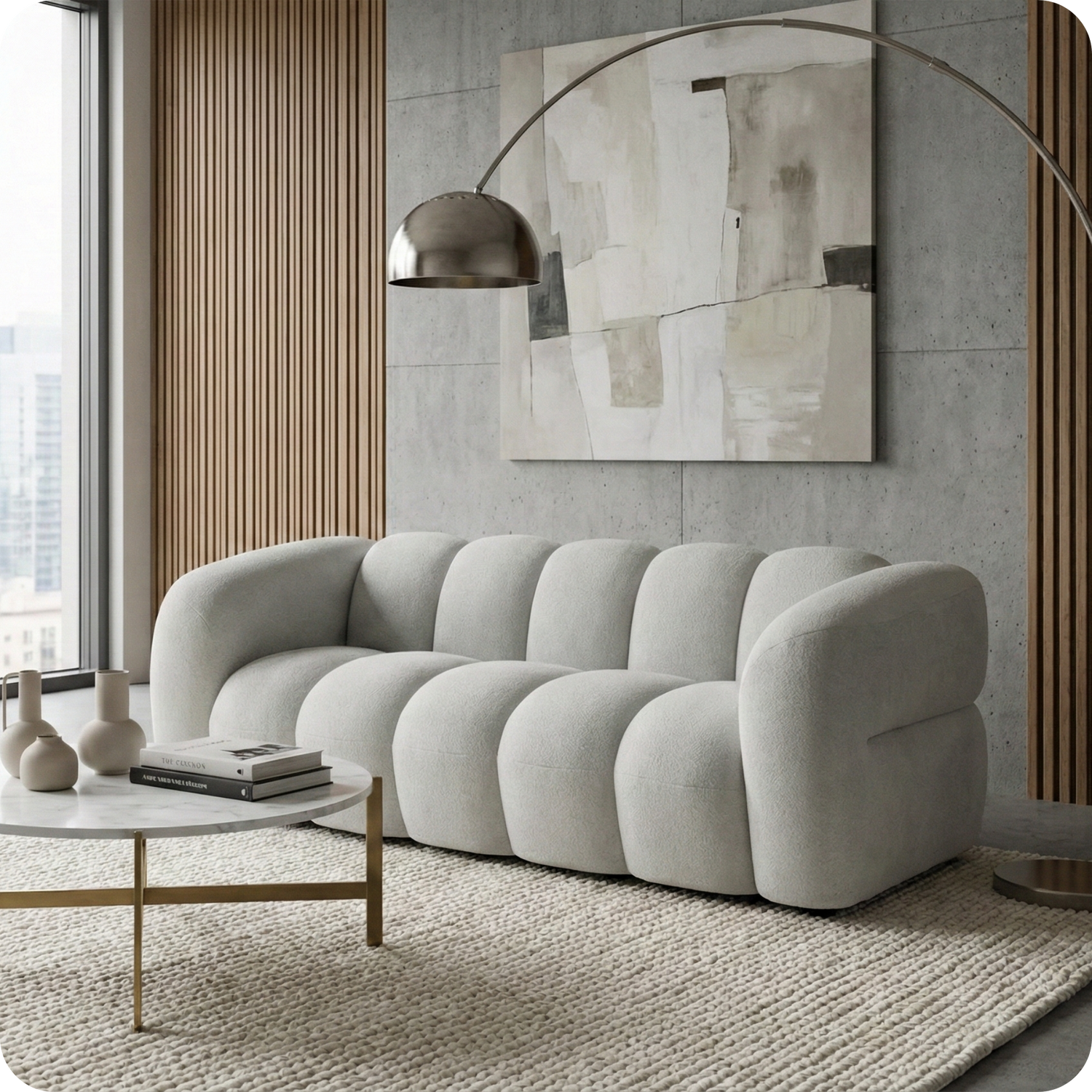
Lugano Sofa in Light Grey — from €1,299
When planning living room lighting, the sofa is the natural anchor point. Position a floor lamp or tall table lamp at one end of the sofa for reading light, and consider wall sconces or picture lights nearby to create ambience. A light grey sofa like the Lugano responds particularly well to warm-toned bulbs (2700-3000K).

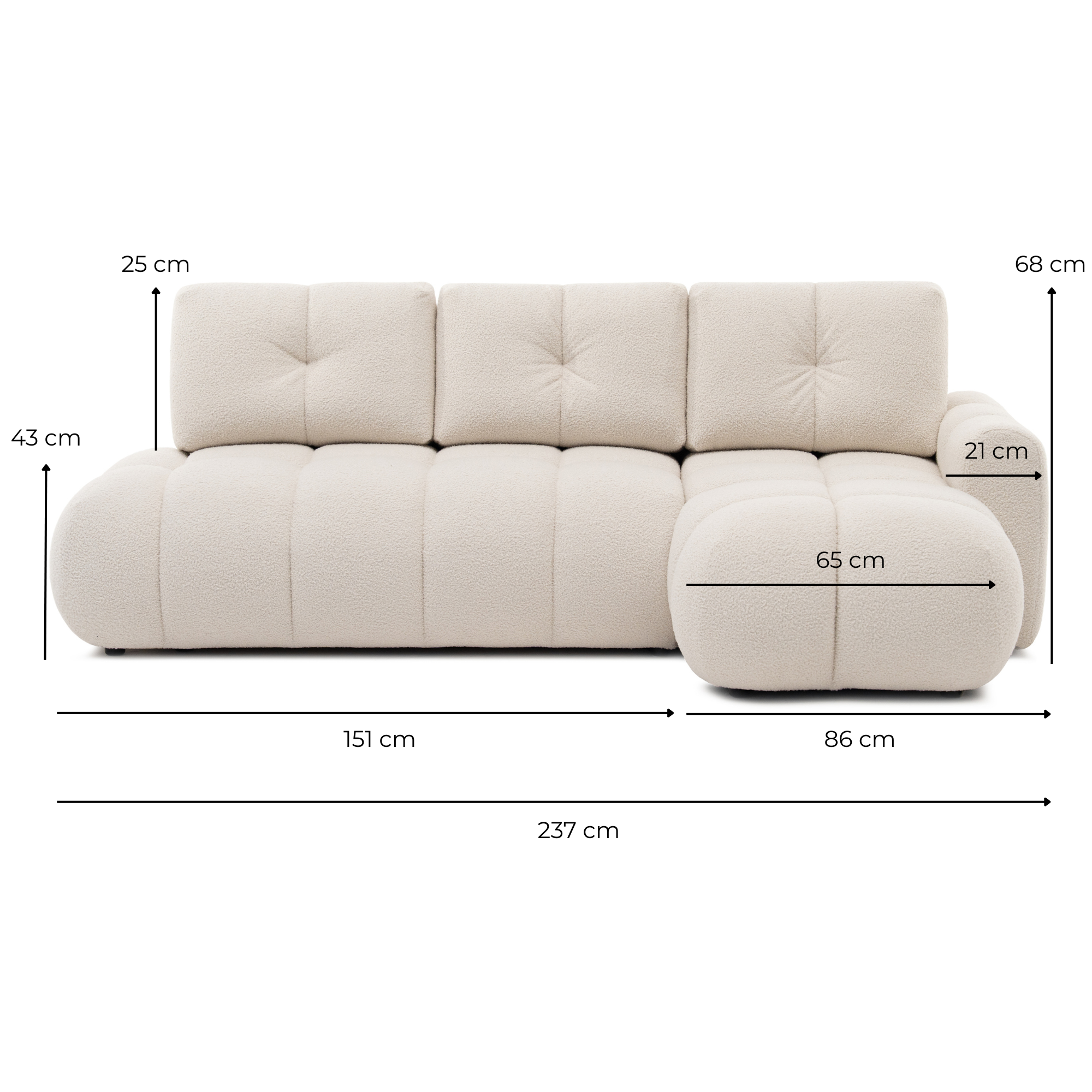
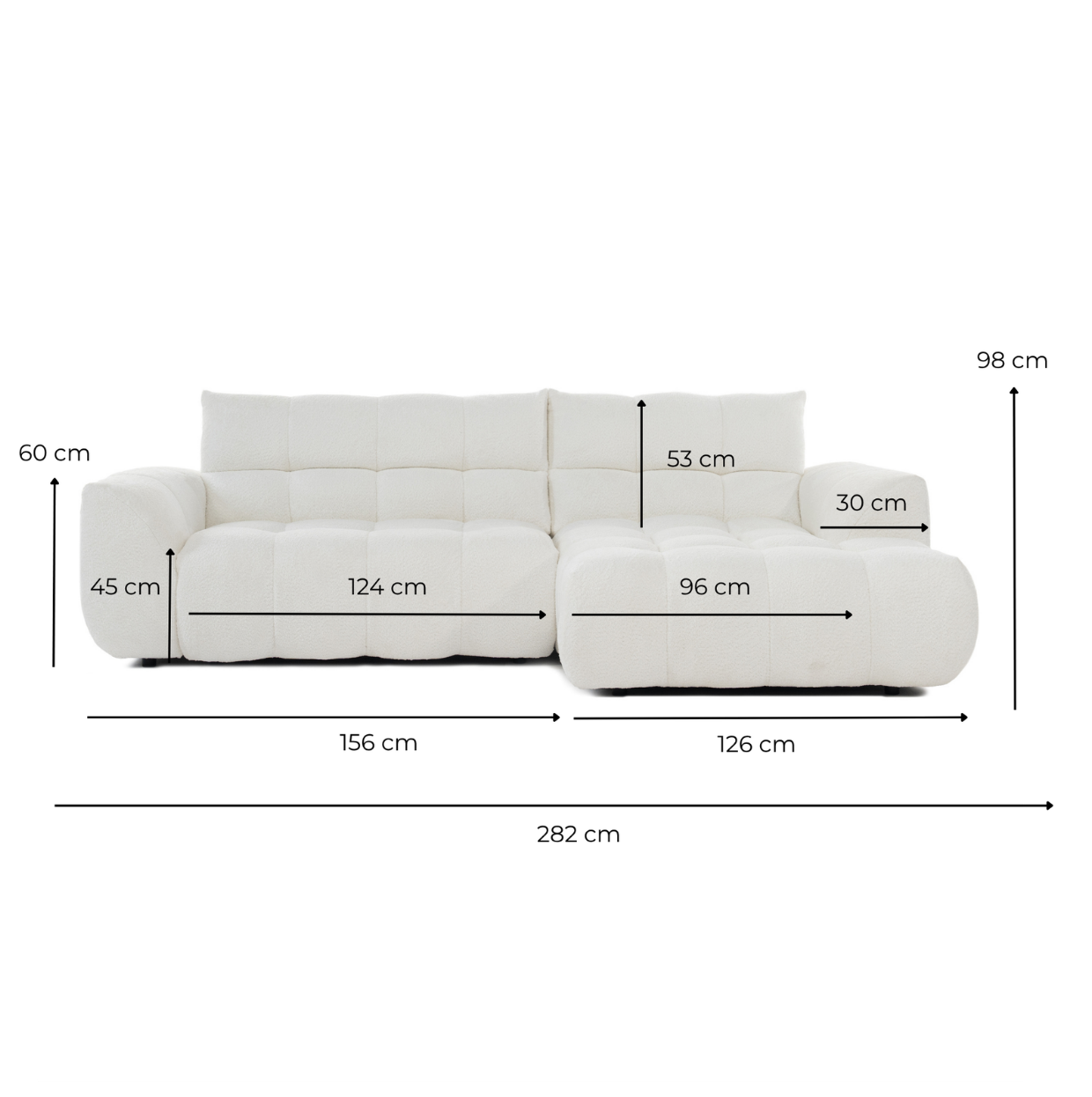
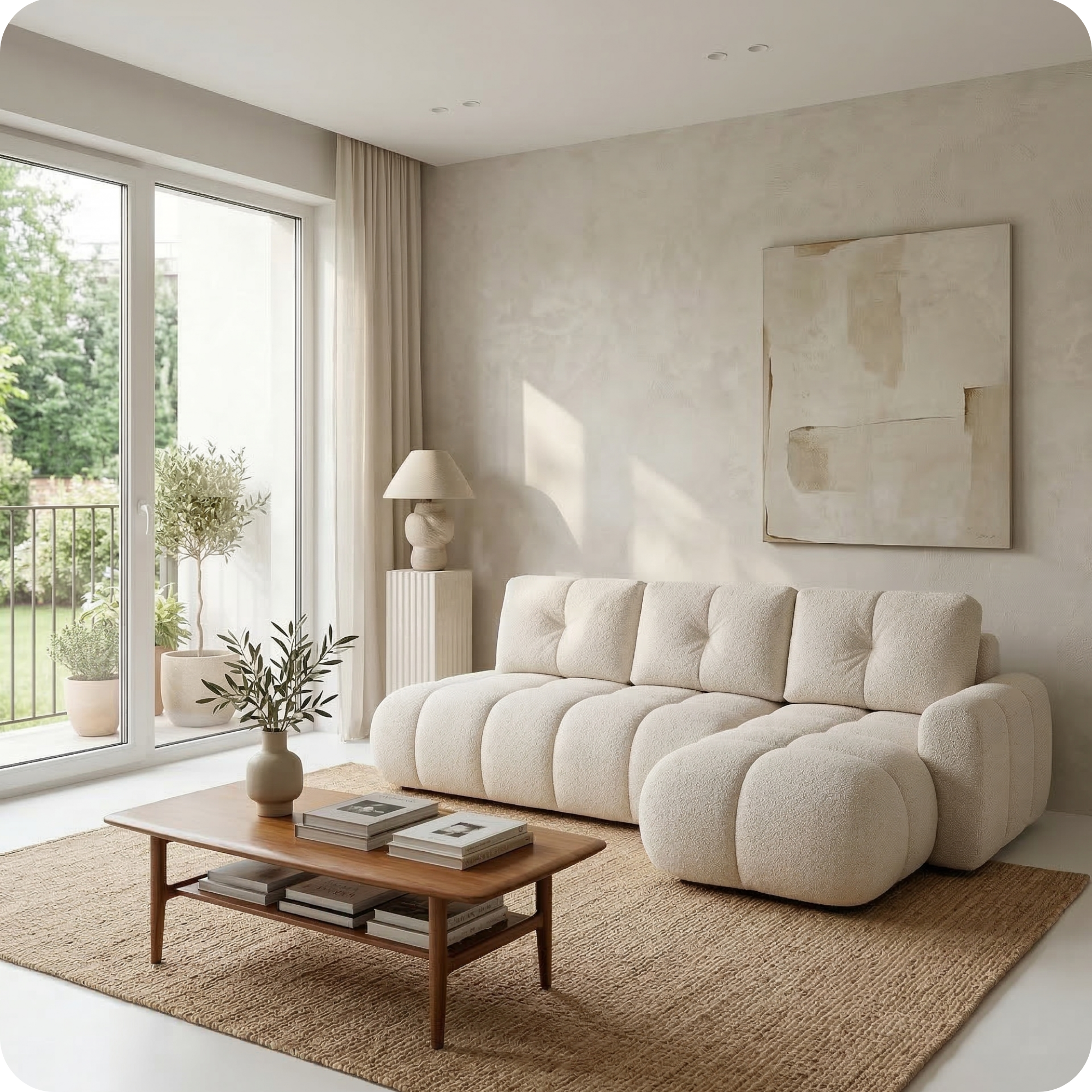
Asti Corner Sofa — from €1,599
For a corner sofa like the Asti, consider an arc floor lamp positioned in the interior corner of the L-shape — it provides light across the full sofa without needing a side table, and creates a striking visual when the light is on in the evening. Layer with a table lamp on a side table at each end.
Bulb Colour Temperature: Getting the Warmth Right
The colour temperature of light bulbs is measured in Kelvin (K) and is as important as the type and position of the light fixture. For living rooms, always use warm-toned bulbs in the range of 2700-3000K — this range produces the soft, amber-tinged light that feels warm, inviting, and flattering. Avoid cool white or daylight bulbs (4000K+) in living room contexts — these produce a harsh, clinical light that undermines any attempt at atmosphere. Within the 2700-3000K range, 2700K is the warmest (closest to candlelight) and works beautifully in intimate living rooms; 3000K is slightly crisper and better suited to larger, more contemporary spaces. All bulbs in the same room should be the same colour temperature — mixing warm and cool bulbs in the same space creates an unpleasant inconsistency.
Practical Tips for Better Living Room Lighting
Five practical principles to improve any living room's lighting: switch all ceiling lights to dimmers so you can modulate the ambient level precisely throughout the day and evening; avoid relying solely on ceiling lights — add at least two floor or table lamps to create lower, warmer pools of light; position lamps at eye height when seated (approximately 120-135cm from the floor to the centre of the shade) for the most flattering, comfortable light; use a mix of light source heights — ceiling, mid-height shelves, and floor level — to create visual depth; and add at least one accent light source purely for atmosphere — a cluster of candles on the coffee table, a backlit shelf unit, or a small warm LED spotlight on a piece of artwork.