


Scandinavian Interior Design: The Complete Guide to Creating a Nordic Home
Scandinavian interior design is one of the most influential and widely adopted design movements of the 20th and 21st centuries. Born in the Nordic countries — Sweden, Denmark, Norway, and Finland — it has spread worldwide because its core values resonate universally: that good design should be functional, beautiful, and accessible; that a home should be comfortable, light-filled, and free from unnecessary complication; and that natural materials and craftsmanship are worth investing in. This guide explains Scandinavian design principles and how to apply them in your home.
The Core Principles of Scandinavian Design
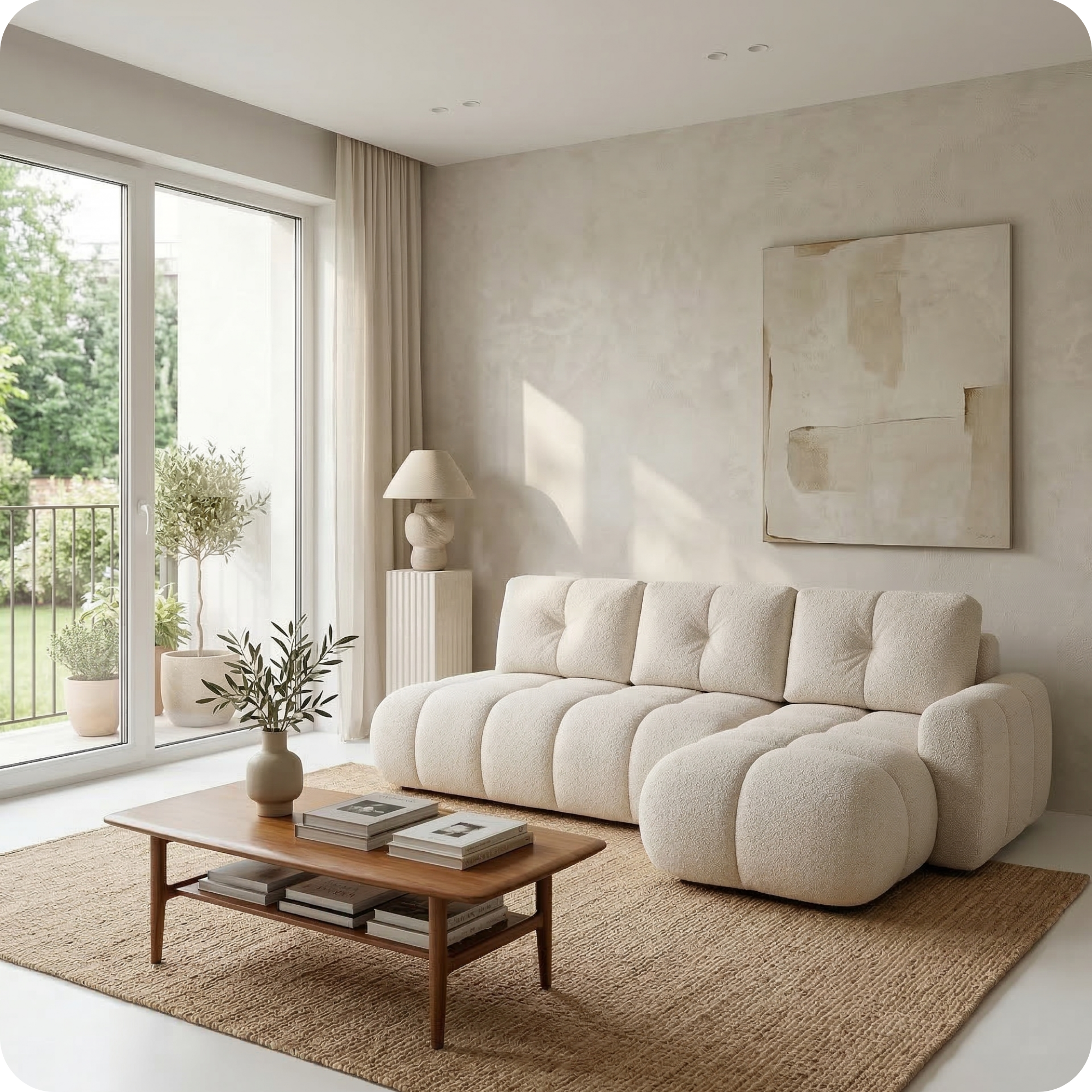
Functionality first: every element of a Scandinavian interior should serve a purpose. Decoration for its own sake is generally avoided; instead, beauty arises from the quality of materials, the proportion of furniture, and the careful composition of the space. Simplicity and clarity: Scandinavian interiors use fewer objects and more negative space than most other styles. The room breathes — there is space between pieces of furniture, surfaces are not overcrowded, and every object has earned its place. Natural materials: wood, linen, wool, ceramic, leather — all natural materials are favoured for their warmth, longevity, and the way they age beautifully over time. Hygge: the Danish concept of cosiness and togetherness — achieved through warm lighting, soft textiles, comfortable furniture, and spaces that encourage gathering.

Lugano Sofa — Light Grey — from EUR 890
The Lugano in light grey embodies the Scandinavian sofa ideal: clean-lined without being cold, generous without being overwhelming, and neutral enough to work with any Scandinavian colour palette from bright white to soft warm grey. Its quality construction reflects the Scandinavian commitment to well-made furniture that lasts.

Merlot Modular Sofa — from EUR 1,190
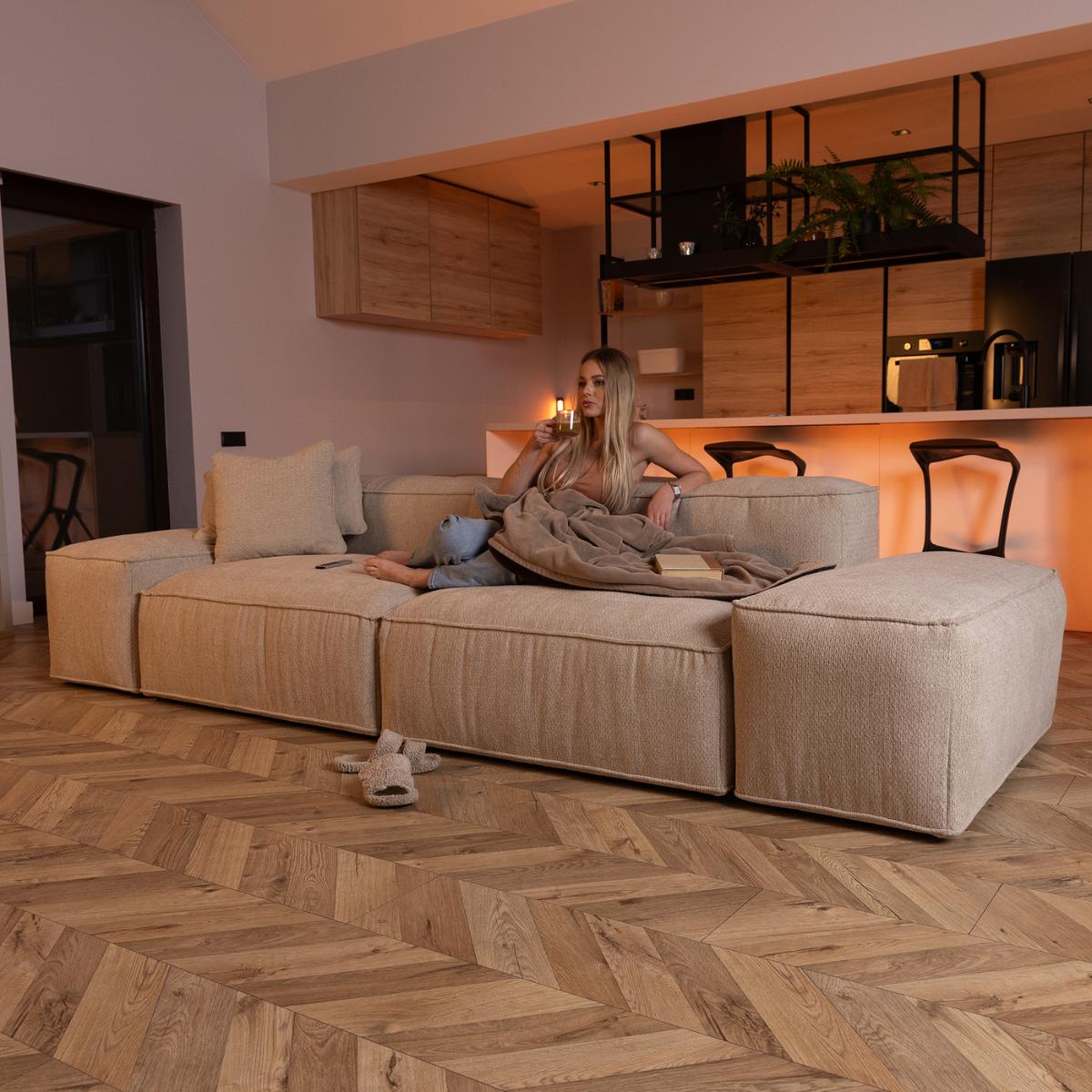
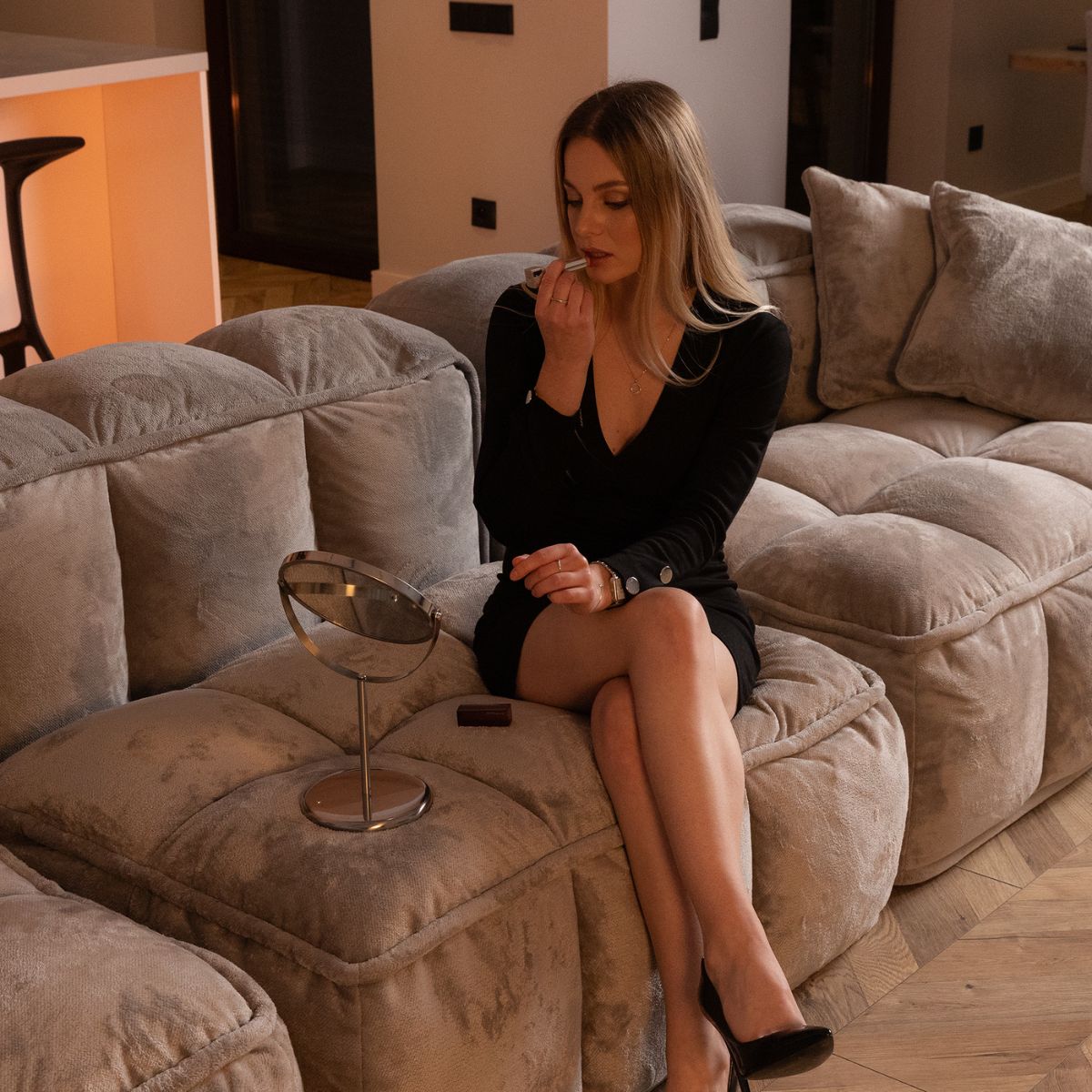
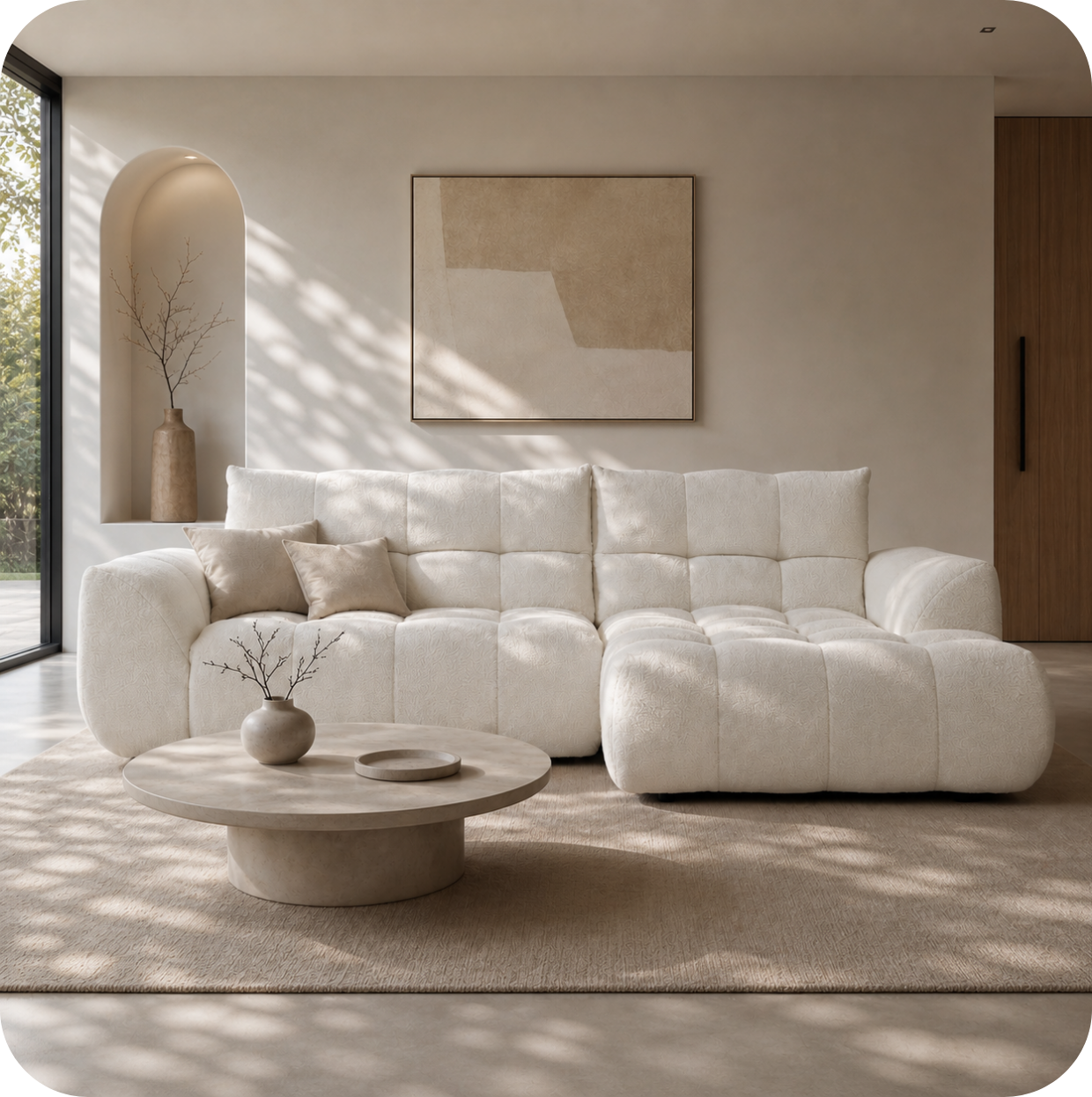
Scandinavian design values practicality alongside beauty — and the Merlot's modular construction speaks directly to the Nordic appreciation for furniture that works hard and adapts to changing needs. In lighter, natural fabric tones, it makes a beautiful Scandinavian living room centrepiece.
The Scandinavian Colour Palette
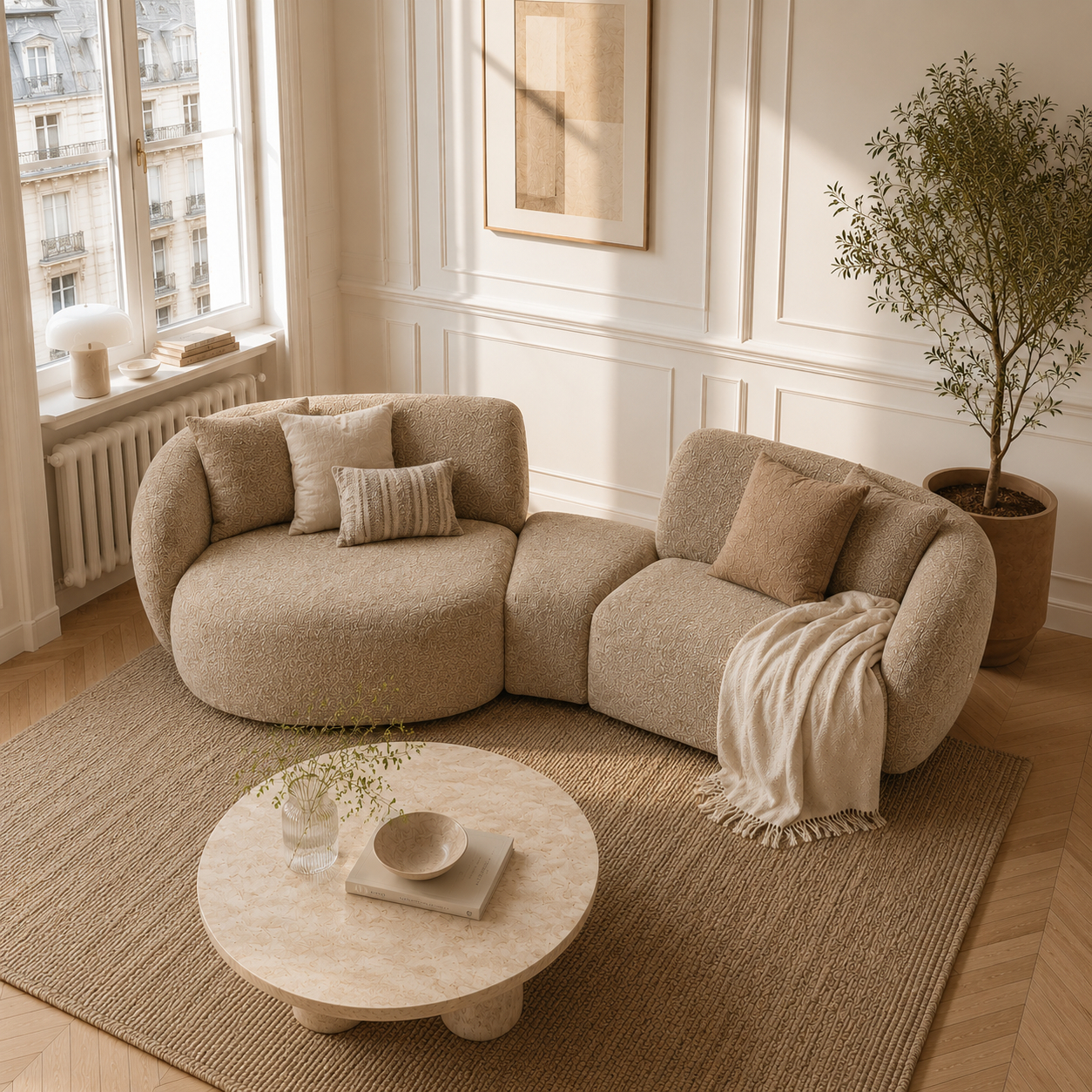
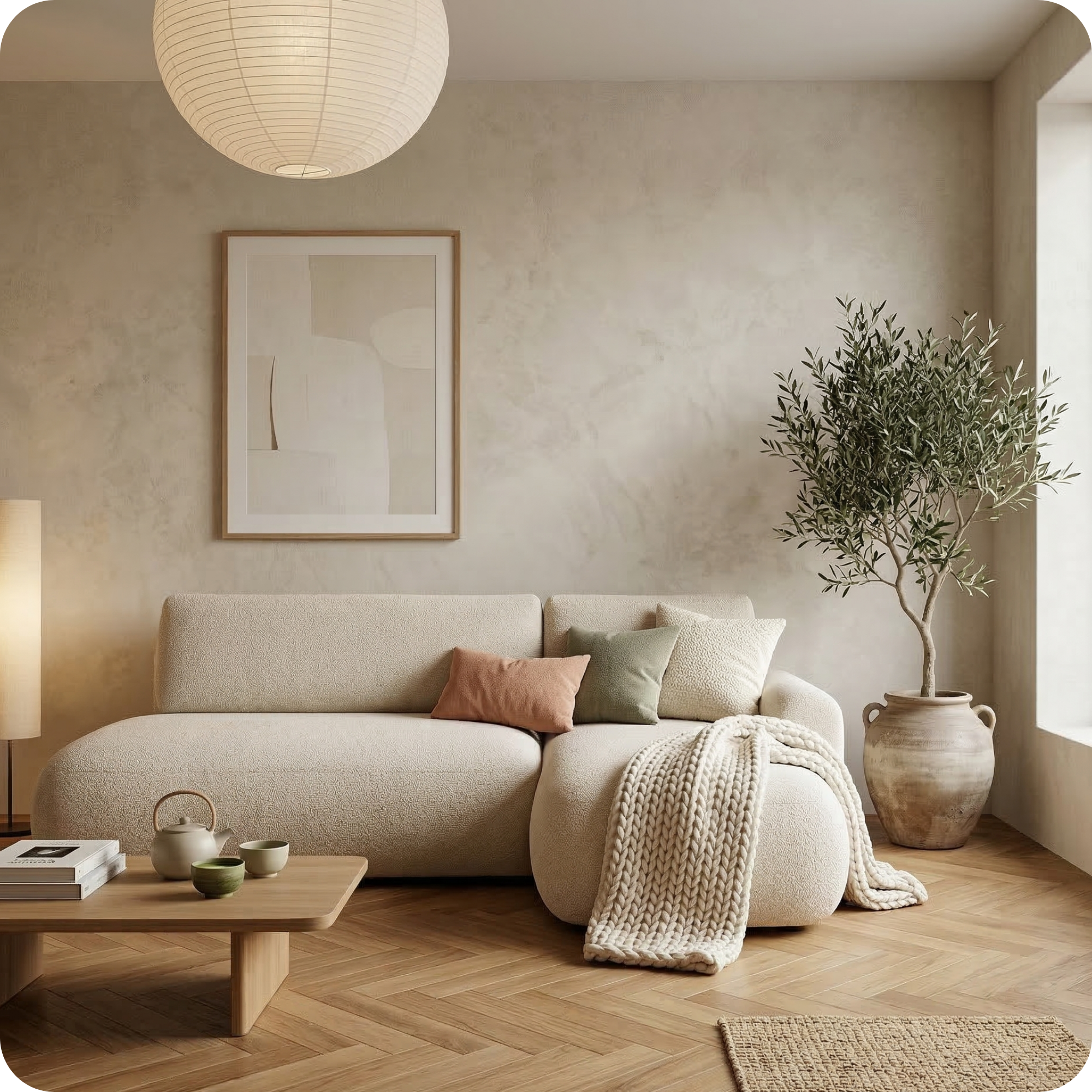
Classic Scandinavian interiors are dominated by whites, off-whites, and light greys — colours that maximise the precious natural light of northern latitudes where winter days are short and dark. But the palette is far from cold: it is warmed by the natural tones of wood (pale ash, birch, light oak), by natural linen and wool textiles in oat, cream, and warm greige, and by carefully chosen soft accent colours. Common Scandinavian accent colours include dusty blue (a classic Swedish shade), soft sage green, warm terracotta (increasingly popular), and a very restrained use of black as a graphic accent — in table lamps, picture frames, and window frames.
Creating Hygge: The Cosiness Factor
Hygge is the element that distinguishes a Scandinavian interior from a minimalist one. Minimalism is about emptiness and discipline; hygge is about warmth and comfort. To achieve hygge in your living room: invest in warm, layered lighting (table lamps and floor lamps with warm bulbs rather than overhead lighting); pile cushions and blankets on the sofa; add candles (Scandinavians use more candles than any other culture); bring in natural materials at every opportunity — wooden bowls, ceramic vases, woollen throws; and above all, keep the space feeling lived-in rather than showroom-perfect.

Hinterlasse einen Kommentar
Diese Website ist durch hCaptcha geschützt und es gelten die allgemeinen Geschäftsbedingungen und Datenschutzbestimmungen von hCaptcha.