


Scandinavian Living Room Ideas: How to Create a Scandi Interior
Scandinavian interior design has been the most consistently influential style in European interior design for two decades — and with good reason. It is practical, beautiful, deeply considered, and based on principles that transcend trend cycles. At its core, Scandinavian design is about the quality of daily life: how a room feels to inhabit over time, how materials age, how light changes throughout the seasons, and how a home supports the people who live in it. Here is how to translate those principles into a living room that genuinely works.
The Core Principles of Scandi Design
Scandinavian design is commonly summarised as minimalism, but this is an oversimplification. The real principles are more nuanced: function over decoration (every element should earn its place); quality of materials (natural, honest materials that age gracefully are preferred over synthetic substitutes); simplicity of form (clean lines, no unnecessary ornament, a preference for geometric or organic shapes); warmth through texture and material (the harshness of minimalism is softened by layering natural textures — wood, wool, linen, ceramic); and an embrace of natural light. A Scandi room is not sparse because it is cold or minimalist by ideology — it is considered, edited, and genuinely comfortable.

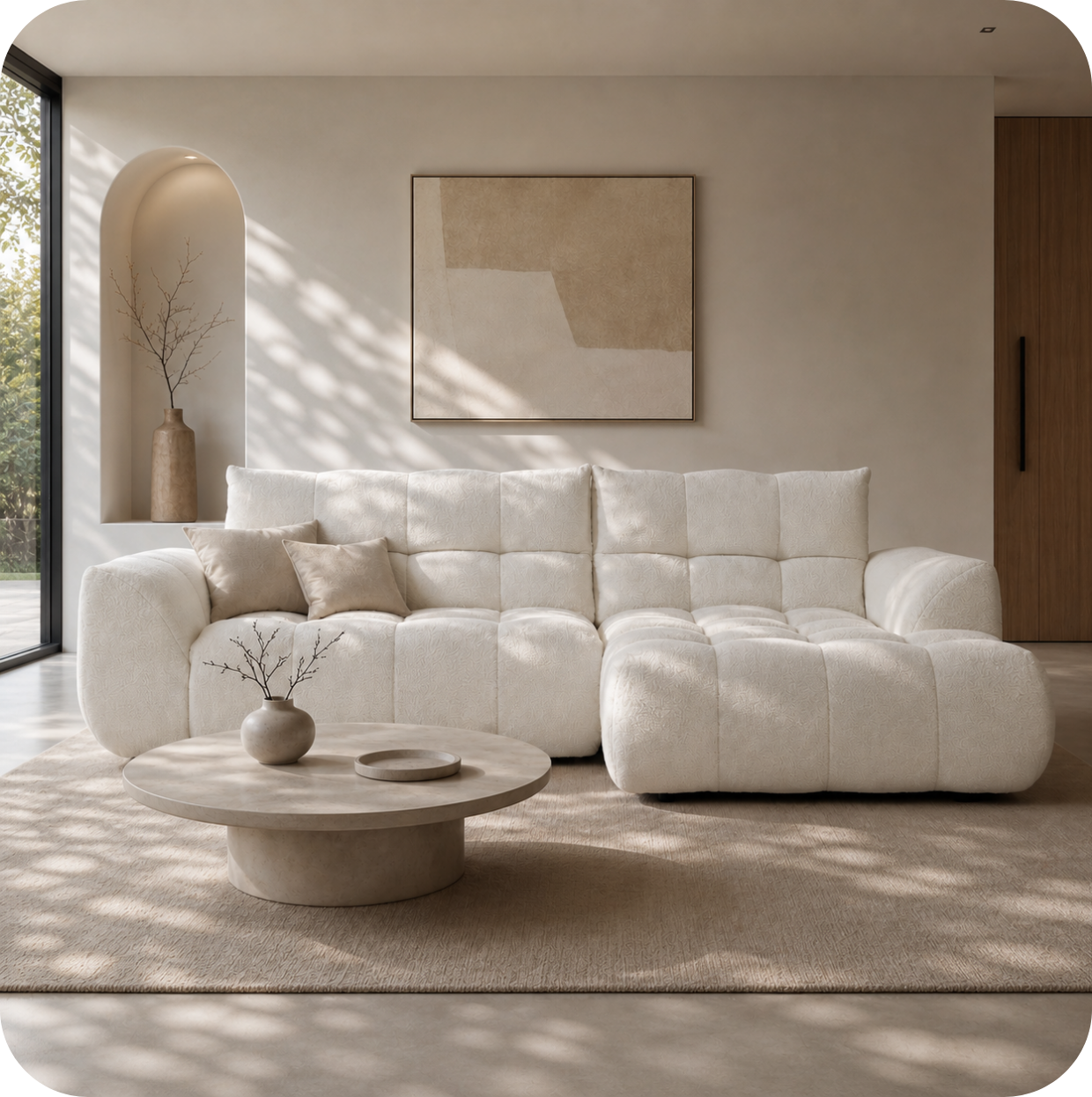
Lugano Sofa in Light Grey — from EUR 1.290
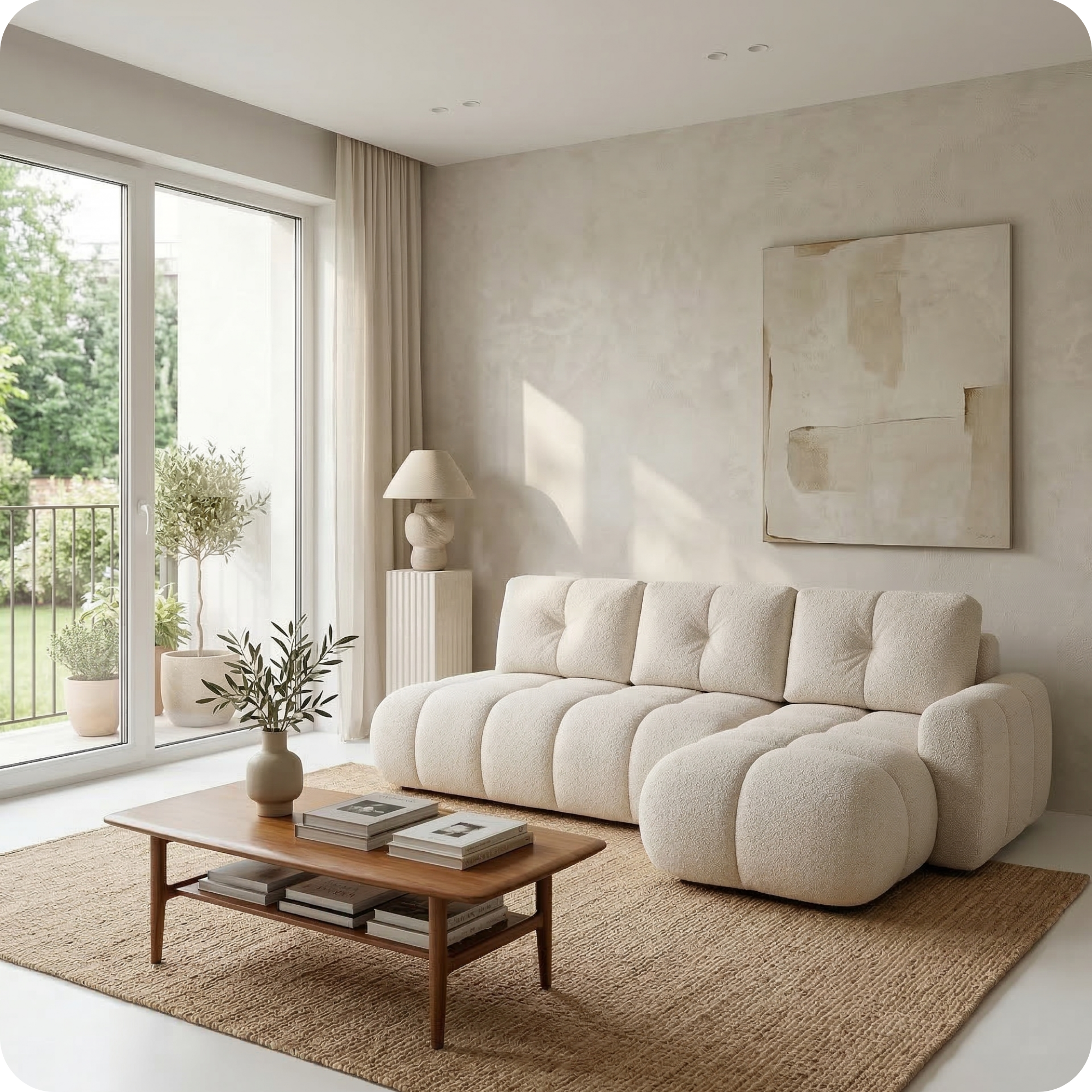
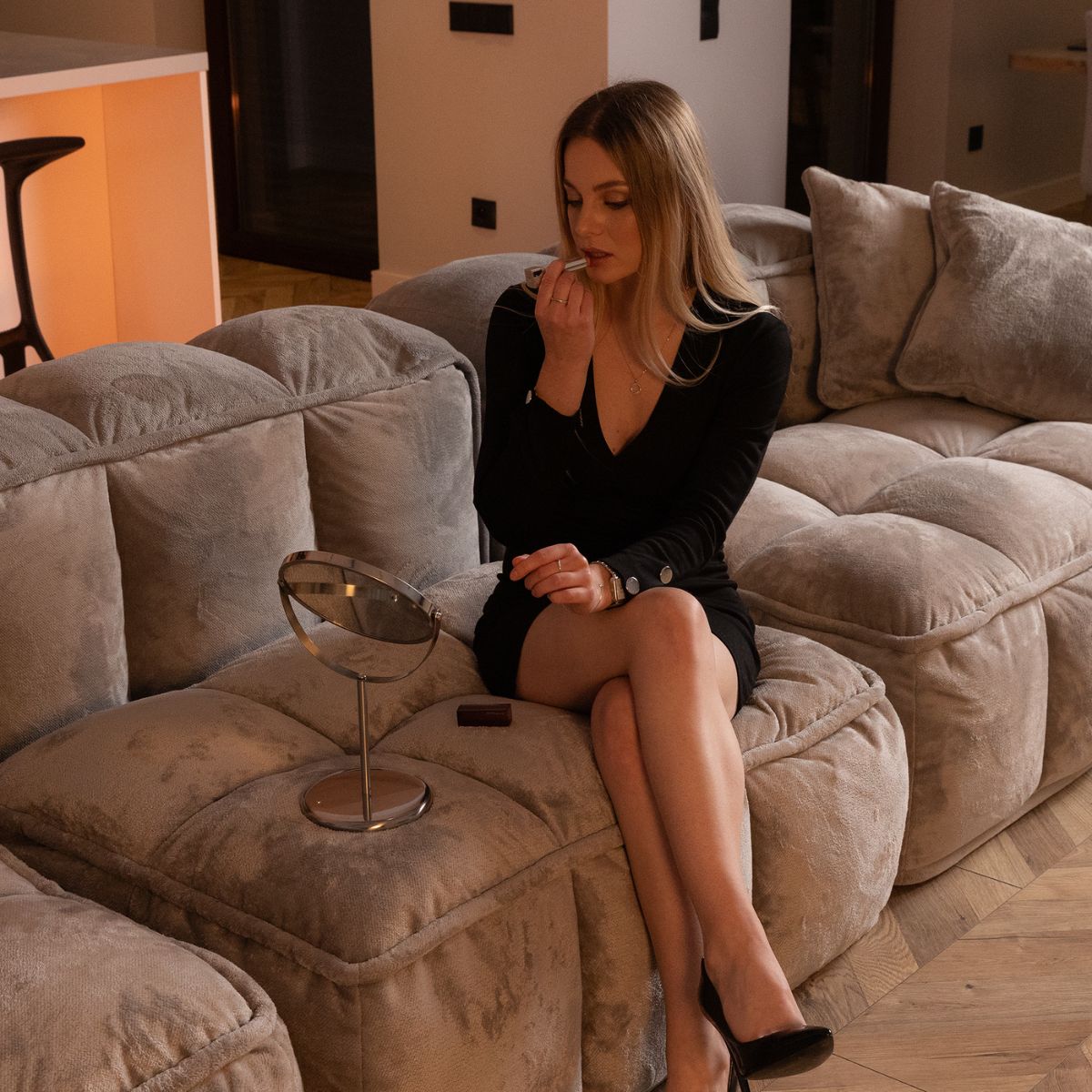
The Lugano in light grey is among the most naturally Scandi sofas available: clean-lined, low-profile, quietly confident, and available in a colour that sits comfortably within the neutral-dominant Scandinavian palette. Its modular nature allows it to be configured exactly to the room — a very Scandi approach to function. Against white or pale grey walls, with a wool rug in oatmeal or natural, and wood furniture, it creates an immediately recognisable Scandi interior.

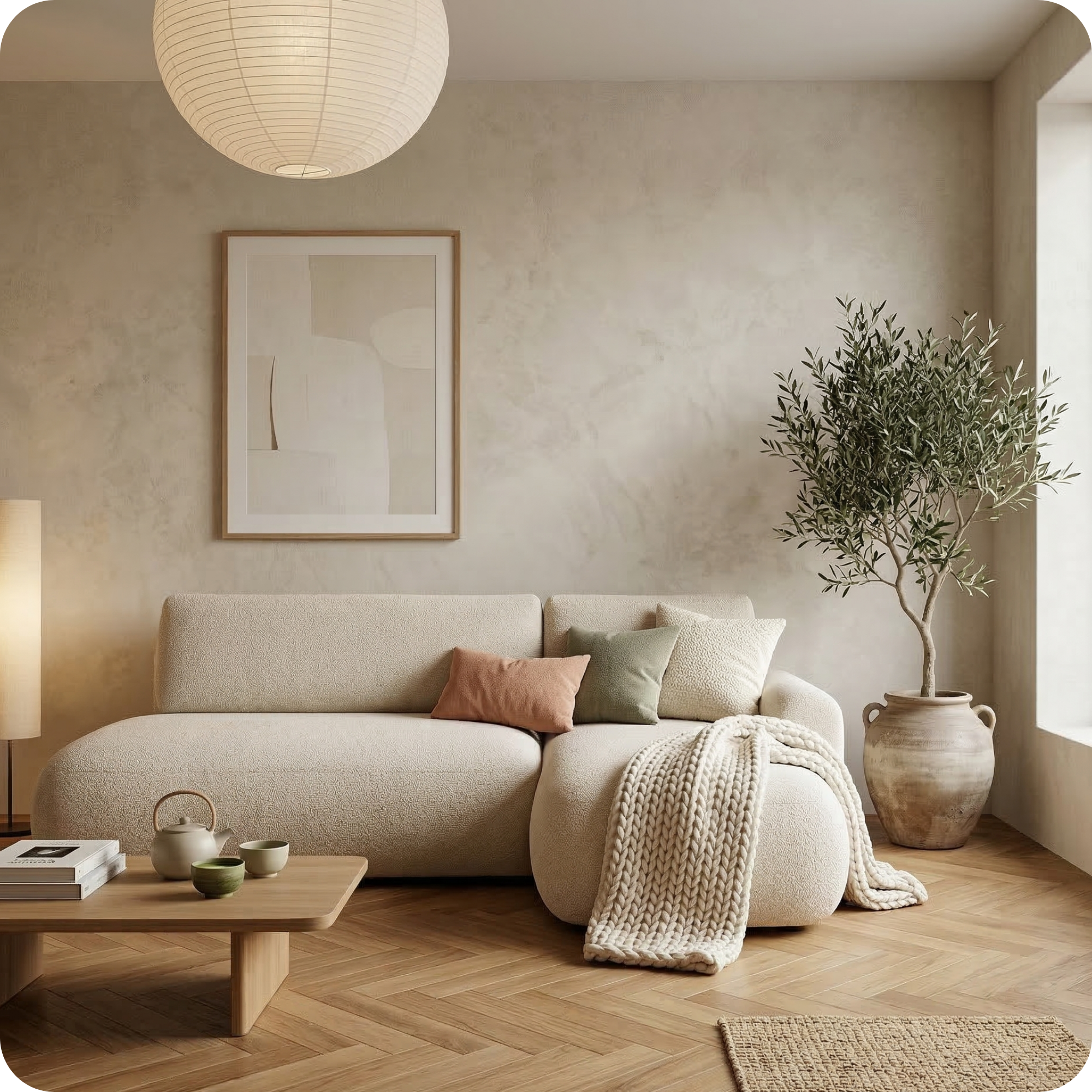
Lugano Sofa in Sand — from EUR 1.290
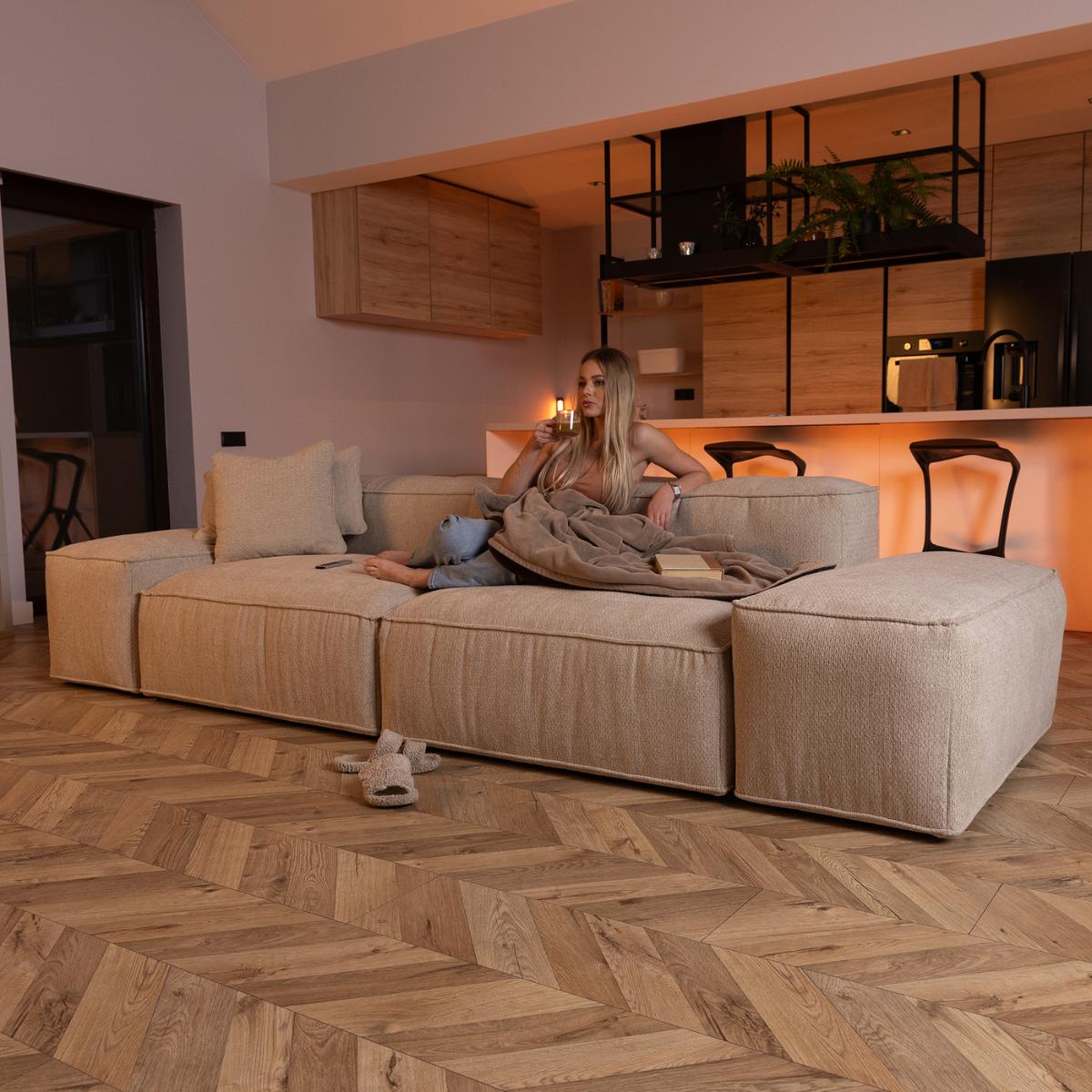
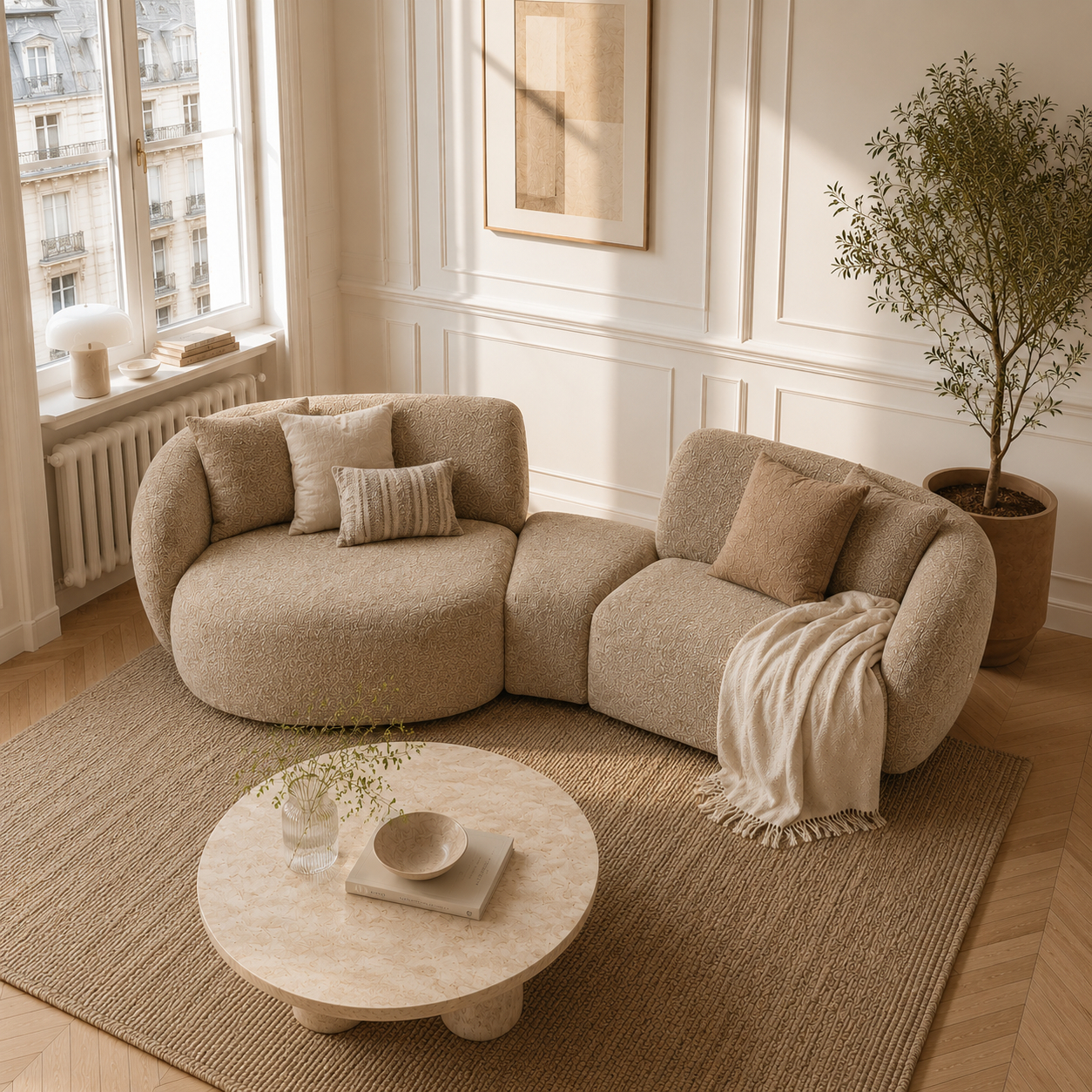
The sand colourway of the Lugano introduces warmth into the typically pale Scandi palette, which is particularly effective in rooms that receive less natural light. The combination of sand sofa, pale wood furniture (birch, ash, pale oak), natural fibre rug, and white or very pale grey walls creates a version of Scandi design that is warmer and more inviting — closer to Danish hygge than pure Swedish minimalism.
The Scandi Colour Palette
The classic Scandinavian colour palette is predominantly white, cream, and pale grey, punctuated by natural material tones — wood browns, wool beiges, linen naturals — and occasional accent colours that tend toward the muted and nature-inspired: dusty blue, sage green, rust, terracotta, blush. Bright, saturated colours are used sparingly if at all. The palette creates an impression of calm, light, and airiness that reflects the Scandinavian relationship with natural light in climates where winter daylight is limited. Black is used as a graphic accent — in light fittings, picture frames, tap fittings — to provide contrast and definition without introducing colour.
Materials and Furniture in Scandi Design
Wood is the dominant material in Scandinavian design — specifically pale woods (birch, beech, ash, light oak) that have a clean, bright quality. Dark wood is rarely used in a true Scandi interior. Furniture forms are simple and functional, with an emphasis on craft: clean joints, honest construction, no unnecessary decoration. Upholstery tends toward natural fabrics — wool, linen, cotton — in muted colours. Ceramics, glass, and metal are present but subordinate to wood and textile. Plants are important in Scandi interiors, particularly during dark seasons when they bring life and organic form into the otherwise clean interior.
Lighting and Hygge
Scandi design places enormous importance on lighting, particularly artificial lighting. The concept of hygge (the Danish and Norwegian idea of cosiness, warmth, and togetherness) is as much about lighting as it is about textiles and warmth. Multiple light sources, all warm white, all at low levels — candles, table lamps, floor lamps, pendant lights — create the intimate, golden atmosphere that is the hallmark of hygge. The goal is never bright overhead light but rather a room full of small, warm pools of light that make the space feel safe, intimate, and welcoming on dark winter evenings.

Hinterlasse einen Kommentar
Diese Website ist durch hCaptcha geschützt und es gelten die allgemeinen Geschäftsbedingungen und Datenschutzbestimmungen von hCaptcha.