






Sofa with storage: is it worth buying in 2026?
Storage sofas — sofas with a built-in compartment beneath the seating area — have become increasingly popular as urban living spaces continue to shrink. The appeal is obvious: you get additional storage without giving up any floor space. But storage sofas are not the right choice for every situation, and some buyers find that the compromises they involve are not worth the benefits. Here is an honest assessment of when a storage sofa is a smart investment and when it is not.
How storage sofas work
Most storage sofas use one of two mechanisms. The lift-up base is the most common: the entire seat section lifts on hinges or gas struts to reveal a large storage cavity beneath. This provides significant volume — often 200 litres or more — and is accessed easily when the sofa is in normal use.
The second type uses a pull-out drawer beneath the front of the sofa frame. This tends to offer less storage volume but is quicker to access and does not require you to remove cushions before lifting the seat.
What is worth storing in a sofa
Sofa storage works best for items that are used occasionally rather than daily. Extra blankets and throws, spare pillows, board games, seasonal cushion covers, and children's soft toys are all ideal candidates. The storage is somewhat inconvenient to access regularly — you typically need to move cushions and lift the seat — so it is better suited to items you retrieve every few days rather than every hour.
Do not use sofa storage for anything that needs ventilation (clothing, shoes) or that might smell over time. The compartment is enclosed and has limited airflow.
The practical benefits
In a small flat or open-plan studio, the storage sofa can genuinely make a meaningful difference. A cavity that holds 200 litres of bedding and seasonal textiles is equivalent to a good-sized chest of drawers or an under-stair cupboard. For households without a utility room or adequate wardrobe space, this is a real quality-of-life improvement.
Storage sofas also tend to have slightly elevated seating — the raised base height adds perhaps 5-8 cm to the seat height compared to equivalent sofas without storage. Some people find this more comfortable; others prefer the lower profile of a non-storage sofa.
The compromises
Weight: Storage sofas are typically heavier than comparable sofas without storage mechanisms. This matters if you move the sofa frequently or live in a building without a lift.
Mechanism maintenance: Lift-up mechanisms — particularly gas-strut lifts — can weaken over time and occasionally need replacing. This is not a common problem in well-made sofas, but it is worth checking what the manufacturer's warranty covers.
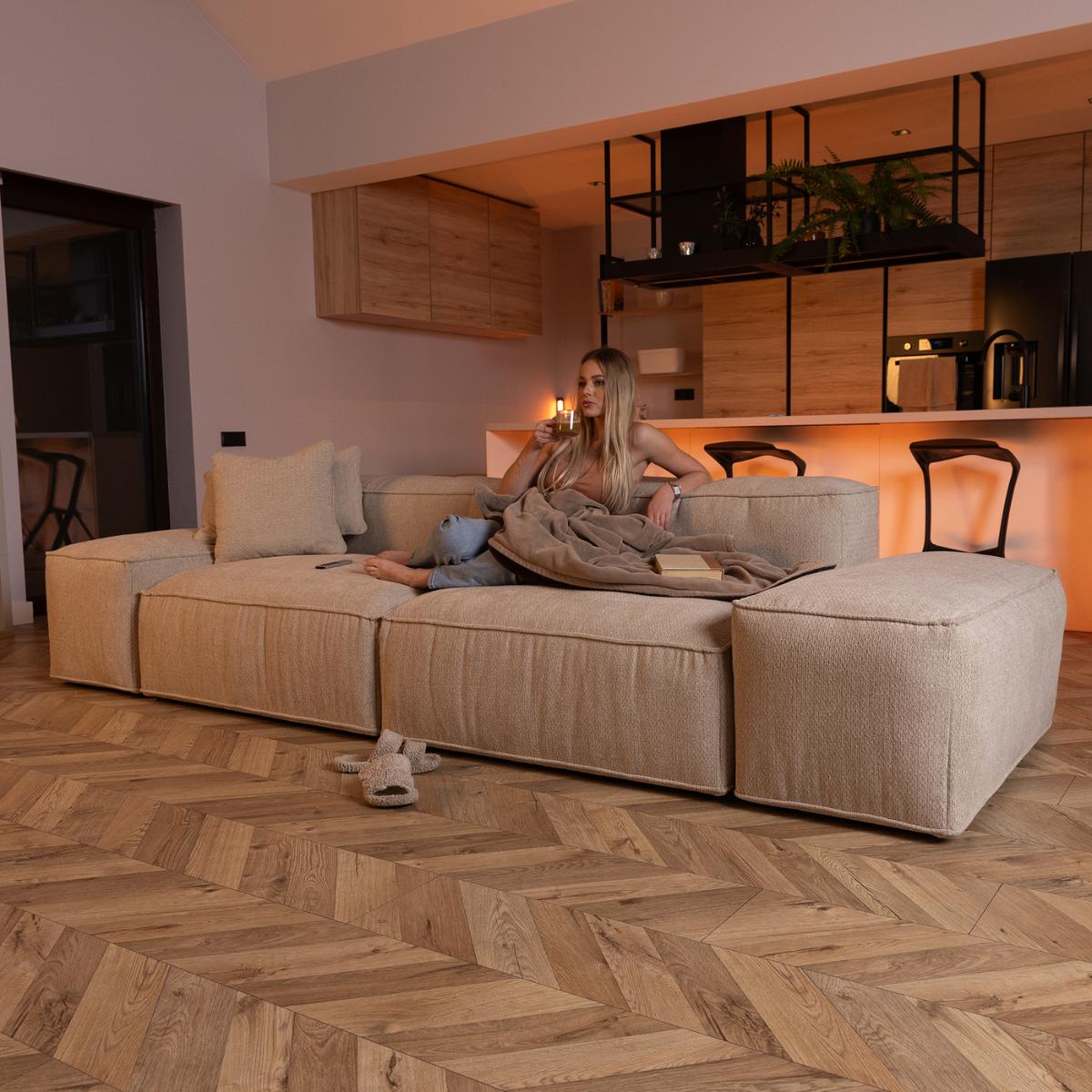
Floor protection: The lift-up base mechanism means the sofa base does not sit flat on the floor. If you have delicate parquet or hardwood flooring, check that the sofa has floor protectors fitted and that the lifting mechanism does not scrape the floor when operated.
Is it right for you?
A storage sofa is worth buying if you live in a space where storage is genuinely limited and where the items you would store are bulky but infrequently accessed. It is less worth buying if you live in a house with ample storage already, if you prefer very low-profile Scandinavian-style sofas, or if the mechanism weight and maintenance considerations matter for your household.
For buyers who want the best of both worlds — pull-out sleeping function and additional under-sofa accessibility — the Riva sofa with pull-out bed and the Torino corner sofa with pull-out bed both integrate a sleeping function into a compact, well-designed frame that works in everyday living situations.

Hinterlasse einen Kommentar
Diese Website ist durch hCaptcha geschützt und es gelten die allgemeinen Geschäftsbedingungen und Datenschutzbestimmungen von hCaptcha.