



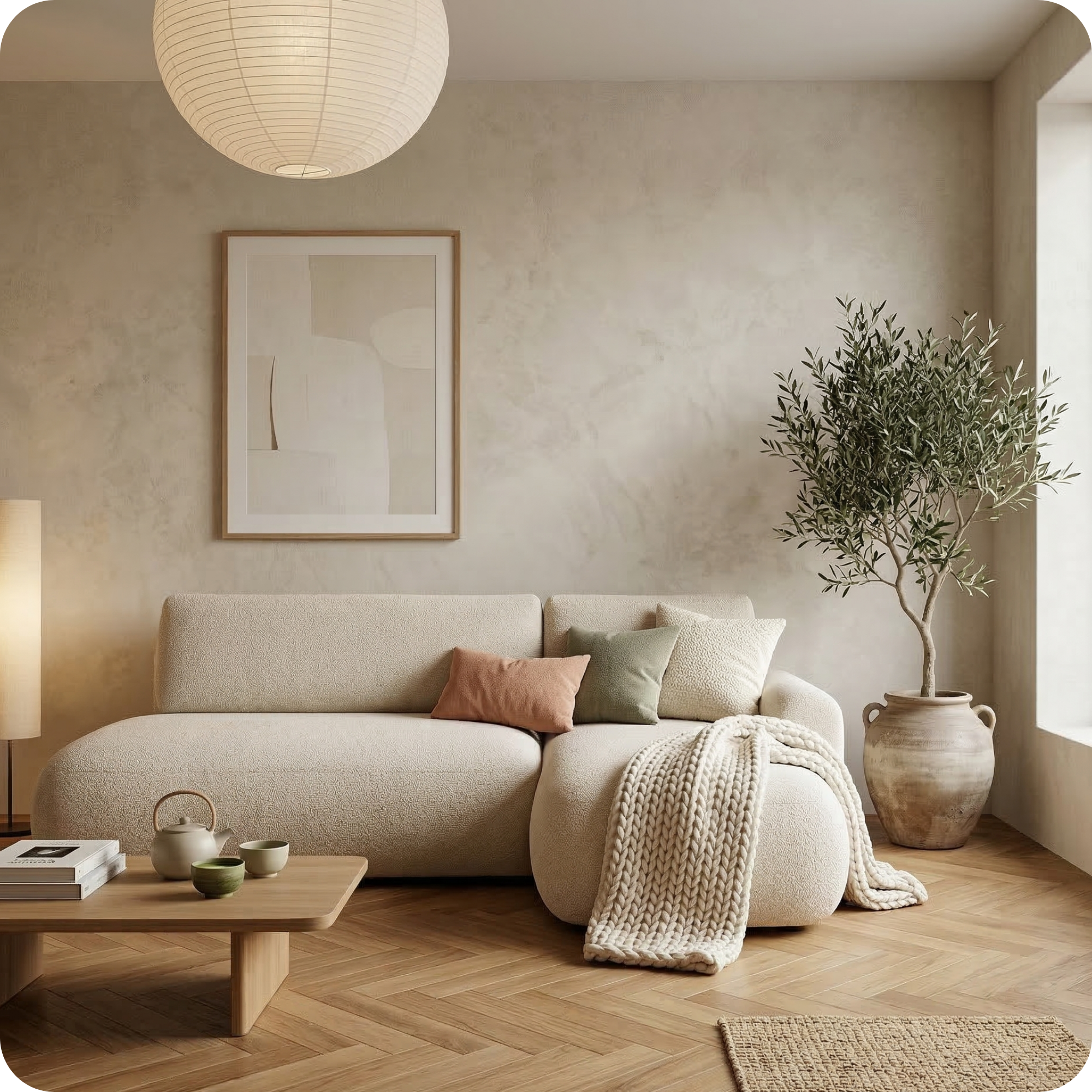

Best Sofa for Back Pain: What to Look for and What to Avoid
If you experience back pain or discomfort regularly, the sofa you sit on for several hours each day matters more than most people realise. A sofa that is too deep, too soft, or at the wrong seat height can actively worsen back problems. Choosing a sofa with the right structural characteristics does not require a medical prescription -- it requires understanding a handful of key measurements and construction choices. This guide covers what to look for and what to avoid if back support is a priority.
Seat Height: The Most Important Measurement
Seat height is the most important single measurement for back comfort. For most adults (height range 160-185 cm), a seat height of 42-46 cm allows the feet to rest flat on the floor with the knees at or slightly below hip level -- the position that places the least strain on the lumbar spine. Sofas with seat heights below 40 cm force the knees higher than the hips, which tilts the pelvis backwards and flattens the natural lumbar curve, causing lower back strain. Very low sofas (35-38 cm) look stylish but are among the worst options for people with back issues. If you are tall (over 185 cm), look for seat heights of 46-48 cm.
Seat Depth: Not Too Deep
A sofa seat that is too deep forces you to either perch on the edge (leaving your back unsupported) or slide back into the cushion (which rounds the lower back). For good back support, a seat depth of 55-65 cm is the appropriate range for most adults. Deeper seats (70 cm+) are comfortable for lounging but are poor for extended upright sitting, particularly for people of shorter stature. If you have a preference for deep sofas, look for models with removable lumbar cushions that allow you to adjust the effective depth.
Seat Firmness: Avoid Overly Soft Cushions
Very soft seat cushions that sink substantially under body weight reduce postural control and allow the pelvis to tilt into poor positions. For back support, a medium-firm seat cushion is significantly better than a soft one -- you should be able to sit on the sofa and feel that you are sitting on a supportive surface rather than sinking into foam. High-resilience (HR) foam cores, particularly those rated HR45 or above, maintain their structure better over time and provide the consistent support that reduces back strain. Pocket spring seat construction is even better: it provides both firm support and dynamic cushioning that adapts to body weight distribution.

Riva 3-Seater Sofa — from EUR 1.390
The Riva features a well-structured seat with generous support and an appropriate seat height for comfortable extended sitting. The back cushions provide good lumbar support in the natural upright seated position.

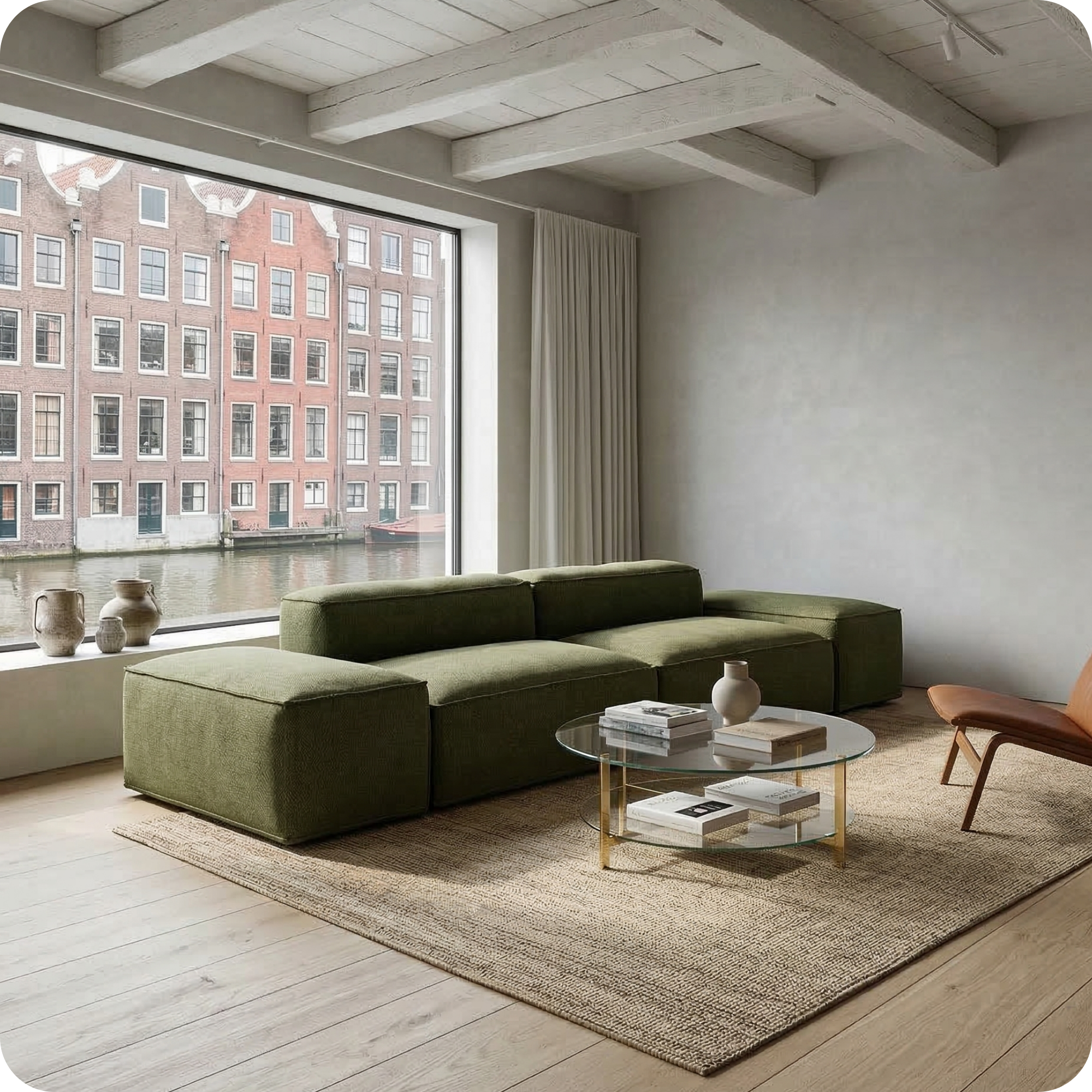
Merlot Modular Sofa — from EUR 1.490
The Merlot has clean proportional seating with a well-defined seat depth and height. The structured back cushions provide reliable lumbar support for everyday upright sitting.
Back Cushion Height and Lumbar Support
The back cushions of a sofa should support the natural curve of the spine -- specifically the lumbar region (lower back) and the mid-back. Sofa back cushions that are too high push the upper back forward into a rounded position; cushions that are too low provide no support above the hips. For most adults, back cushions at 65-80 cm from the floor provide support to the appropriate part of the spine. Sofas with split back cushions (separate upper and lower cushions) often allow better adjustment. Built-in lumbar support -- a slight forward curvature in the lower portion of the back cushion -- is the ideal but is not universal in residential furniture.
Armrest Height and Position
Armrests that are too high force the shoulders up, which creates tension across the upper back and neck. Armrests that are too low provide no support and encourage slumping. The ideal armrest height for most adults is 60-66 cm from the floor -- approximately at elbow height when seated naturally. This allows the arms to rest without shoulder elevation and provides a natural, supported position for the elbows. Low armrest designs (below 60 cm) are fashionable but require more conscious postural effort to sit well in over extended periods.
What to Avoid if You Have Back Pain
Very low sofas (seat height below 40 cm) are the primary category to avoid. Extra-deep seats (over 70 cm) are poor for most people with back problems unless used primarily for lying down. Very soft cushion cores that compress significantly underweight reduce postural control. Sofas with no defined back support (some very low-profile contemporary designs have extremely flat back sections that provide no lumbar support at all). Sofa beds used regularly as primary seating -- the pull-out mechanism typically forces a compromise in the seat depth and cushion structure that is not optimal for daily sitting.
Test Before You Buy
If back pain is a genuine concern, testing a sofa in a showroom is significantly more valuable than any specification comparison. Sit normally, as you would at home -- do not perch politely. Spend at least five minutes sitting in your usual position. Check whether your feet reach the floor comfortably, whether the seat depth allows you to sit back into the cushion while keeping your back supported, and whether the armrests are at a natural elbow height. If you cannot visit a showroom, order a sofa from a retailer with a generous return policy and test it thoroughly at home in the first weeks.


Laisser un commentaire
Ce site est protégé par hCaptcha, et la Politique de confidentialité et les Conditions de service de hCaptcha s’appliquent.