






How Long Does a Sofa Last? When to Replace Your Sofa in 2026
A sofa is one of the most significant household purchases most people make, and understanding how long it should last — and what factors determine longevity — helps both with the initial purchase decision and with recognising when a sofa has genuinely reached the end of its useful life versus when it simply needs cleaning or maintenance.
The average sofa lifespan
The honest answer to "how long does a sofa last?" is: between 7 and 15 years, depending almost entirely on quality of construction, intensity of use, and maintenance. A budget sofa (EUR 400-800) used daily by a family with children and pets may start to show significant structural deterioration within 3-5 years. A well-constructed sofa (EUR 1,500-3,000+) from a manufacturer who uses quality materials and traditional joinery techniques, used by two adults without pets, can last 15-20 years in good condition.
The three factors that most determine sofa lifespan are: Frame construction (hardwood lasts significantly longer than softwood or engineered wood), cushion fill (high-density foam or premium spring systems outlast standard foam by 5-8+ years), and fabric quality (tight-weave performance fabrics outlast loose-weave fabrics by several years under the same conditions of use).
Signs your sofa needs replacement rather than repair
Frame failure: If you can feel or hear the frame creak, flex, or collapse under normal sitting weight, the frame has likely failed or been compromised. In cheaper sofas with softwood or engineered wood frames, this typically happens within 3-7 years of heavy use. Frame failure is generally not economically worth repairing. Irreversible cushion compression: Cushion foam that has permanently compressed to a fraction of its original height — leaving the seat surface clearly lower in the middle or at the back — has degraded beyond recovery. New foam can be inserted, but the cost of professional reupholstery (EUR 500-1,500+ for a full sofa) often approaches or exceeds the cost of a new mid-range sofa. Spring failure: A sofa with a spring system that has broken or collapsed will have a noticeably uneven seat surface. Some spring repairs are practical; widespread spring failure in an older sofa is a sign of end-of-life. Fabric damage that cannot be cleaned or covered: Large stains that have penetrated to the cushion foam, tears in the main seat area, or pervasive pilling that makes the sofa look worn regardless of cleaning.
Signs your sofa needs maintenance, not replacement
Surface stains: Most fabric surface stains can be treated professionally. Upholstery cleaning services typically charge EUR 80-200 for a full sofa clean and can remove many stains that appear permanent. Flattened scatter cushions: Cushion inserts can be replaced individually for EUR 15-40 each. If the sofa frame and main seat cushions are in good condition, replacing just the scatter cushion inserts is an inexpensive way to refresh the sofa's appearance. Sagging seat cushions (moderate): Cushions that have flattened somewhat but have not permanently compressed can often be refreshed by flipping them (if they are double-sided) or by having foam toppers added inside the cover. Fabric wear in limited areas: Armrest covers, seat edge guards, and throw blankets can conceal and protect areas of localised wear without full replacement.
Choosing a sofa built to last

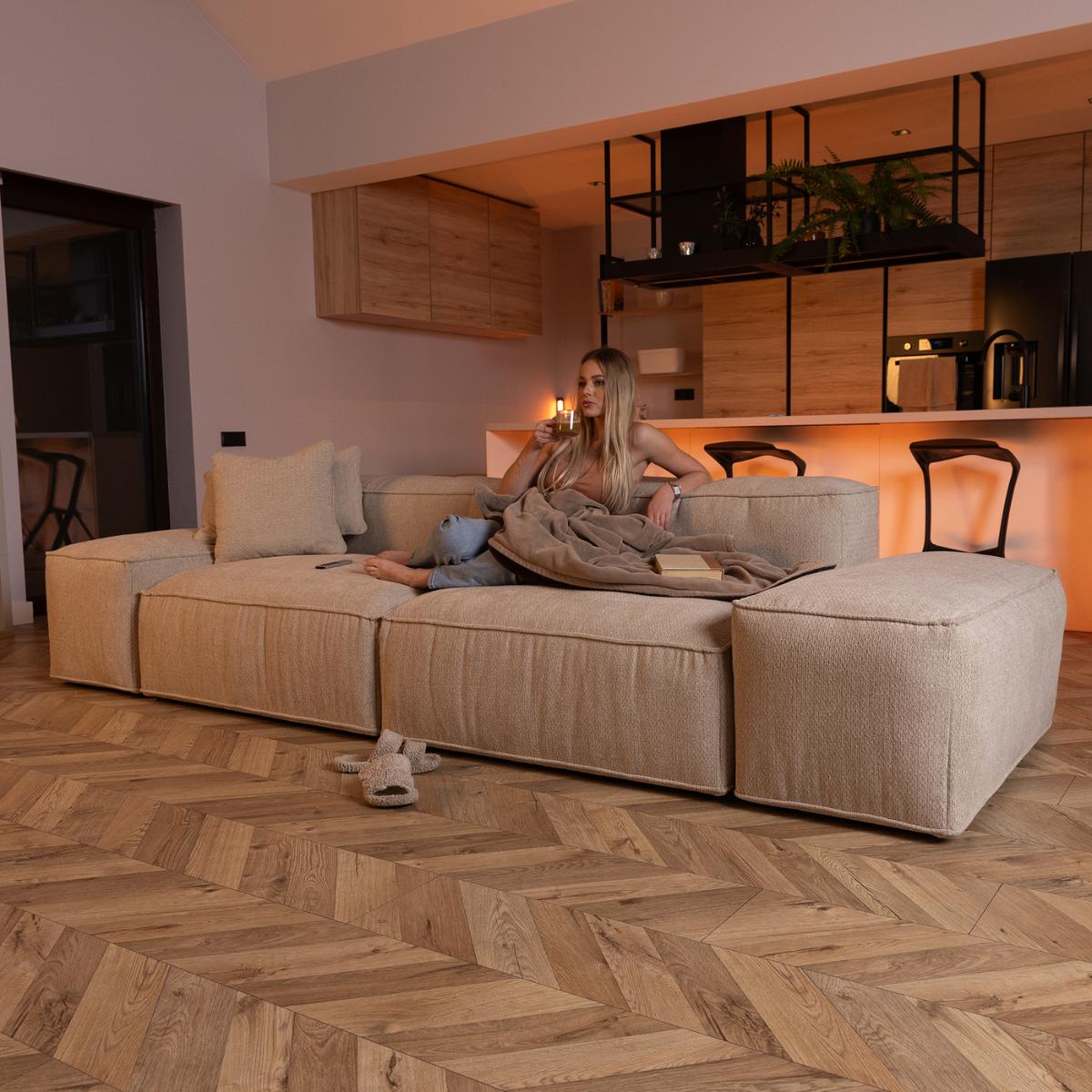
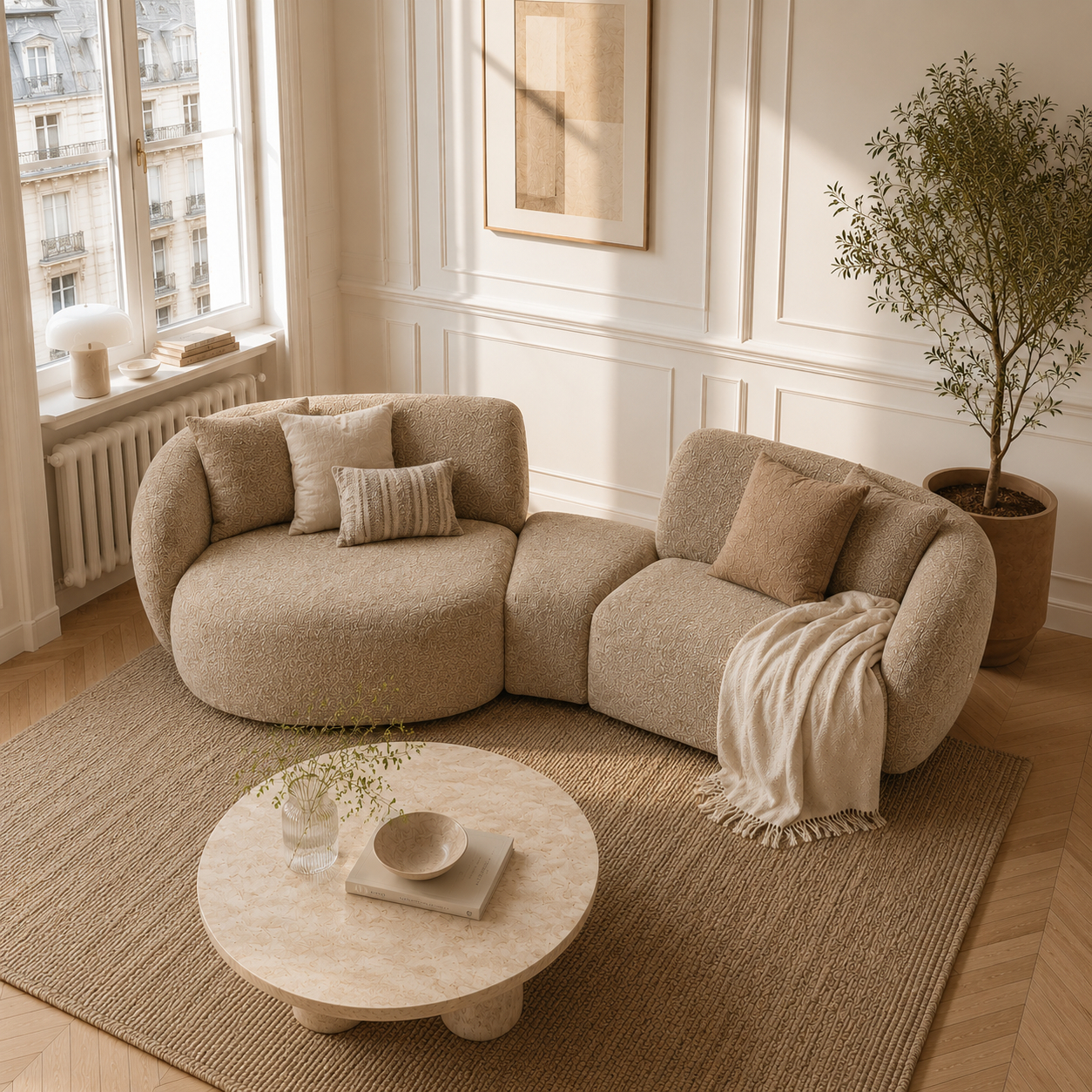
Merlot Modular Sofa — Furni's modular sofas are built to European quality standards with durable frames and high-resilience foam. The modular system extends effective sofa lifespan further: individual modules can be replaced or reconfigured rather than replacing the full sofa when circumstances change.

Malbec Modular Sofa — built for heavy daily use with firm seat support and high-density foam construction. When a sofa is used daily by a family, choosing a model built for durability from the outset is significantly more economical than replacing a budget sofa every 4-5 years.
The cost-per-year calculation
The most rational way to evaluate a sofa purchase is cost per year of use. A EUR 600 sofa that lasts 4 years costs EUR 150 per year. A EUR 2,000 sofa that lasts 15 years costs EUR 133 per year — and provides a significantly better sitting experience throughout. This calculation becomes even more favourable for quality sofas when the environmental cost of disposal and replacement is considered. A sofa that lasts twice as long generates half the waste and half the replacement shopping cost.

Laisser un commentaire
Ce site est protégé par hCaptcha, et la Politique de confidentialité et les Conditions de service de hCaptcha s’appliquent.