


How to Arrange Furniture in a Living Room: Layout Rules That Work
The way furniture is arranged in a living room determines how the space functions, how it feels to be in it, and how it looks. A thoughtfully arranged room feels natural, comfortable, and spacious; a poorly arranged one can feel awkward, cramped, and dysfunctional — even with beautiful individual pieces of furniture. Good furniture arrangement is both practical and psychological: it creates clear circulation paths, facilitates easy conversation, takes advantage of natural light and room features, and creates a visual sense of order and balance.
Start with the Focal Point
Every successful living room layout is anchored by a focal point — the primary visual element that the rest of the furniture arrangement revolves around. The most common focal points are a fireplace, a large window with a view, or a television. Identify the focal point in your room before arranging any furniture — typically, the sofa and primary seating should face or be oriented toward this focal point. If your room lacks an obvious architectural focal point, create one: a large mirror, a gallery wall, or a significant piece of art can serve this purpose.

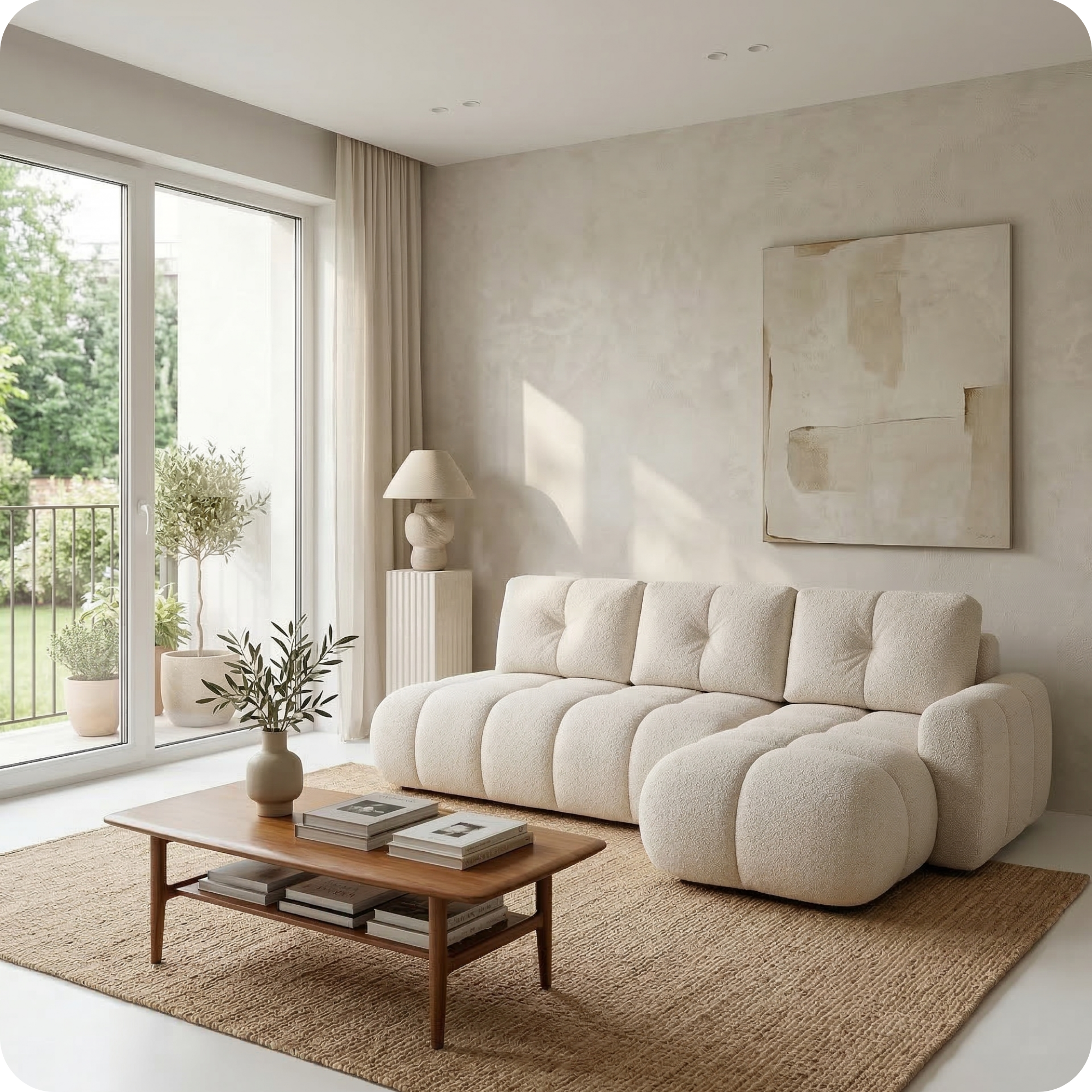
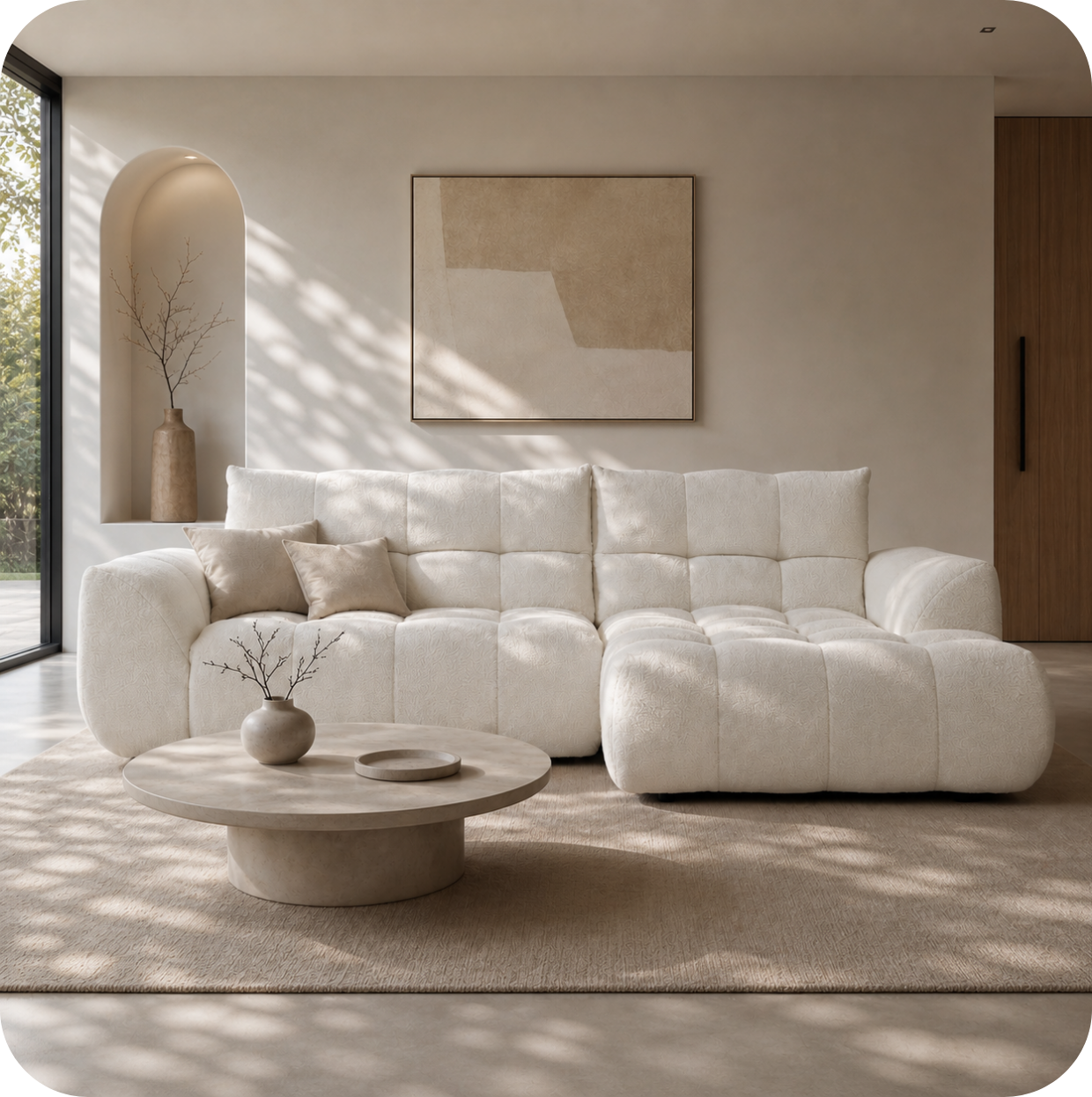
Merlot Corner Sofa — from EUR 1,390
An L-shaped corner sofa like the Merlot simplifies furniture arrangement considerably — it naturally defines the seating zone and creates a ready-made conversation area without requiring additional armchairs. Its modular design means the longchaise can be placed on either side to suit your room layout.

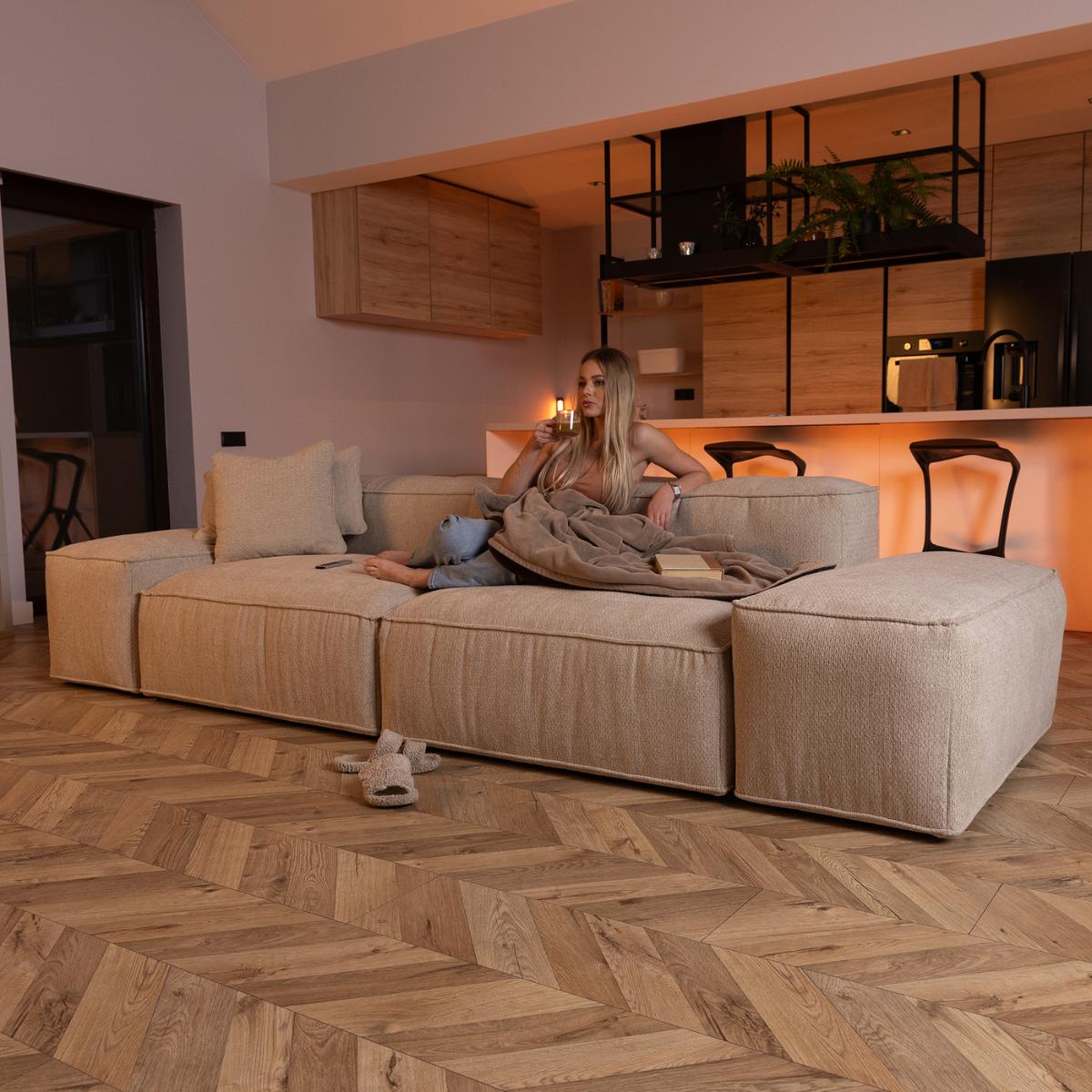
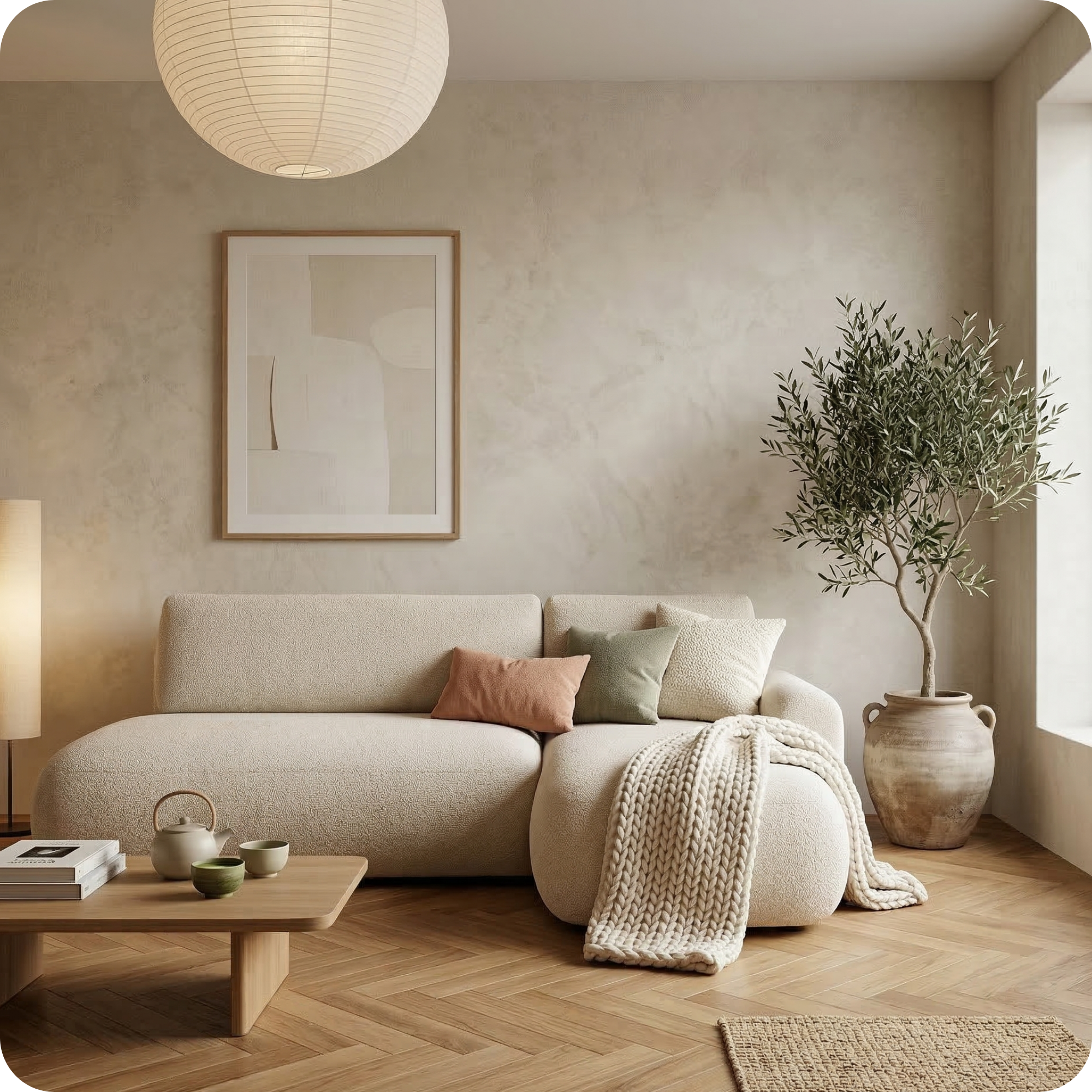
Asti Corner Sofa — from EUR 1,190
The Asti's generous corner configuration creates a natural, self-contained seating arrangement that works beautifully in both large and medium-sized living rooms. Position it with the longer section facing the focal point and the shorter section toward the entrance for a classic, welcoming layout.
The Key Layout Rules
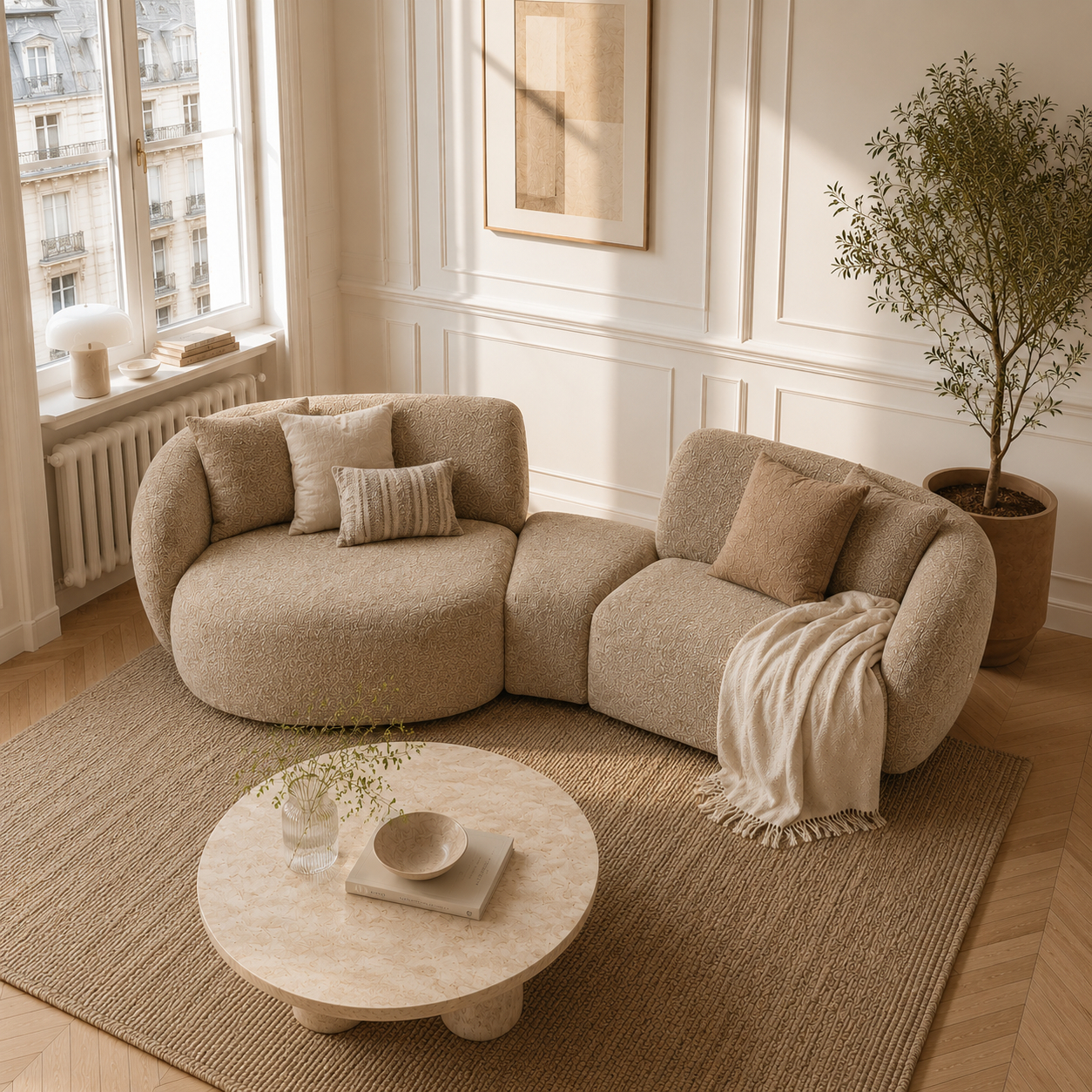
A few foundational rules will improve almost any furniture arrangement. First: keep the sofa away from the wall — floating furniture in the centre of the room (with space behind the sofa) creates a more intimate, designed feeling than pushing everything against the perimeter, which actually makes rooms feel smaller. Second: ensure all seating is within comfortable conversation distance — ideally, no more than 2.5-3 metres between facing seats. Third: create clear circulation paths — there should be at least 90cm of clear walking space between major pieces of furniture. Fourth: use a rug to define the seating area — in an open-plan space, a rug is particularly important as it visually anchors the furniture grouping and separates it from adjacent zones.
Dealing with Difficult Room Shapes
Long, narrow rooms present a particular challenge — the instinct to place the sofa on the short wall and everything else along the sides creates a bowling alley effect. Instead, break the room into two distinct zones: a main seating area at one end (with the sofa floating perpendicular to the long wall) and a secondary zone (a reading nook, a small desk, a dining area) at the other. Square rooms can feel static — use furniture placed at angles, and rugs to create dynamic tension. Rooms with multiple doorways require careful attention to circulation: map out the walking routes first, then arrange furniture to accommodate them.

Laisser un commentaire
Ce site est protégé par hCaptcha, et la Politique de confidentialité et les Conditions de service de hCaptcha s’appliquent.