



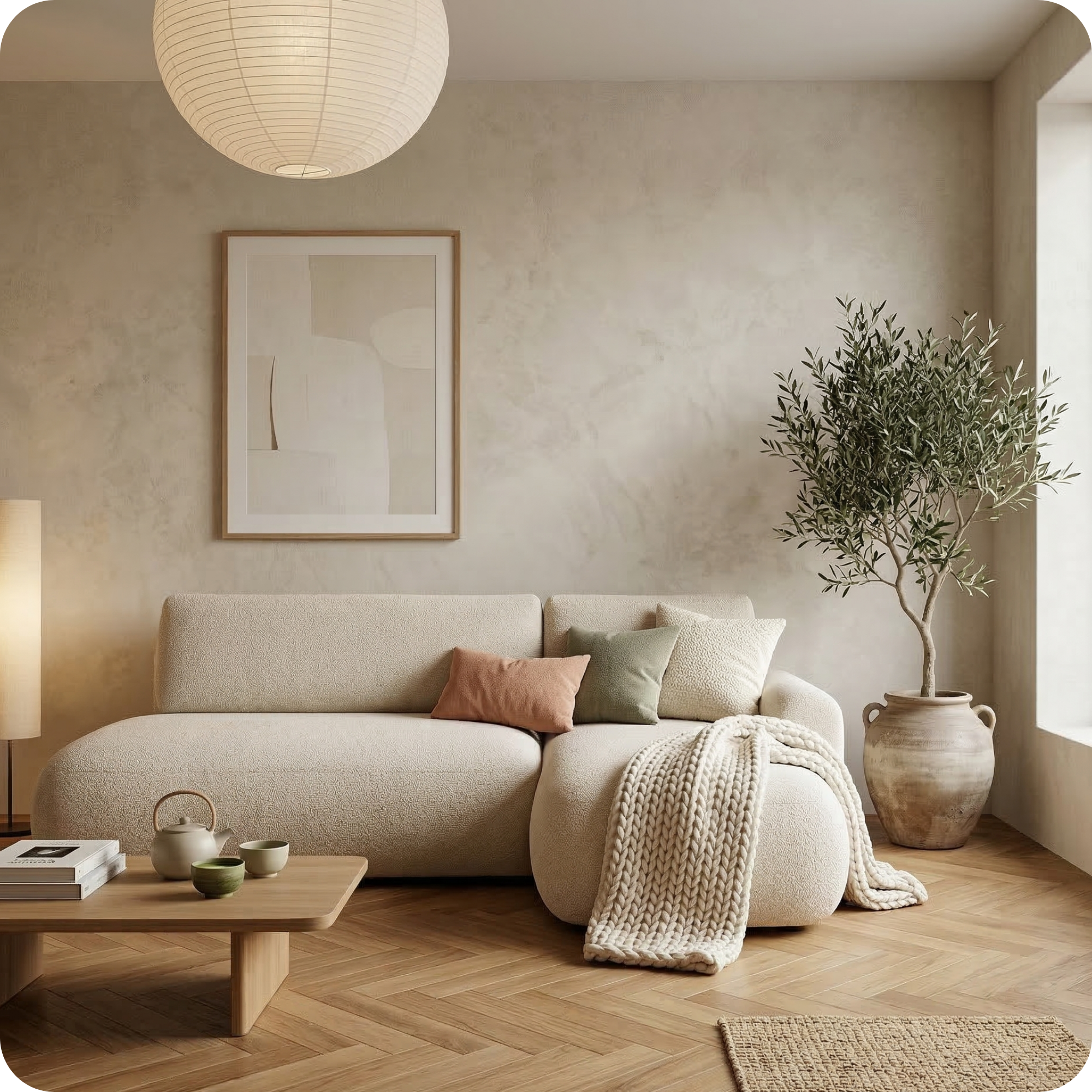
How to Arrange Living Room Furniture: Sofa Placement and Layout Guide 2026
The way furniture is arranged in a living room determines not just how the room looks but how it functions — whether it encourages conversation, whether it flows naturally for people entering or crossing the room, and whether it creates a sense of spaciousness or compression. The sofa is the starting point for any living room layout: once it is placed correctly, the rest of the furniture arranges itself more naturally.
The focal point principle: always start with the focal point
Every living room has one primary focal point — a feature that the room is naturally oriented around. In most rooms, this is a TV, a fireplace, or a large window. The sofa should be positioned to face the focal point at a comfortable viewing or conversation distance. This is the first rule of living room layout, and it is the rule that most often gets broken when people place the sofa against a wall by default rather than in relation to the focal point.
When a room has a TV as the focal point: the ideal viewing distance is 1.5 to 2.5 times the diagonal screen size measured in metres. For a common 55-inch screen (approximately 140 cm diagonal), the ideal sofa viewing distance is 2.1 to 3.5 metres. Placing the sofa further than 3.5 metres from a 55-inch TV typically means the viewing experience degrades. Placing it closer than 1.5 metres means the screen fills too large a portion of the field of view.
Floating the sofa vs. against the wall
The instinct to push the sofa against the wall is strong — it feels like it creates more space. In rooms over 18-20 sqm, it usually does the opposite. A sofa pushed against the wall creates a large empty space in the centre of the room and a circulation path that runs along the walls rather than through the room. Floating the sofa 30-50 cm from the wall creates a more dynamic room layout: it defines the seating zone, brings the sofa into proper relation with the coffee table and TV, and allows a walkway to run behind the sofa, which is often the most natural path from one end of the room to the other.
Corner sofa placement

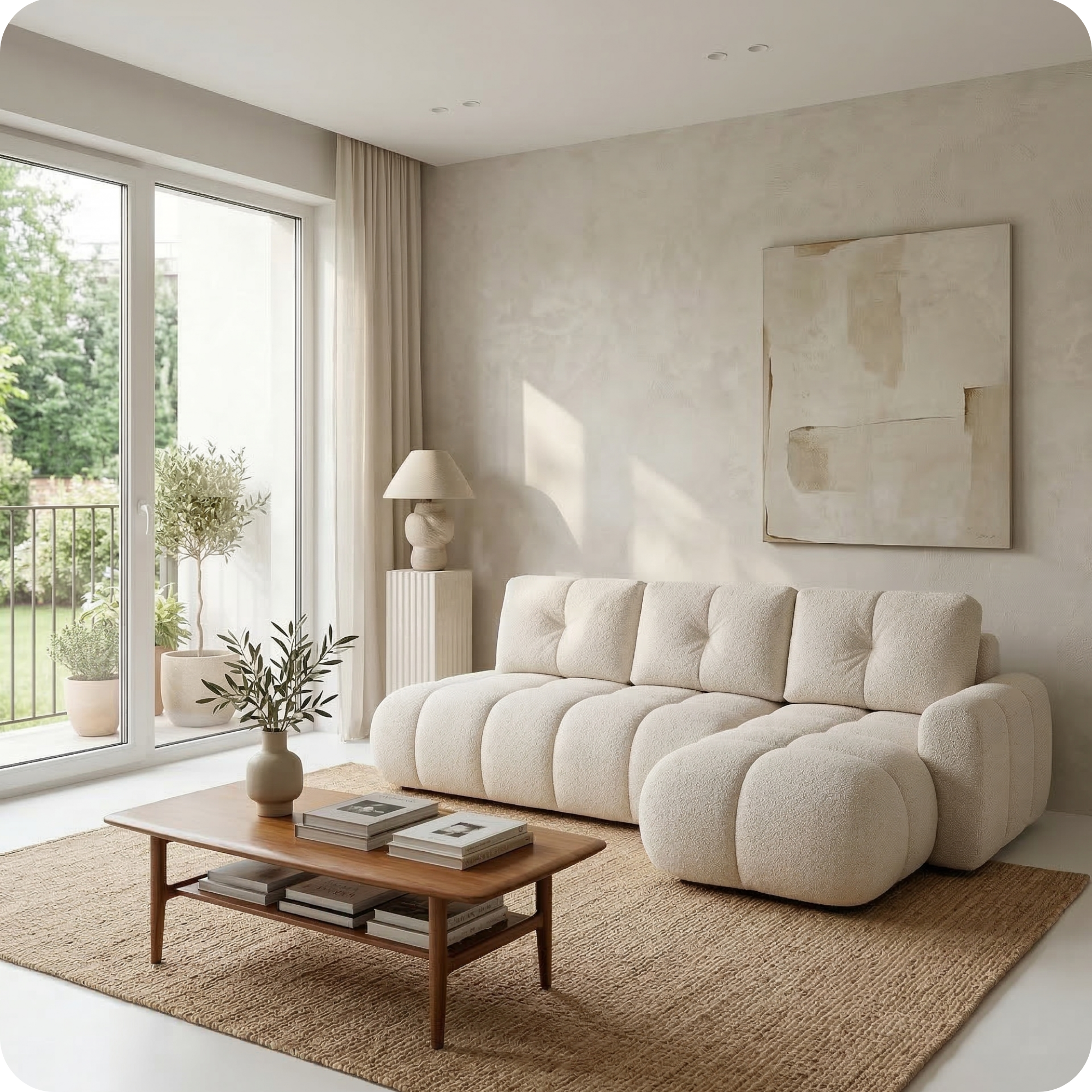
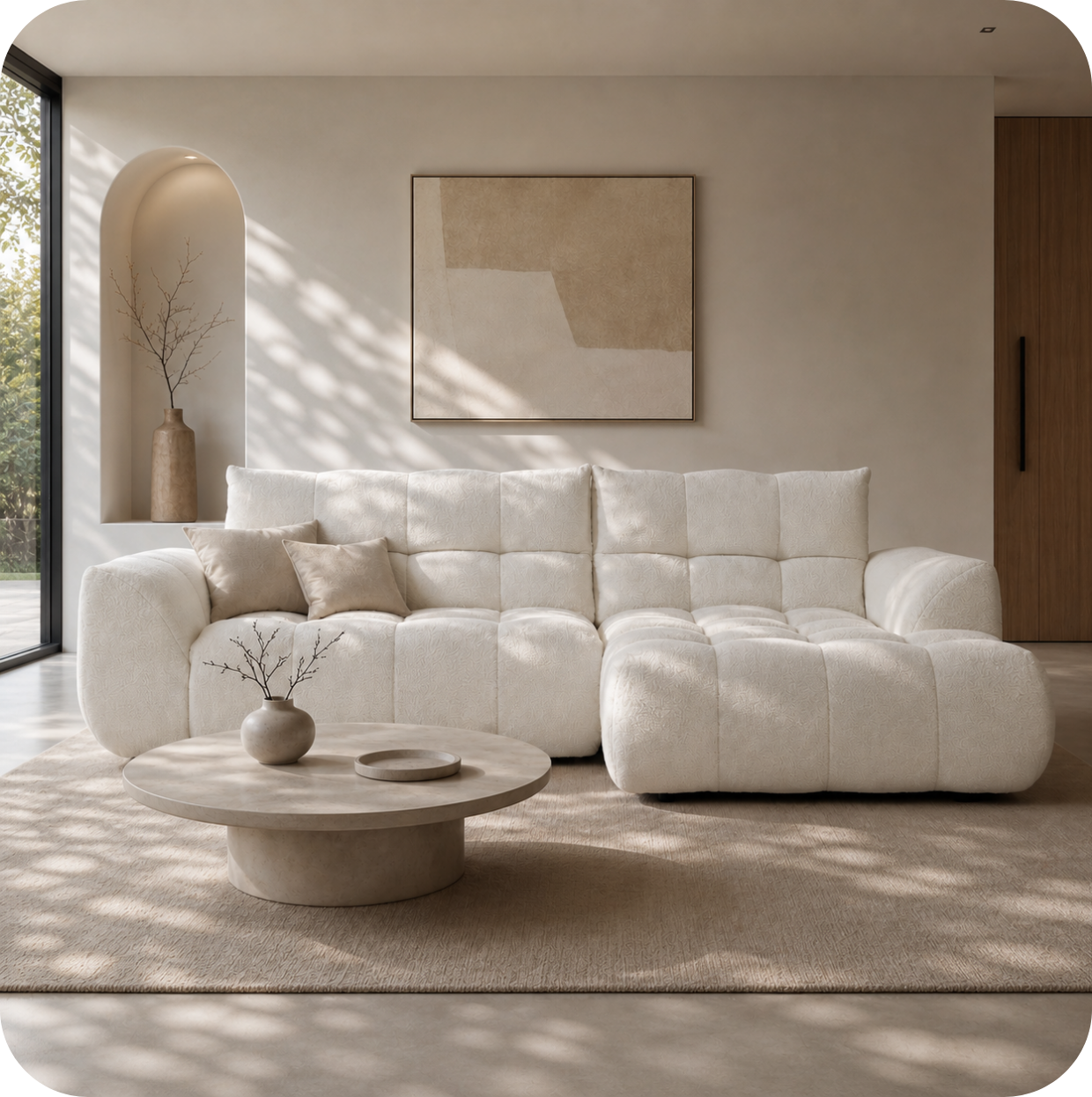
Merlot Corner Sofa — a corner sofa naturally defines a seating zone without additional chairs. The L-shape creates an enclosed seating area that faces inward, making it ideal for conversation-oriented rooms. Place with the corner of the sofa against the corner of the room, or float it with both legs parallel to the walls and no direct wall contact.

Asti Corner Sofa — the Asti's compact profile makes it a good choice for rooms where a corner sofa is needed but floor space is at a premium. Placing the Asti in one corner of the room with the TV on the opposite wall creates a natural, intimate seating arrangement.
The coffee table rule: size and distance
The coffee table should be approximately two-thirds the length of the sofa and positioned 40-50 cm from the front edge of the sofa cushions. This distance is close enough to comfortably reach drinks and remotes without leaning forward excessively, but far enough to allow comfortable leg movement in the seating area. A coffee table that is too far from the sofa (60+ cm) is essentially decorative — it is too far to use comfortably. A coffee table that is too close (20 cm or less) makes it difficult to sit down and stand up without the shins catching the table edge.
Creating zones in open-plan spaces

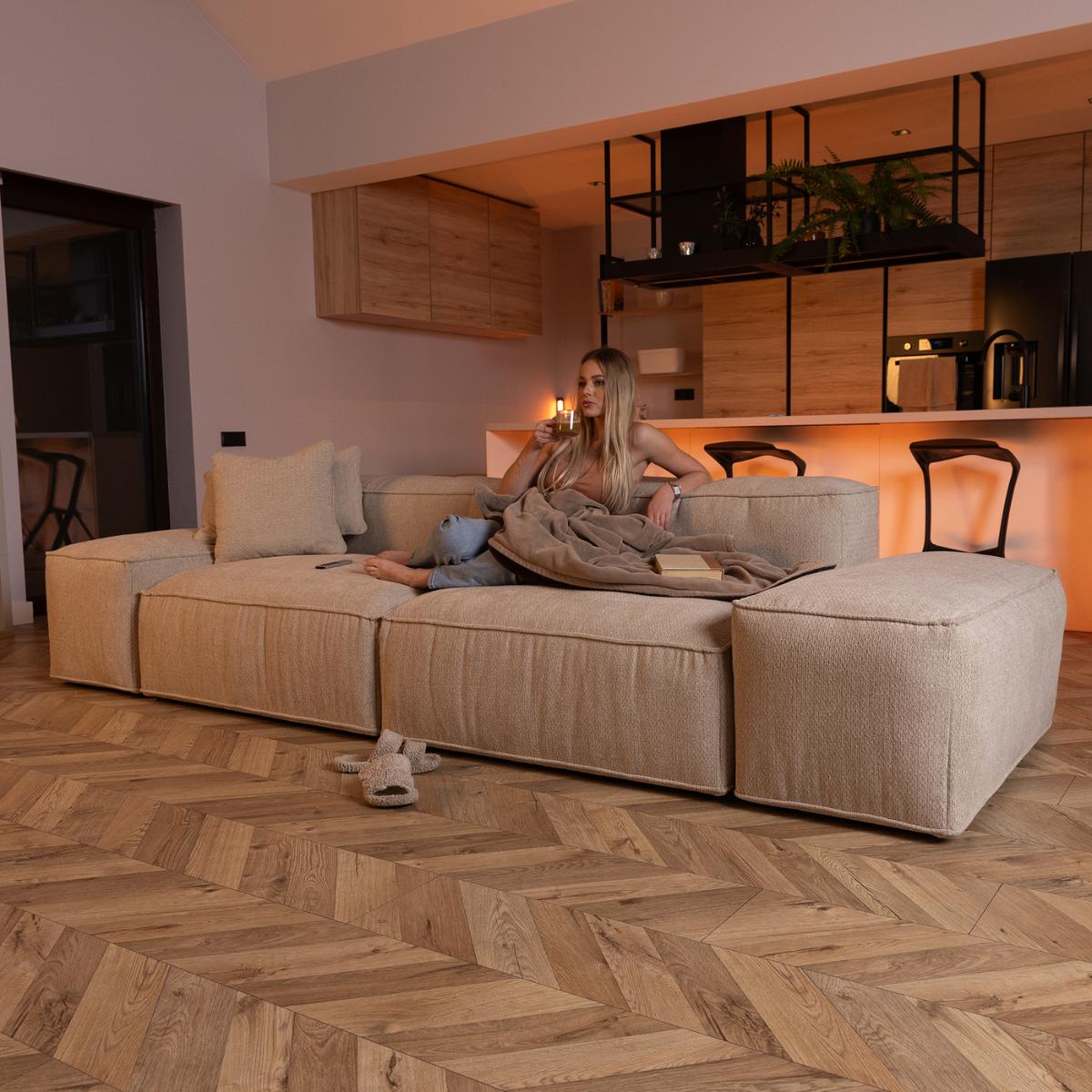
Merlot Modular Sofa — in open-plan living and dining spaces, the back of the sofa acts as a visual and spatial divider between the living zone and the dining zone. The sofa does not need to touch a wall — placing it with the back facing the dining table and the seating facing the TV is one of the most effective open-plan layouts.
Traffic flow: the three path rule
A well-arranged living room has three clear paths: into the room from the main entrance, across the room from one zone to another (typically living to dining or living to kitchen), and out through any secondary exit. All three paths should have at least 80 cm of clear width. Map these three paths on a floor plan before finalising sofa placement — if any of the three is blocked or narrowed below 80 cm by the sofa position, the layout will create daily frustration regardless of how good it looks on paper.
Rug placement: the anchor rule
The rug should be large enough for all sofa legs to sit on it, or at minimum for the front two legs of the sofa and all legs of any additional chairs. A rug that only sits in front of the sofa with no sofa legs on it typically looks undersized and disconnected. The rug is the element that anchors the seating zone as a unified space — getting it large enough is more important than getting a high-quality rug in a smaller size.

Laisser un commentaire
Ce site est protégé par hCaptcha, et la Politique de confidentialité et les Conditions de service de hCaptcha s’appliquent.