



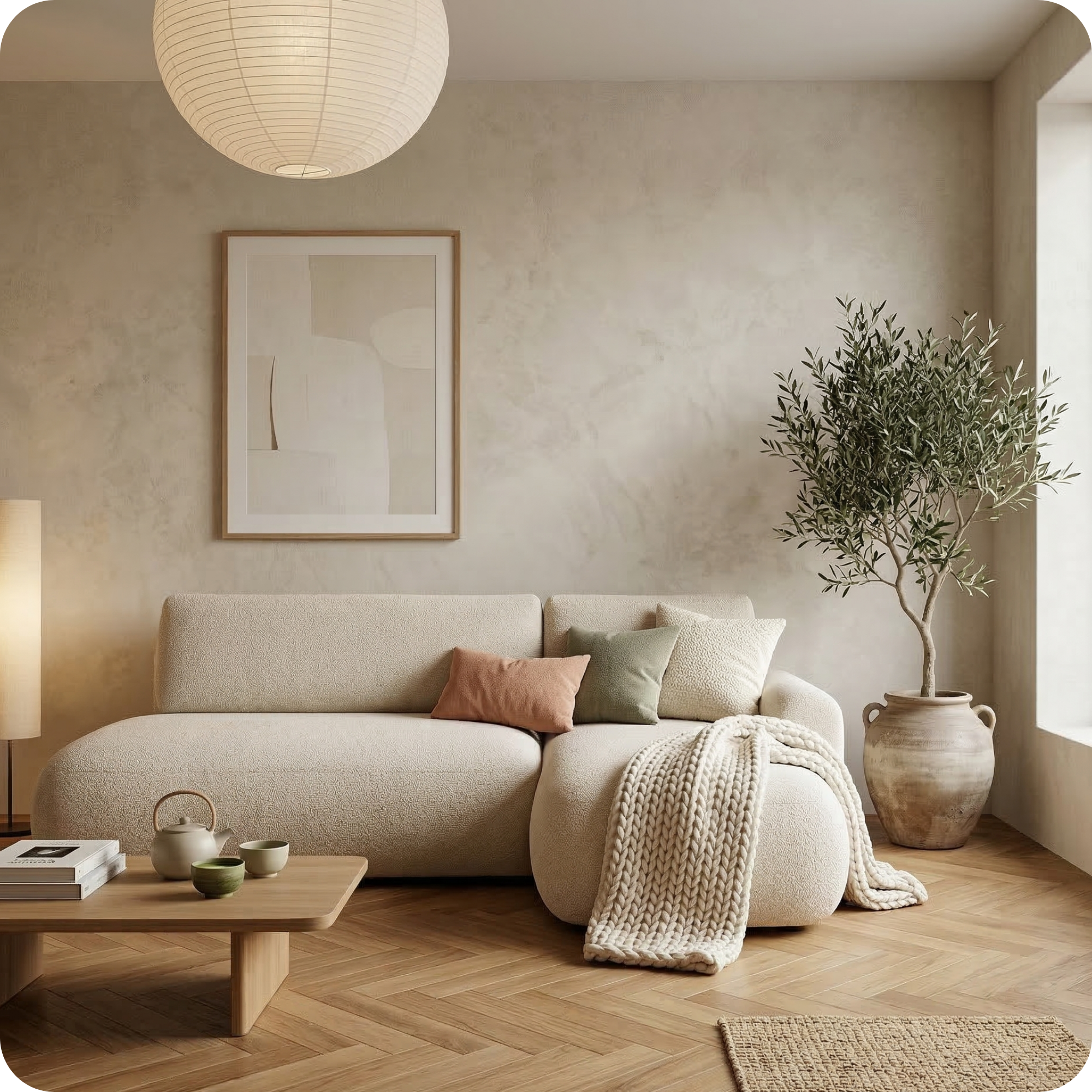
How to Choose a Sofa: The Complete Sofa Buying Guide 2026
A sofa is one of the most significant furniture purchases most people make, and for good reason: it is the centrepiece of daily life, the place where families gather, guests are entertained, and evenings are spent. Choosing well means living with a sofa that improves life for years; choosing poorly means living with a mistake that is expensive and inconvenient to fix. This guide covers every decision point in the sofa-buying process -- from the first measurement to the final fabric choice.
Step 1: Define How You Actually Use Your Sofa
Before measuring or browsing, be honest about how your sofa is used. Is it primarily for watching television, requiring a deep, reclined seating position? Or is it for socialising, where a more upright, interactive seating posture suits better? Do you have pets or young children who will impact the sofa daily -- in which case durability and cleanability are the primary considerations? Do you need the sofa to sleep on occasionally? Do you live alone, as a couple, or in a family of four or more? The answers shape every subsequent decision.
Step 2: Measure Your Space Properly
Measure your room and the position where the sofa will sit. The sofa should occupy roughly two-thirds of the wall it faces or sits against. Leave at least 45-60 cm between the sofa front and any coffee table, and at least 80 cm of clearance on any side where people walk past. Before ordering, mark the sofa's dimensions on the floor with tape and live with the outline for a day -- this is the single most effective way to validate that the size is right before committing.
Step 3: Choose Your Sofa Type
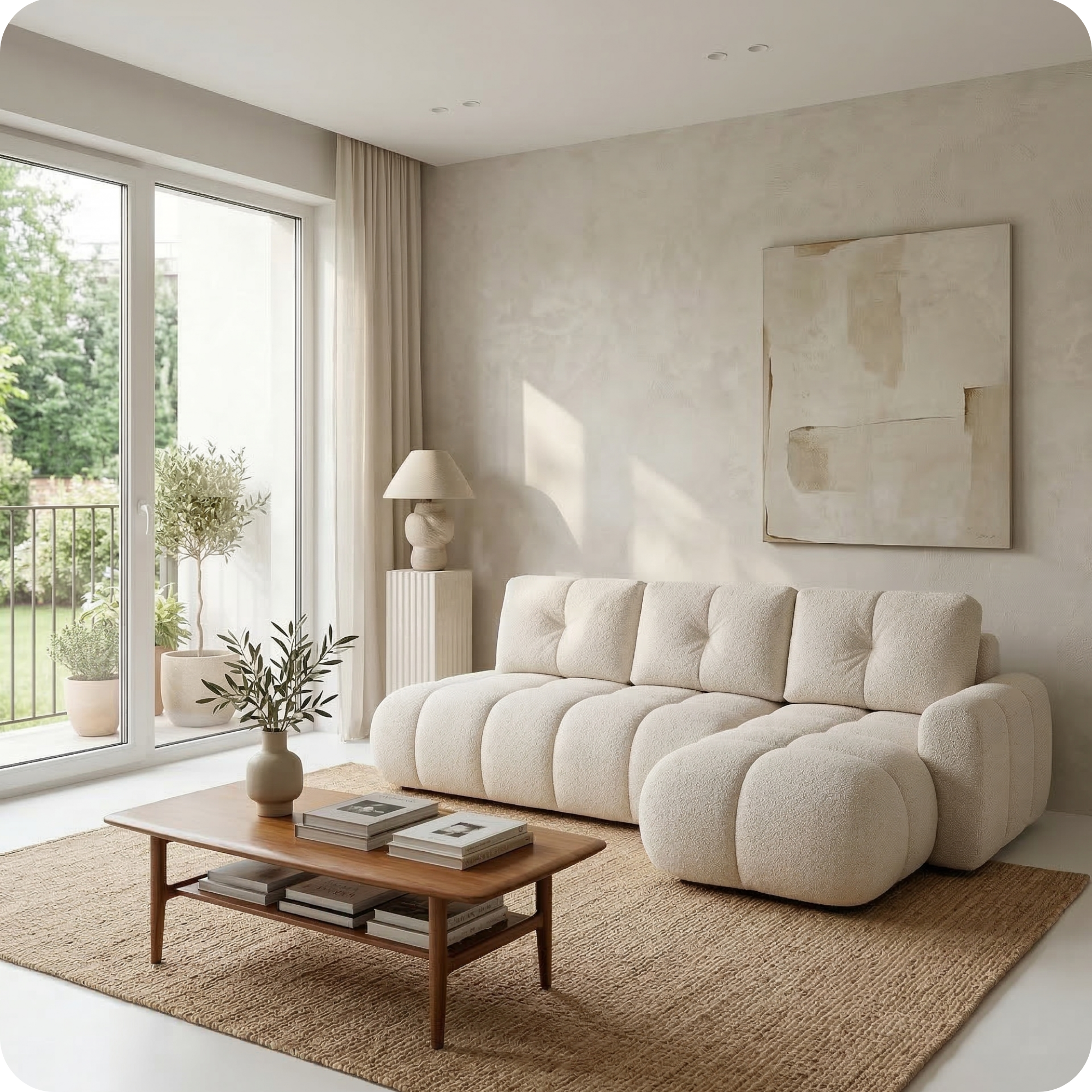
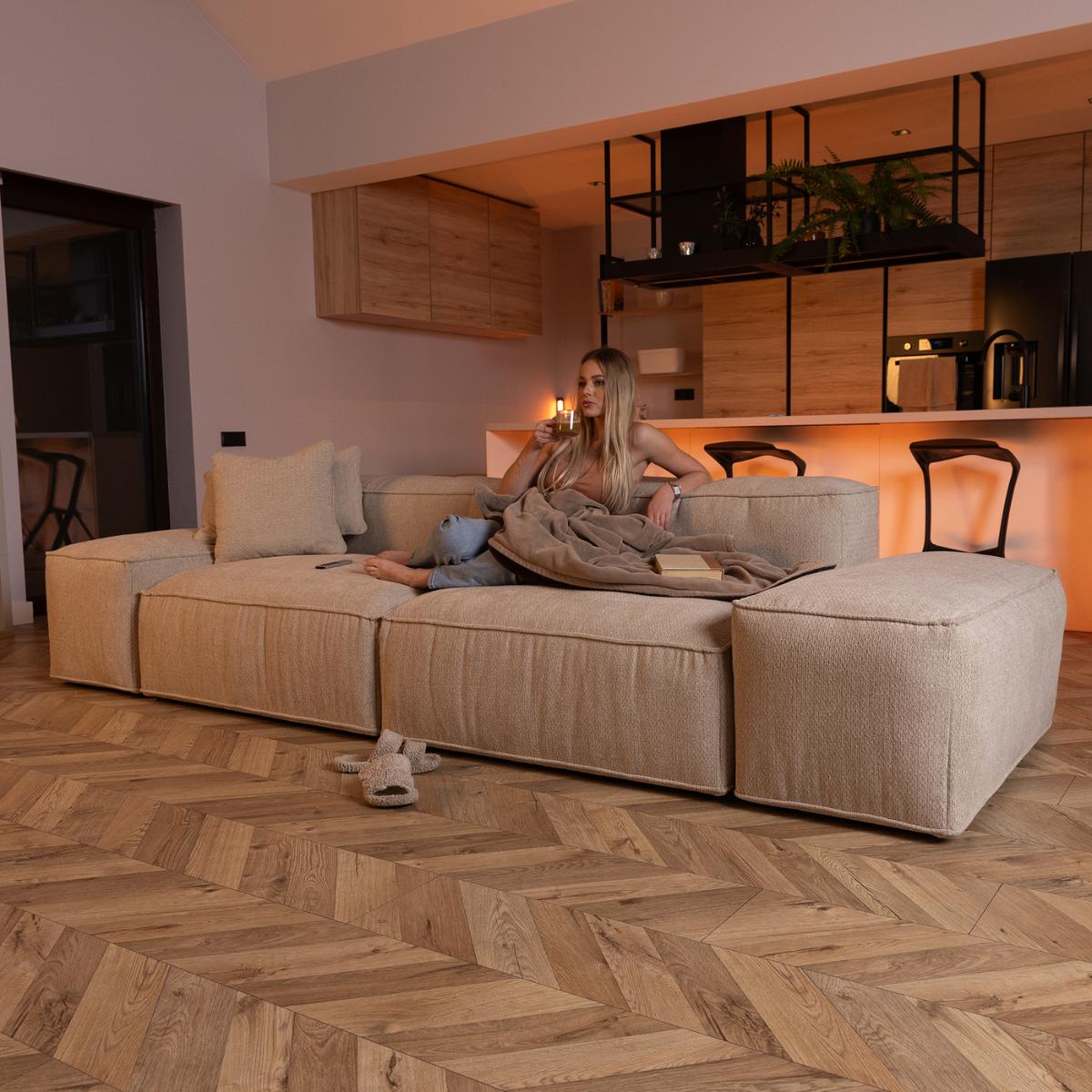
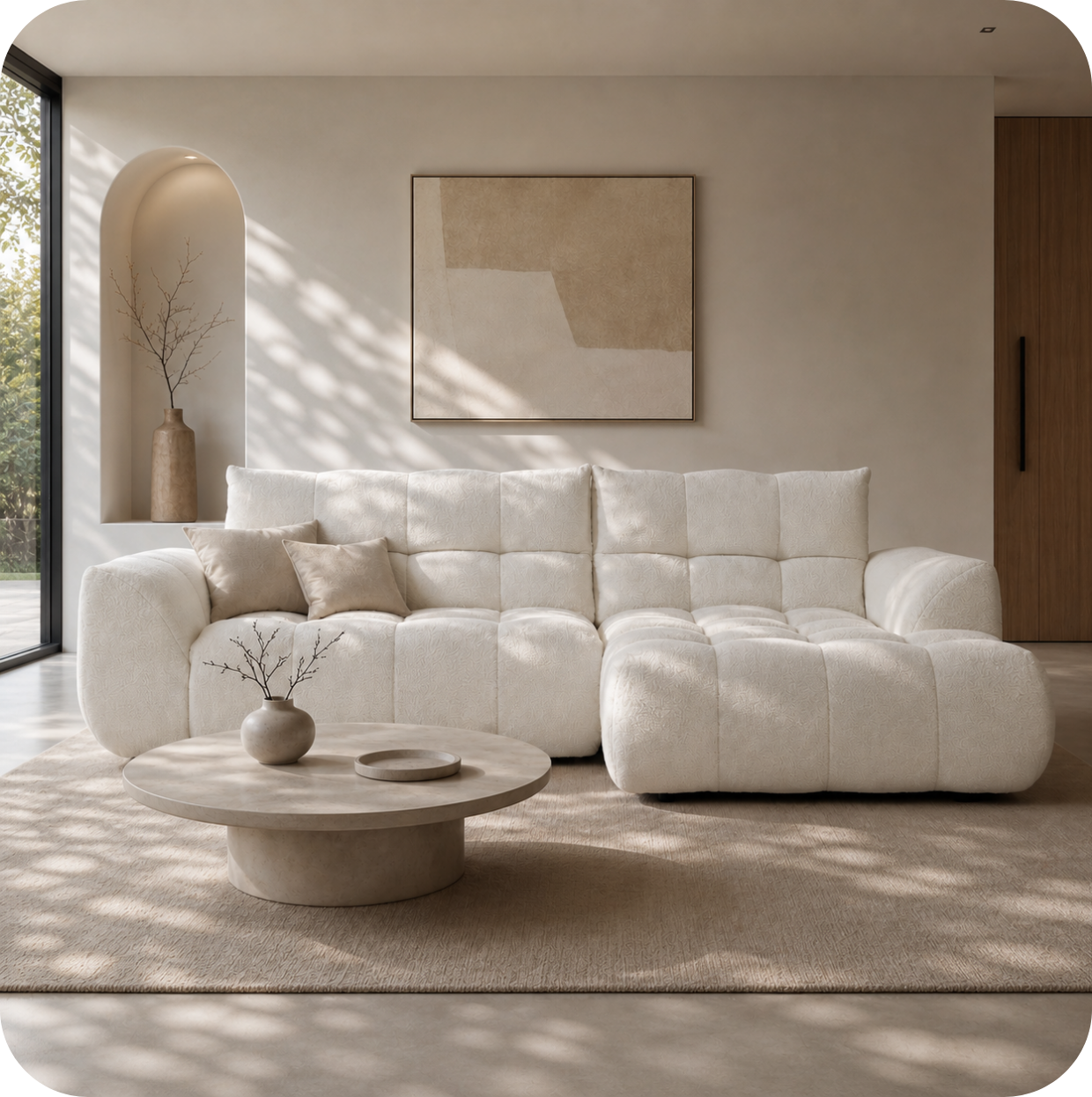
Standard sofa (2 or 3-seater): the classic choice for smaller living rooms and as a secondary sofa in larger spaces. Corner sofa (L-shaped): defines a seating zone, offers more seats than a standard sofa, suits rooms of 18+ m². Large corner sofa (U-shaped): maximum seating capacity, requires rooms of 25+ m². Modular sofa: highly configurable, allows you to add sections over time, best long-term investment. Sofa bed: adds sleeping functionality, ideal for apartments without a guest room. Storage sofa: built-in storage under the seats, practical for clutter management.

Modular Sofas at Furni — from EUR 1.490
Modular sofas are the most flexible option for anyone who values long-term adaptability. The Merlot and Lugano modular systems allow you to start with the configuration that suits your current space and expand or reconfigure as your life changes.

Corner Sofas at Furni — from EUR 1.590
Corner sofas suit the widest range of households: they offer more seating than a standard sofa, define the living room zone architecturally, and come in a range of sizes to suit different room dimensions.
Step 4: Understand Sofa Construction Quality
The frame is the sofa's skeleton. Quality frames use kiln-dried hardwood (beech, birch, or oak) that is screwed and glued at joints. Avoid softwood frames, which flex and deteriorate with use. The suspension system should use sinuous springs or a webbing system for durability. Look for eight-way hand-tied springs in premium pieces. Seat cushions use foam, down, or a foam-and-fibre combination. High-resilience foam with a density of 30-40 kg/m³ offers the best balance of comfort and longevity. Down feather filling feels luxurious but requires regular plumping and loses its shape more quickly.
Step 5: Choosing the Right Fabric
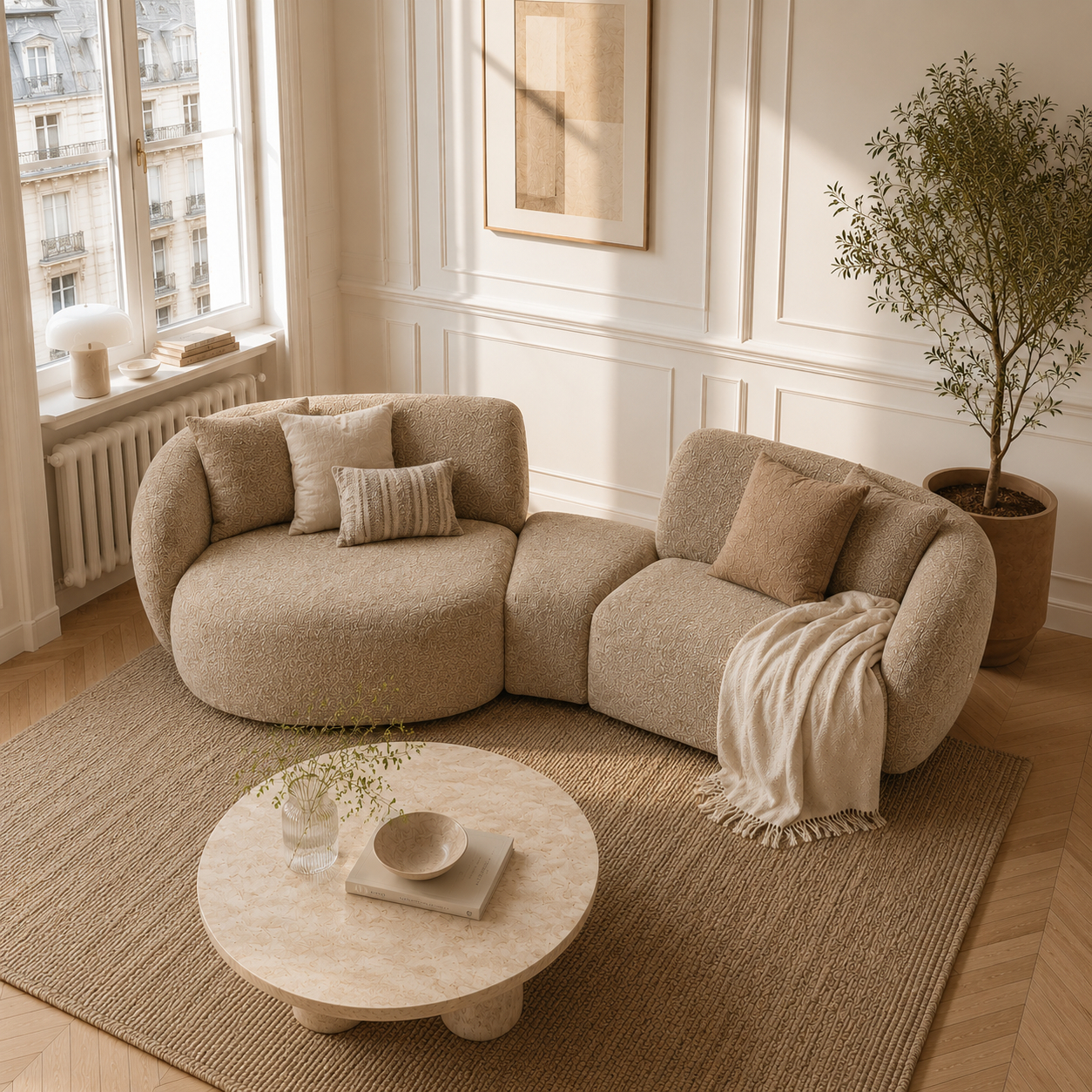
The fabric is the most visible and most tactile element of the sofa, and it also determines how easy the sofa is to live with over time. Performance fabrics (tightly woven polyester, microfibre, and many modern blended weaves) are the most practical for families with children and pets. They resist staining, clean easily, and do not attract pet hair to the extent that velvet or loose-weave fabrics do. Natural fabrics like linen and cotton are beautiful but require more care. Velvet has had a major resurgence and looks spectacular but needs careful maintenance and should be avoided in high-traffic homes with pets. Bouclé (the loopy, textured weave) is extremely popular in 2026 but can catch on objects and pull -- consider carefully for homes with cats.
Step 6: Set a Realistic Budget
Quality sofas begin at roughly EUR 800-1,000 for a basic 3-seater. A well-made, well-warranted 3-seater from a reputable European manufacturer sits in the EUR 1,200-2,000 range. Large corner sofas from quality manufacturers typically start at EUR 1,500-2,000. The temptation to spend less is understandable, but an entry-level sofa that deteriorates within three years costs more per year of use than a quality piece at twice the price that lasts twelve. Think in cost-per-year terms: a EUR 1,500 sofa that lasts 10 years costs EUR 150/year; a EUR 700 sofa that lasts 3 years costs EUR 233/year.
Step 7: Check the Practical Details Before Buying
Delivery dimensions: measure all doorways, hallways, and stairwells. Sofas are delivered partially assembled in some cases but not all. Confirm whether the delivery includes placement in the room or just to the doorstep. Warranty: look for a minimum 2-year structural warranty; 5-year warranties are available from reputable manufacturers. Check fabric care instructions before buying -- some fabrics are dry-clean only, which adds significant ongoing cost.

Laisser un commentaire
Ce site est protégé par hCaptcha, et la Politique de confidentialité et les Conditions de service de hCaptcha s’appliquent.