


How to Choose a Living Room Colour Scheme: A Complete Guide
Choosing a living room colour scheme is one of the most impactful and most agonised-over decisions in home decoration. The good news is that the process is far more straightforward than it often seems: it can be reduced to a series of clear decisions, each building on the last, that together produce a coherent, considered colour palette. This guide walks through the complete process from starting point to final palette.
Step 1: Start with the Fixed Elements
The most common colour scheme mistake is to choose paint colours first and then try to make everything else work around them. Instead, start with the fixed elements — the things that already exist in the room and cannot (or will not) be changed. These typically include: the floor (wooden boards, carpet, tiles — their colour and warmth level will affect everything else), existing furniture if you are keeping any, architectural features (a brick fireplace, wooden beams, original tiles), and significant architectural fixed elements (large windows that let in warm or cool light). Only once you understand these fixed elements should you begin making colour choices.

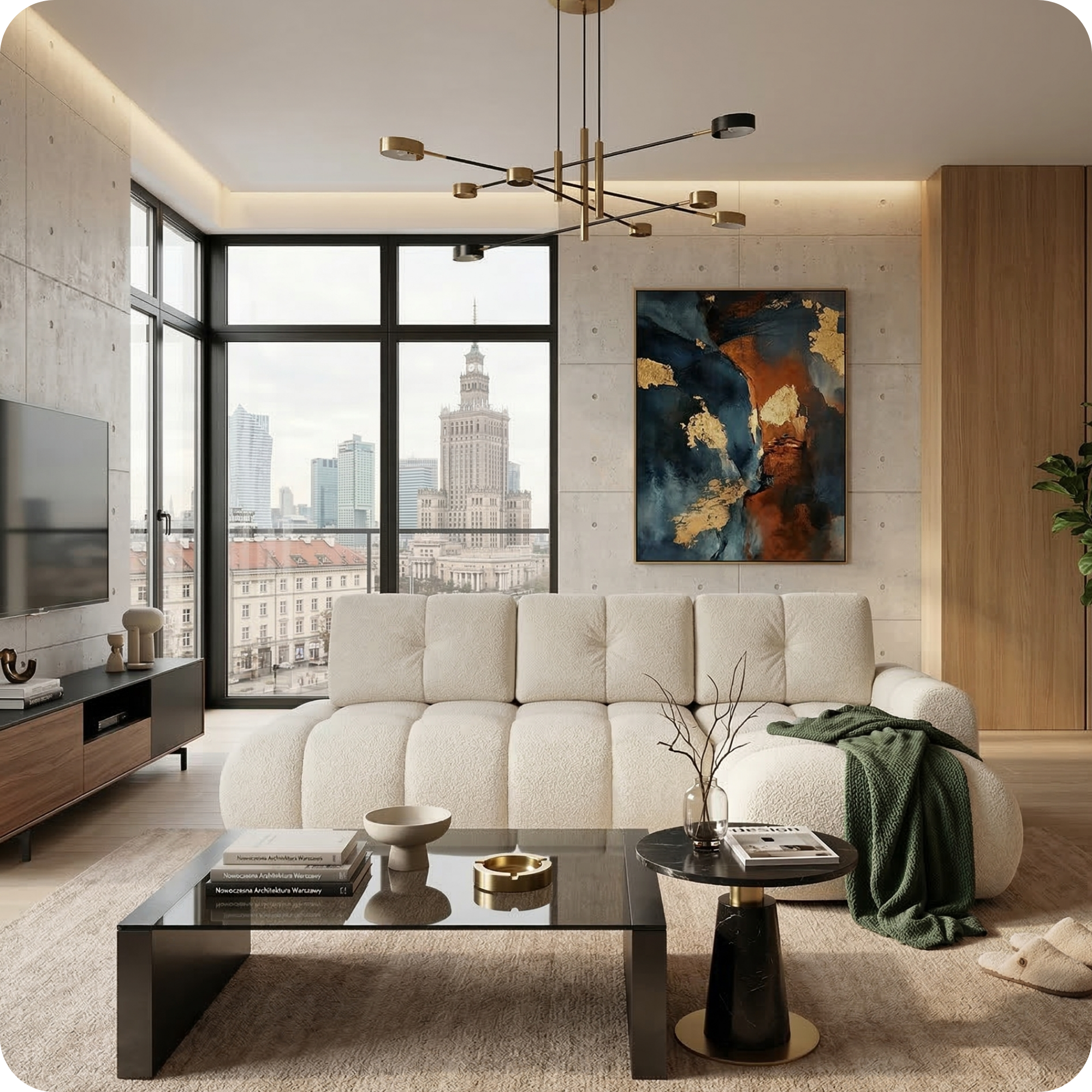
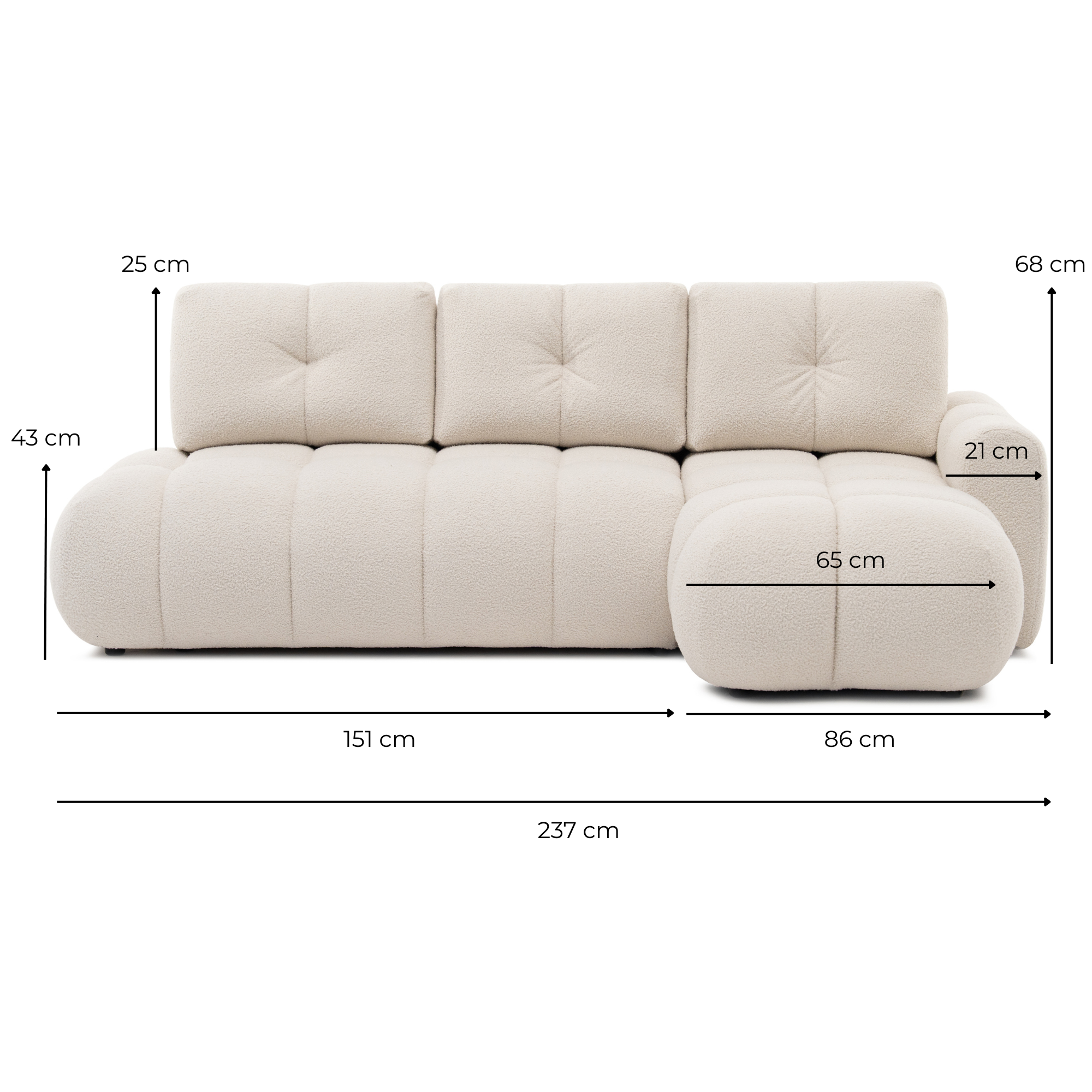
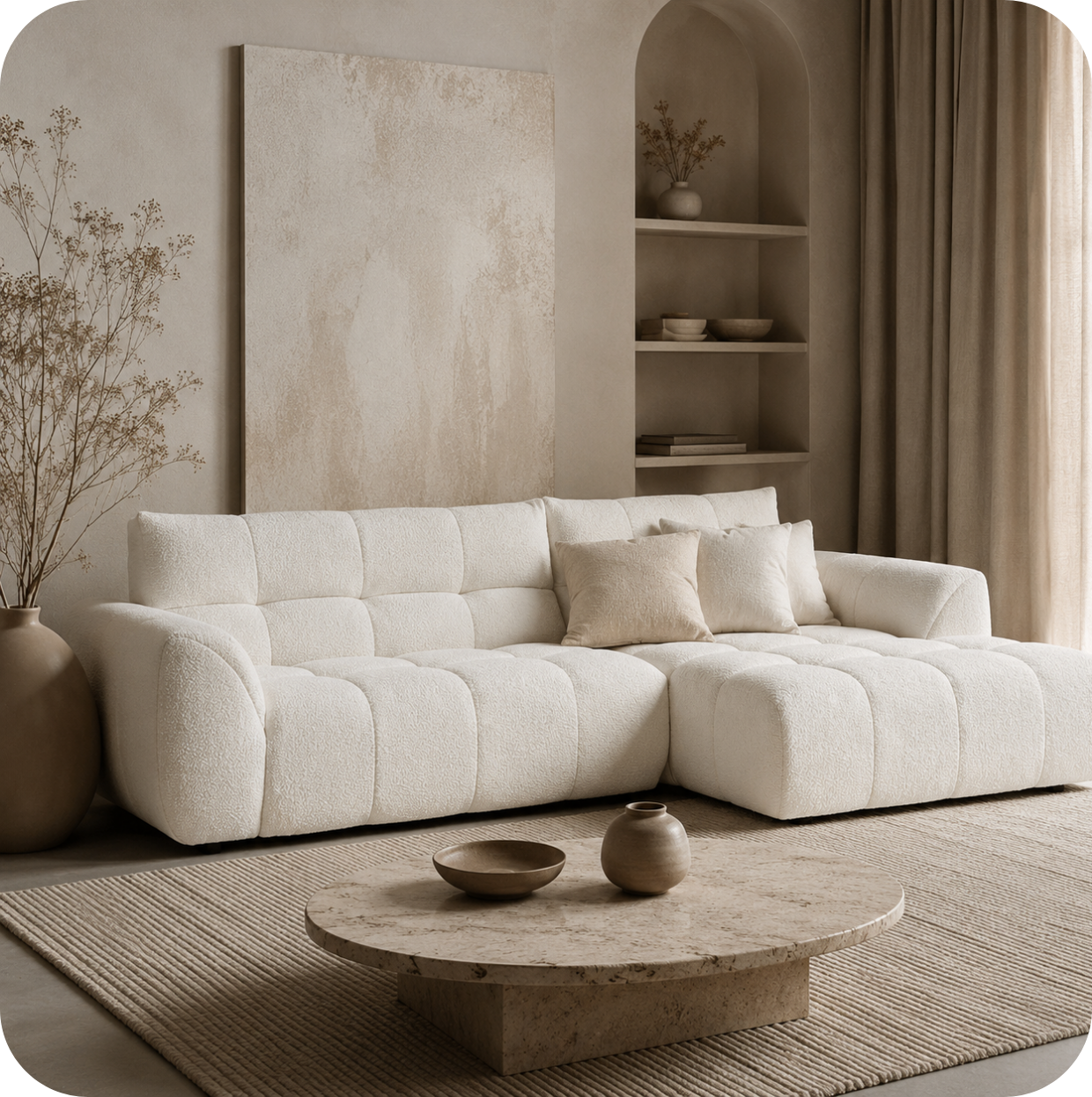
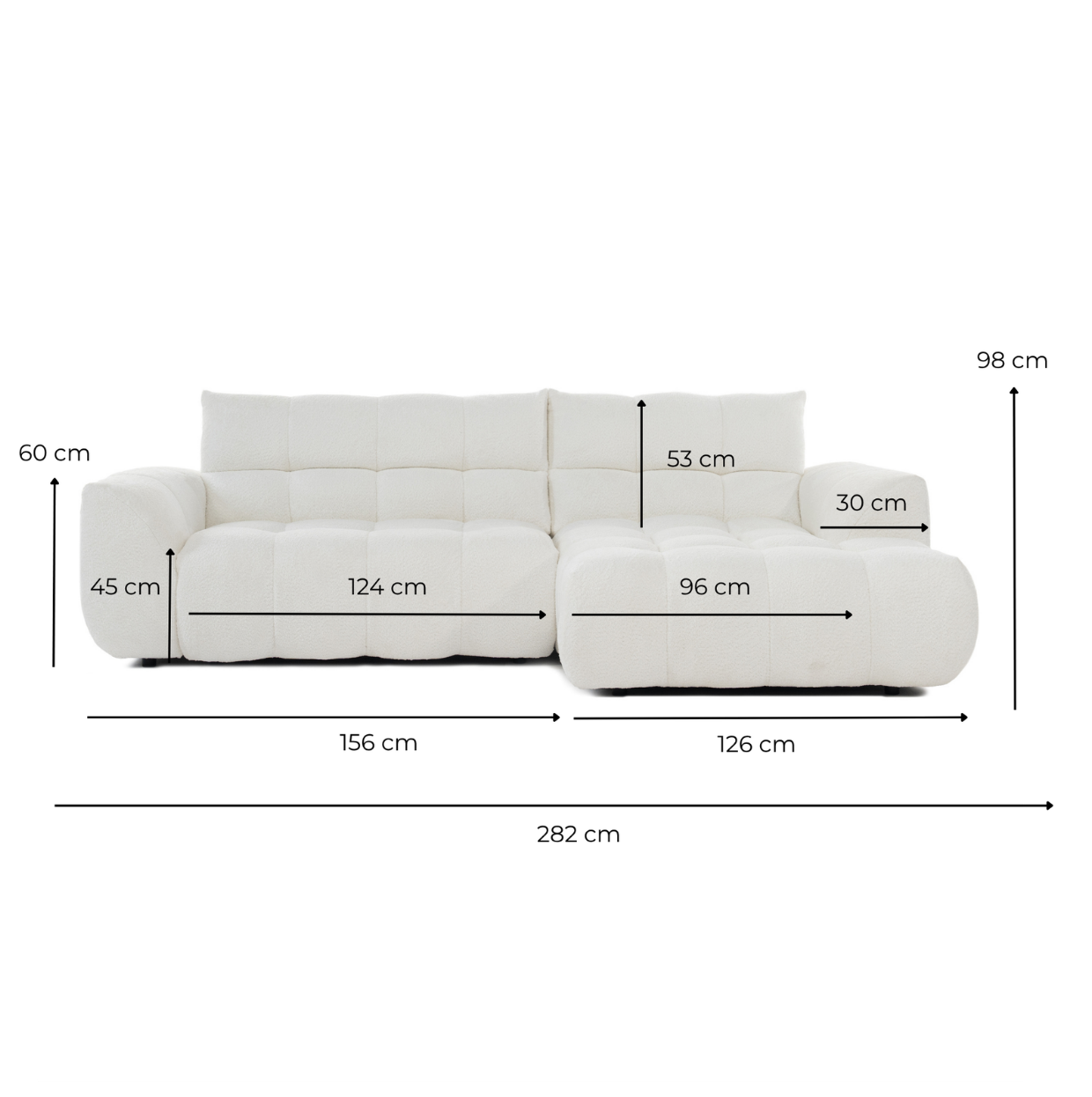
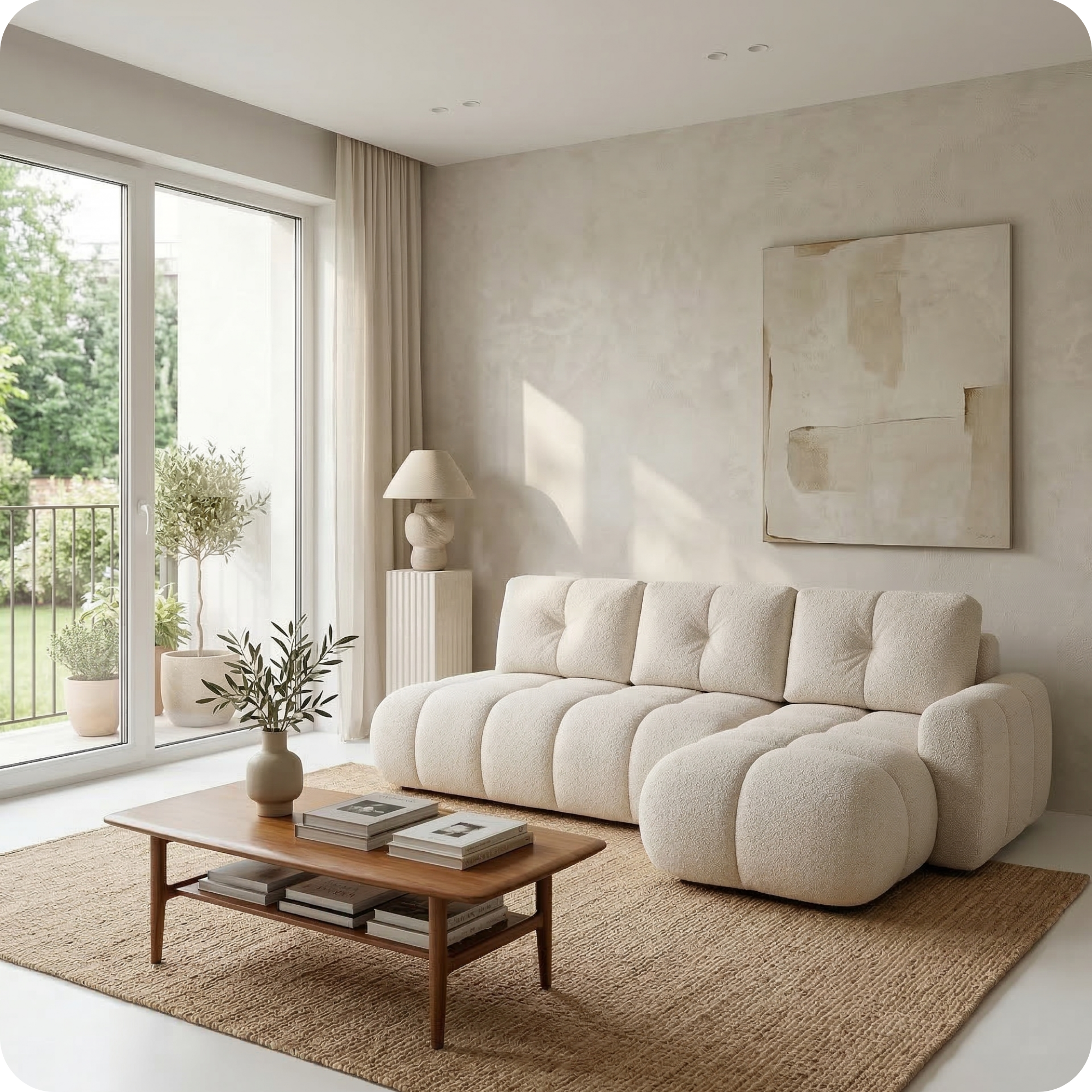
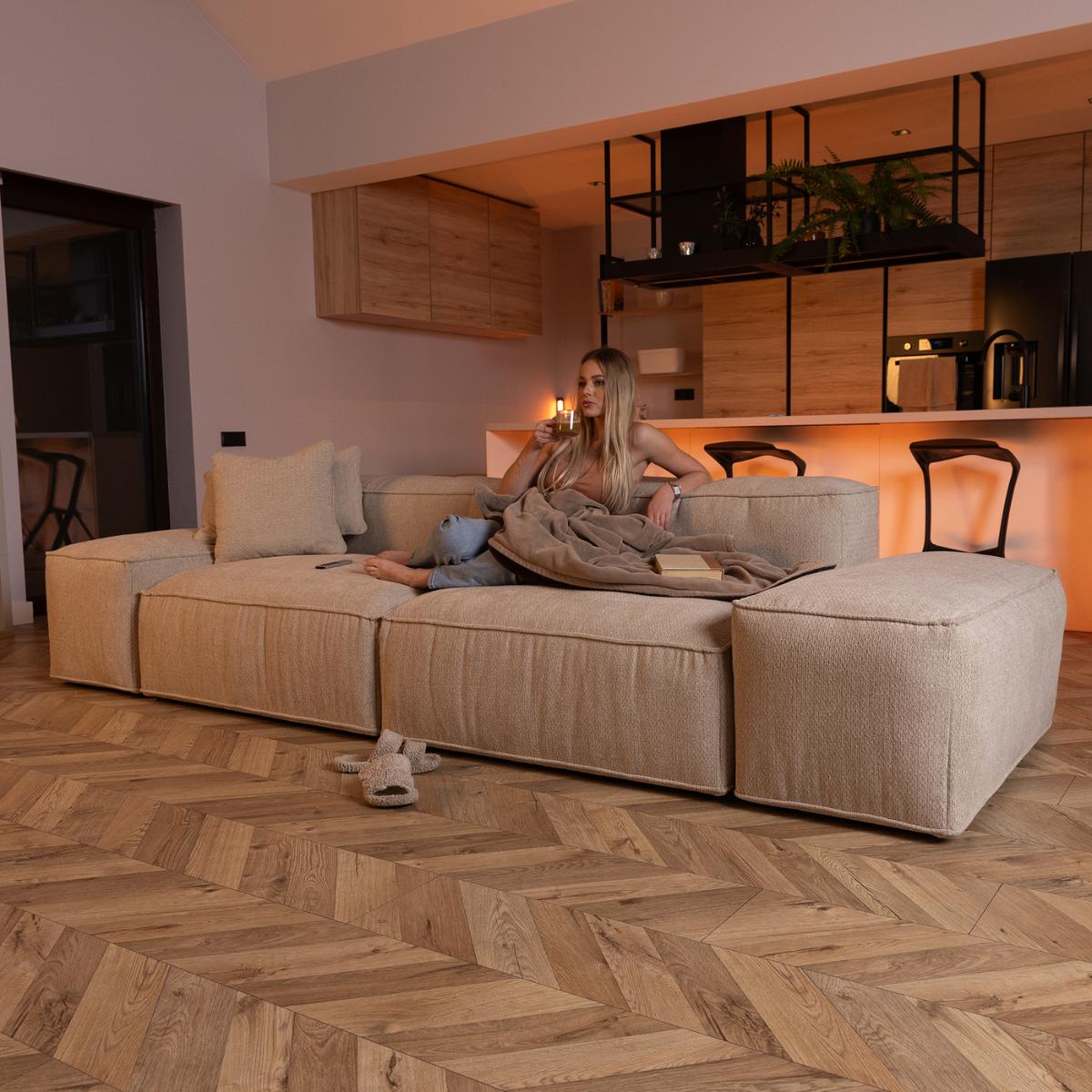
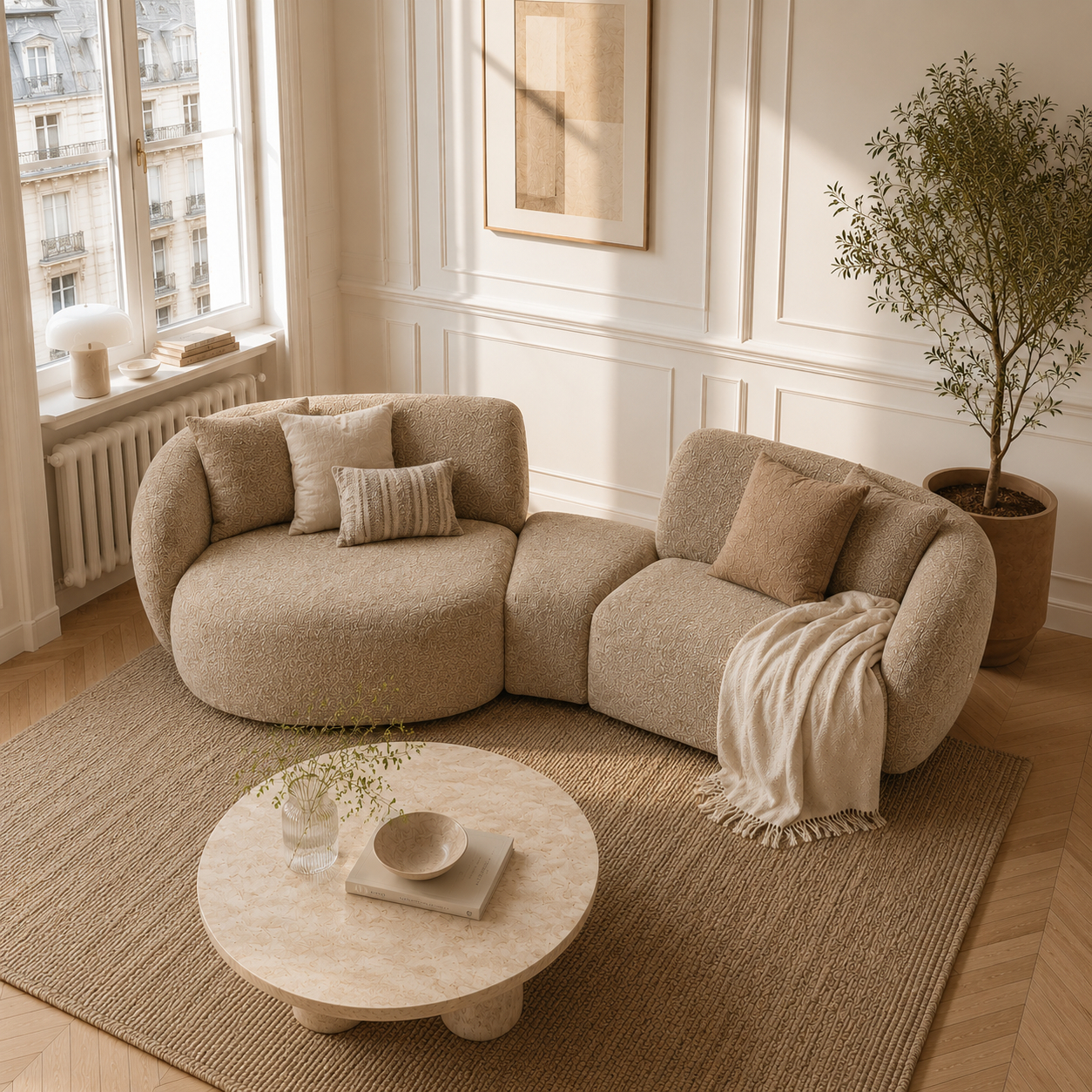
Lugano Sofa — Sand — from €1,299
A sofa in a warm neutral like sand gives you maximum flexibility with your colour scheme — it pairs equally well with warm cream and white walls, sage green, dusty rose, terracotta, or navy accent colours. If you are unsure about your colour scheme, starting with a warm neutral sofa gives you time to refine the palette before committing to wall paint.

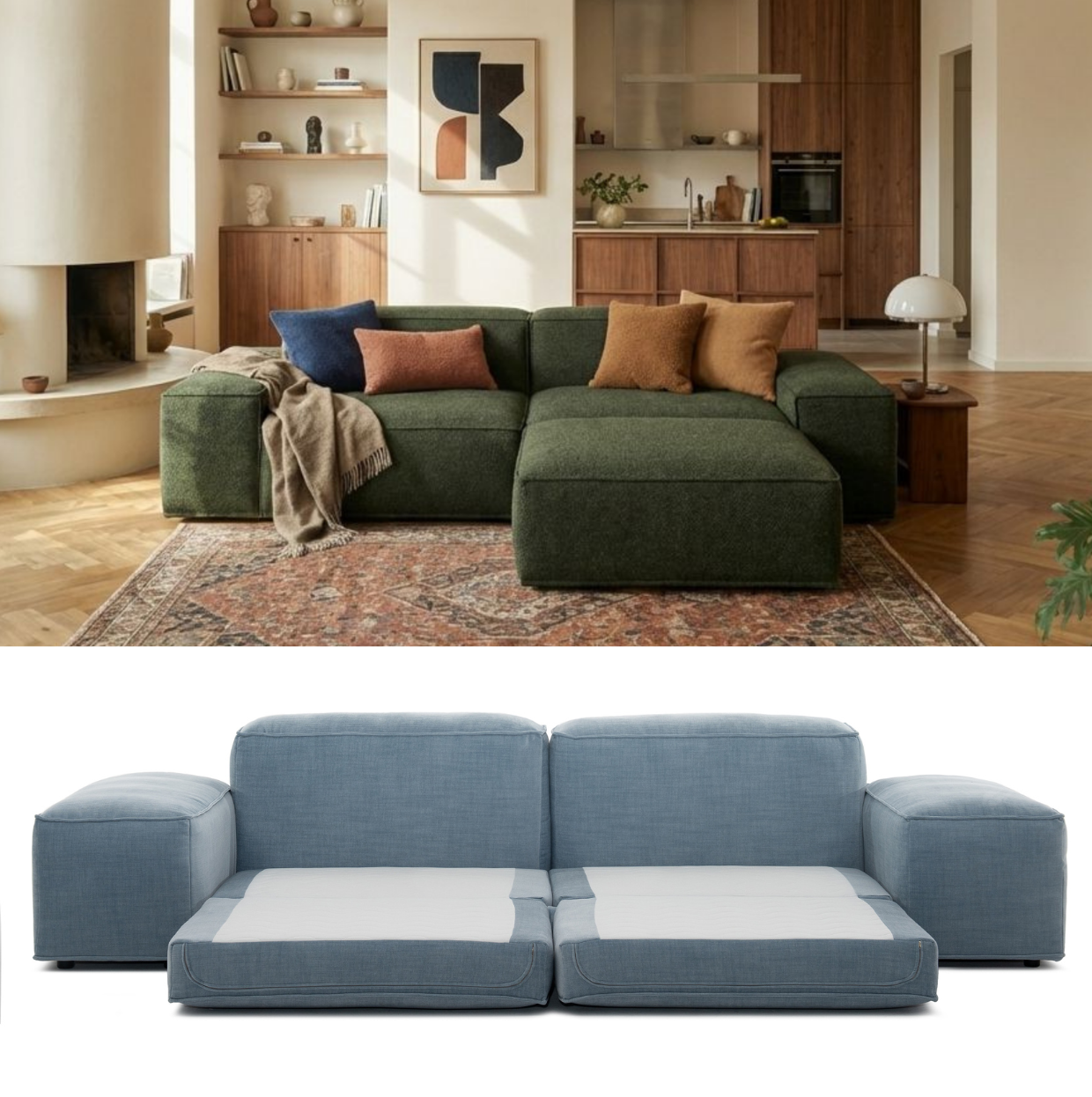
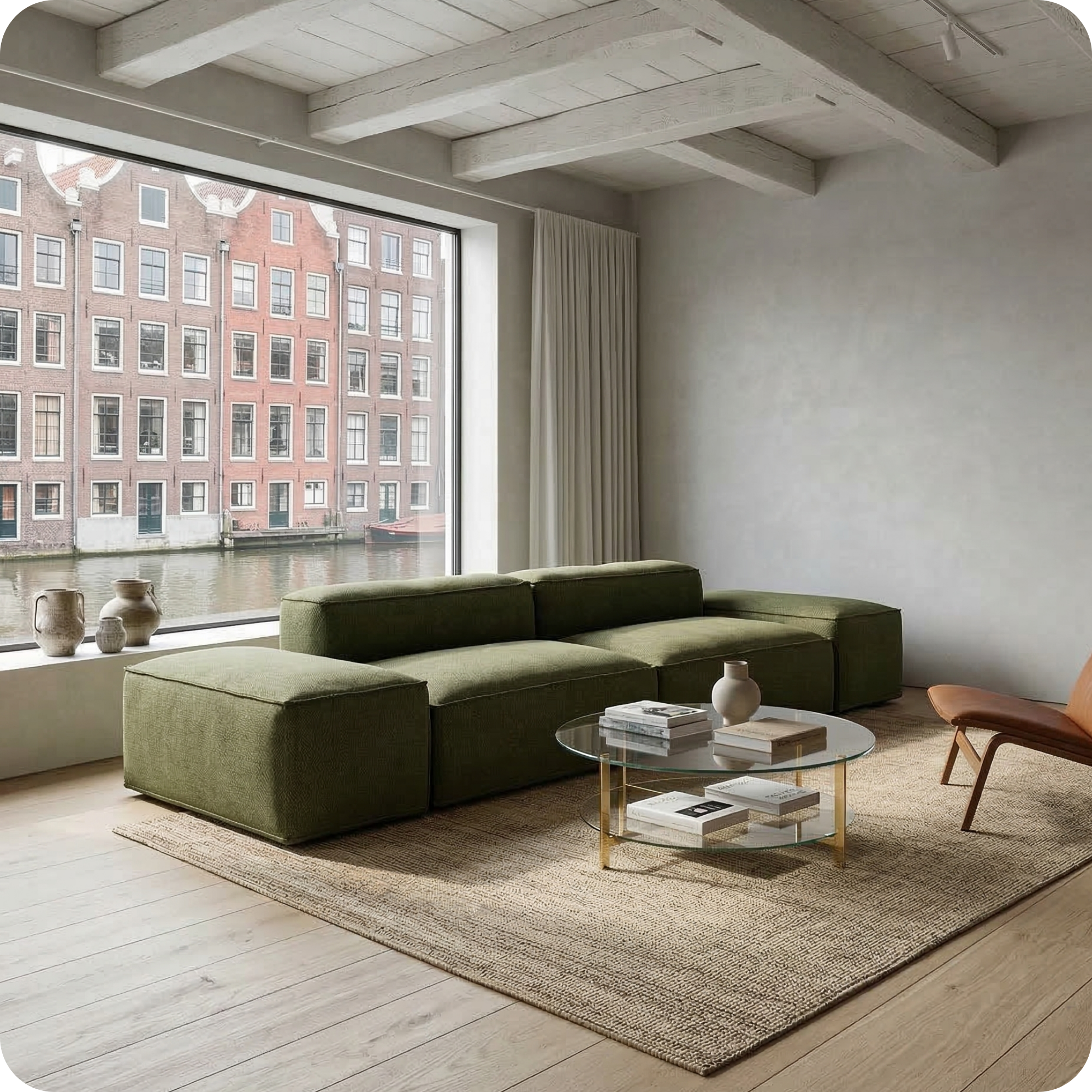
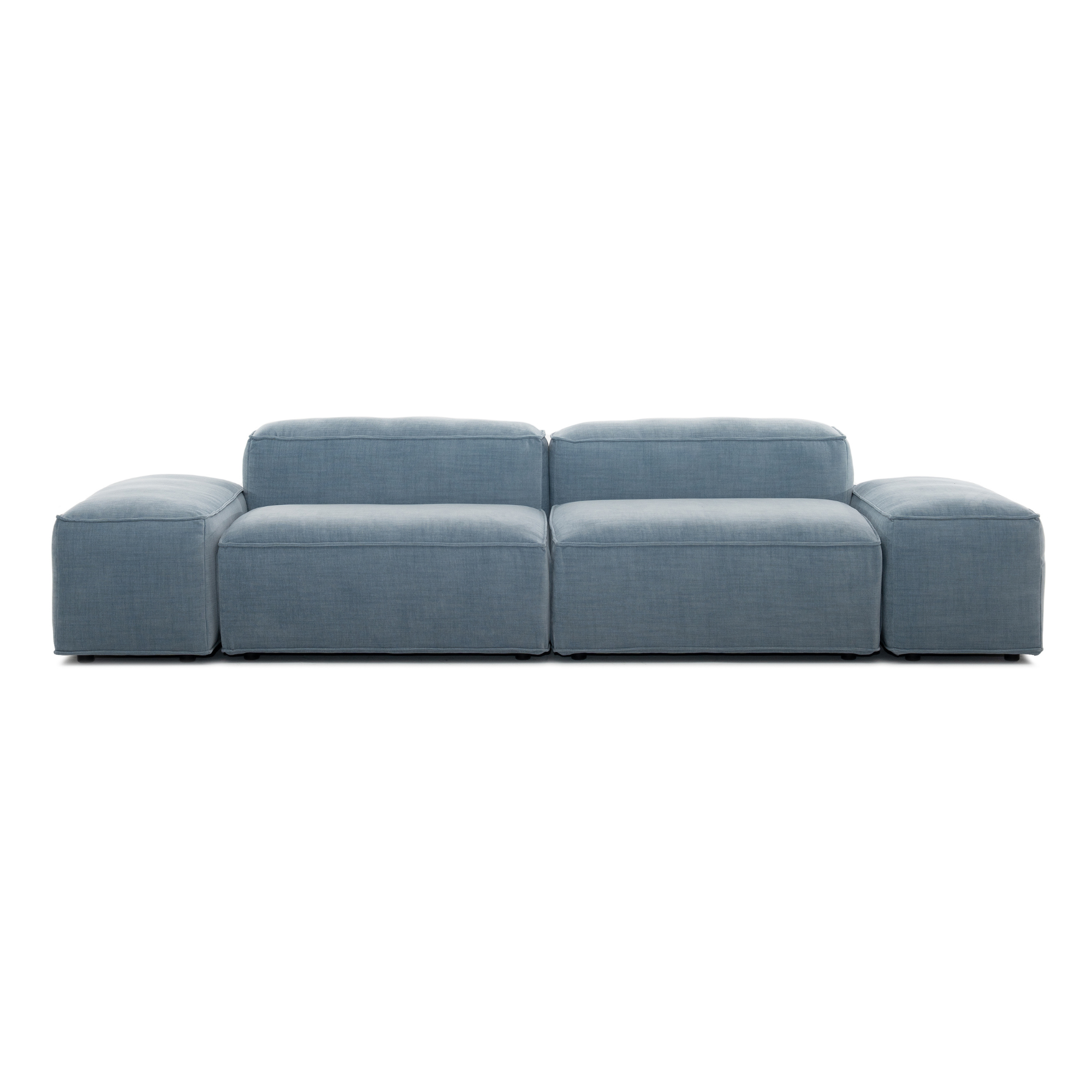
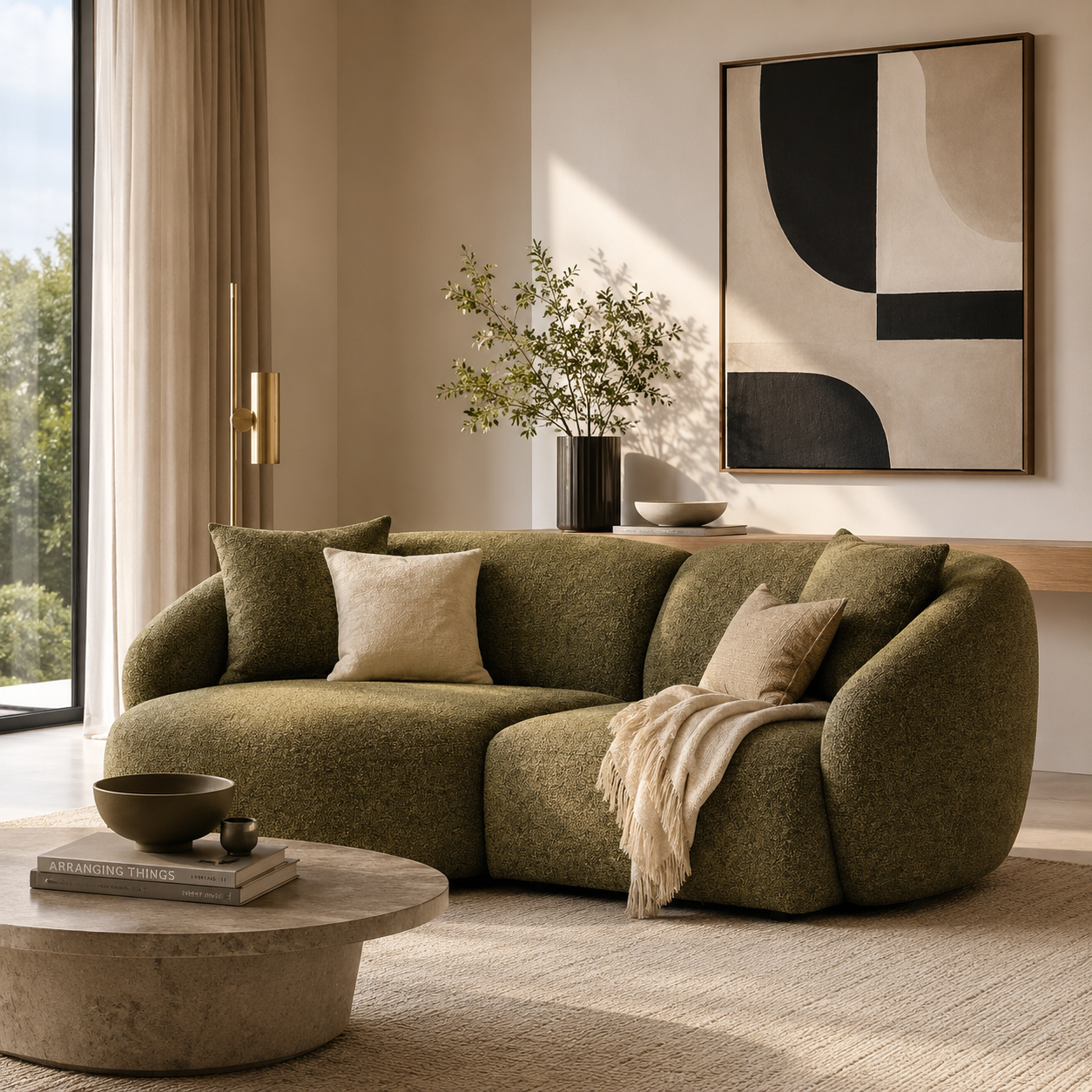
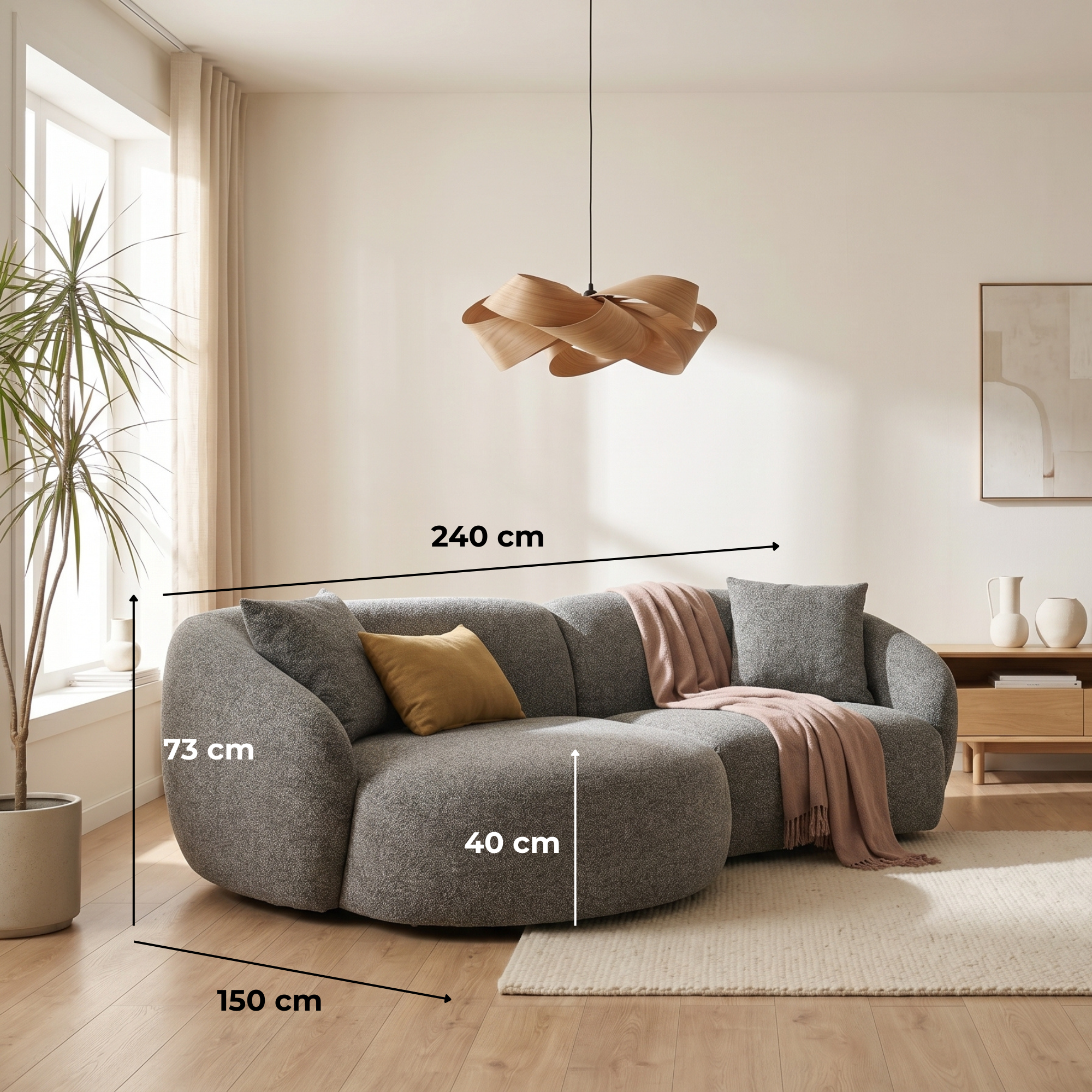
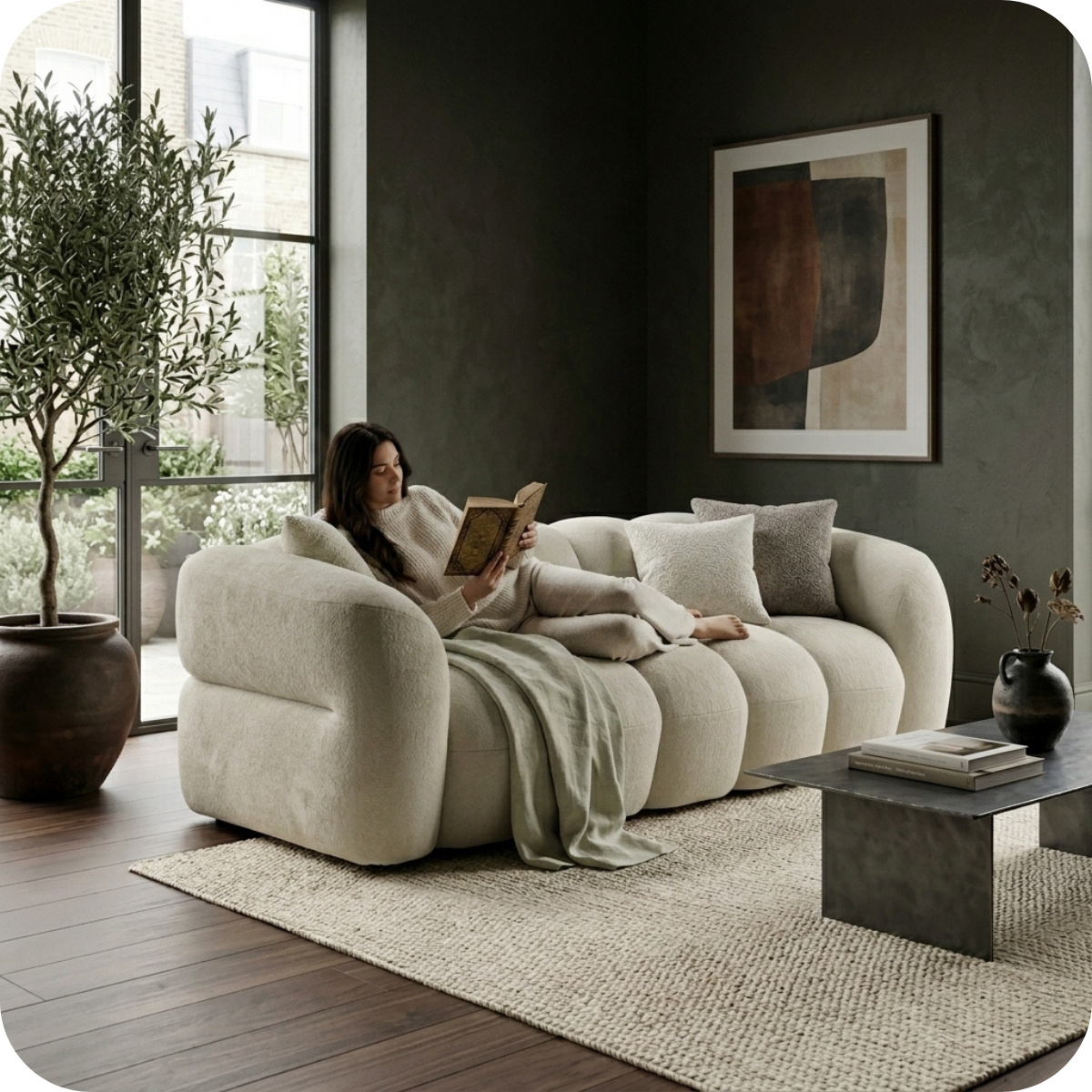
Merlot Sofa — Leaf Green — from €1,532
If you want the sofa to be the colour statement, the Merlot in leaf green gives you a clear anchor colour to build the rest of the scheme around. With a statement-coloured sofa, the walls and floor should generally be more restrained — neutral walls allow the green to read clearly and powerfully.
Step 2: Choose Your Dominant Tone — Warm or Cool
Every successful colour scheme has a consistent temperature — it is either predominantly warm (leaning towards yellows, oranges, reds, warm whites) or predominantly cool (leaning towards blues, greens, purples, cool whites). Mixing warm and cool tones within a scheme is advanced and difficult to pull off without it feeling incoherent. For most living rooms, choose a temperature and commit to it: all paint colours, upholstery colours, wood tones, and metal accents should be broadly consistent in their temperature. Warm schemes feel cosy, intimate, and inviting — particularly effective in north-facing rooms. Cool schemes feel fresh, calm, and sophisticated — particularly effective in south-facing rooms with abundant natural light.
Step 3: The 60-30-10 Rule
The 60-30-10 rule is the most reliable framework for building a balanced colour scheme. 60% is the dominant colour — usually the wall colour and/or the floor, the largest visual area. 30% is the secondary colour — typically the sofa, large rug, or other significant furniture. 10% is the accent colour — cushions, artwork, accessories, plants, lamps. This proportion creates a room that is visually balanced without being boring. A room with only one colour is monotonous; a room with equal amounts of three colours is visually chaotic. The 60-30-10 distribution creates order while allowing clear accent choices.
Step 4: Building a Neutral-Plus-One Scheme
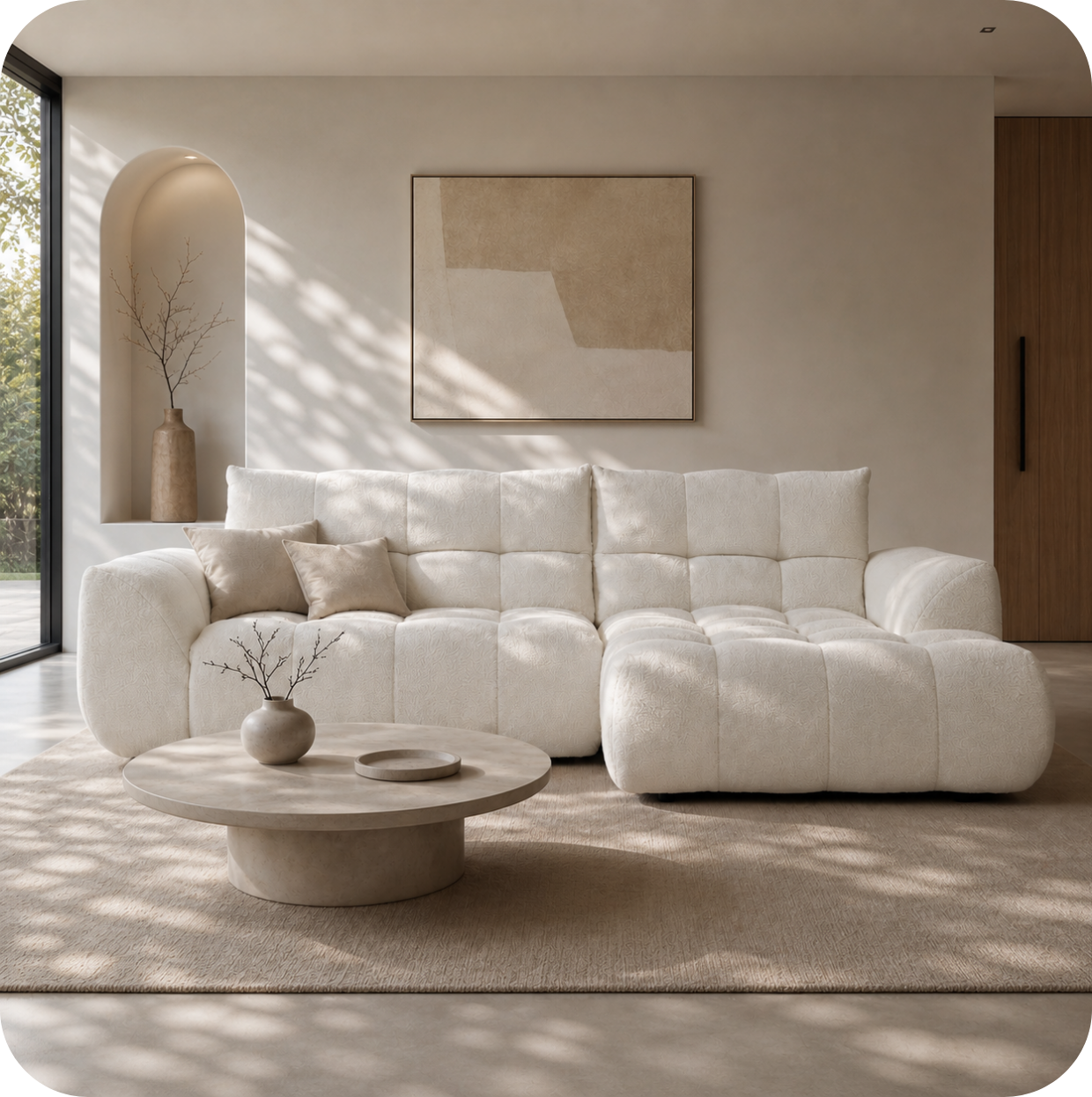
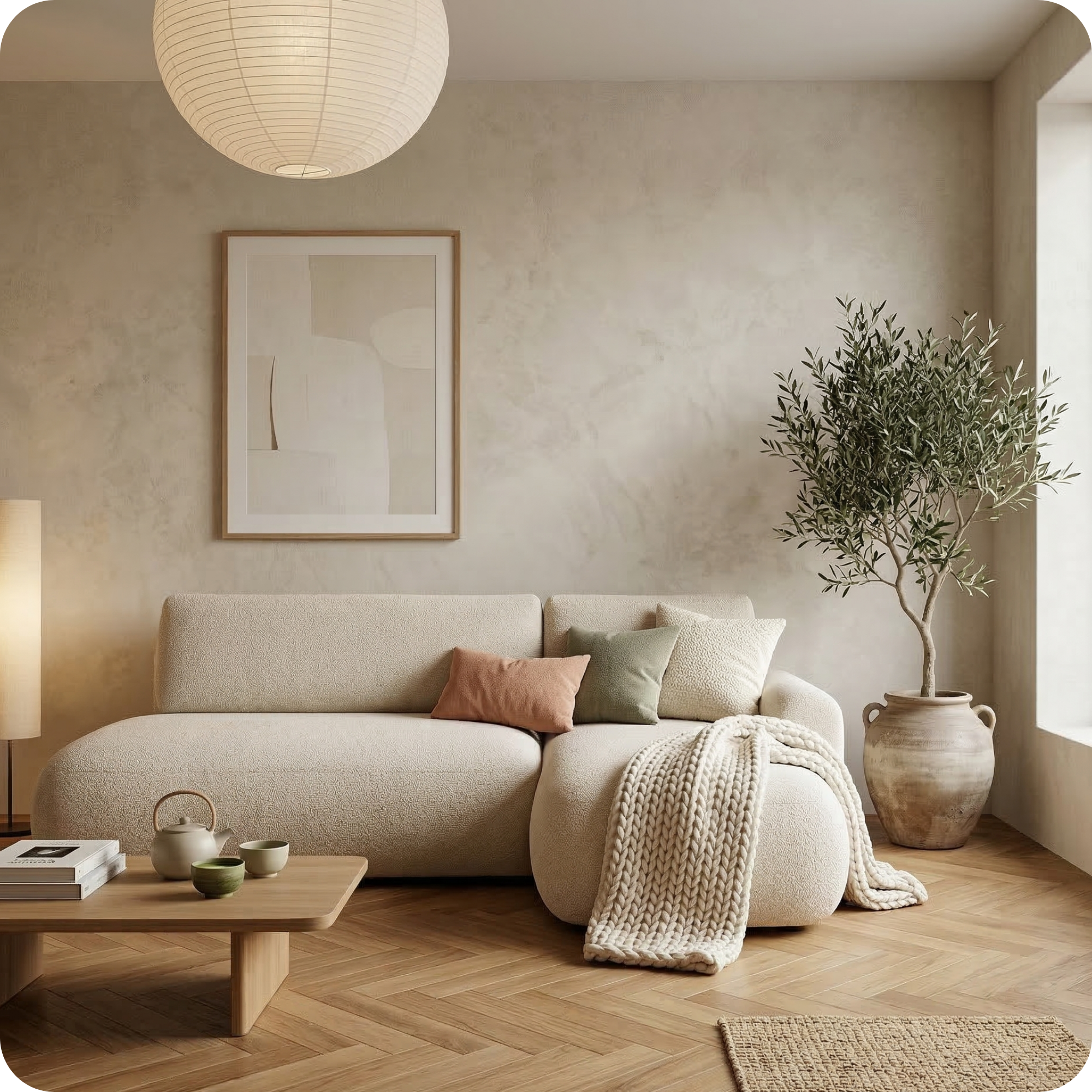
If you are decorating for the first time, the simplest and most flexible colour scheme is neutral-plus-one: a carefully chosen neutral as the dominant (walls, floor, main upholstery) plus one clearly chosen accent colour expressed consistently throughout (cushions, artwork, textiles, plants, a feature wall). This approach is almost impossible to get wrong, looks good in any light condition, and allows for easy updates — change the accent cushions and throw, and the entire room feel shifts. Common neutral-plus-one schemes: warm white walls + terracotta accents; light grey + navy; off-white + sage green; warm cream + dusty rose; sand + forest green.