



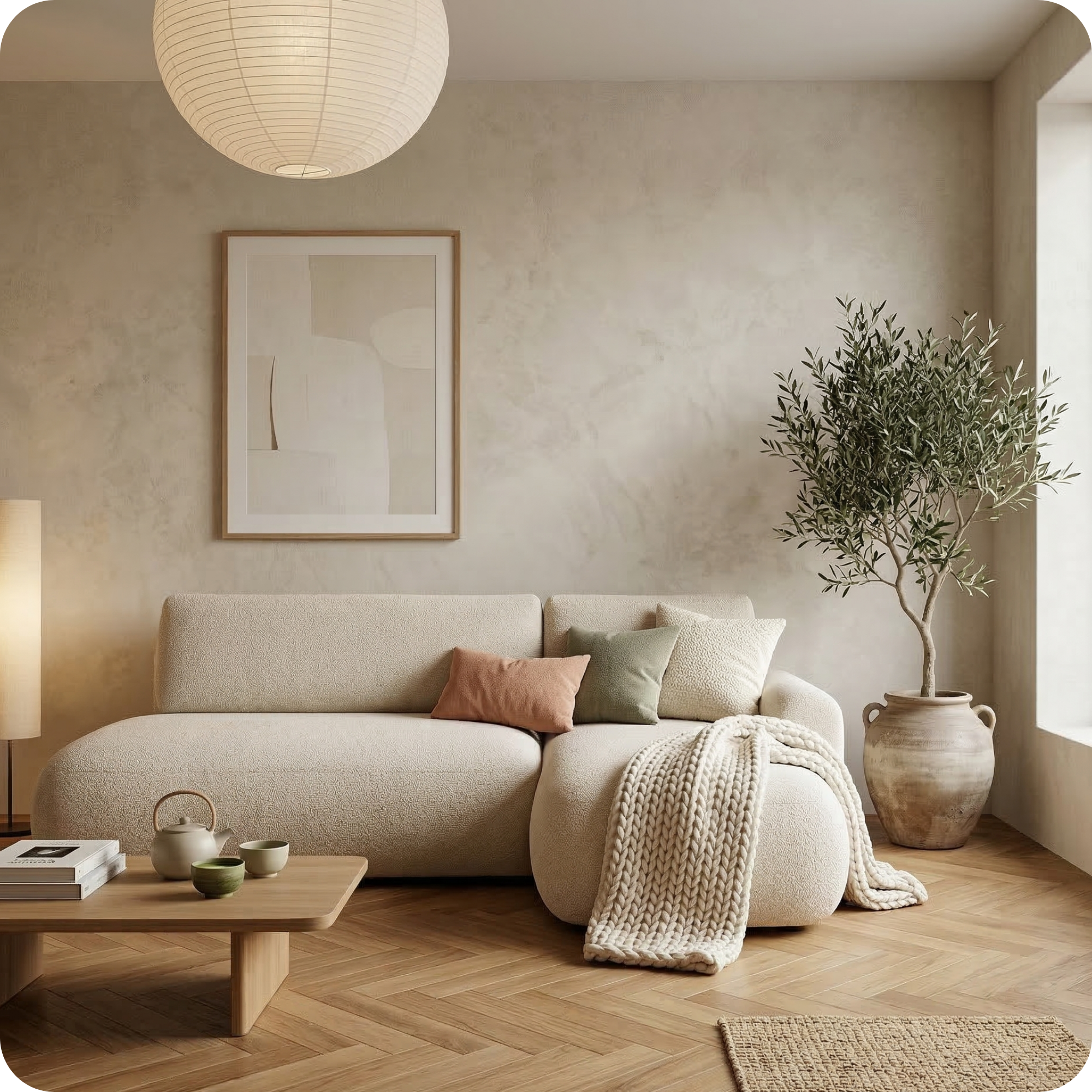
How to Choose the Right Sofa Size for Your Living Room
Sofa size is one of the most commonly misjudged elements of living room planning — and a sofa that is the wrong size for its room is one of the hardest interior mistakes to correct without replacing it. Getting it right at the buying stage requires measuring carefully, understanding how size relates to proportion and function, and resisting the very common temptation to choose a sofa that is either slightly too small (because it looks less risky) or too large (because it looks impressive in a showroom).
Measuring Your Room: The Essential Steps
Before looking at any sofa, measure your living room and create a simple floor plan. Note: the overall room dimensions, the distance from the TV wall or focal point to where the sofa front will sit, the width available for the sofa (with at least 60–80 cm of clearance on each side for circulation), the ceiling height (which affects how imposing a high-back sofa will feel), and any doorways, stairs, or hallways the sofa needs to pass through on delivery. The last point is critical — many sofa returns and exchange requests happen because the piece cannot be delivered into the room.

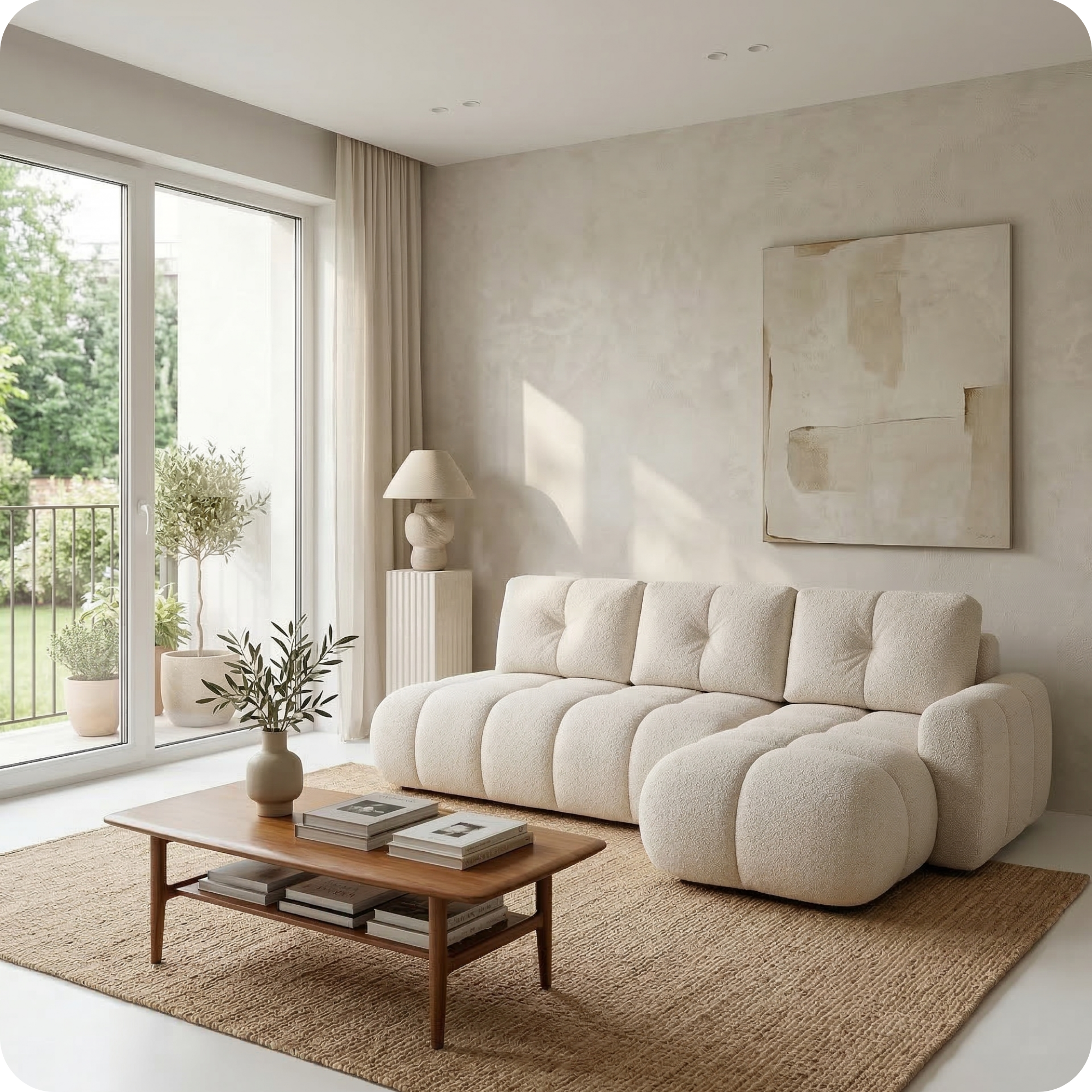
Lugano Sofa — from EUR 1.290
The Lugano is available in multiple configurations to suit rooms of different sizes. The 3-seater configuration (approximately 230 cm wide) suits rooms from around 15–20 sqm. The corner configuration suits larger rooms from 20 sqm upward. If you are unsure which configuration fits, use painter's tape on the floor to mark the footprint before ordering — it takes five minutes and prevents an expensive mistake.

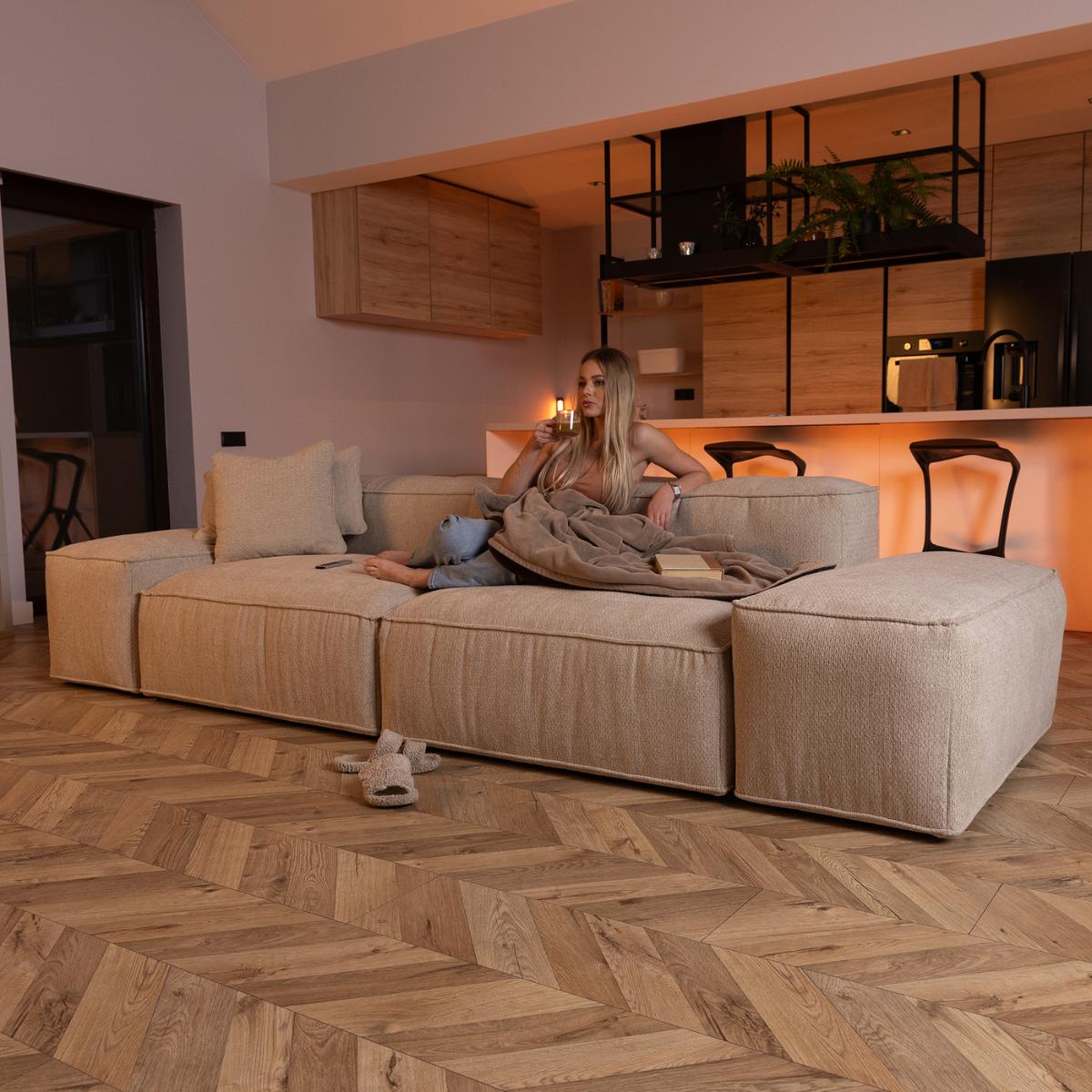
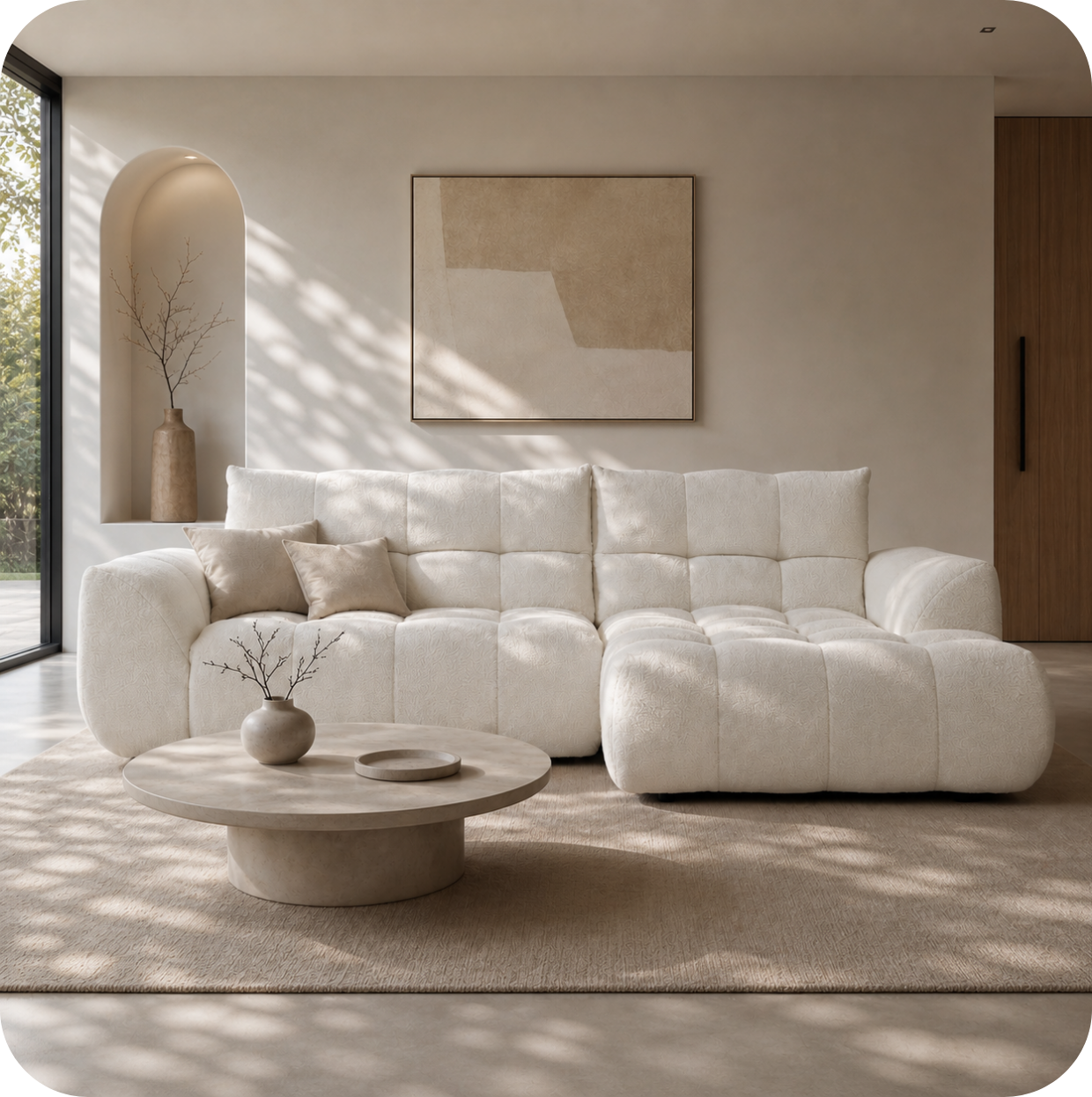
Asti Corner Sofa — from EUR 1.490
The Asti is designed for larger living rooms and open-plan spaces where a standard 3-seater would be proportionally too small. Its generous corner configuration creates a natural seating zone in rooms of 22 sqm and above, and the extended longchair makes it ideal for households where the living room sofa is also the primary lounging and relaxation space.
The Proportionality Rule
As a general rule, the sofa should occupy approximately two-thirds of the wall it is placed against, or two-thirds of the defined living zone width if the sofa is floating. A sofa that is narrower than half the wall width tends to look undersized and disconnected from the space. A sofa that extends beyond the wall (or into circulation paths) looks cramped and overscaled. The most common mistake is choosing a sofa that is too narrow — it fits in the room but does not fill the space visually, making the room feel larger than comfortable rather than intimate and welcoming.
Sofa Depth and Seating Comfort
Seat depth is a separate dimension from width and one that significantly affects comfort. Standard seat depth is 55–60 cm. Deep-seated sofas (65–75 cm) allow lounging and are preferred by taller users, but can make it harder to sit upright for meals or conversation. Shallower sofas (under 55 cm) sit more upright and suit formal living rooms or smaller spaces. When measuring for sofa depth, remember that the total depth including the back cushion will typically be 10–15 cm more than the seat depth.

Laisser un commentaire
Ce site est protégé par hCaptcha, et la Politique de confidentialité et les Conditions de service de hCaptcha s’appliquent.