



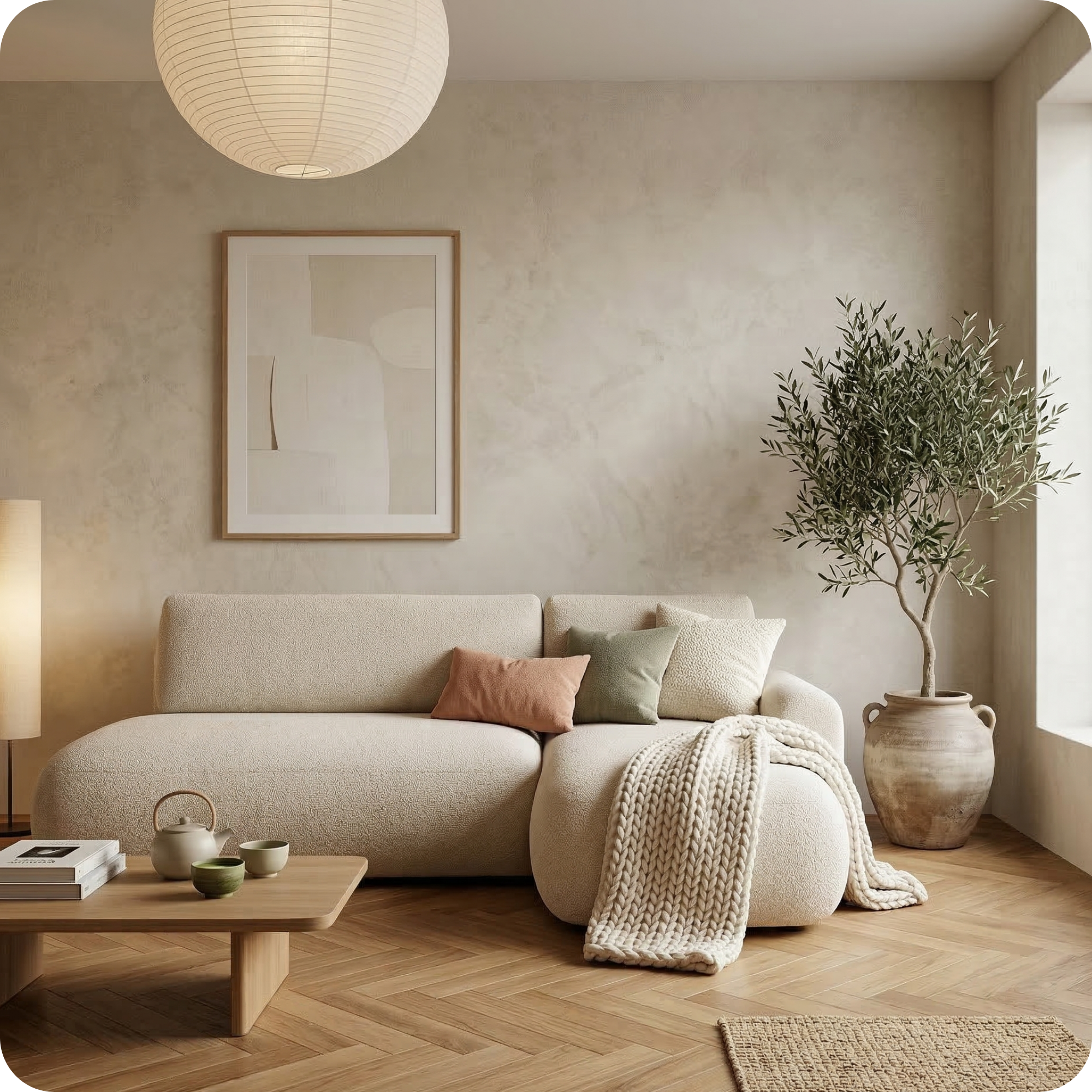
How to Clean Sofa Fabric: The Complete Guide by Fabric Type
Keeping a fabric sofa clean requires different approaches for different fabric types, different stain types, and different levels of soiling. This guide covers the most common fabric types found on modern sofas and the best cleaning methods for each — from routine maintenance to emergency stain removal. The golden rule throughout: always test any cleaning product on a hidden area (under a cushion, on the underside of the seat) before applying it to a visible surface.
Before you start: check the cleaning code
Most sofas have a care label (usually on the underside of a cushion) with a cleaning code. W = water-based cleaners only. S = solvent-based cleaners only (no water). WS or SW = either water or solvent cleaners. X = vacuum only, no cleaners. If your sofa has no label, treat it as W (water-based) unless the fabric is clearly a natural fibre like wool, which is more delicate.
Linen and linen-look fabrics
Routine care: vacuum with an upholstery attachment weekly. Spot clean with a mild soap solution (one drop of washing-up liquid in a cup of cool water). Apply with a soft cloth using gentle circular motions. Blot dry — never rub, which can spread the stain and push fibres out of alignment. For dried stains, a dry brush first to loosen the stain, then spot clean. Avoid soaking the fabric — excess water can cause watermarks on linen. For a full refresh, a fabric-safe upholstery cleaner applied with a microfibre cloth works well.
Boucle and textured weaves
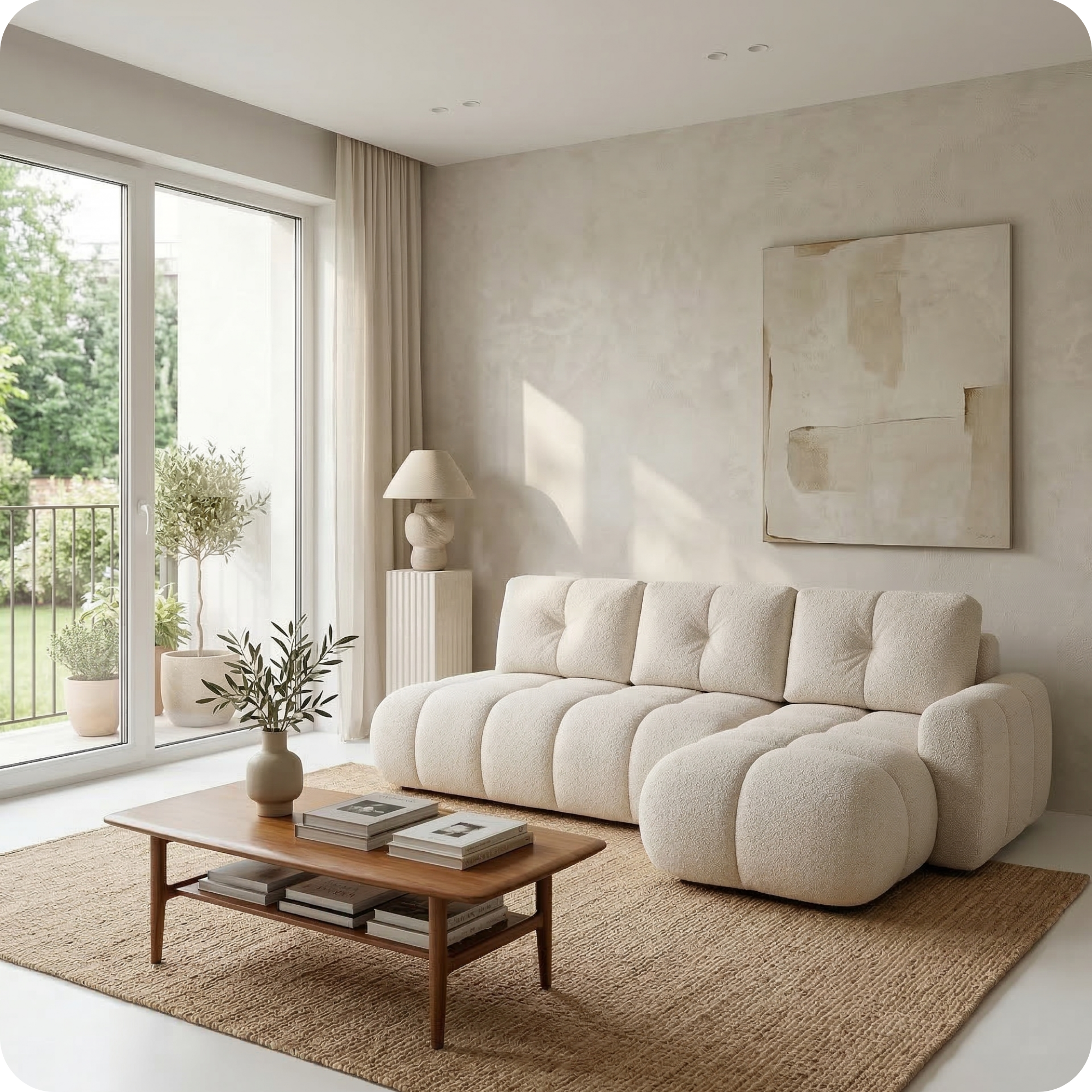
The looped pile of boucle requires gentle handling. Never use a stiff brush — it will damage the loops and create pilling. Vacuum with the lowest suction setting using an upholstery attachment. For stains, blot with a dry cloth first, then use a mild soap solution applied with a damp (not wet) cloth. Work from the outside of the stain inward. Avoid rubbing. For flattened areas of boucle, a clothes steamer gently applied from a distance will lift the loops without damaging them.
Performance fabrics and microfibre
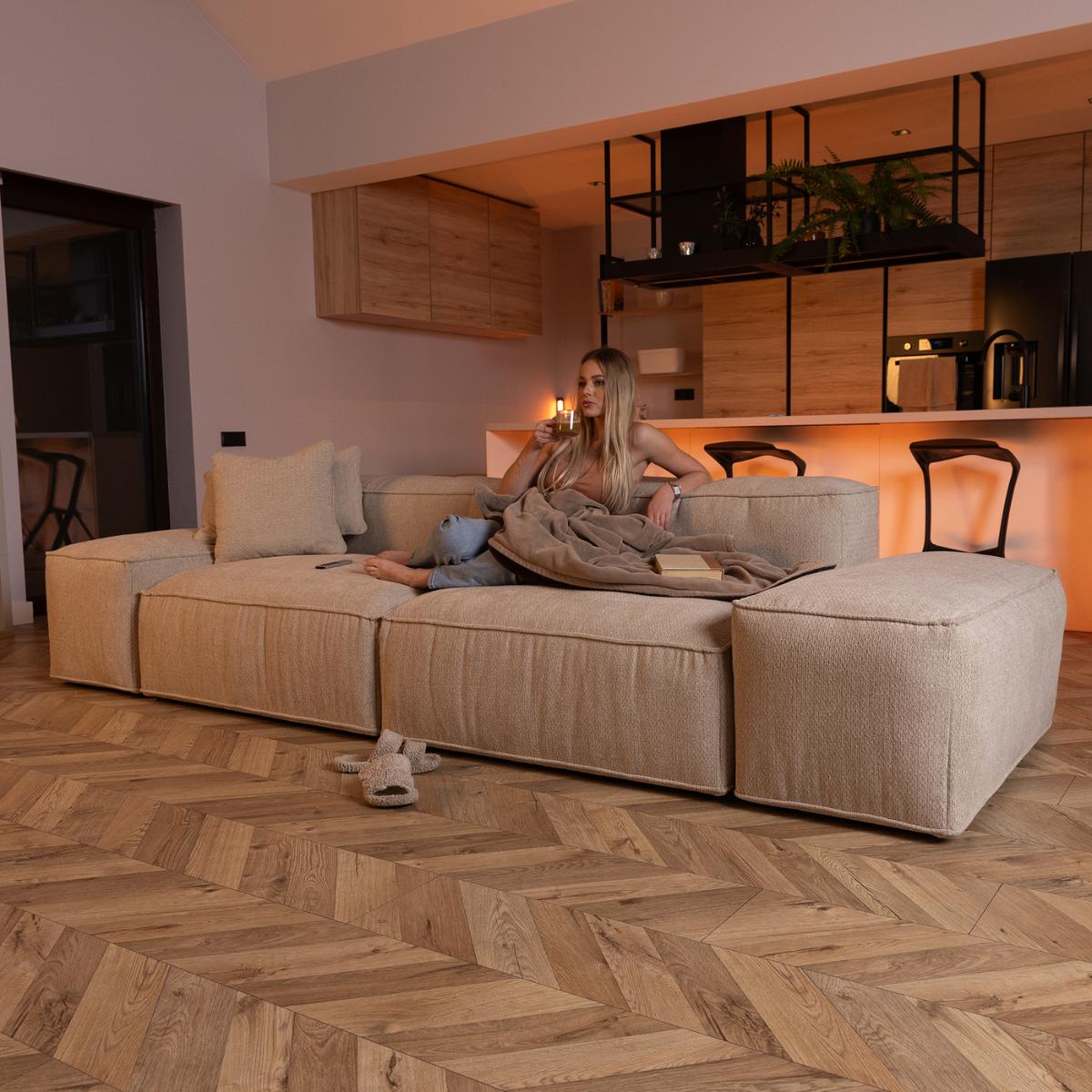
Modern performance fabrics (often labelled as stain-resistant or easy-clean) are the most forgiving to clean. Most liquids will bead on the surface if dealt with quickly. Blot spills immediately with a dry cloth. For set stains, a mild soap and water solution works well. Some performance fabrics can be cleaned with rubbing alcohol (isopropyl alcohol) for stubborn stains — test first. A magic eraser (melamine sponge) can remove scuffs and surface marks on smooth performance fabrics.

Lugano Collection — from EUR 1,190
Furni sofas use premium performance fabrics engineered for real-life use. The Lugano collection fabrics are tested for everyday durability and are straightforward to maintain with routine spot cleaning.

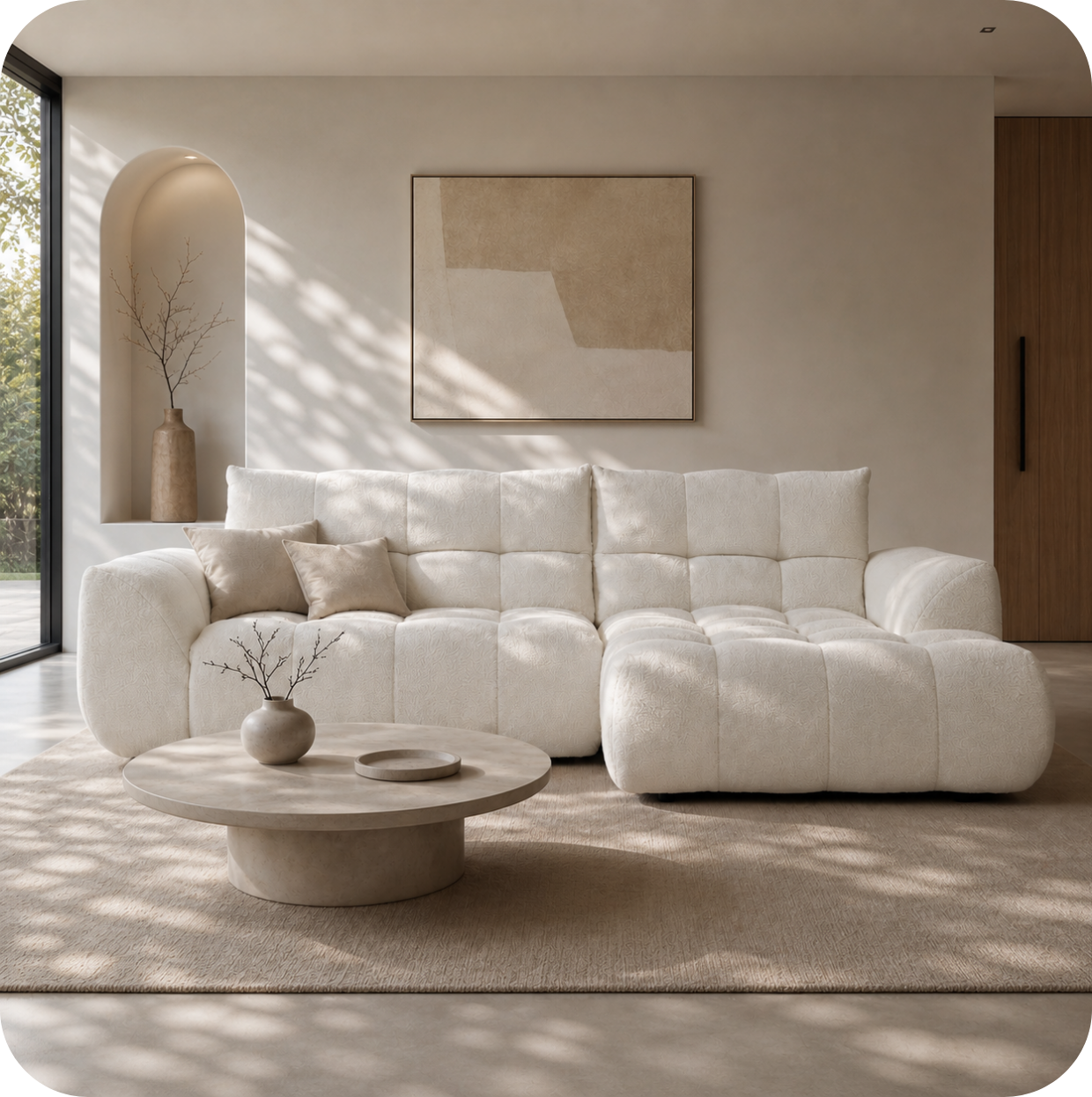
Asti Corner Sofa — from EUR 1,590
The Asti uses durable, family-friendly upholstery fabrics. Understanding your sofa's fabric type and following the correct cleaning protocol will keep it looking fresh for years.
Velvet and velvet-look fabrics
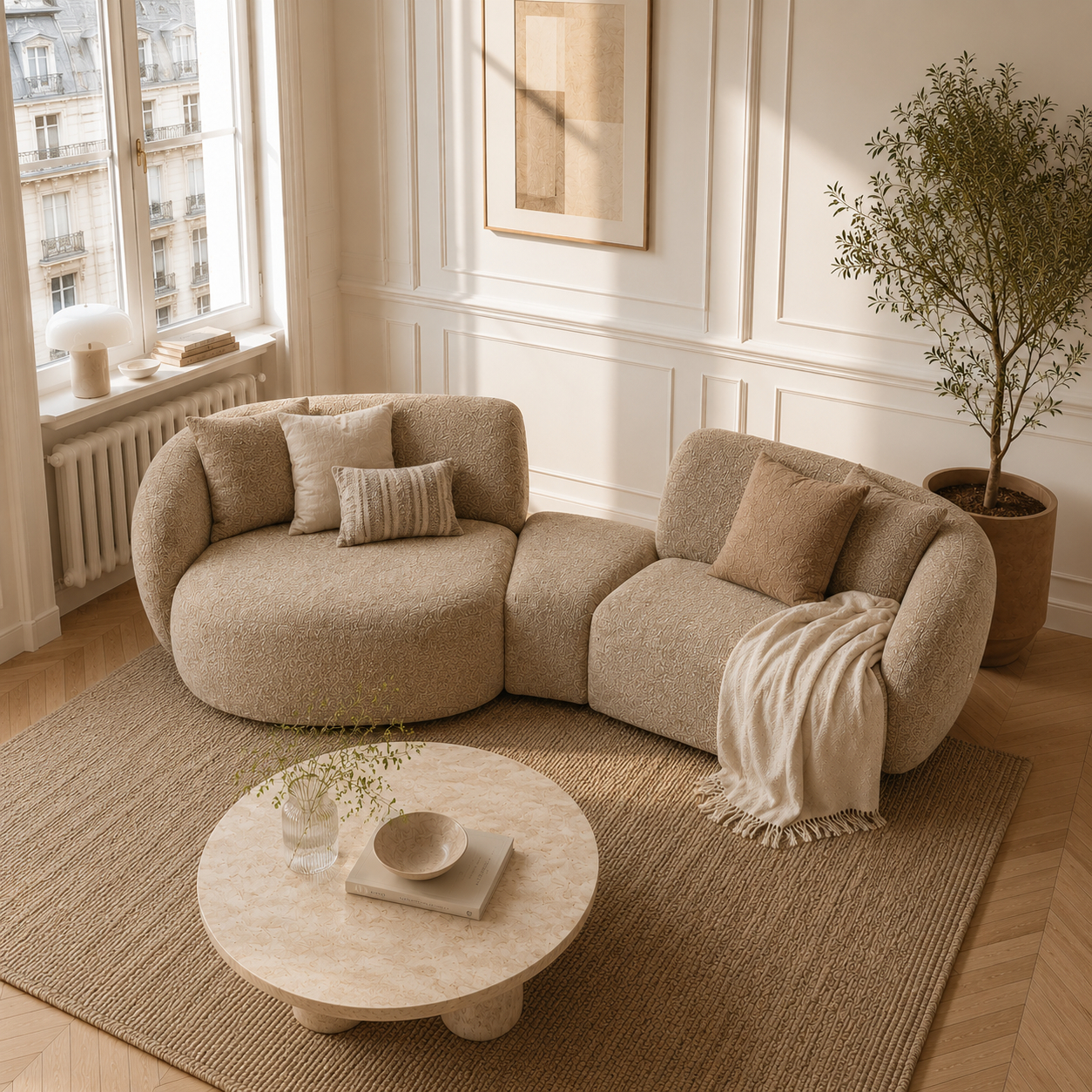
Velvet's pile is directional, which means cleaning technique matters more than with flat-woven fabrics. Always work in the direction of the pile. For routine maintenance, use a velvet brush or a barely-damp microfibre cloth stroked in the direction of the pile. For stains, blot immediately with a dry cloth, then apply a small amount of mild soap solution with a damp cloth, again stroking in the pile direction. Do not rub against the pile. If the pile becomes flattened, hold a clothes steamer 15-20cm above the surface and gently stroke it back with a velvet brush while the steam is applied.
Emergency stain removal: a quick reference
Red wine: Blot immediately. Apply a small amount of sparkling water to lift the stain. Then a mild soap solution. Avoid hot water which sets the stain. Coffee: Blot immediately. Cool water and mild soap. For dried coffee, a white vinegar solution (1 part vinegar to 3 parts water) can help break down the stain. Grease/oil: Apply baking soda to the fresh stain and leave for 15 minutes to absorb the grease. Brush off gently, then spot clean with a mild soap solution. Ink: Rubbing alcohol on a cotton ball, blotting (not rubbing). Test first. Pet accidents: Enzymatic cleaners are the most effective for biological stains — they break down the proteins that cause staining and odour. Available from pet shops and online.
Professional cleaning
For a full sofa refresh — not just spot cleaning but overall brightening — professional upholstery cleaning is worth considering every 2-3 years. Steam cleaning (hot water extraction) is the most effective method for most fabric sofas and is safe for W-coded fabrics. Dry cleaning (solvent-based) is appropriate for S-coded fabrics. Always choose a professional who can confirm the correct method for your specific fabric before proceeding.

Laisser un commentaire
Ce site est protégé par hCaptcha, et la Politique de confidentialité et les Conditions de service de hCaptcha s’appliquent.