


How to Make a Small Living Room Feel Bigger: 12 Expert Tips
A small living room does not have to feel cramped — with the right furniture choices, colour decisions, and styling techniques, a compact space can feel generous, well-proportioned, and comfortable. The secret is working with the room's natural qualities rather than fighting them. This guide covers the twelve most effective techniques for making a small living room feel bigger in 2026.
1. Choose the Right Sofa Size
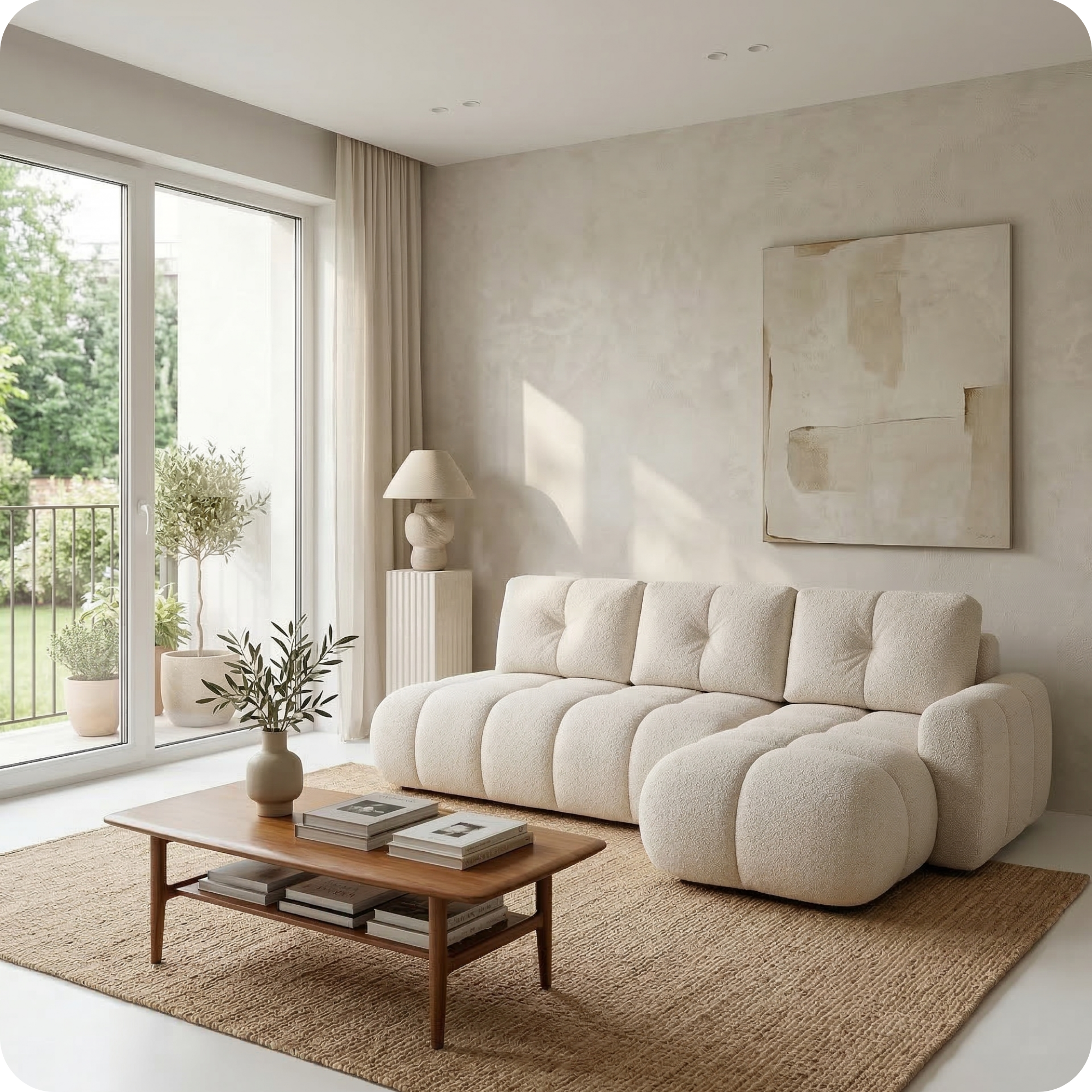
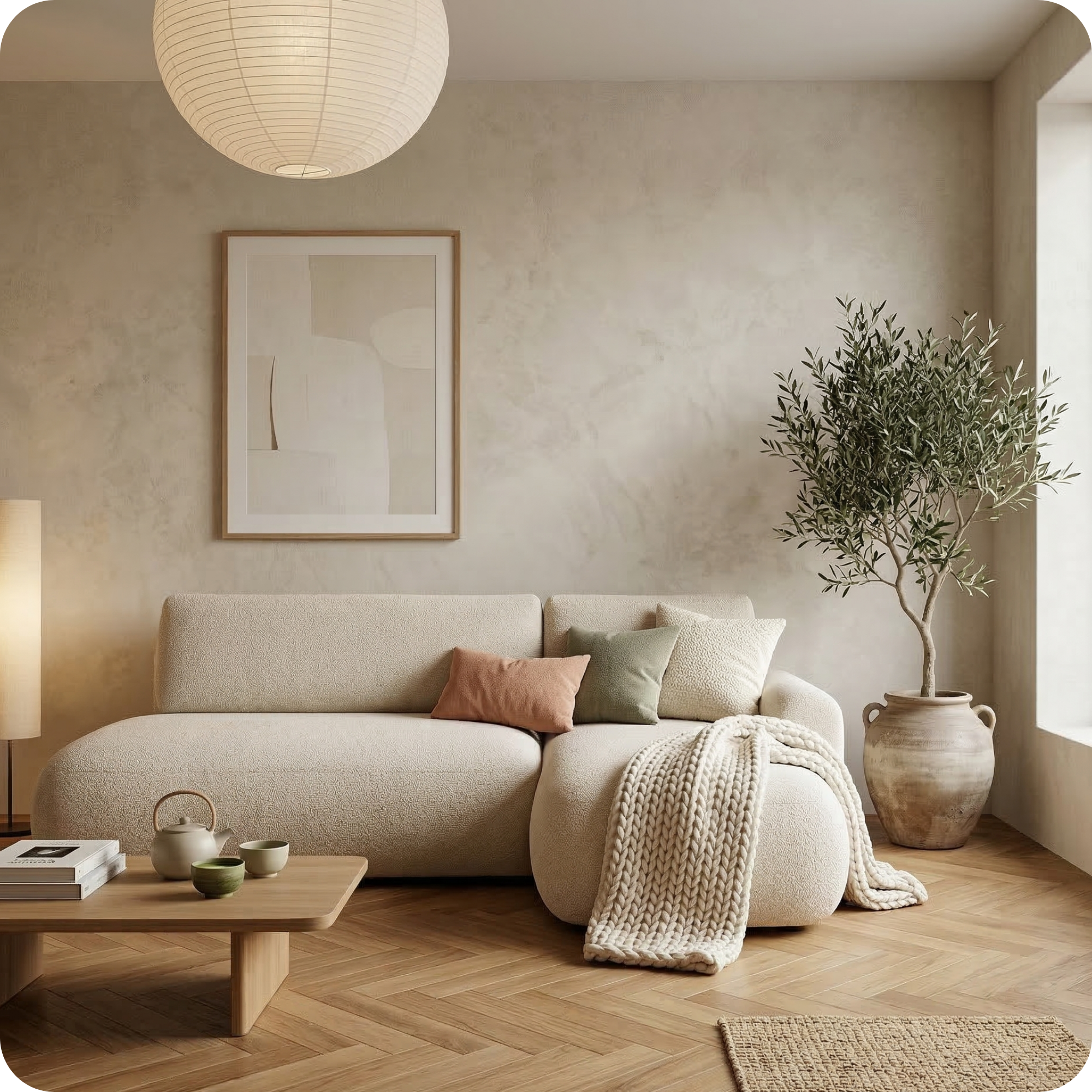
The most common mistake in small living rooms is choosing a sofa that is too large. An oversized sofa dominates a small room and makes everything around it feel cramped. In a room under 15m², a compact 2-seater or a small 3-seater with a low profile (lower back height, lower arm height) is typically more effective than a large corner sofa. The visual principle: a lower sofa allows the eye to travel across the room rather than stopping at the back of the sofa — making the room feel taller and more spacious.
2. Raise the Furniture off the Floor
Sofas, chairs, and storage pieces with exposed legs (even a few centimetres of clearance) create a sense of visual openness beneath the furniture. The floor is visible beneath the pieces, which creates a sense of continuous floor space rather than solid blocks of furniture. This is one of the simplest and most effective techniques for making a small room feel larger.
3. Use Light, Neutral Colours on Walls and Furniture
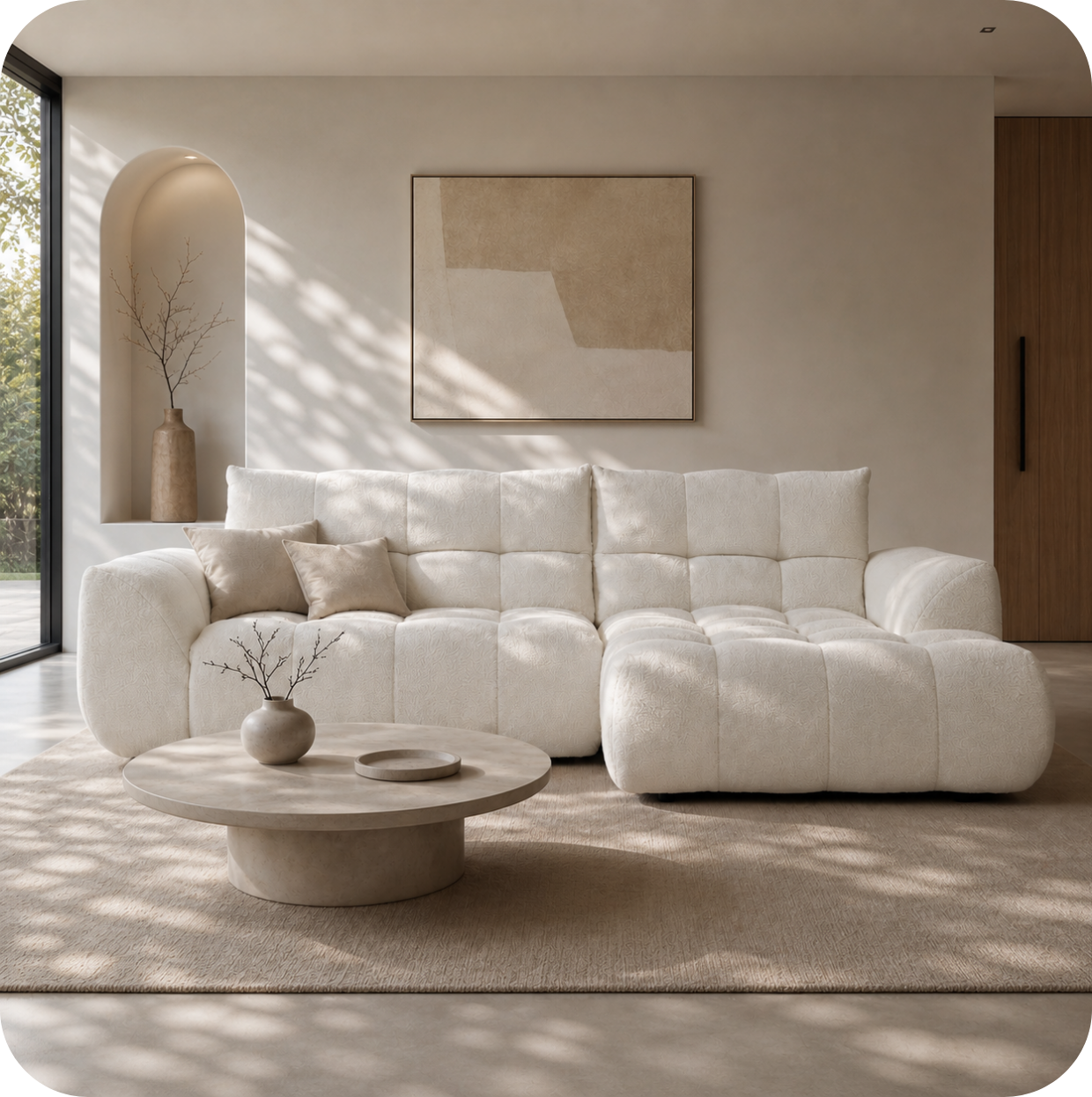
Light walls and furniture tones reflect light and create a sense of airiness. In a small living room, brilliant white or a very light warm cream on the walls keeps the space feeling open. If you want to add colour, keep it in accessories and soft furnishings rather than walls or large upholstery. A light-toned sofa (cream, light grey, sand) in a small room will always make the space feel larger than a dark sofa of the same size.

Riva 3-Seater Sofa — from EUR 990
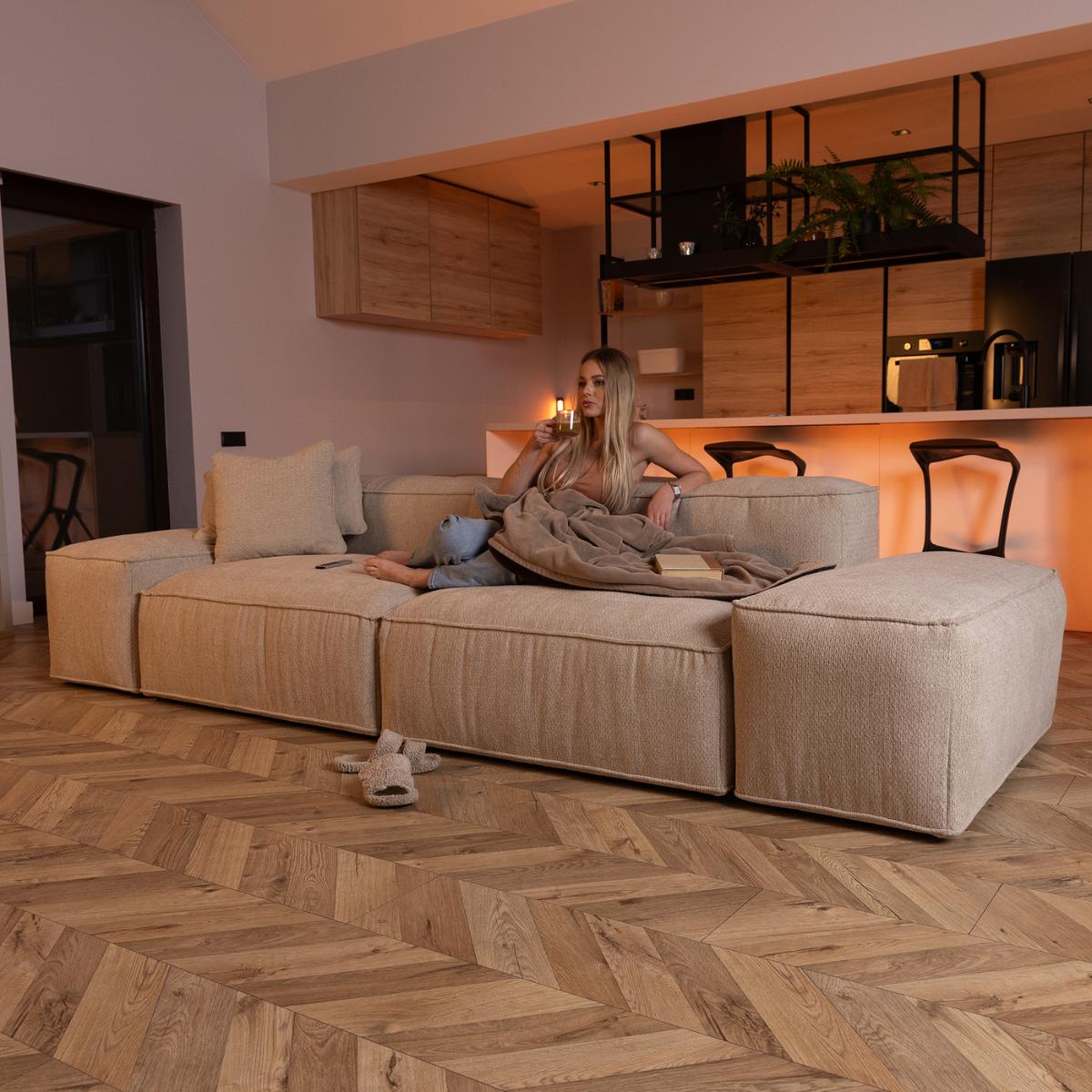
The Riva's compact profile and clean lines make it an excellent choice for smaller living rooms. Its light, neutral upholstery maximises the perception of space. The pull-out bed function adds guest-sleeping capacity without requiring a separate piece of furniture — a smart solution for small-space living.

Lugano Sofa — Sand — from EUR 890
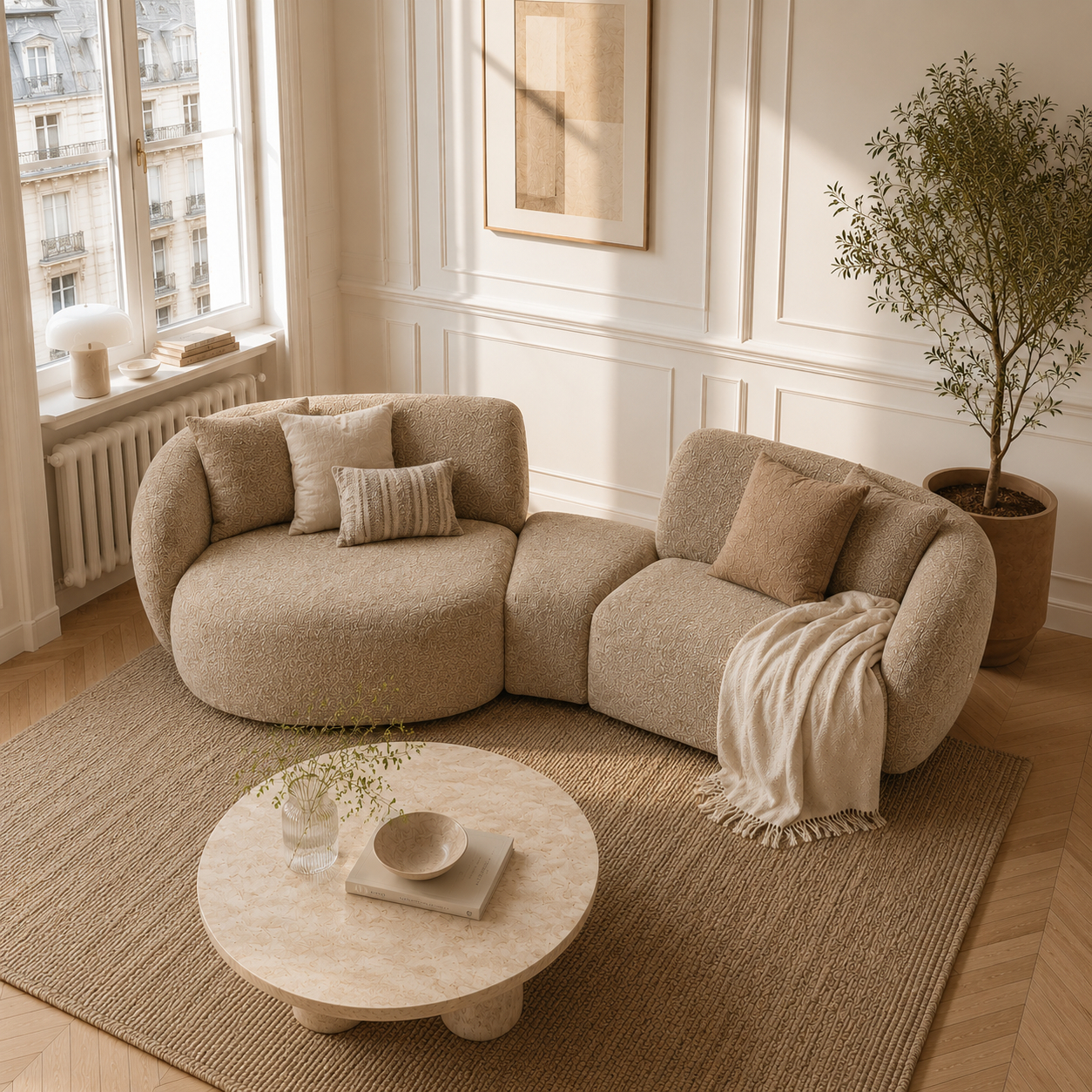
In a small living room, the Lugano in sand is an excellent choice: the warm, light neutral tone reflects light and reads as visually recessive, making the room feel more spacious. Pair with a glass or acrylic coffee table (which has minimal visual mass) and wall-mounted shelving to keep the floor clear.
4. Choose a Glass or Acrylic Coffee Table
A glass-top or clear acrylic coffee table takes up physical space but has almost no visual mass — the eye passes through it to the floor beneath. In a small living room, this single swap can dramatically reduce the visual clutter in the centre of the room and create a significant sense of additional space.
5. Use Mirrors Strategically
A large mirror opposite or adjacent to a window reflects both natural light and the view, effectively doubling the visual depth of the room. A full-length mirror or a large gallery-style mirror on one wall can transform the perception of a small room's scale. The effect is most dramatic when the mirror reflects a window or a view of the room itself.
6. Hang Curtains High and Wide
Hanging curtains from ceiling height (not from the window frame) makes windows look larger and ceilings look higher. Extending the curtain rod 15–20cm beyond each side of the window frame allows the curtains to clear the glass when open — maximising natural light while creating the visual impression of a much larger window.
7. Keep the Floor Visible
In a small room, every square metre of visible floor adds to the perceived size. Avoid oversized rugs that cover the entire floor — a rug that leaves 20–30cm of floor visible around the edges reinforces the room's boundaries and feels intentional. Avoid storing items under the sofa, which creates a dark, cluttered zone that reduces the sense of floor space.
8. Use Vertical Space
In a small room, the vertical dimension is underutilised. Tall bookshelves, floating wall shelves, and storage that runs floor to ceiling draw the eye upward and make the ceiling feel higher. This is one of the most effective ways to add both storage and the perception of scale in a compact living room.
9. Embrace Multi-Functional Furniture
In a small living room, every piece of furniture should do at least two jobs. A sofa bed eliminates the need for a separate guest bed. An ottoman with internal storage replaces a coffee table and provides additional seating and cushion storage. A wall-mounted TV eliminates the need for a large media unit on the floor. Each piece removed from the floor adds measurably to the sense of space.
10. Limit the Number of Furniture Pieces
Small rooms are harmed by too many pieces of furniture, not too few. Identify the essential pieces — sofa, coffee table, one armchair, storage — and resist the urge to fill every corner. Negative space (empty areas) in a small room is not wasted space — it is the element that makes the rest of the room feel comfortable and uncluttered.

Laisser un commentaire
Ce site est protégé par hCaptcha, et la Politique de confidentialité et les Conditions de service de hCaptcha s’appliquent.