



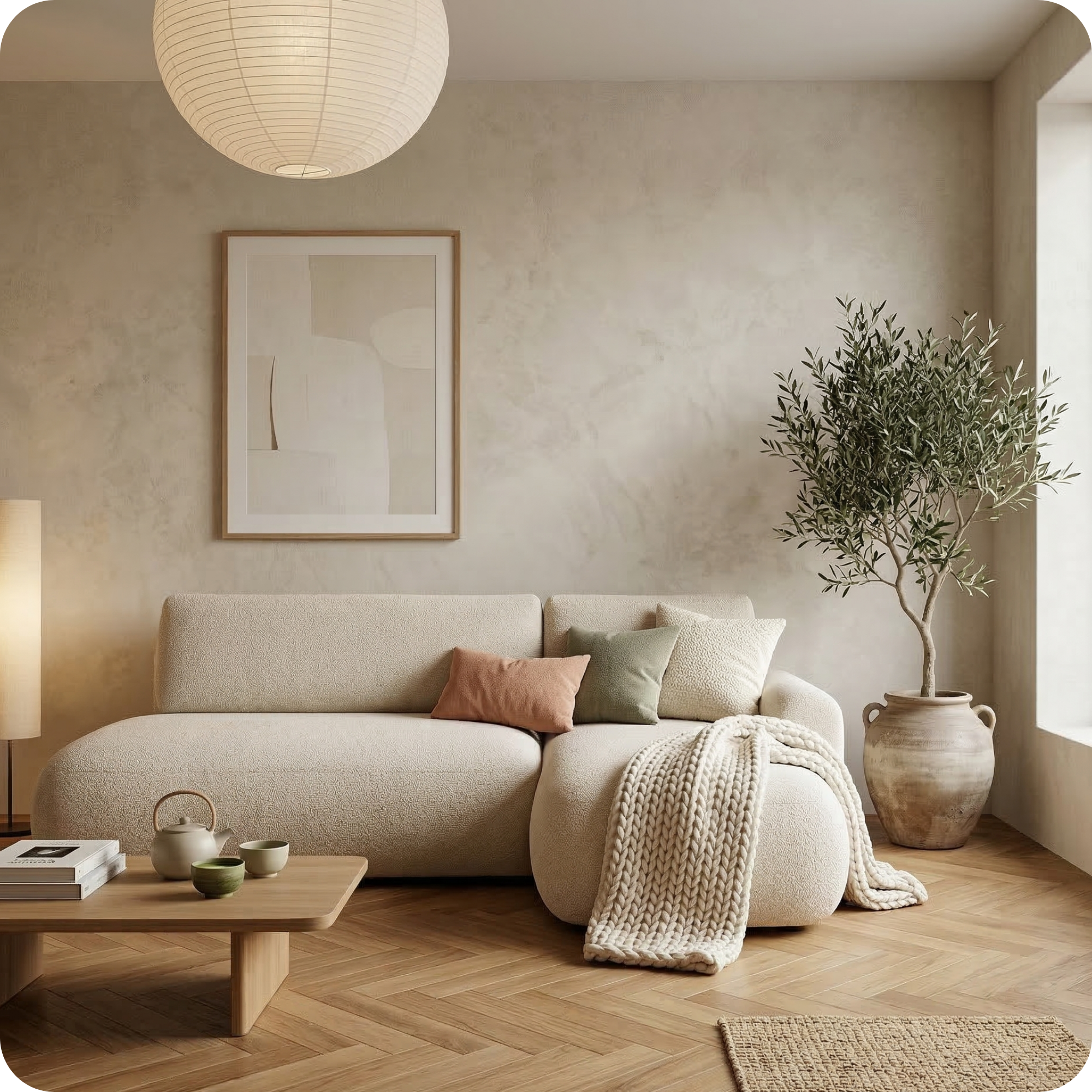
Japandi Interior Design: How to Achieve the Japanese-Scandinavian Style
Japandi is the design hybrid that has dominated interior media for the last several years — a merging of Japanese wabi-sabi aesthetics with Scandinavian hygge sensibility to produce interiors that are simultaneously calm, purposeful, warm, and deeply considered. Unlike either Japanese minimalism (which can feel austere) or Scandinavian cosiness (which can feel casual), Japandi achieves a middle ground: pared back but not cold, natural but not rustic, simple but not blank. For a living room, Japandi principles translate into specific, achievable choices.
The Japandi Colour Palette
The Japandi palette is built around muted, warm neutrals with occasional deep, earthy accents. White — always warm rather than cool — is the base. Warm beige, sand, warm greige, and natural linen tones layer above. The accents come from nature: black (charcoal, sumi ink black), dark forest green, deep indigo, warm terracotta, and natural wood tones. The overall effect is a palette of extraordinary calm — no colour shouts or demands attention, every tone earns its place through quiet authority. Avoid bright saturated colours entirely in a Japandi scheme; everything should feel like it has been found in nature rather than manufactured.

Lugano Sofa in Light Grey — from EUR 1.290
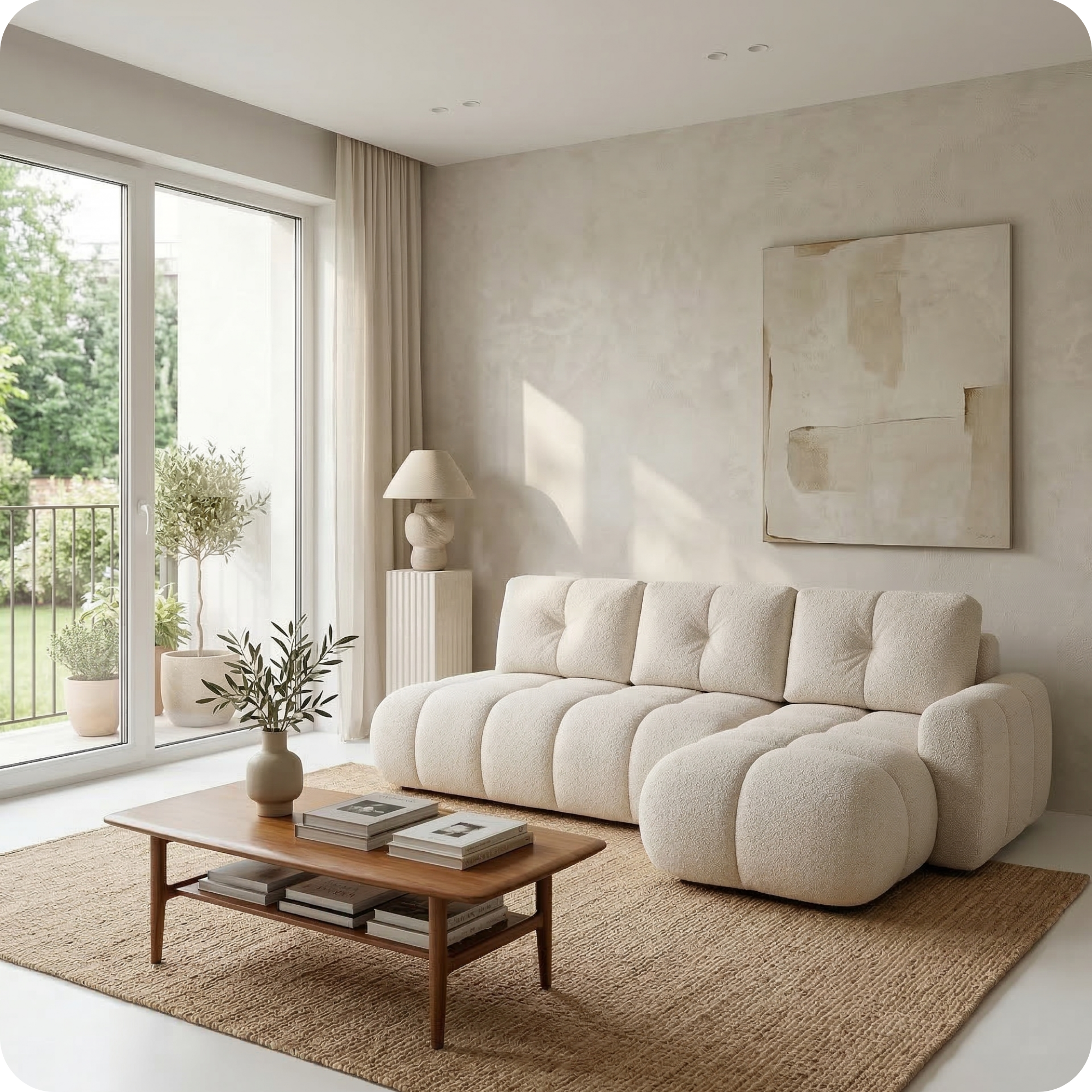
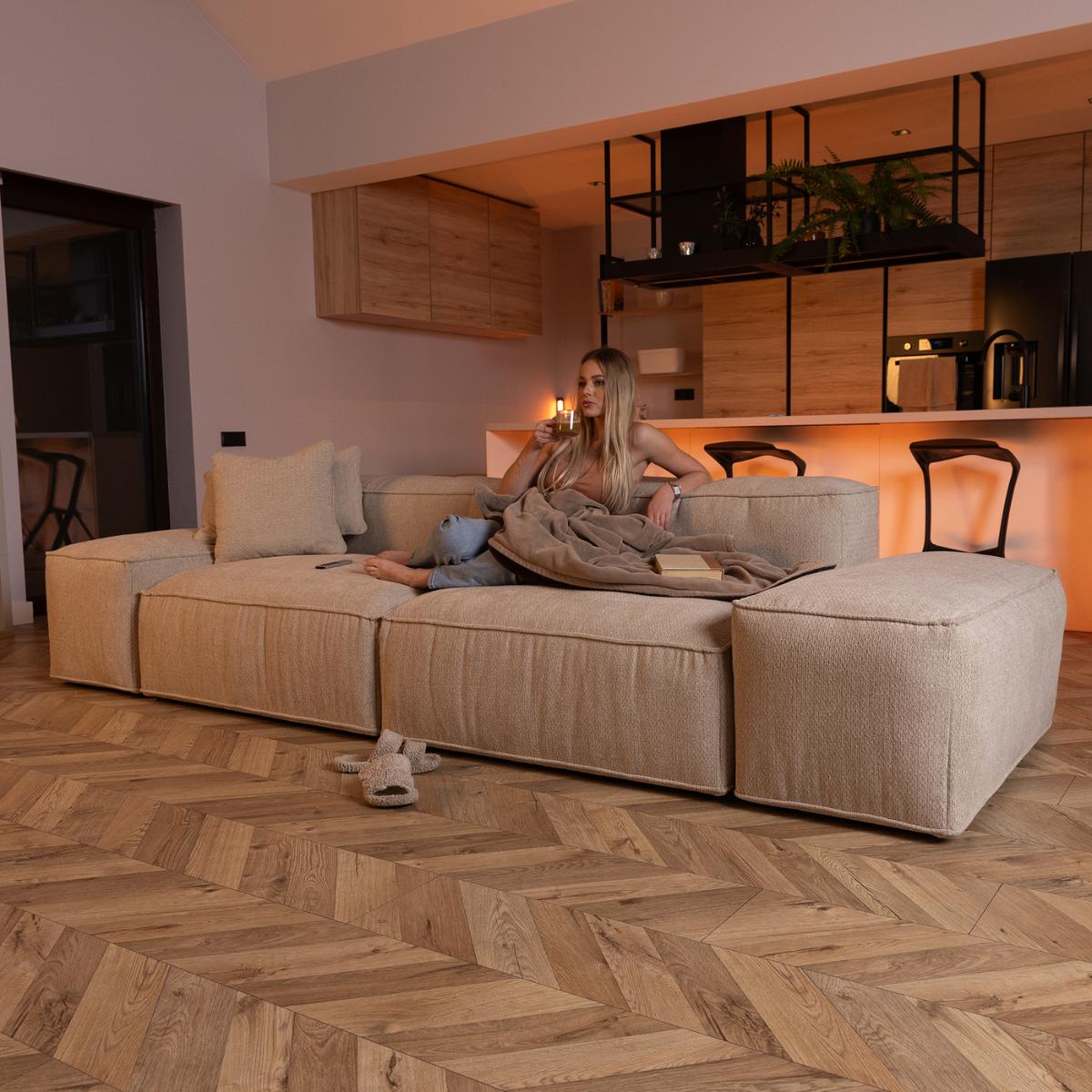
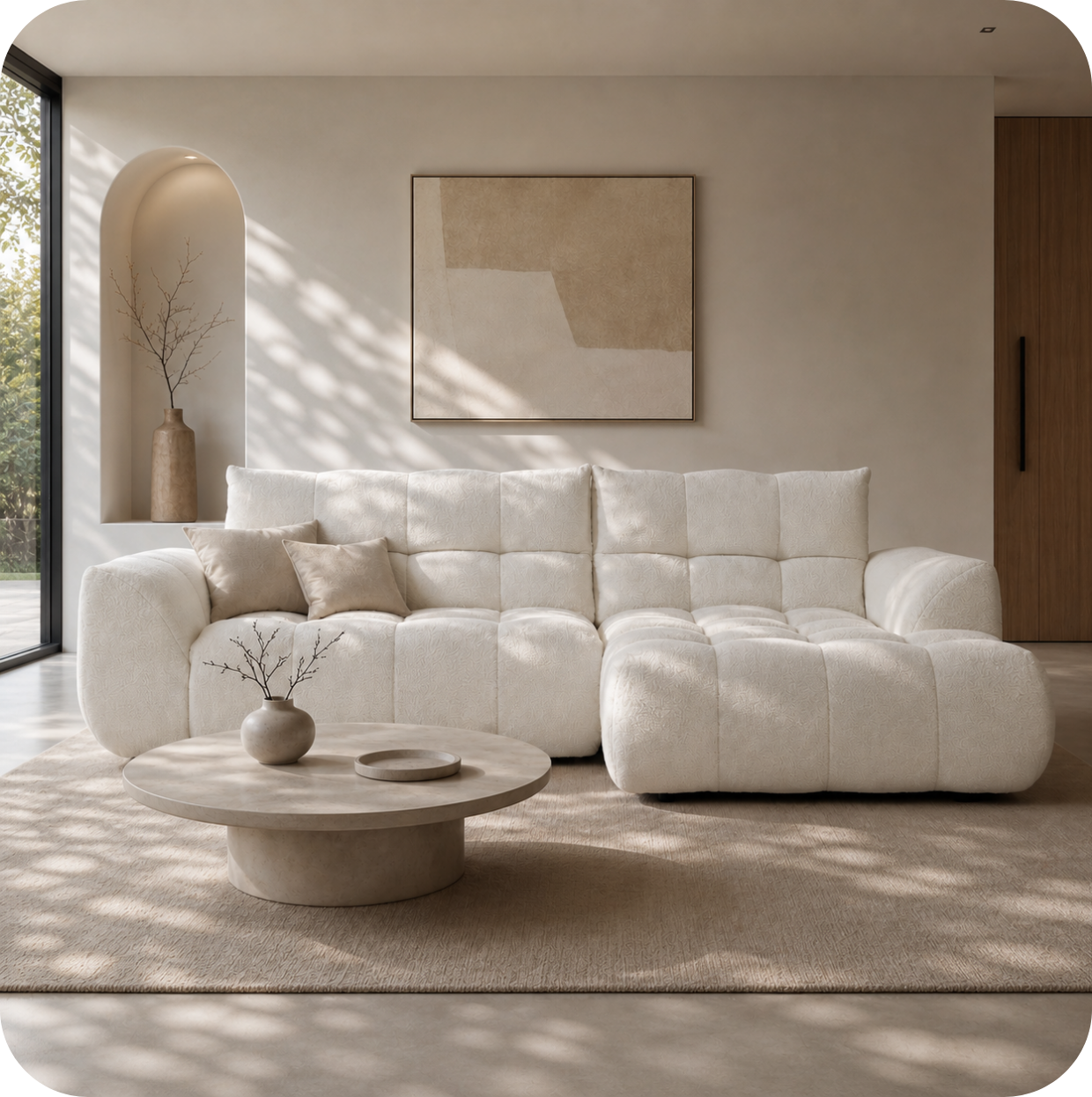
The Lugano sofa in light grey is a natural anchor for a Japandi living room. Its calm, quiet colour sits perfectly within the Japandi palette of warm neutrals and muted tones. The clean, architecturally confident silhouette of the Lugano fits the Japandi principle of furniture that earns its place through quality and form rather than decoration. Surround with natural wood — a low Japanese-style coffee table, walnut shelving, pale ash flooring — and add a single large plant as the only organic statement in the room.

Lugano Sofa in Sand — from EUR 1.290
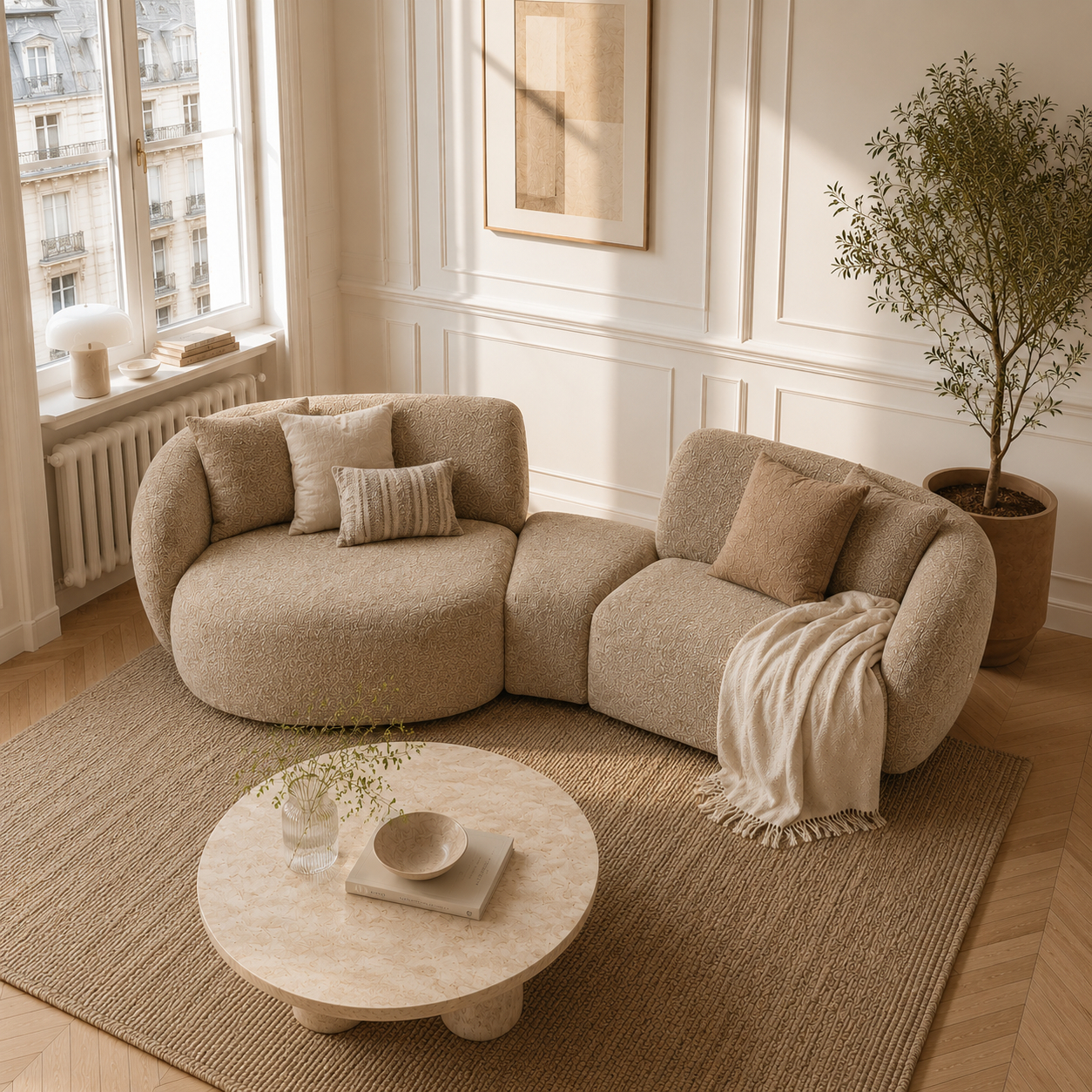
The sand-coloured Lugano captures the warmth at the heart of Japandi: the Japanese appreciation for natural materials and the Scandinavian instinct for comfort combine in a sofa colour that feels both elevated and inviting. Pair with a low, minimalist coffee table in dark-stained wood, a single large ceramic vessel on the floor, and linen cushions in cream and warm white. The restraint in the arrangement — very few objects, perfectly chosen — is what creates the Japandi atmosphere.
Materials in Japandi Design
Natural materials are foundational to Japandi. Wood — particularly oak, walnut, ash, and bamboo — appears in furniture legs, coffee tables, shelving, and architectural features. The wood should look natural rather than lacquered: matte finishes, visible grain, and honest material quality. Stone and concrete appear in smaller objects: ceramic bowls, stone vessels, concrete plant pots. Natural fibres — linen, cotton, jute, rattan, bamboo — appear in textiles, rugs, and baskets. The only manufactured material that finds a place in Japandi is black-painted metal, which provides the visual grounding that Japanese aesthetics value in contrast to the warmth of organic materials.
Furniture Principles: Low, Clean, Purposeful
Japandi furniture is typically lower to the ground than Western furniture — this relates to the Japanese tradition of floor-level living and creates a room that feels grounded, calm, and intimate. Low-profile sofas, low coffee tables (35-45cm height), and floor cushions or low seating all contribute to this quality. Every piece of furniture in a Japandi room should justify its presence: it should either be functional, beautiful, or both. Nothing is there purely as filler or because it came with a set. The Japandi principle is quality over quantity — fewer, better pieces rather than many mediocre ones.
Wabi-Sabi: Embracing Imperfection
The Japanese concept of wabi-sabi — finding beauty in imperfection, transience, and incompleteness — is the philosophical heart of Japandi. In practical terms, this means choosing objects and materials that show their age and use gracefully: a ceramic bowl with a glaze that runs unevenly, a wooden coffee table that acquires marks and patina over time, a linen cushion that wrinkles naturally. Japandi interiors look better lived-in than brand new — the objective is not to maintain a pristine showroom condition but to curate a space that deepens and improves with use and time.

Laisser un commentaire
Ce site est protégé par hCaptcha, et la Politique de confidentialité et les Conditions de service de hCaptcha s’appliquent.