



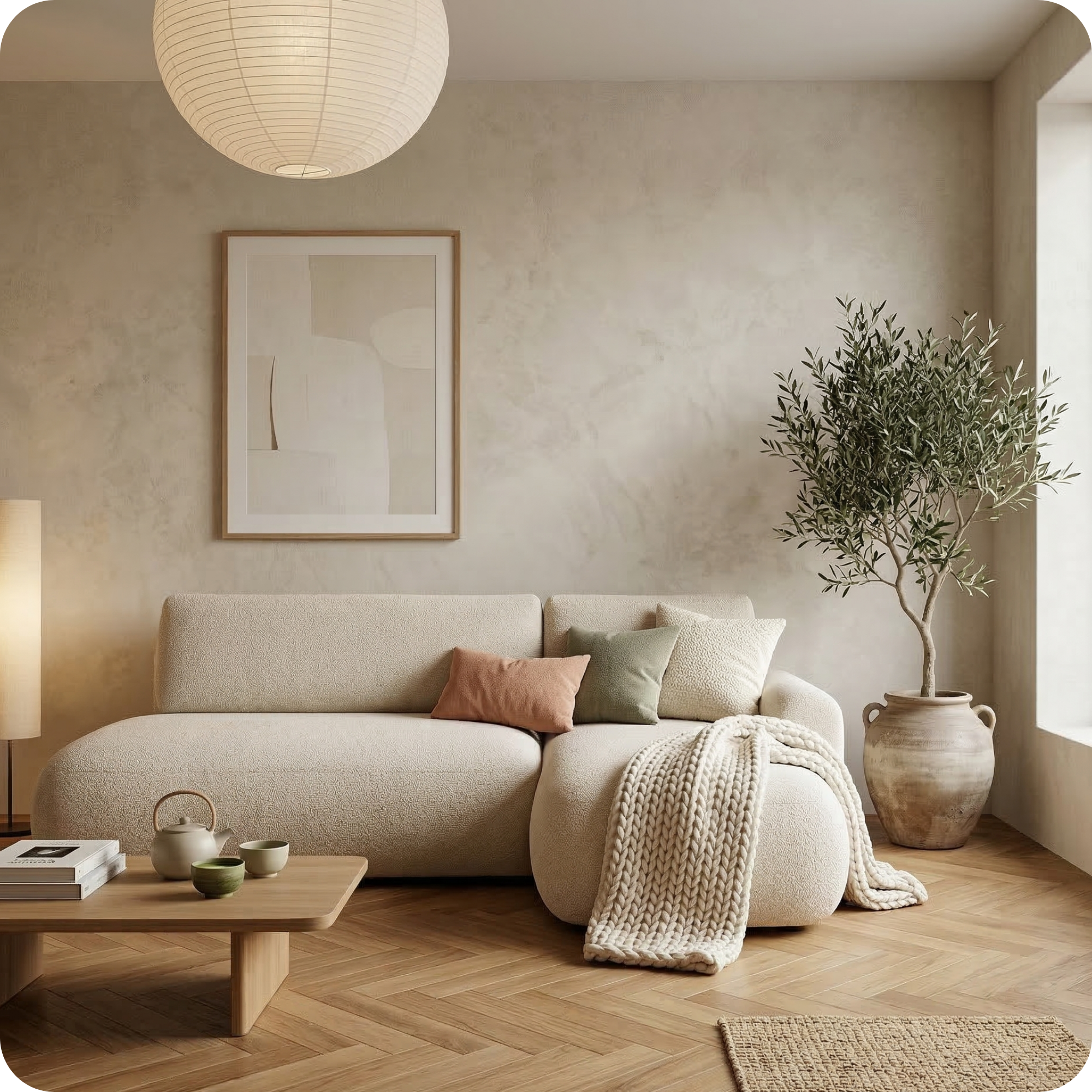
Japandi Living Room Ideas: How to Create the Perfect Japandi Interior
Japandi is the design synthesis that has defined contemporary interior aesthetics for the better part of a decade: a considered fusion of Japanese wabi-sabi philosophy and Scandinavian hygge sensibility that produces interiors characterised by restraint, natural materials, craft, and a deeply intentional approach to comfort. Where Japanese design brings asymmetry, imperfection, and a deep connection to natural materials in their most honest form, Scandinavian design brings warmth, functionality, and the prioritisation of lived comfort. The result is an aesthetic that is simultaneously serene and deeply liveable — arguably the most sophisticated and durable trend in contemporary interior design.
The Japandi Colour Palette
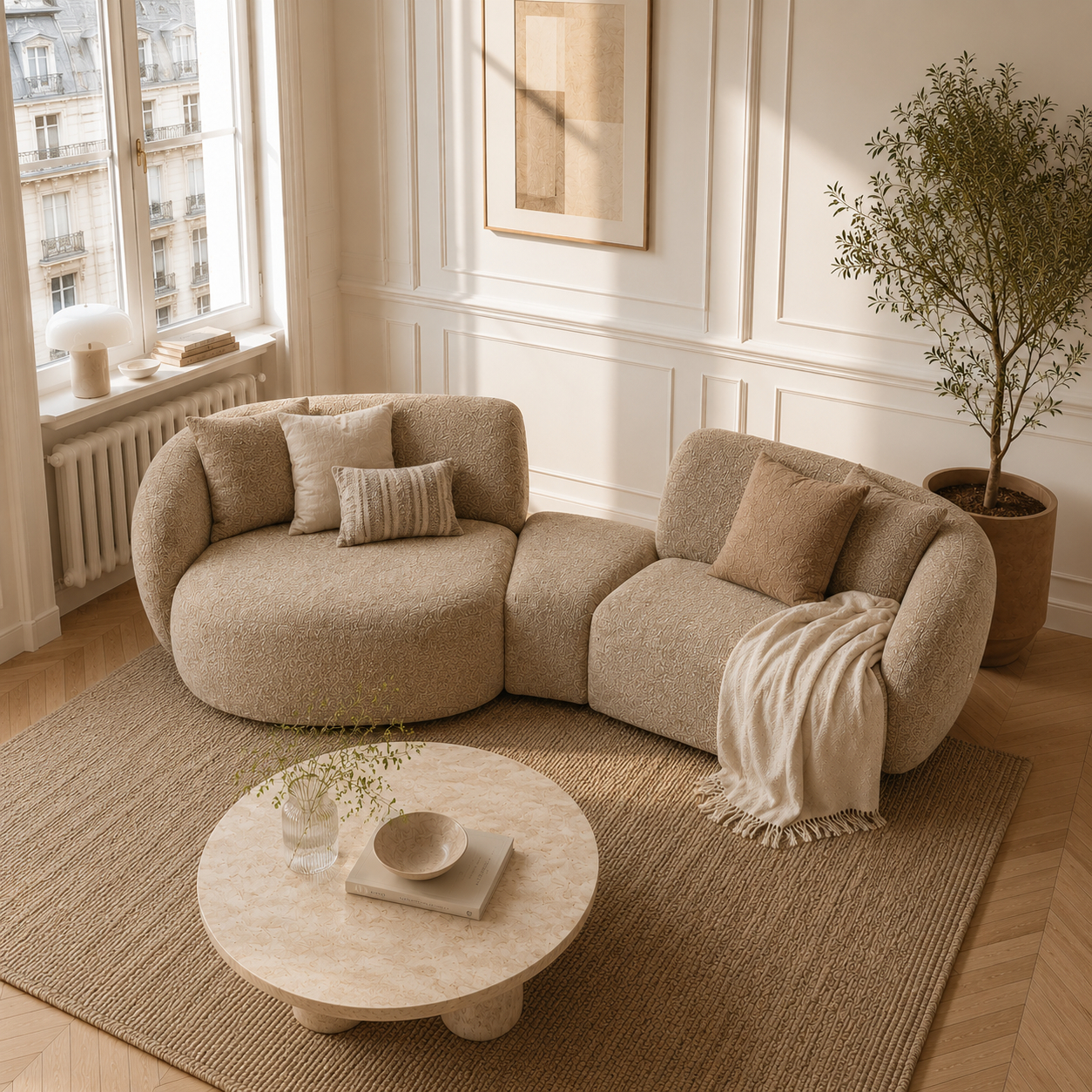
The Japandi palette is built on muted, natural tones that echo the materials from which the style draws: warm off-white, oatmeal, and ivory for walls and large surfaces; warm earthy neutrals — sand, wheat, caramel, warm stone — for upholstery and soft furnishings; and quiet accents in charcoal, dark walnut, and muted sage or forest green. Colour saturation is deliberately low throughout: Japandi avoids bright or high-contrast colours in favour of a palette that feels like it has been quietly aged by light and time. The effect is deeply calming — a room in which the eye rests easily and the mind follows.

Lugano Sand Sofa — from EUR 1,190
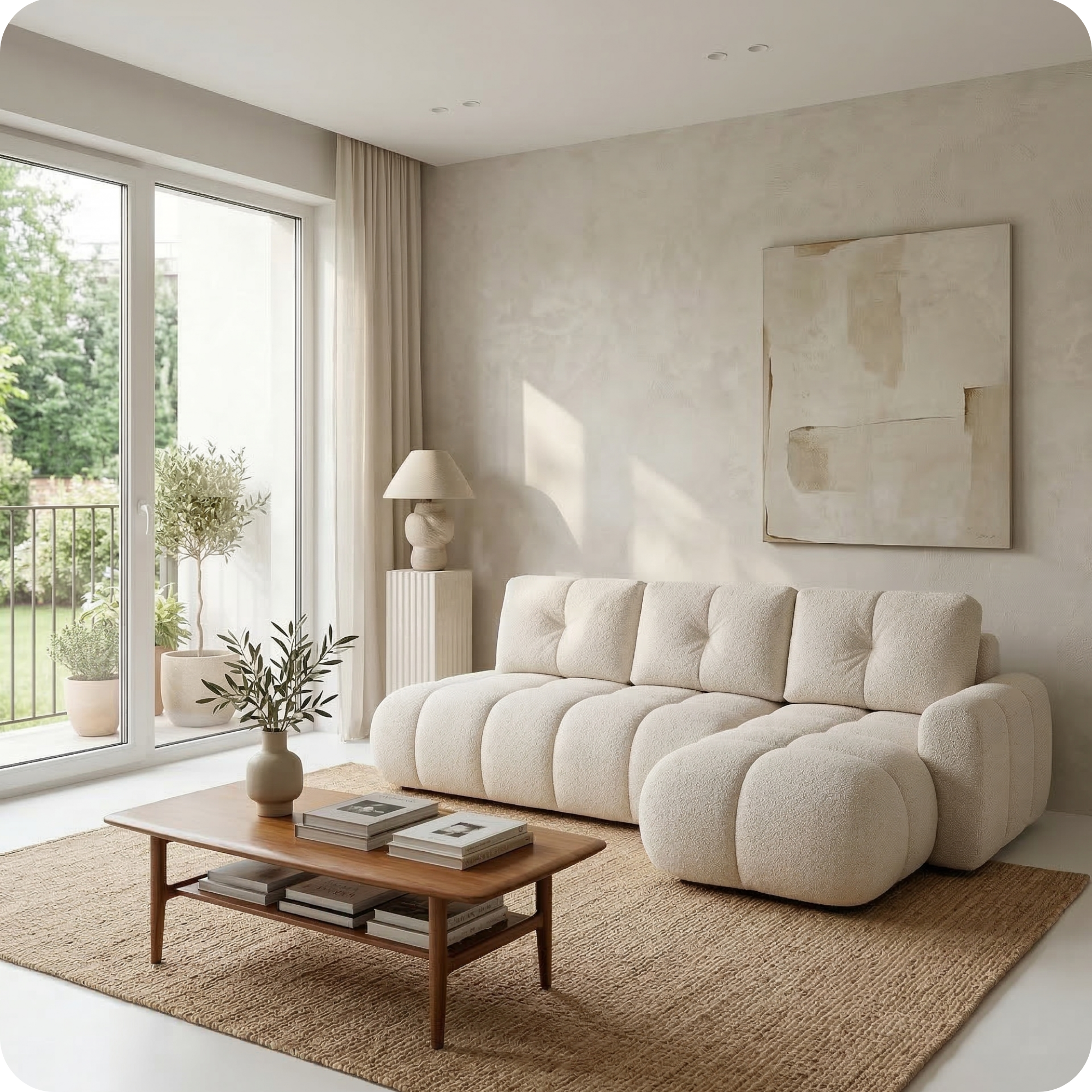
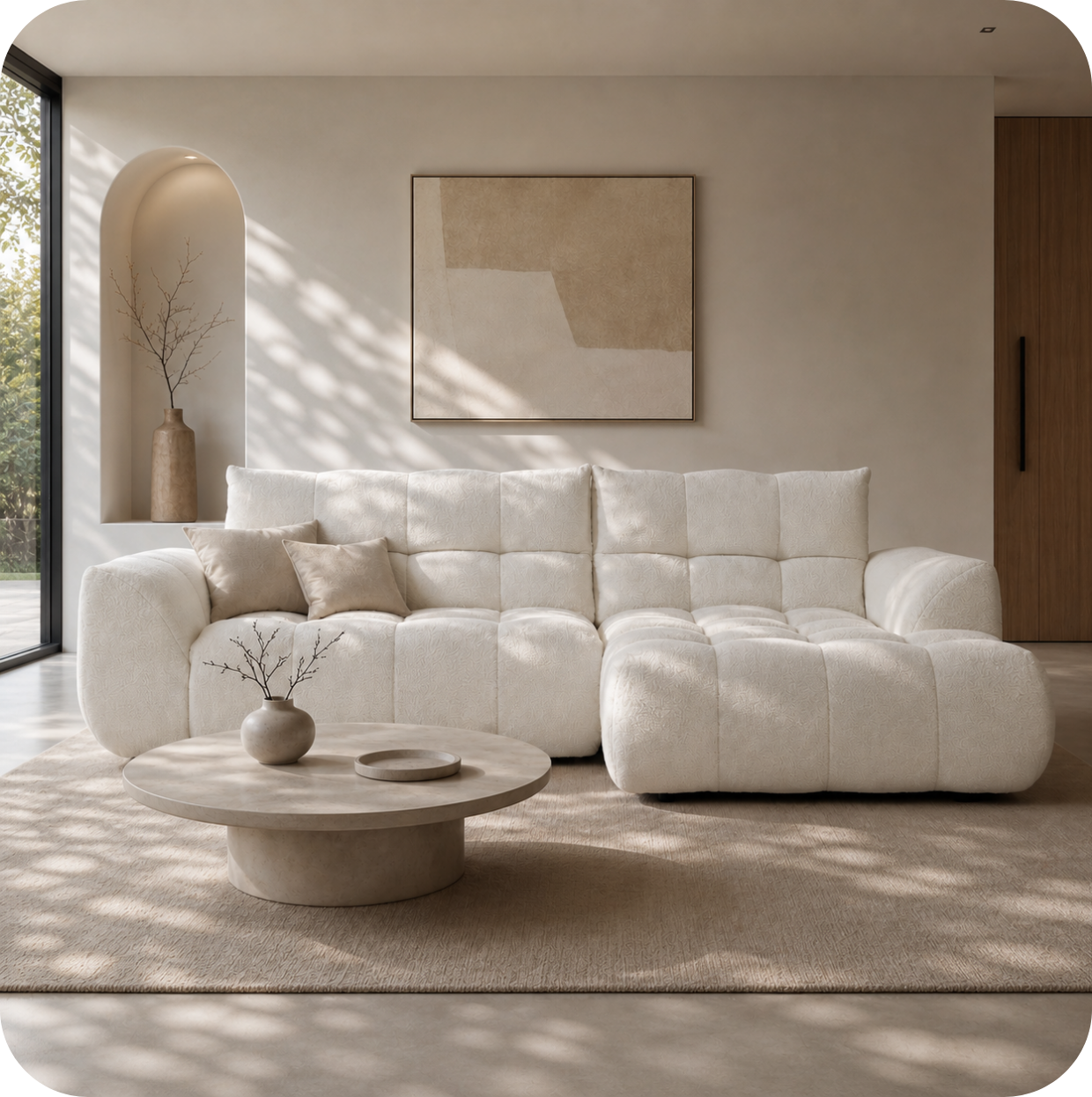
The Lugano sofa in sand or warm stone is the quintessential Japandi sofa: low to the ground, architecturally precise, and upholstered in a colour that sits quietly within the Japandi palette without demanding attention. Its clean geometric lines are the furniture equivalent of the wabi-sabi appreciation of honest form, while the generous proportions reflect the Scandinavian commitment to genuine comfort. Against warm white walls with oak and rattan accessories, it creates a Japandi living room of quiet authority.

Lugano Khaki Sofa — from EUR 1,190
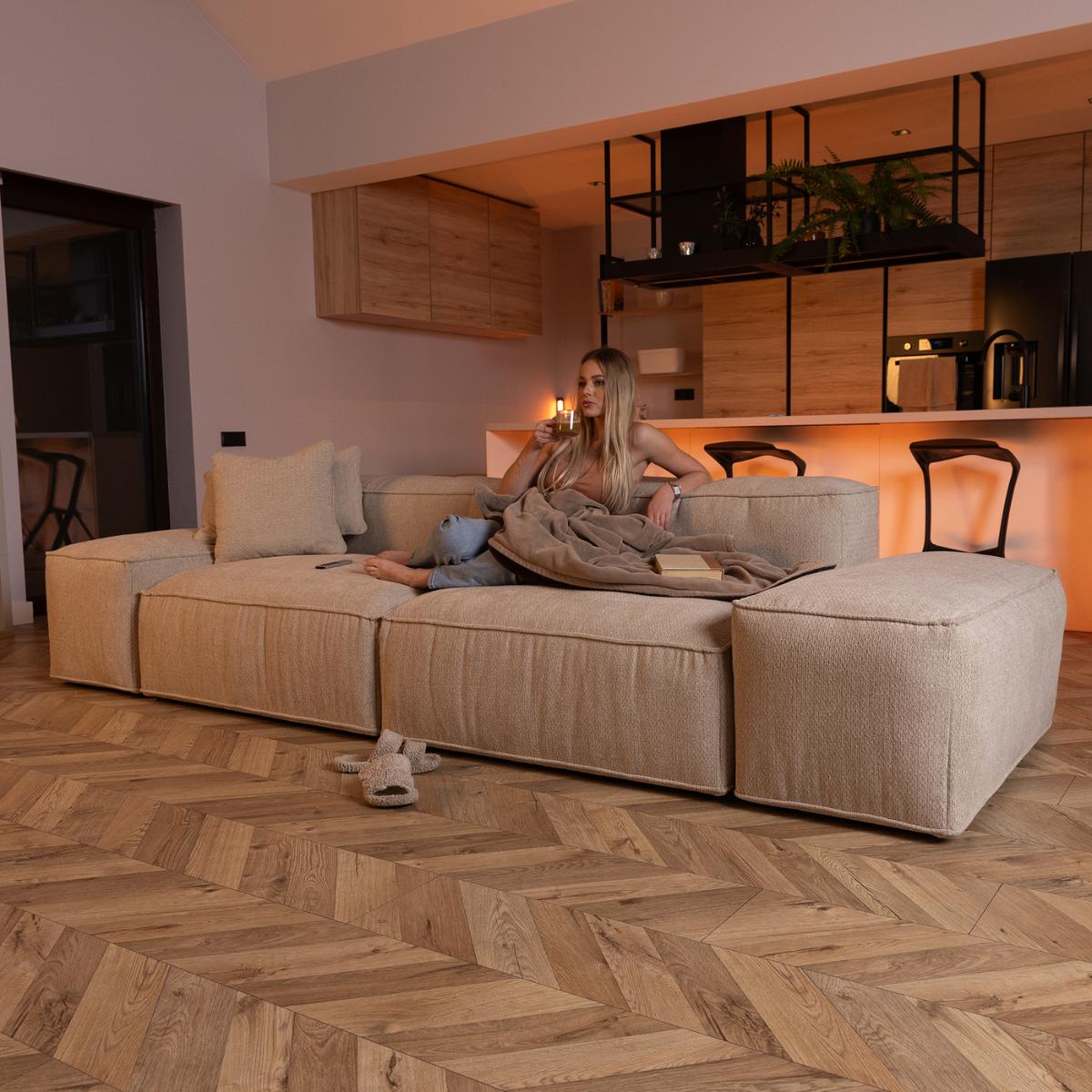
In khaki or warm olive, the Lugano moves further into the Japandi palette — earthy, muted, and deeply connected to the natural world. The slightly cooler, more desaturated quality of khaki is particularly effective in Japandi rooms where the walls are in warm white or plaster tones: the sofa reads as the grounded, organic anchor in a room of controlled quietness.
Japandi Sofa: What to Look For
In Japandi design, the sofa is the most visible expression of the aesthetic's priorities — and it needs to do several things simultaneously. Low profile is essential: Japandi rooms favour furniture that sits close to the ground, emphasising the horizontal plane and the sense of rootedness. Clean lines are equally important: no exaggerated curves, no excessive ornamentation, no heavy embellishment — the sofa should look as if its form was arrived at by removing everything unnecessary. Natural upholstery is the third requirement: linen, washed cotton, or textured fabric in muted earthy tones. And finally, quality of material and construction must be evident without being stated — Japandi design values craftsmanship deeply, and a piece of upholstery that looks cheaply made will undermine the entire scheme.
Japandi Living Room Layout
The spatial arrangement of a Japandi living room is as considered as the material choices. The ideal layout is one that creates generous negative space — empty floor, uncluttered surfaces, and a sense of breathing room that most Western interiors deny themselves. Furniture should be placed with the same deliberateness as objects in a Japanese still life: each piece in its precise position, with purpose, and with enough surrounding space to be seen independently. Coffee tables should be low — ideally solid wood, ideally with organic form — and positioned to relate to the sofa without crowding it. Shelving, where it appears, should be open and sparsely populated: books, a single ceramic, a dried botanical. Nothing more.
Japandi Textures and Natural Materials
Texture is the primary expressive tool in Japandi design — it provides the sensory richness and visual interest that saturated colour would bring in other aesthetics. The material vocabulary is precise: warm oak and walnut for furniture and flooring; linen, cotton, and bouclé for soft furnishings; rattan, bamboo, and washi paper for accessories; ceramic and raw clay for objects. Every material should read as natural, honest, and slightly imperfect. The Japandi approach to imperfection — drawn from Japanese wabi-sabi — is not a tolerance for sloppiness but an appreciation of the character that natural variation brings: the grain of wood, the slight unevenness of a handmade ceramic, the organic irregularity of a woven textile.

Laisser un commentaire
Ce site est protégé par hCaptcha, et la Politique de confidentialité et les Conditions de service de hCaptcha s’appliquent.