


Living Room Rug Guide: How to Choose the Right Rug for Your Lounge
A living room rug is one of the most impactful single purchases you can make for a living room — it anchors the seating arrangement, defines the zone, adds warmth and texture underfoot, and introduces pattern, colour, or material quality that elevates the entire room. A room without a rug almost always looks unfinished, regardless of how carefully the furniture has been chosen. Yet rug selection is frequently treated as an afterthought — a secondary decision made once the furniture is in place — when it should ideally be considered alongside or even before the sofa selection, particularly in rooms where the rug will be a dominant visual element.
Getting the Size Right
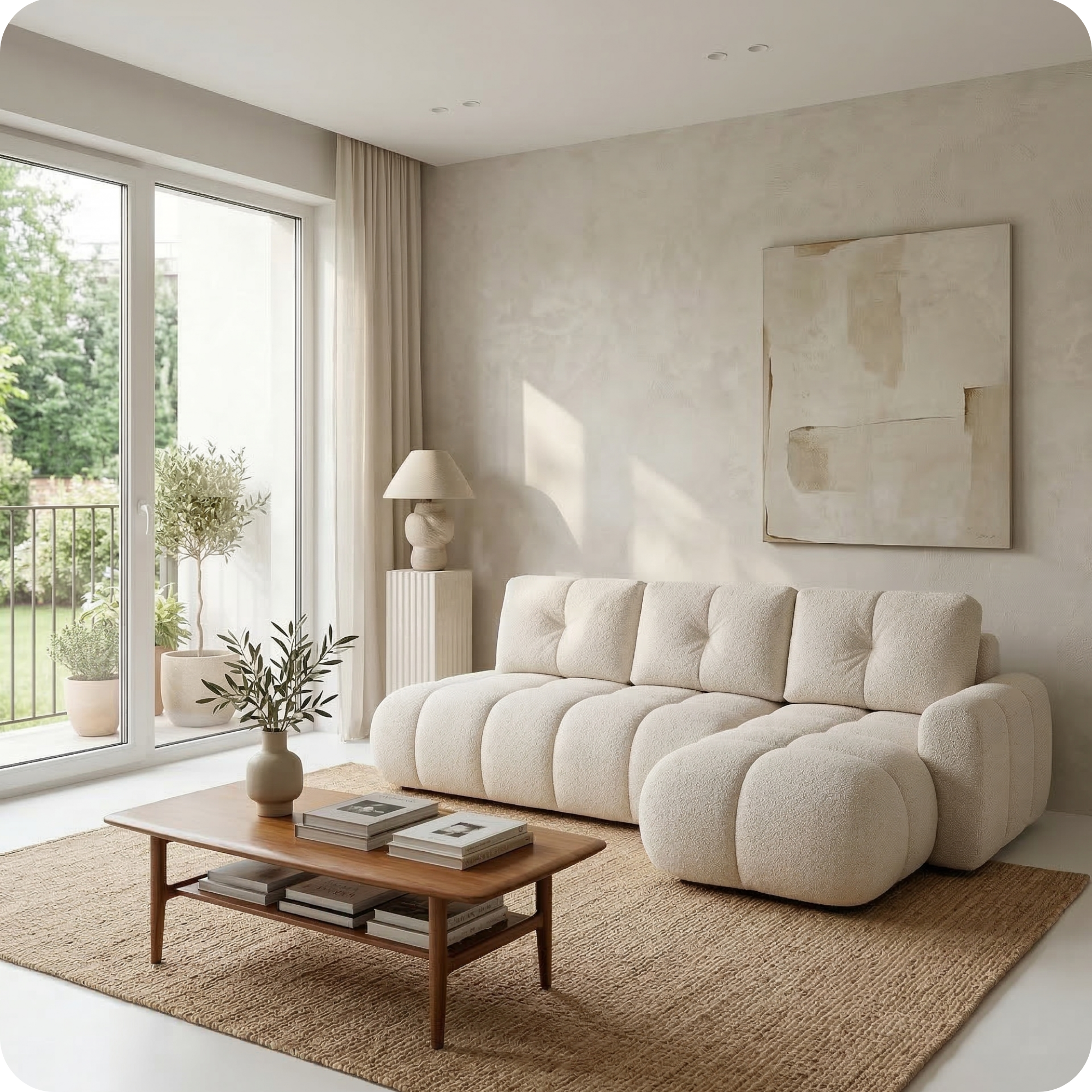
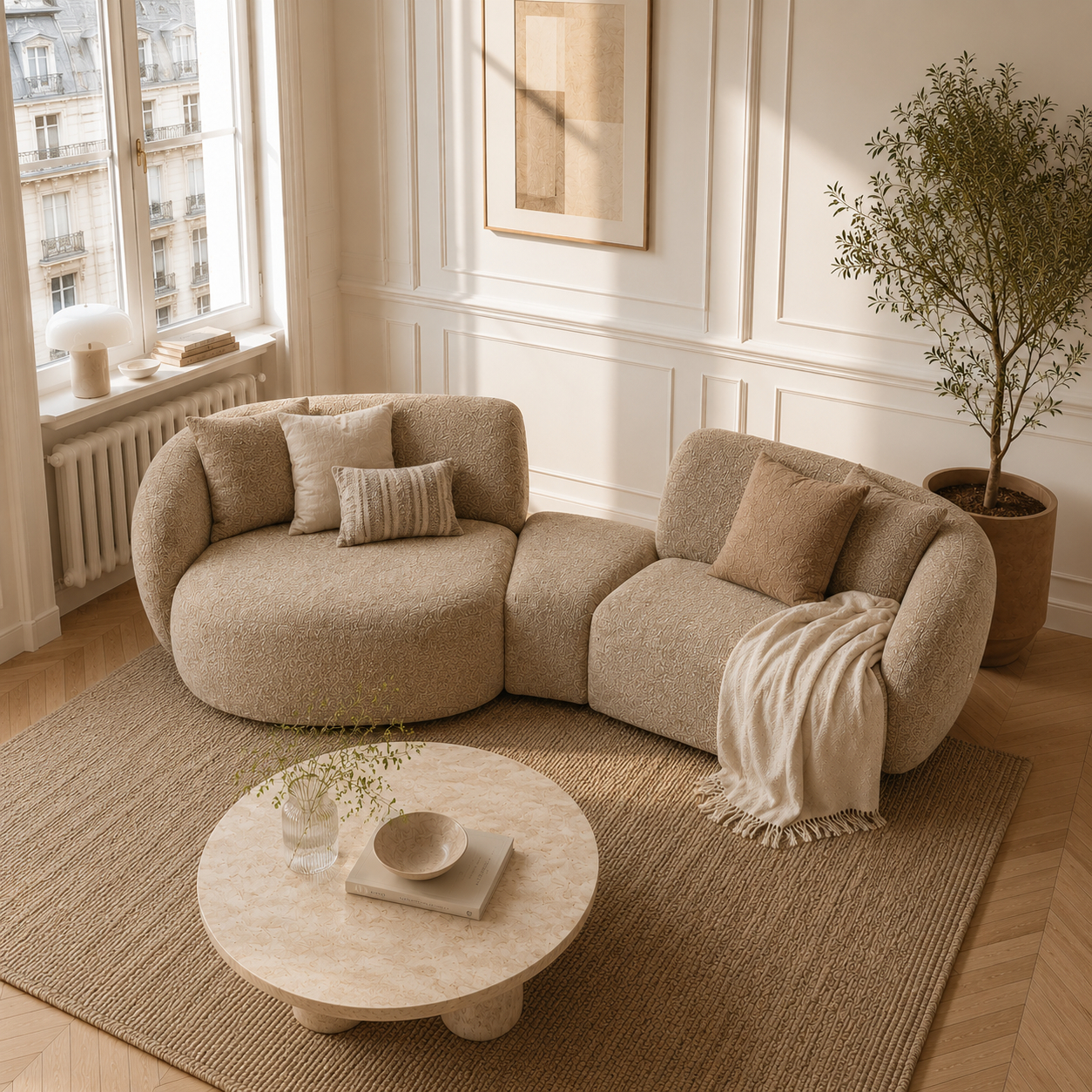
The most common rug mistake is buying one that is too small. In a living room, the rug should be large enough for all the main seating pieces to sit at least partially on it — front legs on the rug is the minimum; all four legs on the rug is the most anchored result. A rug where the sofa sits completely off the rug and only the coffee table is on it looks visually floating and disconnected. As a practical guide for standard living rooms: a 200x300cm rug is the minimum useful size for a standard 3-seater sofa arrangement; 240x340cm or 250x350cm is the more comfortable choice for larger rooms. Measure your seating arrangement footprint before buying — the rug should extend at least 30-40cm beyond the sofa on each side.

Merlot 3-Seater Sofa — from EUR 1,090
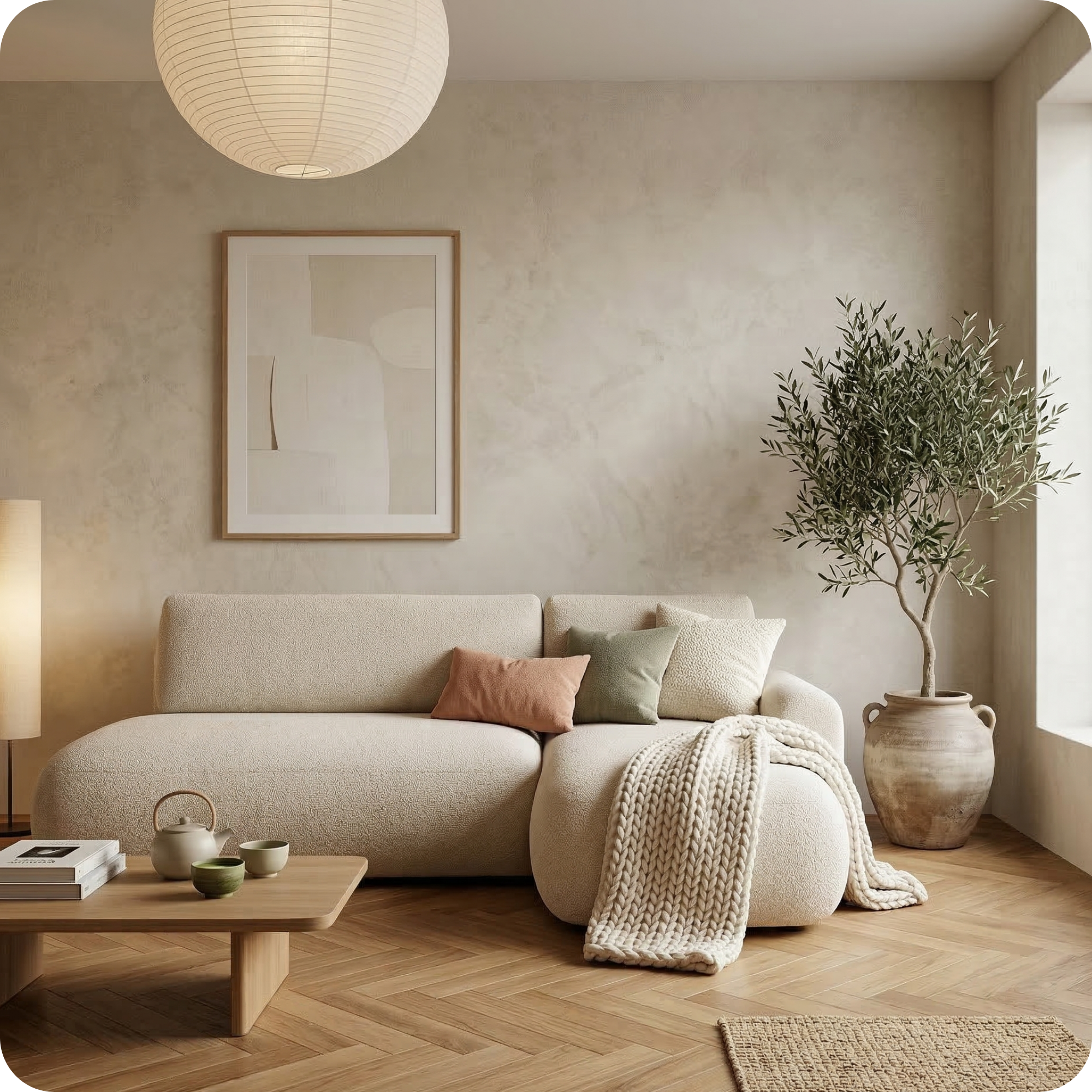
The Merlot's standard 3-seater dimensions require a rug of at least 200x300cm for front legs on, or 240x340cm for a fully anchored look. The leaf green shown here works particularly well with natural fibre rugs (jute, sisal) or patterned rugs in warm terracotta and cream tones.

Merlot Corner Sofa — from EUR 1,290
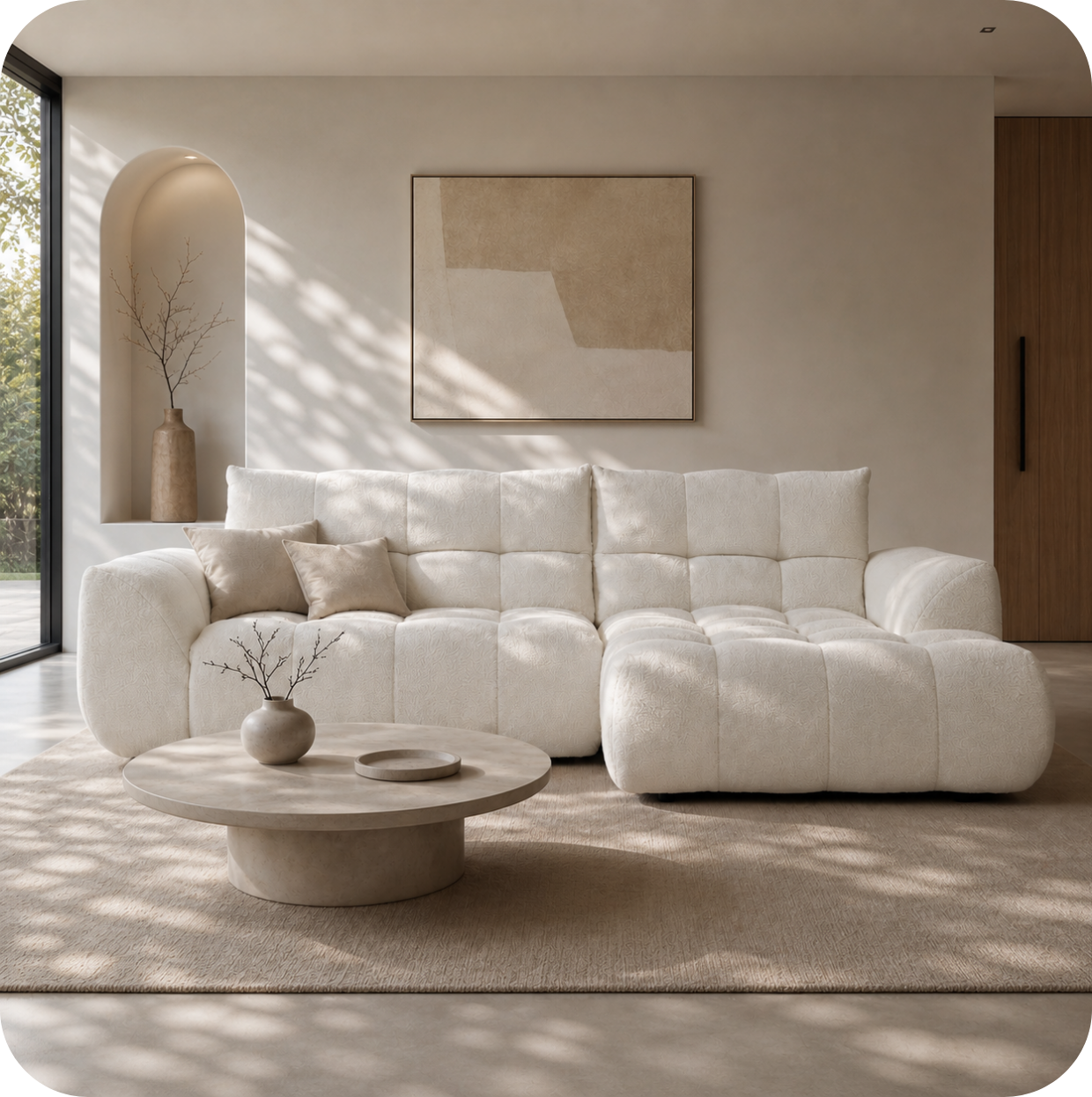
Corner sofas require larger rugs than standard sofas — allow for at least 250x350cm to fully anchor a corner configuration. Square or large rectangular rugs work best under L-shaped sofas. The rug should ideally fit within the triangle of the L without extending significantly beyond the footprint of the corner.
Rug Materials: What to Choose and Why
Natural fibre rugs — wool, jute, sisal, seagrass — are the most durable and characterful choices for living rooms. Wool rugs are the premium choice: soft underfoot, naturally stain-resistant, excellent at holding colour, and durable enough to last decades with normal care. Jute and sisal rugs are the affordable natural fibre option — they have a beautiful, raw texture that suits bohemian, rustic, and Scandi interiors particularly well, but they are coarser underfoot and less suitable for rooms where people sit or lie on the floor. Synthetic rugs (polypropylene, nylon, viscose) are easier to clean and more affordable, but tend to flatten and pill over time. For high-traffic family living rooms, a flat-weave wool or synthetic blend offers the best balance of durability and maintenance ease.
Rug Style: Matching the Interior
The style of rug should complement rather than repeat the visual register of the room. In a minimal, neutral Scandi or Japandi room, a simple flat-weave or textured solid rug maintains the calm visual order of the space. In a bohemian or maximalist room, a richly patterned kilim, Persian-style, or abstract print rug adds the visual complexity and cultural richness the style requires. In a contemporary or transitional living room, a large-scale geometric rug in two or three tones (often a neutral and an accent colour) adds pattern without the commitment of a traditional or highly pictorial design. The safest approach for uncertain buyers: a large, plain, or subtly textured wool rug in a warm neutral tone — it will anchor any seating arrangement, suit any design style, and never date.

Laisser un commentaire
Ce site est protégé par hCaptcha, et la Politique de confidentialité et les Conditions de service de hCaptcha s’appliquent.