

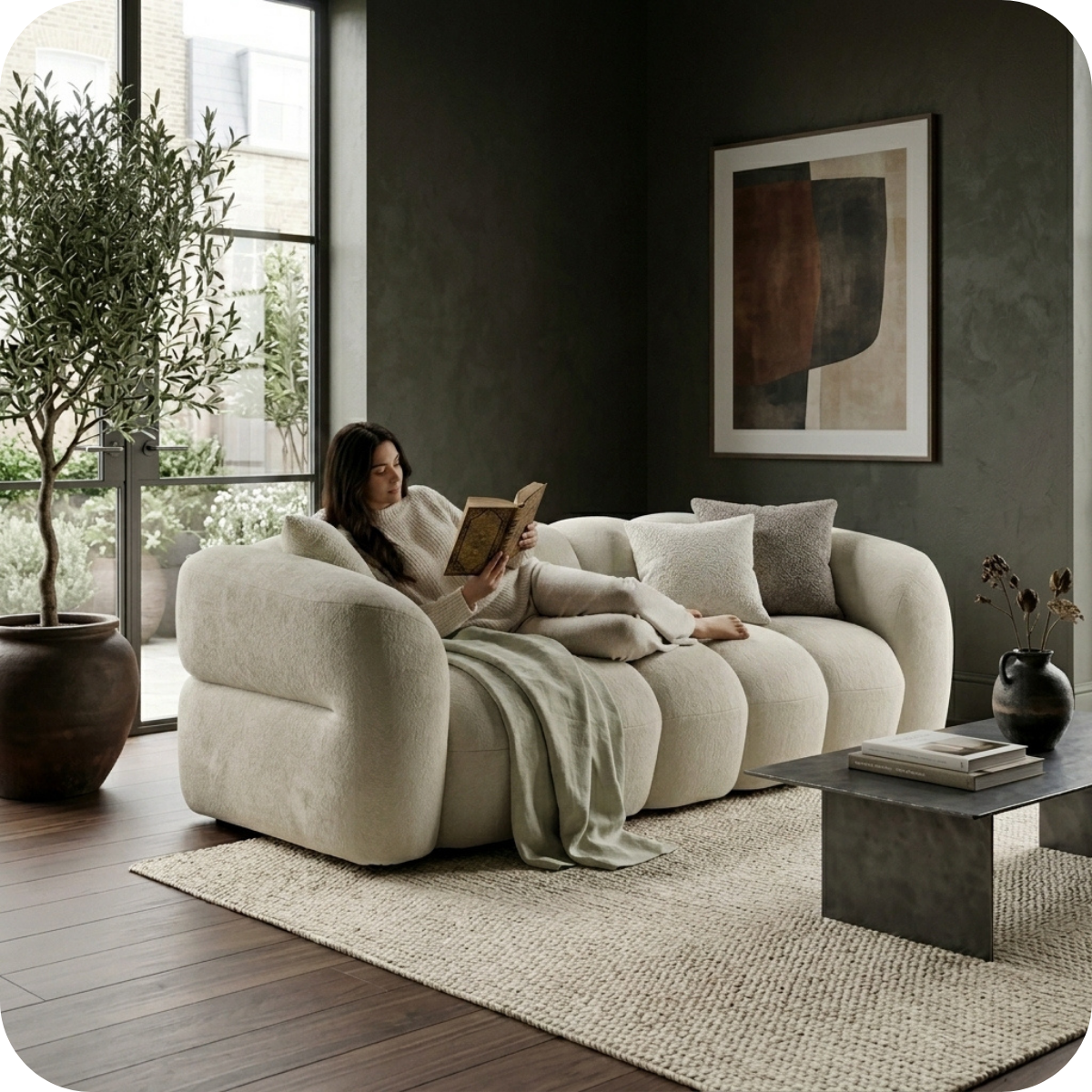
Mid-Century Modern: How to Achieve the Look in Your Living Room
Mid-century modern design — the design movement that flourished from approximately the mid-1940s to the mid-1970s, and the aesthetic associated with designers like Charles and Ray Eames, Arne Jacobsen, and Hans Wegner — remains one of the most enduringly popular interior design styles worldwide. Its appeal is easy to understand: it combines functional elegance with organic warmth, celebrates quality materials and craftsmanship, and has a visual clarity that makes spaces feel both purposeful and inviting. This guide explains how to achieve authentic mid-century modern style in your living room.
The Defining Characteristics of Mid-Century Modern Design
Mid-century modern design is defined by several distinctive characteristics that distinguish it from other styles. Clean, organic lines: furniture has simple, uncluttered profiles with gently curved or organic forms — no heavy carving, no ornate decoration. Tapered or splayed legs: almost all mid-century modern furniture sits on thin, tapered legs that create a floating, lightness quality quite different from chunky contemporary bases. A limited, warm palette: mid-century modern interiors tend to use warm neutrals (mustard, terracotta, warm white, warm brown, olive green) rather than cool or pastel tones. Natural materials in combination: wood (particularly walnut and teak), leather, wool, and natural fibres appear together throughout. Graphic art and pattern: bold, graphic artwork and geometric patterns on cushions, rugs, and ceramics are characteristic.

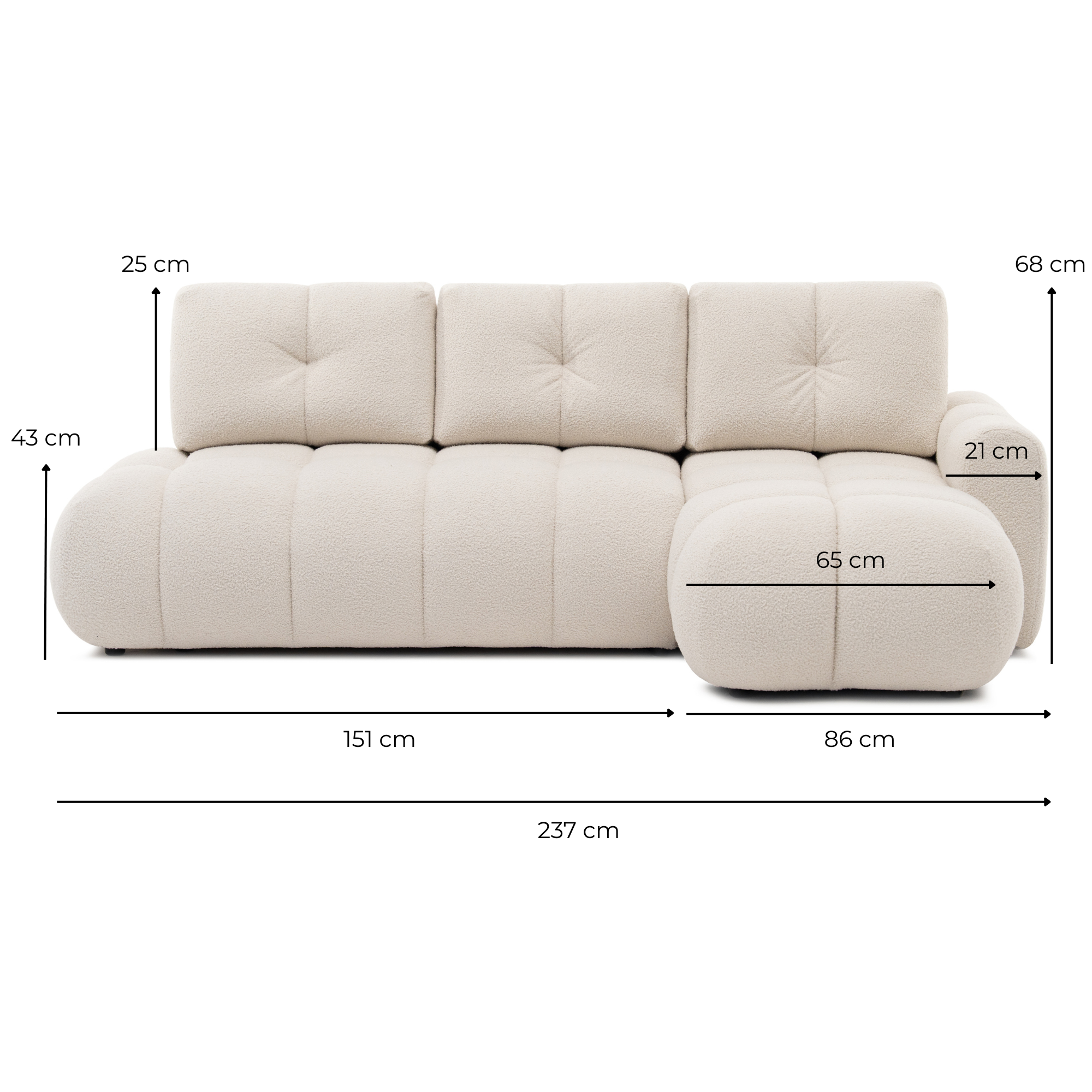
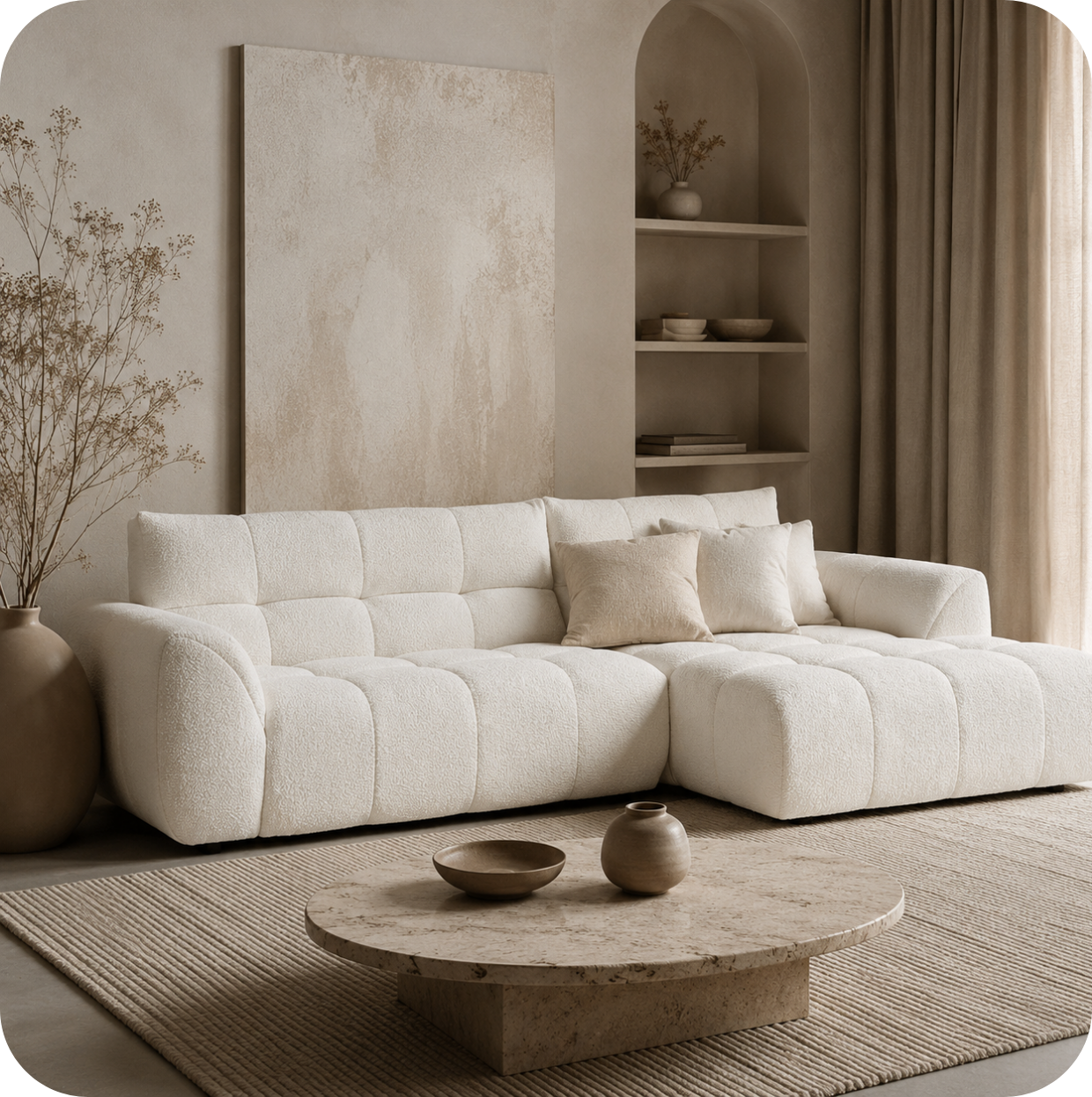
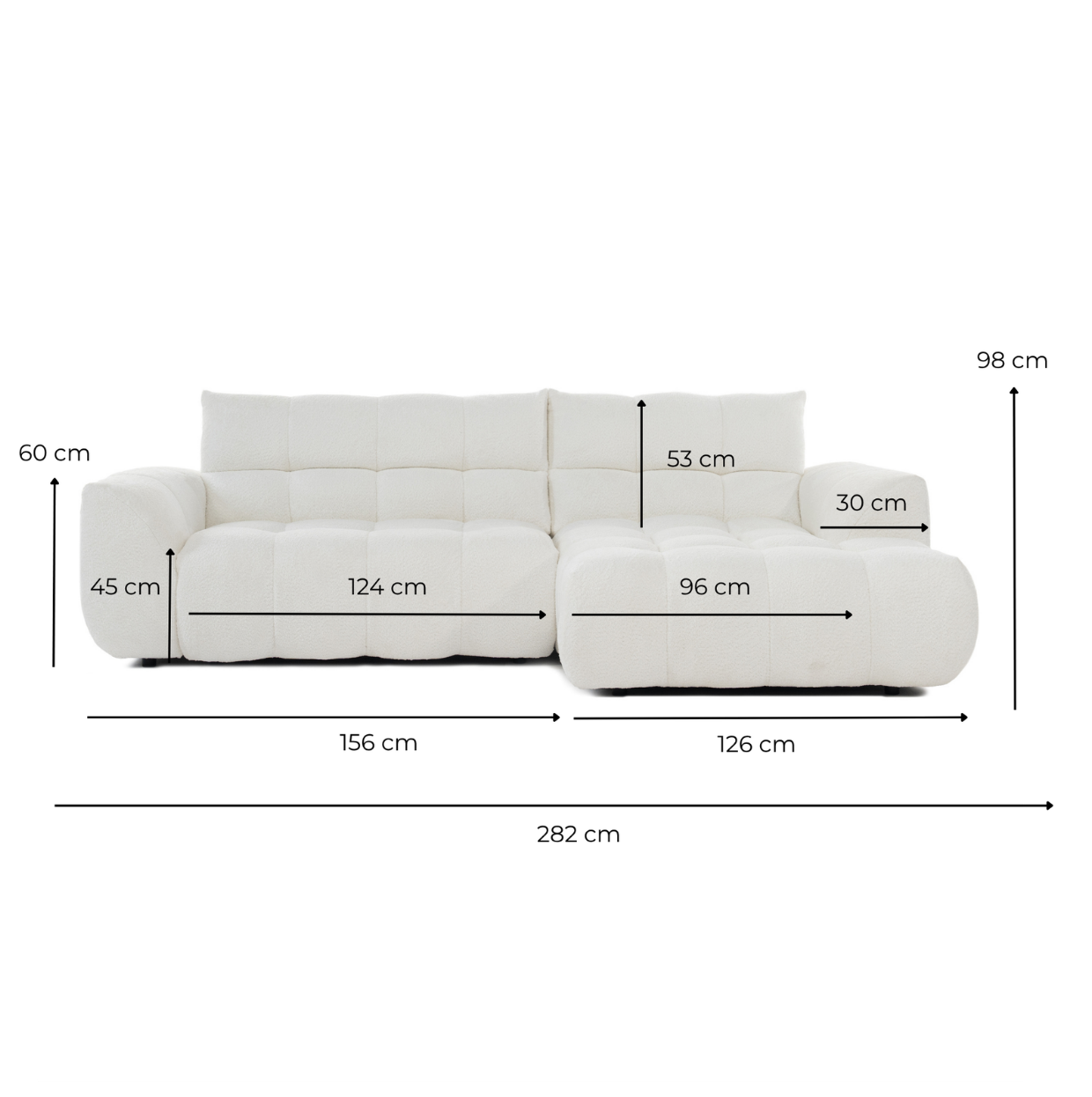
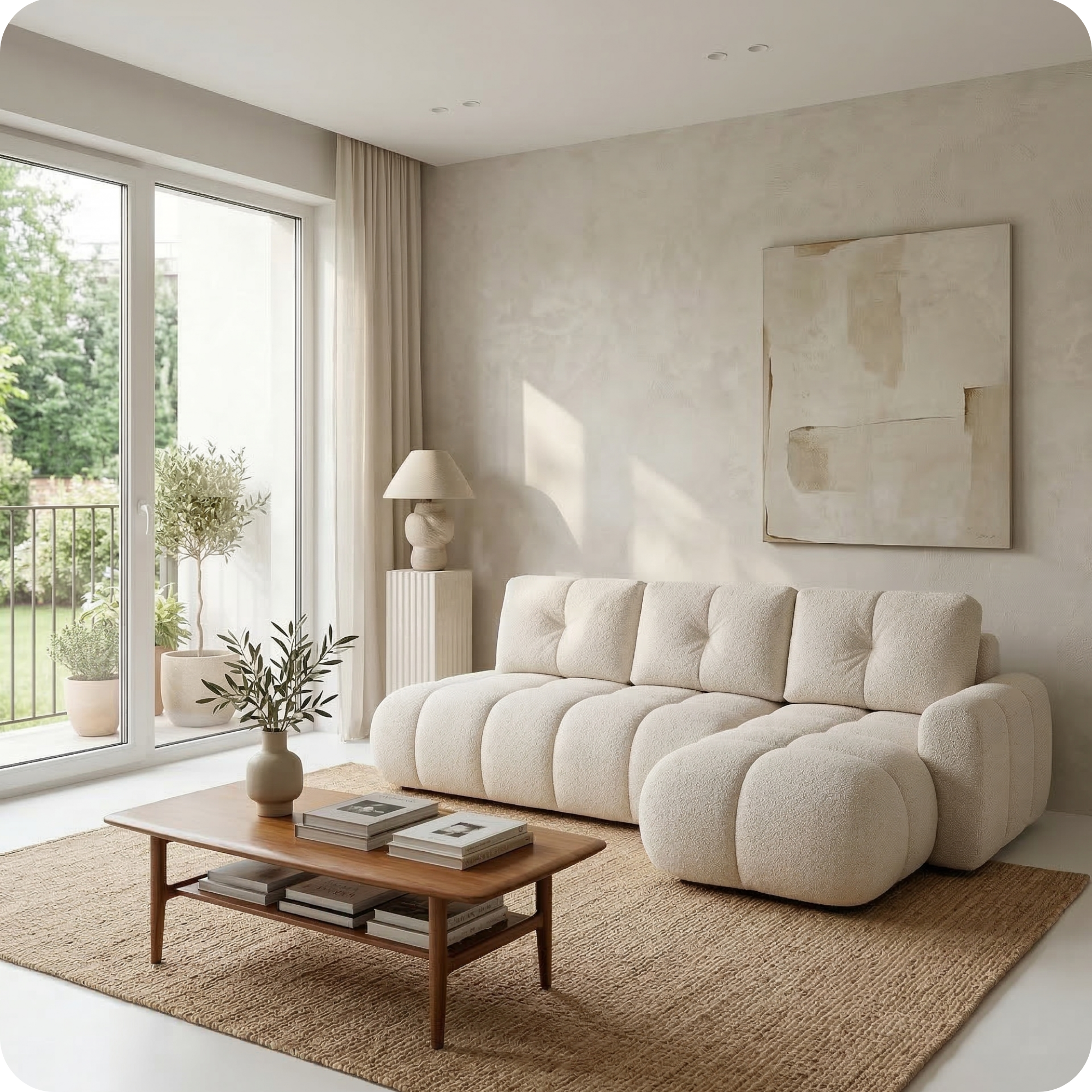
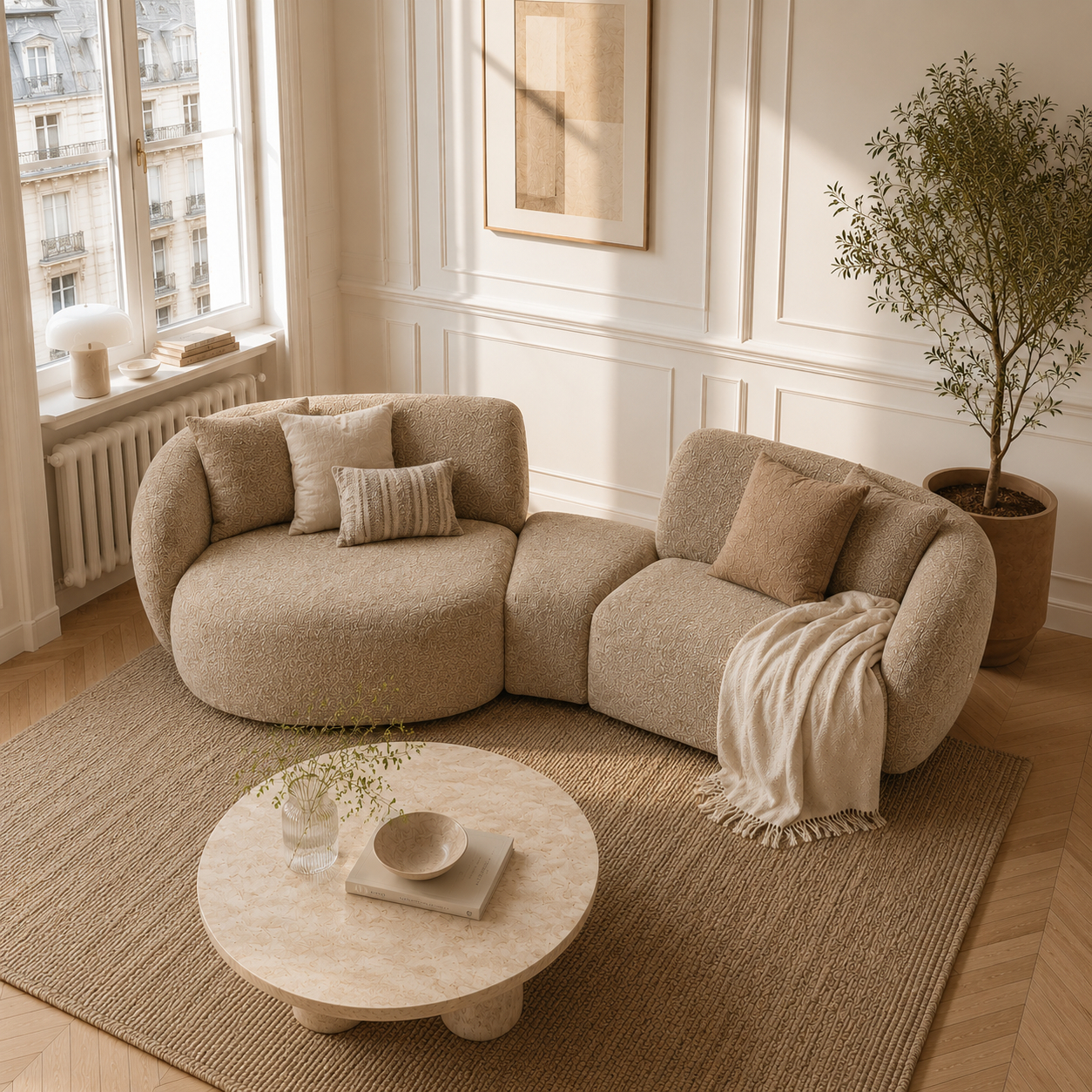
Lugano Sofa — Sand — from €1,299
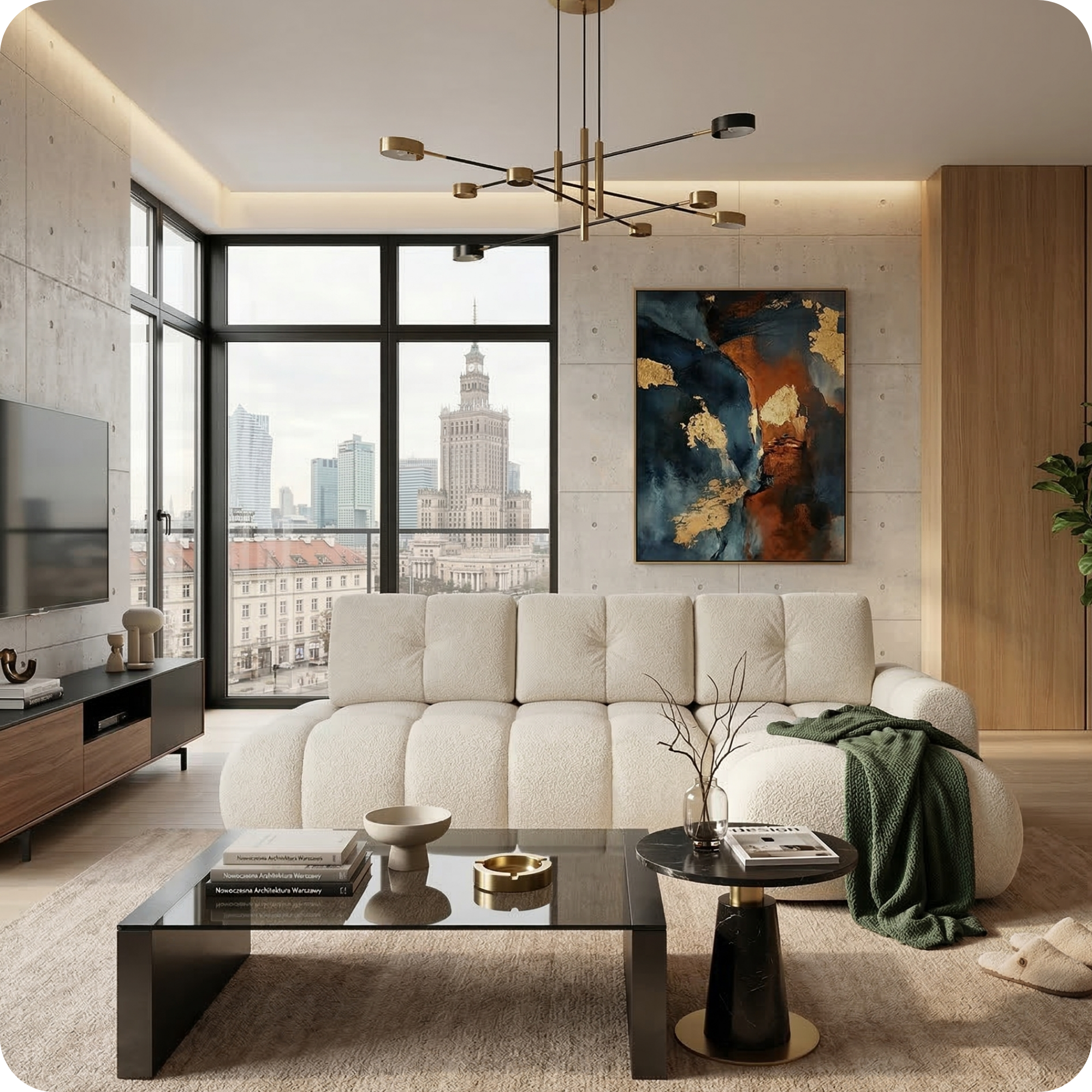
The Lugano's clean-lined profile and warm sand upholstery sit comfortably within the mid-century modern aesthetic. Its uncluttered design, generous proportions, and warm neutral colour allow it to anchor a mid-century room without requiring period-specific design elements to make it work.

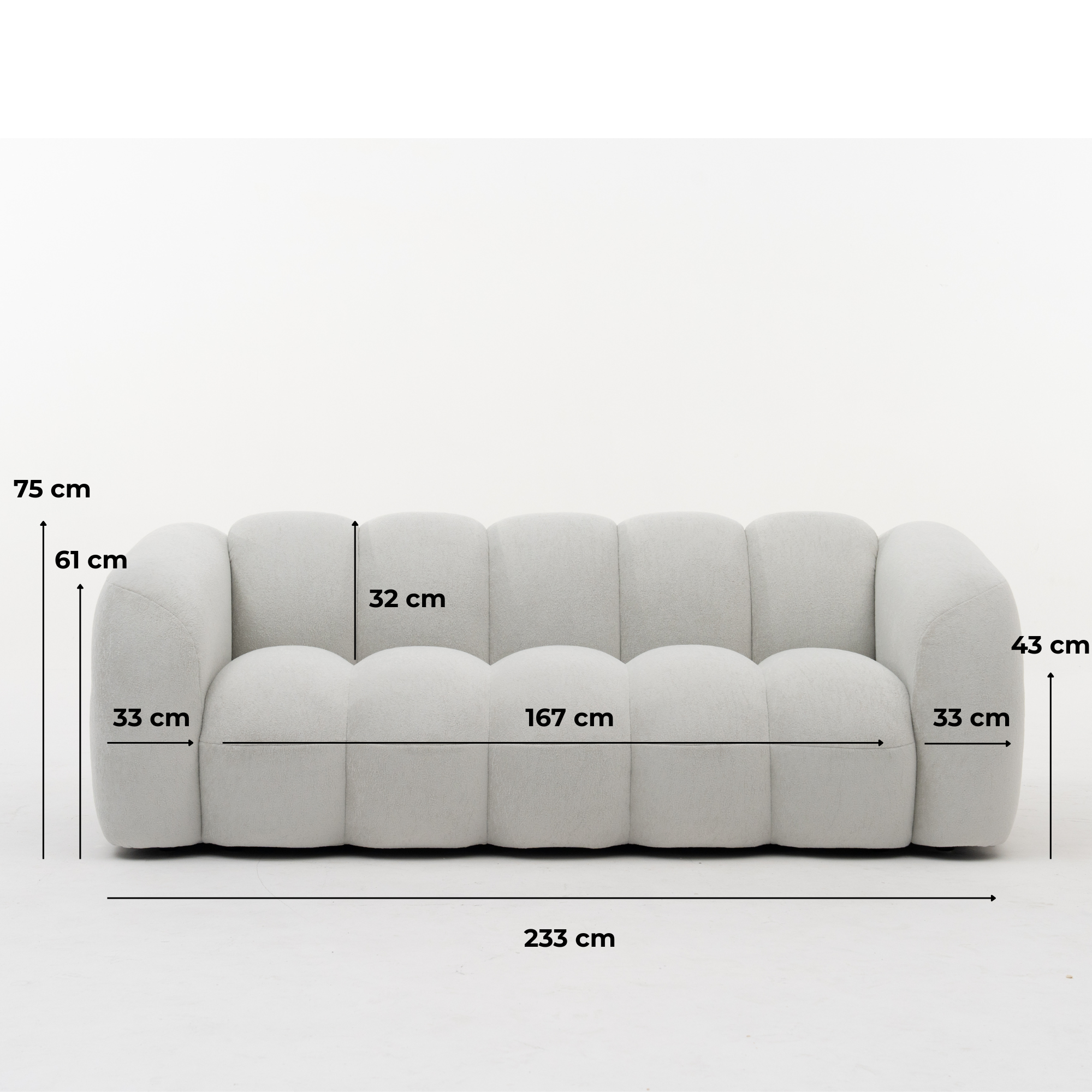
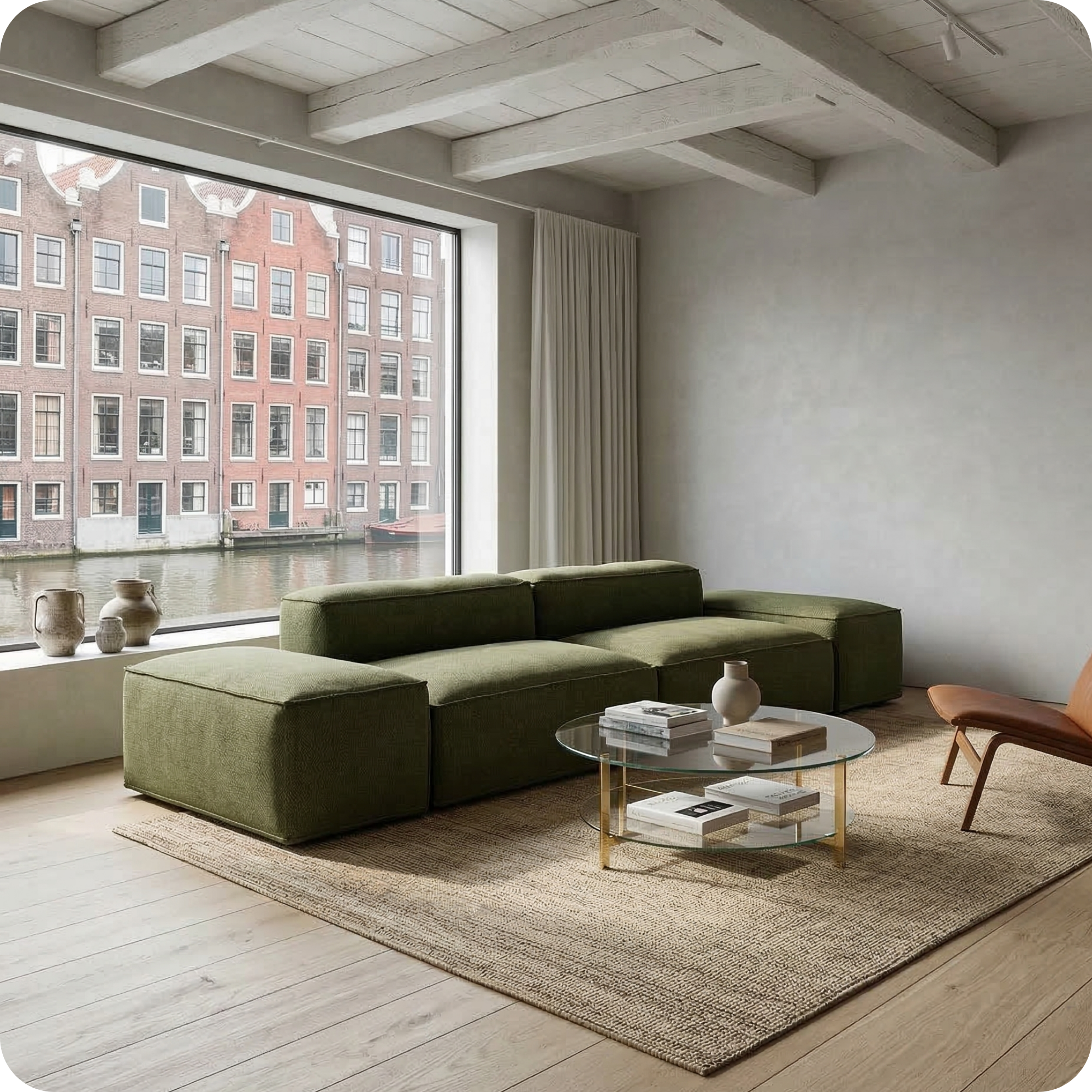
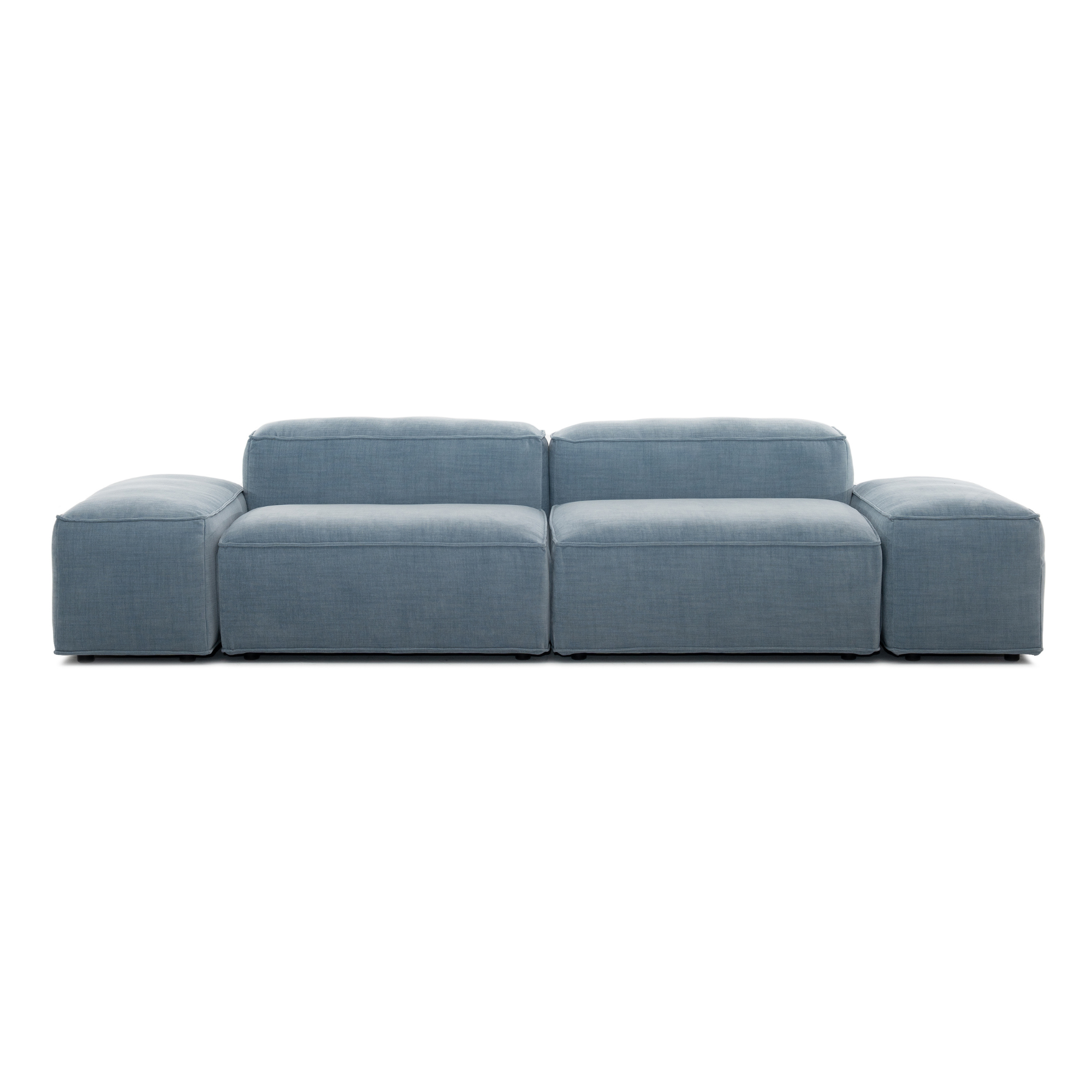
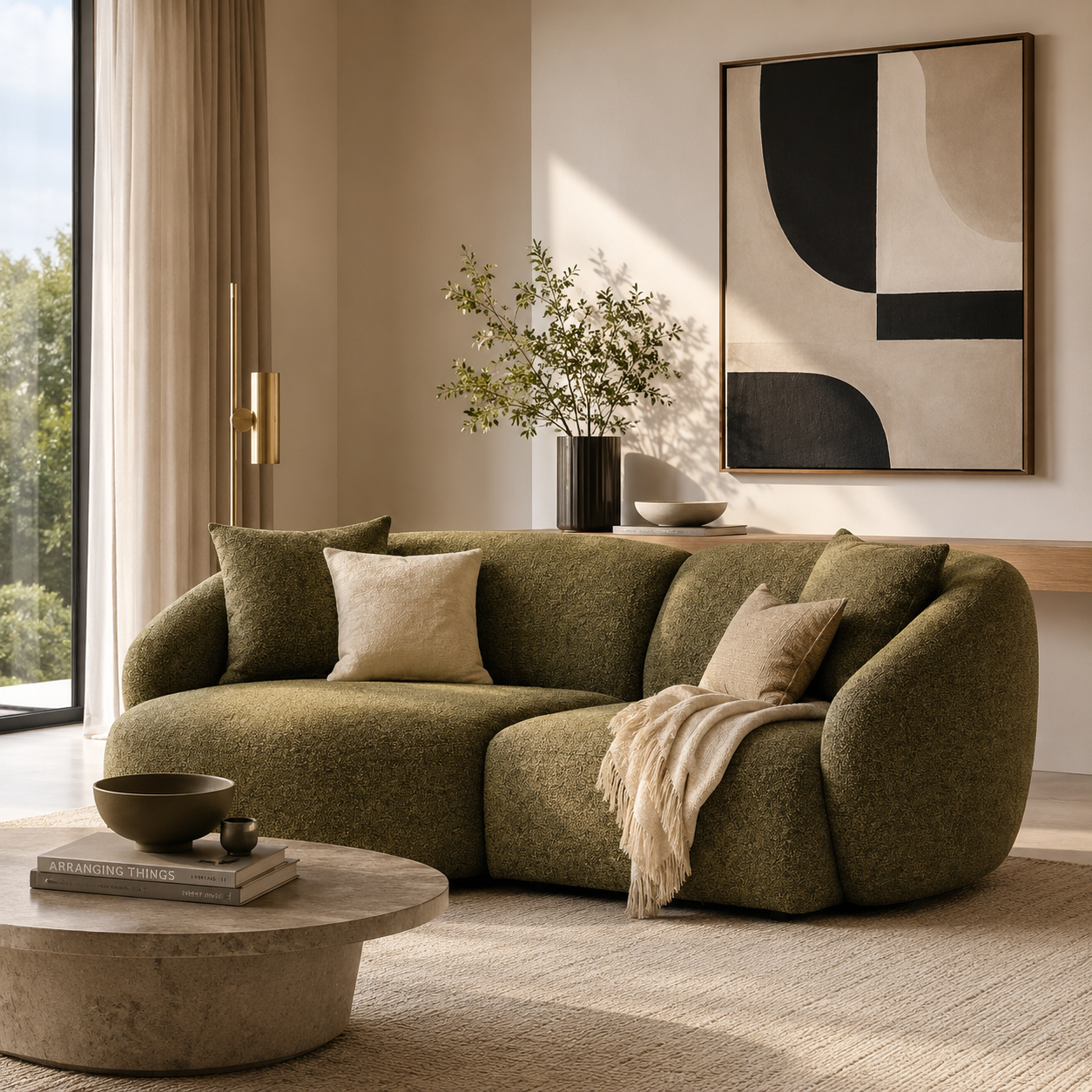
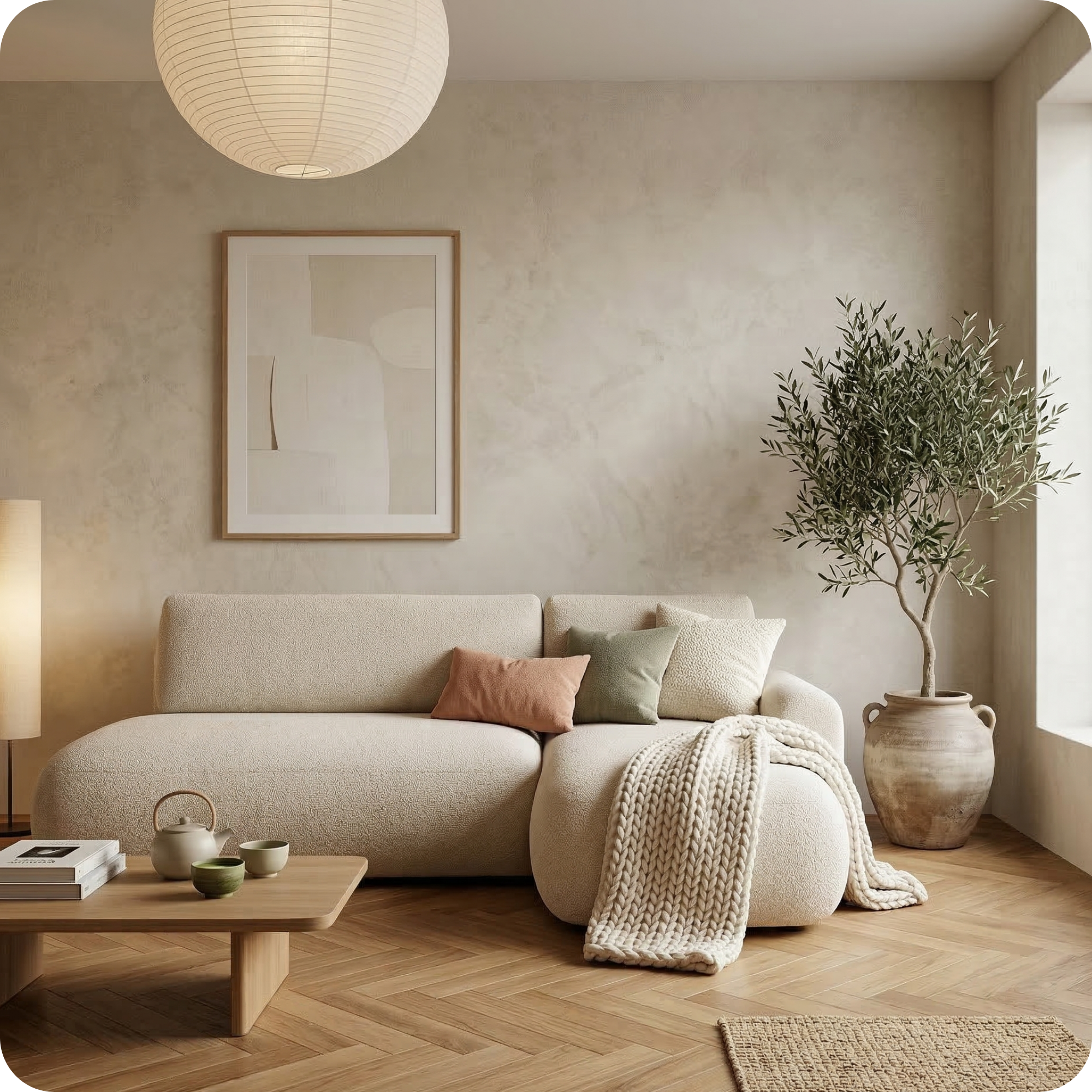
Lugano Sofa — Khaki — from €1,299
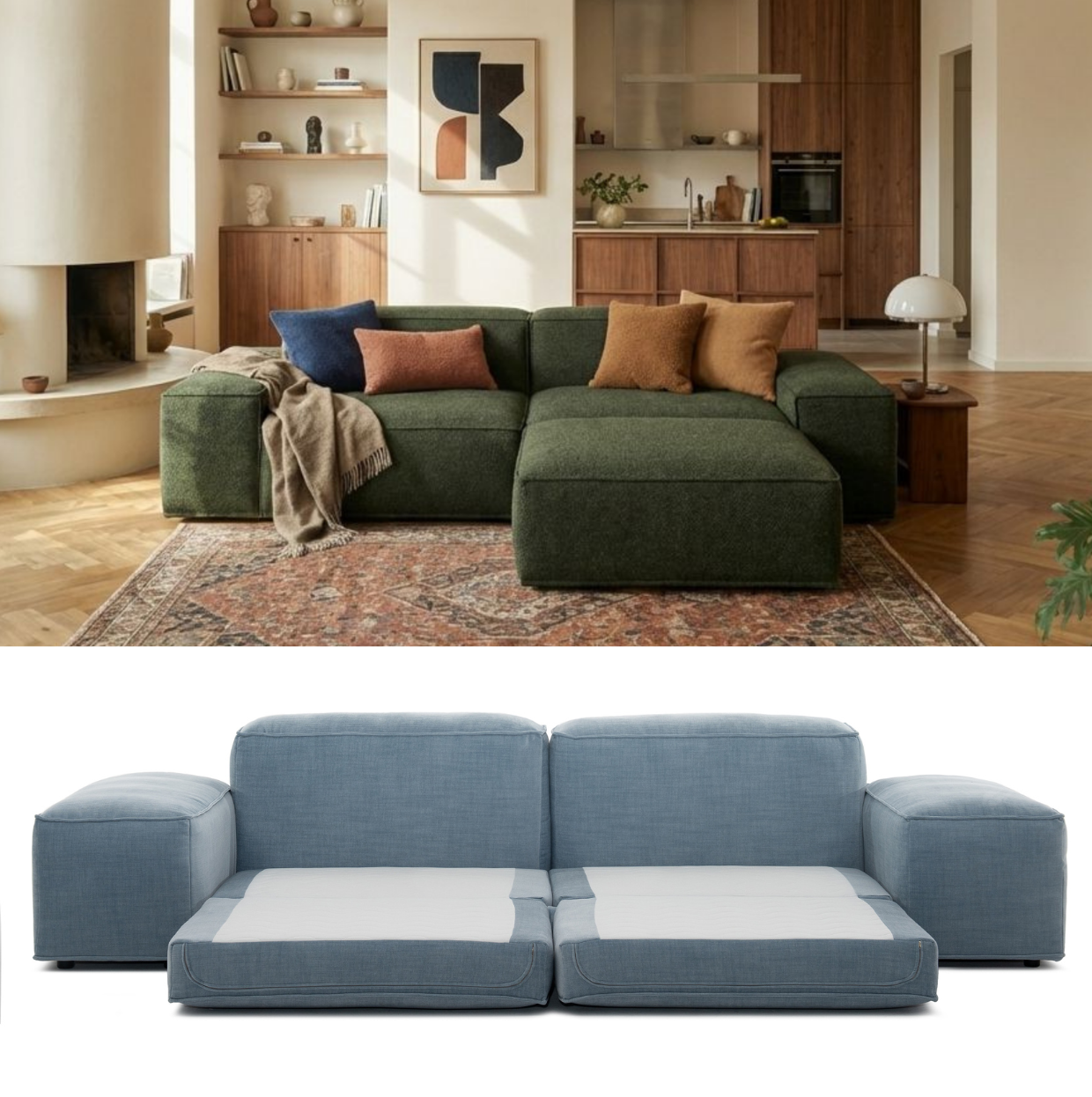
Khaki — that warm, olive-adjacent tone — is particularly evocative of the mid-century modern palette. The Lugano in khaki paired with walnut or dark oak furniture, mustard cushions, and a graphic geometric rug creates an authentically mid-century mood.
The Mid-Century Modern Colour Palette
The characteristic mid-century modern colour palette is warm, earthy, and slightly muted. Key colours: mustard yellow — one of the most strongly associated mid-century accent colours; warm white and cream — for walls and ceilings; warm brown and walnut — from furniture and wood accents; olive and forest green — a characteristic earthy mid-century green; burnt orange and terracotta — warm accent colours that appear in cushions, ceramics, and artwork; warm grey — for upholstery and rugs. The palette avoids cool blues, purples, and bright contemporary accent colours — these will immediately read as non-mid-century.
Key Furniture Pieces for a Mid-Century Modern Living Room
Sofa: low-profile, clean-lined with simple upholstery in wool, boucle, leather, or cotton. Avoid sofas with very deep seats, excessive cushions, or heavy bases. Coffee table: oval, round, or rectangular with tapered legs in walnut or teak; marble with gold or brass legs is also appropriate. Armchair: the Eames lounge chair or similar iconic designs are perfect; alternatively any armchair with a clean, organic silhouette and tapered legs. Sideboard or credenza: a long, low sideboard on tapered legs is one of the most characteristic mid-century modern storage pieces. Floor lamp: an arc lamp or tripod floor lamp in brass or copper is period-appropriate and functional. Rug: a geometric or abstract flat-weave rug in warm neutrals and earth tones.