



Modular sofa prices vary enormously - from EUR 600 for an entry-level model to EUR 6,000 for premium Italian leather. But price doesn't always tell you what you think it does. Here is how to really judge value for money.
Why modular sofas cost more than fixed sofas
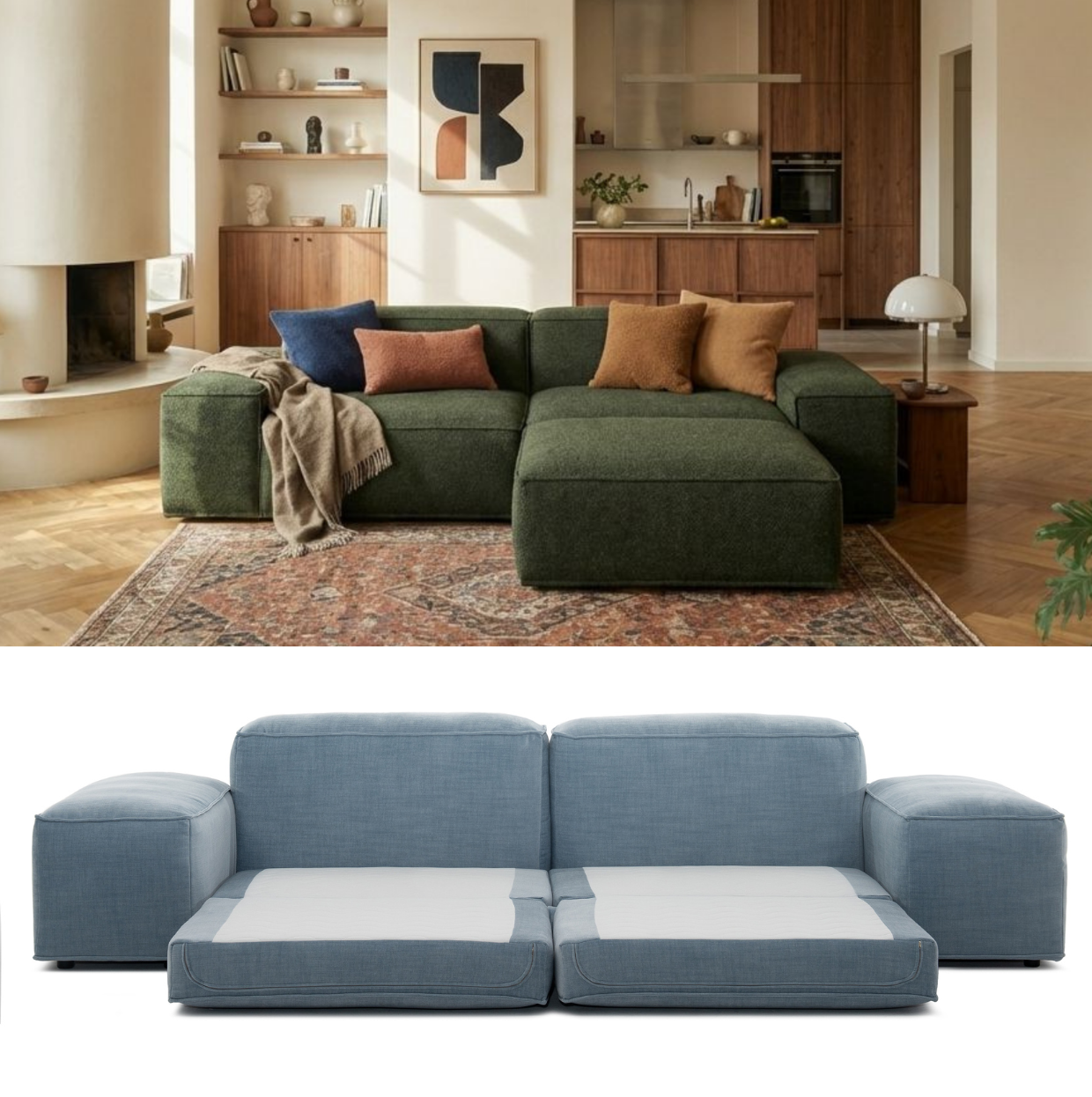
A modular sofa has more connecting elements, more precise manufacturing for each module and more variation in configuration. All of this translates into higher production costs. But it also means a longer lifespan and greater reusability - you replace a module, not the whole sofa.
Price brackets: what you actually get
Under EUR 1,000: an MDF frame and cheap foam (18-22 kg/m3) that sags after 2-3 years, with a fabric of low Martindale rating. You are buying for 4-5 years. EUR 1,000-2,500: mixed quality. Some brands in this segment deliver more solid products. Always ask about foam density and frame material. EUR 2,500-5,000: a solid hardwood frame, HR35 or HR40 foam, Martindale 40,000+. A sofa that lasts 15-20 years. Furni sits in this segment - buying direct from the factory cuts out the retail margin, so you get more quality for your money than with comparable high-street brands.
Buying direct from the factory: what it means for the price
Retail prices include the middleman's margin - typically 40-60% on top of the manufacturer's price. At Furni, you order directly from our factory in Poland. A sofa that costs EUR 4,500 in a Belgian or Dutch furniture shop costs EUR 2,500-3,000 from a comparable direct manufacturer. This is no guarantee of quality in itself, but it explains why direct-selling Polish manufacturers are growing so fast in Belgium and the Netherlands.
Always ask for samples before you decide
Colours on screen are unreliable. Always order free fabric samples before you place your order. It is the simplest way to avoid an expensive mistake.
Request a free sample set
Free delivery to Belgium and the Netherlands - 30-day returns - 5-year warranty - Made in Poland