


Open Plan Living: How to Zone and Arrange Your Open Plan Space
Open plan living has become the default layout for modern homes — combining kitchen, dining, and living areas into a single flowing space that feels larger, lighter, and more connected. But the very openness that makes these spaces appealing also creates a distinct design challenge: without walls to define separate areas, an open plan room can feel formless, noisy, and difficult to arrange. The solution is zoning — using furniture, rugs, lighting, and other elements to create distinct areas within the single space, each with its own purpose and identity. This guide explains how to zone an open plan living space effectively.
The Sofa as the Primary Zoning Tool
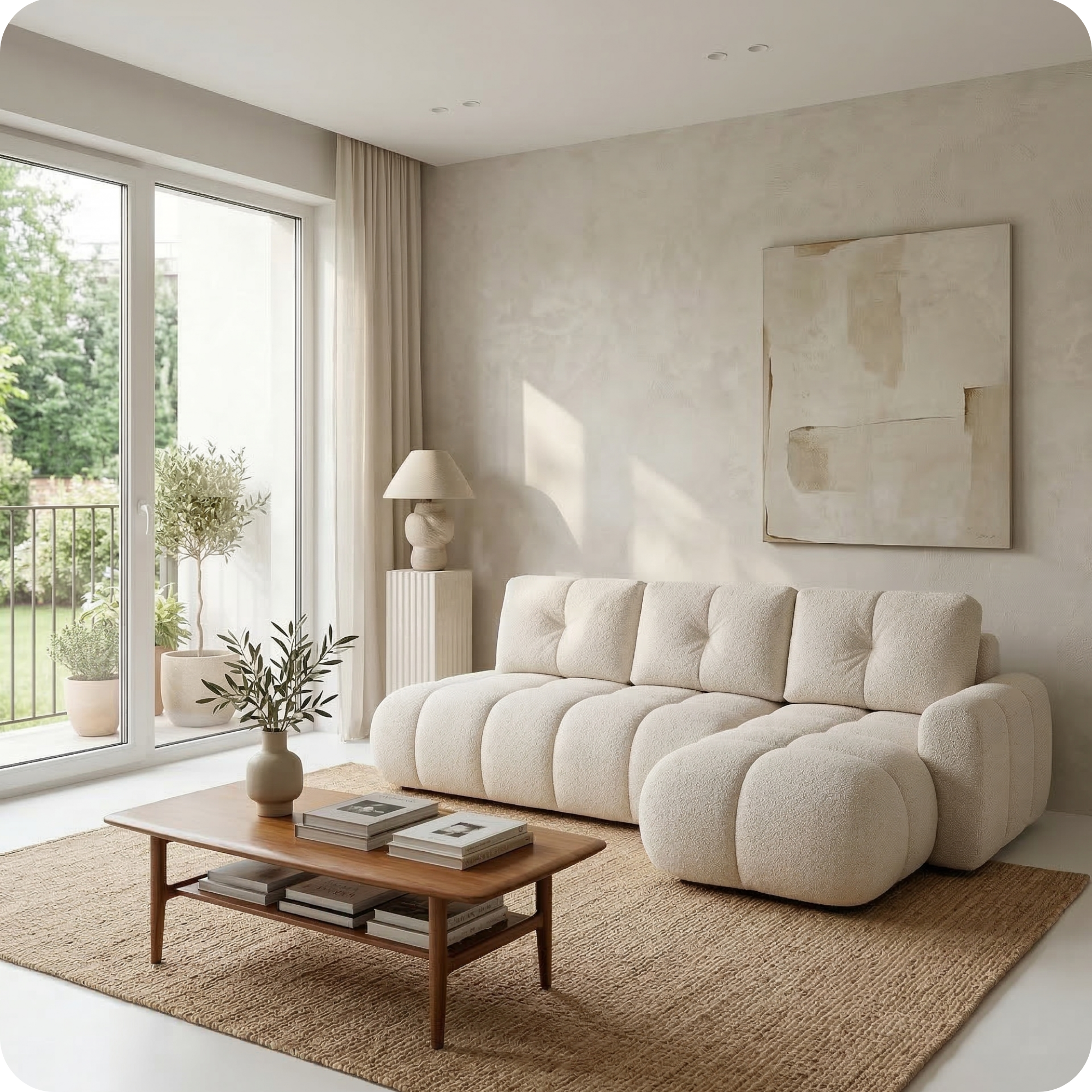
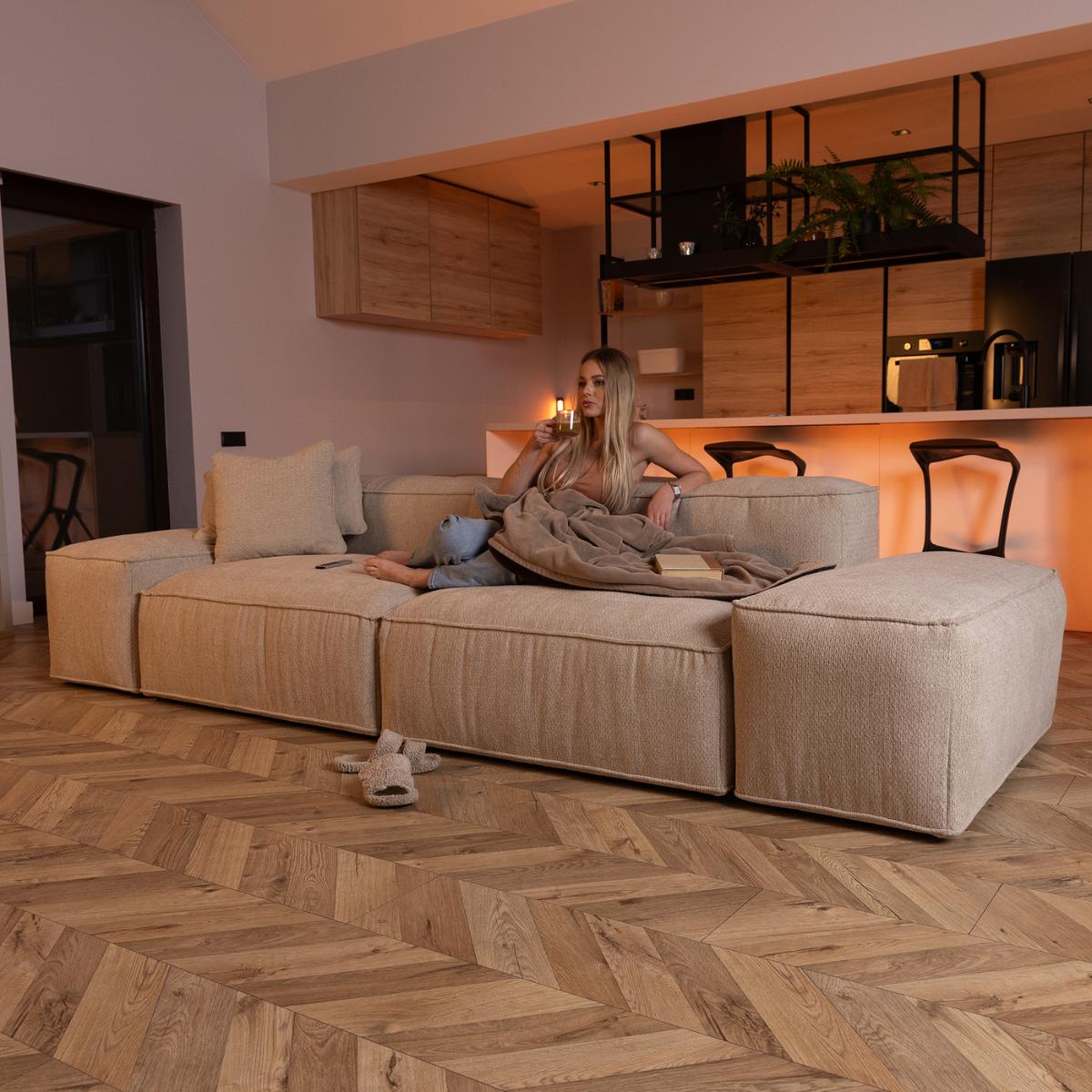
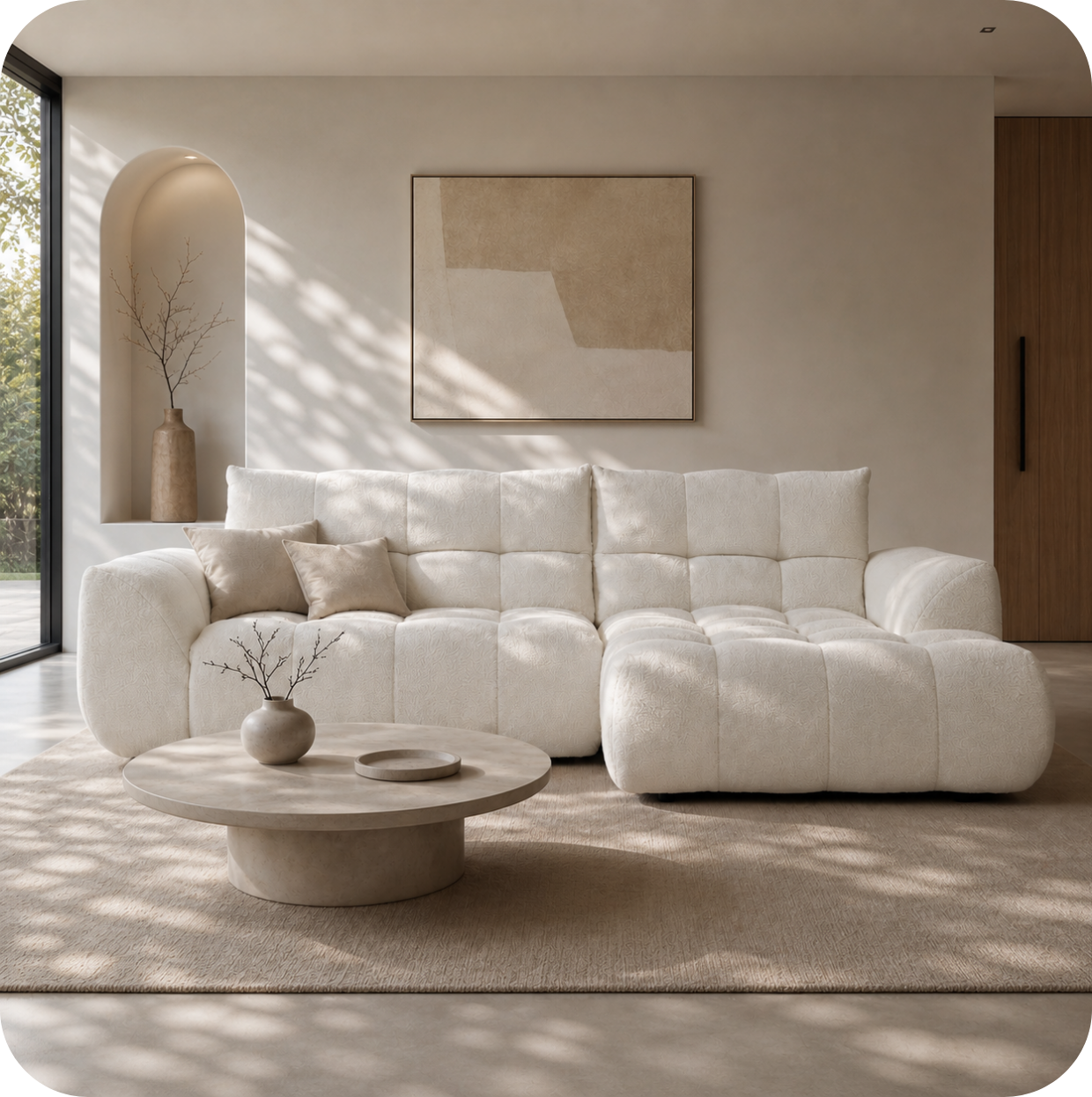
In an open plan space, the sofa is the most powerful zoning tool available. Unlike every other piece of furniture, the sofa has a clear directional quality — it faces one way — and this orientation establishes where the living zone begins and ends. Positioning the back of the sofa towards the kitchen or dining area immediately creates a visual barrier that defines the living zone without requiring any physical division. A corner sofa is particularly effective for open plan zoning: its L-shape allows it to anchor two sides of the living zone simultaneously, creating a clearly defined seating area that feels self-contained even in the middle of a large open space.

Merlot Corner Sofa — from EUR 1,490
The Merlot corner sofa is an ideal open plan living zone solution. Its L-shaped configuration anchors the seating area from two sides, creating a defined living zone that reads clearly even in a large open space. Position it with its back to the kitchen/dining area and it immediately establishes the seating zone without requiring any walls or screens.

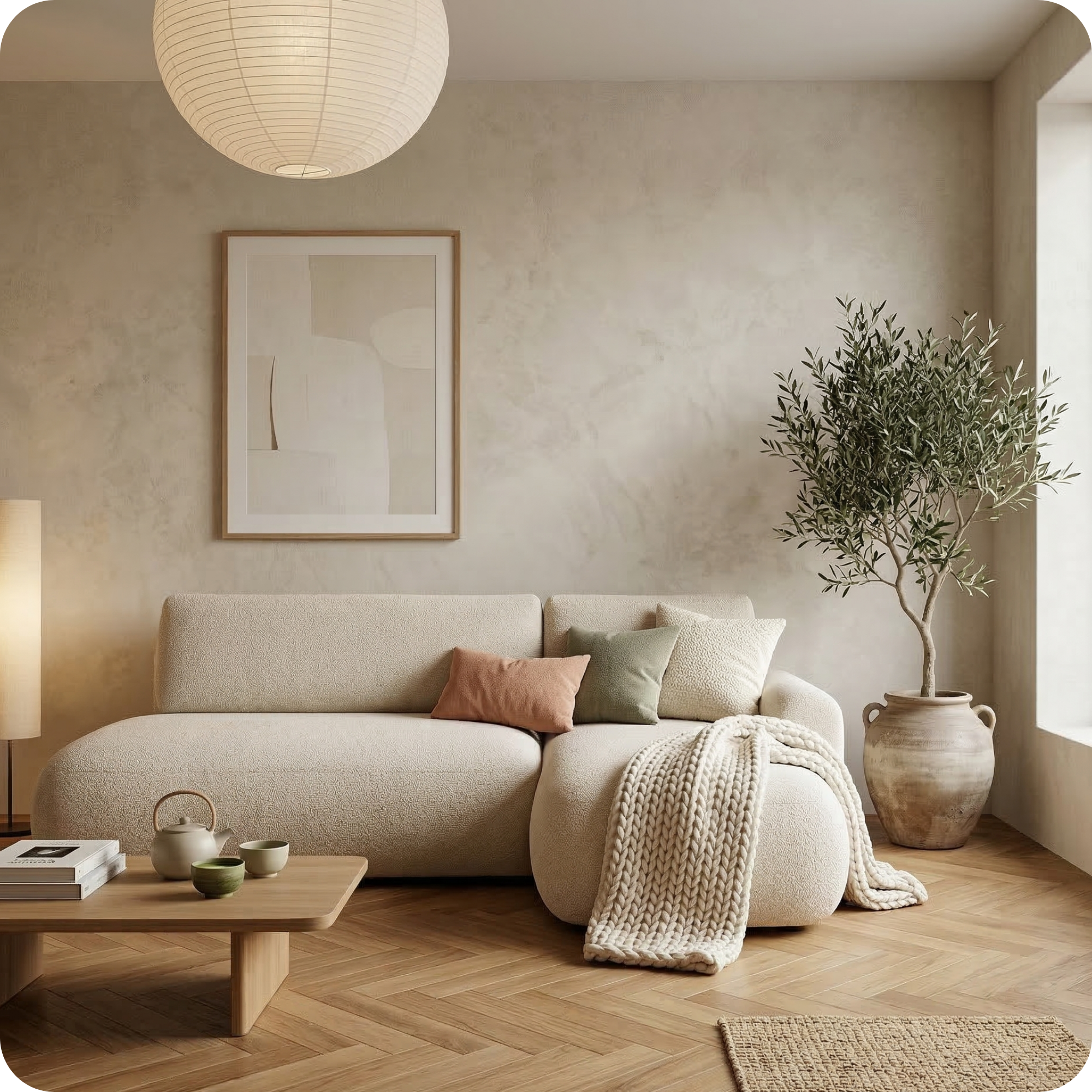
Asti Corner Sofa — from EUR 1,390
The Asti provides excellent open plan zoning in a slightly more compact footprint than some corner sofas — ideal for open plan spaces where the living zone needs to be clearly defined without taking over too large a proportion of the total floor area.
Using Rugs to Define Zones
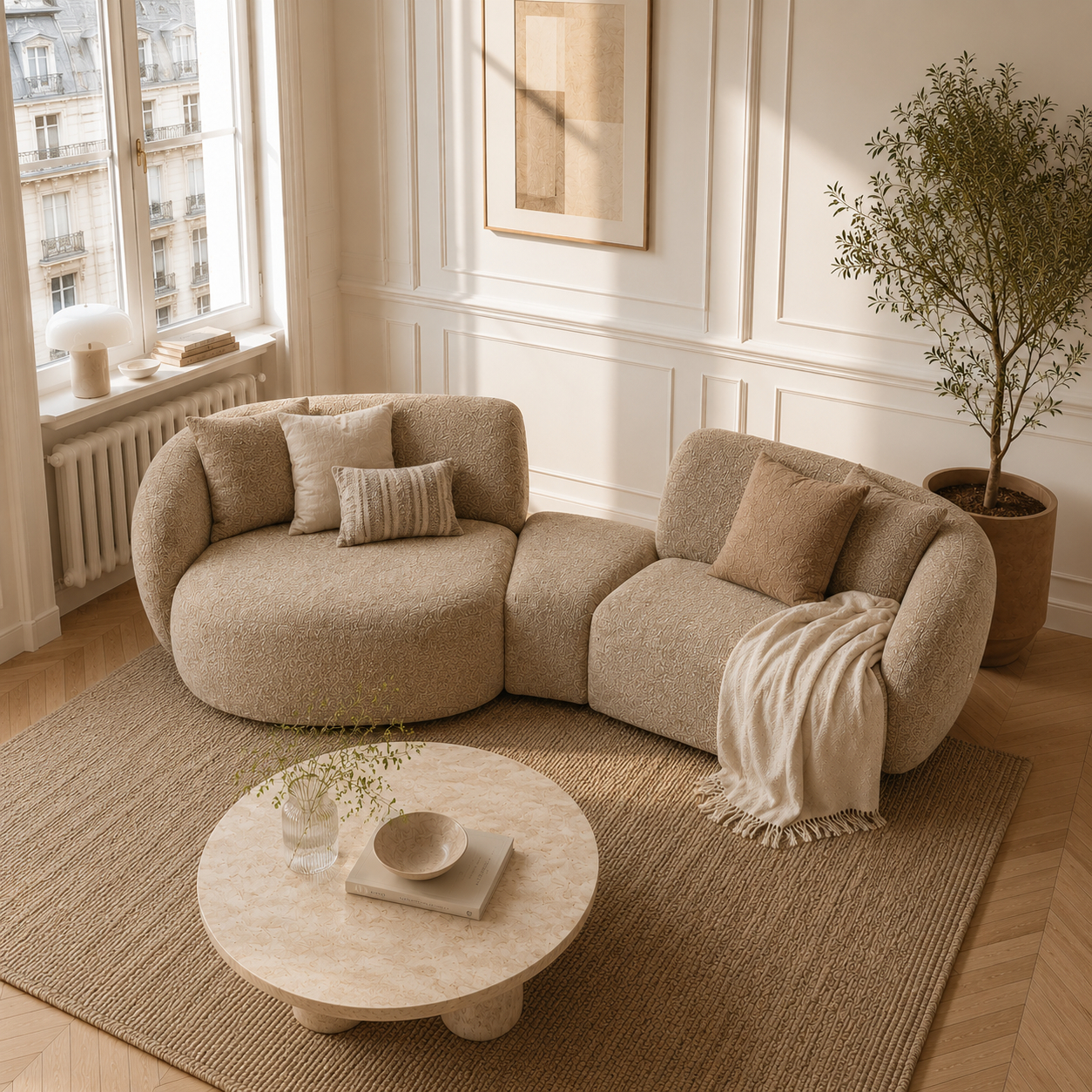
After the sofa, the area rug is the most important zoning tool in an open plan space. A large rug beneath the sofa and coffee table instantly establishes the living zone as a defined floor area — even in a room with identical flooring throughout, the rug signals that this portion of the floor belongs to the seating area. For effective open plan zoning, the rug should be large enough for at least the front legs of all seating to sit on it — this visually links the seating group to the rug and reinforces the zone. A rug that is too small (with no furniture legs on it, or only the coffee table) will appear to float disconnectedly in the space.
Lighting as a Zoning Tool
Lighting zones can be as effective as physical zones in open plan spaces. A pendant light positioned over the dining table creates a distinct dining zone; a floor lamp beside the sofa creates a reading zone; a pendant or cluster over the coffee table reinforces the living zone. Using different light sources in different areas of an open plan space creates a visual hierarchy that helps the eye understand the zones without any physical separation. Dimmer switches are particularly valuable in open plan spaces — the ability to emphasise one zone over another (bright kitchen for cooking, dimmed living area for evening relaxation) is a powerful tool for managing the mood of a large open space.
The Flow Rule: Keep Circulation Paths Clear
The most important practical principle in open plan furniture arrangement is to maintain clear circulation paths between zones. A minimum of 90cm between major furniture pieces allows comfortable movement; 120cm or more is preferred where traffic is frequent. The most common open plan furniture mistake is to push everything to the walls, creating a large empty central space and no distinct zones — this is counter-intuitive but true. Furniture positioned away from walls, grouped together to form zones, creates a better functioning and better looking open plan space than furniture lined up around the perimeter.

Laisser un commentaire
Ce site est protégé par hCaptcha, et la Politique de confidentialité et les Conditions de service de hCaptcha s’appliquent.