


Open Plan Living Room Ideas: How to Zone an Open Space Beautifully
Open plan living — a kitchen, dining area, and sitting room combined in one continuous space — is one of the most desirable home layouts of the last two decades. But it presents specific design challenges that a conventional closed-plan room does not: the most significant is zoning. Without walls to define rooms, you need to use furniture, rugs, lighting, and visual cues to signal where one activity ends and another begins. Done well, an open plan space feels generous, cohesive, and beautifully connected. Done poorly, it feels like one large undifferentiated room with furniture scattered randomly. This guide gives you the tools to do it well.
The Sofa as Zone-Definer
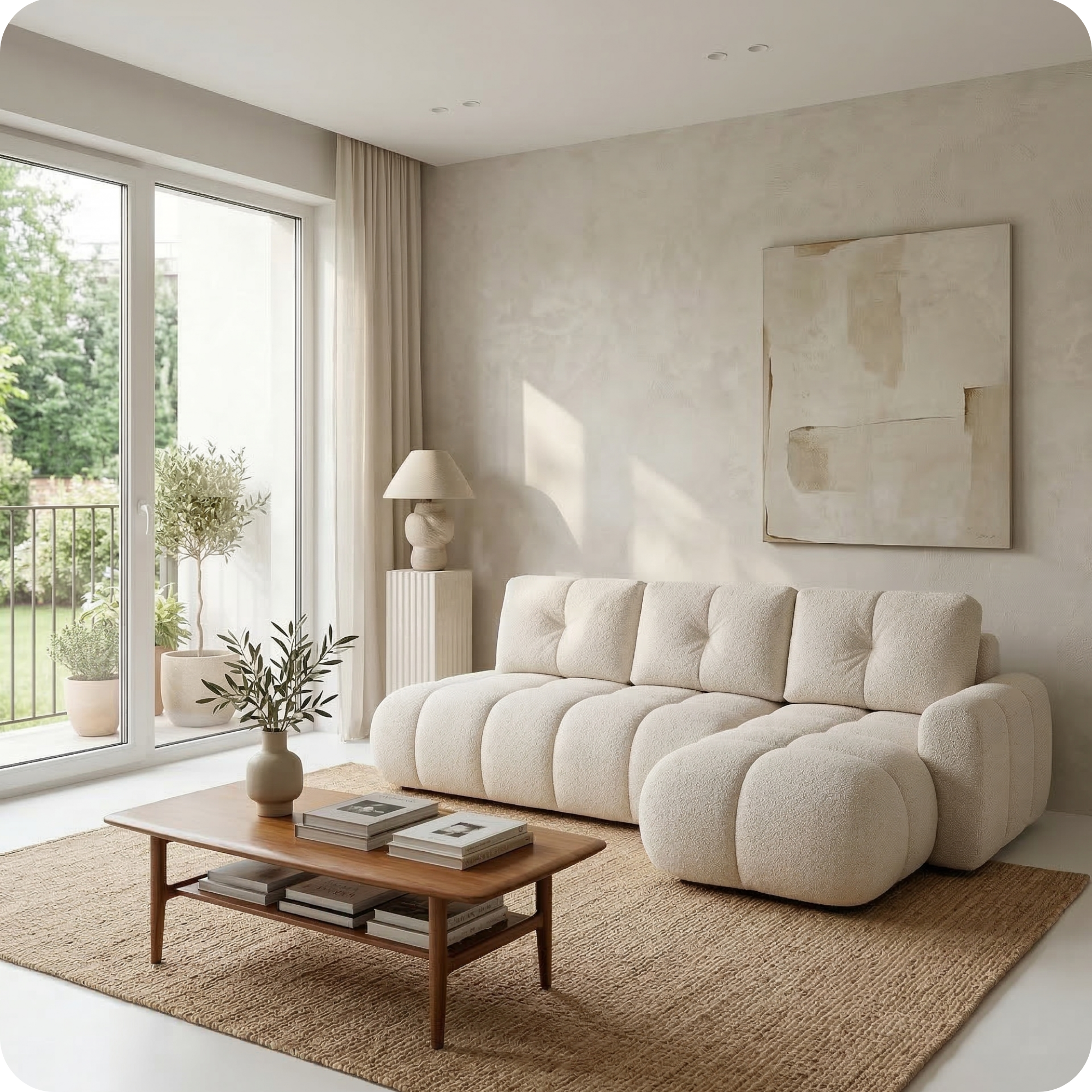
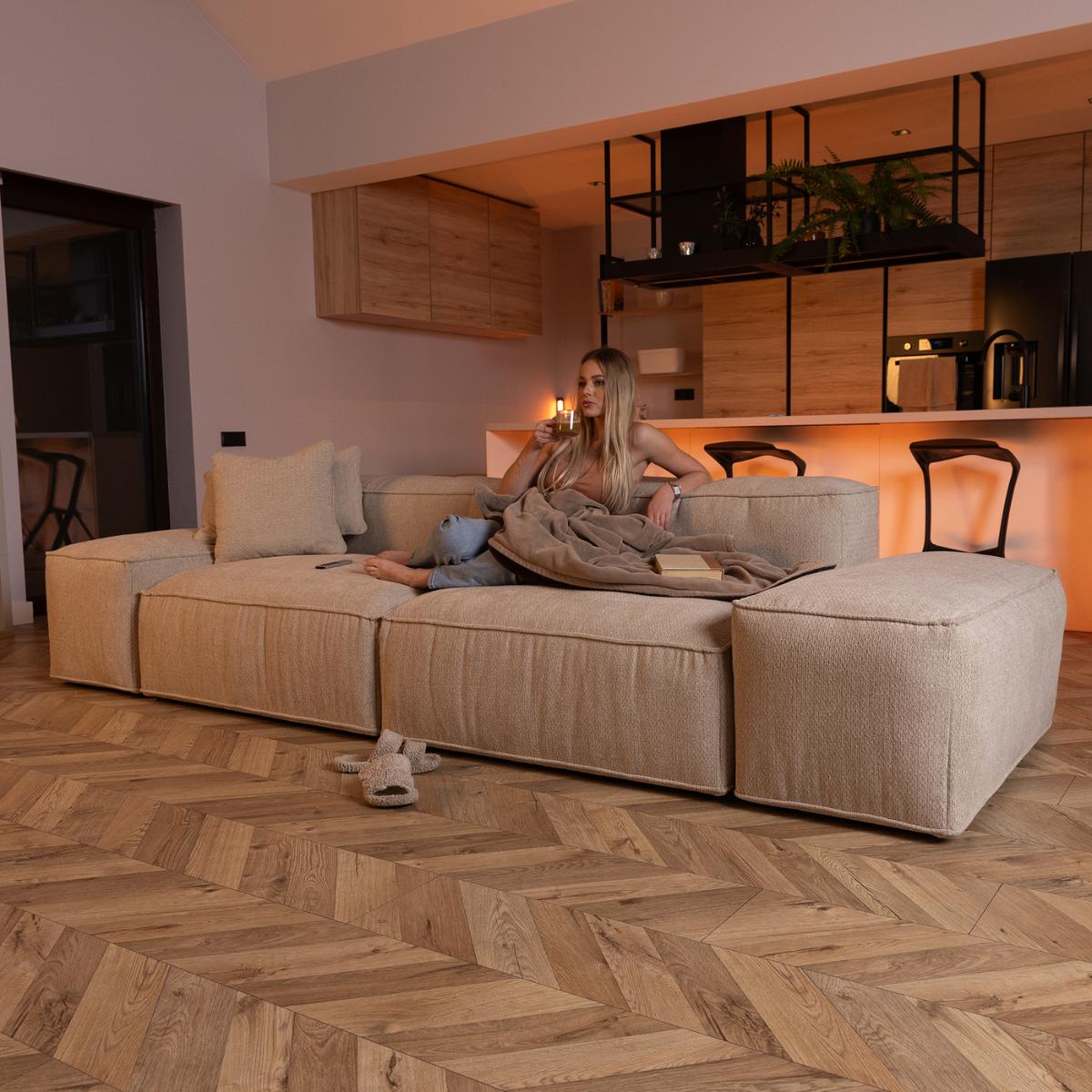
In an open plan layout, the sofa is the most powerful zoning tool you have. Its back creates a visual and psychological boundary between the living area and whatever is behind it (kitchen, dining table, hallway). Placing the sofa with its back to the kitchen or dining area — facing the living zone rather than the room's entrance — immediately defines the sitting area as a distinct space within the larger room. This is more effective than placing the sofa against a wall (as you would in a conventional room), because the back of the sofa becomes the zone boundary. A corner sofa is particularly powerful in an open plan space: its L-shape creates two boundaries simultaneously and makes the living zone feel substantially more enclosed and defined.

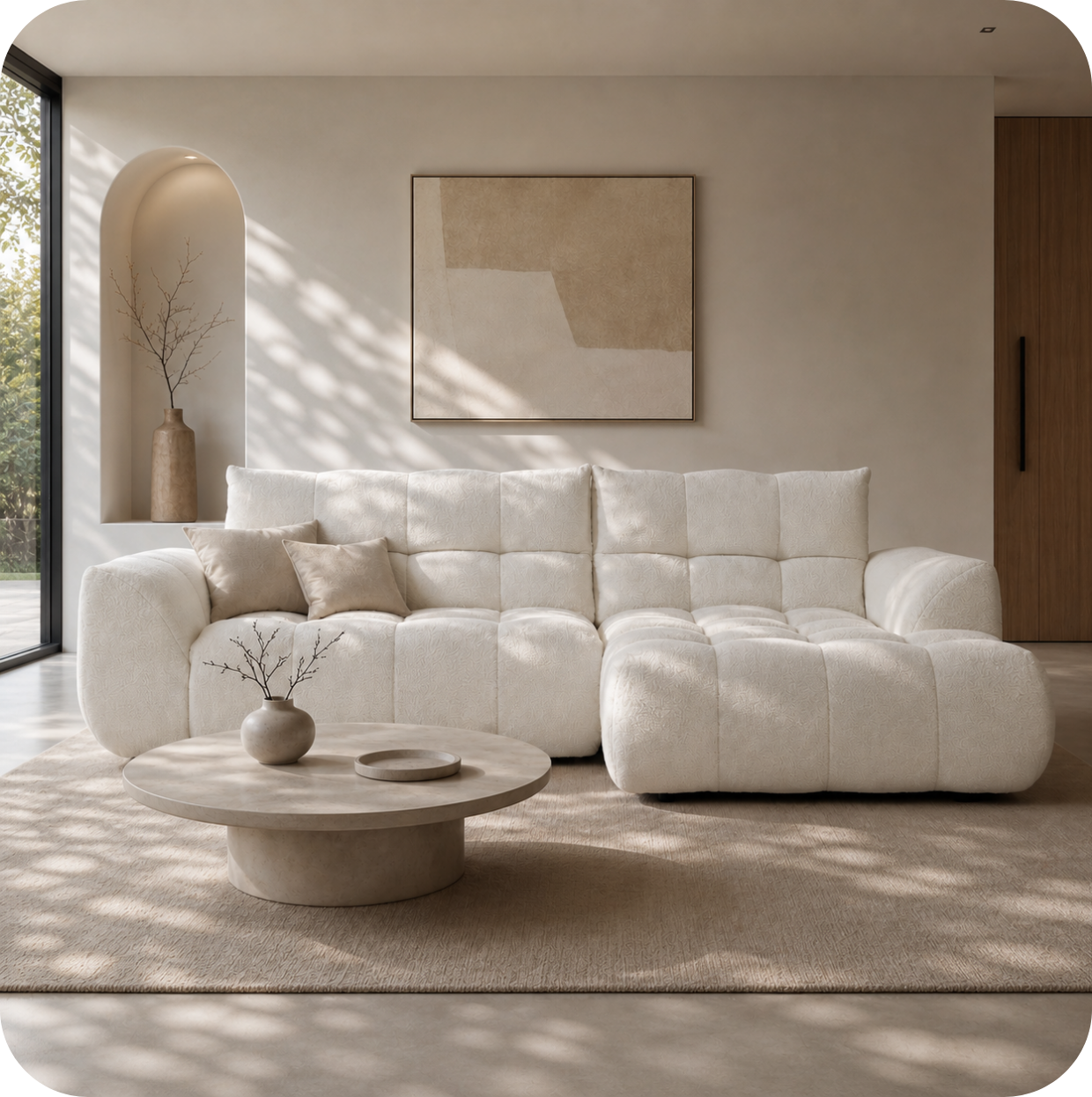
Merlot Modular Corner Sofa — from EUR 1,490
In an open plan space, a corner sofa like the Merlot creates maximum zoning power: the L-shape defines the living area on two sides simultaneously, creating a clear boundary between the seating zone and the rest of the open plan. Position it centrally in the space, back to the dining area, to make the living zone feel definitively its own.

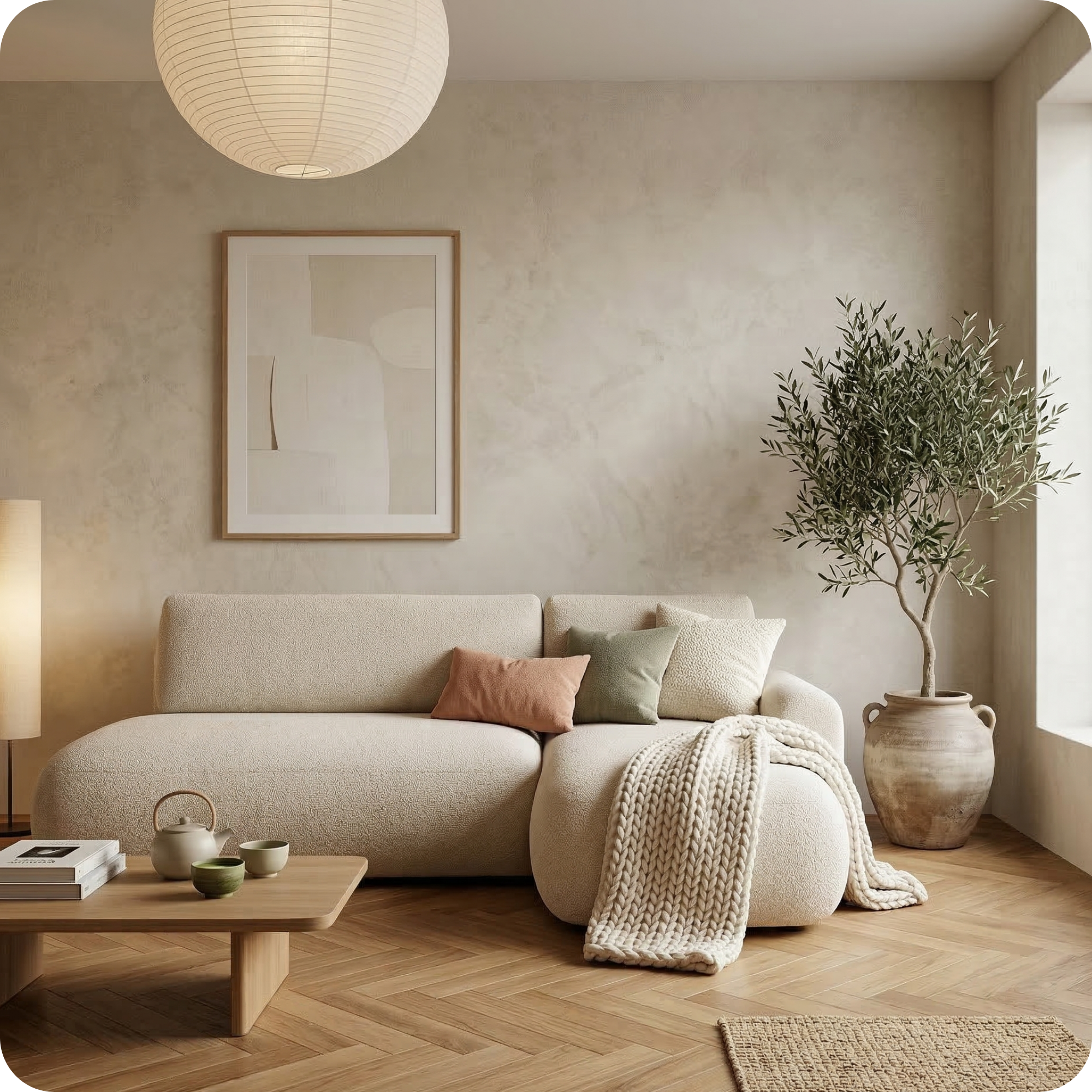
Lugano Sofa — Light Grey — from EUR 890
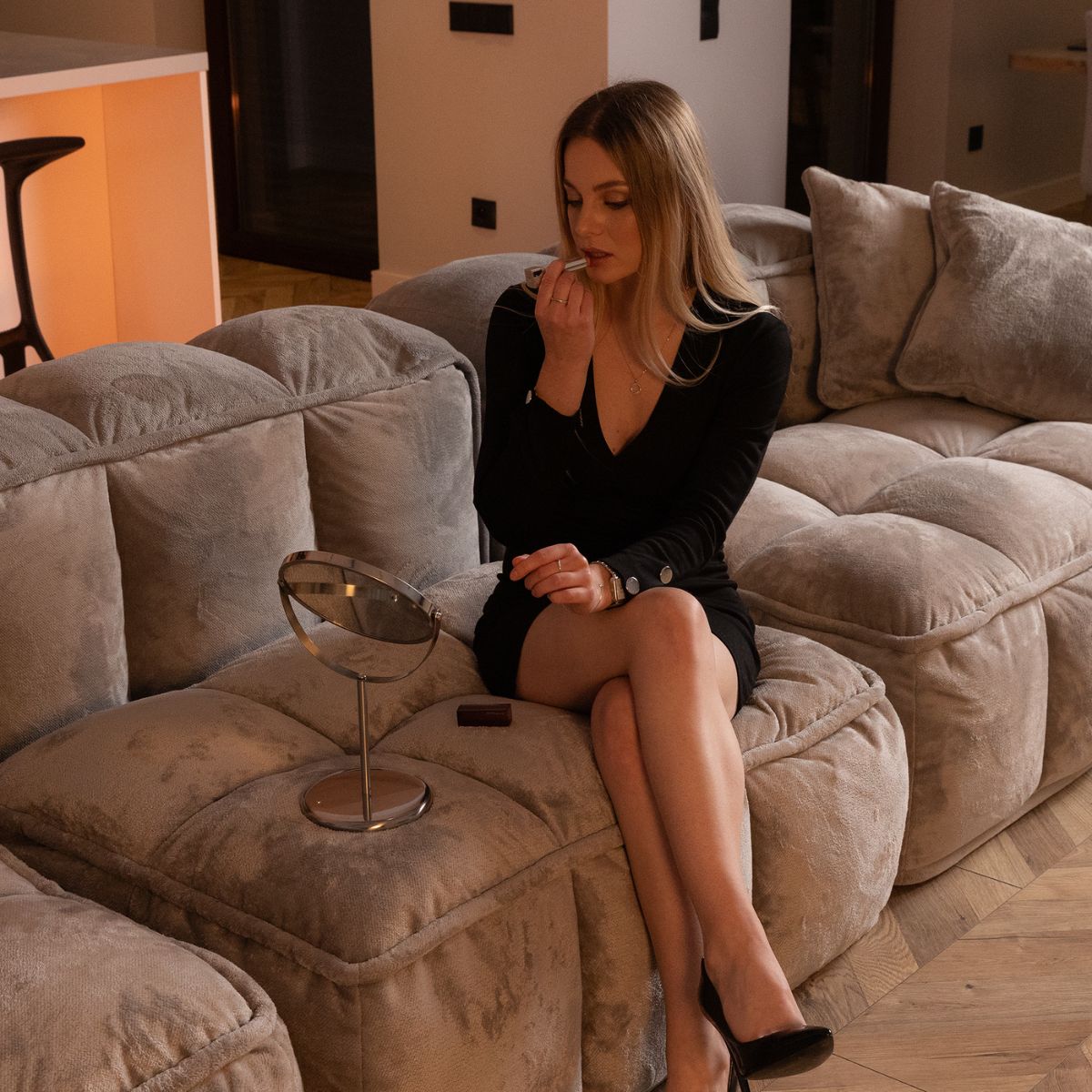
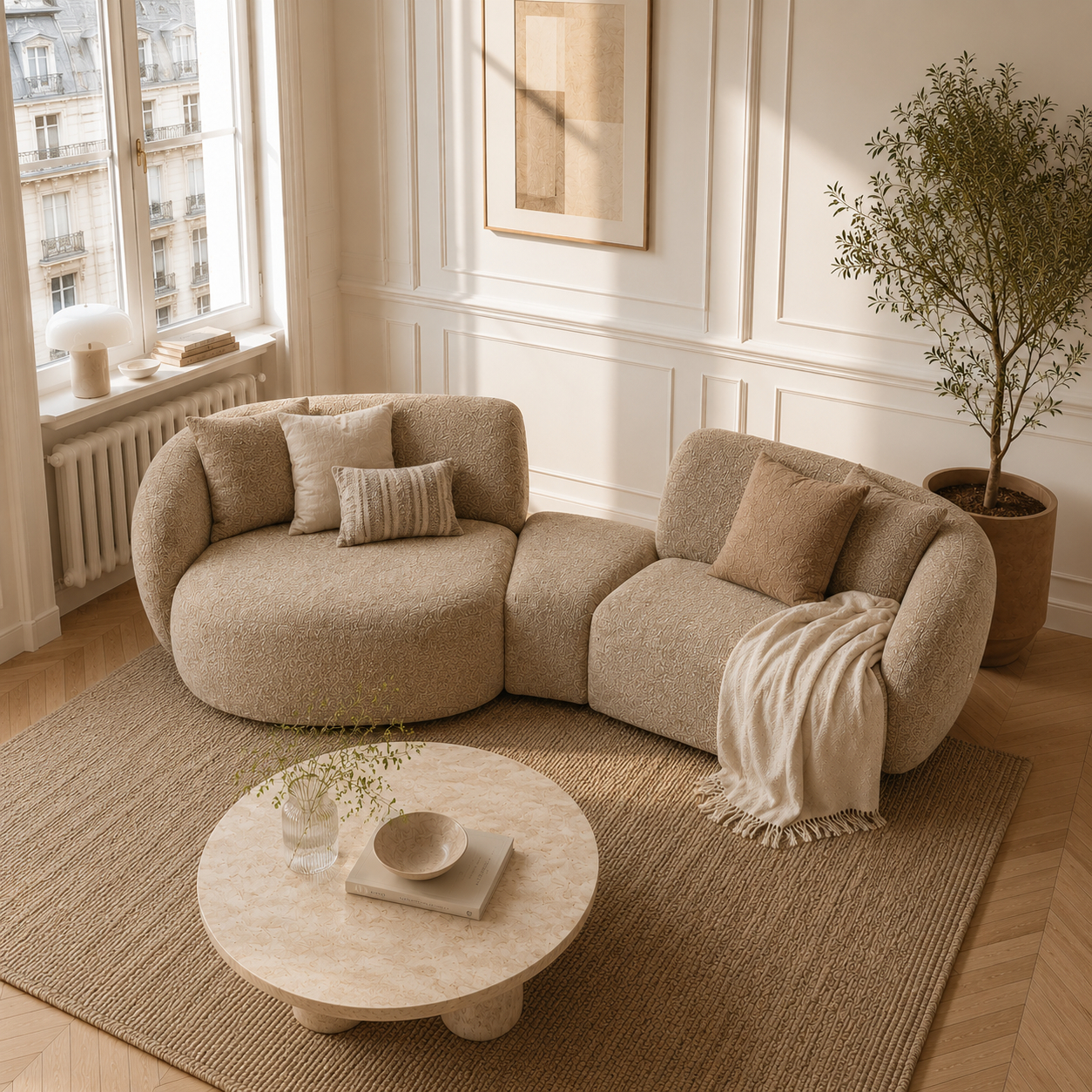
In open plan spaces with lighter, more neutral colour schemes, the Lugano in light grey provides the living zone anchor without competing with the kitchen or dining palette. A large area rug beneath the sofa and coffee table reinforces the zone further, creating a clear visual carpet boundary that defines the sitting area within the larger space.
Rugs: The Invisible Room Divider
After the sofa, a rug is the most powerful zoning tool in an open plan space. A correctly sized rug placed under the sofa and coffee table creates an invisible boundary around the living zone. The rug must be large enough to extend beyond the coffee table on all sides — an undersized rug makes the zone look arbitrary and unconsidered. In an open plan space, err significantly on the side of a larger rug: 270x200cm or even 300x200cm is rarely too large for an open plan living area, and substantially reinforces the zone. The rug should not extend into the dining zone — this is the boundary. If the dining table has its own rug, the gap between the two rugs becomes the implicit division between the zones.
Lighting Zones
Different light circuits for different zones are one of the clearest, most effective ways to define zones in an open plan space. When the living area has its own floor lamp, table lamp, and a pendant over the sofa area — all on a separate dimmer — and the dining area has its own pendant — also dimmable — you can shift between zones visually by adjusting the light. An open plan kitchen, dining and sitting room with zoned lighting feels like three separate rooms; the same space with undifferentiated ceiling lights feels like one large, undefined hall. Adding a pendant light or semi-flush fitting above the living zone — even in an open plan where pendant lights are rare — is one of the most immediately effective zoning moves you can make.
Colour Continuity and Contrast
In an open plan space, colour strategy is more complex than in a single room. One approach is full continuity: a single cohesive palette that flows through all zones, creating a sense of spacious unity. The other approach is intentional differentiation: subtle variations in wall colour, material, or accent colour between zones that signal the change of function. The most common effective approach is a neutral base with zone-specific accents: a warm grey throughout, with terracotta accents in the living zone and sage green in the dining zone. This maintains cohesion while allowing each zone to feel distinct.

Laisser un commentaire
Ce site est protégé par hCaptcha, et la Politique de confidentialité et les Conditions de service de hCaptcha s’appliquent.