

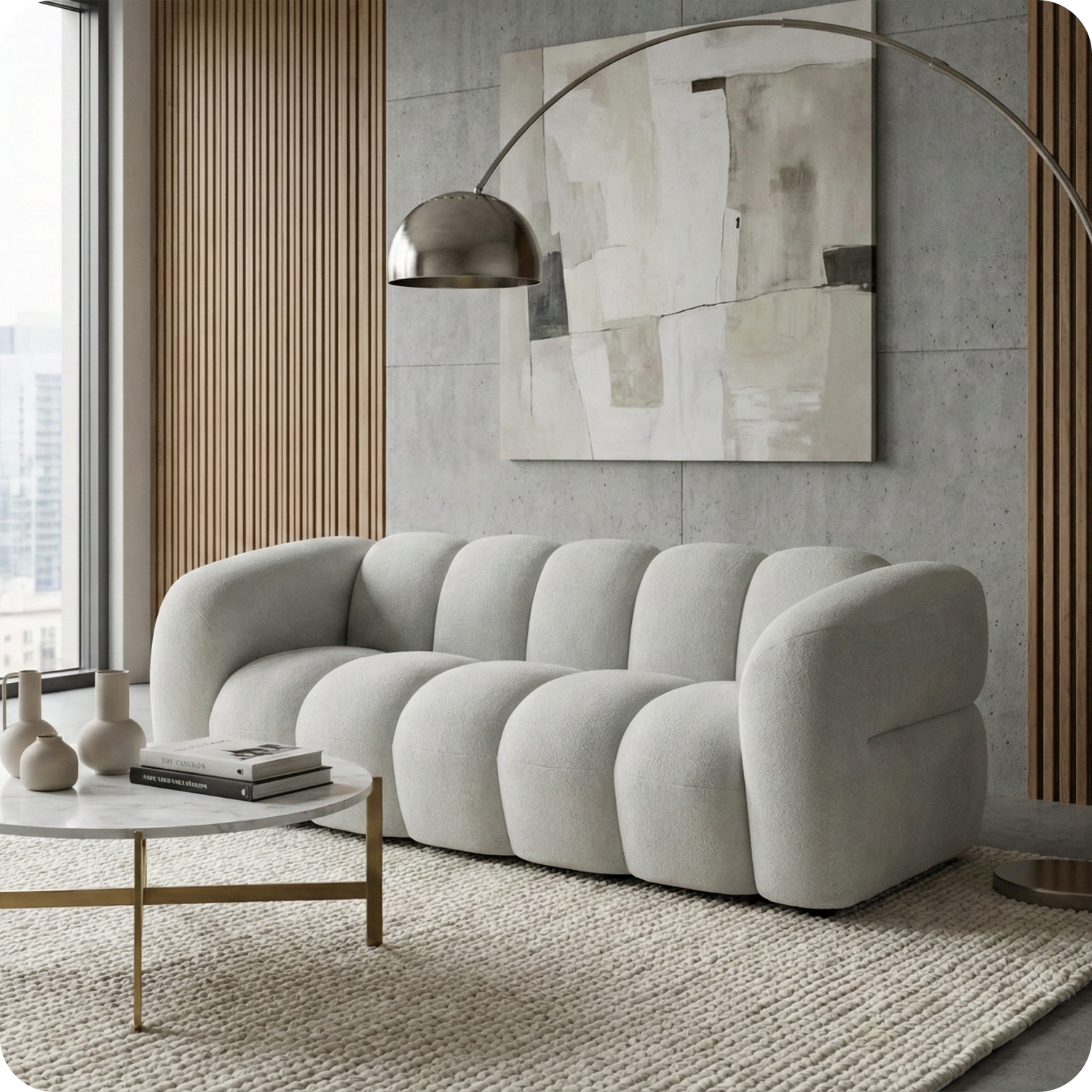
Scandinavian Sofa Ideas: Clean Lines, Natural Materials and Timeless Comfort
Scandinavian design has been one of the most influential forces in European interior design for the past 60 years — and its influence on sofa design specifically is hard to overstate. The Scandinavian approach to sofas prioritises functional beauty: clean silhouettes, honest materials, proportions sized for real human comfort rather than visual grandeur, and a colour palette drawn from the natural world. This guide explores how to choose and style a sofa in true Scandinavian spirit.
The defining characteristics of a Scandinavian sofa
A Scandinavian sofa is recognisable by a consistent set of design principles. Raised legs: Slender, tapered wooden legs (often in natural oak, walnut, or beech) that lift the sofa off the floor. This creates lightness and allows the floor to be seen beneath the sofa — crucial for the visual airiness that Scandinavian interiors prize. Clean lines: Straight or gently rounded backs, minimal ornament, no excessive curves or tufting. Moderate depth: Scandinavian sofas are designed for comfortable sitting rather than deep, sinking lounging. Seat depth of 55-65 cm is typical. Natural fabric: Linen, wool, cotton, and natural-blend fabrics in undyed or lightly dyed tones.
The Scandinavian sofa colour palette
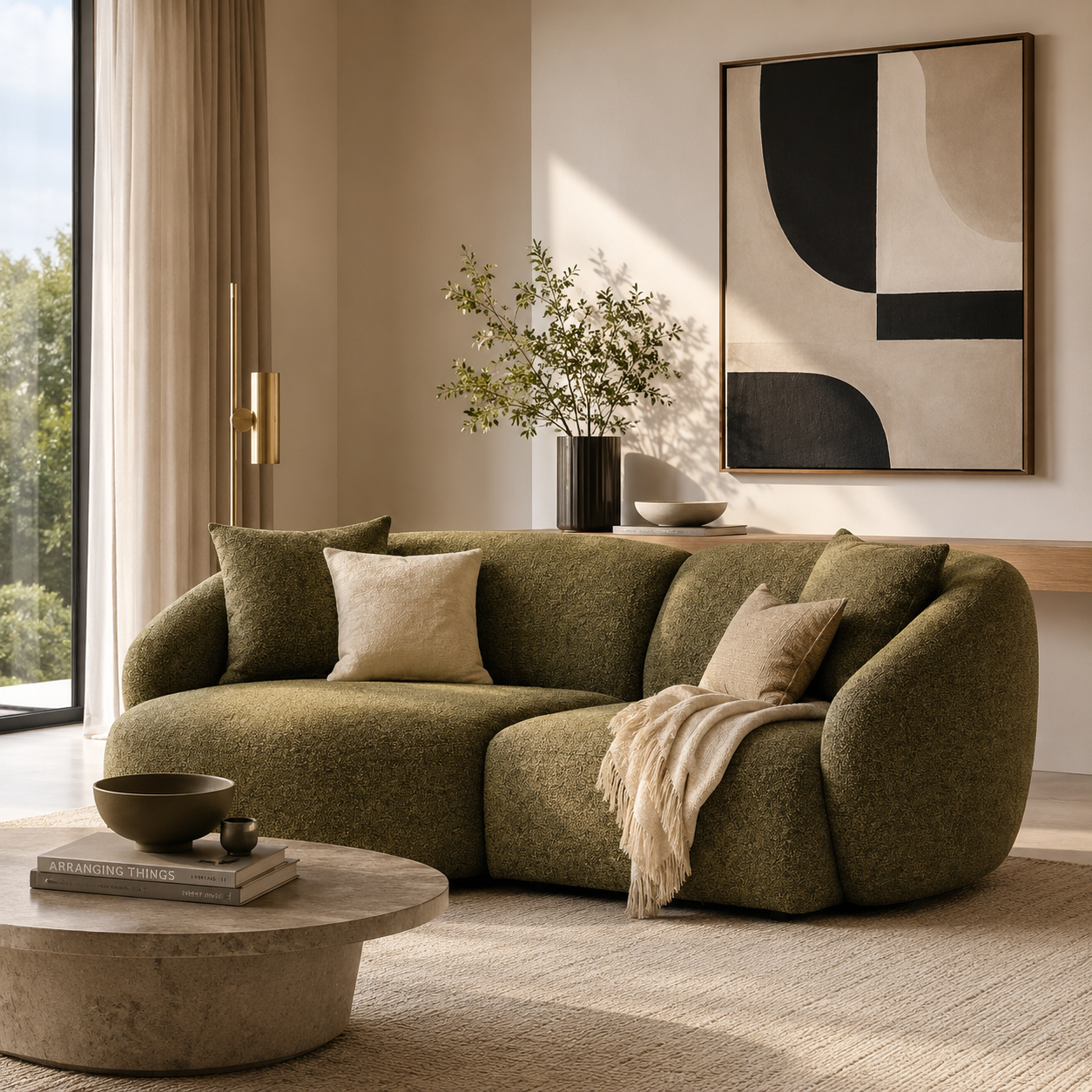
The Scandinavian approach to sofa colour is rooted in nature. The core palette: Oatmeal and warm white: The most classically Scandinavian — clean and warm simultaneously. Dusty grey: The second great Scandinavian neutral. Cool but never cold, thanks to warm wooden legs and natural textile accents. Warm sage green: Brings the outdoors inside in true Scandinavian fashion. Works beautifully with light birch or pale oak. Dusty blue: Inspired by Scandinavian skies and waters. Pairs with natural wool throws and wooden furniture. Warm taupe/greige: The most versatile neutral — reads as sophisticated without requiring much from the rest of the room.

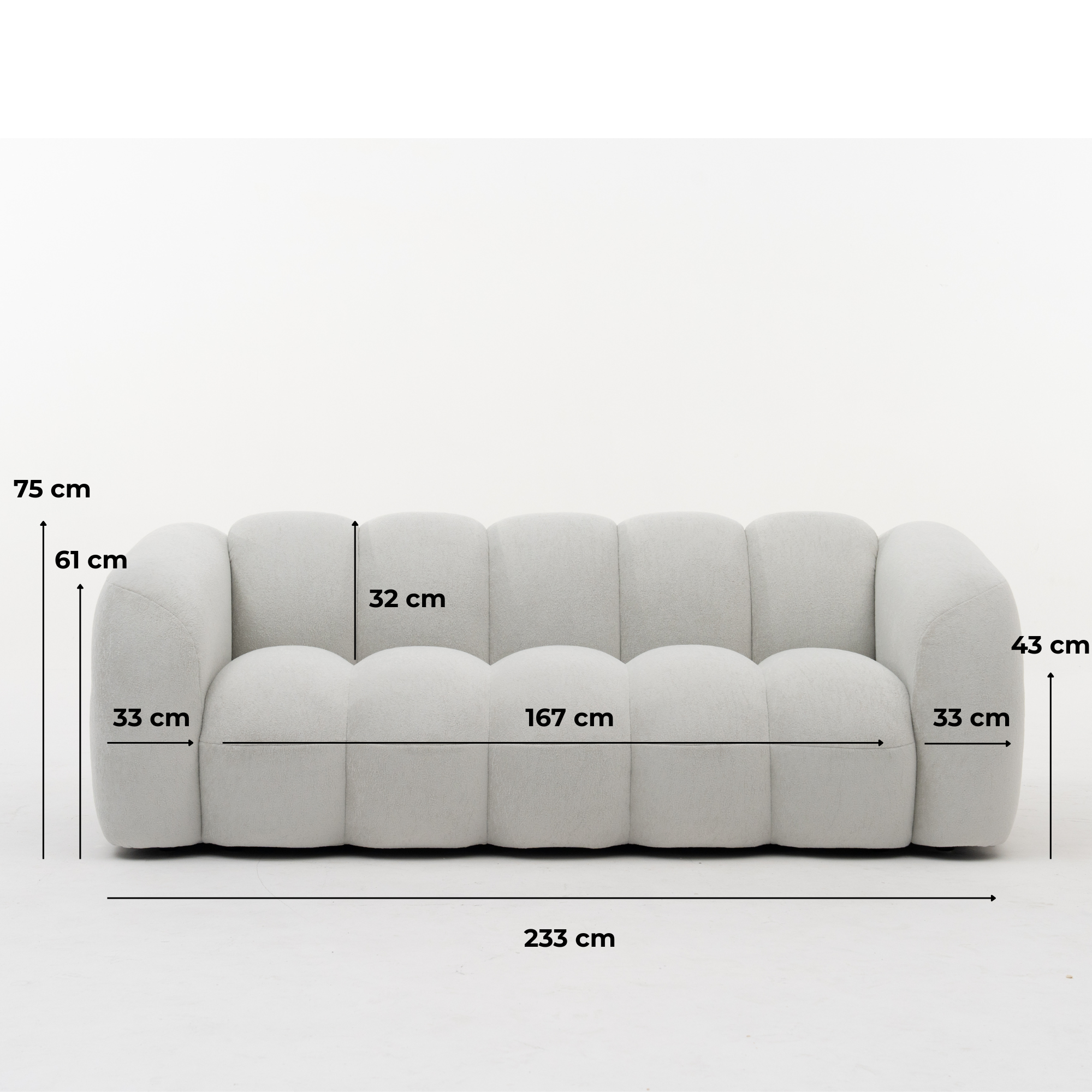
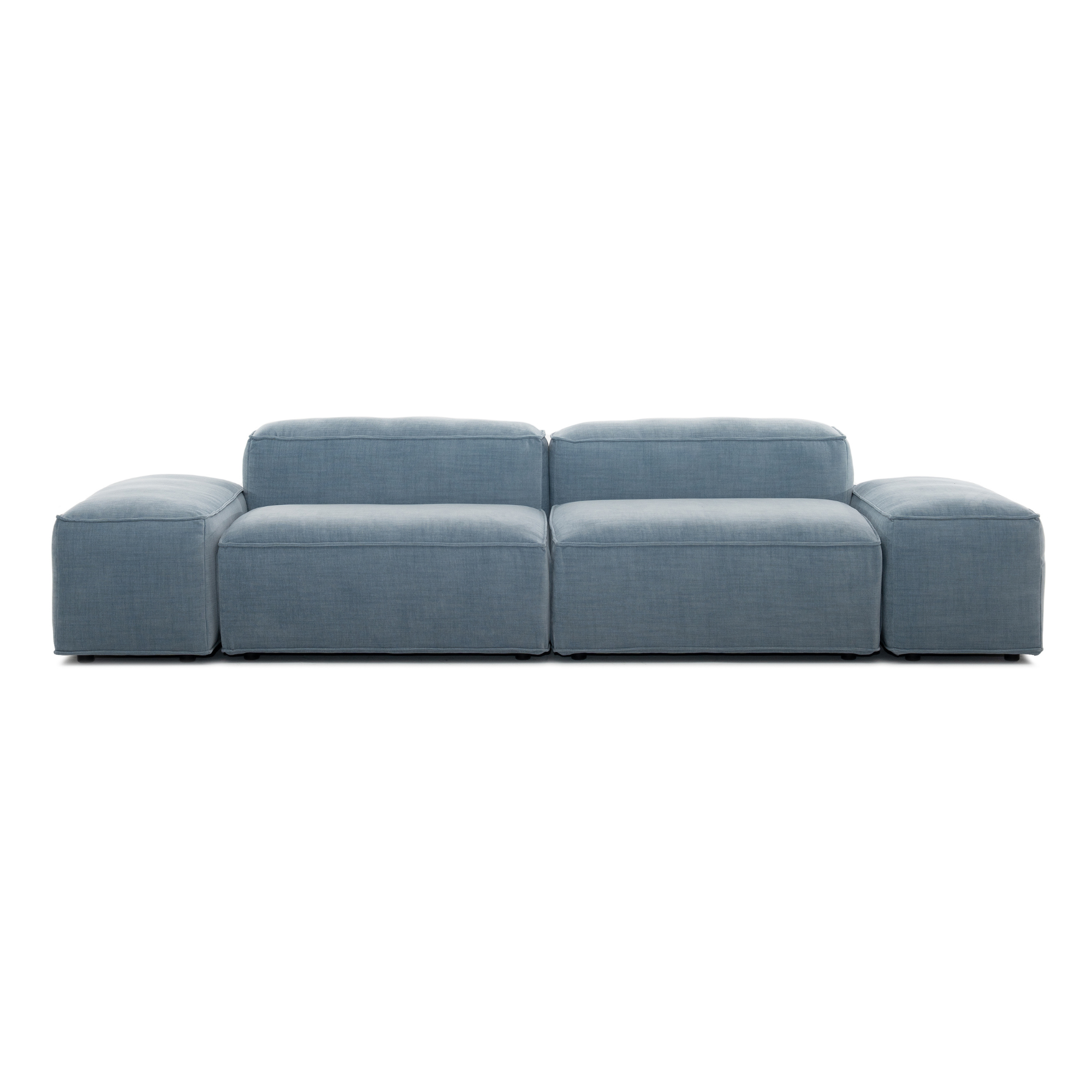
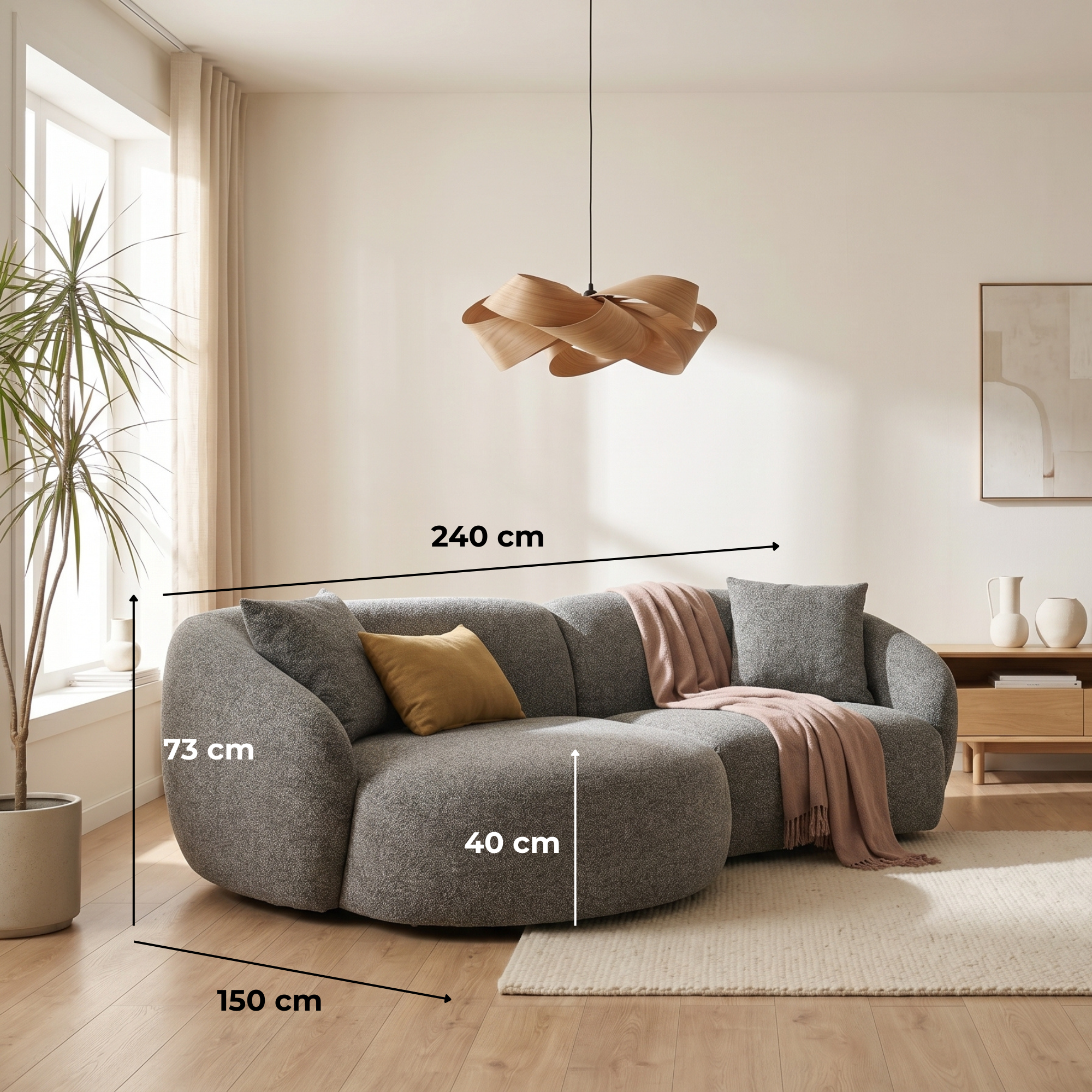
Lugano in Light Grey — from €1,299
The Lugano in light grey embodies Scandinavian sofa principles: clean lines, restrained proportions, and a cool-neutral fabric tone that works with oak, birch, and natural textiles equally well. Its low, architectural silhouette feels at home in any Scandinavian-inspired interior.

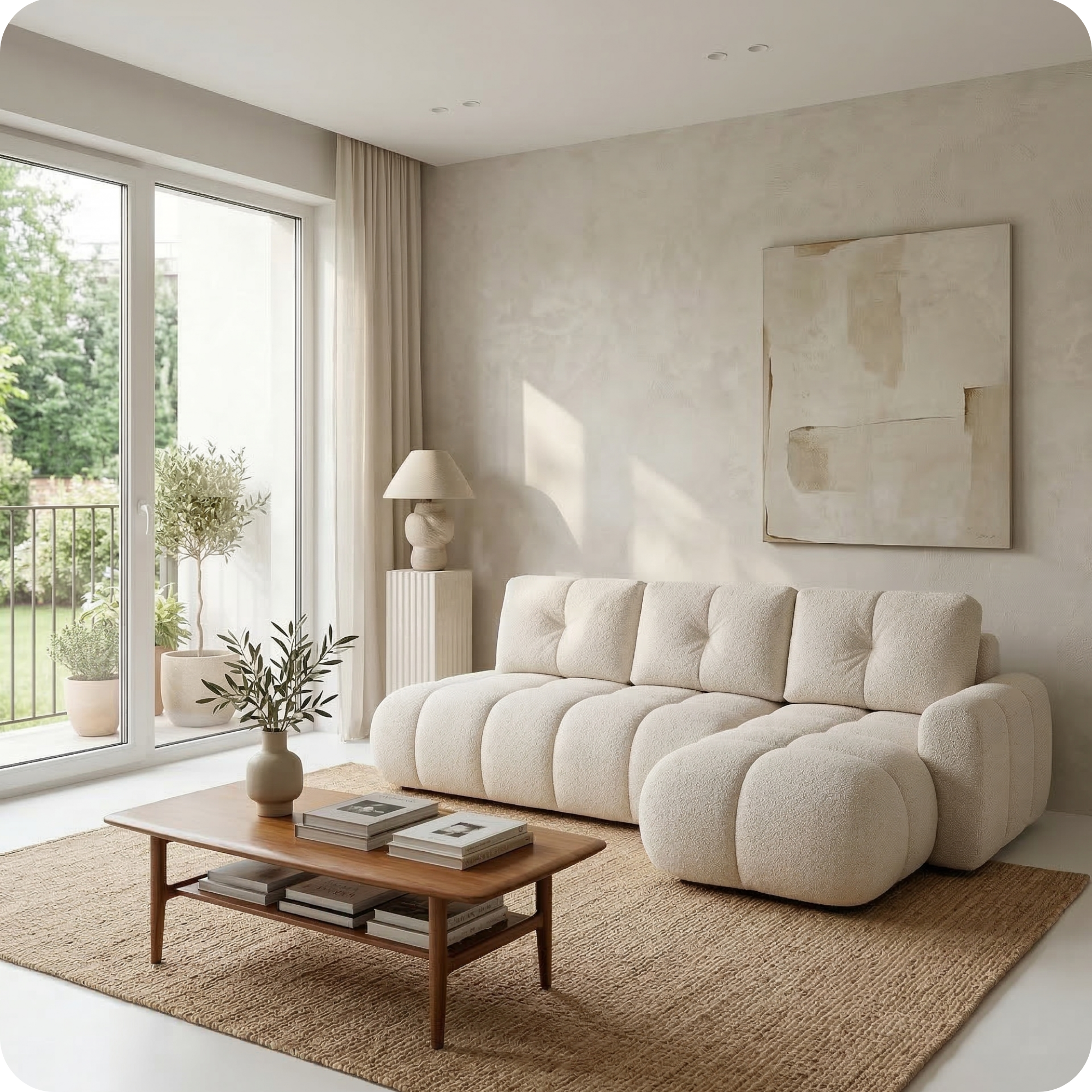
Lugano in Sand — from €1,299
Sand is the quintessential Scandinavian neutral. Against white walls and light oak flooring, the Lugano in sand creates the kind of warm, effortless living room that the Scandinavian aesthetic is built on.
Natural materials around a Scandinavian sofa
The materials that work around a Scandinavian sofa are those that feel honest and unprocessed. Light oak is the iconic Scandinavian wood — pale, warm, and honest. Birch and beech are close alternatives. Wool throws in natural undyed tones, sheepskin cushions, and linen cushion covers all belong in a Scandinavian interior. The rug should be wool, cotton flat-weave, or natural fibre — a jute or sisal rug grounds the space simply and beautifully. Avoid synthetic materials, heavily processed surfaces, and anything that reads as overtly synthetic or highly finished.
Hygge and sofa design
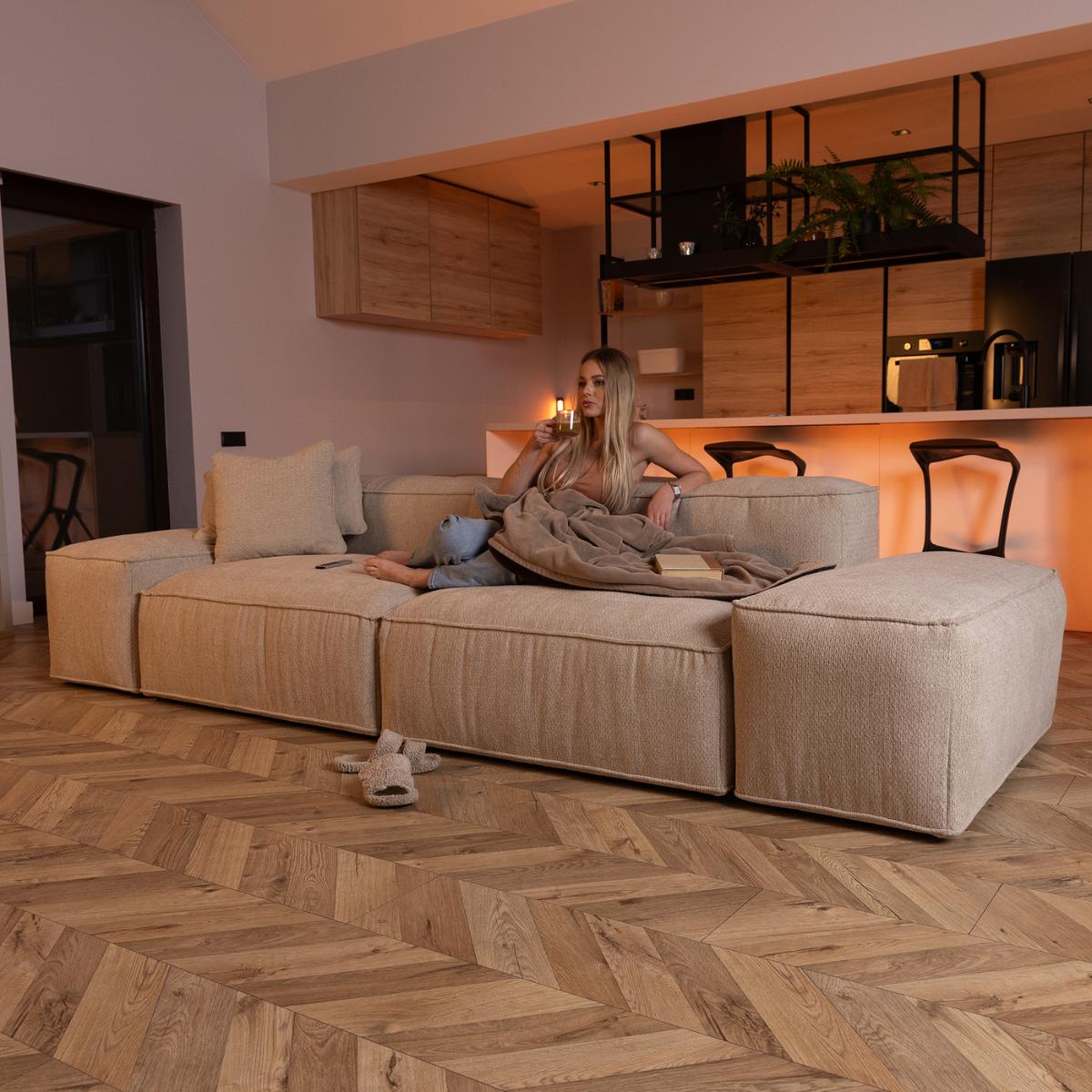
The Danish concept of hygge — a quality of coziness and comfortable conviviality that engenders a feeling of contentment or well-being — is deeply embedded in how Scandinavian interiors approach the sofa. A hygge-oriented sofa arrangement creates an enclosed, intimate zone: cushions and throws within easy reach, a lamp that casts warm light directly onto the seating area, a coffee table that is close enough to comfortably rest a cup on. The sofa should feel like a safe harbour rather than a decorative centrepiece.
Styling a Scandinavian sofa
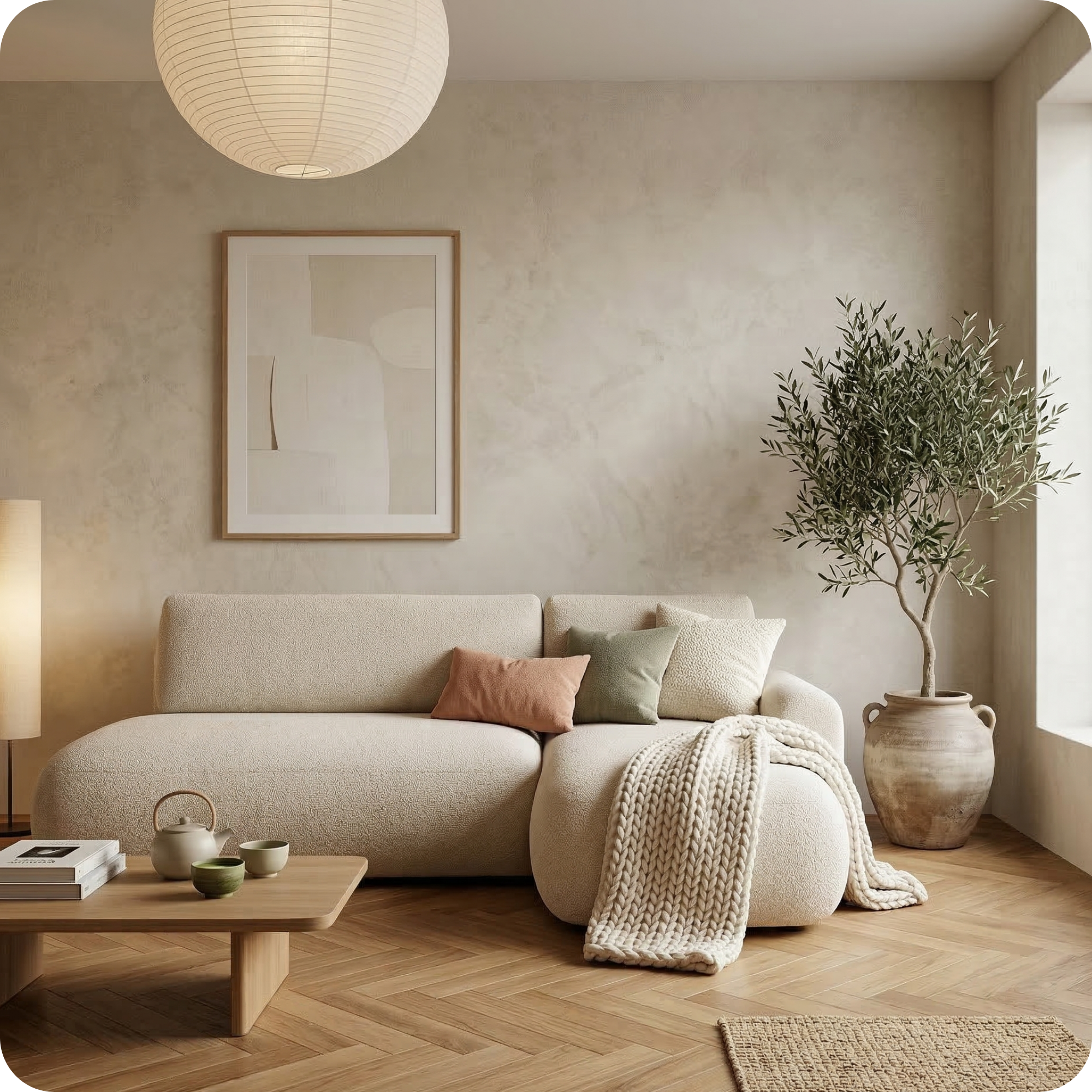
Restraint is the defining quality of Scandinavian sofa styling. Two or three cushions rather than five or six. One throw rather than a collection. Plants — specifically simple, structural plants like a single rubber tree or a peace lily in a plain ceramic pot — rather than multiple accessories. The principle: each object on or around the sofa should earn its place by being genuinely beautiful, genuinely functional, or both. Remove anything that is purely decorative without being beautiful in its own right.