



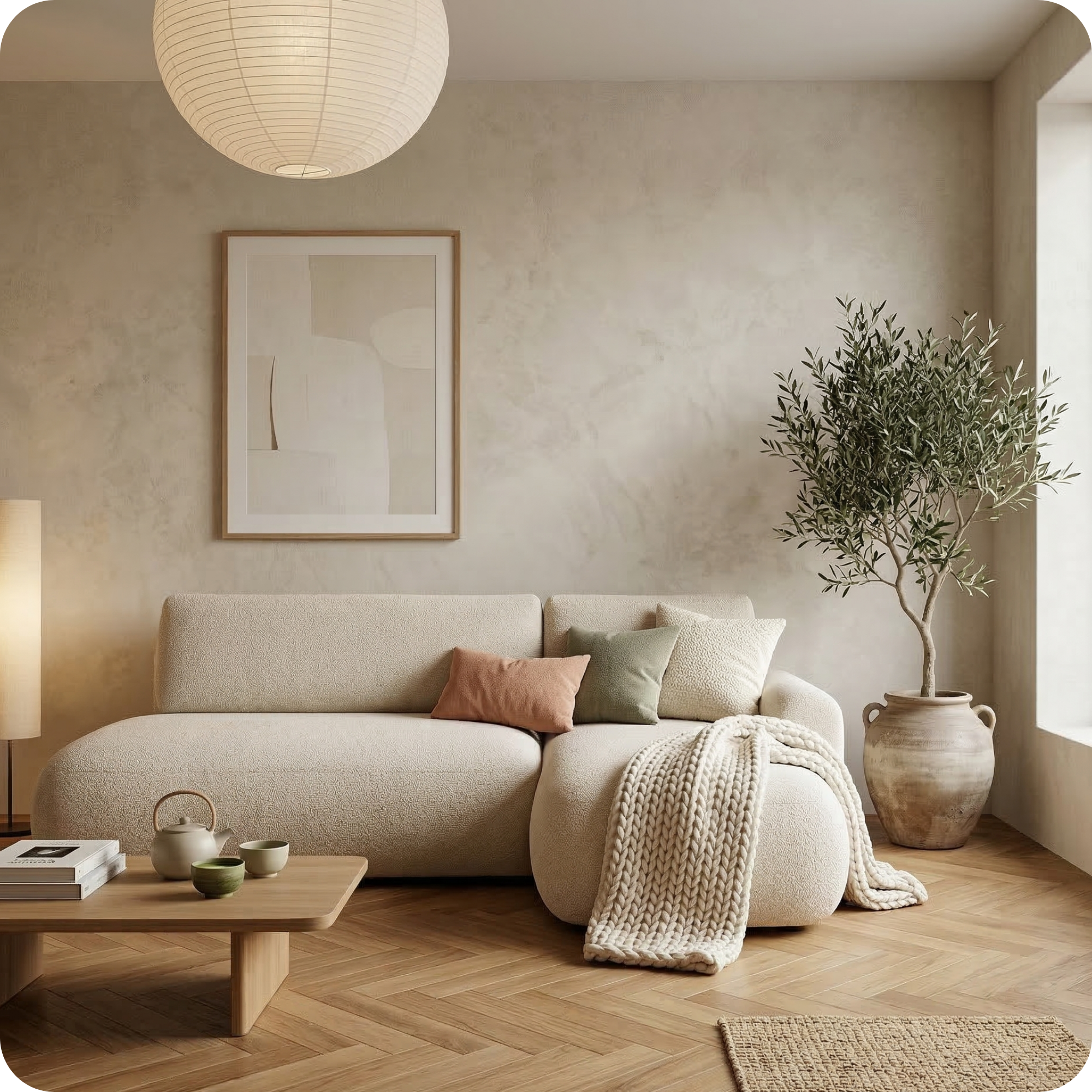
Biophilic Design: How to Bring Nature Indoors and Create a Living Room That Breathes
Biophilic design is one of the most influential interior design philosophies of the past decade — and for good reason. Rooted in our innate human connection to the natural world, biophilic design is about more than just placing a few plants on a windowsill. It's a deliberate approach to creating spaces that feel alive, organic, and connected to the rhythms of the natural world. Research consistently shows that biophilic spaces reduce stress, improve concentration, and increase general wellbeing. This guide explains how to apply biophilic design principles in your living room.
What is Biophilic Design?
The term "biophilia" was popularised by biologist Edward O. Wilson to describe humanity's instinctive bond with other living systems. In architecture and interior design, biophilic design translates this concept into tangible spatial choices: the use of natural materials like wood, stone, and natural fibres; the incorporation of living plants; the maximisation of natural light; the introduction of water features; and the use of organic, irregular forms and textures that mimic those found in nature. The goal is to create environments where the built and natural worlds feel like they belong together.
Natural Materials: The Foundation of Biophilic Living Rooms
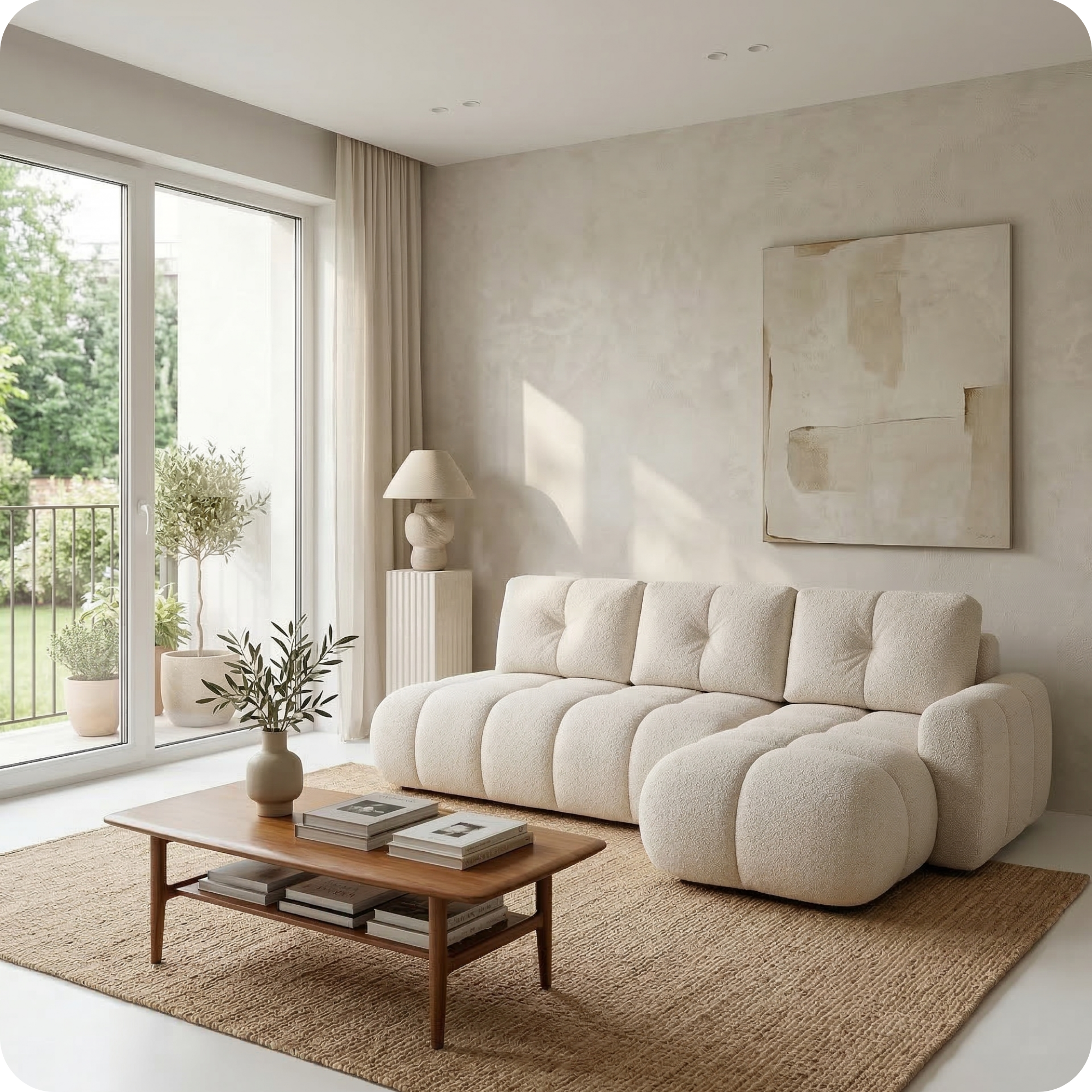
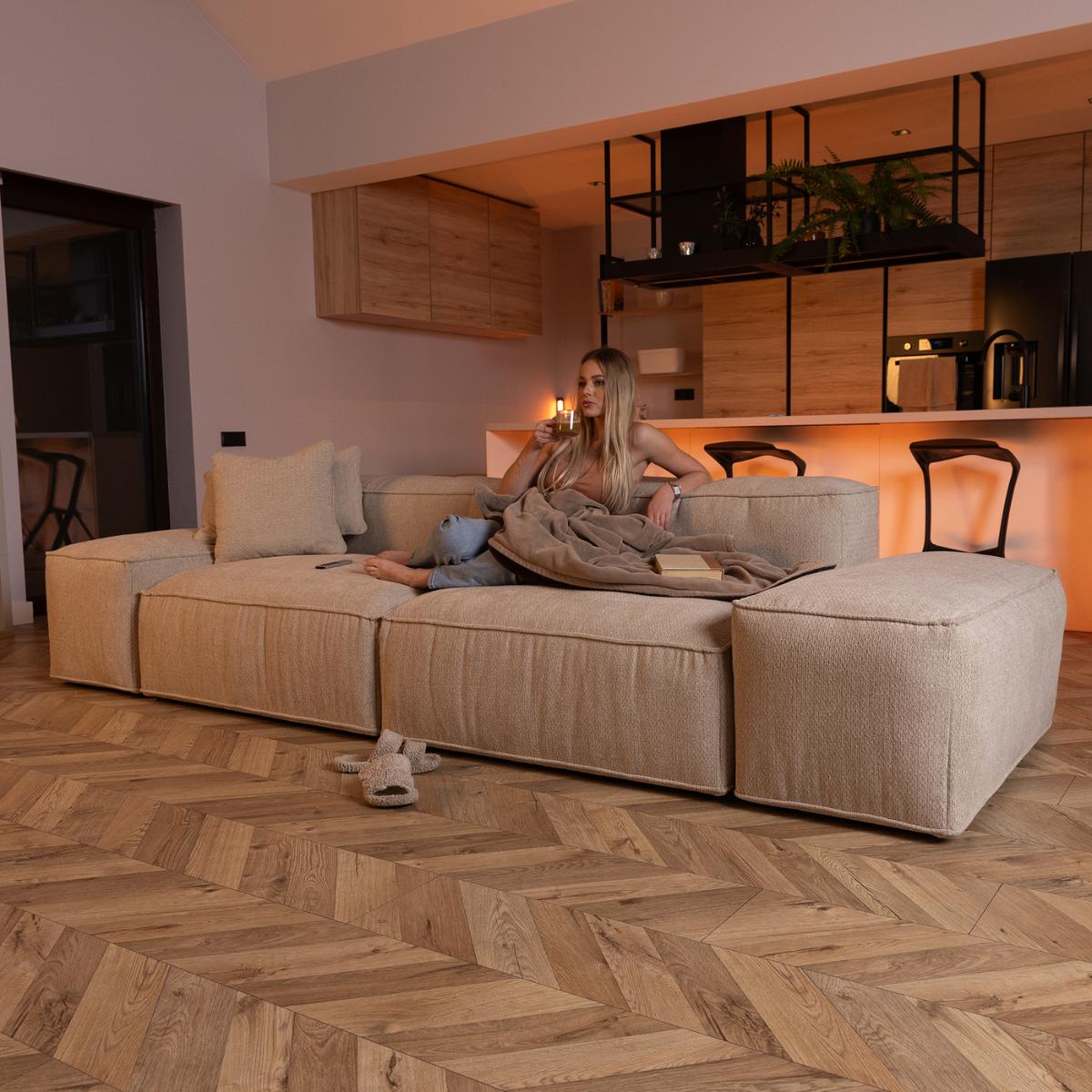
The most fundamental element of biophilic design is the use of natural materials. In a living room, this means choosing furniture and finishes made from wood, natural stone, linen, cotton, wool, rattan, and leather. Timber coffee tables, stone surfaces, jute rugs, and linen or boucle upholstery all contribute to a living room that feels grounded and organic. Avoid synthetic materials wherever possible — the cool, hard surfaces of synthetic plastics and laminates work against the warmth and texture that biophilic design relies on.

Lugano Collection — from EUR 790
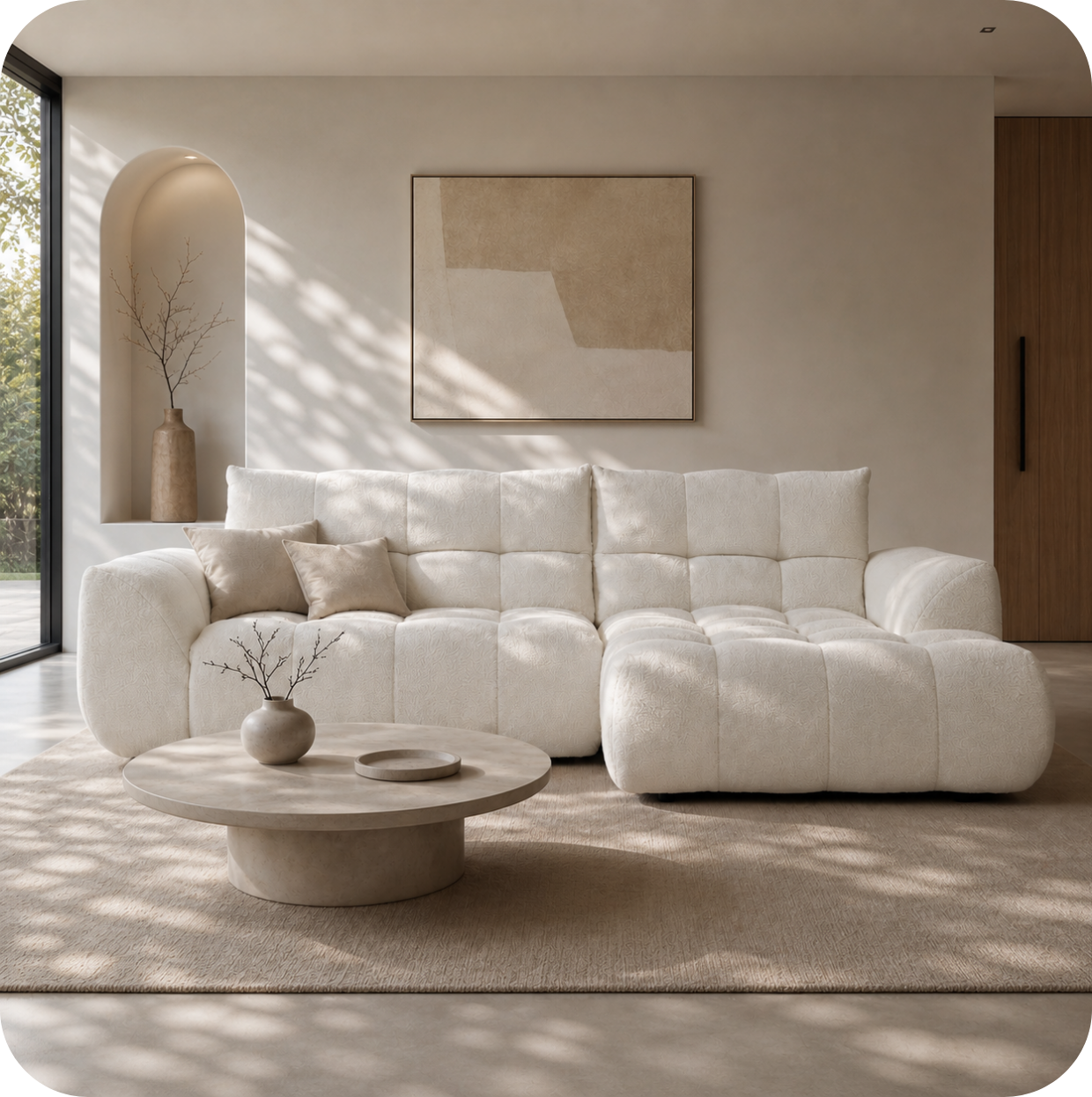
The Lugano's light grey and neutral earth tones sit beautifully in a biophilic living room — the soft, boucle-style upholstery evokes natural textures and integrates seamlessly with wood, stone, and plant elements.

Merlot Sofa in Leaf Green — from EUR 890
Nothing says biophilic design more directly than a sofa in botanical leaf green. The Merlot in this earthy botanical colour becomes the centrepiece of a nature-inspired living room.
Living Plants: The Heart of Biophilic Design
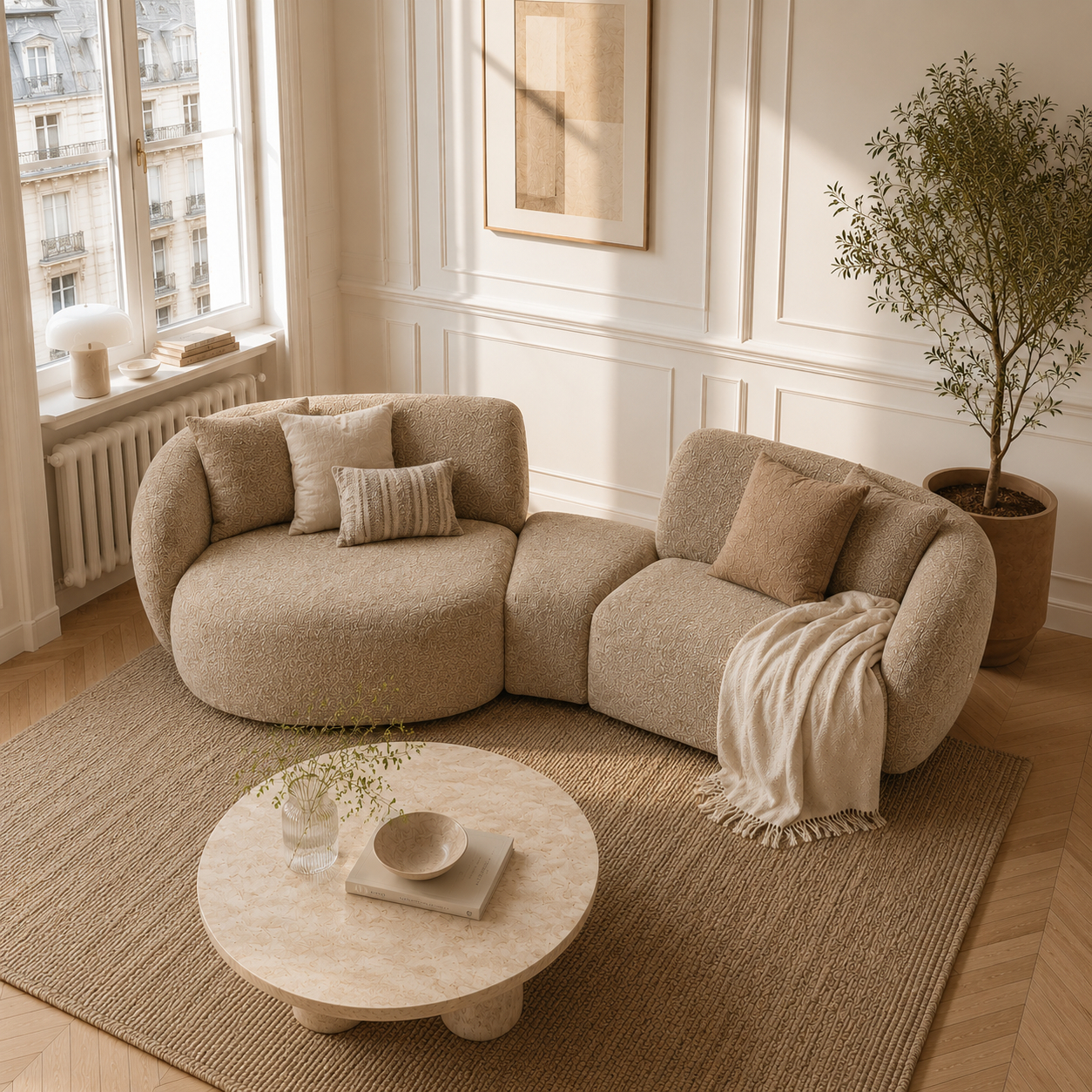
Plants are the most direct way to introduce biophilia into a living room. For a truly biophilic space, go beyond a single houseplant and think in terms of layers: a large statement floor plant like a fiddle-leaf fig, monstera, or olive tree anchors the space; medium tabletop plants add texture at mid-height; trailing plants from shelves add movement and organic flow. Consider a mix of species with different leaf shapes, sizes, and colours to mimic the variety found in natural ecosystems.
Natural Light and Organic Forms
Biophilic design prioritises natural light above all artificial lighting choices. Position seating areas to take advantage of natural light from windows, use sheer curtains that diffuse rather than block light, and choose mirrors strategically to amplify the natural light in the room. Organic forms — curved furniture, rounded coffee tables, irregular stone surfaces — reinforce the sense of being in a natural environment rather than a rigidly geometric built space. The most successful biophilic living rooms combine soft natural light, organic shapes, natural textures, and living plants into a cohesive whole.

Leave a comment
This site is protected by hCaptcha and the hCaptcha Privacy Policy and Terms of Service apply.