



How to Choose a Coffee Table: Size, Shape, Height, and Style Guide
The coffee table is the hardest-working piece of furniture in a living room. It holds drinks, books, and remotes; it defines the seating area; it anchors the rug; and it is the one piece that every person who sits in the room looks directly at while they are there. Despite its importance, coffee tables are often chosen as an afterthought — picked up quickly to fill the empty space in front of the sofa. This guide helps you choose the right coffee table by working through the key decisions: size, shape, height, material, and style.
Coffee Table Size: The Right Proportions
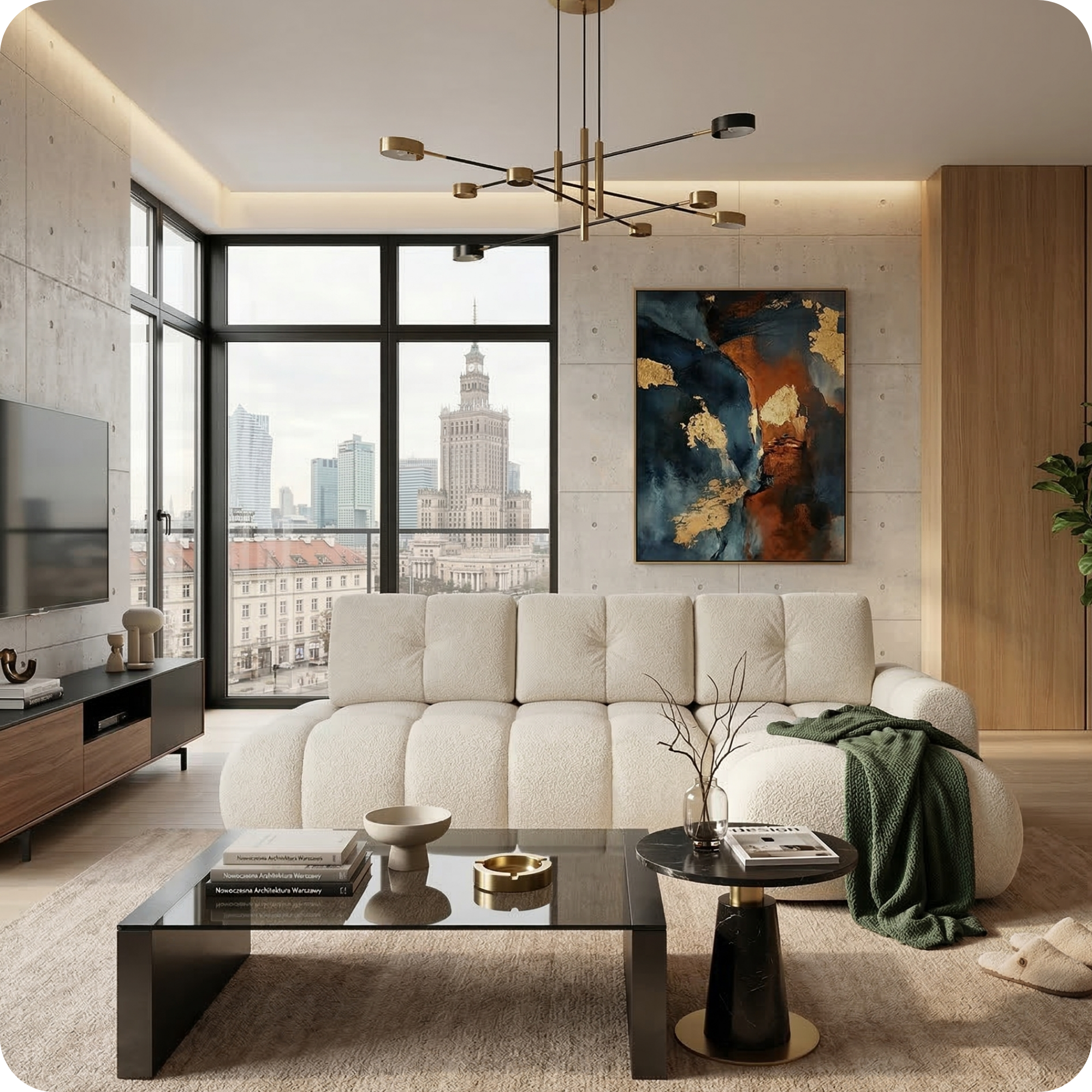
The most important sizing rule: the coffee table should be approximately two-thirds the length of the sofa it sits in front of. A table that is the same length as the sofa will overwhelm the space; a table that is much shorter will look lost. The table should be placed 35–45 cm away from the sofa — close enough to comfortably reach from a seated position, but far enough to allow comfortable movement. The width of the table should be proportional to its length and to the size of the room — avoid very narrow tables in large rooms, and very wide tables in small rooms.
Coffee Table Height: The Golden Rule
The ideal coffee table height is level with or slightly below the sofa seat height. Most sofas have a seat height of 40–50 cm; a coffee table in the range of 40–45 cm is therefore ideal for most living rooms. A table that is too low requires uncomfortable leaning; a table that is too high creates a visual blockage that interrupts the flow of the room. If in doubt, err on the side of slightly lower — it is easier to live with a table that is a little low than one that is too high.
Coffee Table Shape: Round, Rectangular, or Square?
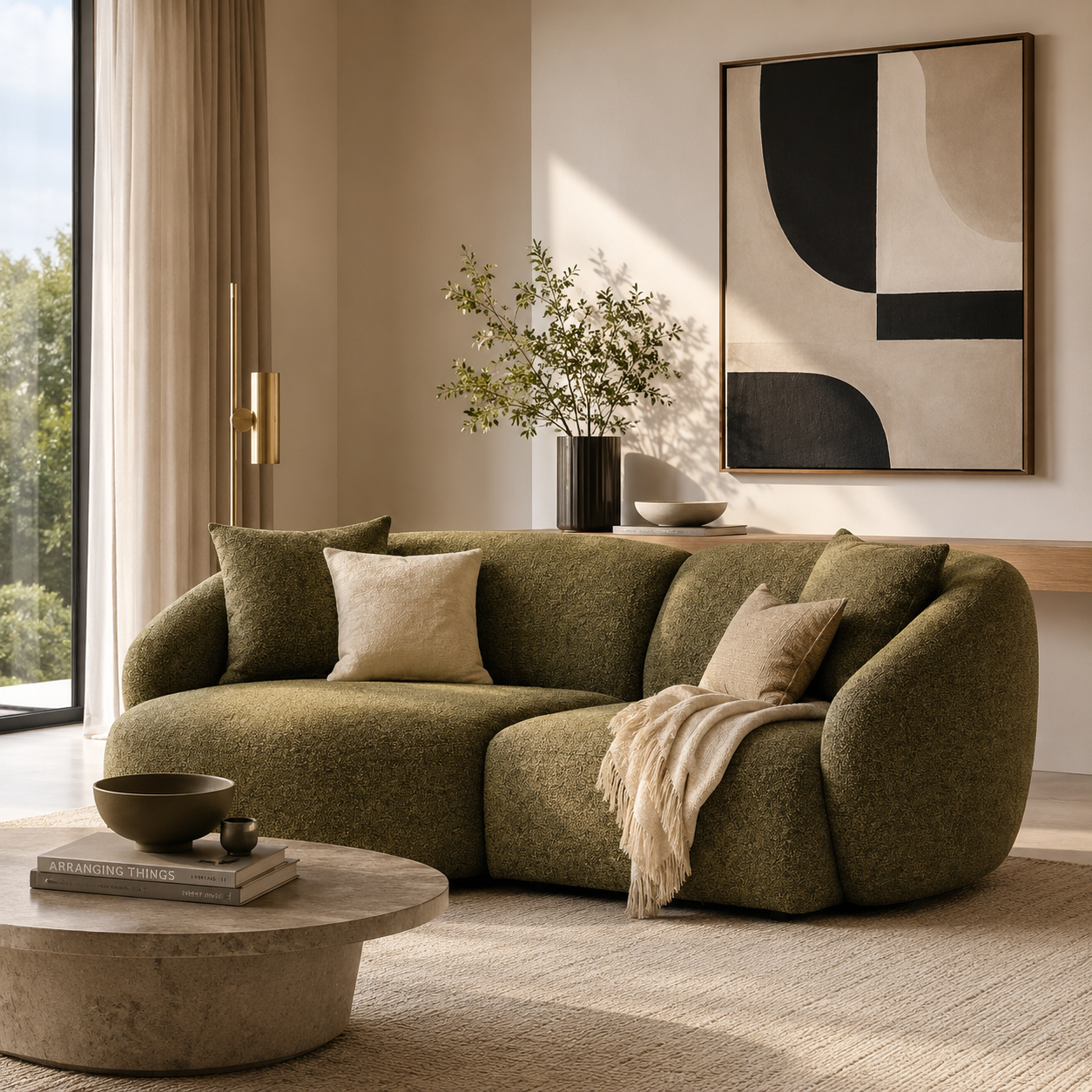
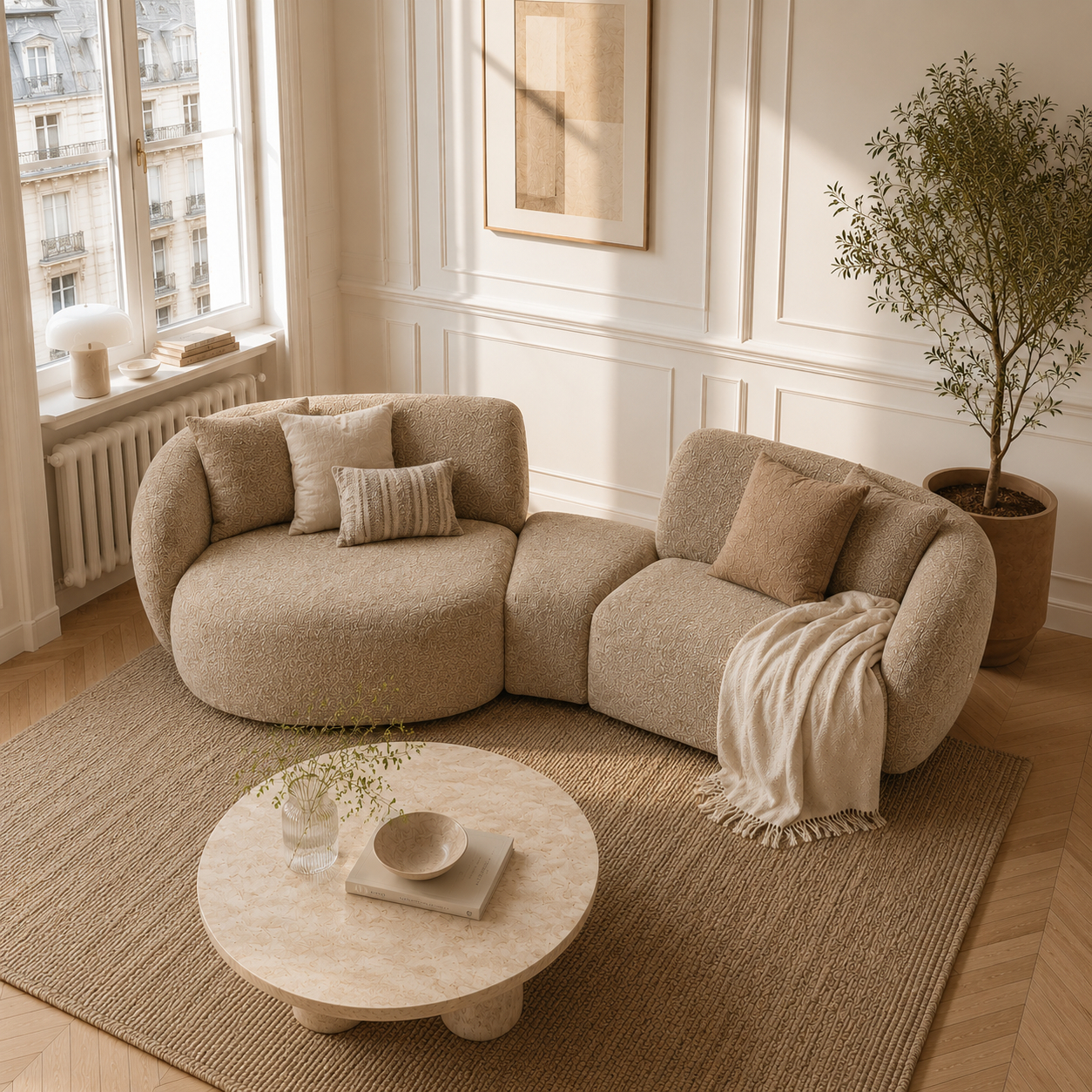
Rectangular tables suit most sofa layouts and are the most common choice. They align naturally with the rectangular form of a sofa and provide a large, useful surface area. Round tables work beautifully in small rooms where sharp corners create a circulation problem, in rooms with a curved or L-shaped sofa, or wherever a softer, more organic aesthetic is desired. Square tables suit large square seating areas and look particularly good with L-shaped or U-shaped sofa configurations where all sides of the table are equally accessible.

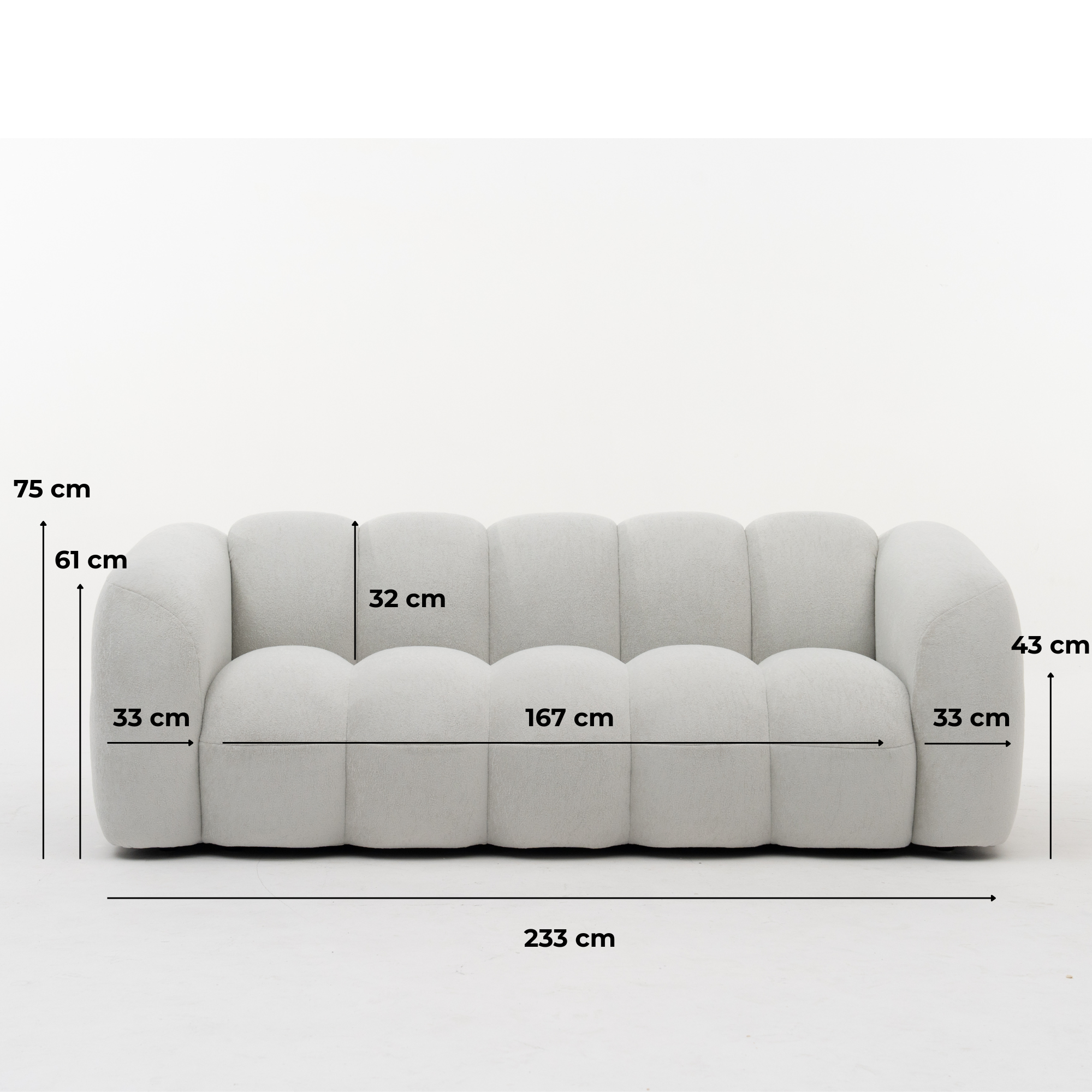
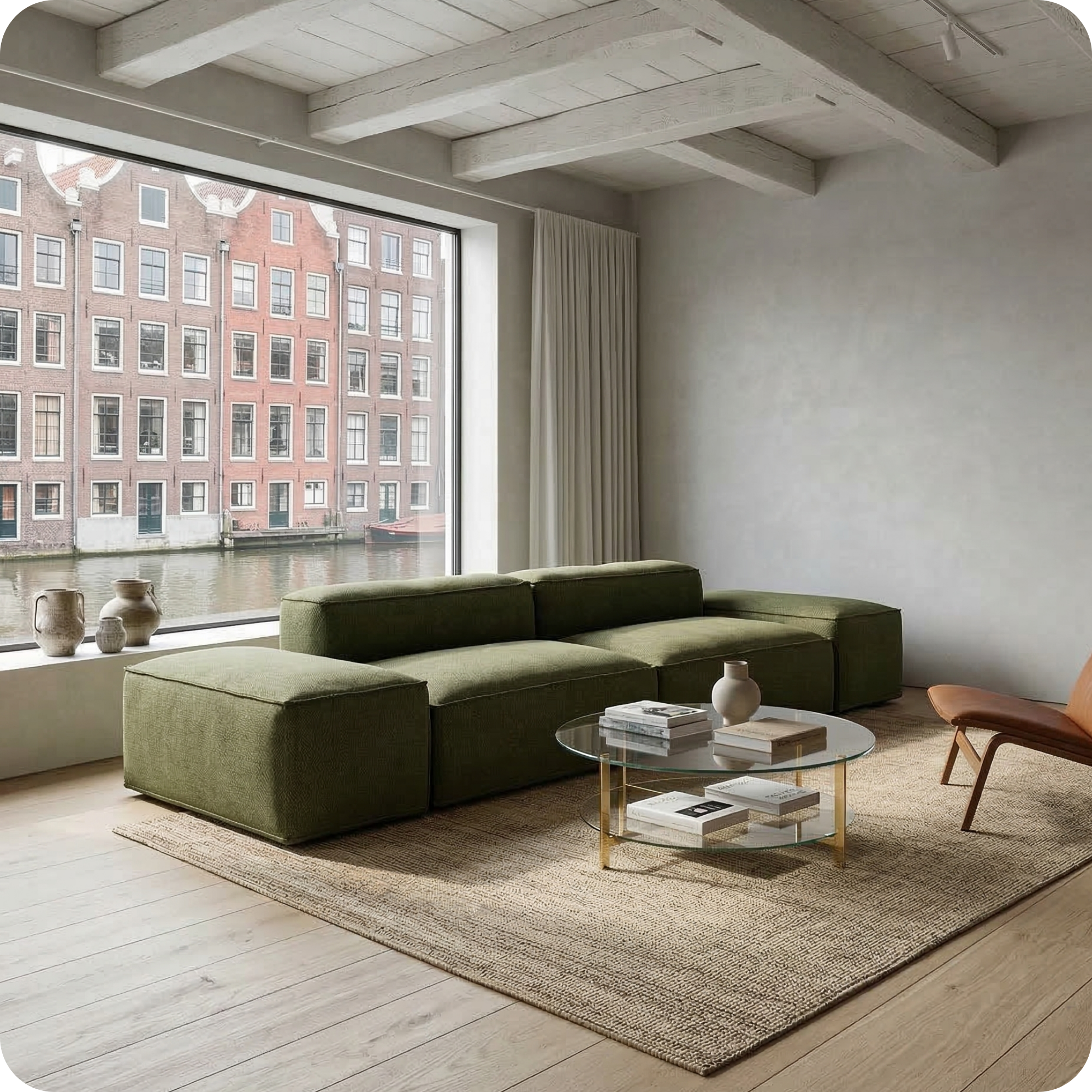
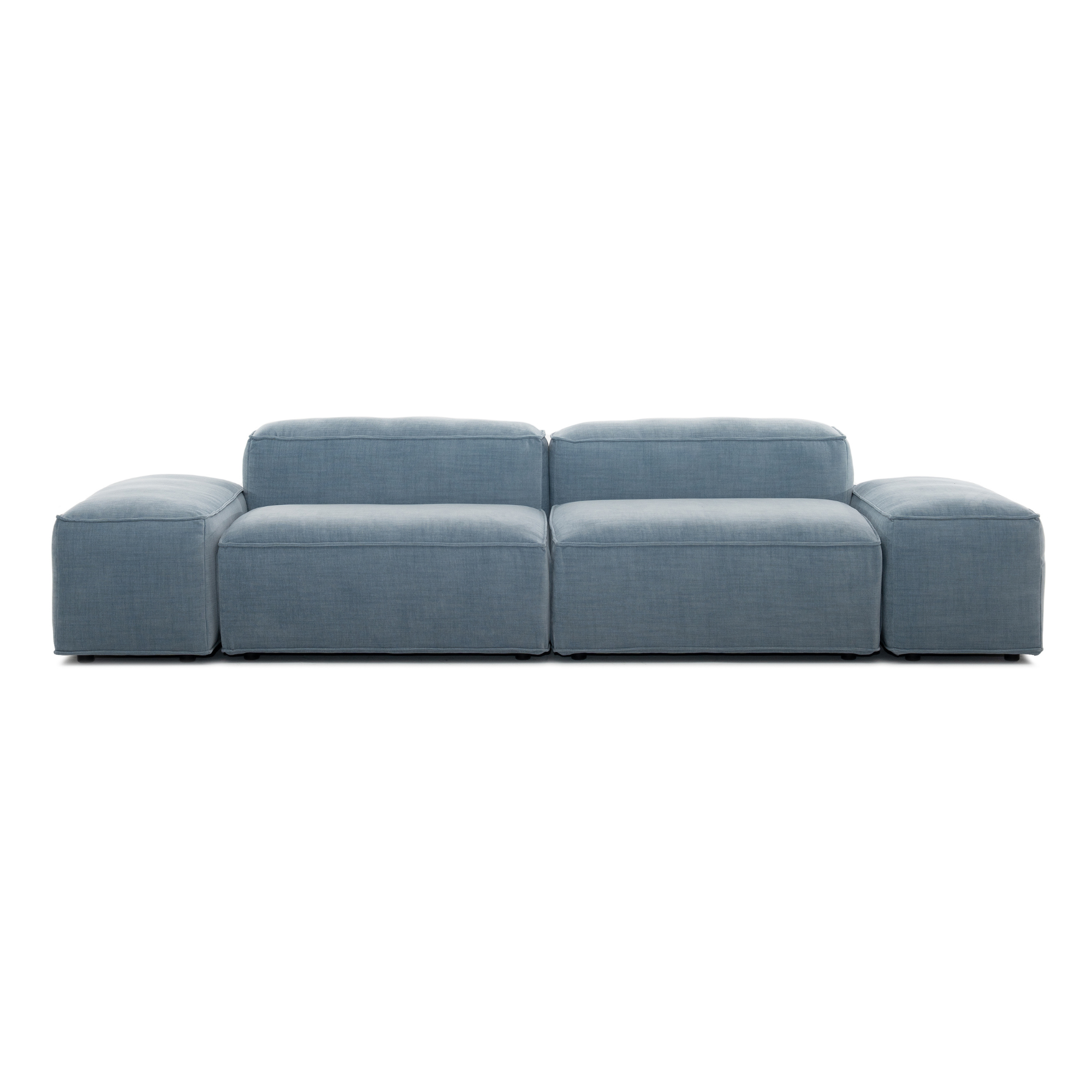
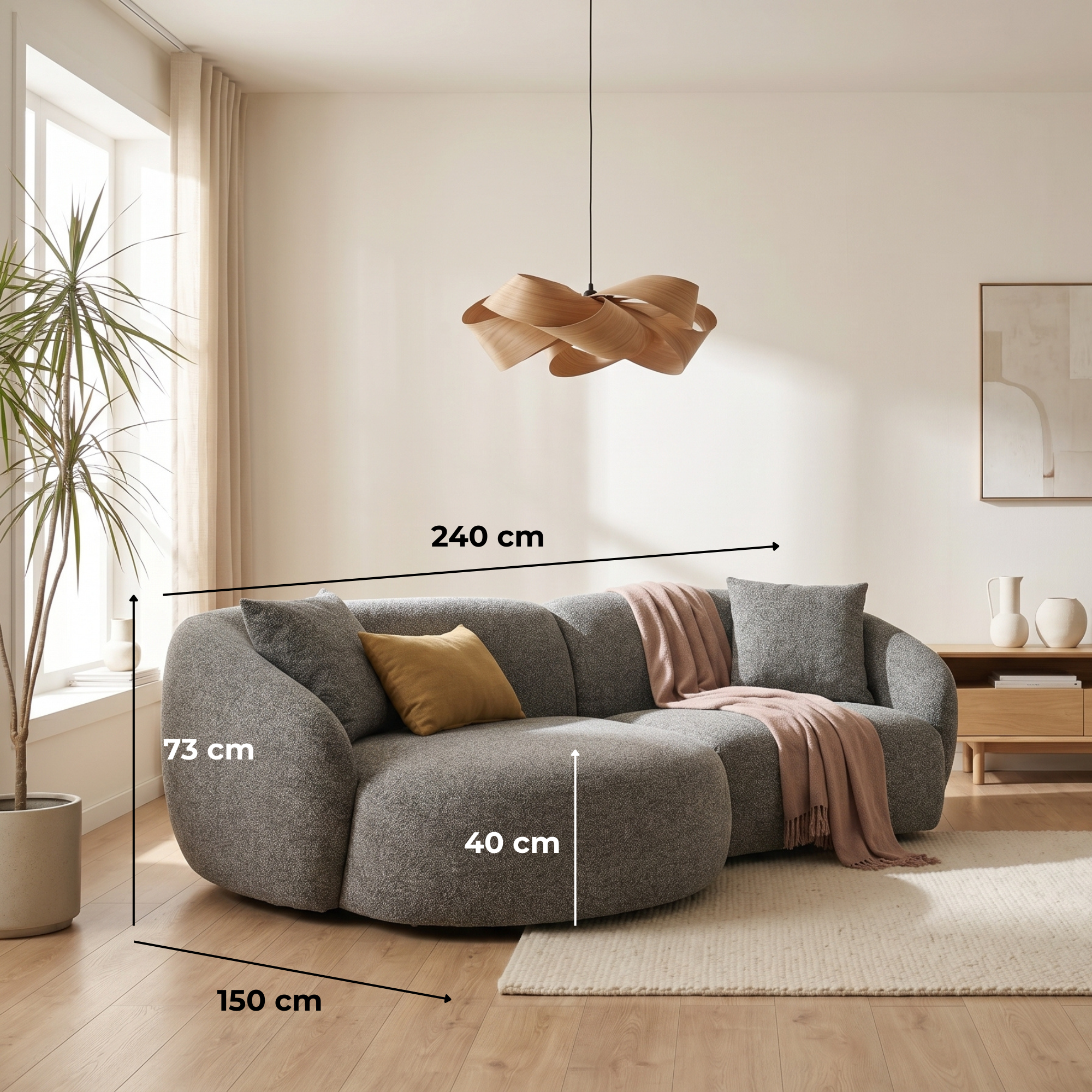
Merlot Sofa — from €1,532
When pairing a coffee table with the Merlot, aim for a table approximately 120–140 cm long (two-thirds its length) at a height of 40–44 cm to match the Merlot's comfortable seat height.

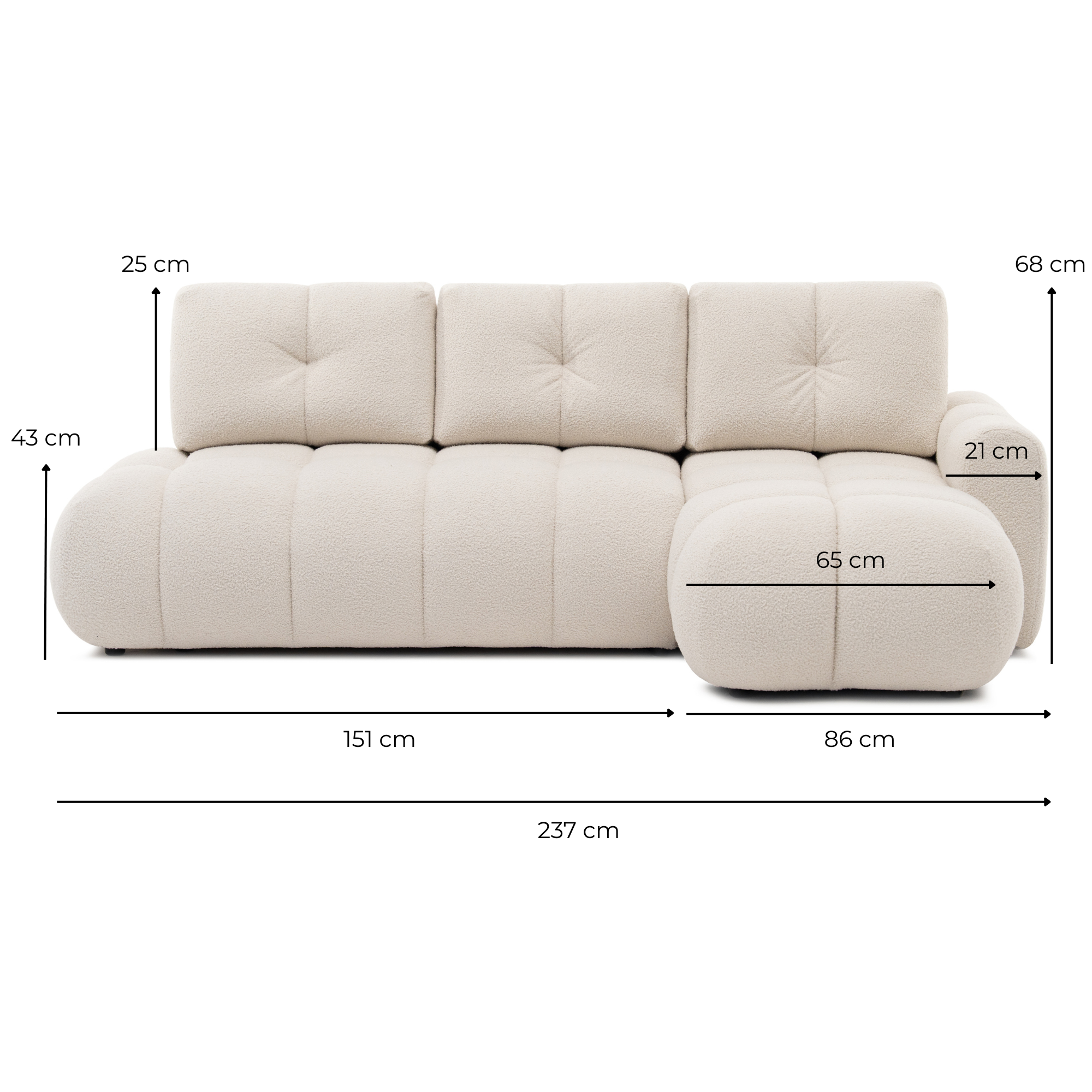
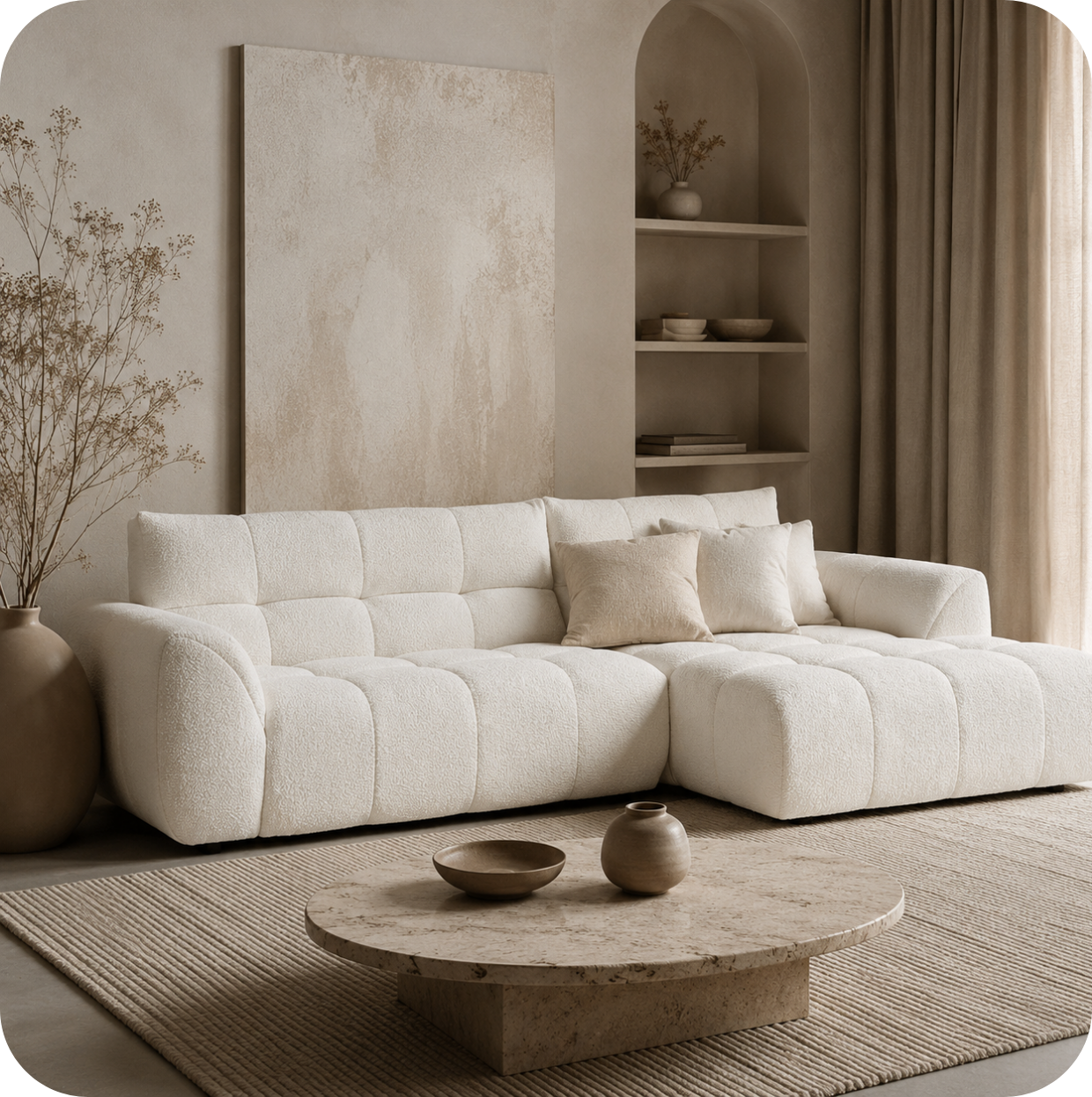
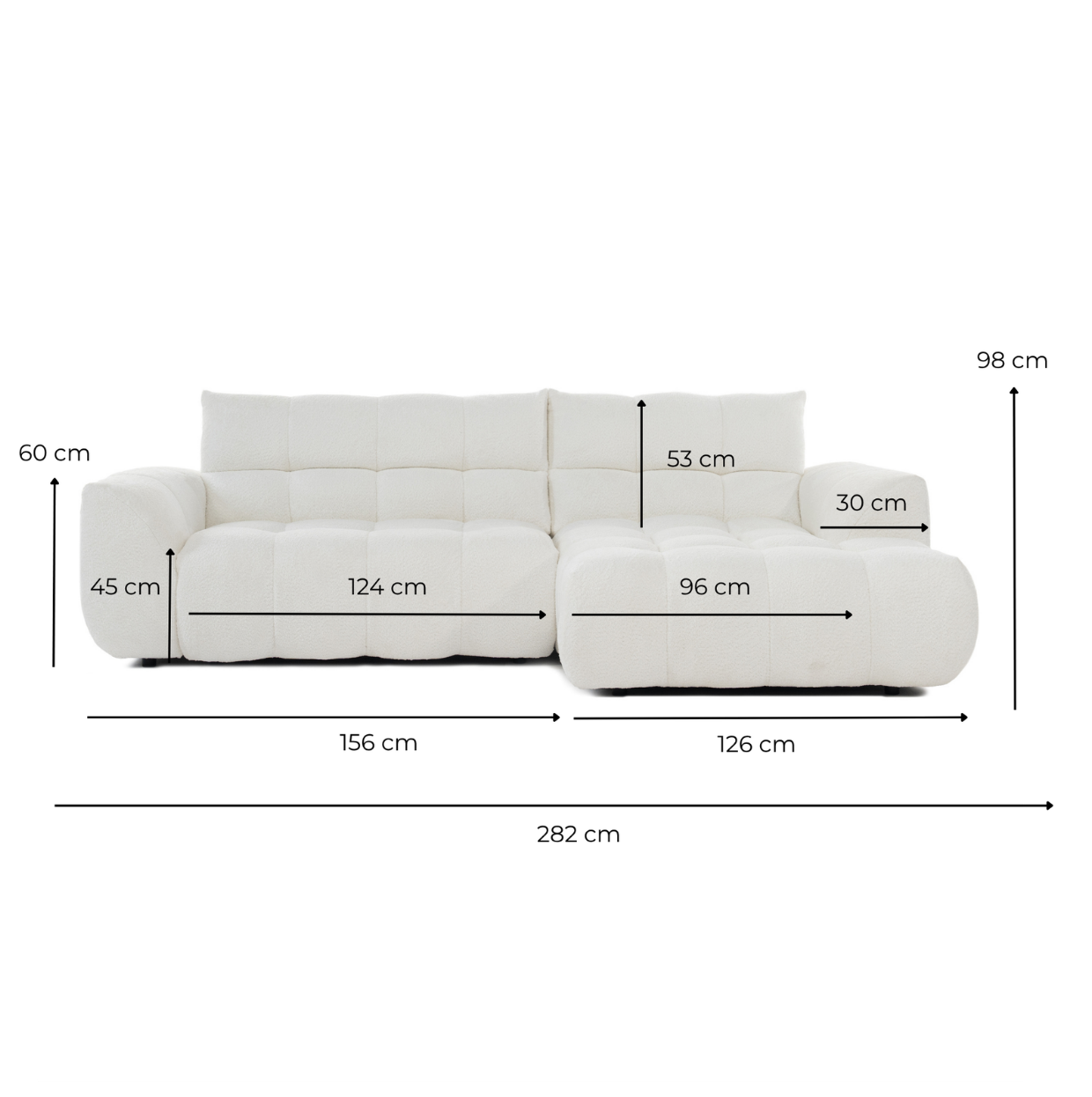
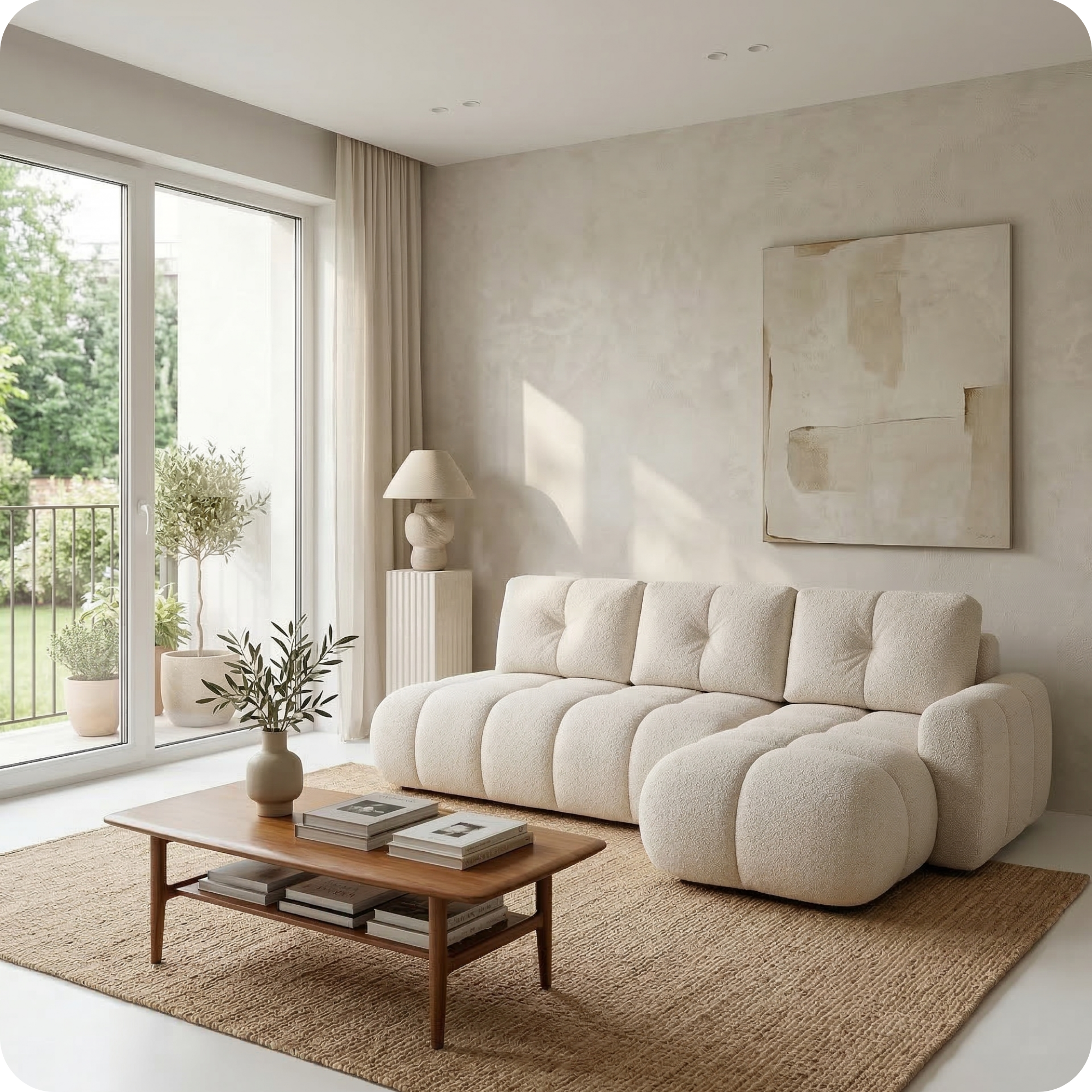
Merlot Corner Sofa — from €1,913
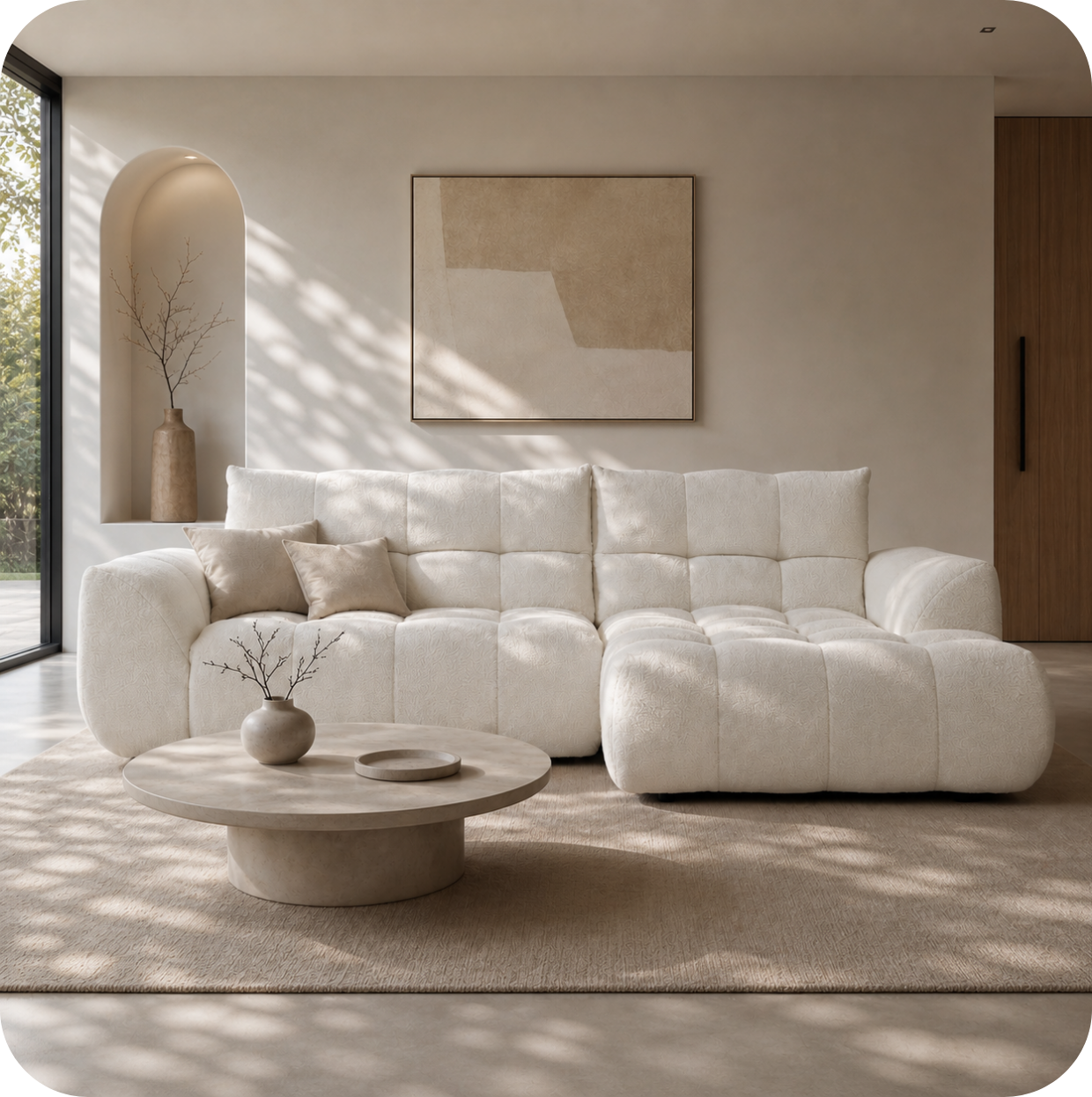
For an L-shaped sofa like the Merlot corner configuration, a square or round coffee table works best — both shapes can be accessed from all sides and suit the symmetry of the corner arrangement.
Coffee Table Materials and Styles
Timber: the most versatile choice — natural wood suits almost every living room style from Scandinavian to rustic to contemporary. Glass: visually lightweight and ideal for small rooms, as the see-through surface avoids adding visual mass. Marble or stone: luxurious and statement-making — works best as a contrast to upholstered sofas and soft furnishings. Rattan and wicker: casual, natural, and lightweight — suits relaxed, coastal, or bohemian interiors. Metal: industrial, graphic, and contemporary — works well in minimal and urban interiors. The best coffee tables often combine two materials — a marble top on a brass or wood frame, or a glass top on a rattan base — to add visual interest and avoid the monolithic quality of a single-material table.