


How to Choose the Right Rug Size for Your Living Room
A rug is one of the most transformative elements in a living room. It defines the seating area, adds warmth and texture, softens the acoustics of a hard-floored room, and contributes significantly to the colour palette and style of the space. Yet despite their importance, rugs are one of the most commonly mis-sized pieces in any room — the most frequent mistake is choosing a rug that is too small, which can make a living room look awkward and disconnected. Understanding how to choose the right rug size — and specifically the right size for your sofa and seating configuration — is one of the most valuable skills in home decorating.
The Fundamental Rule: Bigger Than You Think
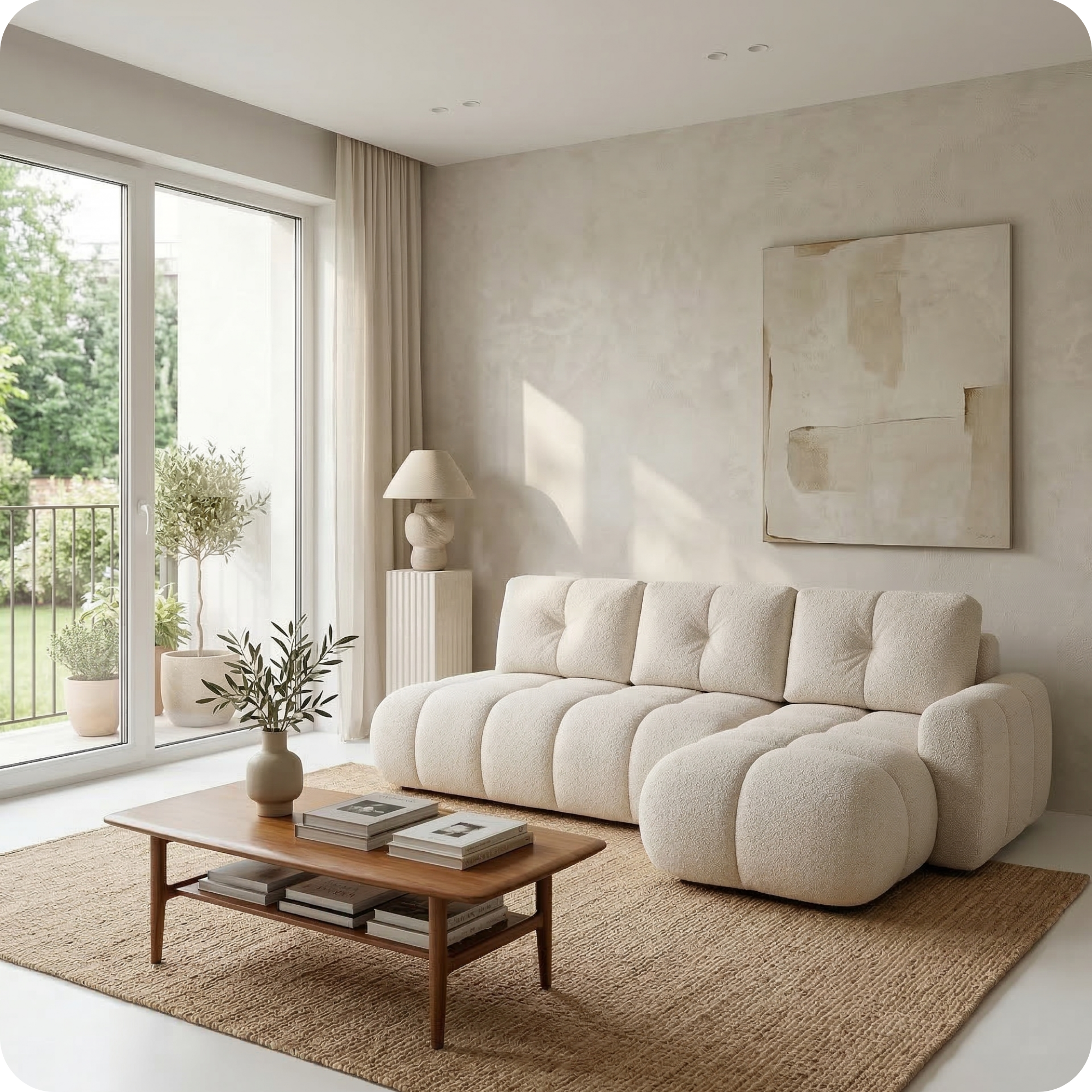
The most common and most damaging mistake with living room rugs is choosing one that is too small. A rug that is too small floats in the middle of the room with furniture pushed to the edges — this creates a disconnected, unanchored effect that makes the space feel smaller and more chaotic. The general rule is that the rug should be large enough for all the front legs of the major seating pieces to sit on it. For a three-seater sofa and two armchairs, a 200x300cm rug is typically the minimum; a 240x340cm is often better, and in larger rooms a 270x370cm or even larger creates the best effect. Go larger rather than smaller — you can almost never regret the extra size.

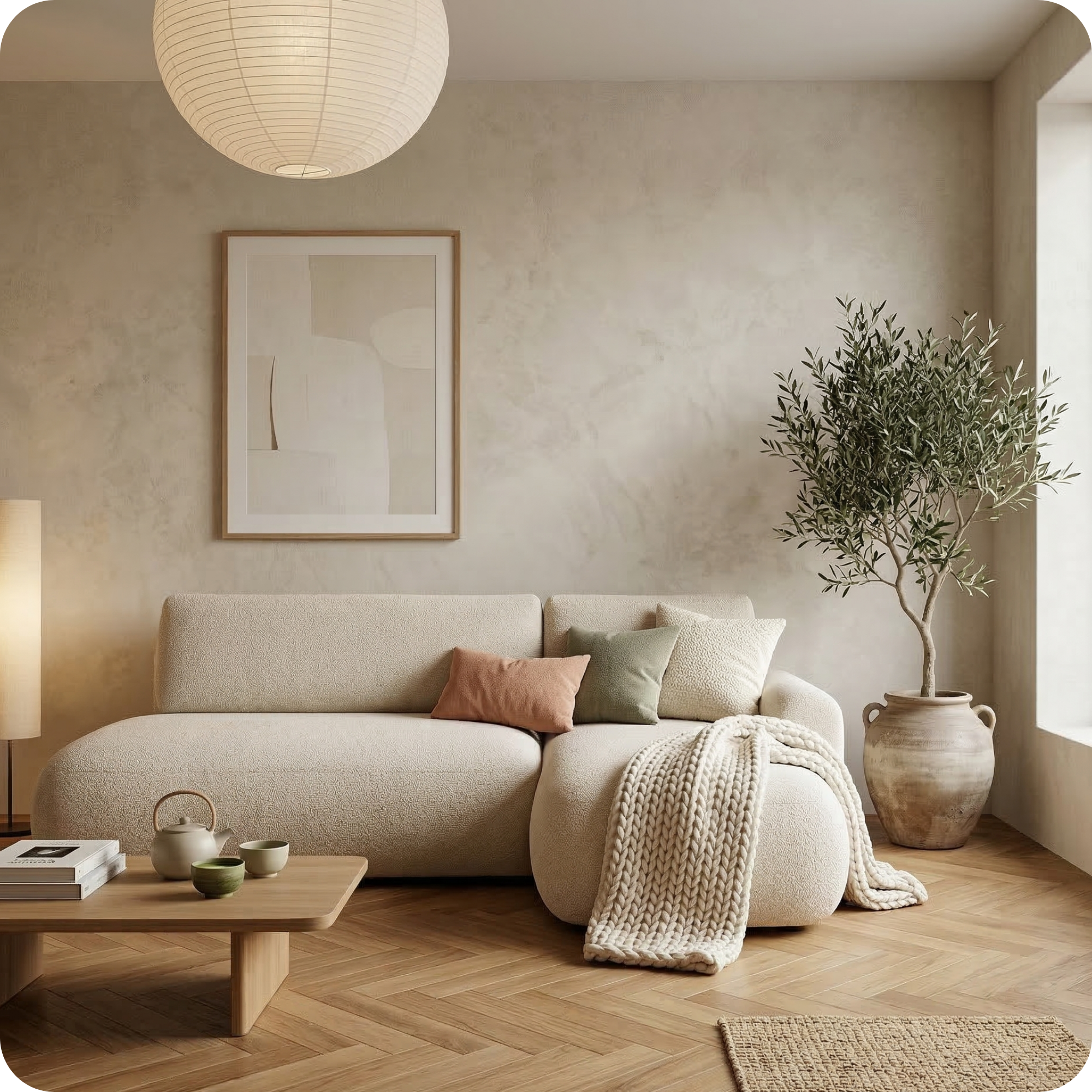
Merlot 3-Seater Sofa — from EUR 1,090
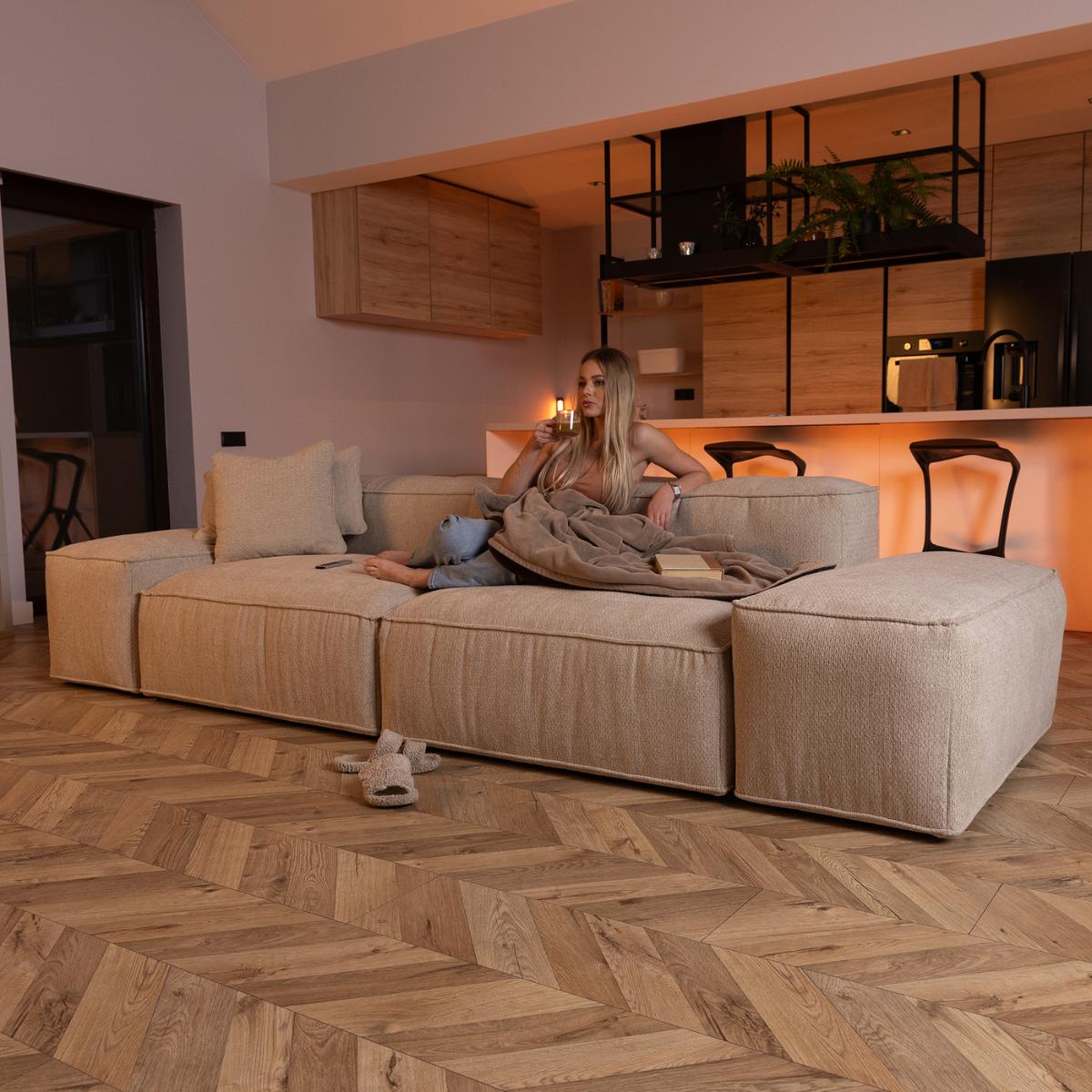
For the Merlot three-seater sofa, a rug of at least 200x300cm ensures that the front sofa legs sit comfortably on the rug. A warm-toned wool rug in grey, charcoal, or a subtle pattern will anchor the Merlot beautifully and define the seating zone.

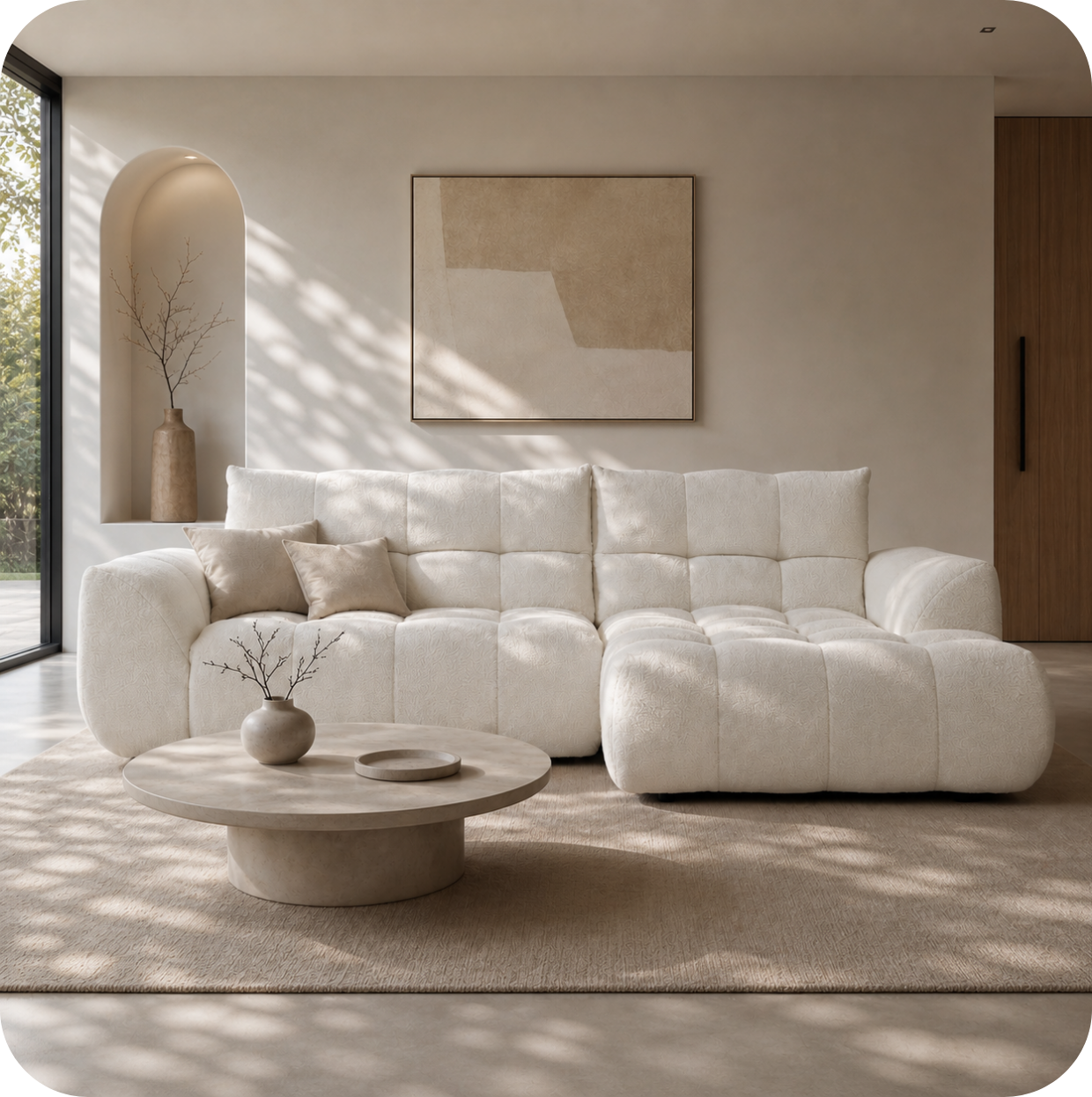
Merlot Corner Sofa — from EUR 1,390
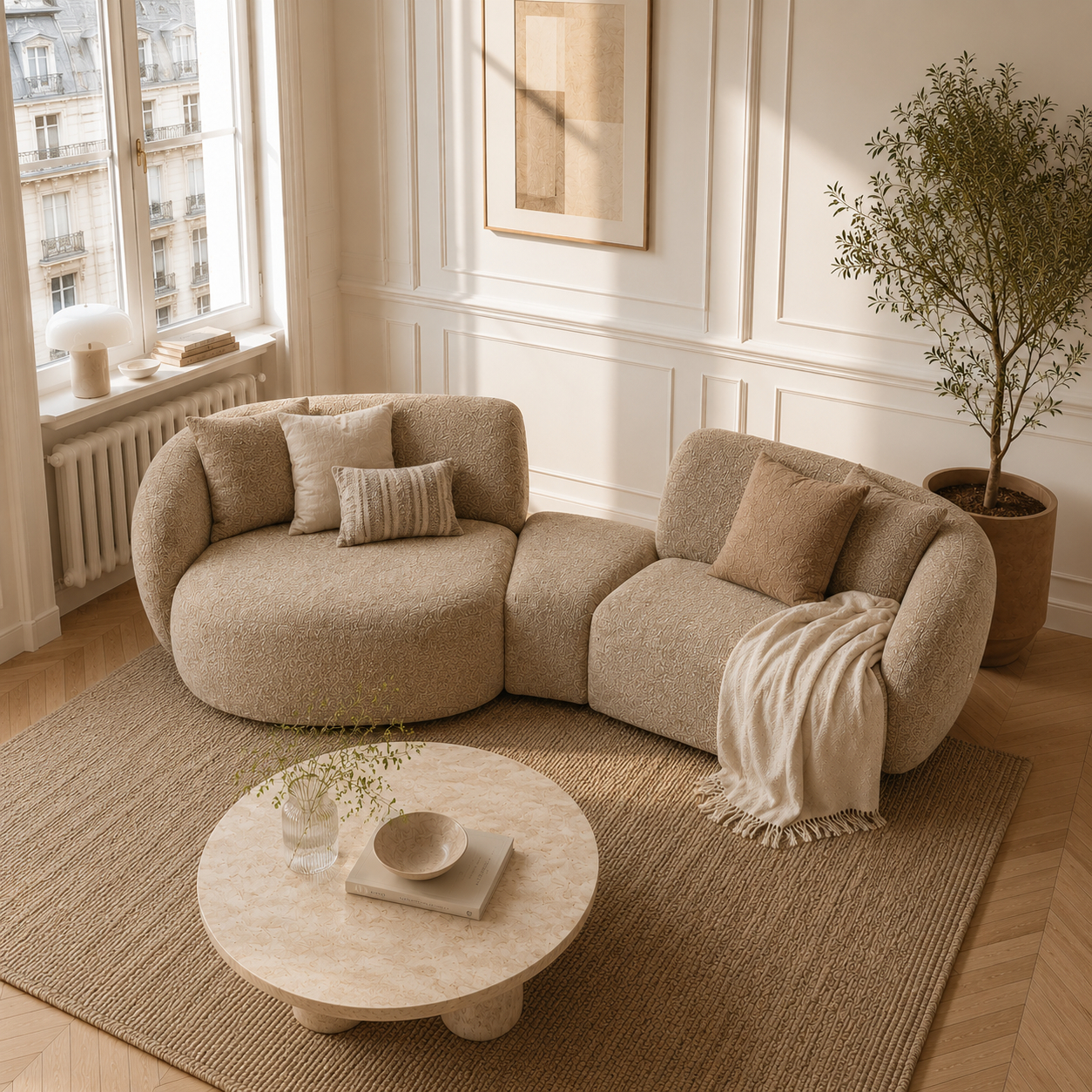
With a corner sofa, the rug sizing decision is slightly different. The rug should be large enough for at least the front legs of both sections to sit on it — for most L-shaped sofas, this means a rug of at least 250x300cm, or considering a round rug of 200-240cm diameter.
Rug Placement Options
There are three classic rug placement approaches, each creating a different effect. The "all on" approach — where all four legs of every piece of seating sit fully on the rug — creates the most formal, contained, and expensive-looking effect, and requires the largest rug. The "front legs on" approach — where only the front legs of the sofa and chairs sit on the rug — is the most popular and practical, and works with a smaller rug while still visually connecting the furniture grouping. The "all off" approach — where the rug sits completely under the coffee table with no furniture legs on it — creates a floating, island effect that works in some contemporary interiors but generally makes the room feel smaller.
Rug Material and Texture
Material and texture have a significant impact on how a rug looks and feels. Wool rugs are the gold standard: they are durable, naturally stain-resistant, and beautifully warm underfoot. Flat-weave cotton and kilim rugs are lighter and easier to clean, making them practical for high-traffic areas. Jute, sisal, and seagrass rugs add natural texture and work particularly well in relaxed, organic, and boho interiors. High-pile shag rugs are incredibly luxurious underfoot but require more maintenance. Silk and silk-blend rugs are beautiful but delicate, and are better suited to lower-traffic rooms or formal settings. Choose a rug that suits both your aesthetic and your practical needs — in a household with children and pets, durability should be a primary consideration.

Leave a comment
This site is protected by hCaptcha and the hCaptcha Privacy Policy and Terms of Service apply.