



How to Choose Sofa Colour: The Complete Guide to Picking the Right Tone
Choosing a sofa colour is one of the most consequential colour decisions in any living room — the sofa is typically the largest upholstered object in the space, the one piece that cannot easily be recovered or replaced, and the anchor around which the rest of the room's palette must work. Getting the sofa colour right sets the entire colour story of the room; getting it wrong means either living with a colour that doesn't work, or investing in a replacement. This guide walks through the key considerations: how to match or contrast with your existing room, how to choose between neutral and bold, how different colour families behave in different light conditions, and which colours age best over time.
Neutral vs Bold: The Fundamental Decision
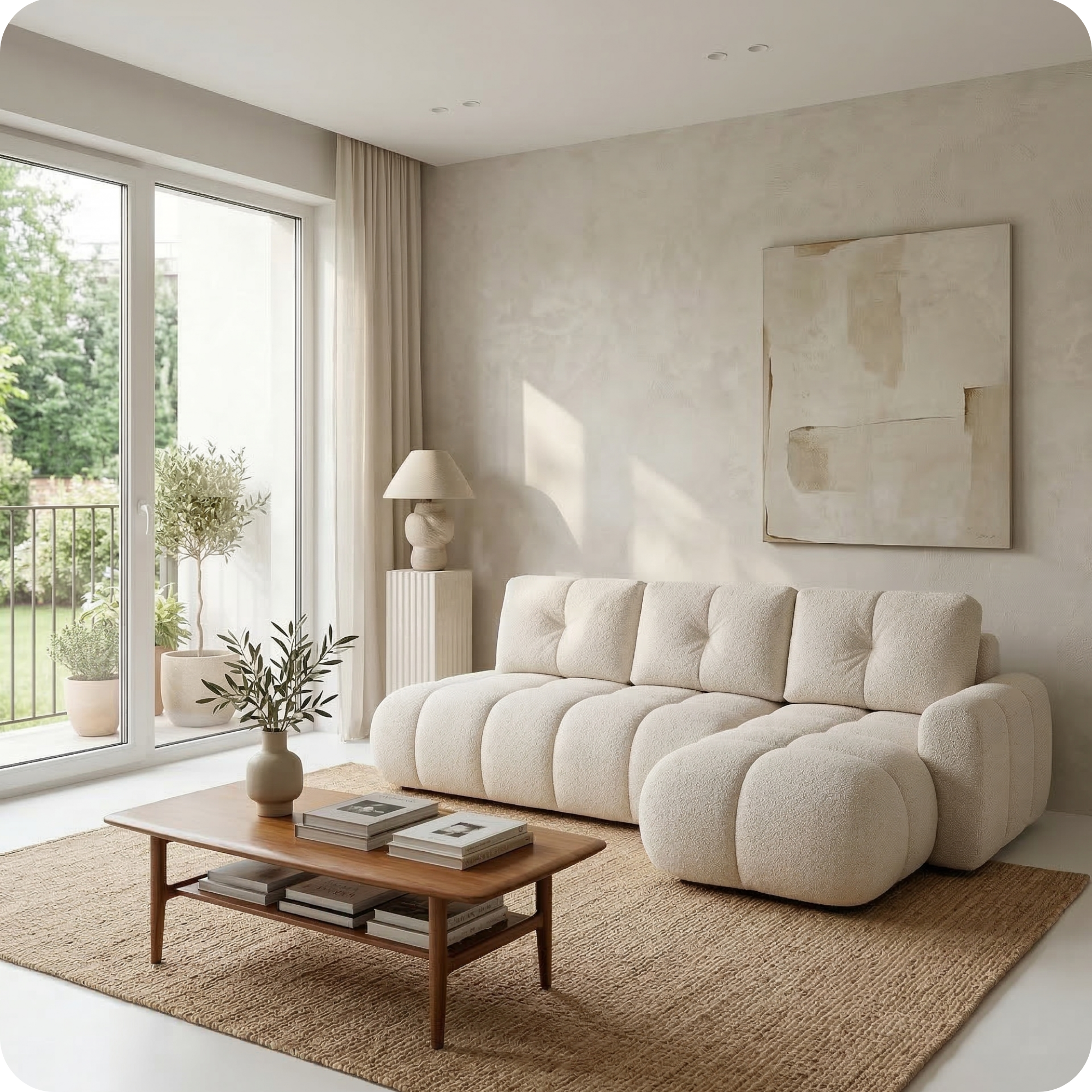
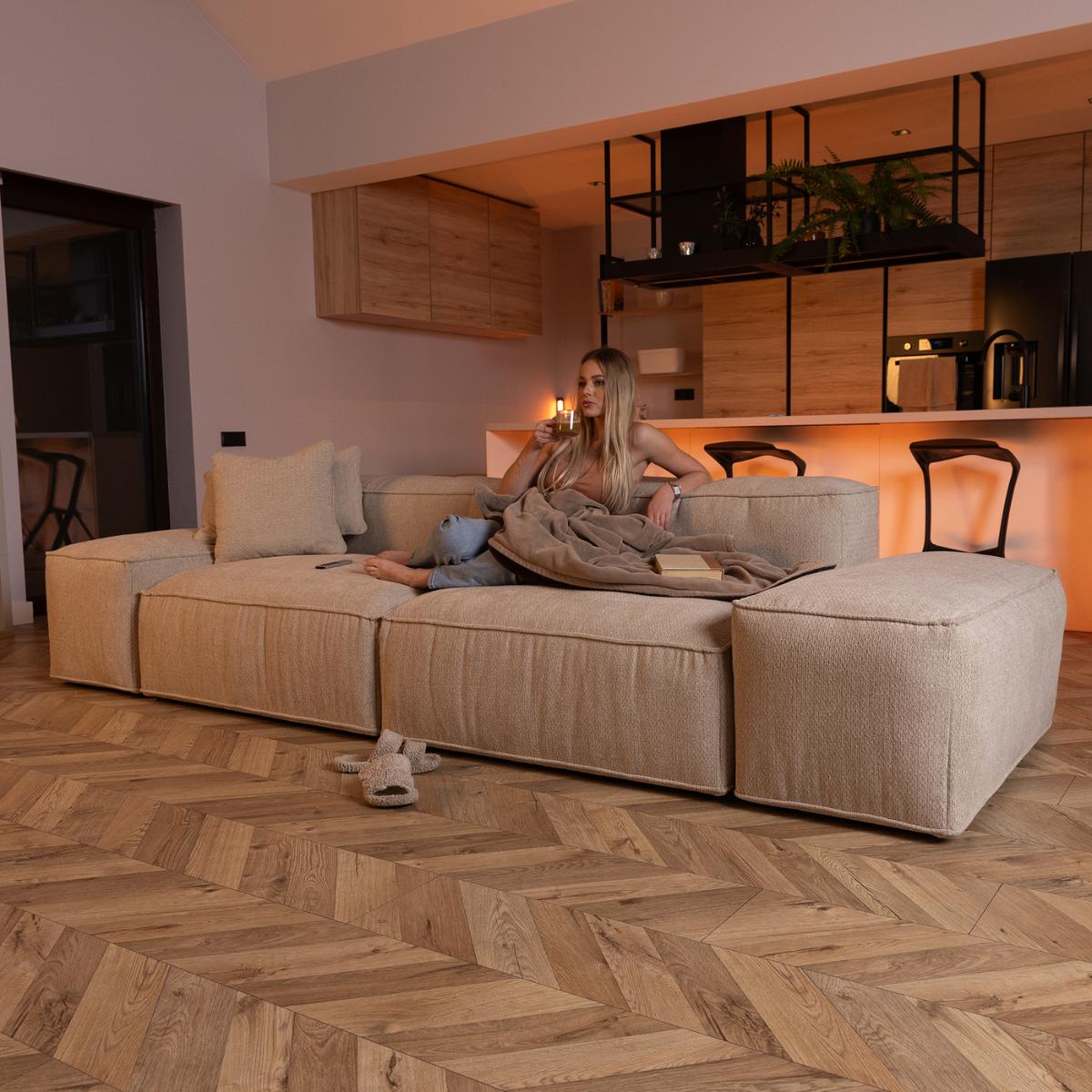
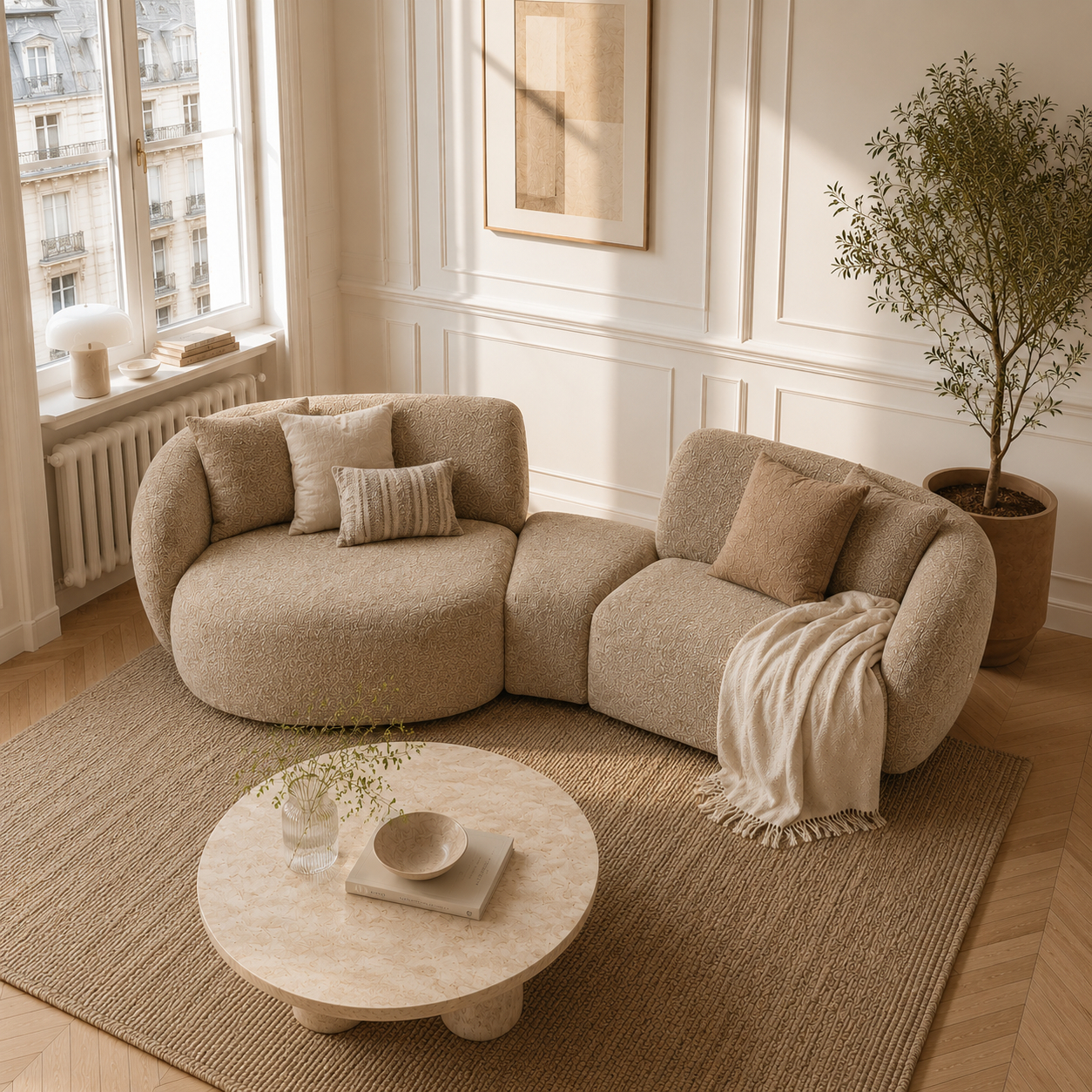
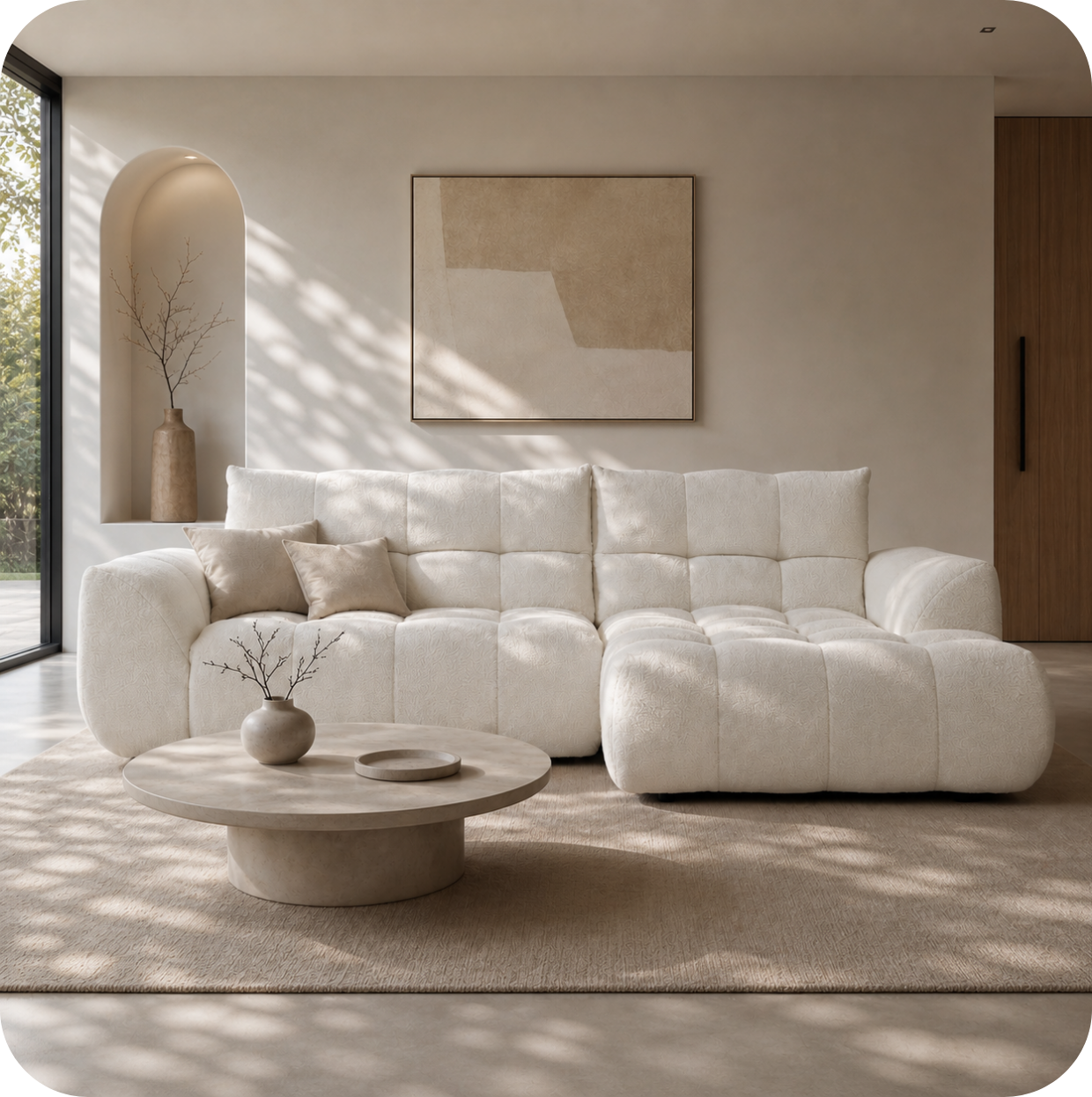
The most fundamental sofa colour decision is whether to go neutral (grey, beige, cream, sand, taupe, light brown) or bold (navy, green, teal, terracotta, burgundy, mustard). Neutral sofas are significantly more versatile — they can be restyles through cushion and accessory changes, they don't conflict with wall colour changes over time, and they create a less prescriptive backdrop for the rest of the room. Bold sofas, by contrast, are a stronger design statement — they anchor the room more decisively, create a focal point, and give the room more immediate personality. The trade-off is less flexibility: a bold sofa makes stronger demands on the room around it, and colour changes elsewhere in the room need to be negotiated around the sofa's colour.

Lugano Sofa — Light Grey — from EUR 1,490
Light grey is the most popular neutral sofa colour — it works in virtually every room, with every wall colour, and can be styled warm (terracotta cushions, jute rug) or cool (white and navy accessories, steel grey throws) with equal success. The safest choice for those who want maximum styling flexibility over time.

Merlot Sofa — Leaf Green — from EUR 1,090
Leaf green is one of the most versatile bold sofa colours available — it works with warm earthy tones (terracotta, rust, amber) for a nature-inspired look, and equally with cool jewel tones (navy, teal) for a more dramatic palette. A bold choice that ages well and reads as considered rather than trendy.
How Light Affects Sofa Colour
Sofa colours look different in different light conditions, and it is essential to assess any colour you are considering in both natural and artificial light before committing. Warm white artificial light (2700K-3000K) will warm up cool tones (greys, blues, teals) and intensify warm tones (terracotta, mustard, toffee). Cool or neutral light (4000K+) will flatten warm tones and make cool tones look cooler still. The direction your room faces also matters significantly: north-facing rooms receive cool, indirect light that can make warm-undertoned fabrics look duller and cool-undertoned fabrics look colder — in a north-facing room, warmer sofa colours (sand, toffee, warm beige) compensate for the lack of warm sunlight. South-facing rooms receive warmer, more direct light — they can support cooler, more saturated colours without them reading as cold.
Colours That Age Well vs Colours That Date
Sofa colours that age well tend to be rooted in natural, earthy tones or classic neutrals — they are colours that have existed in interior design for decades or centuries rather than colours that are specific to a particular trend cycle. Warm greys, warm beiges, deep olive, dusty teal, warm navy, terracotta, toffee, and warm white are all colours with genuine longevity — they may have their moments of peak trend relevance, but they never become obsolete. Colours that tend to date more quickly are those that are highly saturated, very fashionable in a specific short period, or associated with a particular design moment — think millennial pink of the late 2010s or the very specific shade of avocado green that defines 1970s kitchens. When choosing a sofa to last ten or more years, staying in the territory of natural, muted, and earthy tones is the lowest-risk approach.

Leave a comment
This site is protected by hCaptcha and the hCaptcha Privacy Policy and Terms of Service apply.