






How to Clean and Care for Your Sofa: The Complete Guide to Making It Last
A good sofa is a significant investment, and with proper care it should last ten, fifteen, or even twenty years. The difference between a sofa that looks fresh and inviting after a decade of daily use and one that looks tired and worn after just three years is almost entirely care and maintenance. This guide covers everything you need to know about cleaning different upholstery types, dealing with spills and stains, maintaining the structure of the sofa, and rotating cushions to ensure even wear.
Understanding Your Sofa's Upholstery Care Codes
Most sofas have a care label (usually underneath the cushion or on the sofa base) with a cleaning code. Understanding this code tells you exactly how the upholstery can be safely cleaned. W means water-based cleaners only — most water-based fabric cleaners are suitable. S means solvent-based cleaners only — do not use water as it may stain or shrink the fabric. W/S means either water-based or solvent-based cleaners are suitable. X means vacuum or brush only — no liquid cleaners of any kind. If your sofa has no care label or you are unsure, test any cleaning product in a hidden area first and wait for it to dry completely before proceeding with the main surface.

Lugano Sofa — Sand — from €1,299
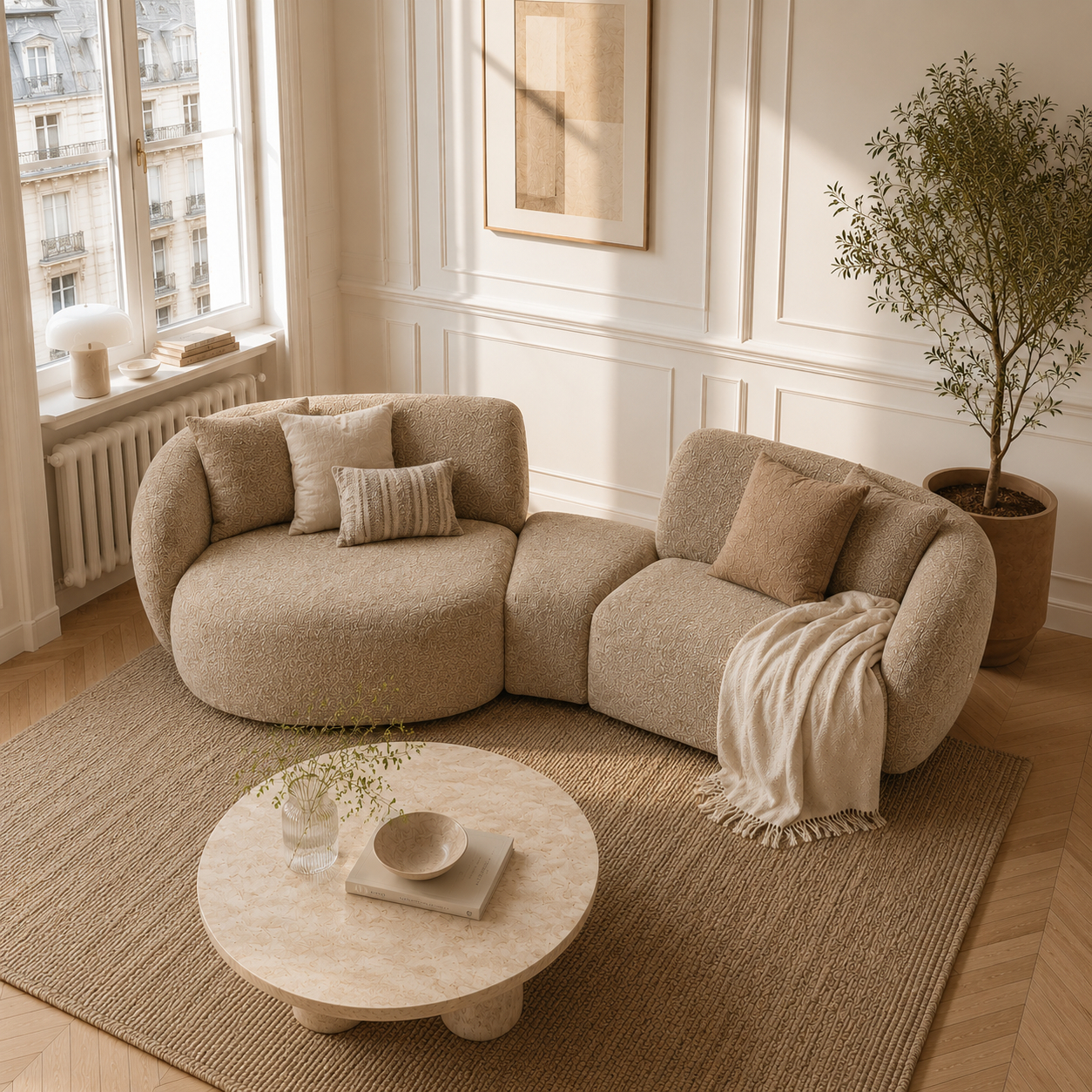
The Lugano's performance upholstery is designed with longevity in mind — its fabric composition offers excellent resistance to everyday wear and pilling, and responds well to gentle regular cleaning. Regular vacuuming and prompt attention to spills is all that is needed to keep it looking as good as new for years.

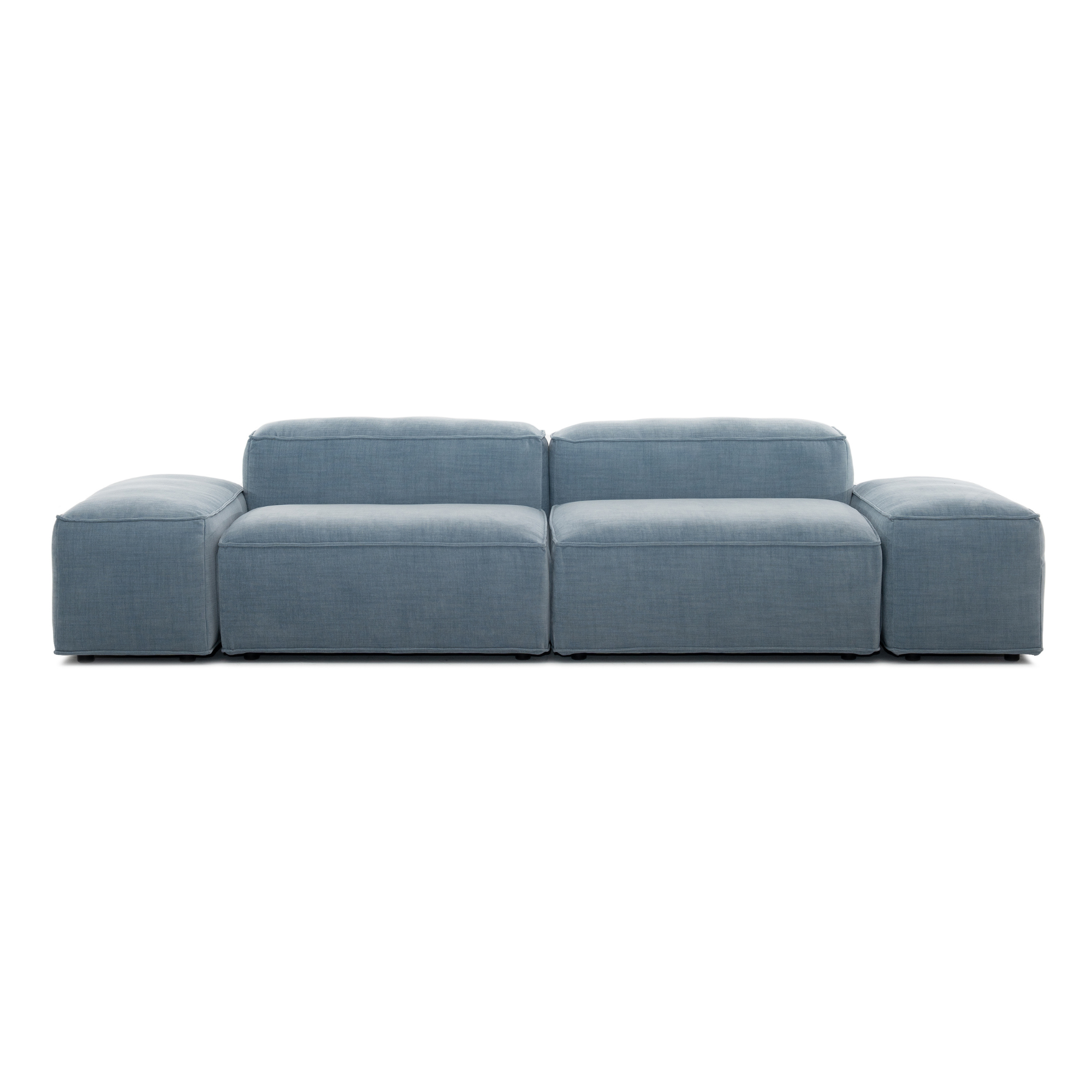
Modular Sofas — Furni Collection — from €990
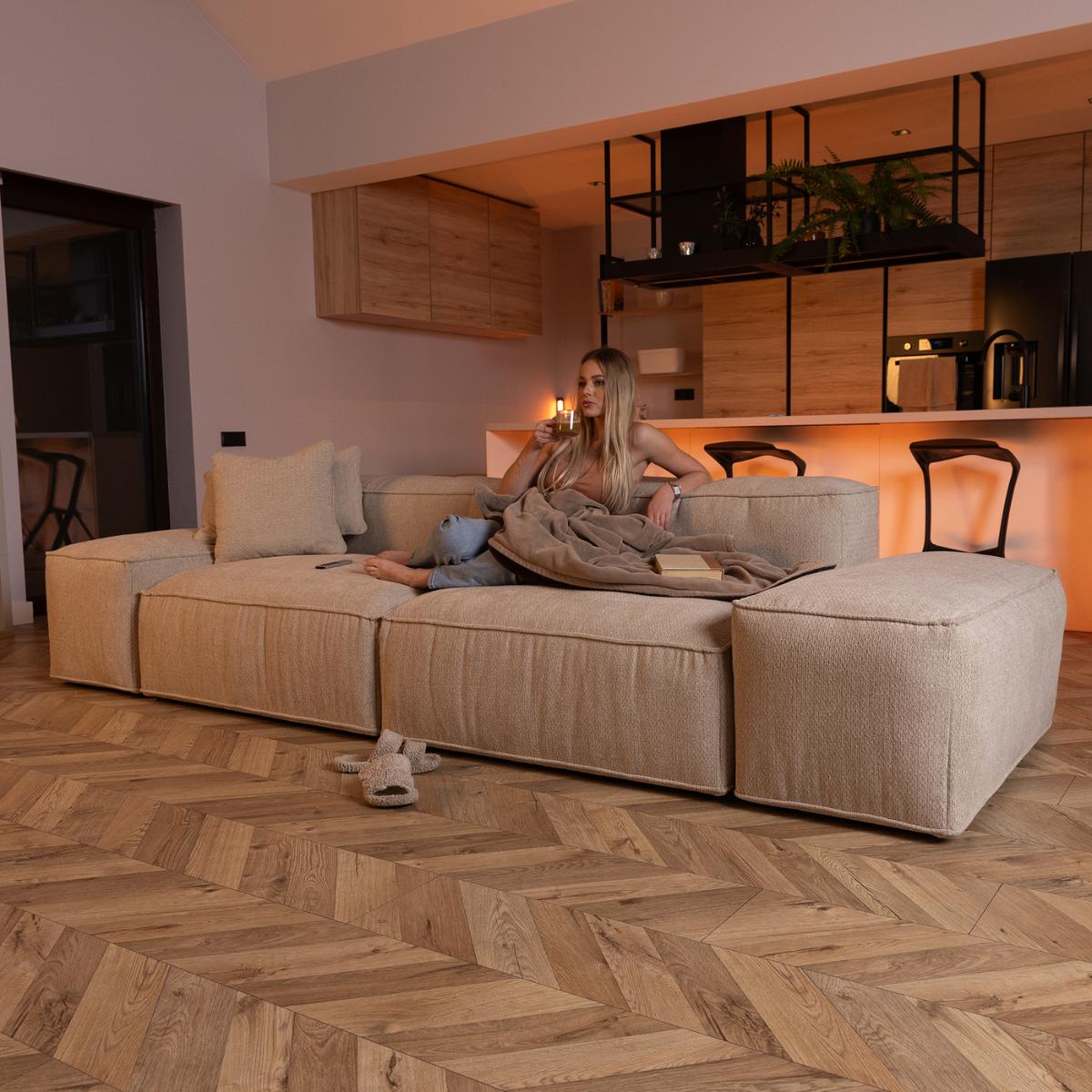
Modular sofas offer a practical care advantage: if one section's cushion covers become worn or stained beyond cleaning, covers can potentially be replaced individually rather than requiring the replacement of the entire sofa. This modularity extends the effective lifespan of the piece significantly.
How to Clean Different Upholstery Types
Fabric sofas (linen, cotton, boucle): vacuum regularly with a soft brush attachment to remove dust and debris. For spot cleaning, use a clean white cloth slightly dampened with appropriate cleaner (check care code) and blot — never rub — the stain from the outside inward. Allow to dry completely before using. Professional cleaning once a year or every two years is recommended for heavily used family sofas. Velvet sofas: velvet is delicate but easier to maintain than its reputation suggests. Vacuum gently with a soft brush attachment, always in the direction of the pile. Brush marks and light crush can often be removed by gently steaming from a distance and brushing into the pile while still slightly damp. For spills, blot immediately and allow to dry naturally, then gently brush back into the pile direction. Performance fabric and microfibre: these are the most forgiving upholstery types to clean. Most spills can be cleaned with a damp cloth and mild soap. Allow to dry completely. Most performance fabrics can be cleaned more aggressively if needed without risk of damage.
The 5-Minute Weekly Sofa Maintenance Routine
Five minutes of regular maintenance prevents the need for more intensive cleaning and significantly extends sofa life. Each week: plump and redistribute all cushions to prevent permanent deformation in any one area. Rotate reversible cushions (flip them) so both sides receive equal wear. Vacuum the seat cushions, back cushions, and the sofa base surface with a soft brush attachment. Brush or shake out any crumbs from between cushions. Check for any small stains or marks and address them immediately before they set.
Dealing with Common Spills and Stains
The golden rule with all spills is act immediately — the longer a spill sits, the more it penetrates the fibres and the harder it becomes to remove. Blot (never rub) with a clean white cloth to absorb as much liquid as possible before applying any cleaner. Common stains: red wine — blot immediately, apply cold sparkling water, continue blotting. Coffee and tea — blot immediately, mild soap and cold water. Grease and food oil — sprinkle baking soda or cornflour on the stain, allow to absorb for 20 minutes, brush off, then spot clean. Ink — isopropyl alcohol on a cotton bud applied directly to the ink; blot rather than rub. Pet accidents — blot and absorb immediately, use an enzyme-based pet stain cleaner.