


How to Make a Small Living Room Look Bigger: 10 Design Tricks That Work
A small living room doesn't have to feel small. With the right design choices — in furniture scale, colour, layout, lighting, and decoration — even a modest-sized room can feel generous, open, and well-proportioned. These ten design techniques are used by professional interior designers to make small spaces feel larger, and every one of them is achievable in a real home without a major renovation.
1. Choose the Right Sofa Size
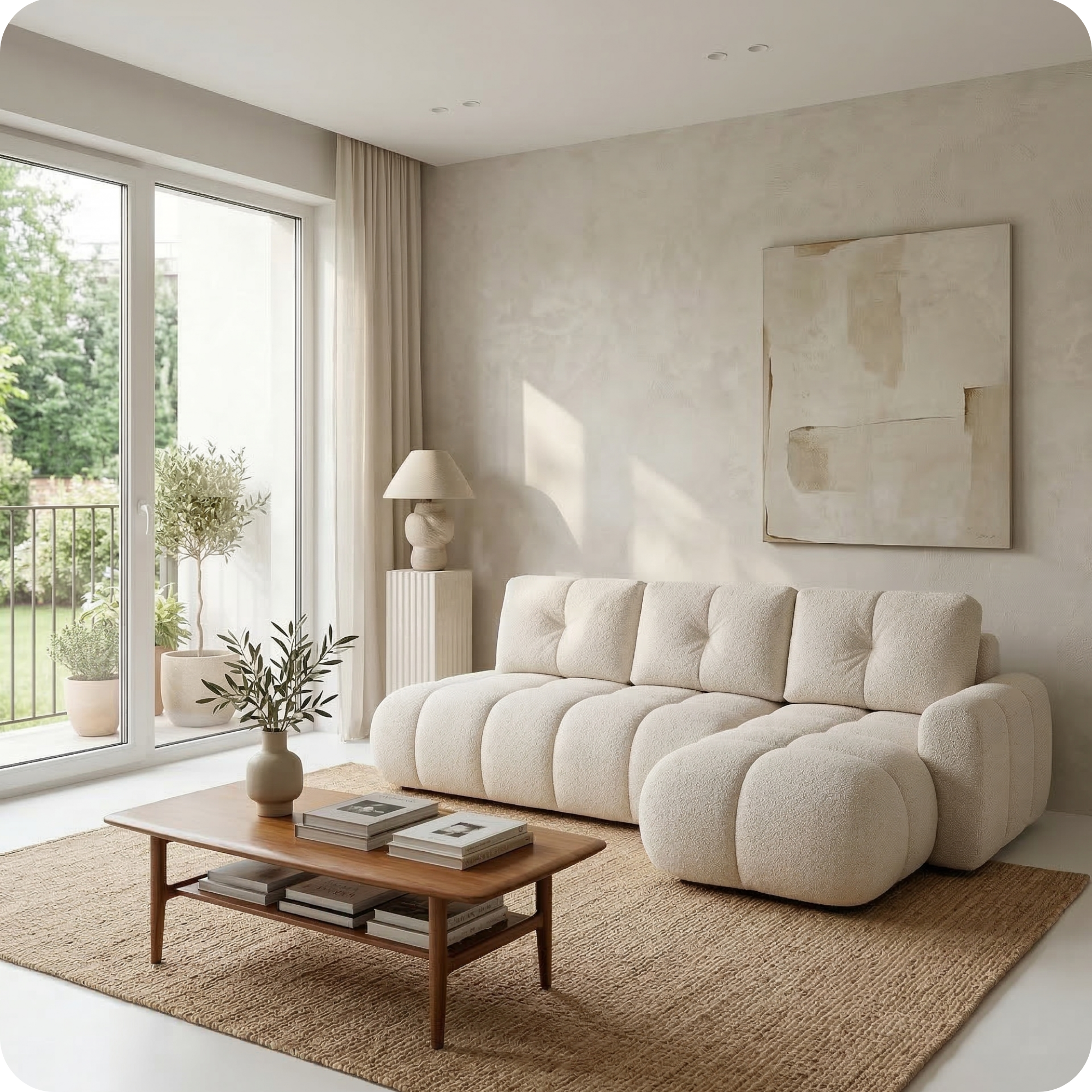
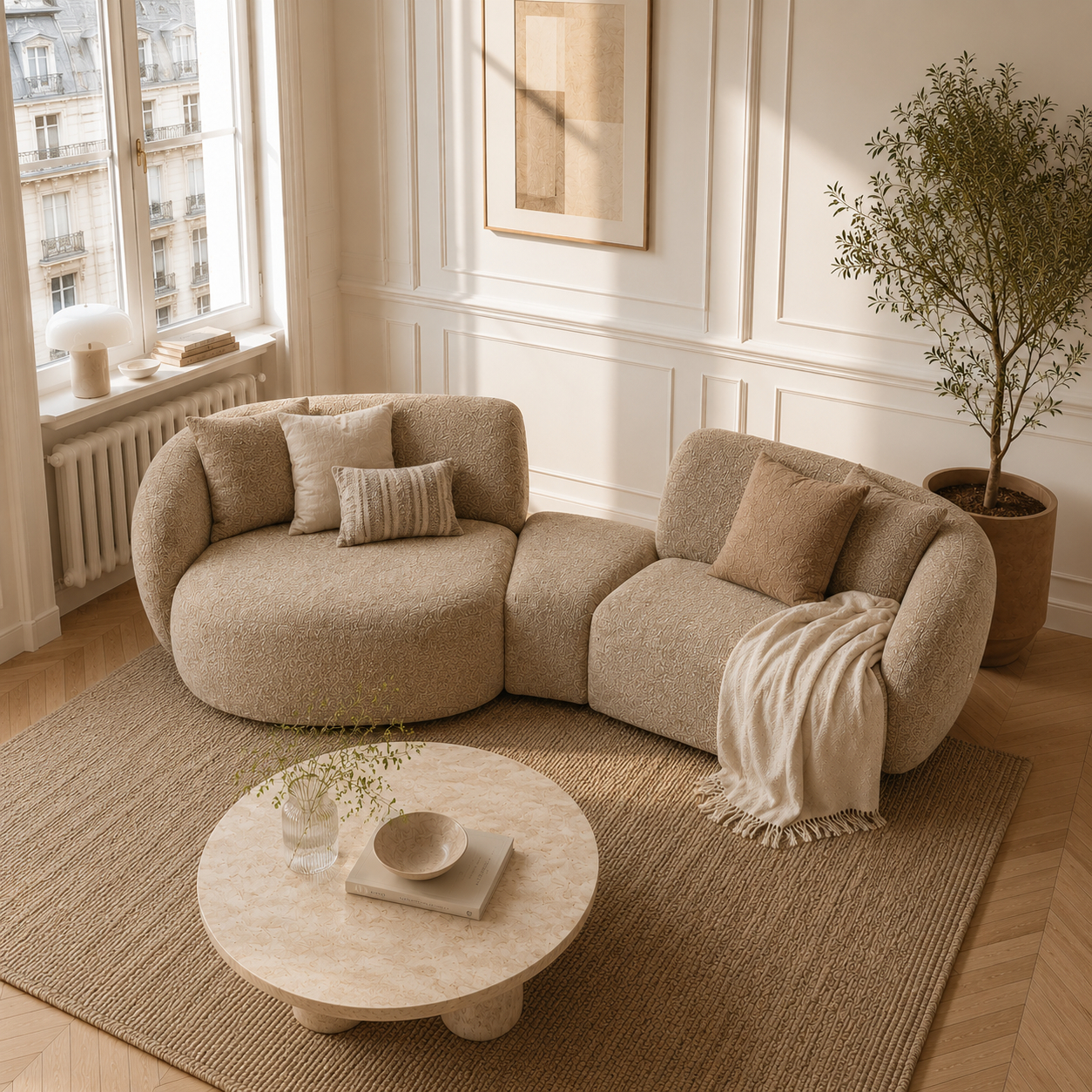
The single most important decision in a small living room is choosing a sofa that's right-sized for the space. A sofa that's too large overwhelms a small room and makes it feel cramped; a sofa that's right-sized (or even slightly smaller than your instinct suggests) keeps the room feeling proportionate and open. For small living rooms, a two-seater or compact three-seater with a seat depth of 80-90cm is usually more appropriate than a deep, oversized three-seater. Low-profile sofas — with low backs and arms — create a lower visual horizon that makes ceilings feel higher and rooms feel more open.

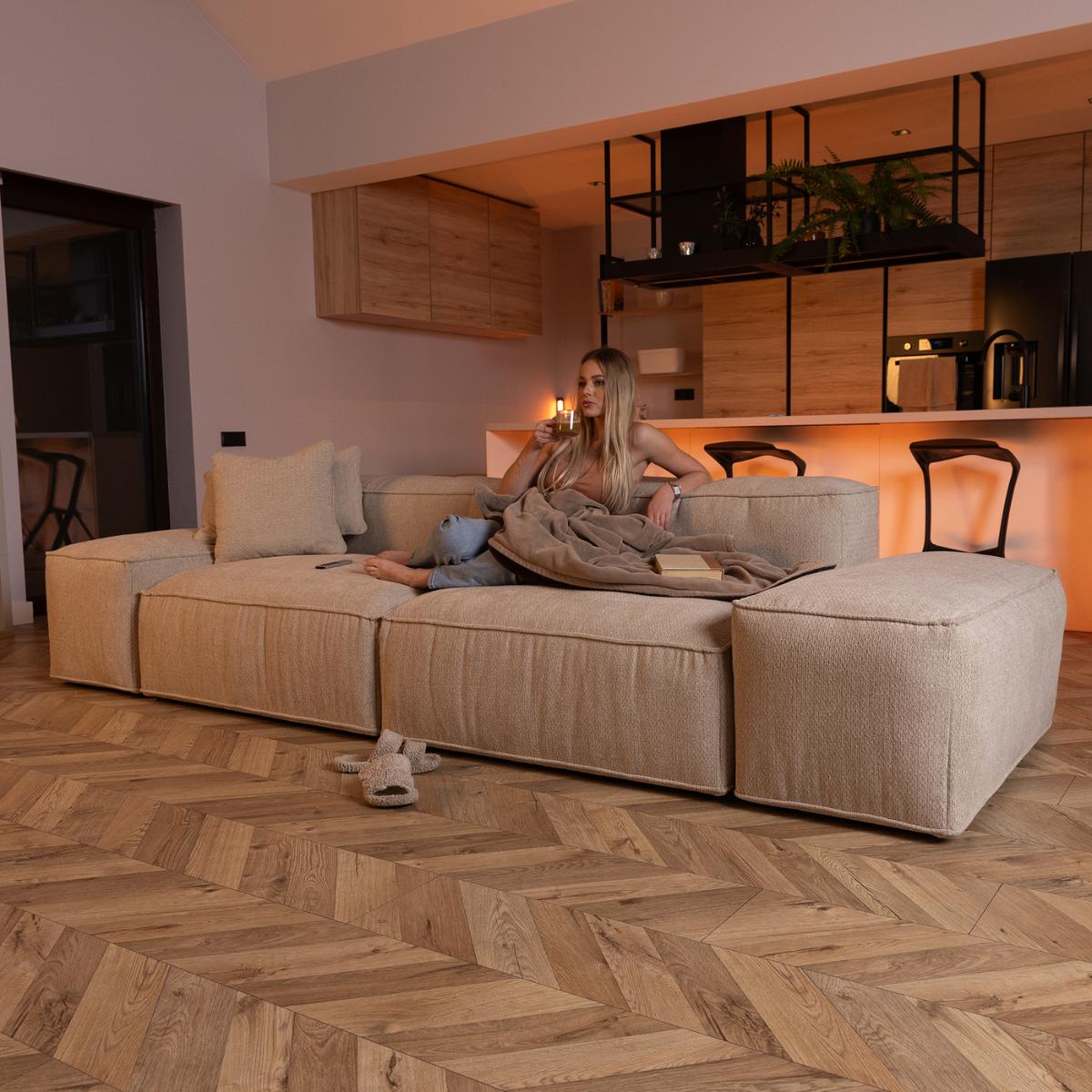
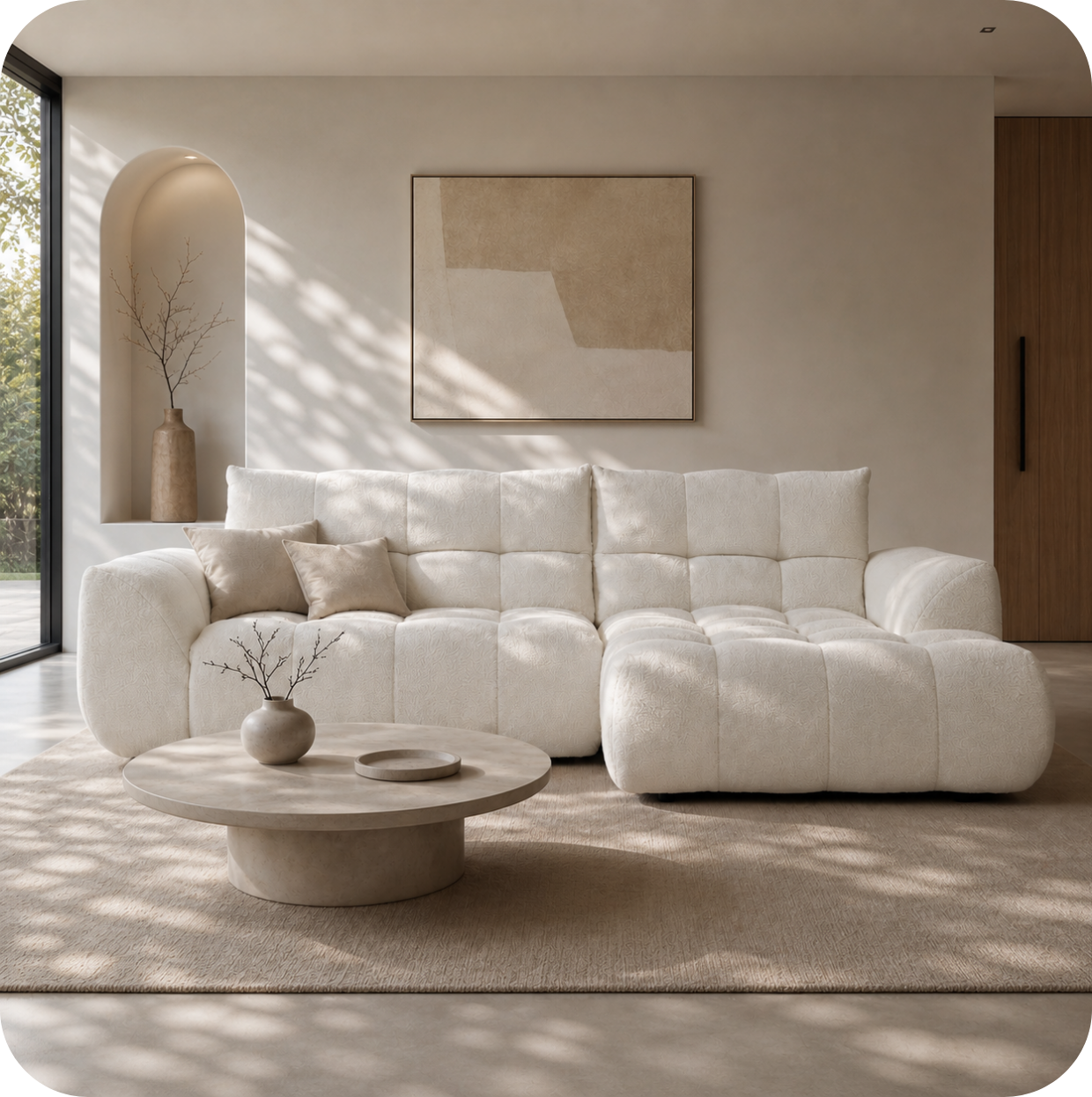
Merlot Modular Sofa — from EUR 1,190
The Merlot's low armrests and clean profile make it an excellent choice for smaller rooms — its proportions keep the room feeling open while delivering full three-seater comfort. Configure as a standard sofa (no chaise) for the most space-efficient option in rooms under 15m².

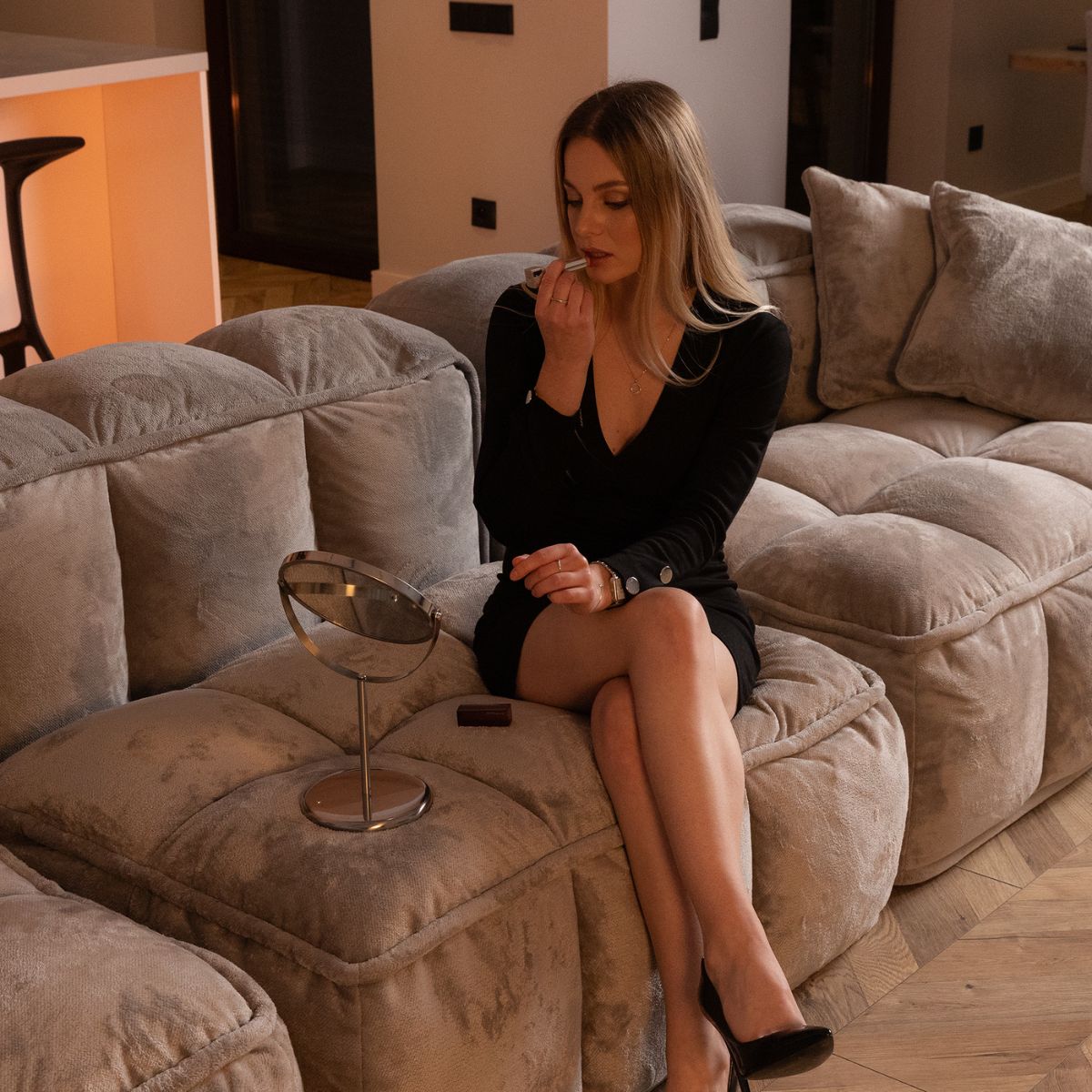
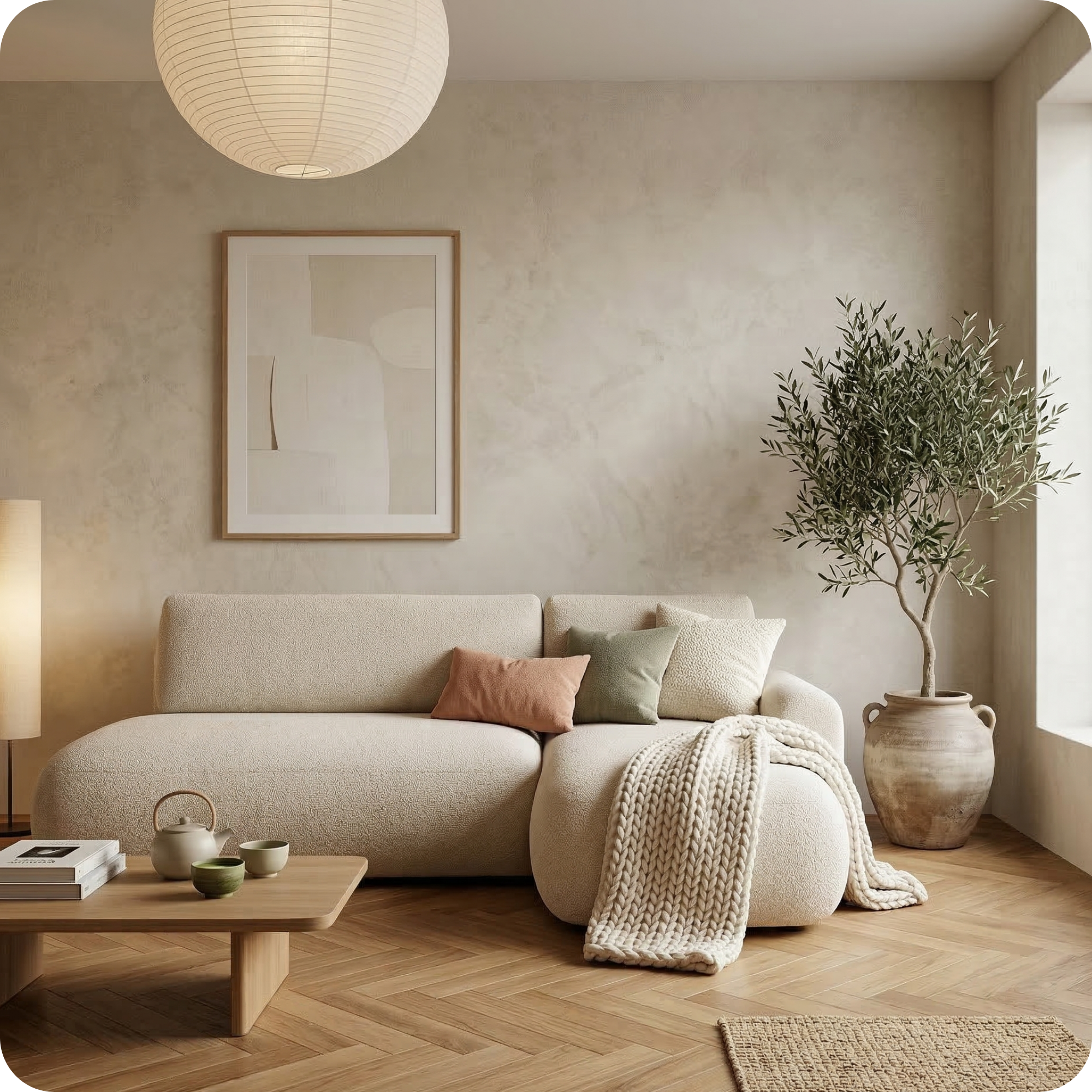
Lugano Sofa — Light Grey — from EUR 890
The Lugano in light grey is ideal for small rooms: the pale, receding neutral colour doesn't visually dominate the room, and the clean, compact proportions keep floor space maximised. Light grey is one of the best small-room sofa colours — it reads as neutral without visually advancing the way a dark sofa would.
2. Use a Light, Neutral Colour Palette on Walls
Light walls reflect more light and make rooms feel larger. The best small-room wall colours are warm whites, light creams, and pale neutrals — colours that bounce light around the room and create a sense of airiness. Dark walls can work in small rooms too (it's a deliberate, dramatic choice) but they make rooms feel more enclosed. If you want colour in a small room, introduce it through accents — cushions, a single artwork, a potted plant — rather than walls.
3. Keep Leg Furniture on Show
Furniture with visible legs — a sofa on legs, armchairs on legs, a coffee table on legs — makes rooms feel more open because you can see floor beneath the furniture. This continuation of floor level under the furniture creates an illusion of more floor space. Avoid block sofas (no legs) in small rooms — they sit heavily on the floor and make the room feel more enclosed.
4. Maximise Natural Light
Natural light is the most effective tool for making any space feel larger. Keep windows unobstructed or dressed with light, sheer curtains rather than heavy drapes. Hang curtains as high as possible — close to the ceiling rather than at the window frame — to make the window appear taller and the ceiling higher.
5. Use Mirrors Strategically
A large mirror on a wall — particularly opposite a window — doubles the apparent depth of a room and reflects natural light throughout the space. One large mirror is more effective than several smaller ones. Lean a mirror against the wall rather than hanging it flat for a more contemporary, less formal look.
6. Declutter Relentlessly
Clutter makes small rooms feel smaller. In a small living room, ruthless editing is essential — every object that doesn't earn its place should be removed. One well-chosen artwork, one beautiful lamp, one plant — the result is a room that feels curated and spacious rather than crowded.
7. Choose a Low Coffee Table
A low coffee table (40-45cm high) keeps the visual horizon low and the room feeling open. Glass or transparent coffee tables are the best small-room choice: they take up visual space without visually occupying it. A round coffee table improves circulation in small rooms compared to a rectangular one.
8. Mount the TV on the Wall
A wall-mounted TV removes the need for a TV unit, freeing up significant floor space and creating a cleaner, less cluttered look. The wall space below a mounted TV can be left empty (which looks clean and spacious) or used for a low, slim console.
9. Use Vertical Space
Draw the eye upward with tall bookshelves, artwork hung high, or floor-to-ceiling curtains. Vertical elements make ceilings feel higher and rooms feel taller.
10. Keep the Rug Proportionate
In a small living room, the rug should ideally extend beyond the edges of the coffee table and have the front legs of the sofa on it — a rug that's too small fragments the room and makes it look smaller. A rug that extends the full width of the seating arrangement creates a unified, defined zone that feels more spacious than a room with no rug or a too-small rug.

Leave a comment
This site is protected by hCaptcha and the hCaptcha Privacy Policy and Terms of Service apply.