
How to Style a Corner Sofa: 10 Ideas to Make Your L-Shape Look Stunning
A corner sofa is one of the most impactful pieces of furniture you can put in a living room. It fills a space with confidence, maximises seating, and creates an instant focal point. But its very scale can make it feel daunting to style. How do you decorate around something so large without the room looking overwhelmed? These ten ideas will help you get it exactly right.
1. Choose Cushions in Odd Numbers
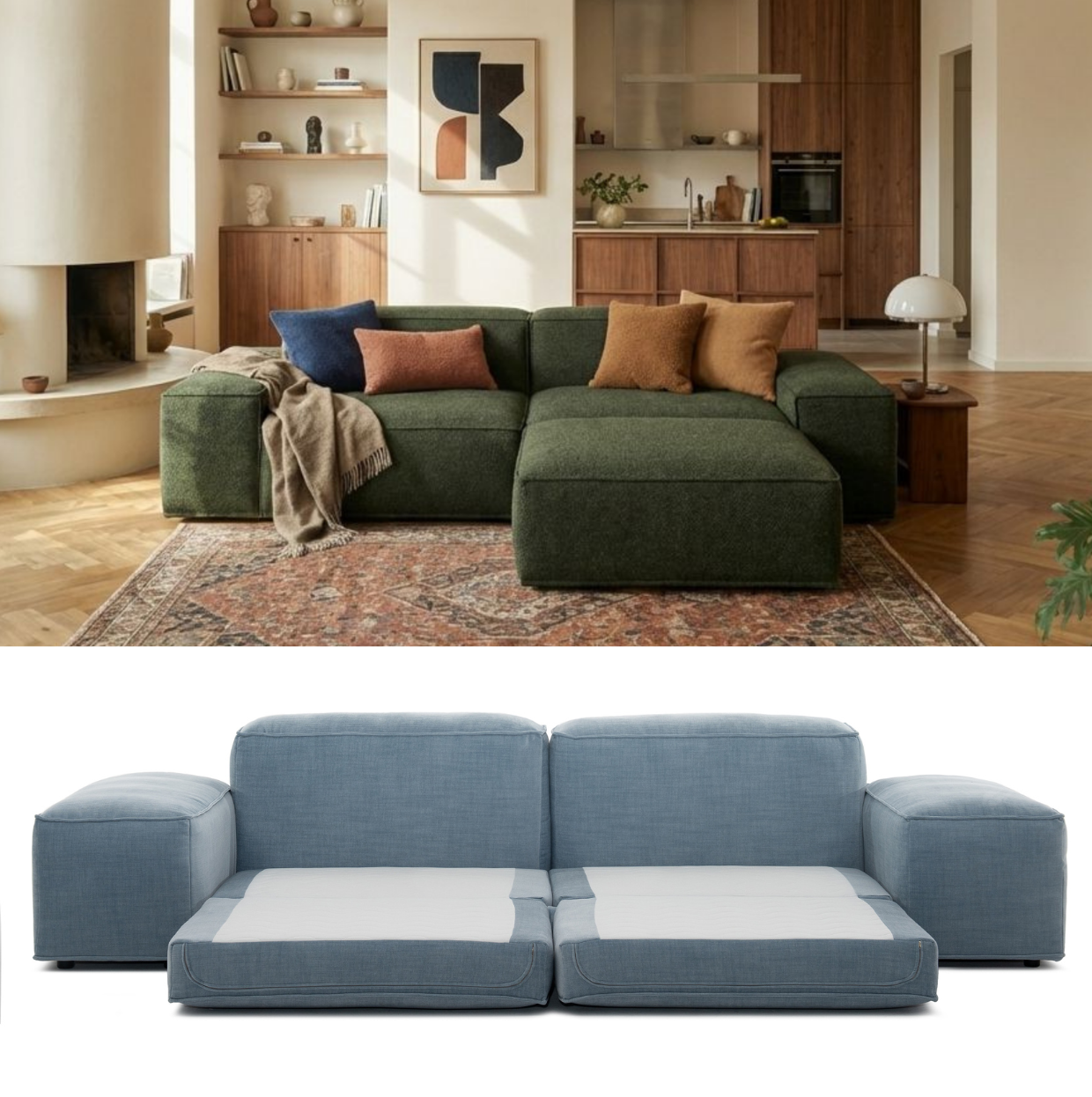
The golden rule of sofa cushion styling is odd numbers — three or five cushions on each arm of the corner, rather than even pairs. This creates a more relaxed, organic look. Mix sizes: one large square anchor cushion (60x60 cm), one mid-size square (50x50 cm), and a rectangle. Layer textures — boucle, velvet, linen — for visual interest without adding colour chaos.
2. Use a Large Rug to Anchor the Corner
Because corner sofas are large, the rug beneath them needs to be proportionally generous. Aim for at least 240x340 cm — enough that the front legs of both the main sofa and the longchair section rest on the rug. A floating rug that is too small will make even a beautiful corner sofa look disconnected from the room.
3. Add a Statement Coffee Table
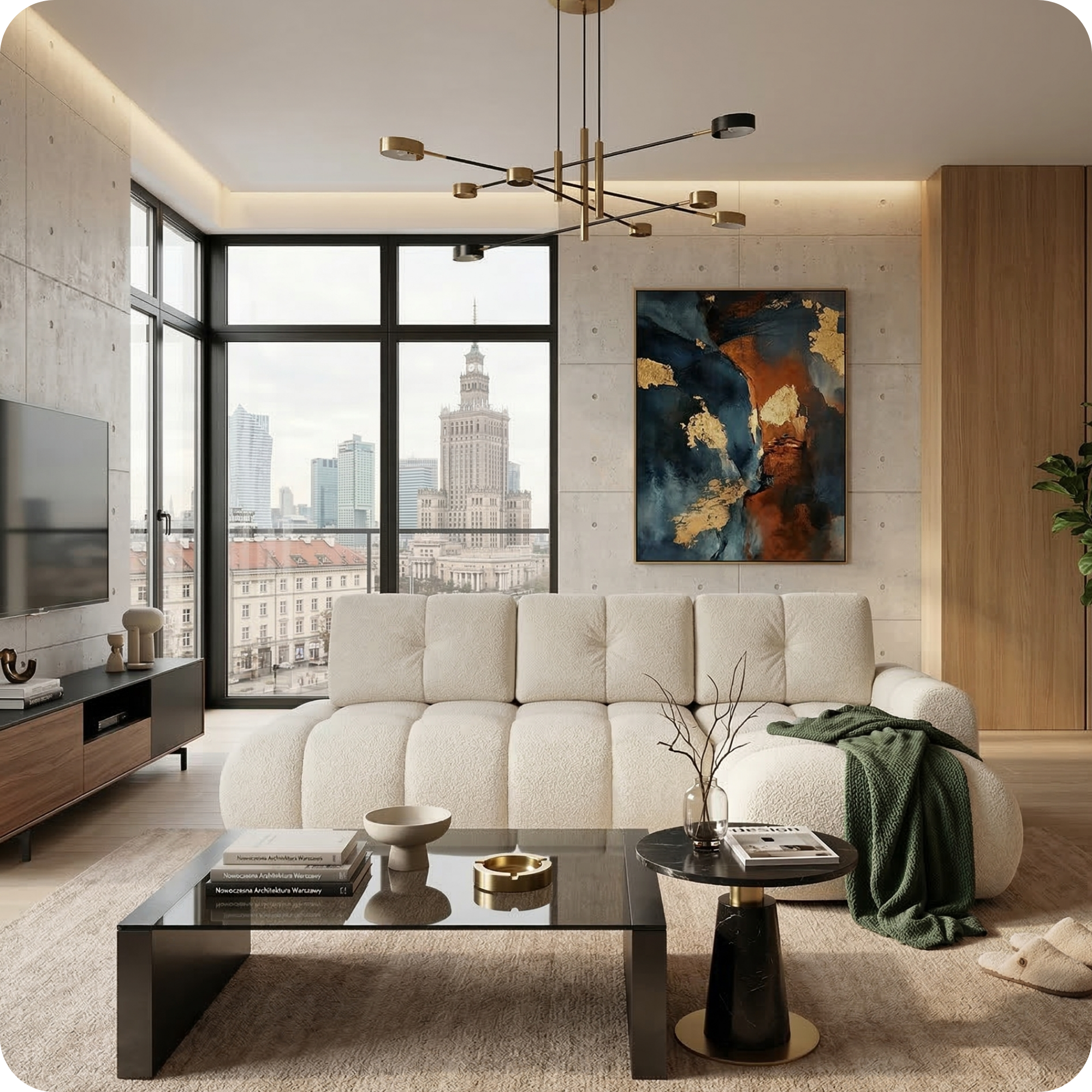
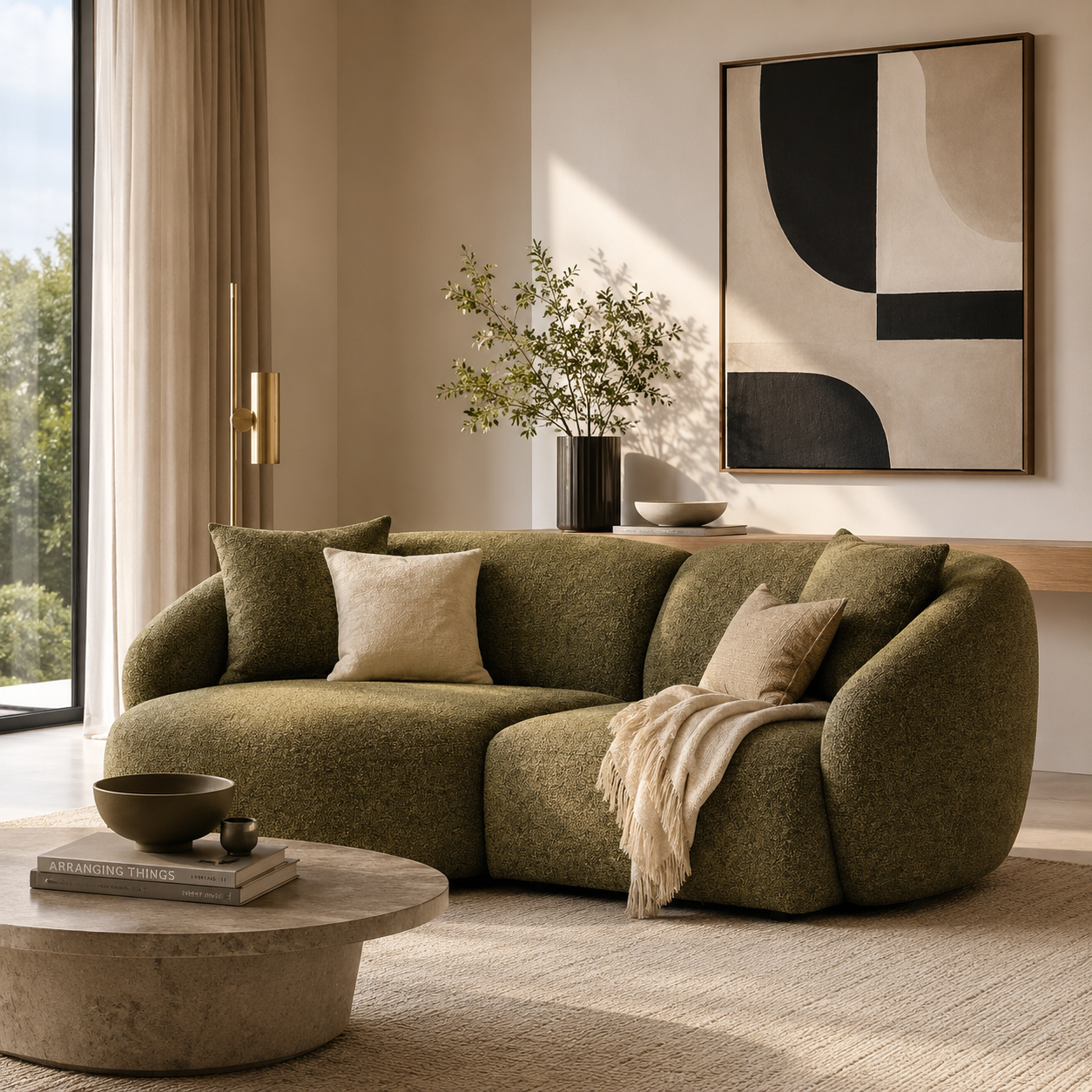
The coffee table in front of a corner sofa is visible from both the sofa arm and the longchair, so it needs to work from multiple angles. Round and oval tables are particularly good at softening the angular L-shape. A chunky wooden coffee table with organic edges adds warmth; a glass table keeps the space feeling open and light.

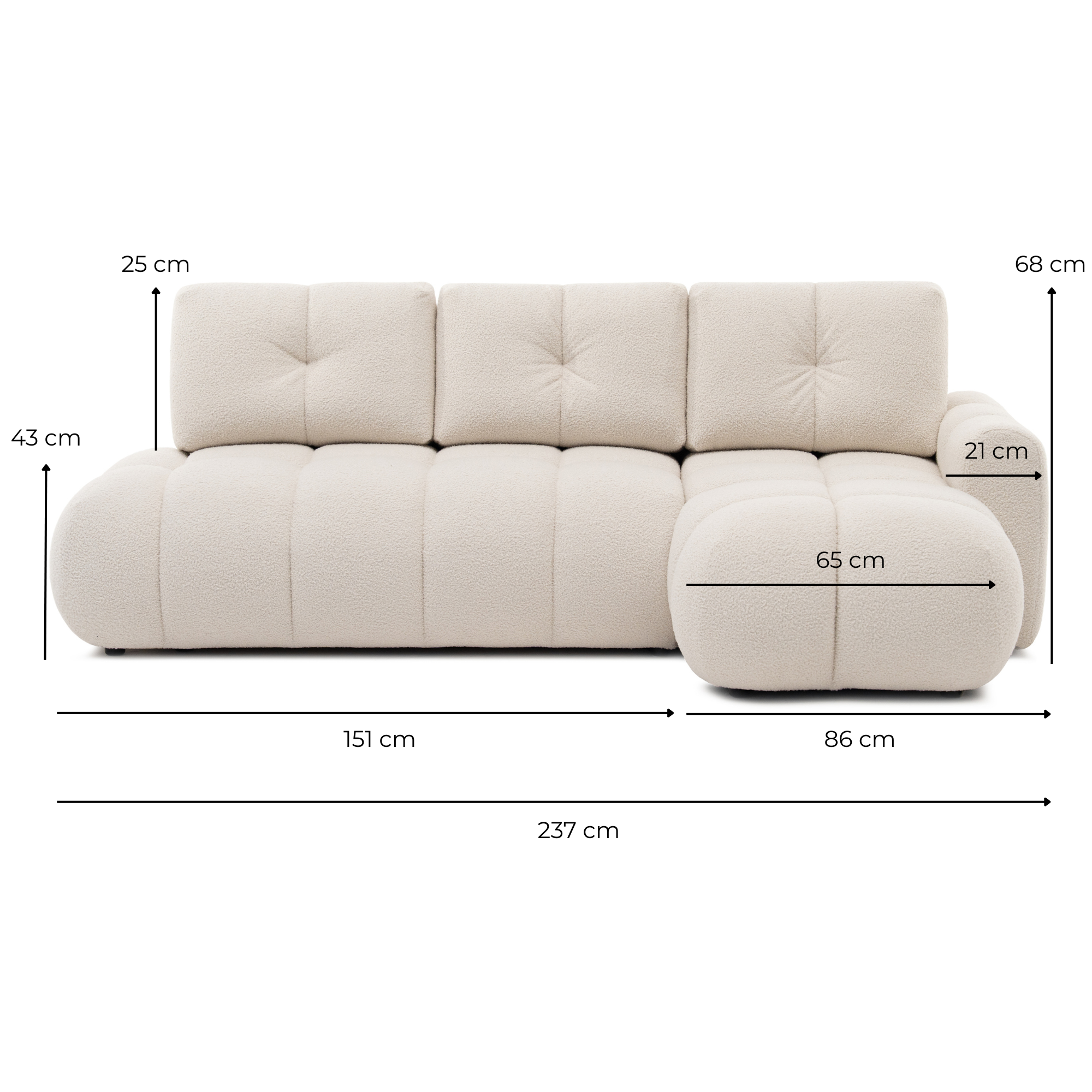
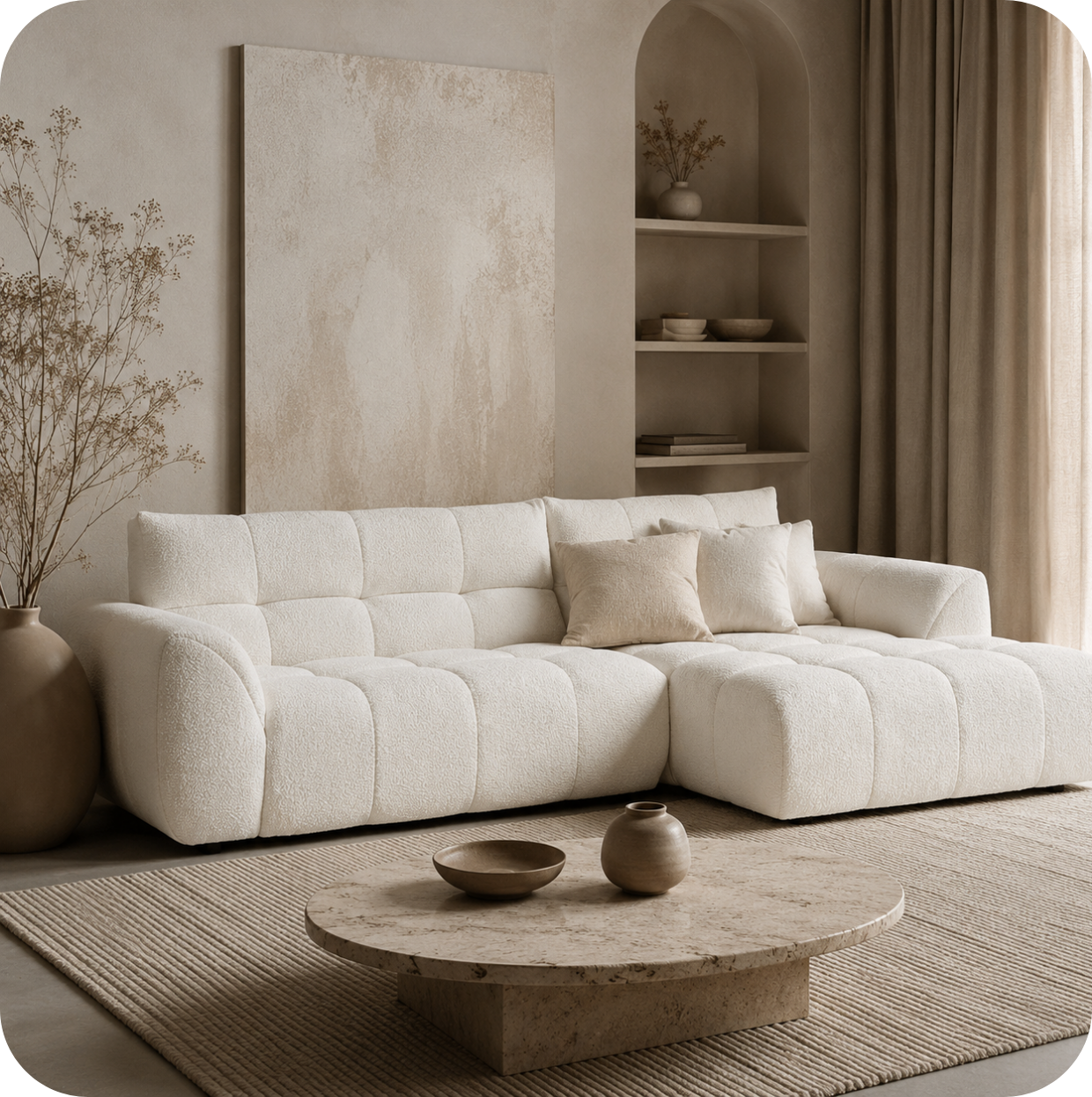
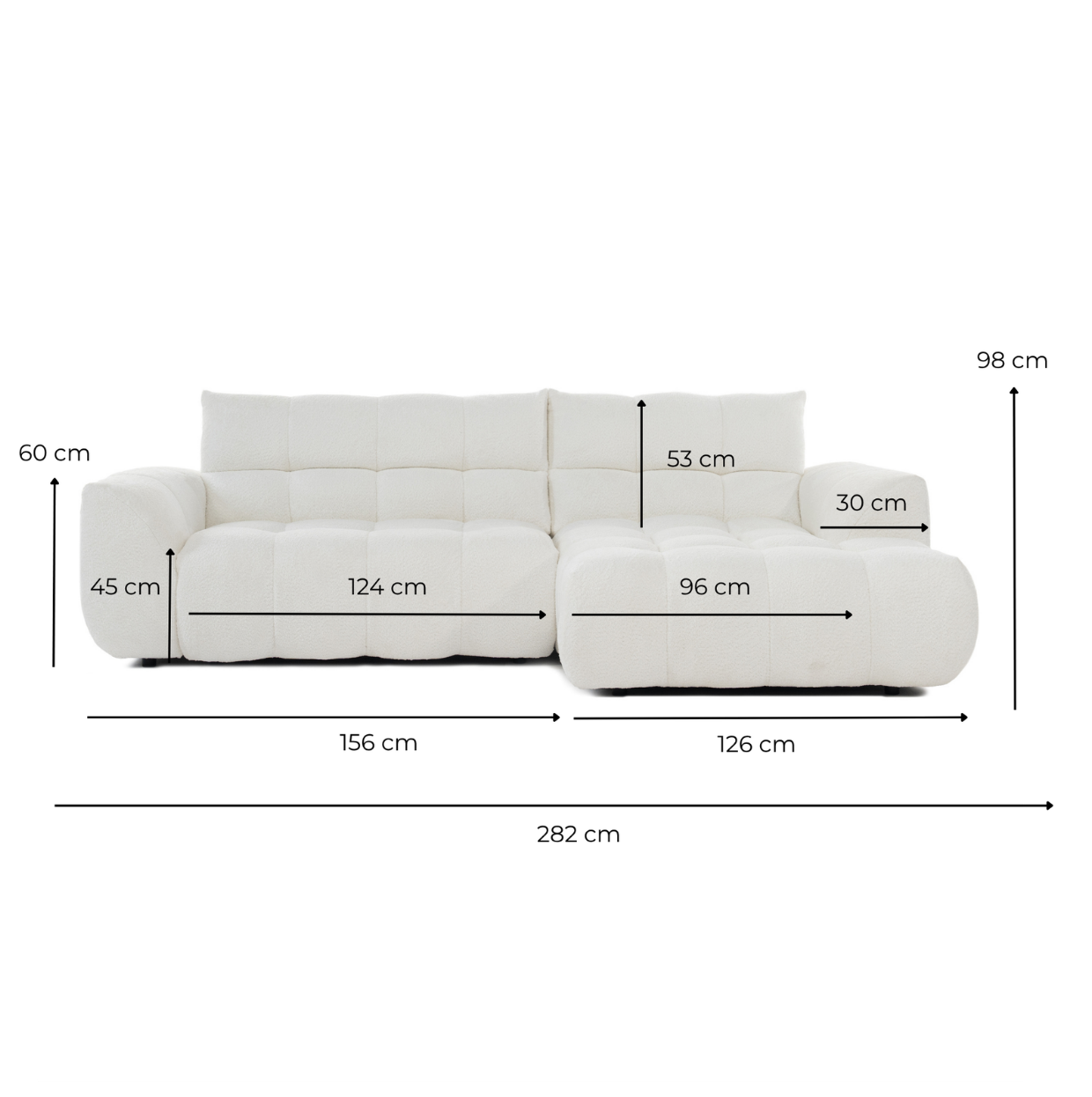
Asti Corner Sofa 3-Seater — from €1,599
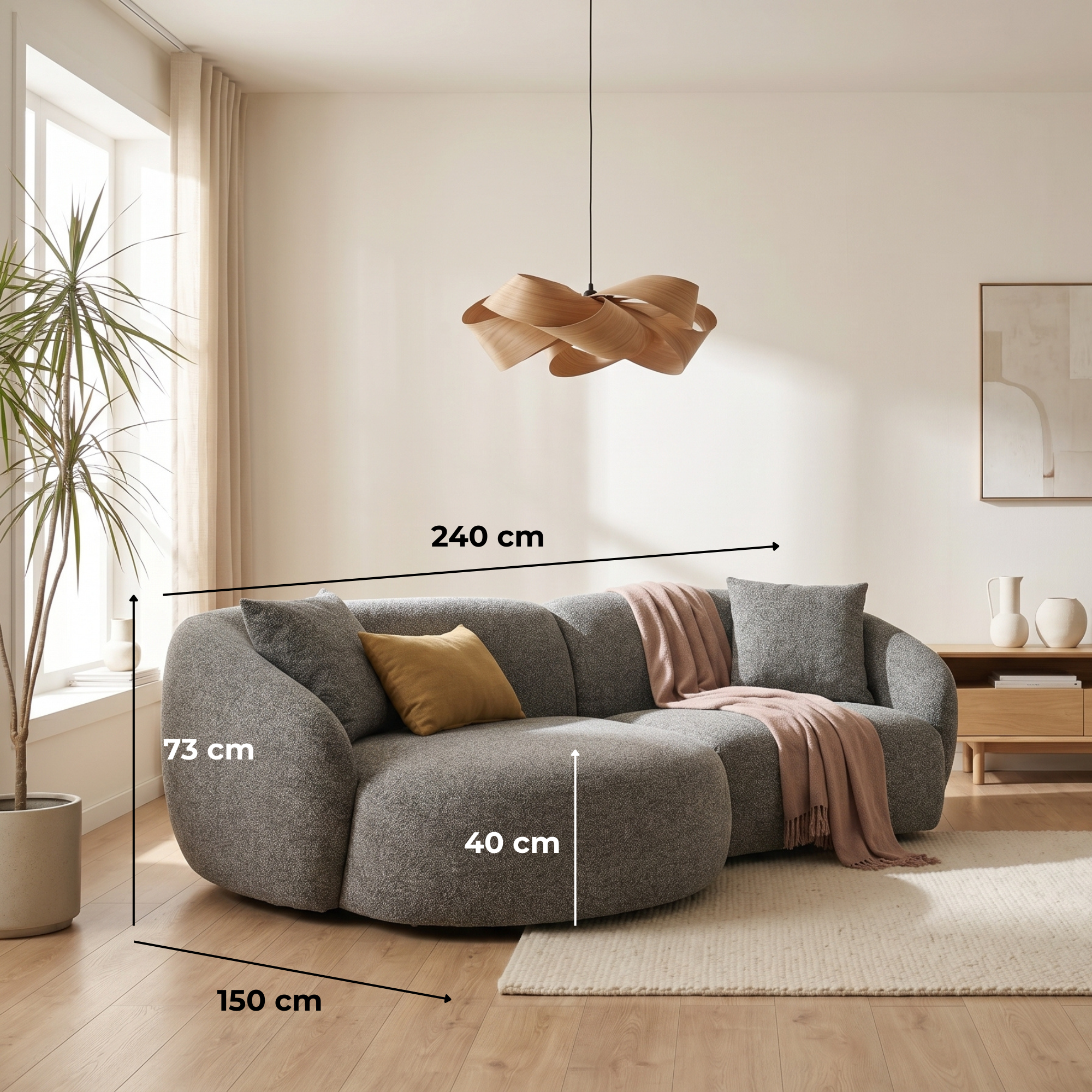
The Asti's clean L-shape with high armrests is a natural canvas for great styling. Try three large boucle cushions on the main section and two contrasting velvet cushions on the longchair for a layered, designer-feel arrangement.

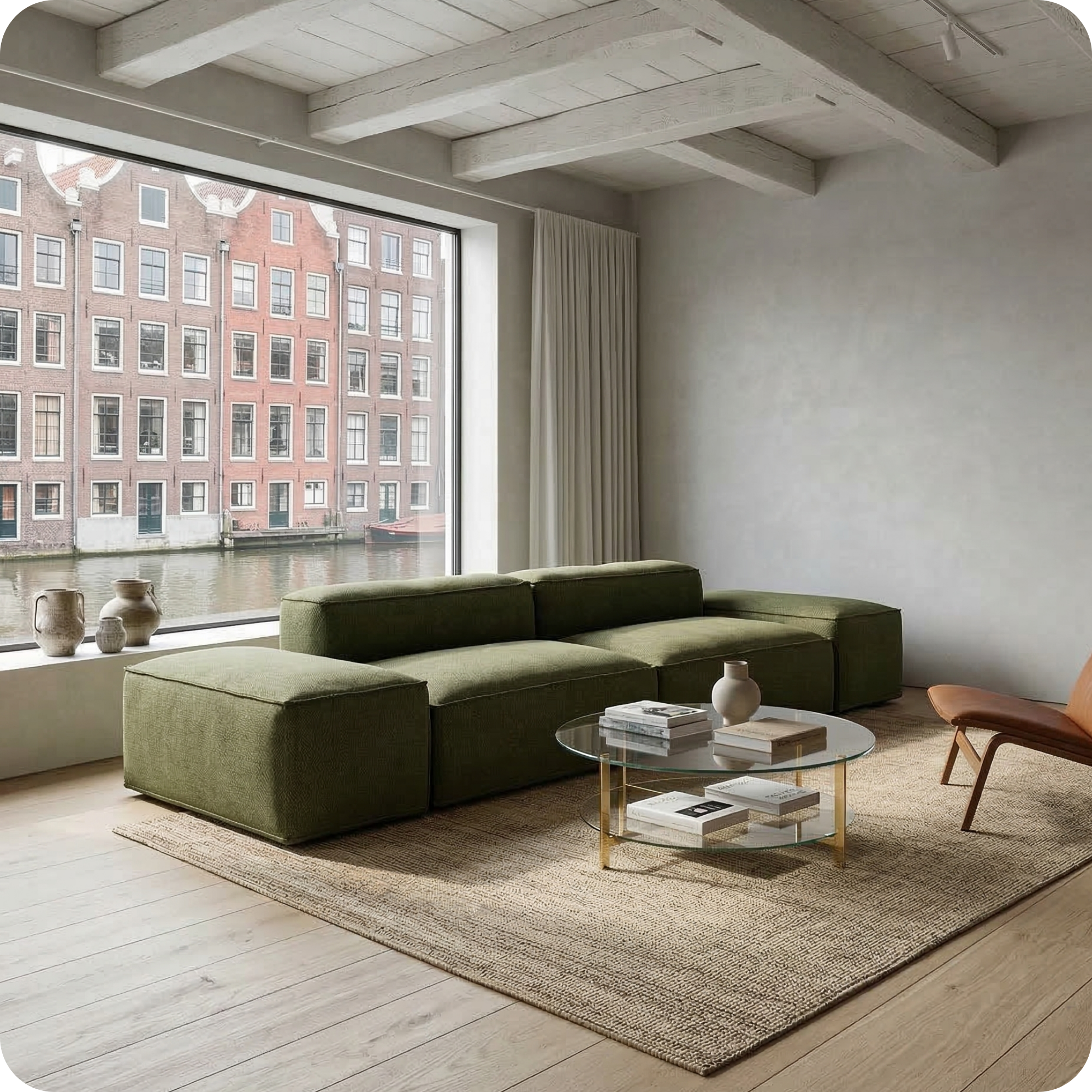
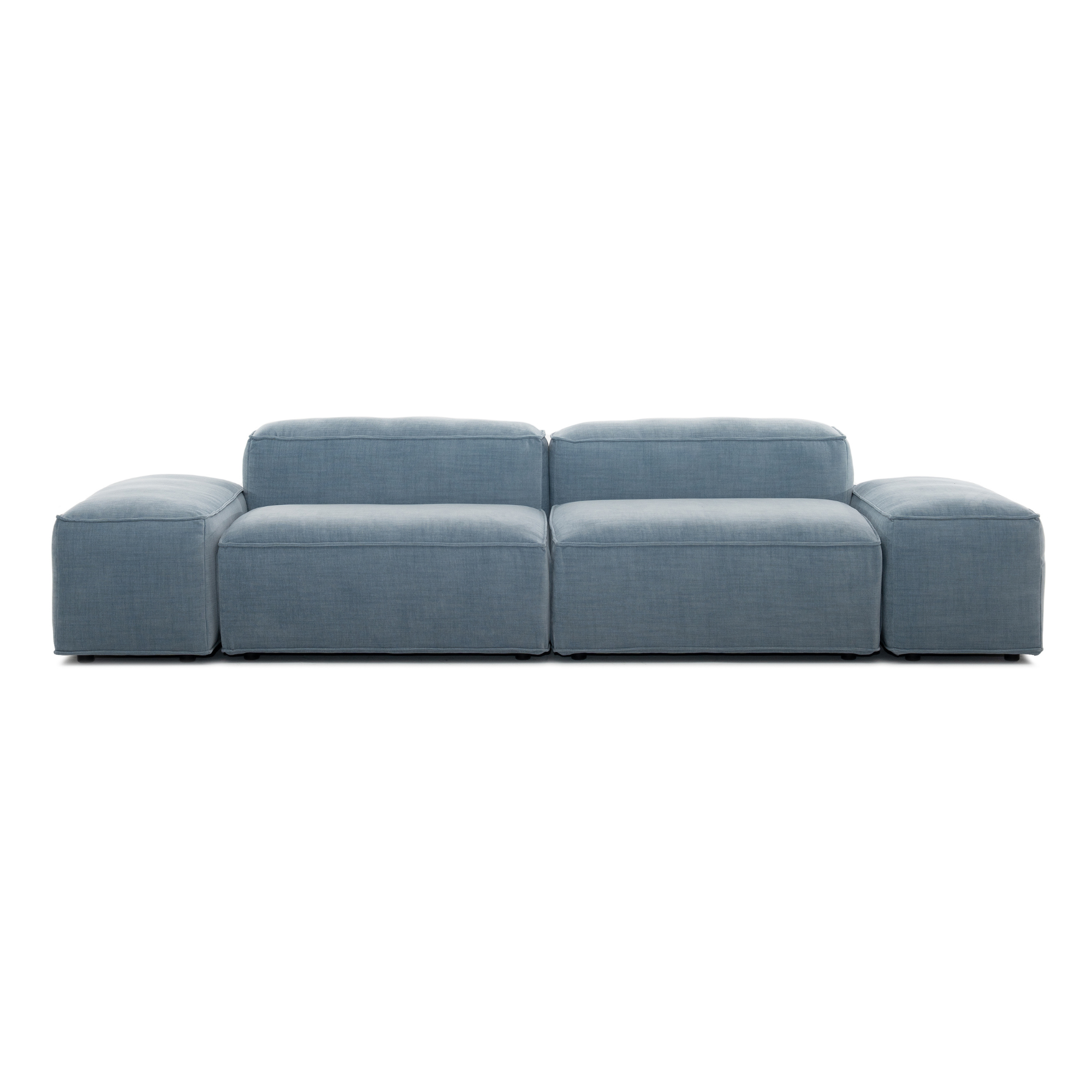
Merlot Modular Corner Sofa — from €1,913
The Merlot's modular structure means you can configure it precisely to your space — then style the corner with a round travertine coffee table and a jute rug for a timeless, tactile look.
4. Position the Sofa Away from the Wall
One of the biggest mistakes with corner sofas is pushing them flush against two walls. While this maximises floor space in theory, it can make the room look like a waiting room. Float the sofa slightly from the walls — even 10–15 cm — and the room immediately feels more intentional and designer-styled.
5. Use the Corner for a Side Table or Lamp
The inside corner of an L-shaped sofa is often wasted space. Place a small side table in the corner and use it for a statement floor lamp, a stack of coffee table books, or a trailing plant. This turns an awkward gap into a deliberate design moment.
6. Layer Throws Naturally
A casually draped throw over one arm of a corner sofa adds enormous warmth and texture to what can otherwise feel like a large, flat expanse of fabric. Fold it loosely — don't lay it flat — and let it fall naturally. Natural fibres like chunky knit wool or sherpa are especially effective.
7. Balance with Artwork and Shelving
A large corner sofa needs something to look at on the walls — not just a blank expanse. A gallery wall of varied frame sizes hung above the main back of the sofa creates vertical interest. Alternatively, floating shelves filled with books, plants, and ceramics provide a layered backdrop.
8. Use Accent Lighting
An arc floor lamp positioned behind or beside the corner of the sofa creates a warm pool of light that makes the seating area feel like an intentional nook. Pair it with a table lamp on the side table in the corner for a layered lighting effect that is both functional and atmospheric.
9. Keep the Rest of the Room Light
Because a corner sofa occupies so much visual space, the rest of the room needs to feel light and airy. Light walls, minimal clutter, and carefully chosen accent furniture prevent the room from feeling overwhelmed by the sofa. Let the sofa be the hero.
10. Choose Colour Intentionally
The colour of your corner sofa sets the tone for the entire room. A neutral sofa (grey, cream, sand) gives you maximum flexibility to change the room's accent colours over time. A coloured sofa (green, blue, terracotta) makes a bolder statement and requires more considered coordination of the surrounding elements.