

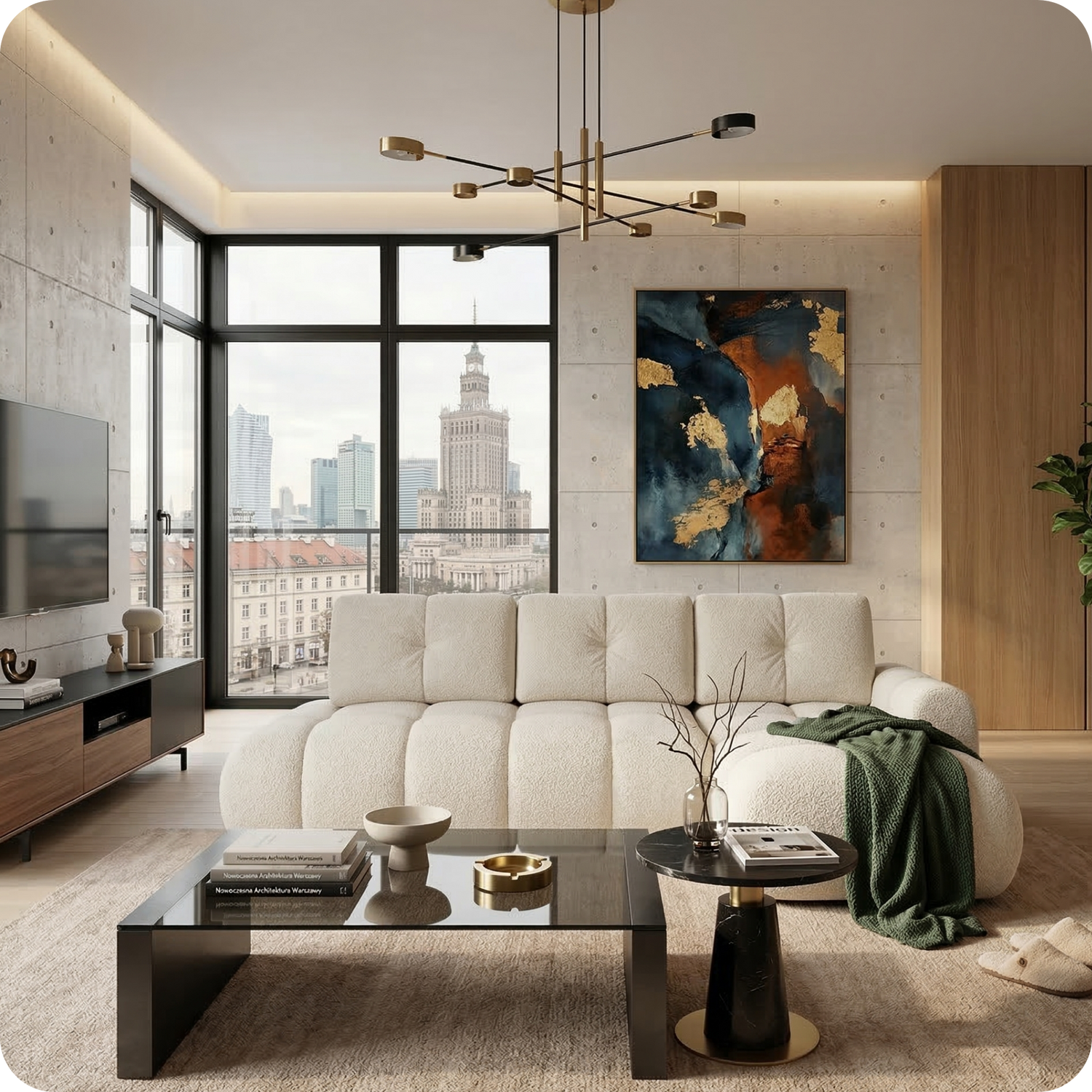
How to Style a Sofa with Cushions: The Complete Guide
Cushions are the most immediate and affordable way to change the feel of a sofa — and by extension, an entire living room. A well-chosen arrangement of cushions can make a plain sofa feel luxurious, tie a room's colour scheme together, introduce texture, and create a sense of considered style that makes a room feel finished. A poorly chosen arrangement can look chaotic or flat. This guide covers the principles that make the difference.
How Many Cushions Do You Need?
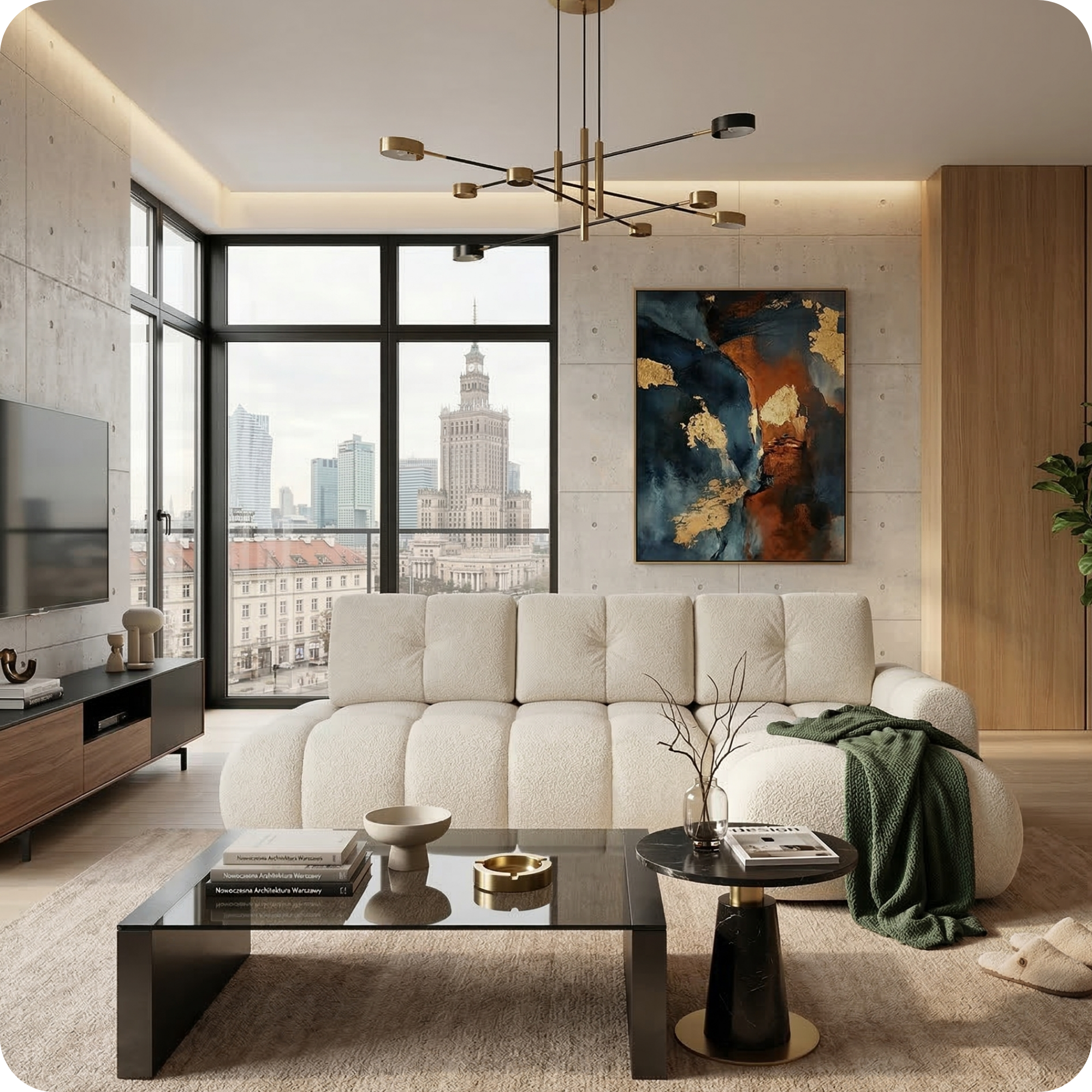
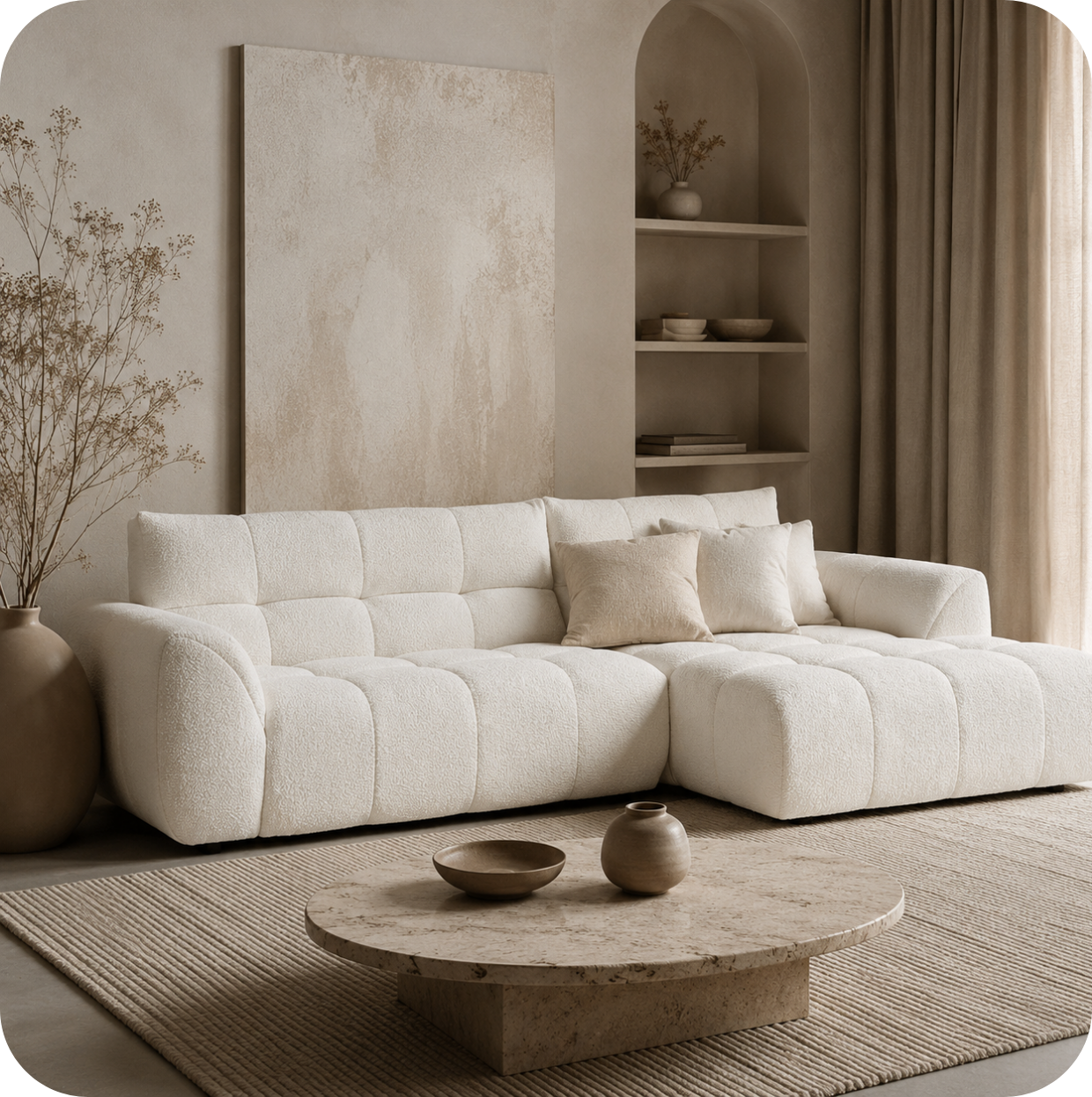
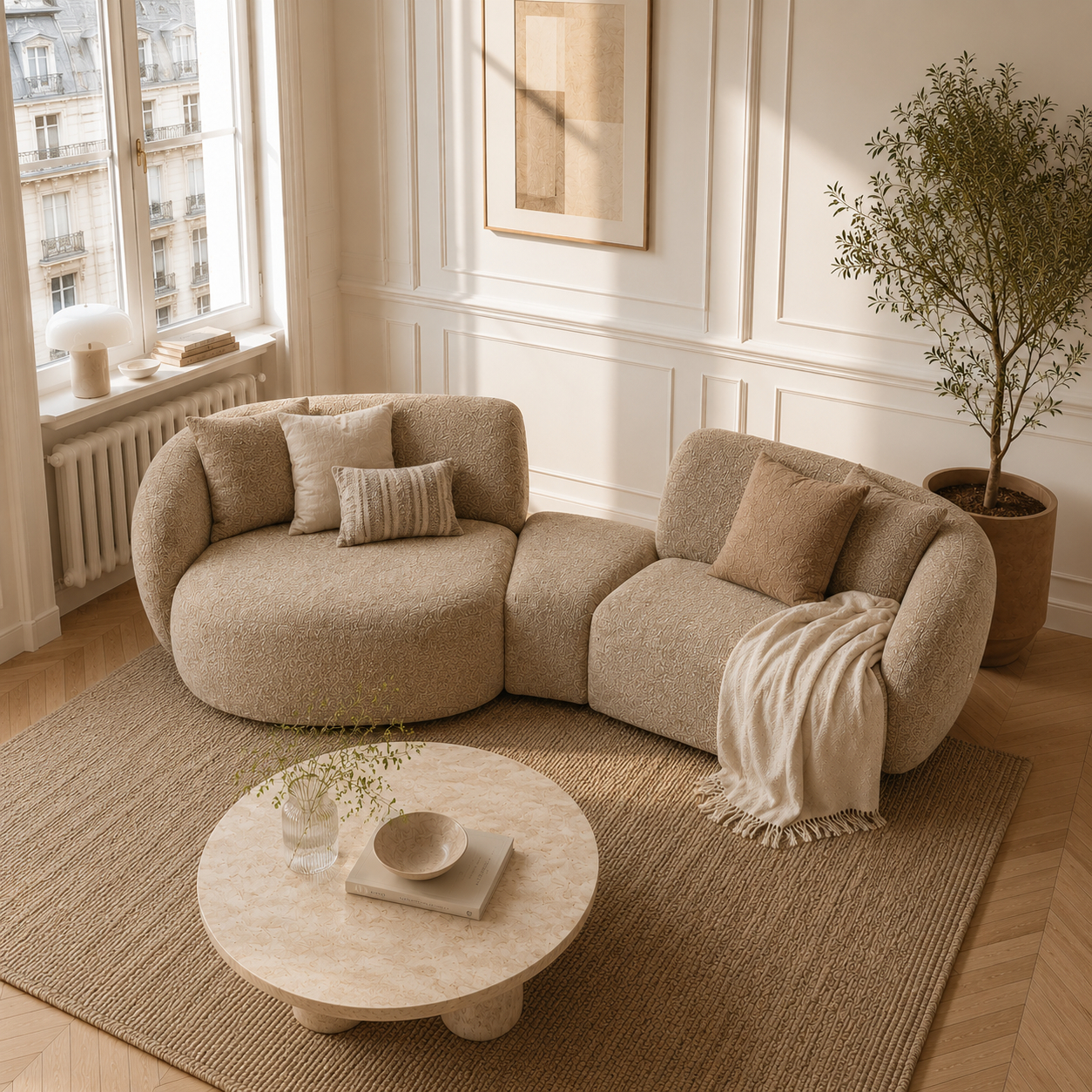
The right number depends on your sofa size and personal style preference. As a general rule: a 2-seater sofa works with 2–3 cushions; a 3-seater with 3–5 cushions; an L-shaped or corner sofa with 5–8 cushions. These are starting points — some people prefer a minimal single-row arrangement, others a full, layered look. The key is symmetry or deliberate asymmetry; avoid the middle ground of a random number placed without logic.
Cushion Sizes: The Rule of Variety
Mixing cushion sizes creates depth and visual interest. A typical arrangement might use: two large square cushions (60x60cm) as the back layer, two medium cushions (50x50cm) in the middle layer, and one rectangular lumbar cushion (30x50cm or 30x60cm) at the front. This stepped depth gives the arrangement a sense of deliberate styling. Avoid using all the same size — it creates a flat, hotel-lobby effect unless you are specifically going for a minimal look.
Mixing Patterns: The Rule of Thirds
Combining different patterns on cushions is where most people feel uncertain, but the principle is simple. Choose three pattern scales: one large pattern (a bold print or oversized geometric), one medium pattern (a classic stripe, check, or abstract), and one solid or texture-only fabric. Limit your colour palette to 2–3 colours maximum across all cushions. The solid cushions anchor the arrangement and stop it feeling busy; the pattern cushions create energy.

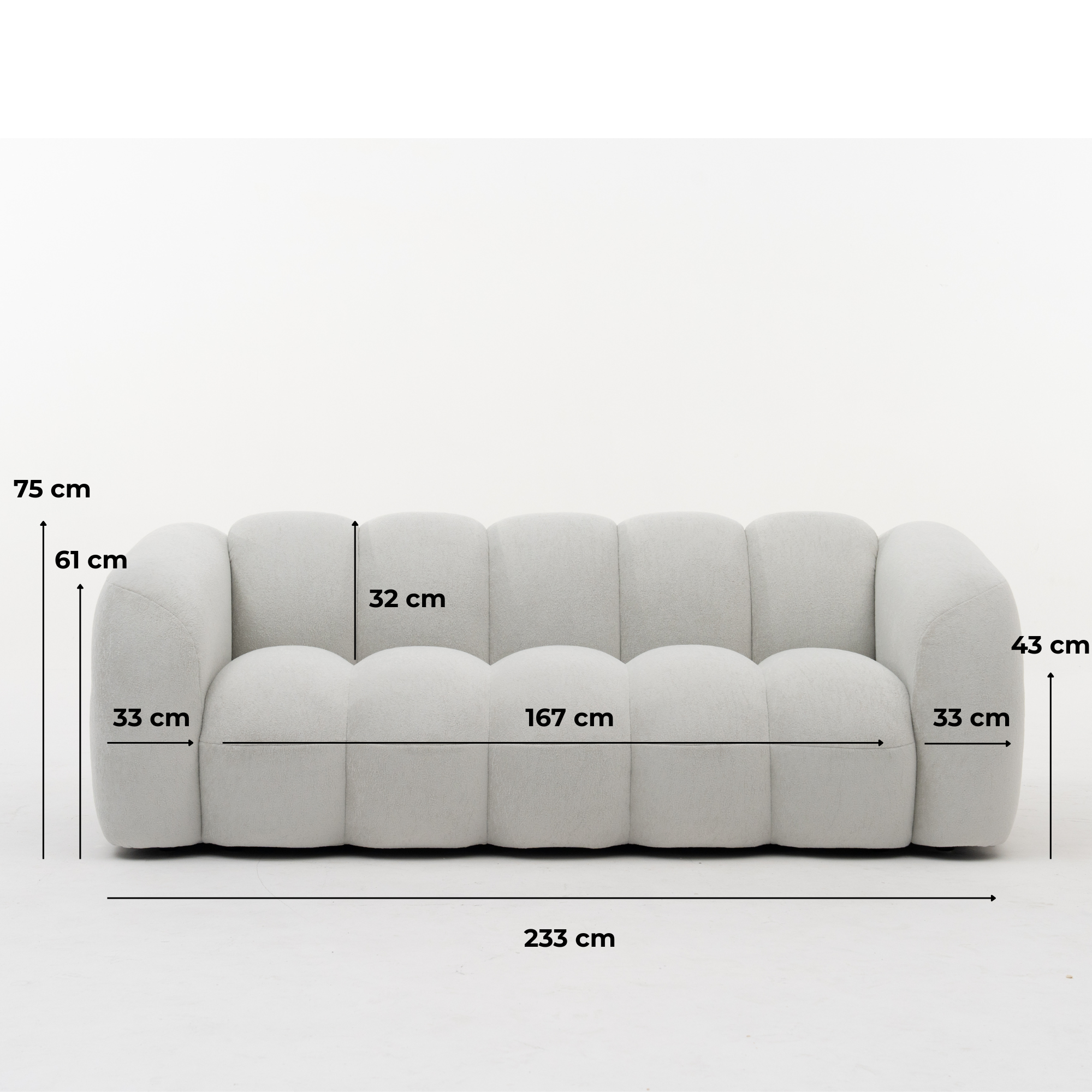
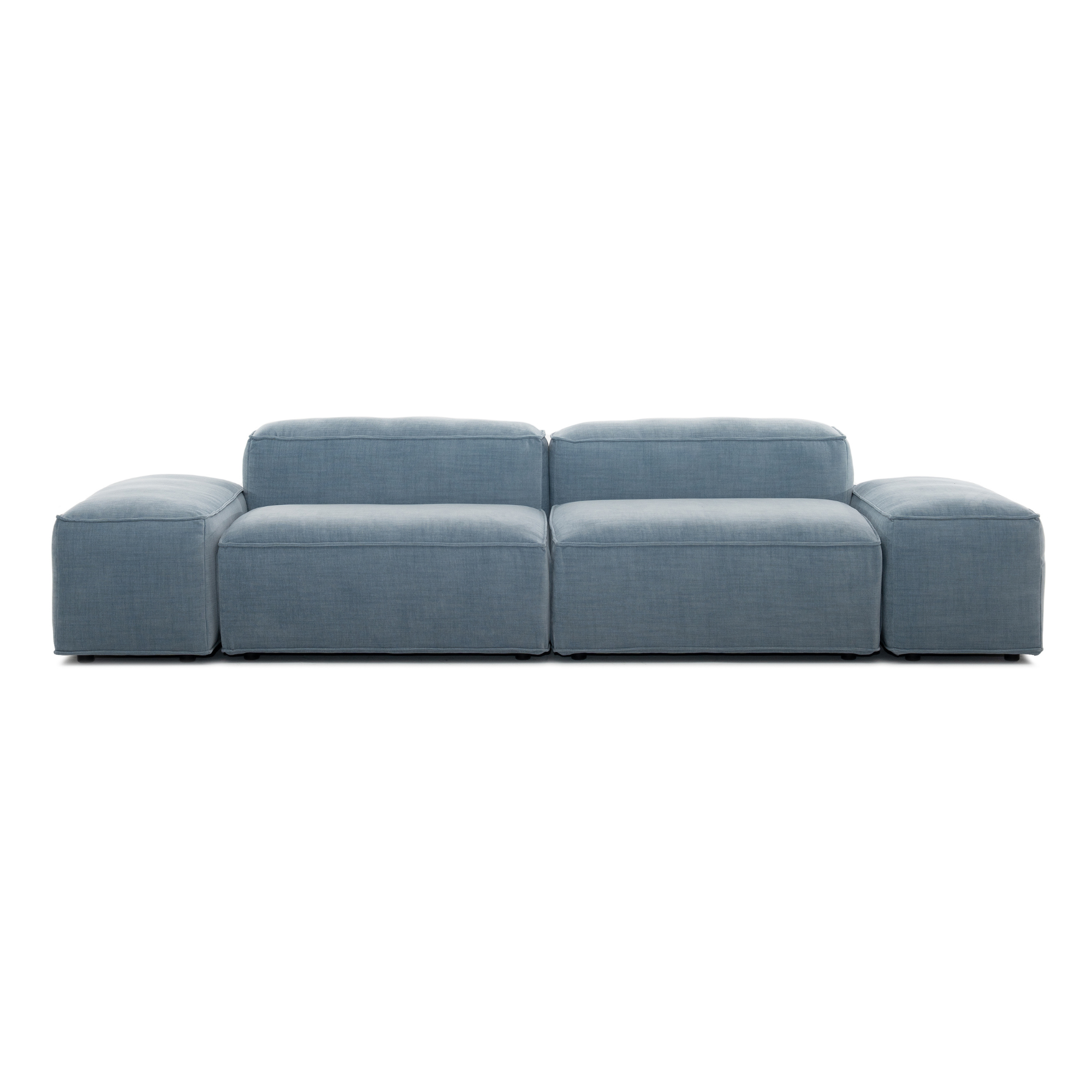
Riva 3-Seater Sofa — from €999
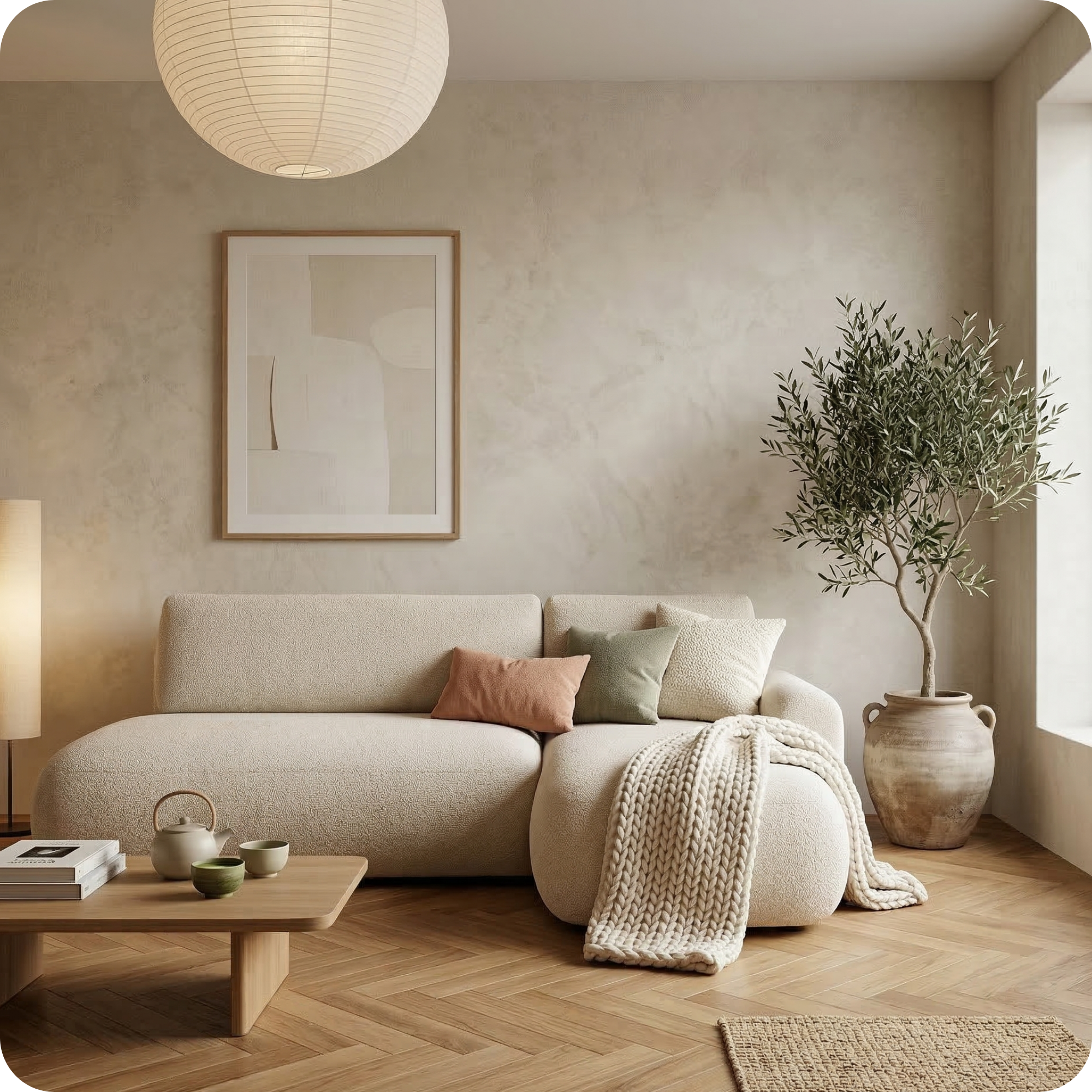
The Riva's clean, neutral upholstery makes it an ideal canvas for cushion styling experiments. Try a palette of terracotta, warm cream, and olive for a warm, earthy look — or dusty blue, warm grey, and natural linen for a calmer Scandinavian approach.

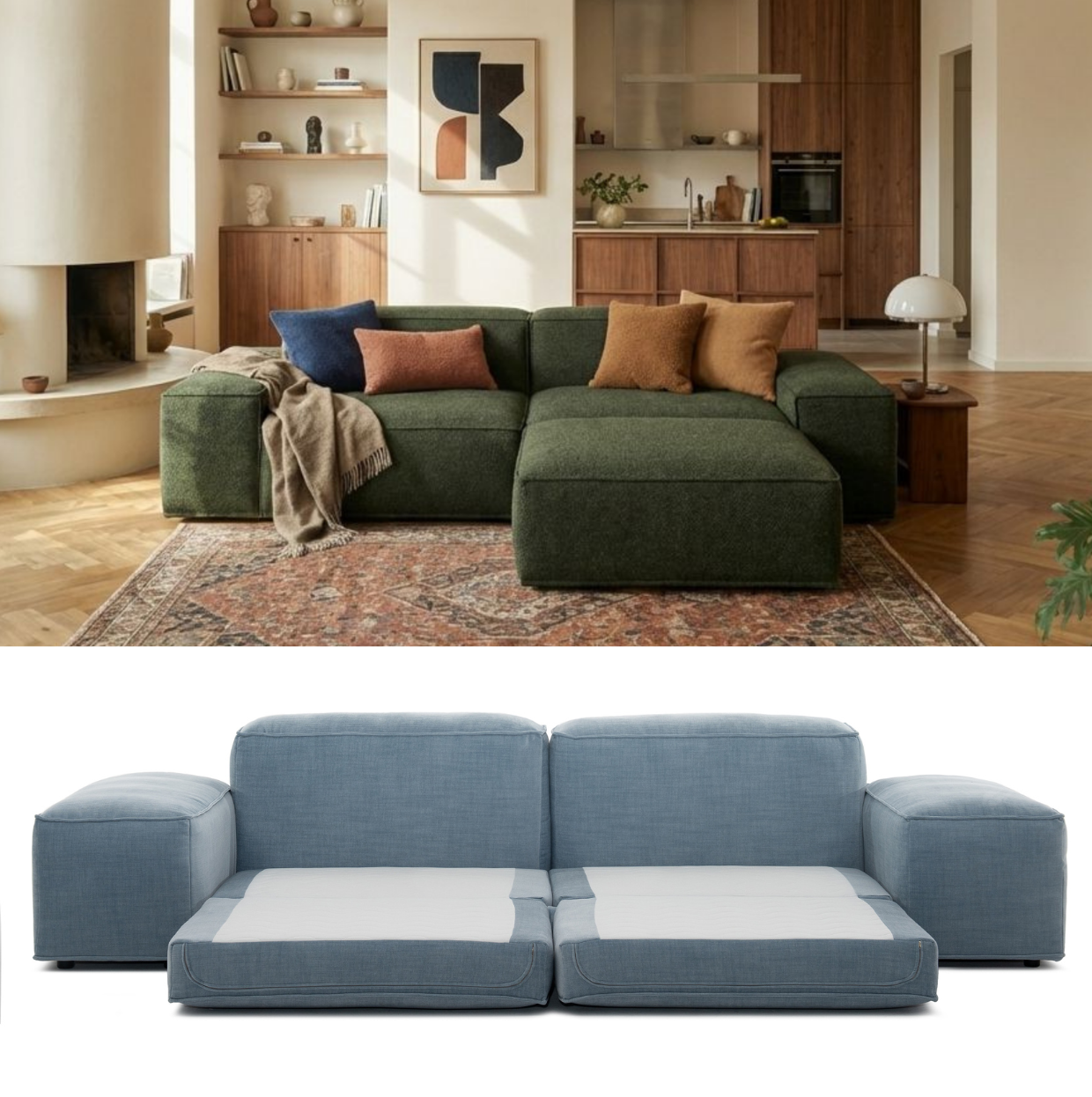
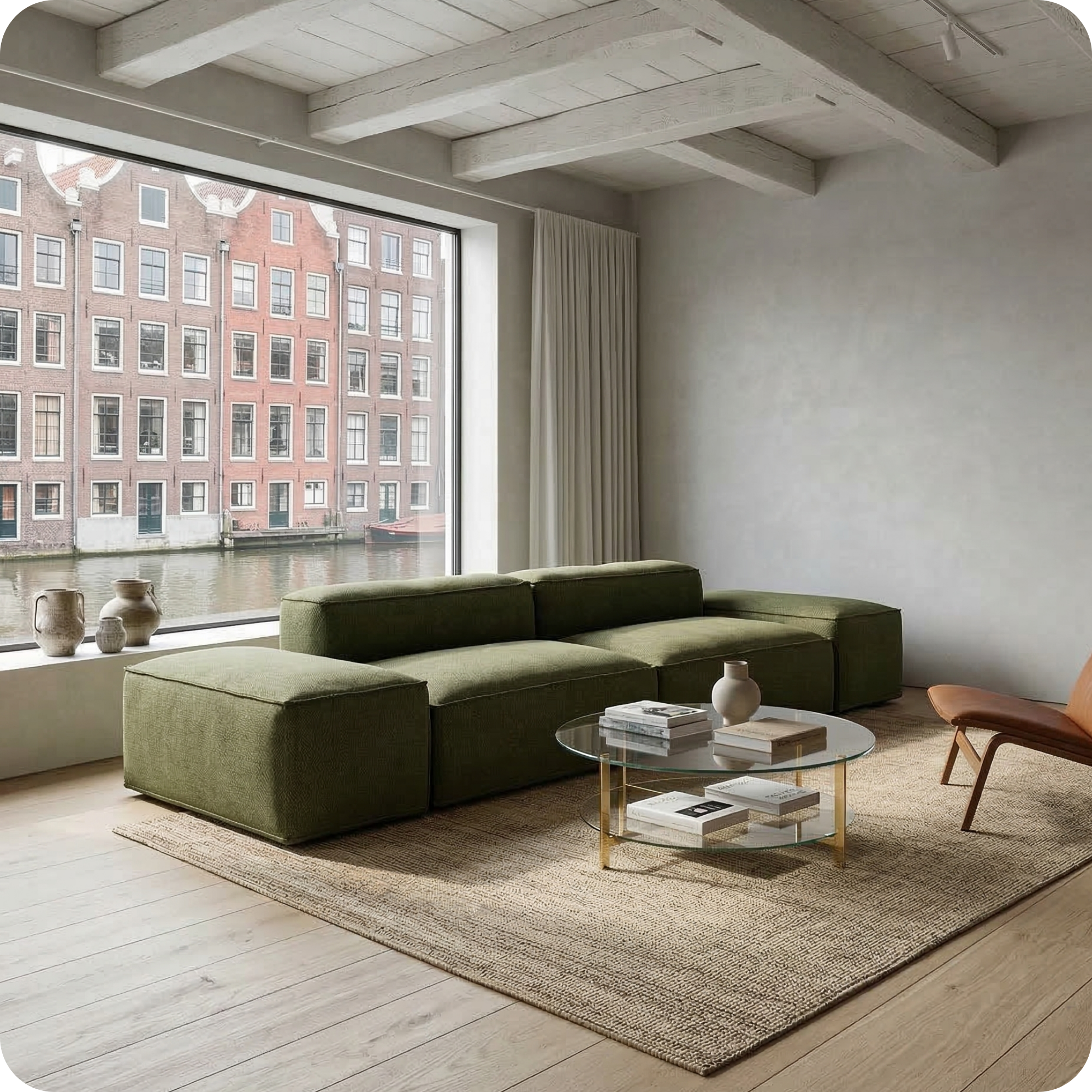
Merlot Modular Sofa — from €1,532
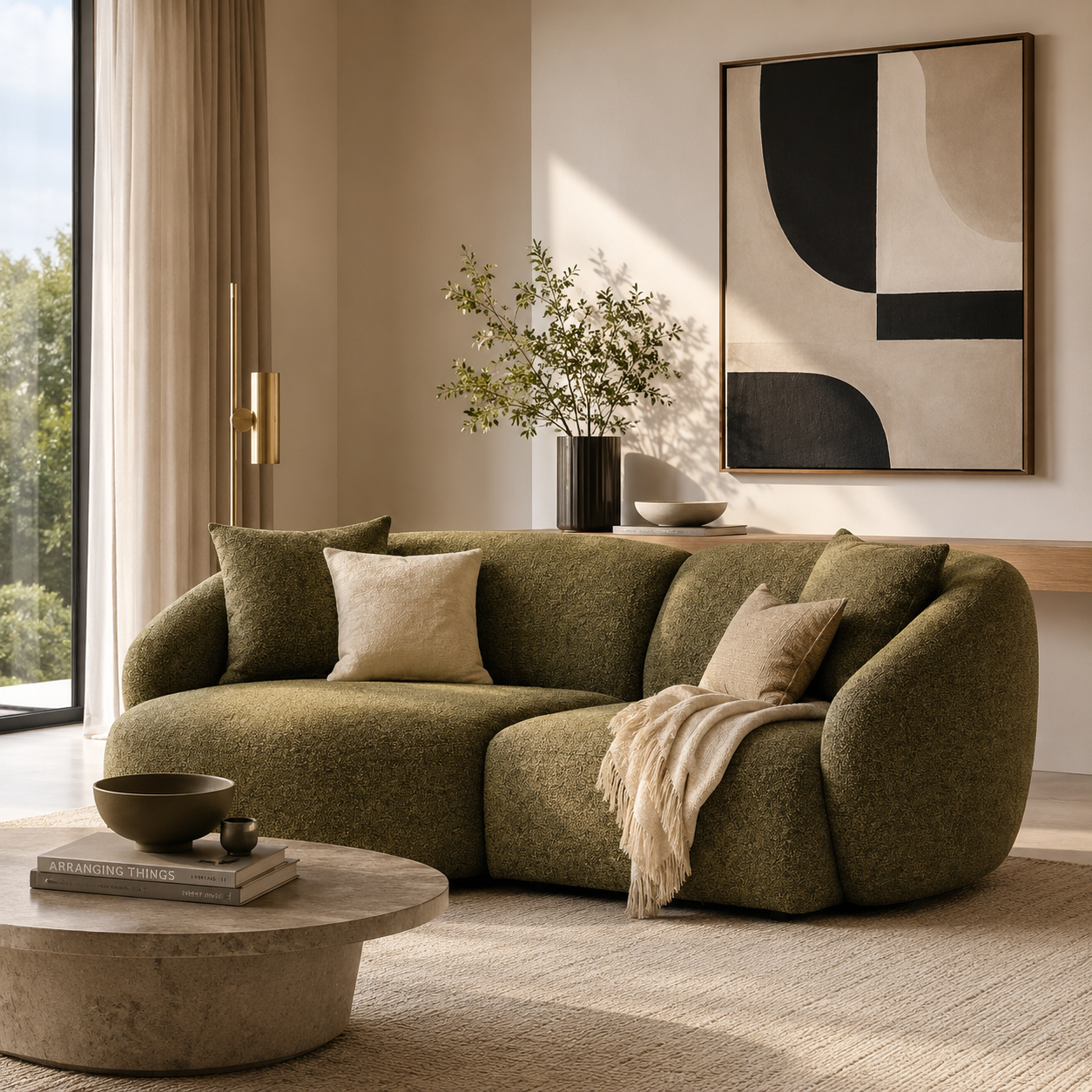
On the Merlot's leaf green upholstery, keep cushions in the same tonal family — deep forest, sage, and warm cream — to create a tonal, sophisticated look. Introduce a single mustard or rust cushion as a complementary accent for visual interest without competing with the sofa colour.
Colour Approaches for Sofa Cushions
There are four reliable colour strategies for cushion arrangements. Tonal: all cushions in variations of the same colour as the sofa (deeper, lighter, more muted or saturated) — creates a sophisticated, layered look. Complementary: cushions in the colour opposite to the sofa on the colour wheel — blue sofa with orange/terracotta cushions, green sofa with burgundy/rust cushions — high impact and visually dynamic. Neutral with one accent: mostly cream, beige, and grey cushions with one bold accent colour in one or two cushions — safe, timeless, and works with almost any sofa colour. Seasonal/rotational: maintain a neutral base and swap one or two cushions seasonally — warm autumn tones in winter, fresh greens and blues in spring and summer.
Texture: The Often-Overlooked Element
In a cushion arrangement where colours are deliberately coordinated, texture does the work of creating visual variety without adding colour complexity. Mix velvet (rich and light-absorbing), linen (matte and natural), boucle or teddy (tactile and cosy), and woven or jacquard fabrics (patterned through texture rather than print). A cushion arrangement that mixes textures cohesively always looks more expensive than one that relies on pattern alone.
The Lumbar Cushion
A single rectangular lumbar cushion placed at the front centre of a sofa arrangement finishes it with a professional touch. It creates a layering effect, fills the natural gap at the centre front of a sofa arrangement, and adds a practical ergonomic element — lumbar cushions support the lower back during long periods of sitting. In styling terms, the lumbar cushion is the final punctuation mark of the arrangement.