


Japandi Living Room Ideas: How to Create the Perfect Calm Interior
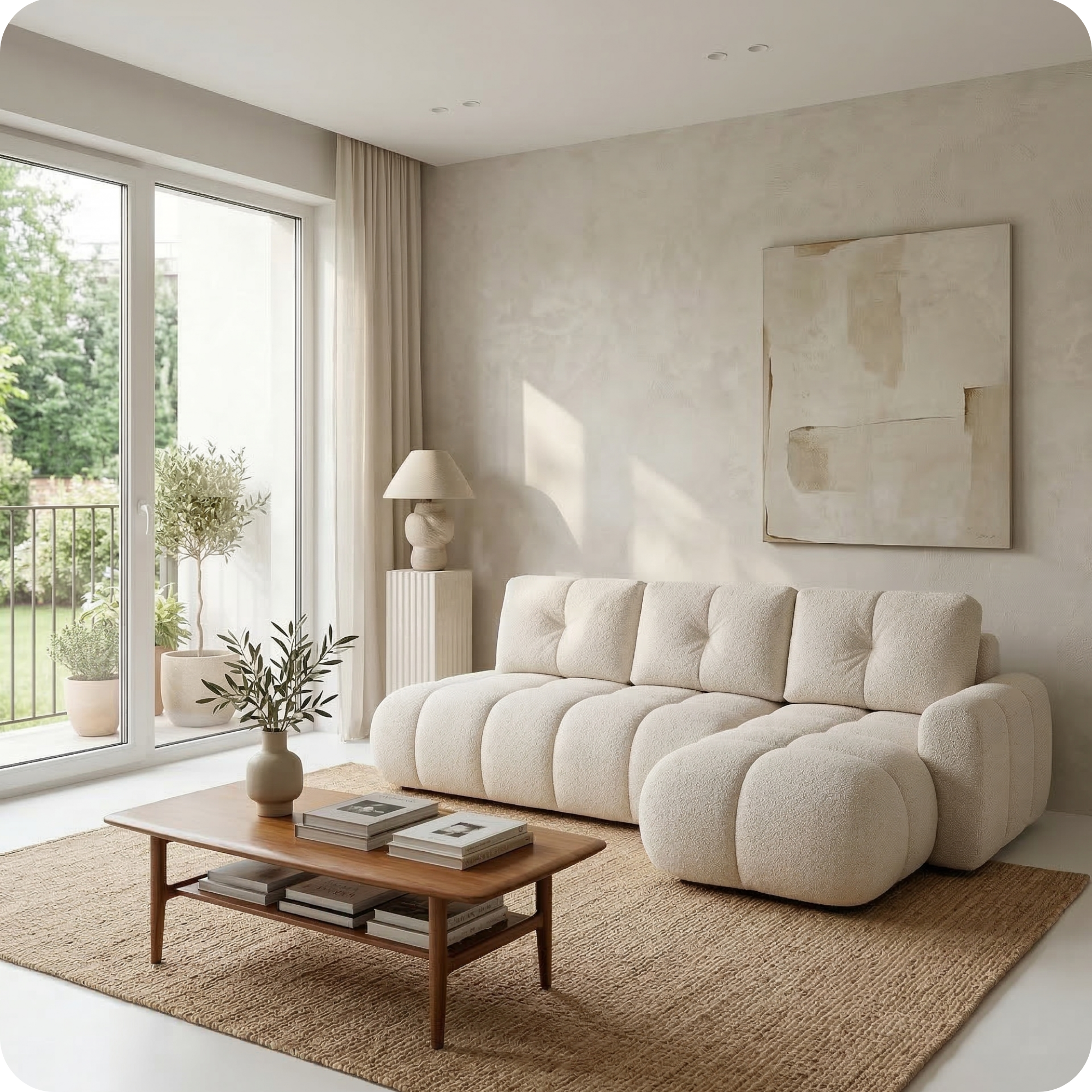
Japandi is the design philosophy that emerged from combining Japanese wabi-sabi (the beauty of imperfection and transience) with Scandinavian hygge (warmth, simplicity, and cosiness). The result is an interior style that is simultaneously minimal and warm, disciplined and liveable. In the living room, Japandi translates to low-profile furniture, natural materials, a restrained neutral palette, and a deliberate absence of visual clutter. It is one of the most searched interior styles of 2025-2026 for good reason: it creates spaces that feel genuinely restful in a way that maximises the quality of time spent at home.
The Core Principles of Japandi Design
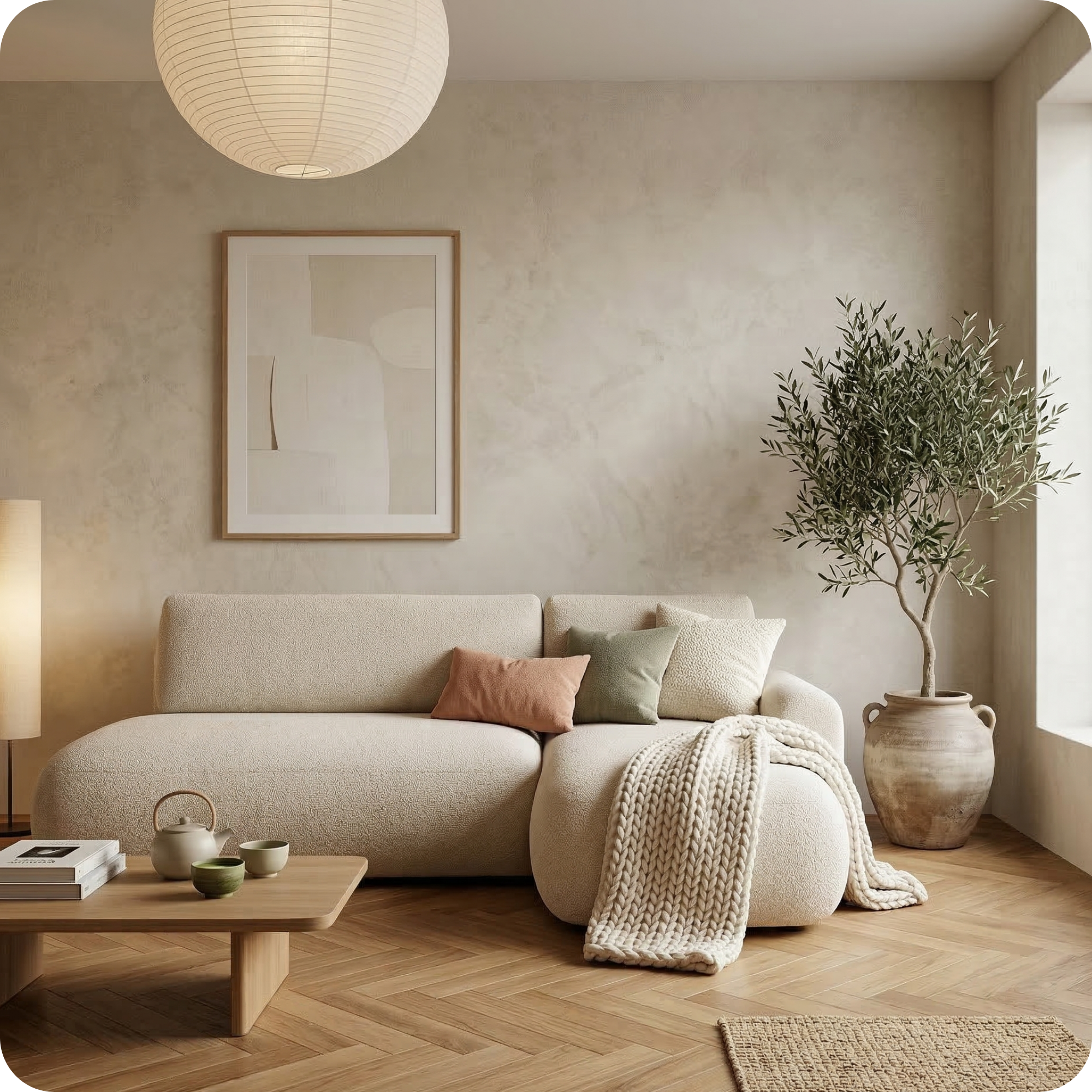
Japandi is not achieved by buying a set of matching products -- it is a sensibility applied to every choice in a room. The core principles are: functionality over decoration (every object should earn its place), natural materials (wood, linen, cotton, jute, stone, ceramics), a palette anchored in earthy neutrals (warm white, sand, beige, caramel, charcoal, warm black), craftsmanship that is evident but not showy, and negative space as a deliberate design element rather than empty space waiting to be filled. Low-to-the-ground furniture is characteristic of both Japanese and Scandinavian design and is a reliable Japandi signifier.
Choosing a Japandi Sofa
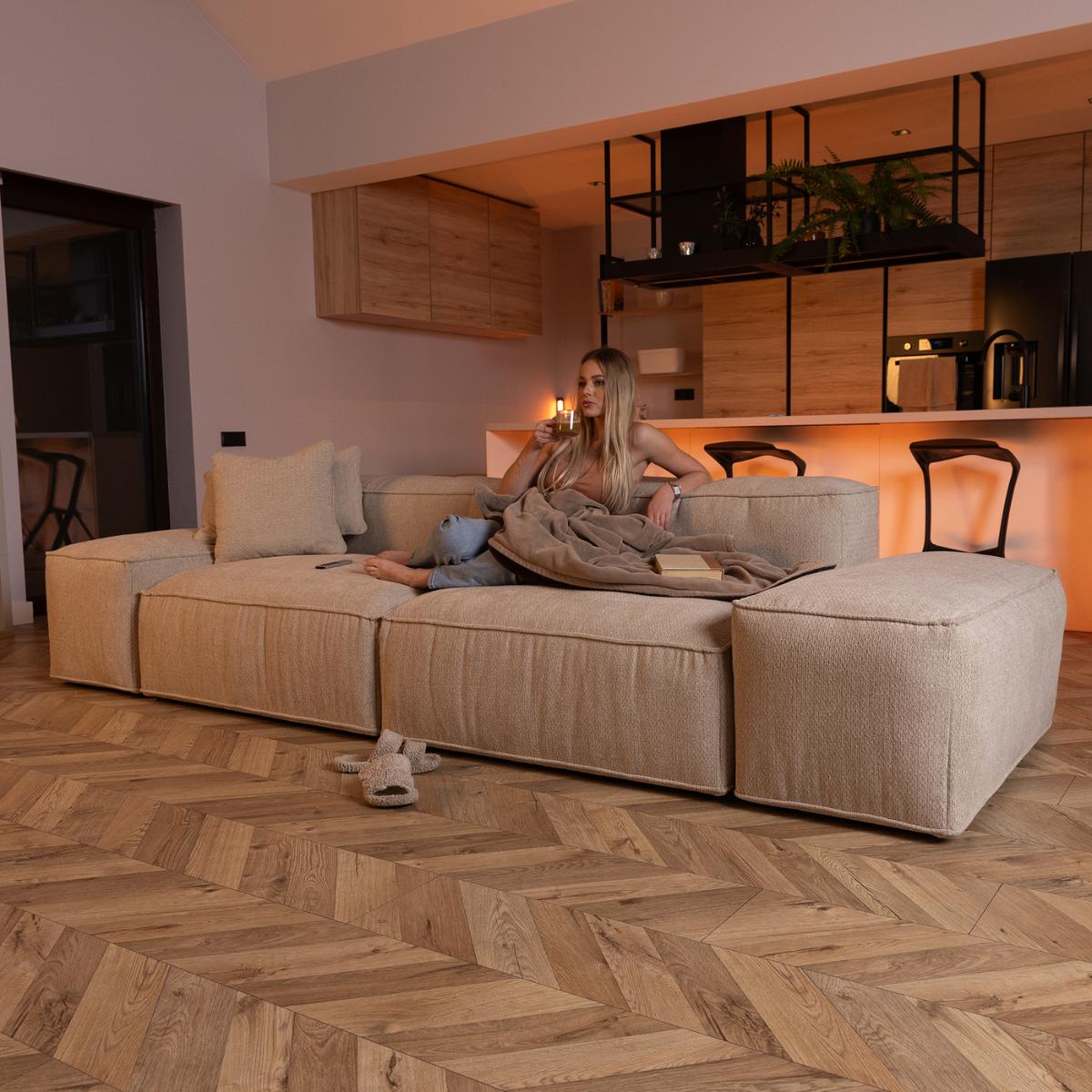
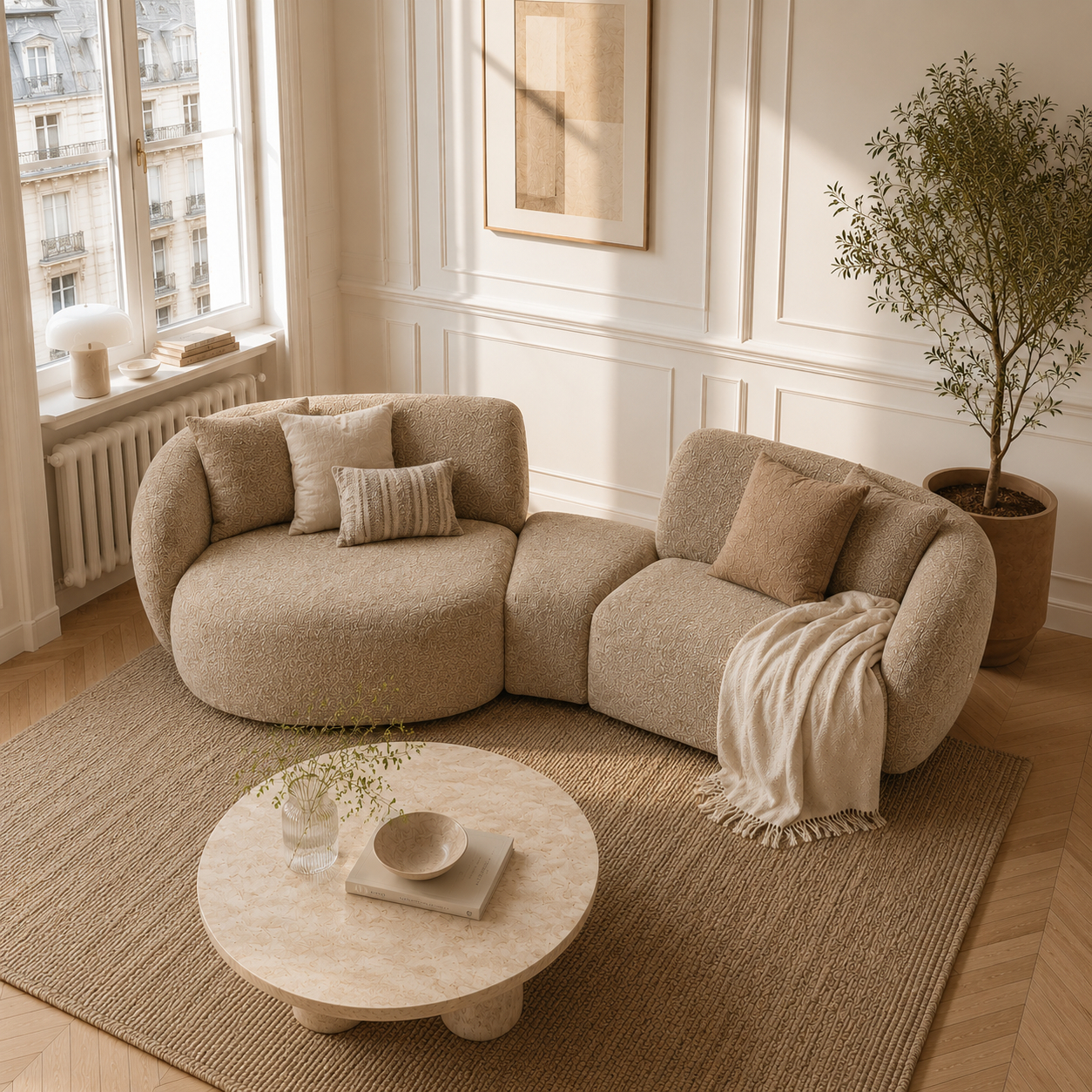
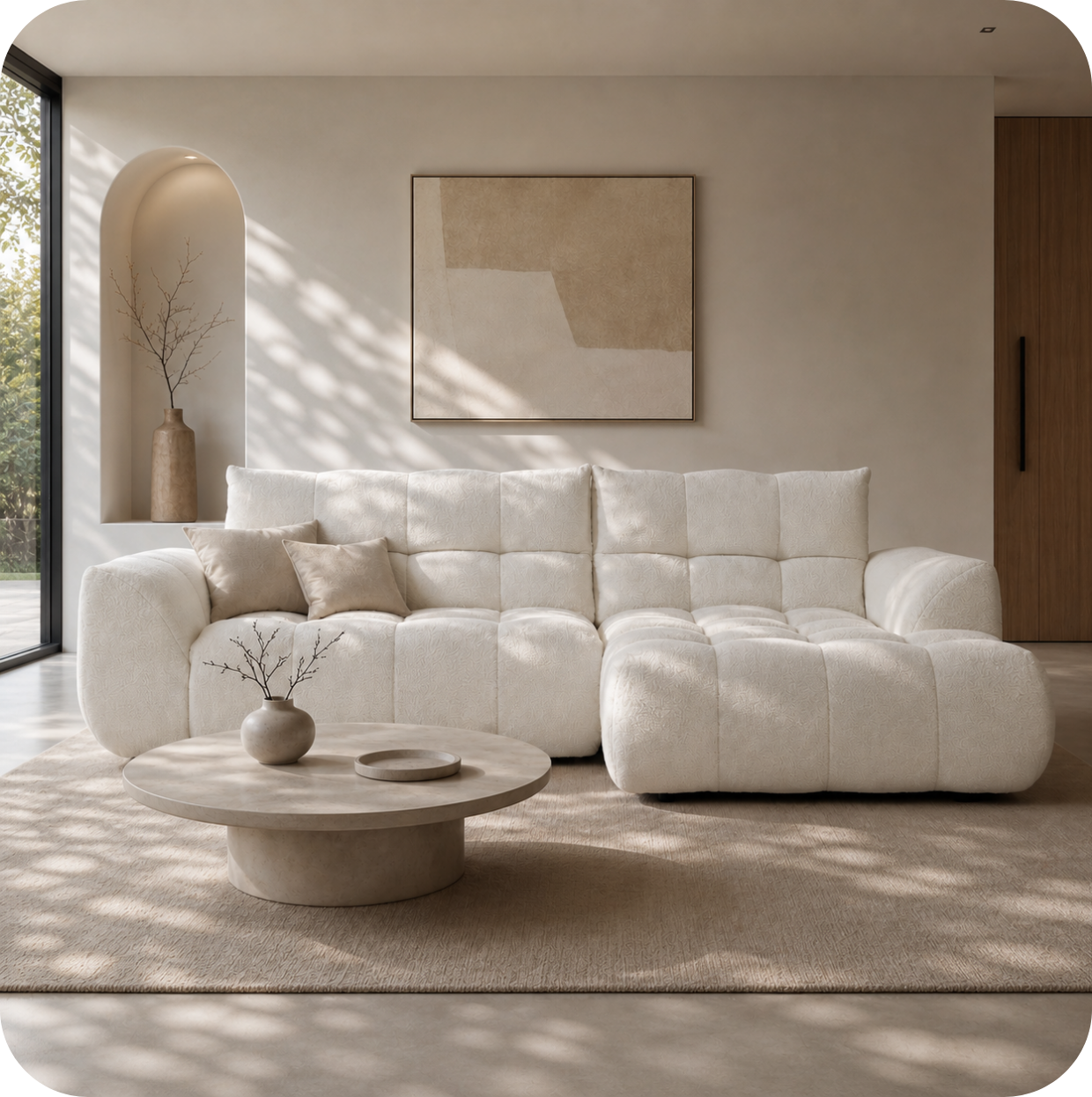
The sofa is the most important single piece in a Japandi living room. Key characteristics to look for: low profile (seat height typically 38-42 cm), clean straight lines without decorative flourishes, arms that are low or absent, legs in solid wood (oak is ideal), and upholstery in a natural or near-natural tone. Fabric texture matters more than it does in other styles -- a slightly textured weave, a bouclé in oat or cream, or a linen-look fabric in warm sand reads as Japandi in a way that smooth solid-colour microfibre does not, even in the same colour. Modular sofas work extremely well in Japandi rooms because they allow the footprint to be kept minimal while maintaining adaptability.

Lugano Sofa in Sand — from EUR 1.190
The Lugano in wolf sand is a near-perfect Japandi sofa: low profile, clean lines, warm sandy upholstery, and a natural material feel. The colour sits in the precise Japandi sweet spot between warm white and light caramel.

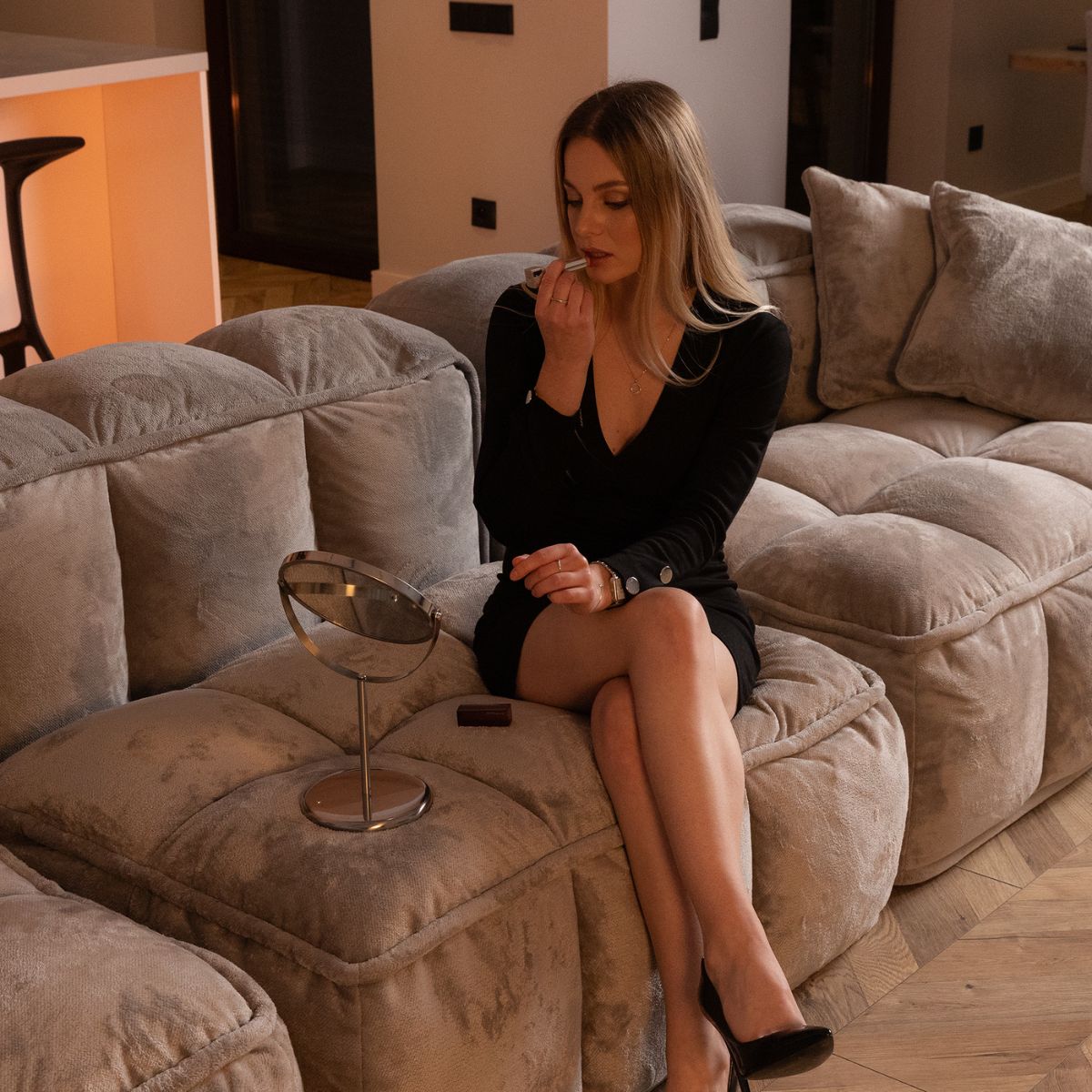
Merlot Modular Sofa — from EUR 1.490
The Merlot's low armrests, clean modular structure, and neutral upholstery options make it a strong candidate for a Japandi living room. Available in a range of natural tones.
Japandi Colour Palette for the Living Room
The Japandi palette is earthy but warm. The dominant colours should be variations of off-white, warm beige, sand, and light warm grey. Accent colours are introduced through natural materials rather than paint: the warm brown of a wooden coffee table, the dark tone of a ceramic vase, the olive of a living plant, or the warm charcoal of a cushion. Avoid cool grey and pure white -- both are too cold for the style. Avoid strong colour statements: there are no deep navies, no terracottas used in large doses, no jewel tones. The colour story in a Japandi room is about subtle variation within a narrow, warm, low-saturation range.
Furniture and Layout
Japandi living rooms are deliberately low-density in furniture. The standard approach is sofa plus low coffee table plus one accent chair -- not sofa, armchairs, side tables, and a full console. Every piece of furniture should be lower than standard where possible: a coffee table at 35-40 cm rather than the standard 45 cm reads more Japanese; a low-slung TV unit at floor level rather than a standard-height media stand moves the room in the right direction. The floor becomes a more active part of the composition -- natural fibre rugs in jute or sisal, or a simple low-pile wool rug in warm white or sand, anchor the seating area.
Decoration and Accessories
In Japandi design, less is genuinely more -- not as a cliche but as a working principle. Surfaces should be clear: a single ceramic object on a shelf is more powerful than a collection of five objects. Plants are important: they provide organic form and a living element that softens the minimal structure. A single large-leaf plant (a monstera, a fiddle-leaf fig) in a simple pot is characteristic. Lighting should be warm and layered: floor lamp, table lamp, pendant over a low table -- not overhead ceiling lighting as the primary source. Textiles (cushions and throws) should be limited but tactile: linen, boucle, knitted cotton in oat, cream, warm grey, or warm charcoal.
Common Japandi Living Room Mistakes
The most common mistake is achieving minimal but not warm -- a room that looks like an architecture photograph rather than a space to actually live in. This happens when natural materials are replaced with their synthetic-looking equivalents, when the palette drifts too far towards cool grey and white, or when the deliberate negative space is interpreted as incompleteness. The second most common mistake is mixing too many different wood tones -- Japandi works best with a single consistent wood type across the room, or with a carefully graduated range from light to medium within the same family.

Leave a comment
This site is protected by hCaptcha and the hCaptcha Privacy Policy and Terms of Service apply.