



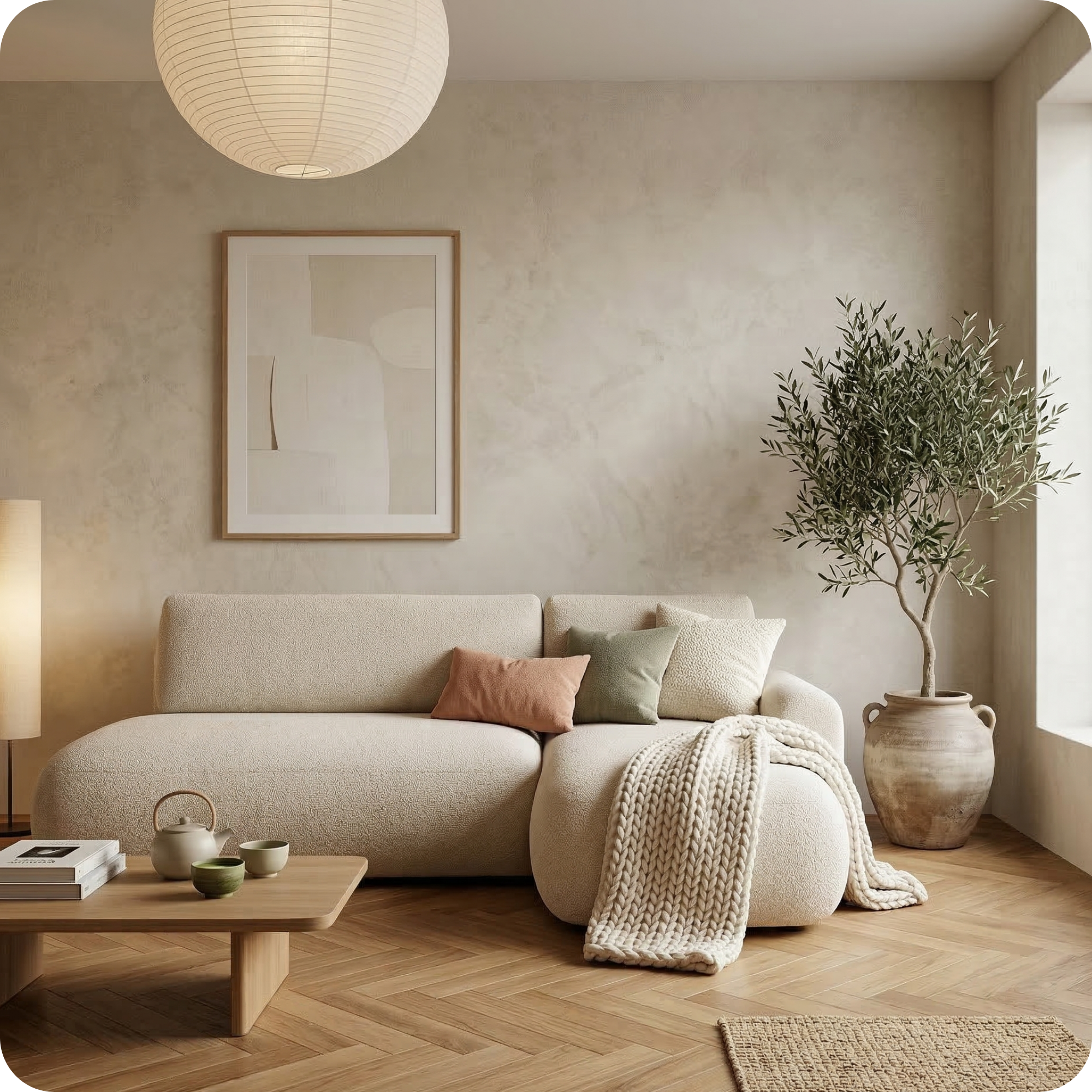
Japandi Living Room Ideas: How to Create a Japandi Interior at Home
Japandi is the design fusion of Japanese and Scandinavian aesthetics — two traditions that, despite emerging from entirely different cultural contexts, share a remarkably coherent set of values: a reverence for natural materials, a commitment to functional simplicity, an appreciation for wabi-sabi imperfection, and a deep suspicion of unnecessary ornament. The term itself is relatively recent, but the sensibility has been present in both design traditions for well over a century. When Japanese and Scandinavian design principles are combined, the result is an interior style that is simultaneously minimal, warm, and deeply considered — stripped of excess but never cold or austere.
Core Principles of Japandi Design
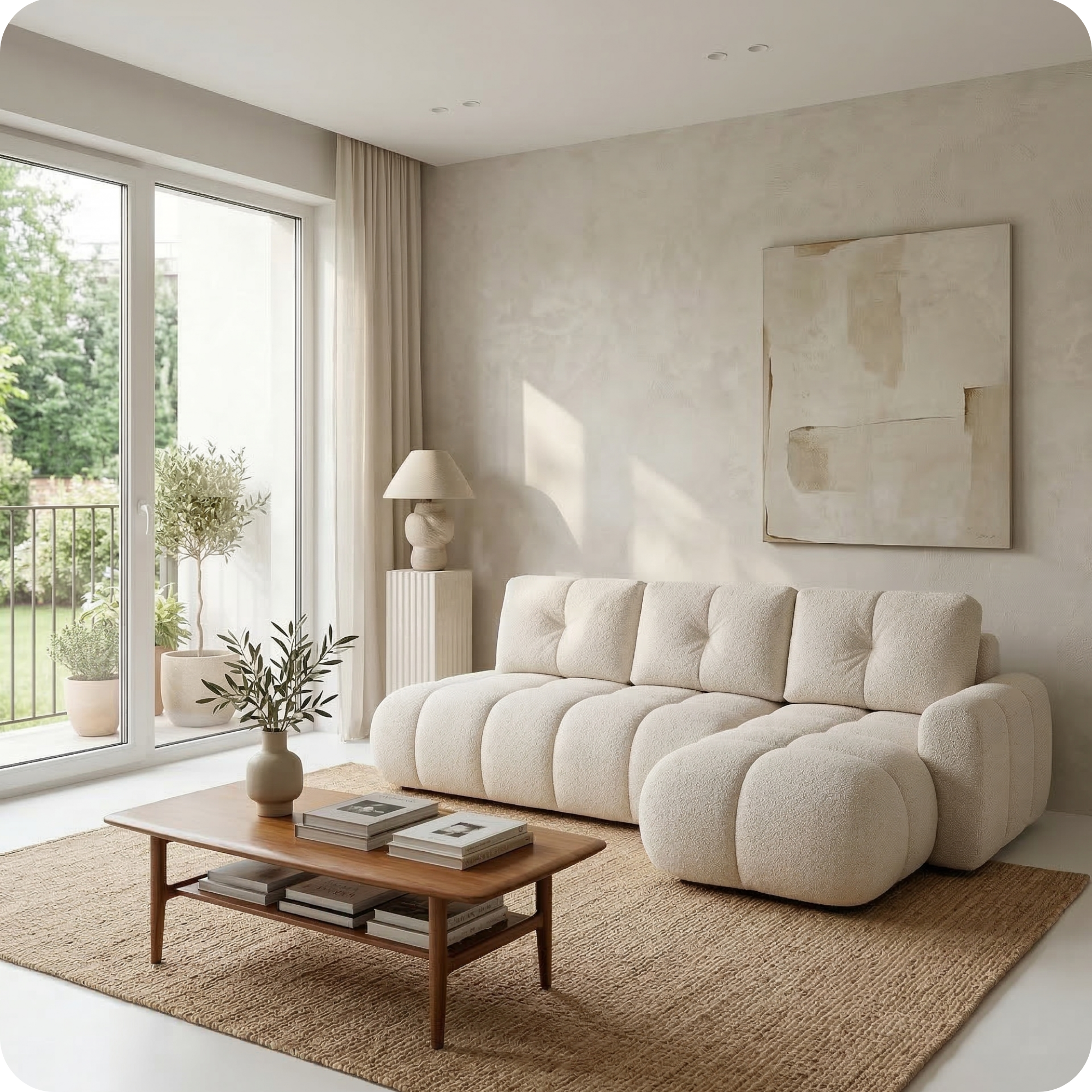
The most fundamental Japandi principle is intentionality — every object in a Japandi space should have a purpose and earn its place. This is more demanding than simple minimalism, which can be achieved through removal alone. Japandi requires that the objects which remain are either beautiful in their function, functional in their beauty, or both. The second principle is material authenticity: natural materials — wood, linen, cotton, wool, clay, stone, rattan — are used in their honest, minimally-processed states. Bleached or whitewashed timber, undyed linen, raw ceramic, hand-formed pottery — these materials speak for themselves without requiring finishing or decoration. The third principle is a restrained, earthy palette: warm whites, warm beiges, taupes, warm greys, soft blacks, and the occasional muted sage or dusty terracotta.

Lugano Sofa — Sand — from EUR 1,490
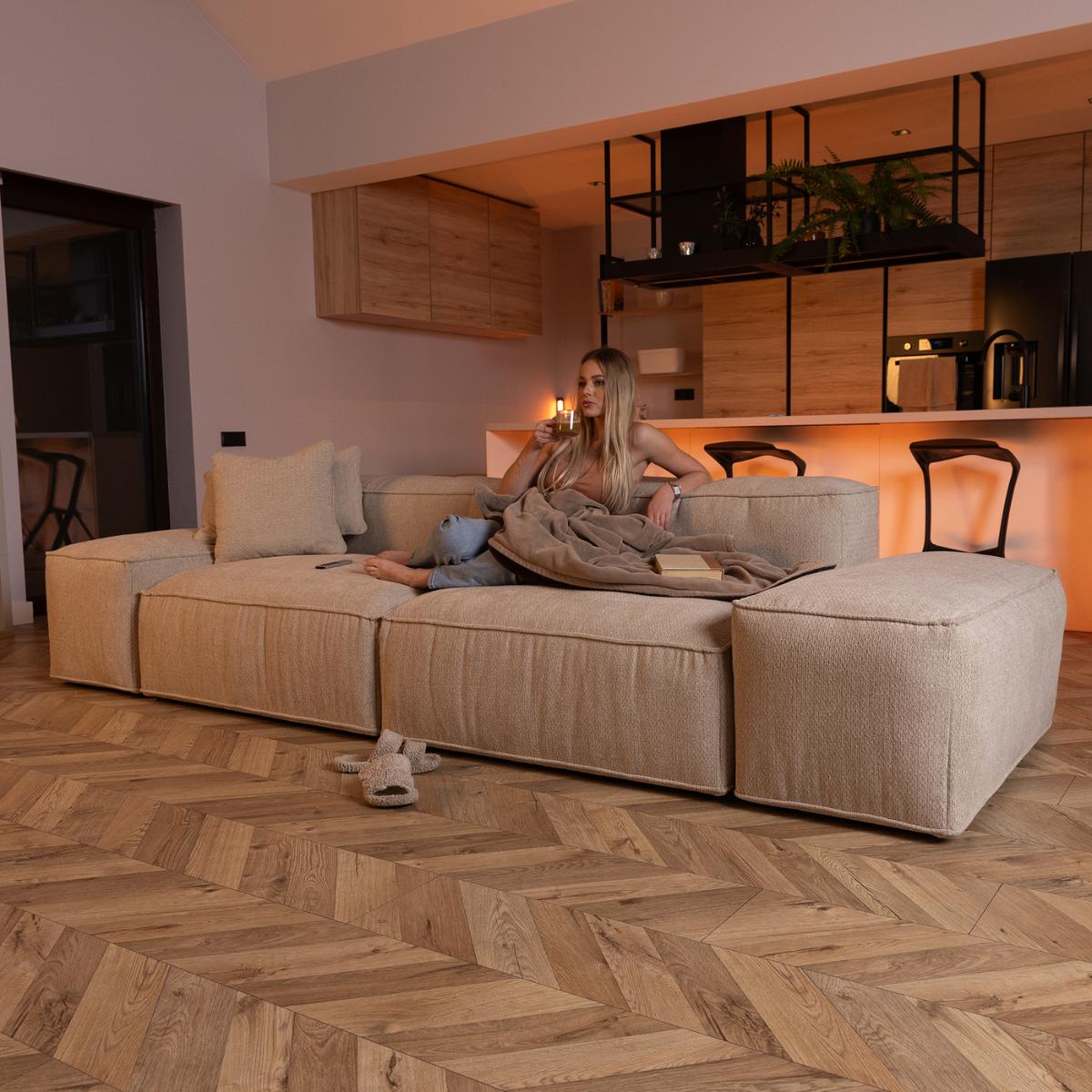
The Lugano in sand is a near-perfect Japandi sofa: clean, considered lines with no superfluous detail, in a colour that reads as warm and natural without shouting. Pair with a pale timber coffee table, a woven rattan pendant, and a single ceramic vase — the entire composition needs nothing more.

Lugano Sofa — Khaki — from EUR 1,490
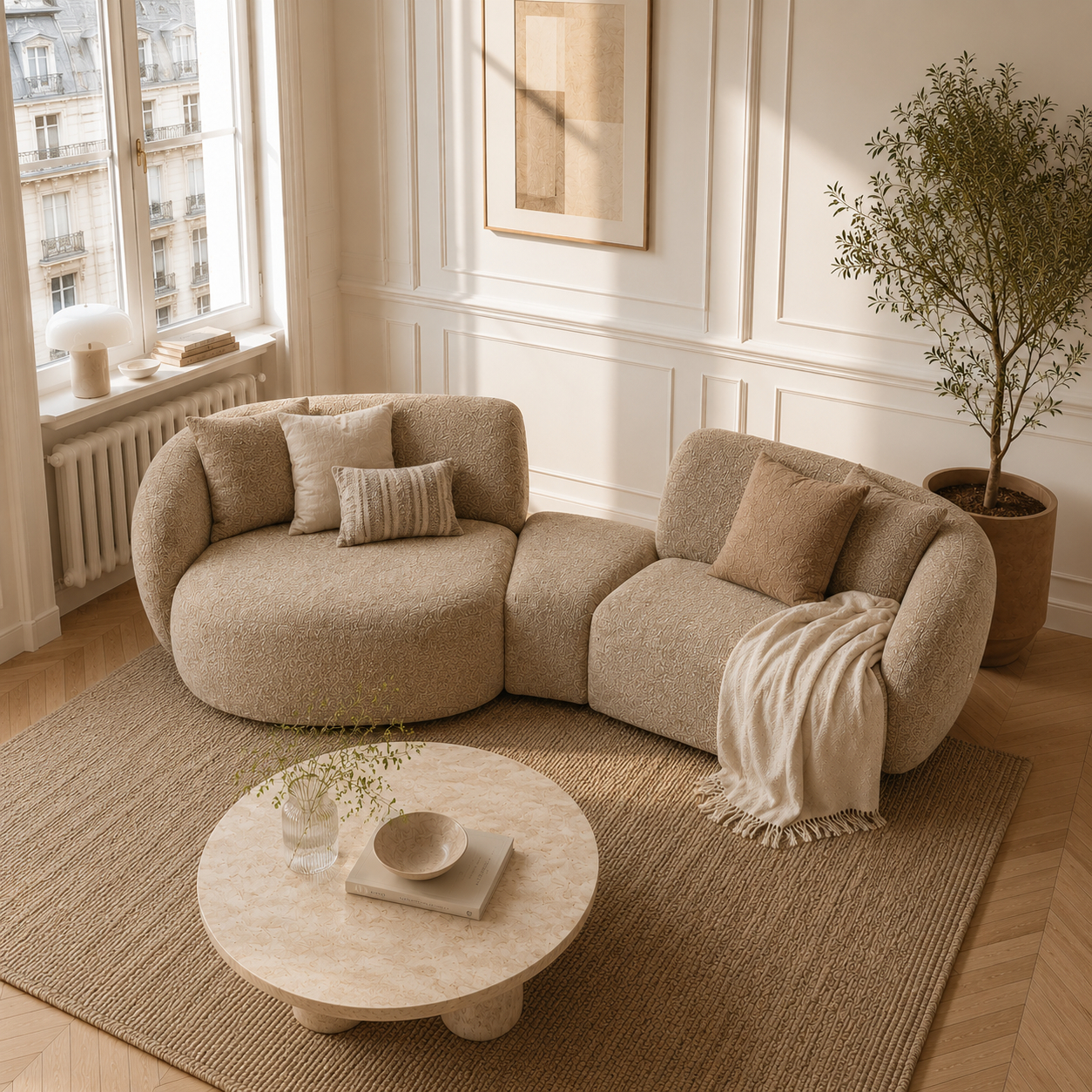
The khaki Lugano sits at the intersection of warm grey and warm taupe — a natural Japandi tone that grounds a space without dominating it. Works especially well with warm black (not cool charcoal), pale ash wood, and undyed linen cushion covers for a genuinely coherent Japandi result.
Japandi Colour Palette and Materials
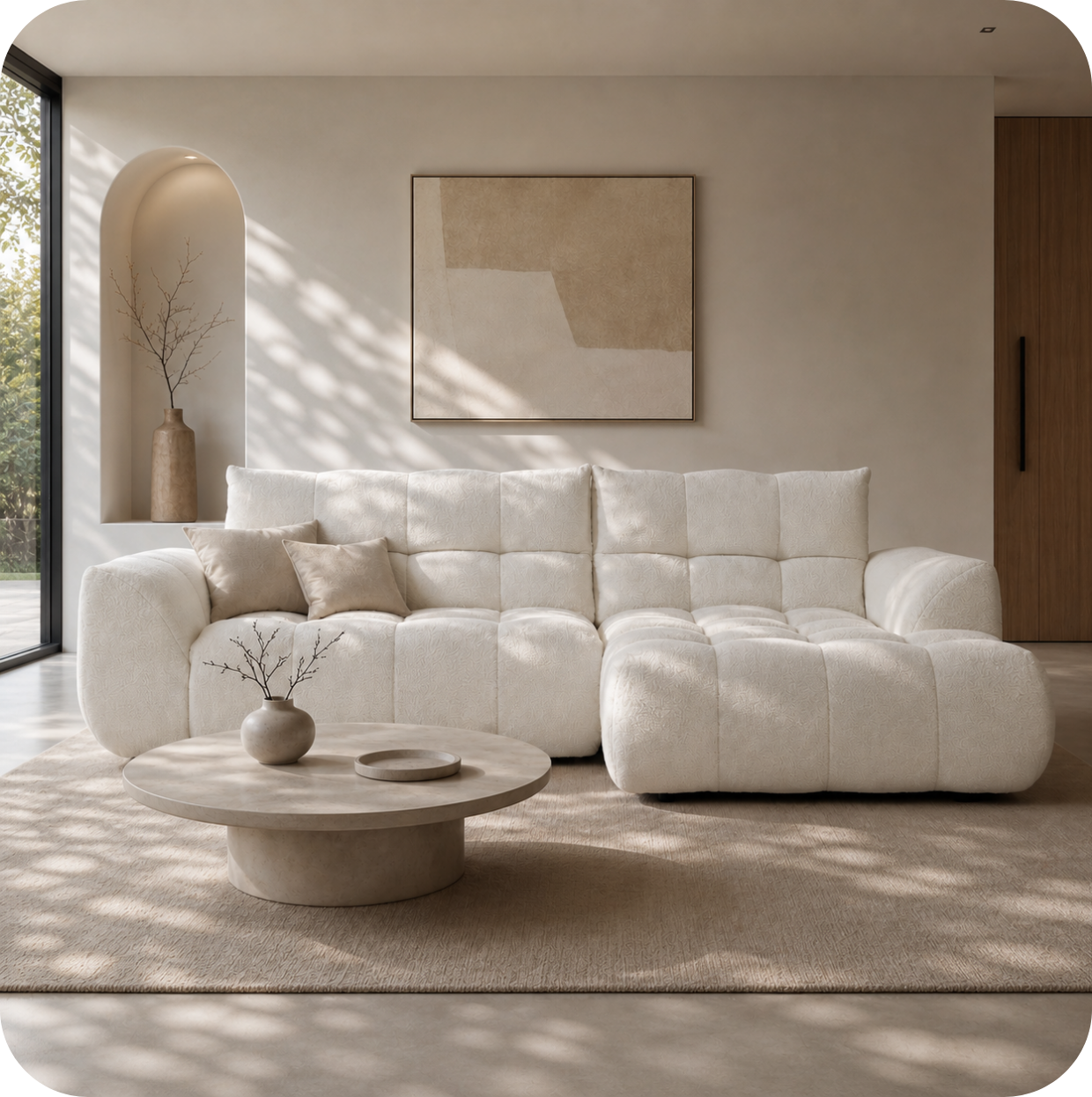
Japandi interiors avoid pure white in favour of warm, cream-tinged whites — the difference between a Japanese paper lantern and a clinical hospital wall. Wall colours in the Japandi palette include warm off-whites (think lime-washed plaster), warm light grey, and occasionally deep charcoal or inky black for accent walls. Wood is the dominant natural material in Japandi spaces — typically pale, low-grain timbers like ash, oak, or birch with a matte finish. Dark lacquered wood is also authentic to the Japanese side of the palette — a low black coffee table or dark timber shelving against a warm white wall is a classic Japandi combination. Linen and cotton in natural, undyed shades are the preferred upholstery fabrics — the absence of dye is itself a design choice.
Japandi Living Room Furniture Choices
Japandi furniture tends to be low, with a strong horizontal emphasis. Low sofas, low coffee tables, and floor cushions all reduce the visual mass of the space and create a calm, grounded atmosphere. Leggy furniture — pieces that allow light to pass underneath — is preferred over furniture that sits flush with the floor, as it creates the impression of a lighter, less-cluttered space. Modular furniture works particularly well in Japandi rooms, as it embodies the Scandinavian value of adaptability and the Japanese value of considered arrangement. Unnecessary decorative detail is eliminated — no turned legs, no ornate carvings, no applied mouldings — leaving the material quality and proportions of the piece to carry the aesthetic weight.

Leave a comment
This site is protected by hCaptcha and the hCaptcha Privacy Policy and Terms of Service apply.