


Japandi Living Room Sofa Ideas: Japanese-Scandinavian Style Guide
Japandi is one of the most searched interior design aesthetics of recent years -- and for good reason. It combines the warmth and functionality of Scandinavian design (hygge, natural materials, considered simplicity) with the refined restraint of Japanese interiors (wabi-sabi, ma, negative space). The result is a style that feels profoundly calm, deeply intentional, and genuinely liveable. The sofa sits at the heart of it.
What Is Japandi Style?
Japandi is not a strict set of rules but a philosophy applied to interiors. It values: natural materials over synthetics, quality over quantity (fewer pieces chosen with great care), muted and earthy tones over bright or saturated colours, handmade or artisanal elements alongside clean modern lines, negative space -- breathing room around furniture that gives each piece visual weight. In practice, a Japandi living room has very little furniture, but what is there is exceptional. The sofa is usually the most significant investment.
Choosing the Right Sofa for Japandi
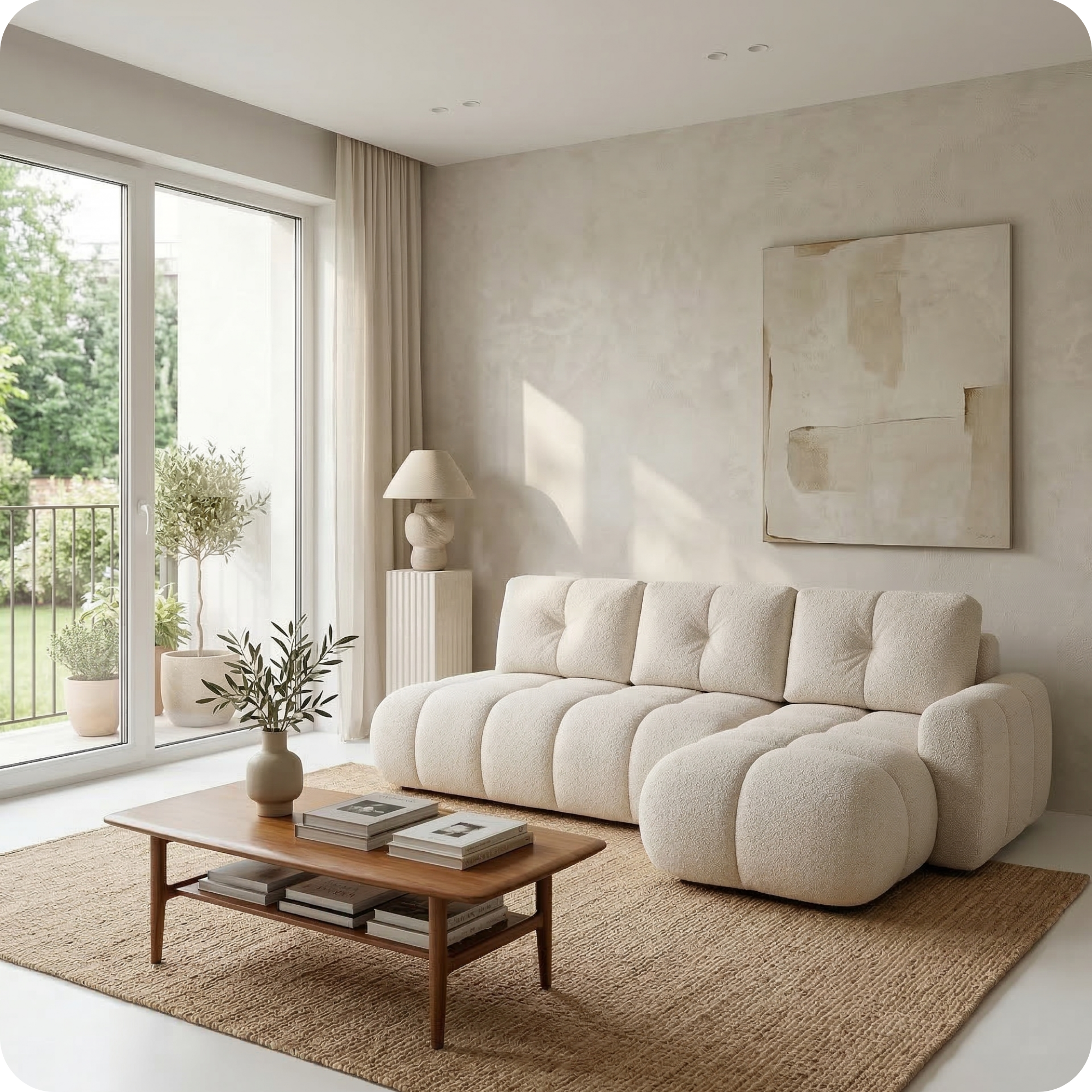
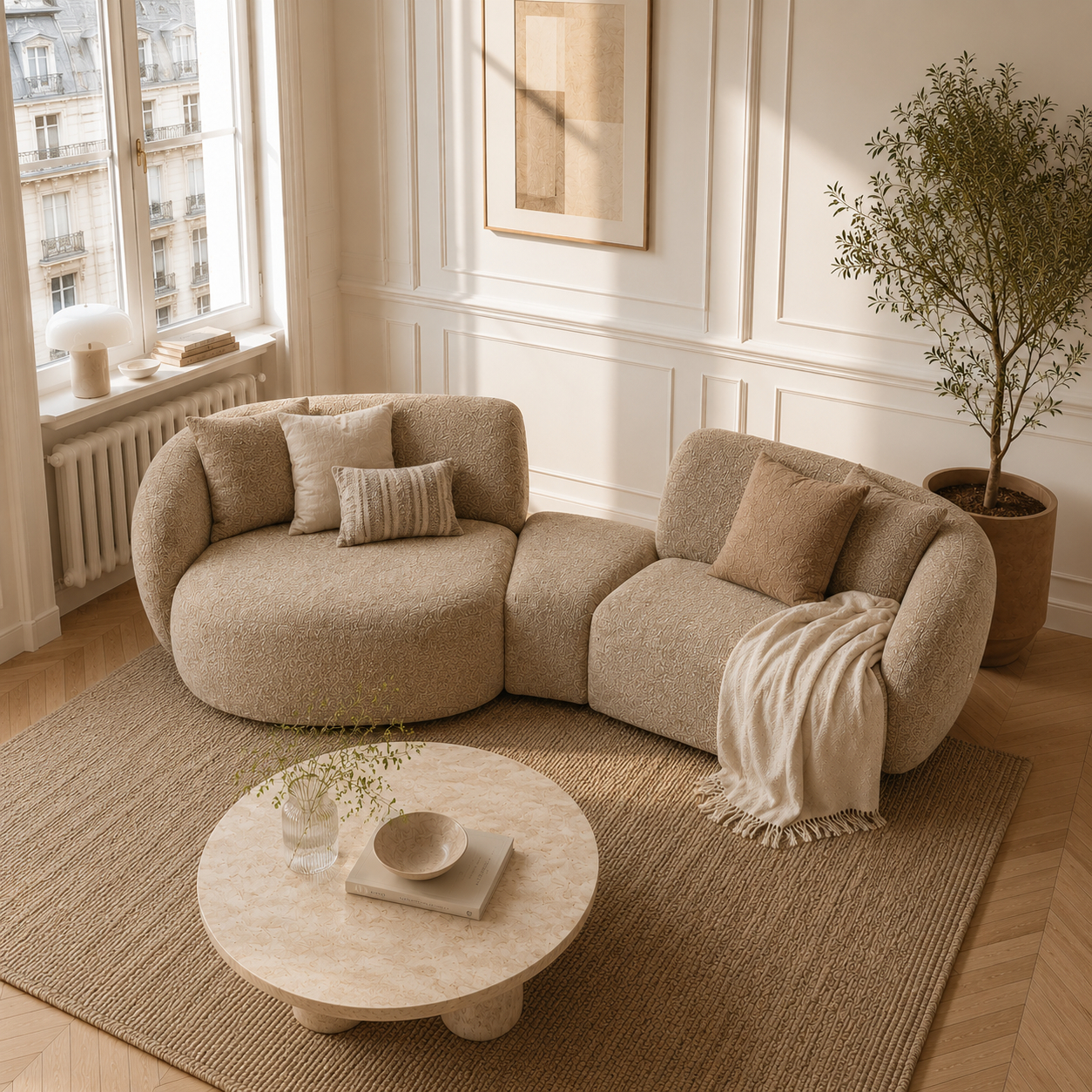
The Japandi sofa has a few non-negotiable characteristics. Low profile: Japandi draws heavily from Japanese interior traditions where furniture sits close to the ground. A low-slung sofa with a seat height of 40-45cm is ideal. This creates the visual calm that defines the style. Clean lines: No fussy curves, no ornamental details. The silhouette should be simple and architectural. Natural fabric: Linen, bouclé, and textured weaves in natural tones are ideal. Avoid anything that reads as synthetic or overly polished. Neutral colour: Warm greige, soft sand, natural linen, warm white, dusty taupe -- these are the palette of Japandi. Some rooms incorporate a single deeper tone (charcoal, clay, sage) as an accent.

Lugano Collection — from EUR 1,190
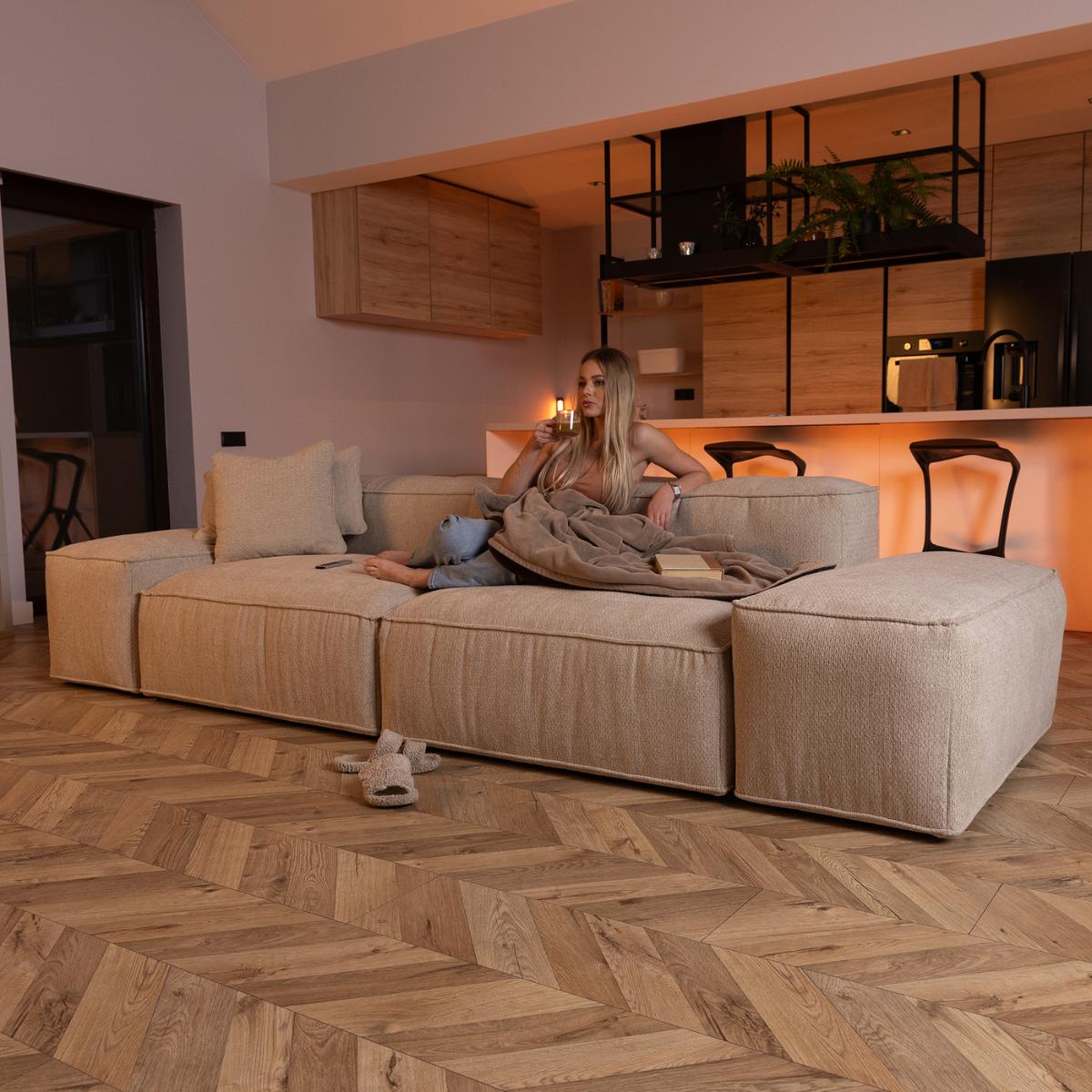
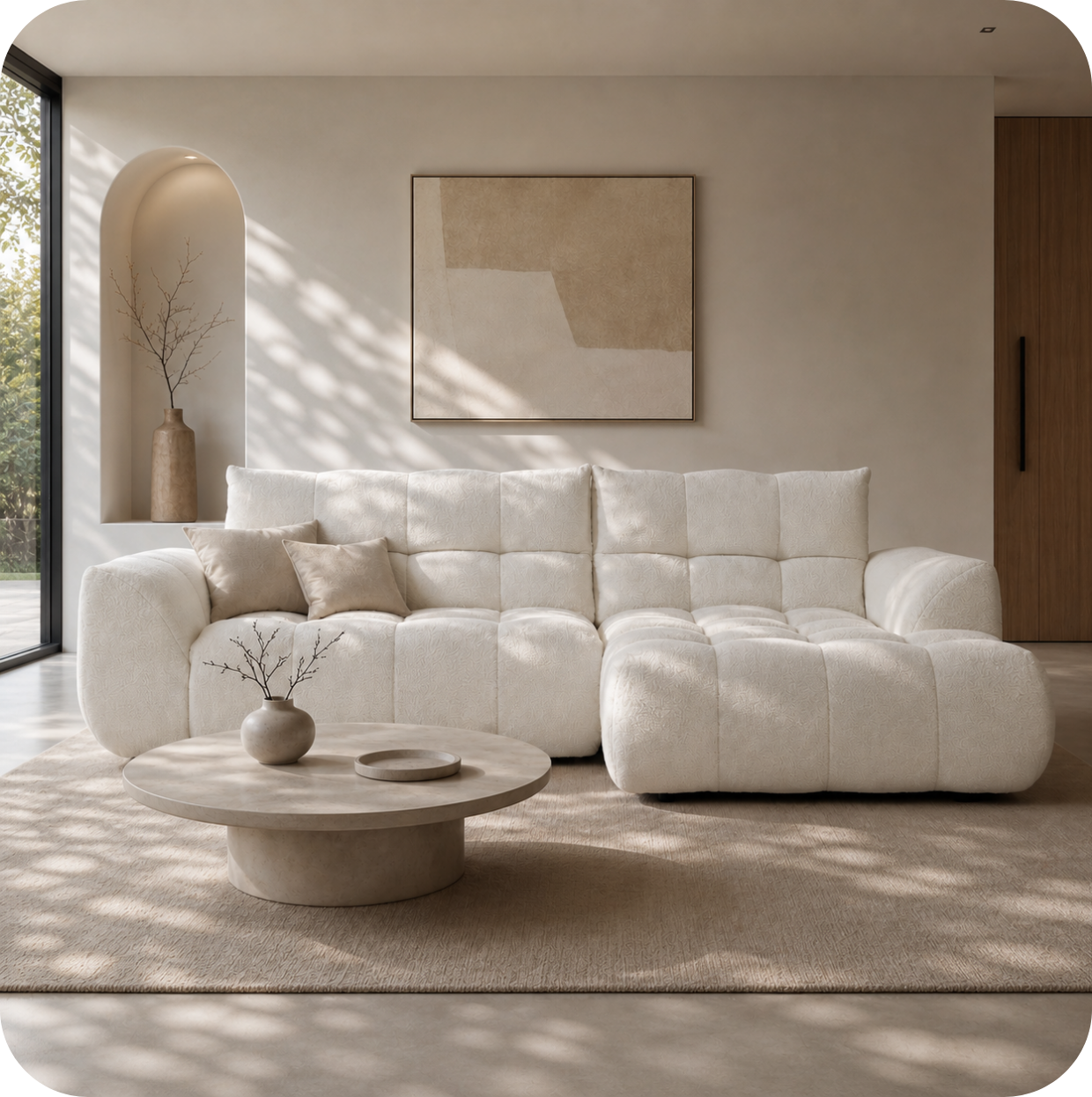
The Lugano's clean horizontal lines and deep seating make it an ideal Japandi sofa. In light grey or natural sand, it anchors a Japandi living room without imposing -- exactly right for a philosophy that values restraint above all.

Lugano in Wolf Sand — from EUR 1,190
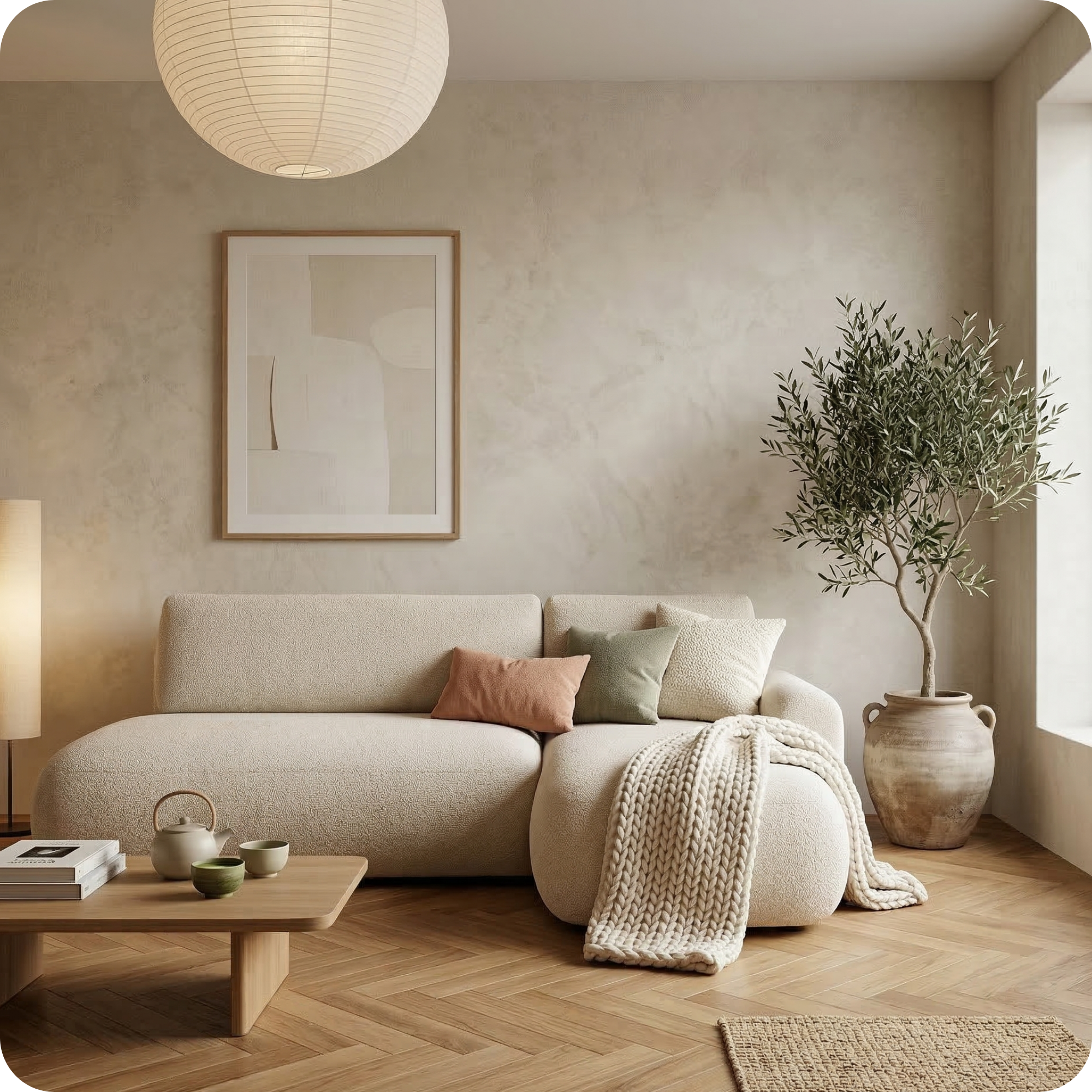
The Wolf Sand colourway is quintessentially Japandi -- warm but not yellow, neutral but with depth. Paired with a low oak coffee table and a single ceramic vase, this sofa creates a living room that could exist in both Kyoto and Copenhagen.
Japandi Colour Palette for the Living Room
The Japandi palette is warm neutrals layered with earthy accents. Start with a wall colour in warm white, clay, or soft greige. The sofa in sand, linen, or warm grey becomes the room's anchor. From there, add accents in terracotta, muted sage, charcoal, or warm bronze. The palette should feel like it was found in nature -- driftwood, stone, dried grass, quiet forest. There are no bright colours in a Japandi room. Even plants (and Japandi rooms always have plants) should be simple: a single sculptural stem in a ceramic vessel rather than an abundant tropical arrangement.
Materials and Textures
Japandi layering is done through texture rather than colour. On the sofa: a rough-weave linen throw, a single knitted cushion in a tone-on-tone colour. On the floor: a flatweave jute or wool rug in a simple stripe or natural tone. On the walls: nothing except perhaps a single piece of art with space around it. On the coffee table: a handmade ceramic bowl, a single candle, a book. Restraint in decoration is not emptiness -- it is deliberate curation. Each object earns its place.
Furniture to Pair with Your Sofa
In Japandi, every other piece of furniture in the room should respond to the sofa. A low coffee table in natural oak or walnut at sofa height. Floor cushions or a single low armchair rather than full armchairs. A simple sideboard or media unit -- the TV should be on the wall or hidden; a large TV unit is not Japandi. Lighting should be indirect and warm -- a paper pendant lamp, a low-wattage Edison bulb table lamp, or a sculptural floor lamp with a natural material shade. Nothing that creates harsh overhead light.
Japandi vs Scandinavian: What is the Difference?
Both styles value simplicity, natural materials, and functionality. The difference lies in tone. Scandinavian design allows for more warmth, more pattern (think classic folk motifs), slightly more casual arrangement. Japandi is more austere -- it incorporates the Japanese concept of ma (negative space) more deliberately. Where a Scandinavian room might have a cheerful plant arrangement and a patterned throw, a Japandi room would have one plant, one unadorned cushion, and more visible space. Japandi also leans darker in its accents -- charcoal and black appear more readily than they would in a pure Scandi room.

Leave a comment
This site is protected by hCaptcha and the hCaptcha Privacy Policy and Terms of Service apply.