


Living Room Lighting Guide: How to Layer Light for a Beautiful Space
Lighting is one of the most transformative but least understood elements of interior design. A well-lit living room does not just help you see — it shapes the mood, defines zones, highlights your furniture and artwork, and makes the difference between a space that feels flat and one that feels genuinely inviting. The foundation of good living room lighting is understanding how to layer different types of light to achieve depth, warmth, and flexibility.
The Three Layers of Good Living Room Lighting
Professional lighting designers work with three layers: ambient lighting (the general, overall illumination of the space), task lighting (focused light for specific activities like reading), and accent lighting (decorative light that highlights architectural features, artwork, or objects). A living room that uses only one layer — typically just an overhead ceiling light — will never feel as good as one that uses all three in combination. The art lies in balancing these layers and making them independently controllable so you can adjust the mood for different times of day and different activities.
Ambient Lighting: Setting the Base
The most common mistake in living room lighting is relying entirely on a single overhead ceiling light for ambient illumination. A ceiling light positioned directly above the room illuminates horizontally and creates a flat, shadow-free effect that makes a room feel like an office. Better ambient lighting comes from multiple lower sources: wall sconces, floor lamps, and even uplighters that bounce light off the ceiling. A pendant or chandelier above a coffee table can provide atmospheric ambient light while also being a decorative focal point. The goal is to have enough ambient light to move around comfortably without having to use the overhead light at full power.

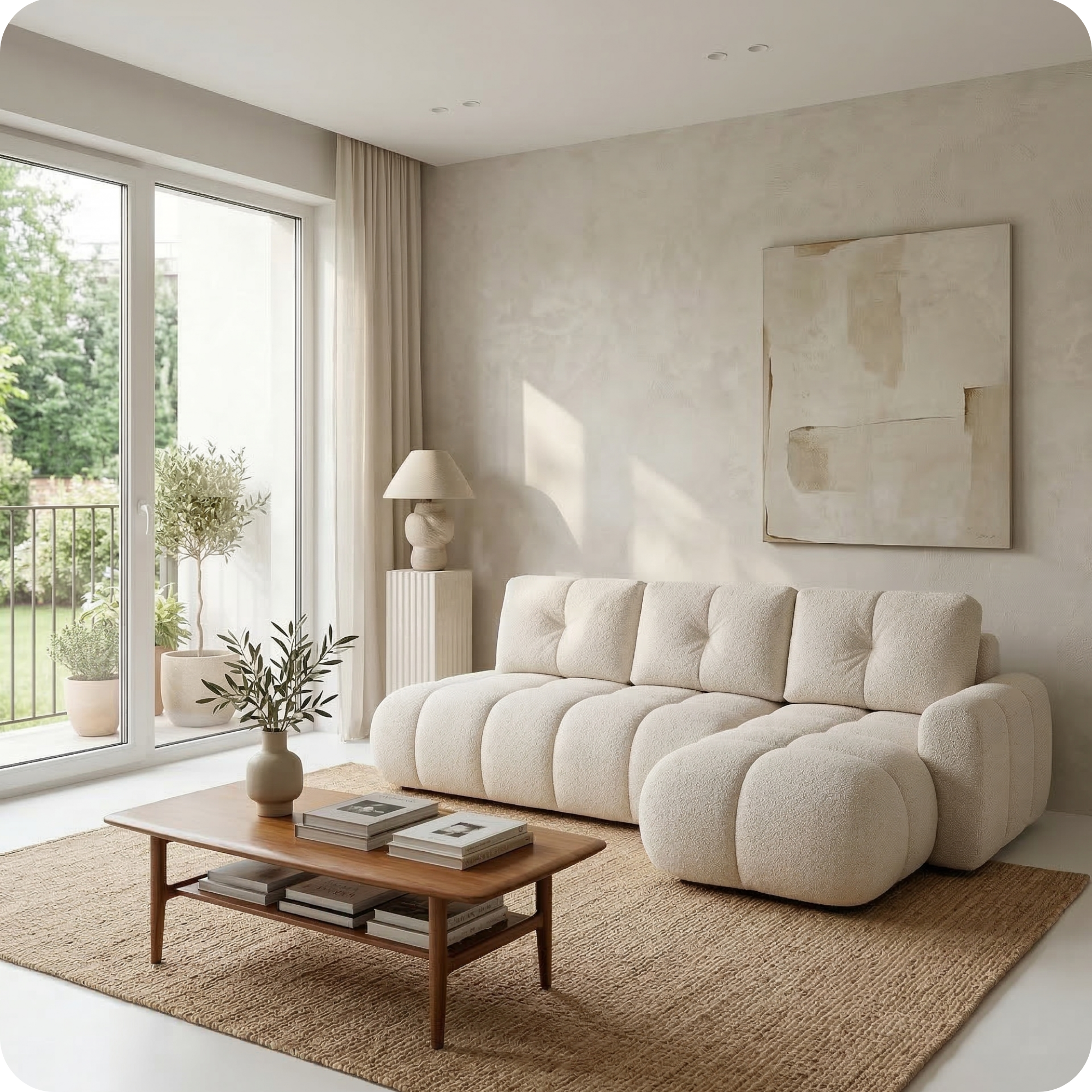
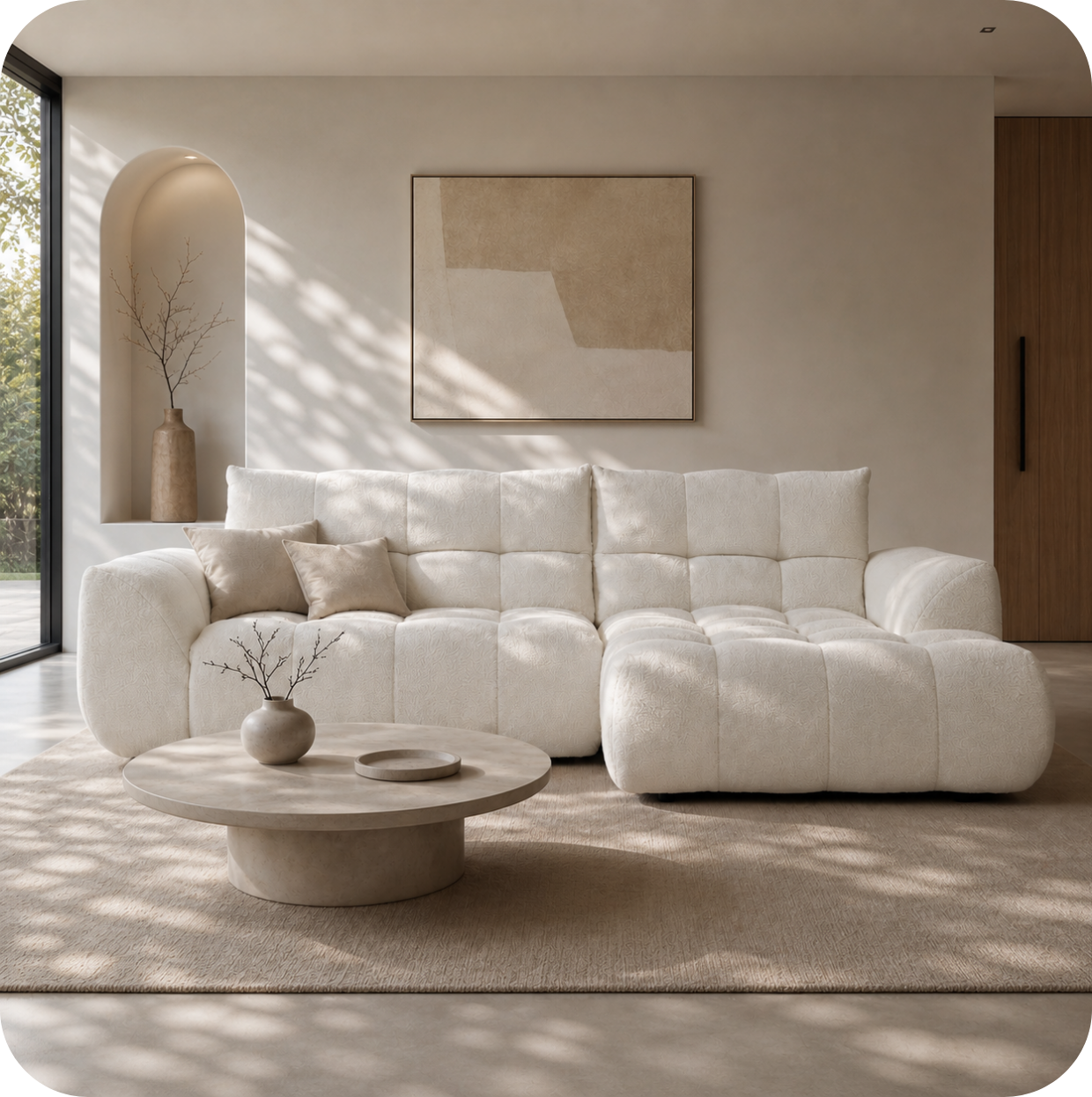
Lugano Sofa in Light Grey — from EUR 1.290
The sofa is the centrepiece around which your living room lighting should revolve. A pair of matching floor lamps on either side of the sofa creates balanced ambient and reading light while framing the seating area visually. A dimmer switch on these lamps allows you to drop the ambient level for evening relaxation. The Lugano in light grey benefits from warm-toned lighting (2700K) that brings out the depth of the fabric rather than flattening it.

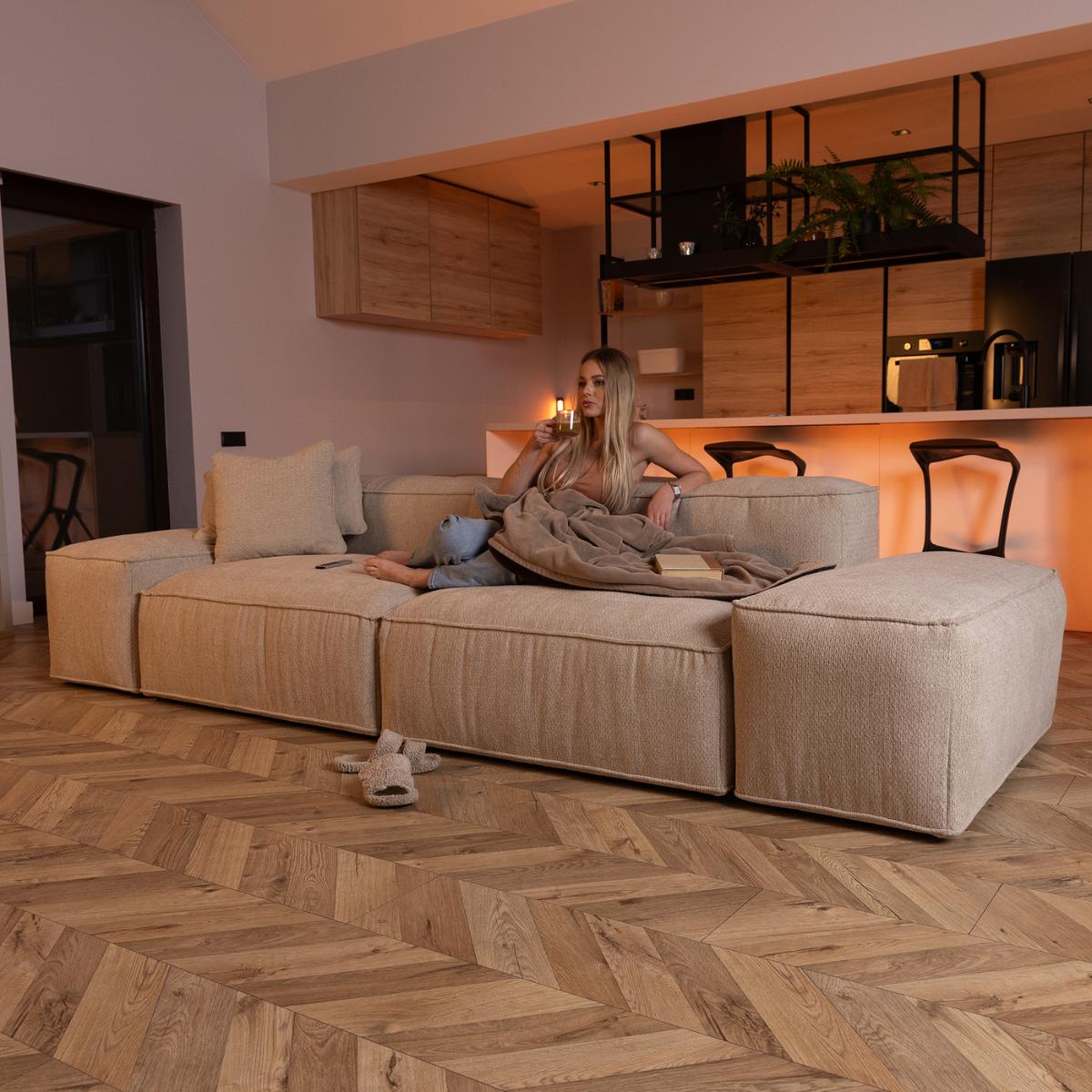
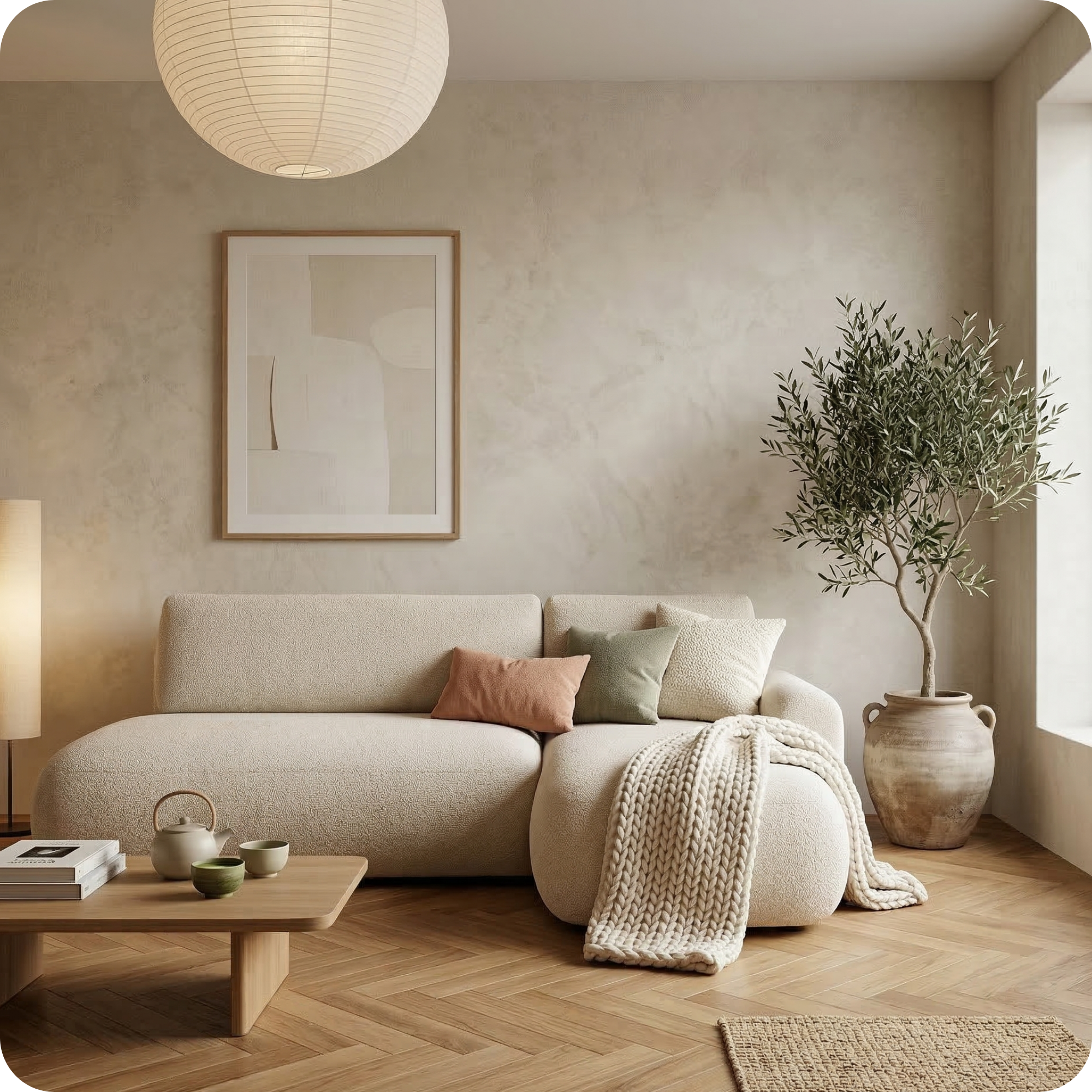
Riva 3-Seater Sofa — from EUR 1.090
Positioning a floor lamp at one end of a sofa creates an instantly more inviting reading nook than any overhead light can achieve. The Riva sofa, with its clean lines and generous proportions, benefits enormously from considered lighting — a warm pendant above the coffee table area plus a floor lamp to one side transforms the seating zone from a functional area into a place you genuinely want to spend time.
Task Lighting: Reading and Focus
Task lighting in a living room primarily means reading light: enough brightness, from the right angle, to read comfortably without eyestrain. A floor lamp positioned to one side and slightly behind your shoulder as you read is the classic solution — it provides directed light without glare. Adjustable swing-arm floor lamps and table lamps allow you to direct the light precisely where you need it. The colour temperature for reading light should be slightly cooler than your ambient lamps — around 3000K-3500K — to provide adequate clarity without being harsh.
Accent Lighting: Highlighting and Drama
Accent lighting creates depth and visual interest by highlighting specific elements of the room: artwork, architectural features like alcoves or shelving, plants, and objects on display. Picture lights, directional downlights, LED strip lighting inside shelving units, and uplighters behind plants all fall into this category. A single accent spotlight trained on a large artwork dramatically increases the room's perceived sophistication. Wall sconces on either side of a fireplace create symmetry and a sense of occasion. The trick with accent lighting is subtlety — it should enhance rather than overwhelm.
Dimmer Switches and Smart Lighting
The single most practical lighting upgrade you can make is fitting dimmer switches to every light circuit in your living room. The ability to lower ambient light in the evening fundamentally changes how a room feels — it is one of the cheapest ways to make a significant difference. Smart lighting systems allow you to set and recall different lighting scenes for different moods and times of day: bright for daytime tasks, warm and low for evening relaxation, and romantic for entertaining. Warm-toned LED bulbs (2700K-2800K) are recommended throughout for a living room — they render fabric colours and skin tones beautifully, and they consume a fraction of the energy of incandescent equivalents.

Leave a comment
This site is protected by hCaptcha and the hCaptcha Privacy Policy and Terms of Service apply.