


Living Room Lighting Ideas: How to Layer Light for a Warm and Beautiful Space
Lighting is arguably the single most powerful design tool available in interior design, yet it is also the most consistently under-thought. A living room with brilliant furniture, beautiful rugs, and carefully chosen accessories can be completely undermined by poor lighting — particularly the ubiquitous single overhead light that casts flat, even illumination from directly above. This guide explains how professional interior designers approach living room lighting and how you can apply the same principles in your home.
The Three Layers of Light
All great interior lighting is built on three layers: ambient lighting, task lighting, and accent lighting. Ambient lighting: the general background illumination that replaces daylight. Rather than relying on a single overhead fitting, distribute ambient light across multiple sources at different heights. This might include recessed downlights on dimmer switches, floor lamps, and table lamps. Task lighting: focused light for specific activities — reading, working, or examining detail. A reading lamp beside the sofa or an adjustable floor lamp are both task lighting. Accent lighting: light used primarily for aesthetic effect — to highlight artwork, architectural features, plants, or decorative objects. LED strip lights inside shelving, picture lights above artwork, and uplighters behind plants are all accent lighting. The goal is to never have the ceiling as the only light source in the room.

Lugano Sofa — Toffee — from EUR 890
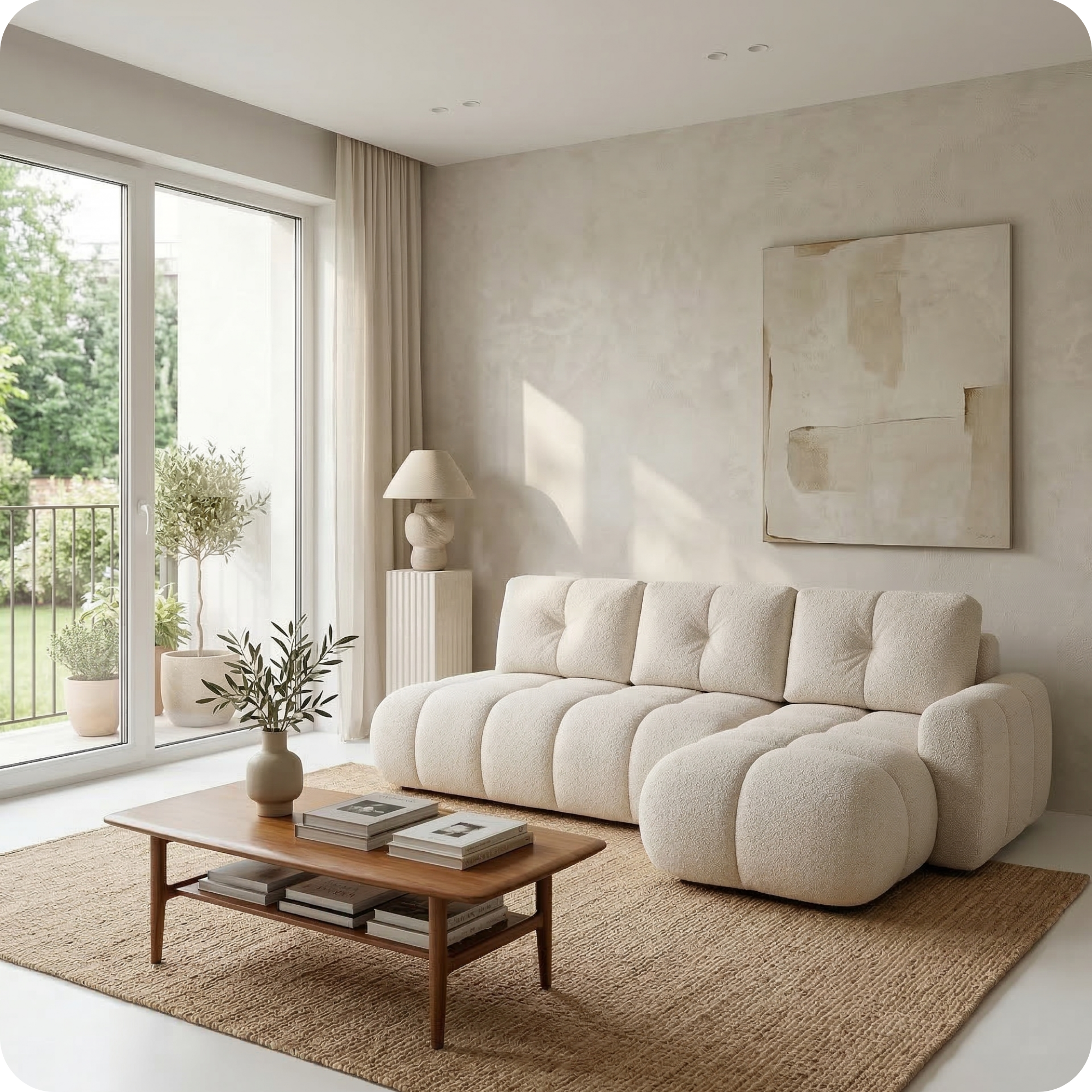
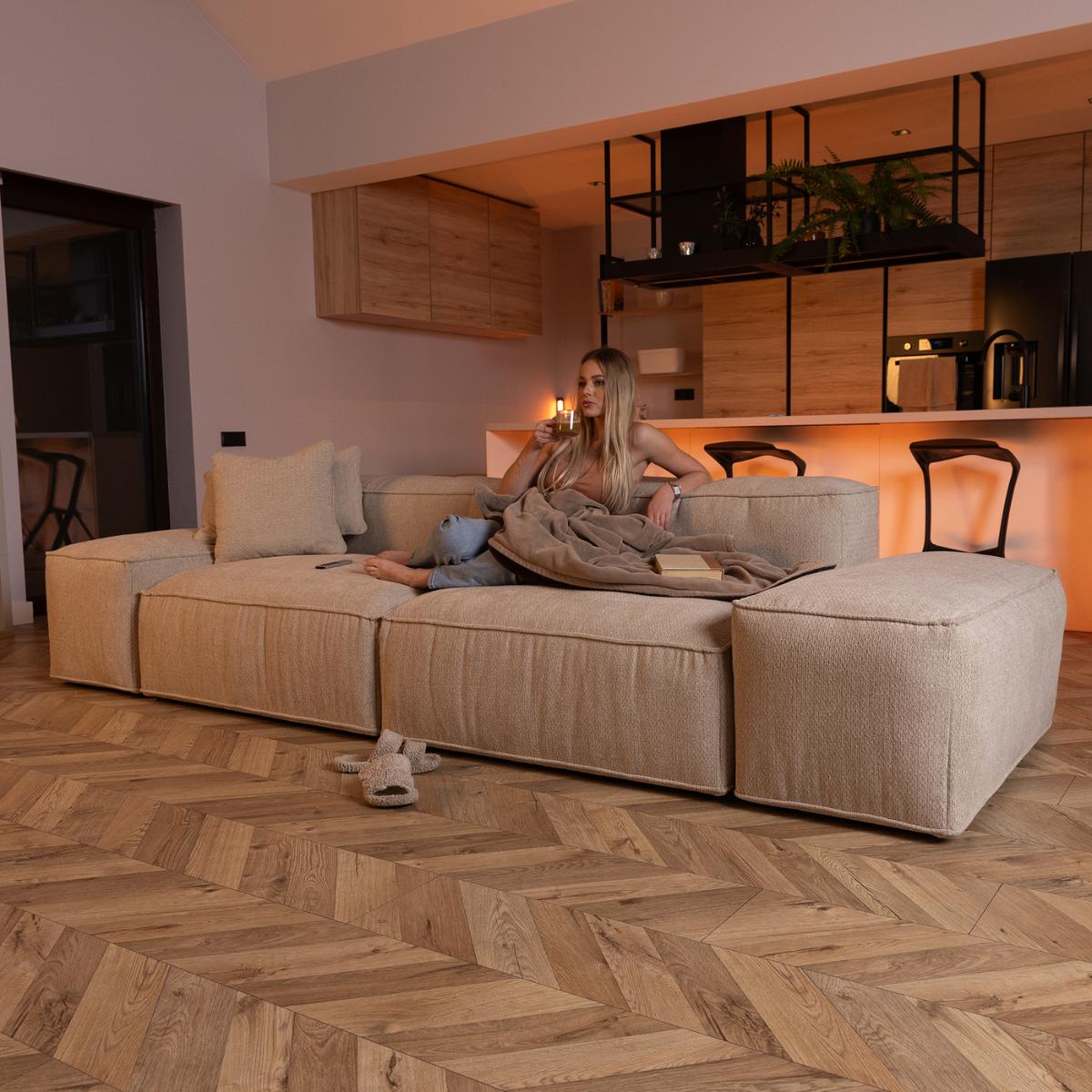
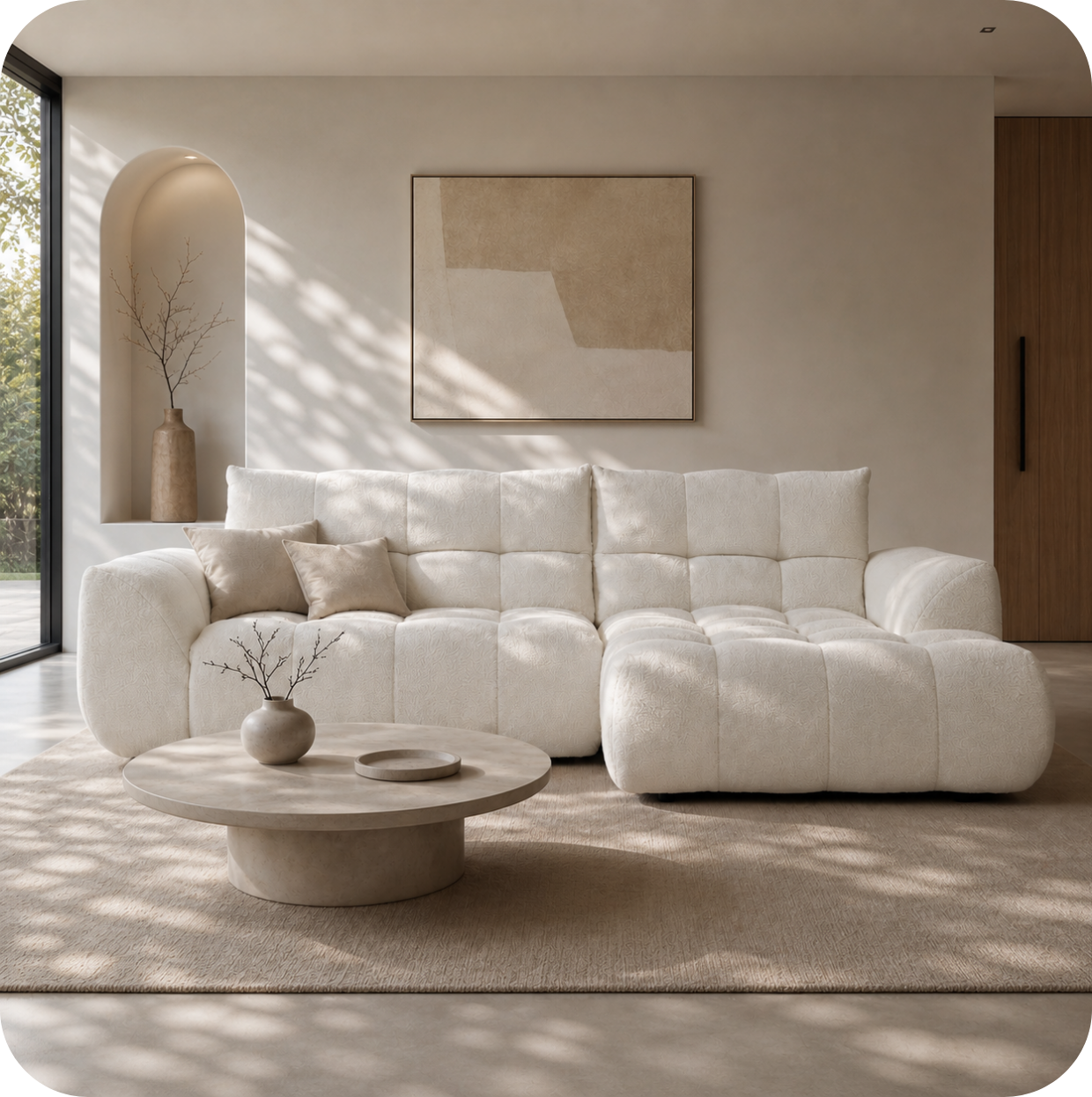
A warm toffee sofa benefits enormously from layered warm lighting — a floor lamp to one side, a table lamp on a side table, and carefully positioned accent lights create the kind of inviting evening atmosphere that makes a living room genuinely pleasurable to spend time in.

Malbec Sofa — from EUR 990
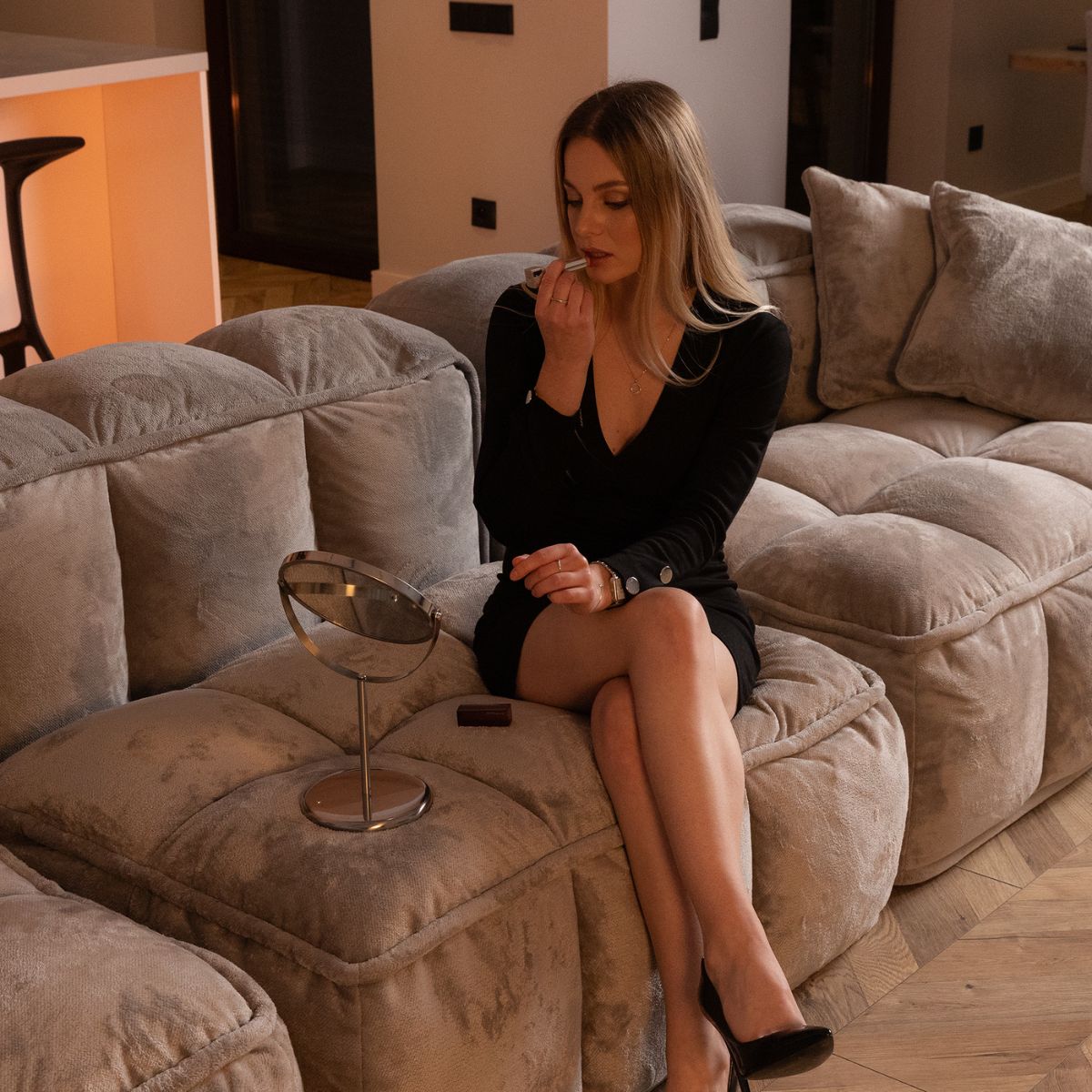
In a room with a rich, darker sofa like the Malbec, warm layered lighting is essential — without it the room can feel cave-like. Floor lamps with warm bulbs, a statement pendant light above the coffee table, and accent lights on artwork or shelving transform the space into an elegant, atmospheric room.
Choosing the Right Bulb Temperature
Bulb temperature (measured in Kelvin) has an enormous impact on how a room feels. 2,700 K (warm white): the most residential-feeling temperature, producing a warm, amber-toned light similar to traditional incandescent bulbs. Ideal for living rooms. 3,000 K (soft white): slightly cooler and crisper than 2,700 K but still warm. Works well in more contemporary spaces. 4,000 K (cool white): neutral to slightly cool. More appropriate for kitchens and offices than living rooms. 6,500 K (daylight): very cool and blue-toned. Avoid in living rooms — it creates an unpleasant, fluorescent-like atmosphere. For living rooms, always use 2,700 K or 3,000 K bulbs in all lamp fittings.
Essential Living Room Lighting Fixtures
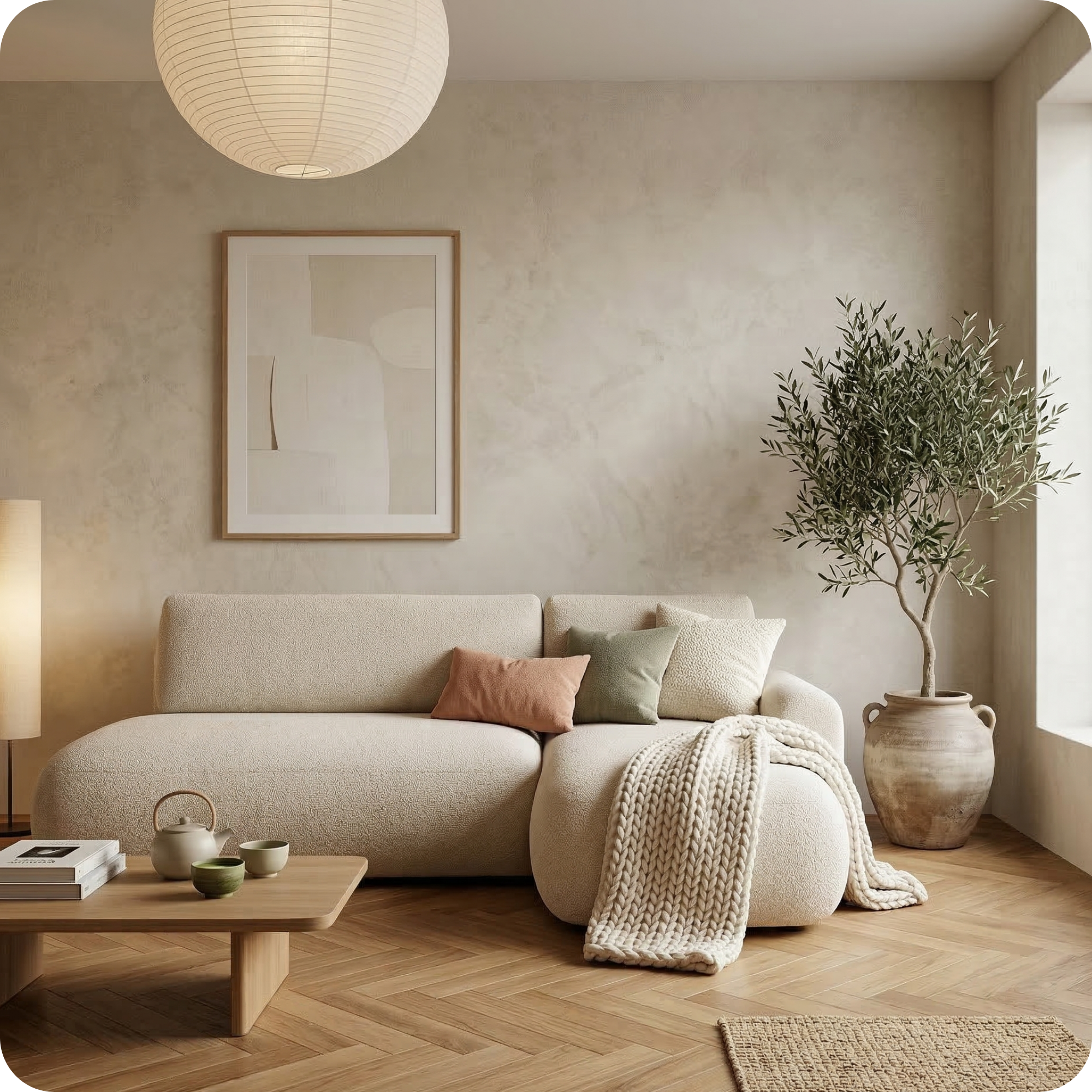
Floor lamp: the single most useful living room lighting addition. A tall floor lamp positioned beside or behind the sofa creates a reading light and an ambient pool of warm light at human height. Table lamp: on side tables, console tables, or windowsills, table lamps create intimate pools of light and serve as decorative objects in their own right. Pendant light: a statement pendant over the coffee table or seating area can serve as both ambient light and a design feature. Dimmer switches: fitting dimmers to all ceiling and wall lights is the simplest upgrade that has the biggest impact on living room atmosphere.

Leave a comment
This site is protected by hCaptcha and the hCaptcha Privacy Policy and Terms of Service apply.