



Living Room Plants: The Best Indoor Plants for Your Living Room and How to Style Them
Plants have always been an essential part of interior design, but in recent years their prominence has increased dramatically — from a single potted plant on a windowsill to fully considered botanical arrangements that form a defining element of the living room aesthetic. The reasons for this trend go beyond pure decoration: research consistently shows that indoor plants improve air quality, reduce stress, and increase wellbeing. This guide covers the best plants for living rooms, how to position them for maximum impact, and how to incorporate them into different interior styles.
The Best Low-Maintenance Plants for Living Rooms
Monstera deliciosa (Swiss cheese plant): one of the most architecturally dramatic indoor plants available, the monstera's large, perforated leaves make a strong visual statement and work equally well in minimalist, Scandinavian, and maximalist interiors. Water once a week in summer, every two to three weeks in winter. Snake plant (Sansevieria): virtually indestructible, the snake plant tolerates low light and infrequent watering. Its upright, architectural form works particularly well in modern and contemporary interiors. Pothos (Epipremnum): one of the easiest trailing plants, perfect for placing on high shelving or a plant stand. ZZ plant (Zamioculcas): extremely tolerant of low light and irregular watering, with attractive glossy dark green leaves. Peace lily (Spathiphyllum): one of the best flowering indoor plants, tolerant of lower light, and reportedly one of the most effective air-purifying plants. Fiddle-leaf fig (Ficus lyrata): when happy, one of the most beautiful living room plants — large, glossy leaves and an elegant tree form. Needs bright indirect light and consistent watering.

Merlot Sofa — Leaf Green — from EUR 890
A sofa in leaf green is itself a botanical choice — and when paired with actual living plants, it creates a deeply biophilic living room that feels genuinely connected to nature. Layer a large monstera beside the sofa, trailing pothos on the shelving, and a collection of smaller ceramic-potted plants on the coffee table.

Lugano Sofa — Sand — from EUR 890
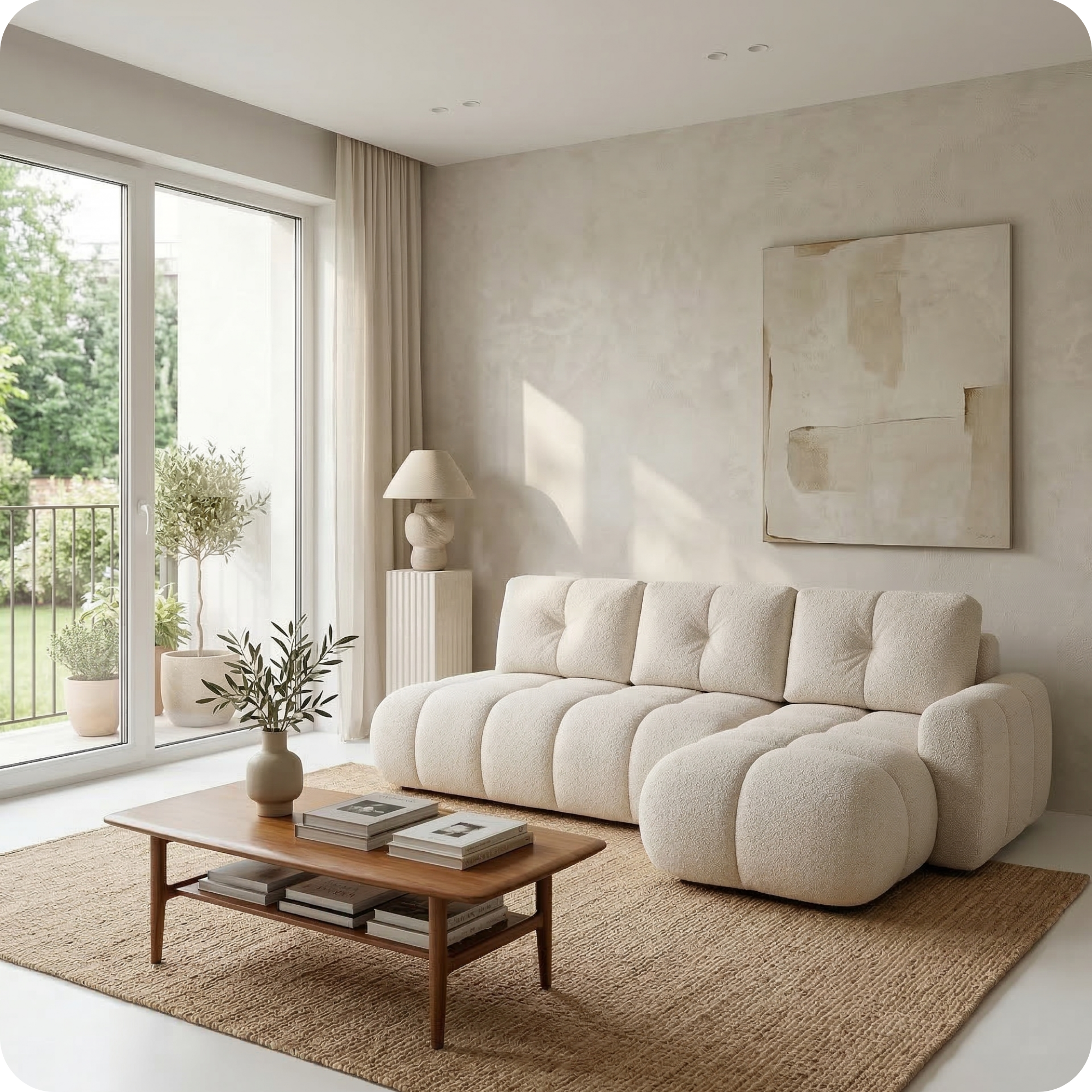
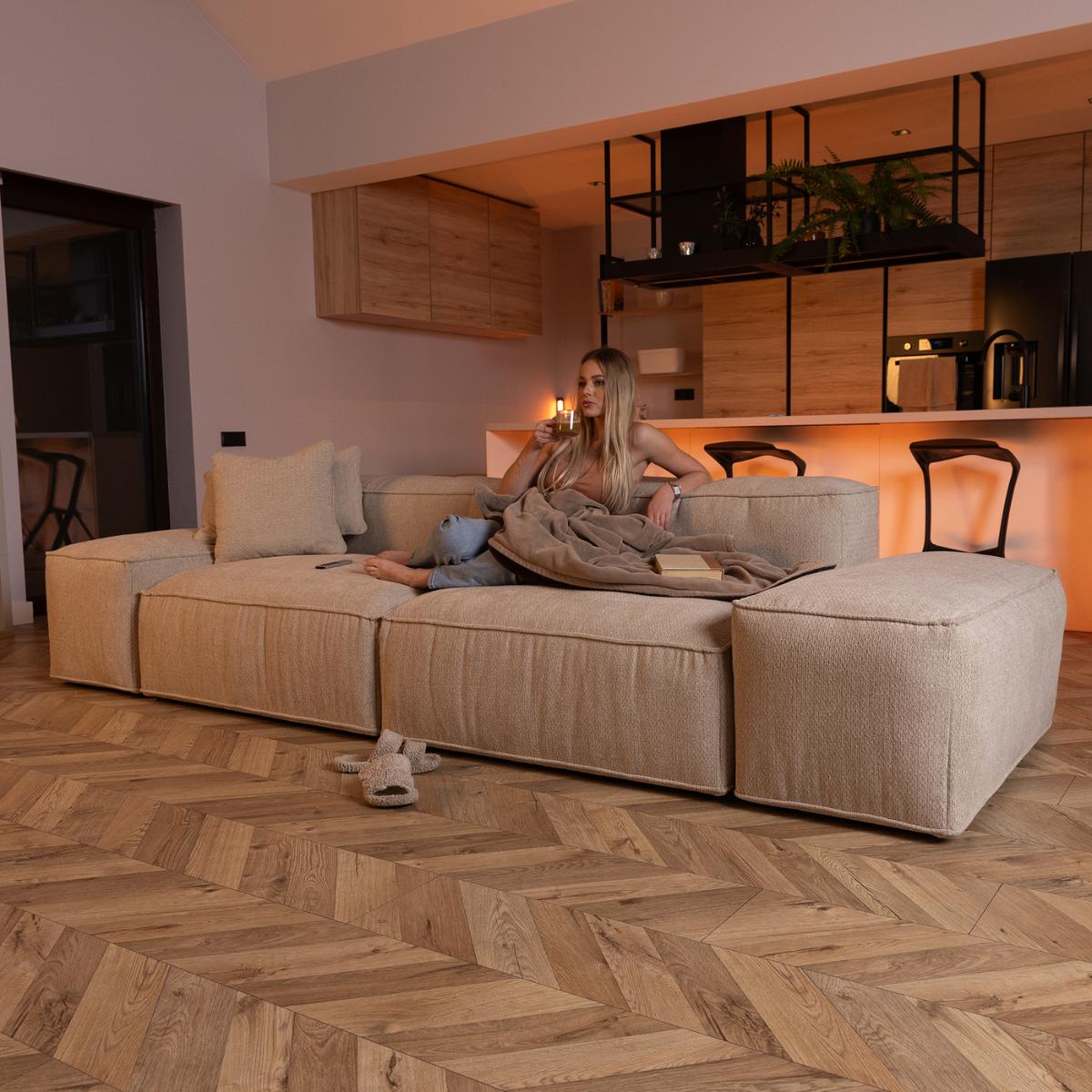
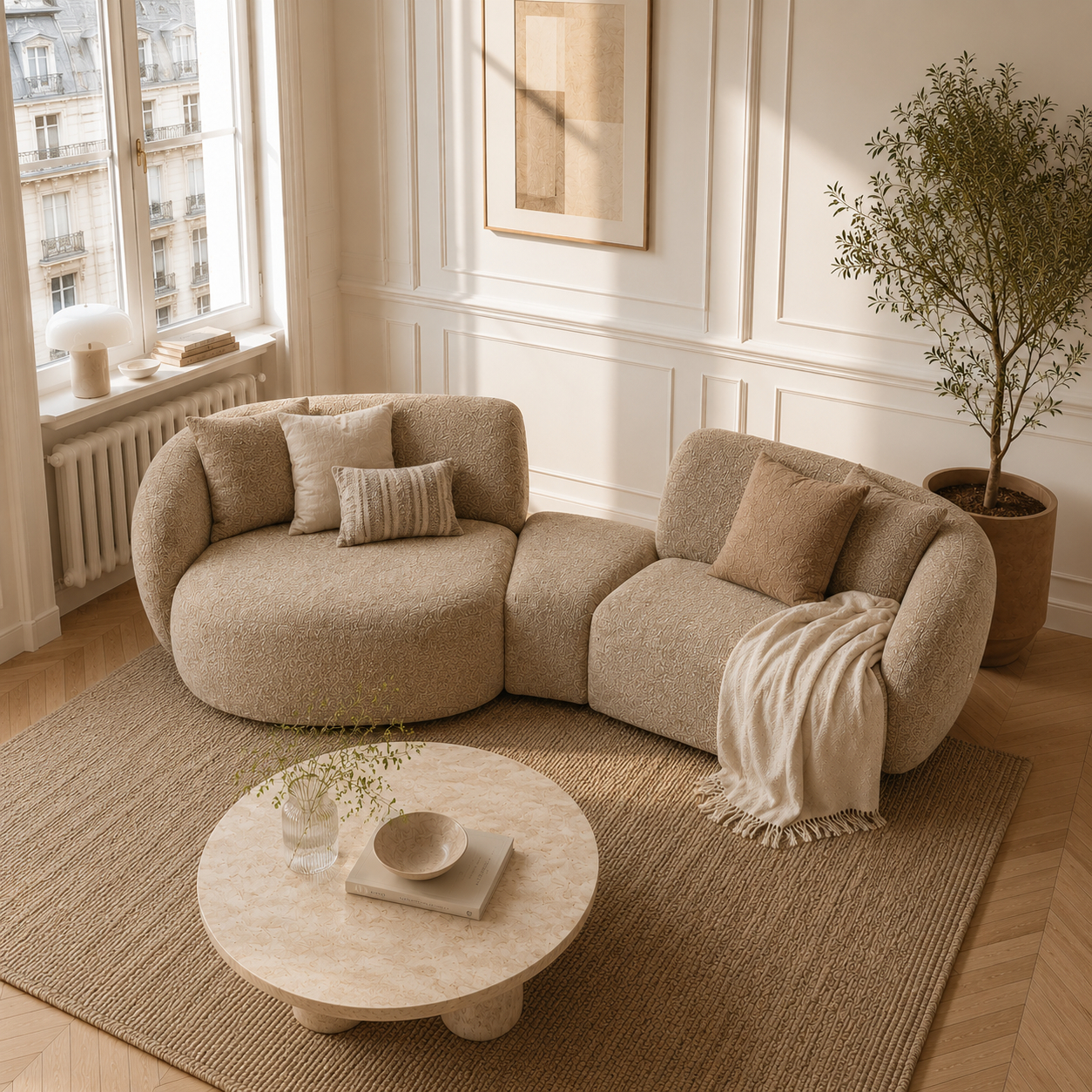
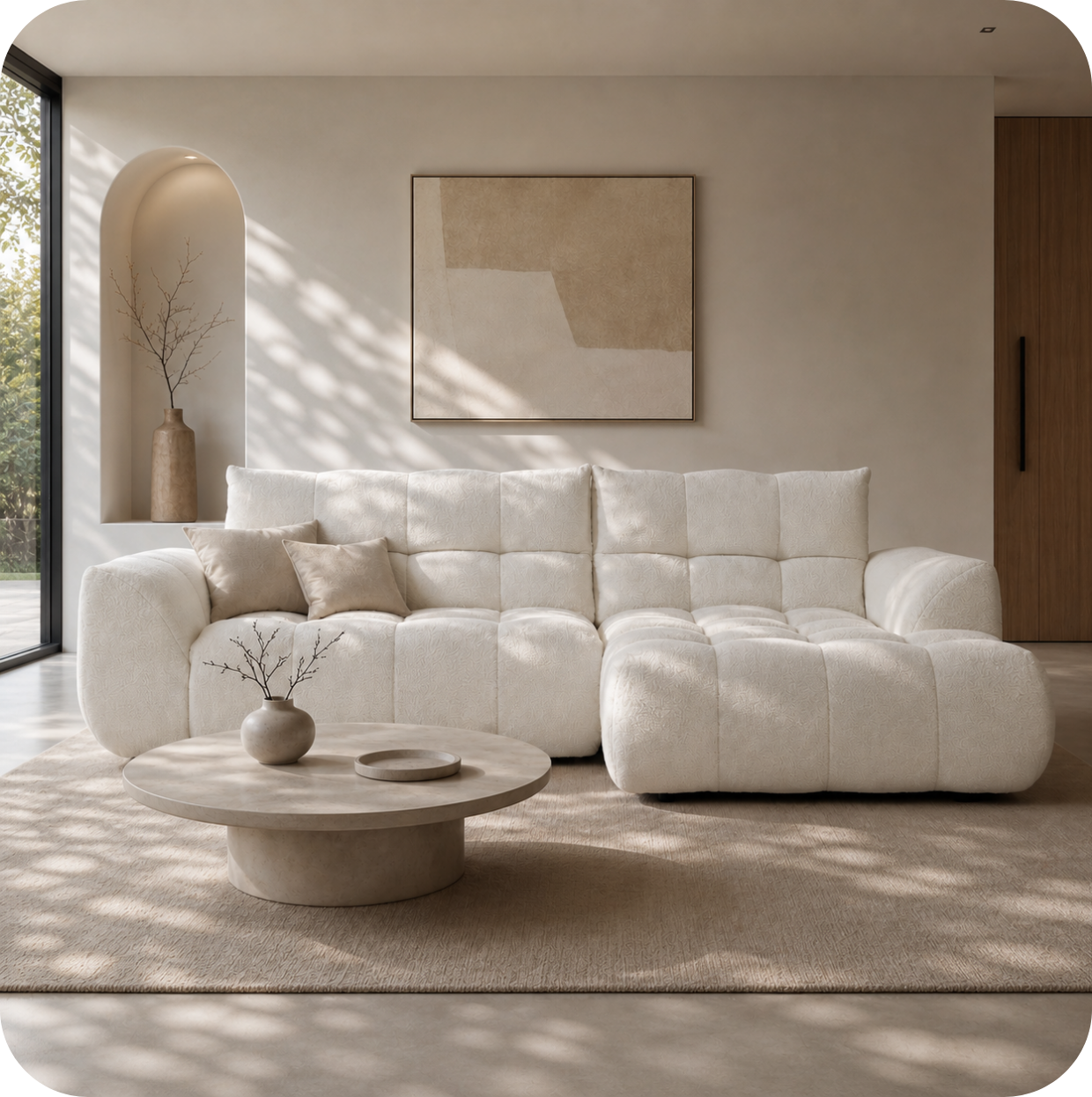
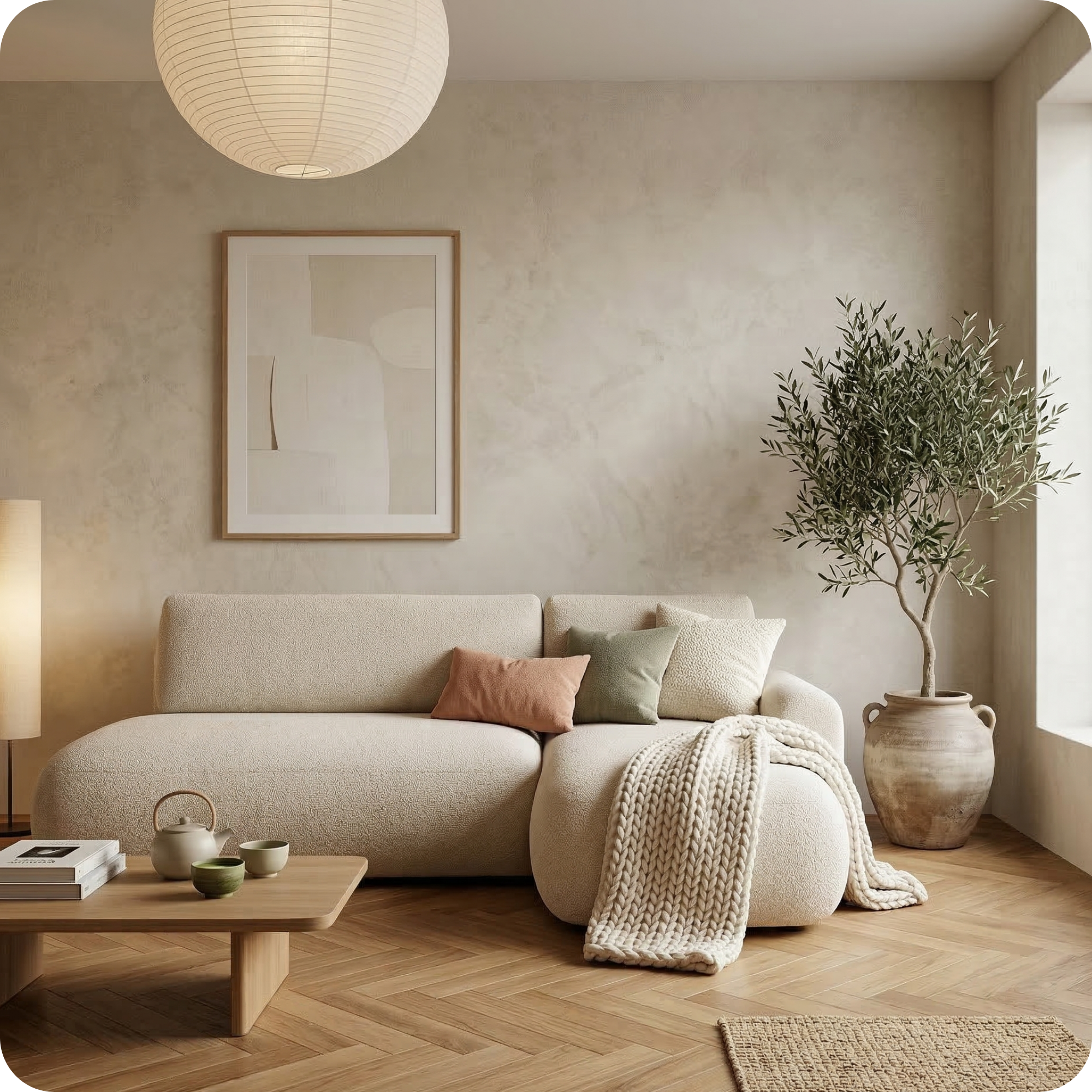
Against a neutral sand sofa, the green of living plants creates striking contrast that enlivens the space. A fiddle-leaf fig in the corner, a snake plant flanking the sofa, and a trailing pothos adds layered botanical presence without overwhelming the serene neutral palette.
How to Style Plants in a Living Room
Plants work best in a living room when they are treated as design elements rather than afterthoughts. A few principles: vary height: use a tall floor plant (fiddle-leaf fig, monstera), a mid-height plant on a plant stand, a trailing plant on a shelf, and a small plant on the coffee table or windowsill. This creates vertical rhythm and visual interest at multiple levels. Group plants together: a cluster of three to five plants in a corner creates far more visual impact than the same plants dotted individually around the room. Grouping also creates a microclimate of slightly higher humidity that benefits most tropical houseplants. Use pots as accessories: terracotta pots, ceramic vessels, and woven baskets all bring additional texture and warmth to a plant grouping. Avoid plastic pots in visible positions. Vary texture: mix large-leaved plants (monstera, fiddle-leaf fig) with finer-textured plants (ferns, pothos) for a natural, layered look.
Plants for Different Interior Styles
Scandinavian interiors: snake plants and ZZ plants (clean, architectural, minimal care); small succulents and cacti in simple ceramic or concrete pots. Japandi interiors: a single, beautifully placed plant in a quality ceramic vessel; bonsai or small architectural forms. Maximalist interiors: the more the better — a jungle corner of large tropical plants. Biophilic interiors: hanging plants, vines, large-leaved tropical species, moss walls, and every possible botanical layer. Mid-century modern: rubber plant (Ficus elastica), monstera, snake plant in brass or terracotta pots.

Leave a comment
This site is protected by hCaptcha and the hCaptcha Privacy Policy and Terms of Service apply.