



Living Room Wall Decoration Ideas: Gallery Walls, Mirrors and Art
The walls of a living room are its largest surfaces and the most significant opportunity for personality, depth, and visual interest beyond the furniture. A well-decorated wall can anchor a seating arrangement, draw the eye to a focal point, make a ceiling feel higher, and tell the story of who lives in the room. The principal options — gallery walls, single statement artwork, mirrors, and architectural or decorative features — each have their own principles, and understanding them is what separates a wall that looks considered from one that looks random or bare.
The Sofa Wall: Your Most Important Decorating Decision
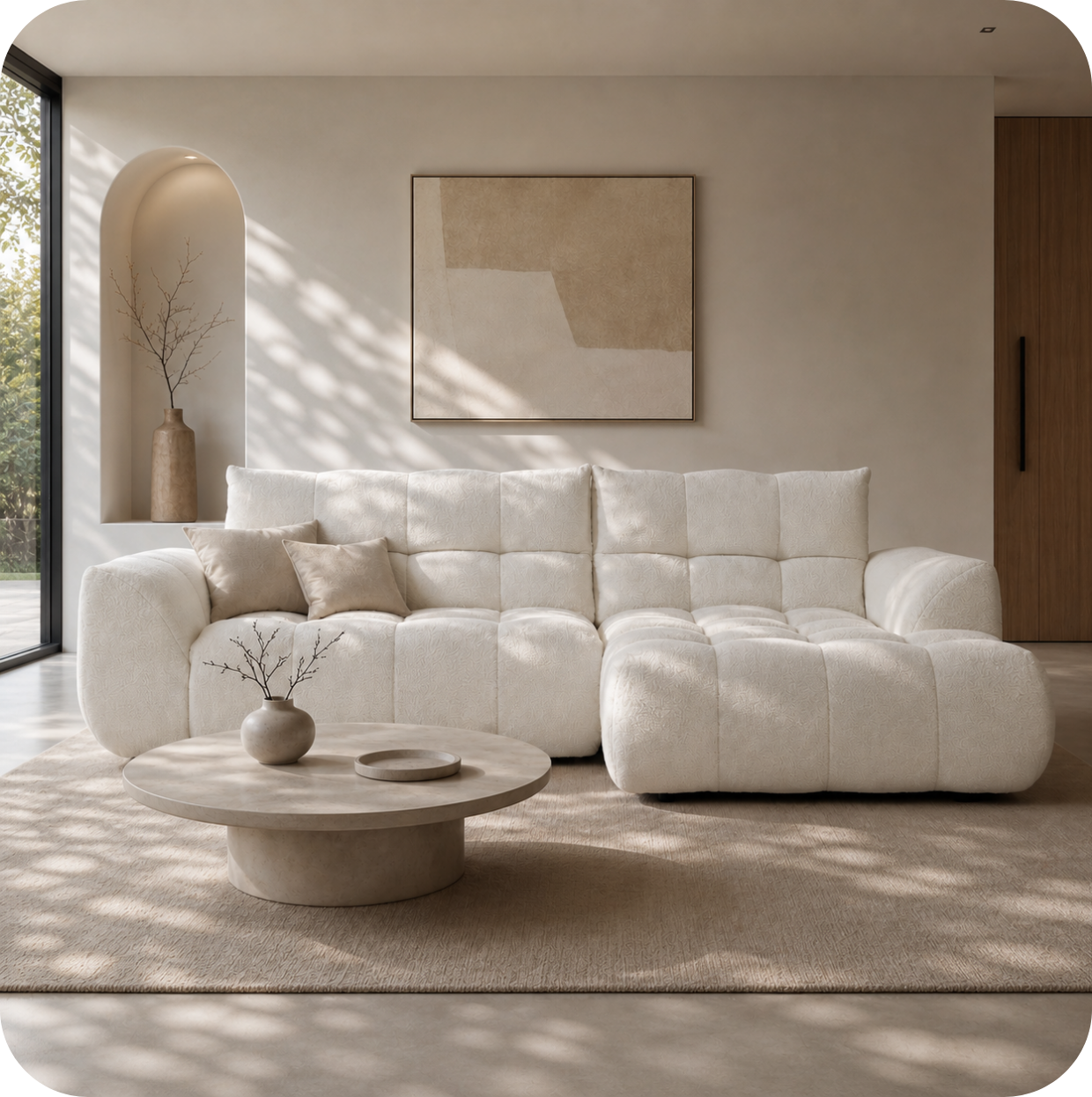
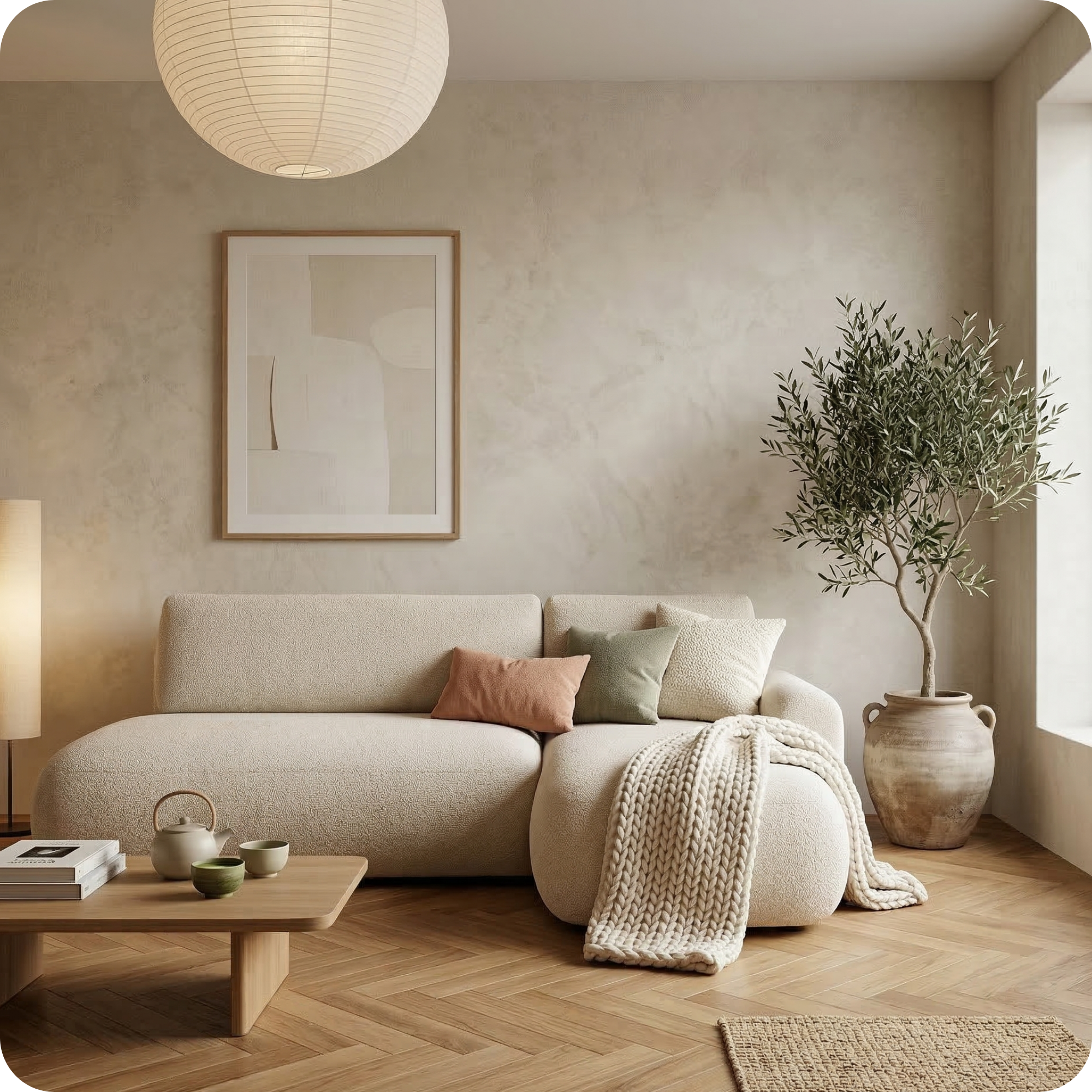
The wall behind the sofa is the most viewed wall in the living room — it is the backdrop against which the primary seating zone is set, visible from the moment you enter the room and from the kitchen or dining area in an open-plan home. This is the wall that most justifies decorating investment: a beautiful piece of art or a well-executed gallery wall here transforms the entire character of the room. The general principle is that the artwork or wall arrangement should be roughly the same width as the sofa (or slightly wider) — something that is significantly narrower than the sofa will look lost and unanchored.

Lugano Sofa in Toffee — from EUR 1.290
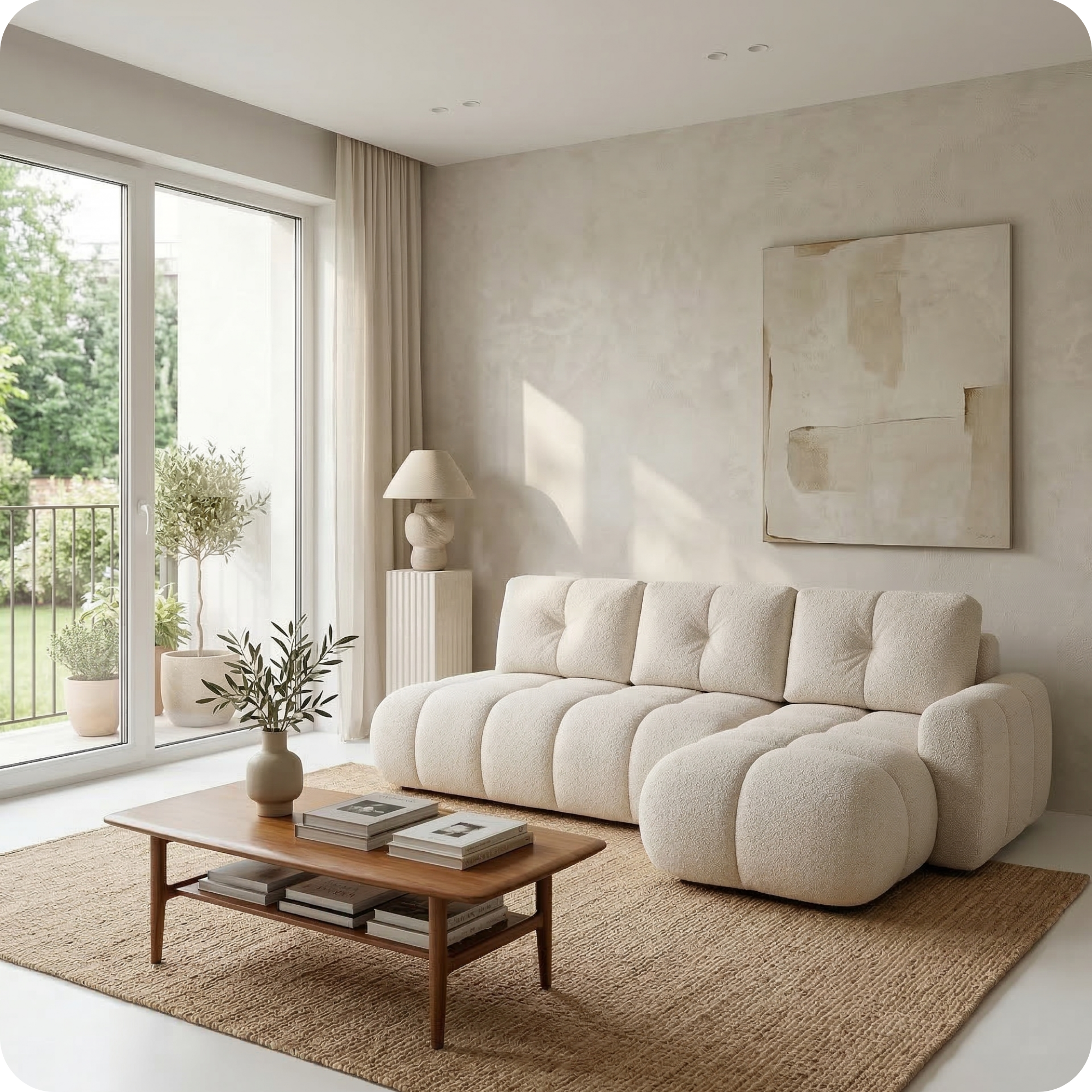
The Lugano sofa in toffee, paired with large-format abstract art in warm ochre and cream tones above it, creates one of the most satisfying and easily achievable living room compositions. The sofa's warm colour sets the palette for the art selection — abstract prints that pick up the warm tones create a coherent visual story. Hang artwork at eye level when seated (approximately 140-150cm from floor to centre) rather than at standing eye level, which is a common and easily avoidable mistake.

Merlot Sofa in Leaf Green — from EUR 1.190
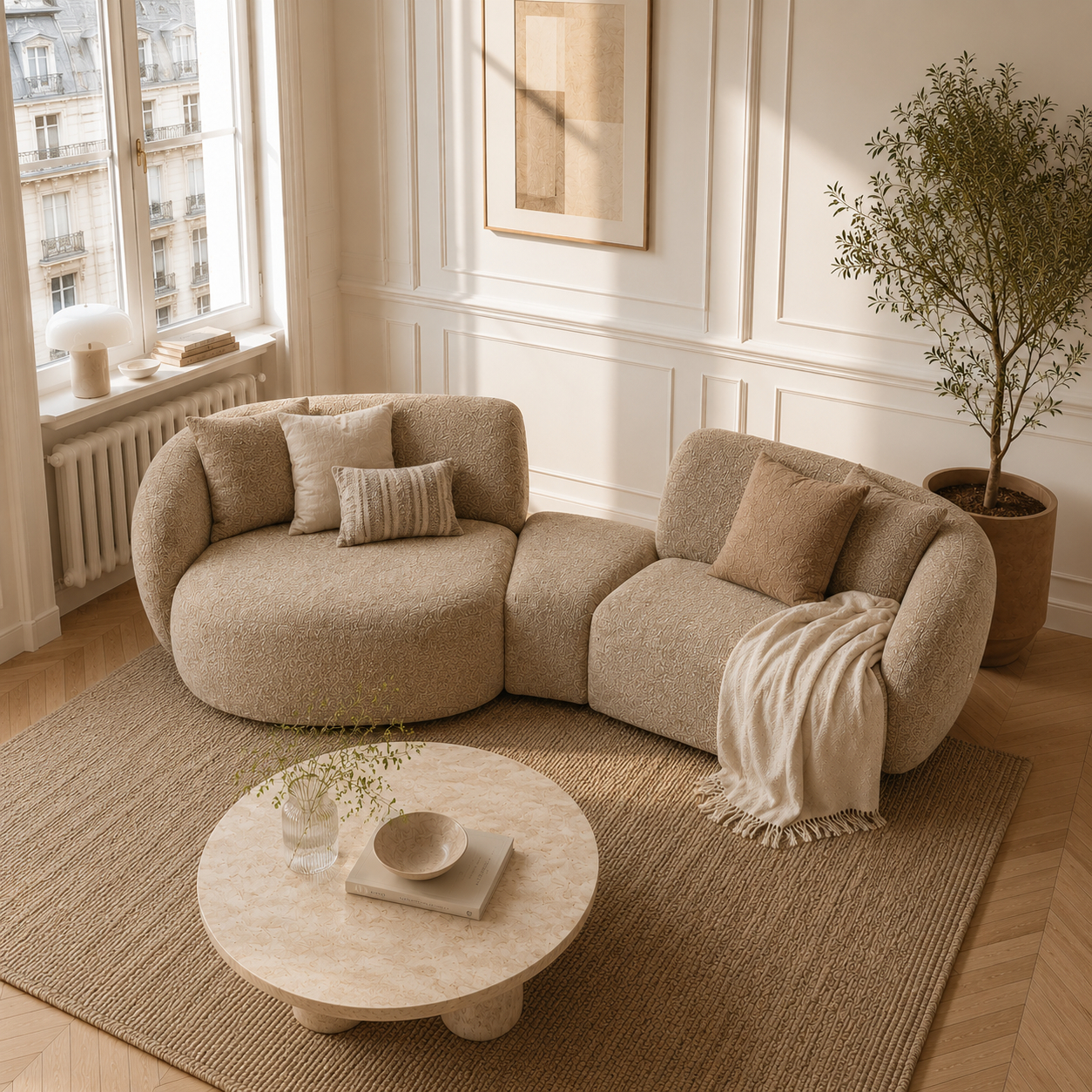
A bold-coloured sofa like the Merlot in leaf green creates a strong focal point in itself — the wall behind it should be relatively simple to avoid the room feeling visually busy. A single large statement artwork or a simple arrangement of two to three framed pieces works better than a dense gallery wall when the sofa is already a strong design statement. Choose art that incorporates the warm tones that complement the green: terracotta, cream, ochre, warm white.
Creating a Gallery Wall
A gallery wall — a curated arrangement of multiple framed pieces — is one of the most effective and personal ways to decorate a living room wall. The key to a successful gallery wall is planning before hanging: lay all the pieces on the floor first, photograph the arrangement, and live with it for a day before committing holes to the wall. A few principles make the difference between a gallery wall that looks curated and one that looks chaotic: use a consistent frame colour (all black, all natural wood, all white, or all metallic) or a consistent frame style for visual cohesion while varying the contents; maintain a consistent gap between frames (5-8cm is a good standard); include a mix of sizes (one or two larger anchoring pieces, several medium pieces, and a few small pieces); and mix types of content (photography, fine art prints, botanical illustrations, abstract art, typography, objects) for richness and personality.
Mirrors: Practical and Decorative
Mirrors are among the most versatile and impactful wall decorations in a living room. A large mirror on the sofa wall or opposite a window reflects light deep into the room, visually doubles the apparent size of the space, and adds a dynamic, shifting element that no artwork can provide. The best positions for mirrors in a living room: opposite a window (to reflect natural light), on a dark or narrow wall (to add depth), or above a fireplace or console table as a traditional centrepiece. Round mirrors have become particularly popular for their softening, organic quality — they break up the rectilinearity of furniture and create a more relaxed visual rhythm. Lean a large mirror against the wall for a casual, contemporary alternative to hanging.
Single Statement Pieces
A single large-format artwork is the most direct and impactful wall decoration for a living room. The key is genuine scale — many people buy prints that are too small for the space, which creates a "lonely picture" effect where the artwork looks like it has been forgotten rather than chosen. For most living rooms, the primary wall artwork should be at least 80-100cm wide; for larger rooms or above a 3-seater sofa, 120-150cm wide is often more appropriate. Large-format fine art prints on museum-quality paper, gallery-wrapped canvases, and abstract textile pieces are all strong choices. Consider the colour relationship between the artwork and the sofa carefully: this is the most prominent pairing in the room, and when it is right, the entire living room composition clicks into place.

Leave a comment
This site is protected by hCaptcha and the hCaptcha Privacy Policy and Terms of Service apply.