


Mid-Century Modern Living Room: How to Achieve the Timeless 1950s Aesthetic
Mid-century modern is one of the most enduring and widely loved of all interior design movements. Emerging primarily in the United States in the late 1940s through the 1960s, it represented a joyful post-war optimism: a belief that good design could be democratic, functional, and beautiful all at once. Designers like Charles and Ray Eames, Arne Jacobsen, Hans Wegner, Florence Knoll, and George Nelson created furniture and interiors that were simultaneously sleek and warm — organic forms in natural materials, clean lines without coldness, and a palette that drew from both the natural world and the vivid optimism of the postwar era. Decades later, the aesthetic remains as fresh and appealing as ever.
The Mid-Century Colour Palette
The mid-century modern palette is one of its most recognisable features. Warm neutrals — camel, tan, mustard, warm white, and avocado green — form the base. Against these, bolder accent colours appeared: burnt orange, teal, warm turquoise, rust, and deep olive. The palette was warm, optimistic, and rooted in the natural tones of the American landscape. Today, a mid-century modern living room typically uses these warm, earthy-bright tones alongside natural teak and walnut wood furniture, aged brass metalwork, and natural fibres.
Furniture Silhouettes: Low, Tapered, and Organic
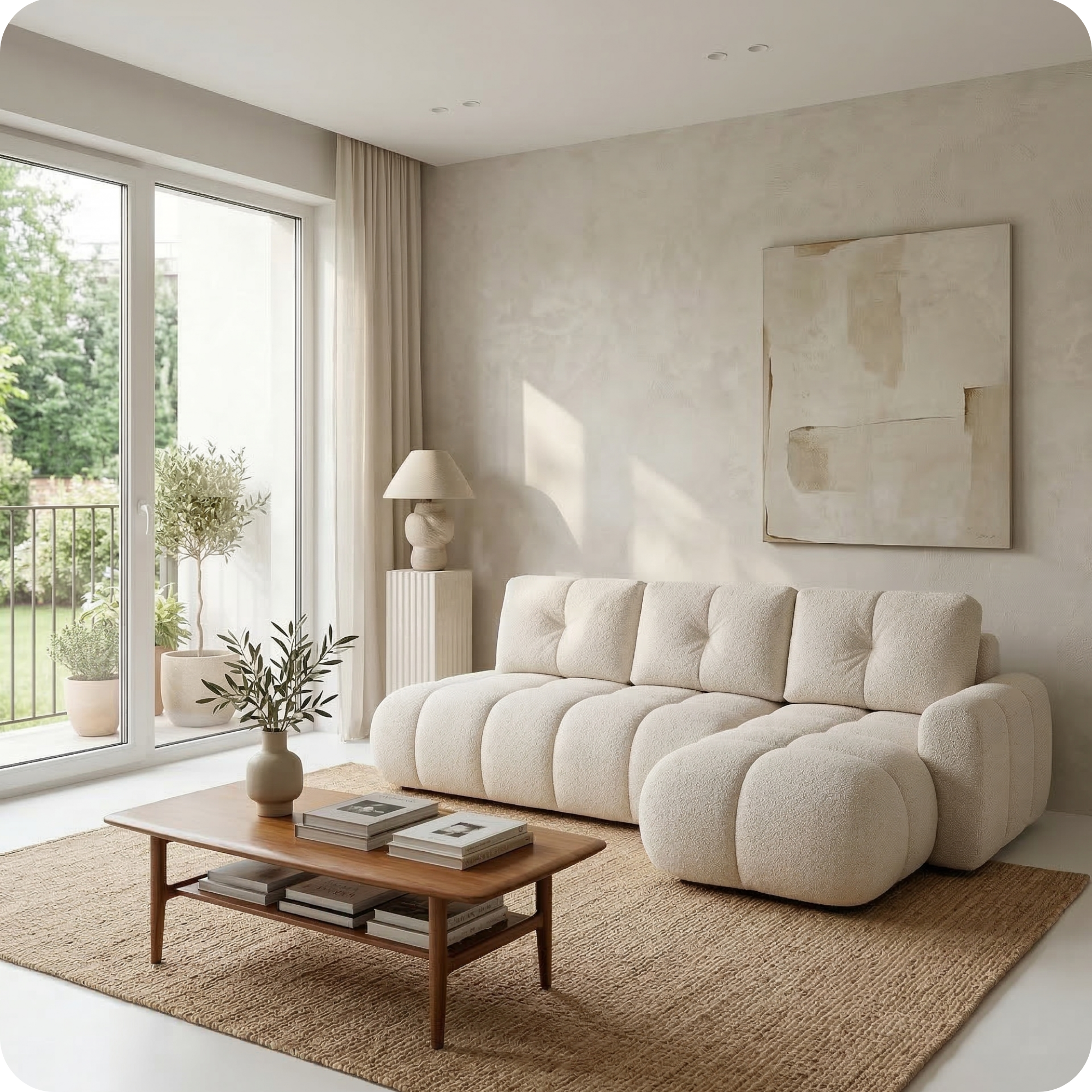
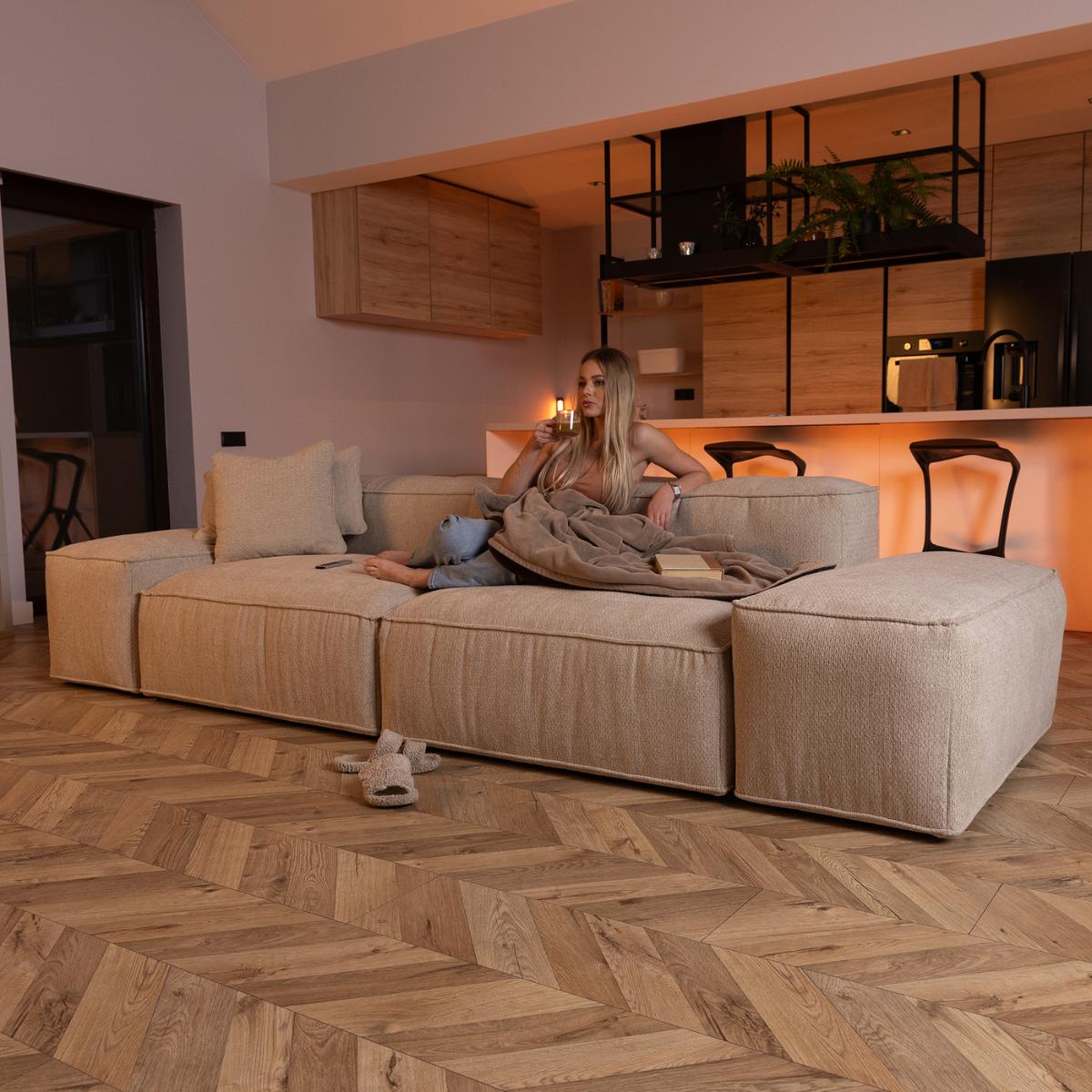
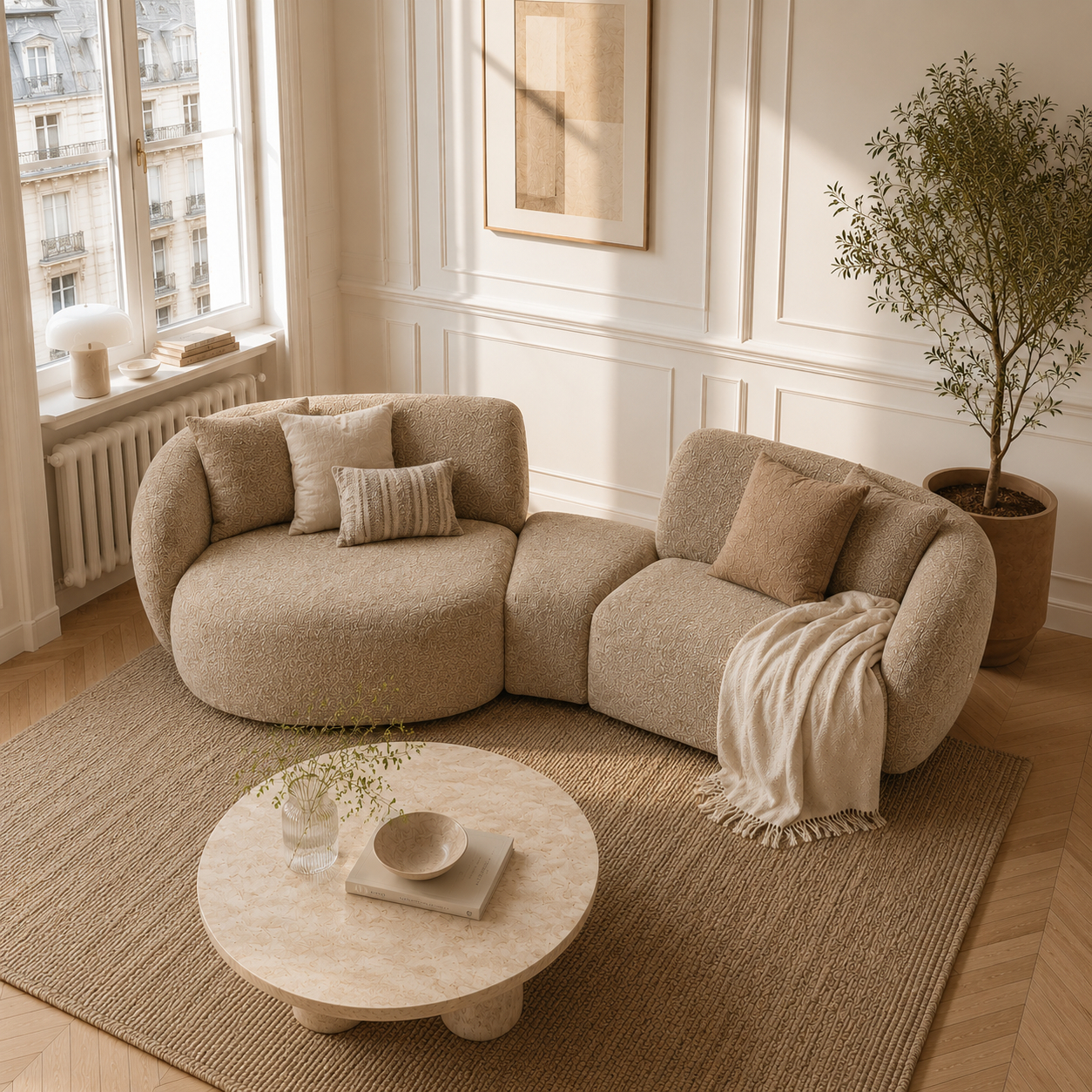
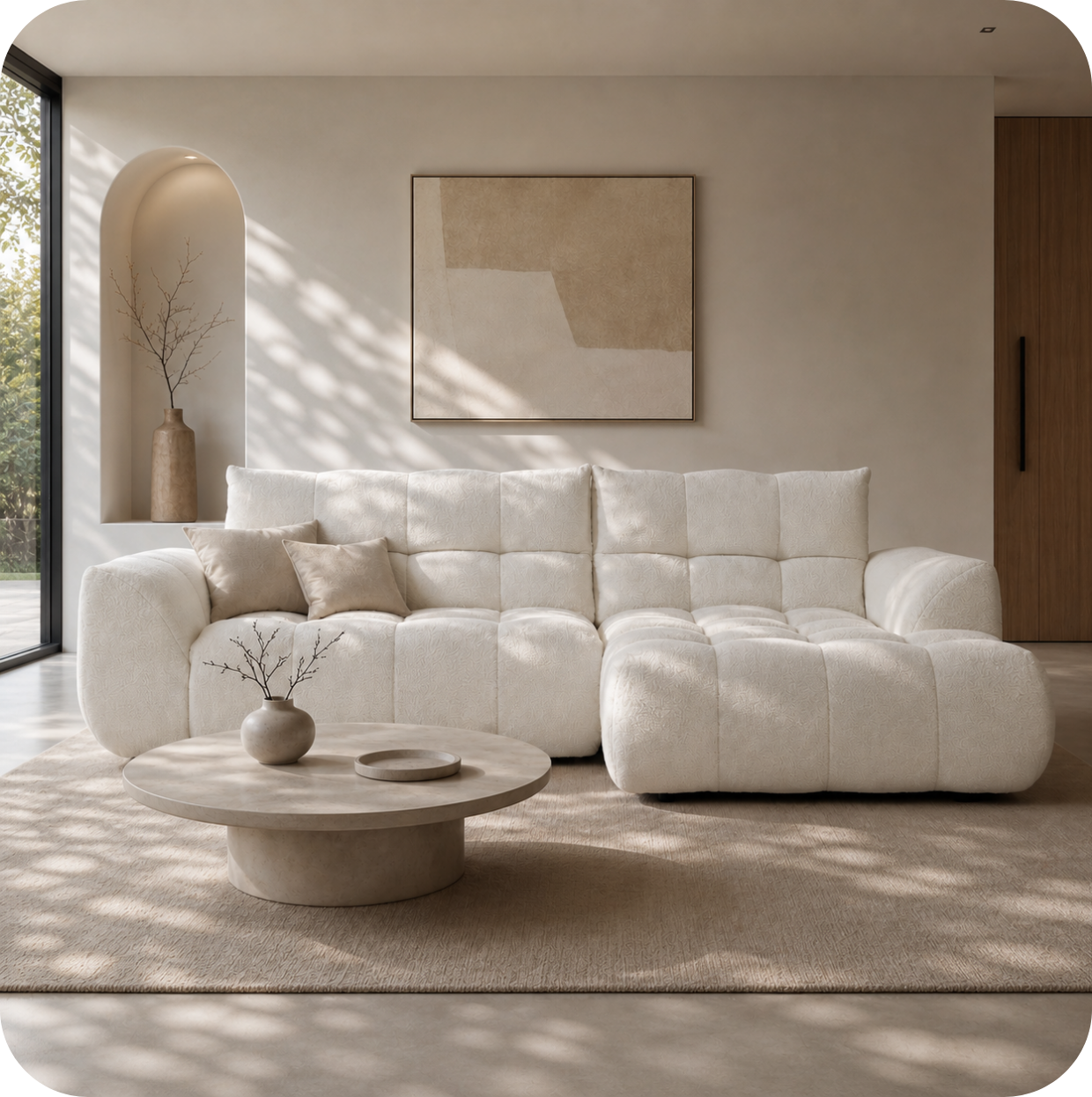
The defining furniture characteristic of mid-century modern is the low-slung silhouette with tapered wooden legs. Sofas sit close to the floor, with slender angled legs in solid wood — typically walnut or teak — lifting them slightly from the ground. This gives the room an open, airy quality. Organic forms — curved edges, gentle sculptural shapes — soften the clean lines. The Malbec modular sofa captures this spirit: its generous proportions, modular flexibility, and clean, inviting form are in keeping with the mid-century principle of furniture that is both functional and beautiful.

Malbec Modular Sofa — from EUR 1,190
The Malbec's clean silhouette, generous proportions, and warm upholstery options suit a mid-century modern living room beautifully — pair it with walnut side tables, a round coffee table, and mustard or rust cushions for an authentic MCM feel.

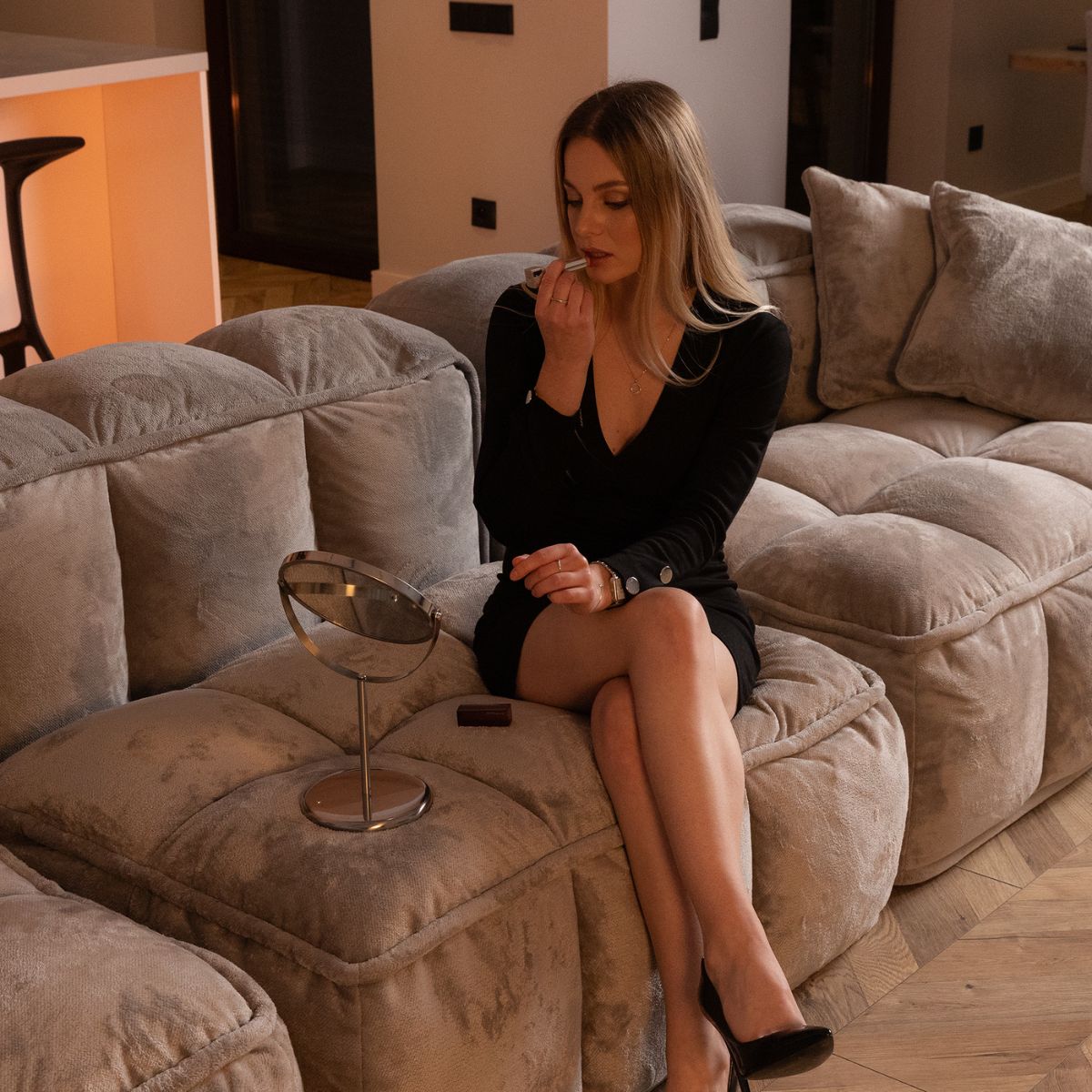
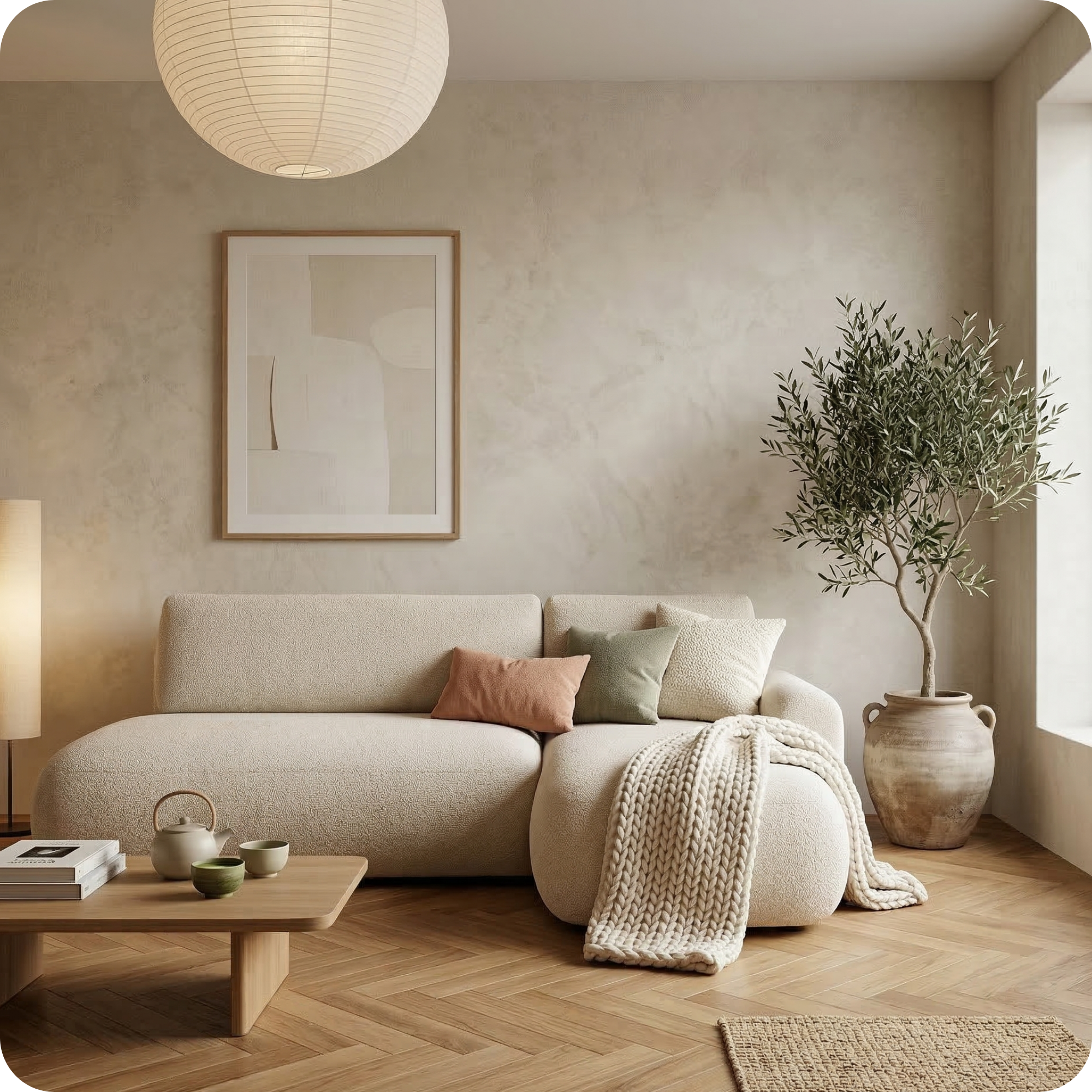
Lugano Sofa in Toffee — from EUR 790
Toffee is one of the most authentic mid-century modern sofa tones — its warm caramel-tan quality echoes the palette of the great MCM designers and pairs naturally with walnut furniture, brass accents, and avocado or rust textile accents.
Signature Mid-Century Details
The details that complete a mid-century modern living room are specific and recognisable. Walnut or teak wood furniture with clean lines and tapered legs. Aged brass or gold metalwork on light fittings, handles, and legs. Sunburst wall clocks or mirrors. Geometric-pattern rugs in warm earthy tones. Statement pendant lights in amber glass, rattan, or sculptural forms — the Sputnik chandelier is the quintessential MCM ceiling light. Ceramic vessels and abstract art in the palette's warm accent colours. Plants in simple terracotta or stone-effect pots.
The Walls and Flooring
Mid-century modern walls were typically clean — either white or warm neutral plaster, or occasionally wallpapered in a bold graphic pattern or botanical print. Today the most successful MCM-influenced rooms often use a warm off-white or greige as the wall base, with a feature wall in a deeper warm tone — deep mustard, burnt orange, warm terracotta, or deep olive green. Flooring is typically natural hardwood — warm walnut or oak tones — with an area rug in the seating zone in a geometric or abstract pattern in the warm palette of the room.

Leave a comment
This site is protected by hCaptcha and the hCaptcha Privacy Policy and Terms of Service apply.